Picking the right ceiling fan can take the edge off a sweltering room so you do not have to lean solely on your AC. Yet cooling performance comes down to a mix of things: fan size, airflow, motor efficiency, blade pitch, speed settings, and installation all play a part. You want a fan sized and positioned for your specific room, with enough output to keep everyone in it comfortable. Day-to-day operation is also a lot simpler when you have extras like reversible motors, remotes, and several speed options. This guide covers how to pick a ceiling fan for warm weather, weighs key features against each other, and offers direct advice on boosting airflow and comfort when temperatures climb.
How to Choose the Best Ceiling Fan for Summer Cooling
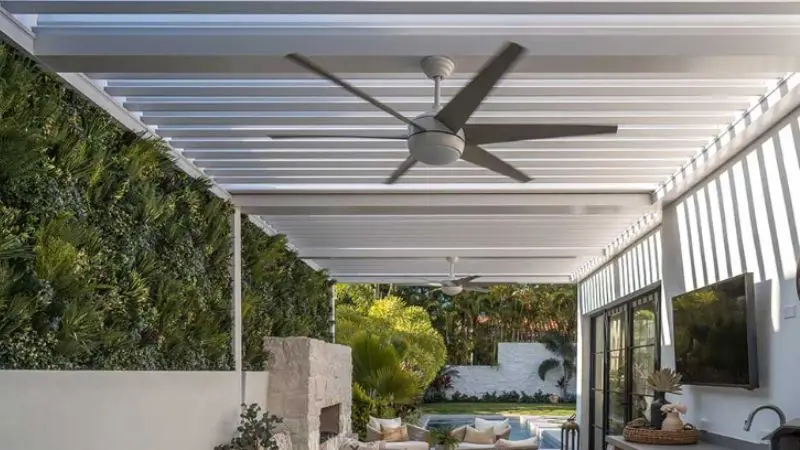
Getting the right fan takes more thought than simply finding an attractive design. How well a fan moves air depends on all of these factors: room size, airflow, motor efficiency, blade pitch, and speed controls.Get that balance right, and the room stays comfortable without pulling power you do not actually need. The points below break down how to pick a summer ceiling fan and settle on a unit that fits your space.
Recommended For Your Project
Look at CFM Ratings and Airflow
CFM stands for cubic feet per minute and measures how much air the fan actually moves. A higher CFM typically gives you more airflow, but the highest number available is not automatically what every room needs. You need to balance that CFM number against the size of the room, the quality of the motor, and how wide the blades are. Bedrooms tend to do best with a mild, steady breeze that lets you sleep, while large living rooms require far more forceful airflow. Keep electricity in mind too, since a fan that moves plenty of air while sipping wattage is a much smarter pick across months of heat. When raw cooling ability is your top priority, CFM gives you the clearest picture.
Consider Motor Type and Efficiency
The motor dictates almost everything about a ceiling fan‘s operation, from how loud it runs to how smooth and power-hungry it is. You will find AC models practically everywhere, and they typically give you reliable service at an affordable price. Choosing a DC motor typically lowers electricity use, runs more quietly and evenly, and hands you tighter control over fan speeds. While the purchase price tends to be higher, the reduced power use helps make up for it if you keep the fan running all day. Do not go by wattage by itself, but instead compare that electrical draw to the volume of air being moved. You get plenty of airflow without burning through extra watts if you match the motor to the space, which is especially important in a room that gets too hot.
Choose the Right Blade Pitch
How well the blades drive air down and circulate it through the room comes down to their pitch. A moderate pitch can strike a practical middle ground between airflow and motor efficiency, whereas a steeper pitch can generate stronger airflow if the motor is up to the task. Still, going with the steepest possible blade angle is not always your best move. To hold the target speed without drawing too much power, the motor has to be strong enough. How the blades are shaped, how many there are, and the overall way the fan is built also affect how well it works. To figure out what actually improves a ceiling fan‘s cooling, you have to look at the whole airflow setup instead of focusing solely on blade pitch.
Look for Convenient Speed Controls
Having solid speed controls lets you tweak the airflow with less effort as it warms up or cools down outside. Standard wall switches handle daily adjustments well enough, but a remote is far handier when you are already sitting at a desk, lying in bed, or on the couch. A number of modern fans come with a wider selection of speeds, letting people make subtle airflow tweaks instead of being stuck with just low, medium, and high. A timer is another useful feature that keeps the fan from spinning pointlessly in an empty room. Make sure the controls you pick match the fan’s motor and are straightforward to operate. Having flexible speed settings also lets you see how to get the most cooling out of the fan without keeping it on high all the time.
Which Ceiling Fan Size Works Best in Different Rooms?

Looking at room size is one of the simplest ways to start filtering your ceiling fan options. When the fan fits the space properly, air circulates more evenly without driving up power use or making extra noise.
Measure up the space before you buy anything, keeping an eye on ceiling height as well as the floor area. Those measurements will point you toward the right blade span and show you which fan cools best across different areas of the house.
Sizing Ceiling Fans for Small Bedrooms
In a small bedroom, you generally want a compact ceiling fan that keeps air moving comfortably without taking over the room. A fan spanning roughly 29 to 42 inches is often a good fit for spaces around 75 to 100 square feet, though ceiling height and layout still factor in. Going smaller also keeps the room from feeling crowded, preserving clearance around walls, light fixtures, and furniture. Pick one with several speeds so the air can be turned down when you go to bed. If that room gets especially hot in summer, focus on a solid CFM rating instead of relying solely on blade size. Getting the size right can help a ceiling fan cool you down more effectively in the summer.
Ceiling Fans for Mid-Sized Rooms
To get air moving through the whole area, mid-sized bedrooms, home offices, and dining spaces usually call for a bigger fan. Blade spans of roughly 42 to 52 inches usually suit spaces measuring around 100 to 200 square feet. Airflow also depends on room shape and where the furniture sits, making it worth thinking about where people actually spend their hours. Choosing a fan built with a solid motor and several speed settings lets you adjust your comfort level as the day goes on. To set things up well for summer, look at how high the fan hangs, its motor efficiency, the blade design, and the CFM rating. Doing so makes it easier to work out what the best ceiling fan is for summer cooling for your particular room.
Ceiling Fans Without Lights for Heavier Flow
If you need to dial in the airflow for a specific space, ceiling fans without lights that feature adjustable blade pitch can come in handy. When deciding what are the best ceiling fans without lights with adjustable blade pitch, and how do they compare for airflow performance, start by looking at how blade pitch affects the amount of air the fan can move. Blade pitch is simply the angle at which the blades cut through the air.
Blades set at a steeper angle push more air if the motor has the power for it, whereas a flatter angle demands less work from the motor. To compare these fans properly, weigh CFM, motor wattage, blade span, available pitch adjustment, and speed settings as a single package. An adjustable pitch does not automatically ensure you will get better cooling. Efficiency depends on the motor and blade design working in tandem. When you are evaluating fans for large rooms or spaces that require heavier airflow, these features matter most.
Large Living Room Ceiling Fans
To push air through the whole space, large living rooms require broader blade spans and more powerful circulation. Fans that measure roughly 52 to 60 inches tend to work well in spaces between 200 to 400 square feet. Instead of depending on a single giant fan, you might get better results from two units if the room is unusually shaped or very large. Before you buy, look up what the maker recommends for room dimensions and airflow. Even air distribution comes down largely to having a strong motor, the right blade pitch, and a high CFM. Rather than cooling just a single corner, set the fan up where it can move air over all the main seating spots in the living room.
Ceiling Fans for High-Ceiling Spaces
A fan hung too high off the floor will rarely deliver the breeze you want, which is why tall rooms take extra planning. Whenever a ceiling rises past standard height, drop the fan lower with the right downrod, keeping safe clearance from both the floor and nearby objects. Big rooms often demand more airflow as well, simply to push air across all that extra footage. Look over what the maker recommends for mounting and pick a unit rated specifically for high ceilings. Getting the mount right matters just as much as blade size when you want good summer airflow through open halls or vaulted rooms.
The 5 Best Ceiling Fans for Beating the Summer Heat

To get real cooling power in the heat, size up different fans by looking at their CFM, motor, blade span, speeds, and how you control them. The fans below bring together different mixes of quiet sound, airflow, reversible motors, and easy controls meant for summer.
VEVOR 84-Inch Model
VEVOR built this 84-inch fan specifically for areas that demand serious air movement through the summer. Driven by a 53W DC motor, its eight aluminum blades push as much as 12,000 CFM. Features include a remote, a reversible motor, six speeds, and shutoff timers for 1, 2, 4, or 8 hours. Rated at ≤45 dB, it runs quietly enough for living rooms and bedrooms where noise needs to stay down. It comes with three different downrod lengths, so you can adapt it to various ceiling heights.
DREO Smart Ceiling Fan (52-Inch)
Built for routine summer cooling, the 52-inch smart fan from DREO pairs robust airflow with simple, flexible controls. Driven by a high-grade DC motor with six standard speeds, it pushes out up to 5,673 CFM. Connecting via the DREO app unlocks up to 12 speeds on this smart model, which also works alongside Google Home and Alexa. You also get control via a remote and a wall switch, and the blades reverse so you can swap airflow direction whenever necessary. According to DREO, this 52-inch footprint suits rooms measuring up to roughly 400 square feet.
Haiku L 52-Inch by Big Ass Fans
Quiet running, effective air movement, and ease of control are the main priorities of the 52-inch Big Ass Fans Haiku L ceiling fan. On paper, it tops out at 5,204 CFM of airflow while keeping peak noise under 35 dBA. Along with a high-efficiency motor and a supplied handheld remote, the fan can be paired with app and smart-home controls. This 52-inch model is intended to cover spaces measuring roughly up to 225 square feet. Because of that, it merits a look for living rooms, bedrooms, or home offices where you need consistent air without hearing the motor hum.
Fanimation Kute 52-Inch Fan
The 52-inch Fanimation Kute ceiling fan blends powerful air output with versatile speed adjustments. Its current specifications list 6,701 CFM on high and 16 speed settings, allowing users to make smaller airflow adjustments throughout the day. The Kute is damp-rated and smart-ready, making it suitable for indoor areas and some covered spaces where the location rating allows installation. A TR305 control comes in the box, though you have to buy the light kit on its own if you want one. If you have a room that demands serious air movement in the hotter months, this 52-inch model delivers the CFM to justify a look.
Fanimation Kute5 52-Inch Ceiling Fan
Anyone looking for plenty of speed settings and forceful air movement has another solid contender in the 52-inch Fanimation Kute5. Fanimation rates it at 6,701 CFM on high, equips it with 16 speeds, and gives it a damp location rating. You can get the 52-inch Kute5 with five blades, and there is an optional LED light kit you can pick up on the side. Changing speeds is straightforward using the supplied control, and the manufacturer lists the unit as smart-ready. Come summer, the strong CFM output and wide spread of speeds make it easy to tune the breeze to the heat of the room and what feels comfortable to you.
| Ceiling Fan | Size | Max Airflow | Speed Settings | Key Features |
| VEVOR 84-Inch | 84 in | 12,000 CFM | 6 | DC motor, reversible, remote, timer |
| DREO Smart | 52 in | 5,673 CFM | Up to 12 | App, remote, Alexa/Google Home, reversible |
| Big Ass Fans Haiku L | 52 in | 5,204 CFM | — | Quiet operation, remote, app-enabled |
| Fanimation Kute | 52 in | 6,701 CFM | 16 | Damp-rated, smart-ready, remote |
| Fanimation Kute5 | 52 in | 6,701 CFM | 16 | Five-blade design, damp-rated, smart-ready |
Wrap Up
How well a ceiling fan cools your space comes down to matching the room with the right motor, CFM, blade size, and fan span. Before you buy, look closely at the CFM, blade span, speed settings, and hanging height.
Keep it spinning counterclockwise through the summer months and change the speed whenever you need to. Decent ventilation throughout the room helps bring down the perceived heat as well. Keep in mind that all a ceiling fan does is generate a cool breeze. The actual temperature in the room never drops because of them.
Cut the power when the room is empty so you aren’t wasting power. A properly chosen ceiling fan can keep your house feeling much nicer in the heat, provided it is installed well and used consistently.
FAQ
How to choose the best ceiling fans without lights for large rooms (400+ sq ft) ?
High-ceiling fans should support downrod mounting and provide strong airflow. Compare models by blade span, compatible downrod lengths, CFM, motor type, installation requirements, warranty, and price before choosing one.
What are the best ceiling fans without lights for vaulted or high ceilings and how do they differ in mounting and price?
High-ceiling fans should support downrod mounting and provide strong airflow. Compare models by blade span, compatible downrod lengths, CFM, motor type, installation requirements, warranty, and price before choosing one.
Which ceiling fans without lights come with remotes and what are the best models for ease of use?
Remote-controlled ceiling fans make speed and direction adjustments easier. Look for models with simple remotes, multiple speed settings, timers, and memory functions. Check how the receiver installs and whether the remote is actually compatible, too.
Which lightless ceiling fans with reversible motors are best, and how do they stack up in the winter?
A reversible fan pushes cool air down in hot months and recirculates the warm air that drifts upward in cold ones. If you plan to run it all year, weigh motor efficiency, airflow, speed settings, reverse controls, blade shape, mounting options, and the warranty.
What Ceiling Fan Speed Works Best in Summer?
Running the fan at medium or high usually keeps a room pleasant in summer, though the right choice comes down to personal taste and room temperature. Turn the fan up when the heat rises, and dial it back if the breeze starts to feel like too much.