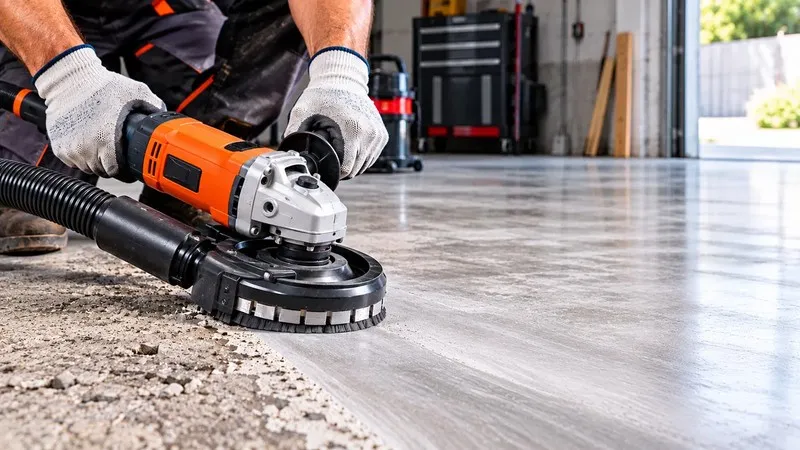
You need to grind down a peak on your garage slab, but all you have is an angle grinder for metal cuts. Before you put a wheel on, keep in mind that grinding concrete with an angle grinder concrete affects your wheel, guard, and dust handling, just like the diamond cutting wheel for concrete guide explains when you make a cut. The grinding wheel does the job this time around, and confusing the two is the biggest problem beginners face. Below are the steps in sequence from start to finish.
What Is the Best Angle Grinder for Concrete?
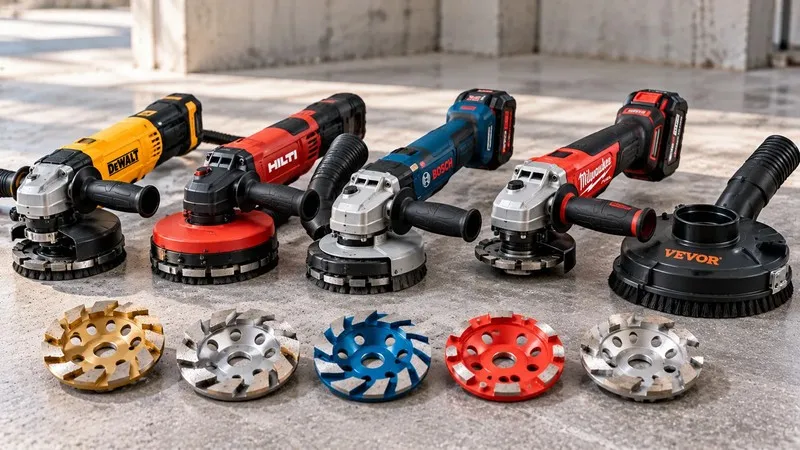
However, choose the right angle grinder concrete based on the nature of your work, since grinding and cutting have different requirements. When grinding, use the angle grinder concrete that can accommodate the wheel you intend to use.
Ensure the spindle thread and mounting system, wheel size, guard system, and speed rating match according to the manual for both the tool and wheel. For cutting, use a diamond blade that matches the guard system and the specified grinder. A concrete cutting saw is better for deep or long cuts.
For any grinding project, first match the grinding wheel to your angle grinder. A wheel’s highest rated speed cannot exceed the grinder’s no-load speed. For instance, Milwaukee rates its 5-inch turbo cup wheel (49-93-7790) at 12,000 RPM, while its M18 FUEL 2880-20 grinder has a speed rating of 8,500 RPM.
What Are the Best Hand-Held Concrete Grinders for Grinders That Accept Diamond Cup Wheels?
Start with grinders for concrete surface work, as they’re built with cup wheels and dust collection in mind. This table includes dedicated concrete grinders, one angle grinder concrete for everything, and one shroud kit. Check the intended use column because VEVOR doesn’t offer any angle grinders for hands in their angle grinders category. No source ranks them, so compare speed, weight, and dust connection, and browse VEVOR’s concrete grinders if you want a walk-behind option as well.
| Model | Intended use | Power and speed | Spindle or mounting | Notes |
| DEWALT DWE46155 | Concrete and masonry surface grinding | 13 A, 120 V corded; check the manual for speed | Check the manual | Kit includes a 5 in dust shroud with flush edge grinding, a diamond turbo wheel, and a bail handle |
| Hilti DGH 130 | Concrete grinder | 1300 W corded, 3,000 to 8,700 rpm | 22.2 mm arbor size; thread not listed | 2.5 kg; adjustable dust hood for edges and corners |
| Bosch GBR 18V-15 S | Dry grinding of concrete, stone, and screed | 18 V battery, 2,600 to 8,500 rpm | M14 spindle thread, 22.23 mm bore, 125 mm cup wheel | 2.6 kg without battery |
| Milwaukee M18 FUEL 2880-20 | General-purpose angle grinder | 18 V battery, tool only, 8,500 RPM listed | 5/8″-11 spindle, 4-1/2 in or 5 in wheels | The maker’s page does not mention concrete |
| VEVOR dust shroud with 5 in cup wheel | Add-on shroud for 4-5 in angle grinders, listed for concrete and wall | Uses your own grinder’s motor | Fits 4-5 in discs; six clamping washers | Connects to a vacuum cleaner; port size not listed |
Spindle thread determines which wheels will work. Milwaukee spindle thread is 5/8″-11, while Bosch spindle thread is M14. So, a threaded wheel that fits one won’t fit the other because the threads differ. DEWALT and Hilti websites don’t list the spindle thread; refer to the manuals for their approved cup wheels.
Recommended For Your Project
What Are the Best Battery-Powered Concrete Grinders If I Need Cordless Options?
Of the two angle grinders listed above, the Bosch GBR 18V-15 S is designed for use on concrete. This grinder is intended for dry grinding and surface refinement of concrete, stone, and screed, and it has a dust-collection connection. The 2880-20 by Milwaukee is a braking angle grinder concrete for general use, and the page does not indicate it is for use on concrete.
Which Wheel or Blade Does Angle Grinder Concrete Work Need?
Choose the right wheel for the job, not the other way around. While a diamond blade cuts materials, a diamond cup wheel grinds them. You can cut concrete with an angle grinder concreter for shallow cuts and short lines, but don’t grind with the side of the cutting blade, since it isn’t designed for that kind of stress. If you are cutting masonry materials like bricks and blocks, choose a masonry cutting wheel instead.
| Job | Wheel | Watch for |
| Cutting a slot or short line | Diamond blade | Closed guard and steady, shallow passes |
| Grinding a high spot | Diamond cup wheel | Dust shroud and a matching spindle |
| Edges and corners | Smaller cup wheel | A shroud with a flush edge door |
| Removing adhesive | Cup wheel | Dust control, and check old adhesive for asbestos first |
In the Milwaukee product list, it is indicated that the 4-inch DIAMOND MAX double row cup wheel (49-93-7750), which has a 5/8″ – 11 arbor and operates at up to 15,000 RPM, is used for concrete grinding, leveling, and removal of adhesives. The 4-inch and 5-inch turbo wheels are listed for wet and dry operation, depending on your dust-control method.
How Do You Grind Concrete With an Angle Grinder, Step by Step?
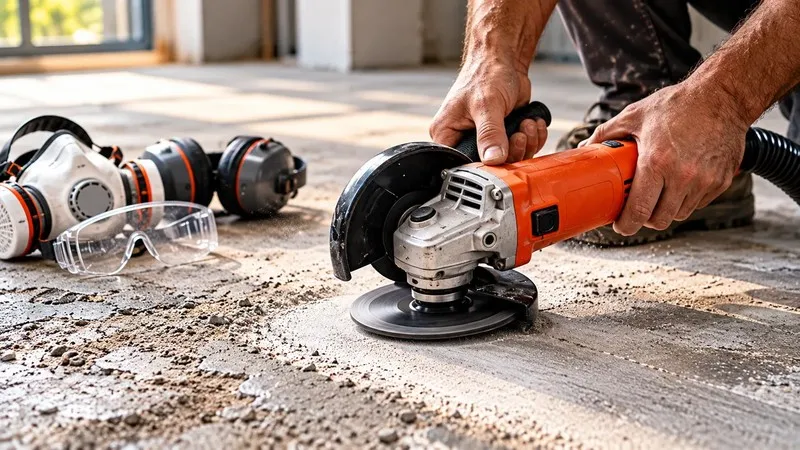
Clear the slab, establish dust control, install the correct cup wheel, edge-grind the slab first, then pass over the slab surface, evaluate, and clean up. This order helps minimize dust. First, clean the floor and check for cracks, spalls, or old adhesive. Mark any crack that needs to be filled by following the procedure for filling cracks in a garage floor. Test the adhesive for asbestos before grinding it. Second, wear protective eye gear, hearing protection, and a respirator.
According to Hilti, DGH 130 emits 88 dB(A) noise. Therefore, you need hearing protection. Third, install the correct shroud and cup wheel, tighten the wheel according to the manufacturer’s instructions, and connect the dust-extraction system. Before starting angle grinder concrete work, check that the wheel, guard, and vacuum are compatible with your machine.
How Do I Control Dust When Using an Angle Grinder on Concrete?
Grinding concrete can release respirable crystalline silica, which can harm your lungs. When grinding concrete with an angle grinder, use a shroud with a vacuum or water the wheel. OSHA’s hand-held grinders fact sheet suggests that the integrated water system be used outdoors only, which implies you will need a vacuum when working indoors.
Choose a shroud designed for your grinder and cup wheel. For an angle grinder used to grind concrete, OSHA guidance specifies a vacuum airflow of at least 25 cubic feet per minute (CFM) for each inch of wheel diameter under the relevant dust-control method. For a 5-inch wheel, that means at least 125 CFM. The vacuum should also have a cyclonic preseparator or filter-cleaning mechanism and a filter rated at 99% efficiency or higher for respirable particles, as specified by the applicable guidance.
Cleaning up is also important. According to OSHA standards, clean surfaces and filters using a HEPA vacuum cleaner or wet methods. Do not blow dust with compressed air. When working indoors, you need additional ventilation, since a shroud alone may not keep exposure low. OSHA’s Table 1 also requires wearing a respirator with an assigned protection factor of at least 10 if indoor grinding with dust collection lasts longer than four hours during a shift. Using this equipment for short tasks is an additional precaution, not an OSHA standard, but it’s good practice. Now that the dust has settled, clean the concrete garage floor.
What Size Angle Grinder Is Best for Concrete Edges and Corners?
A 4½-inch or 5-inch grinder is usually appropriate for grinding edges and corners because it’s easy to control in small areas, but the best choice depends on your grinder’s power, the wheel’s specifications, and the task at hand. If you choose an angle grinder concrete blade or cup wheel, make sure it matches your equipment in size, speed, and purpose.
Cup wheels come in several sizes: 4-inch, 4½-inch, 5-inch, and 7-inch. Although a larger wheel covers more surface area with each pass, it’s harder to control when grinding near walls, pillars, and staircases. To grind edges with an angle grinder, choose a disc with a shroud that lets you reach the area. Some shrouds include a removable part for grinding edges.
Turn on the machine and let it reach working speed, then engage the wheel with the concrete. Hold the machine with your strong hand and push it gently. Don’t push too hard, as too much pressure can cause an uneven finish.
Now grind the edge using short overlapping movements. Move to the open floor and continue grinding with overlapping motions. After grinding, test the surface with a straightedge and look for cracks and rough areas. Vacuum up the dust, fix the problems, and prepare the slab for the coating. It’s easier to work with the right angle grinder concrete on small jobs, especially when you use the right wheels and dust-control systems.
Can an Angle Grinder Grind a Whole Concrete Floor, or Is a Floor Grinder Better?
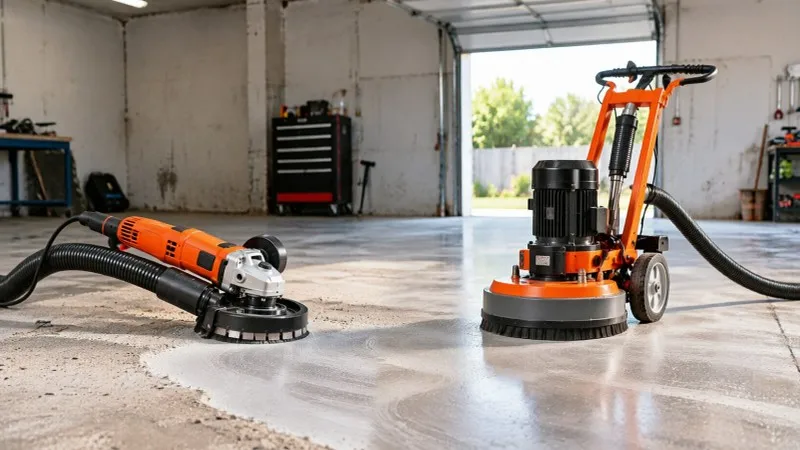
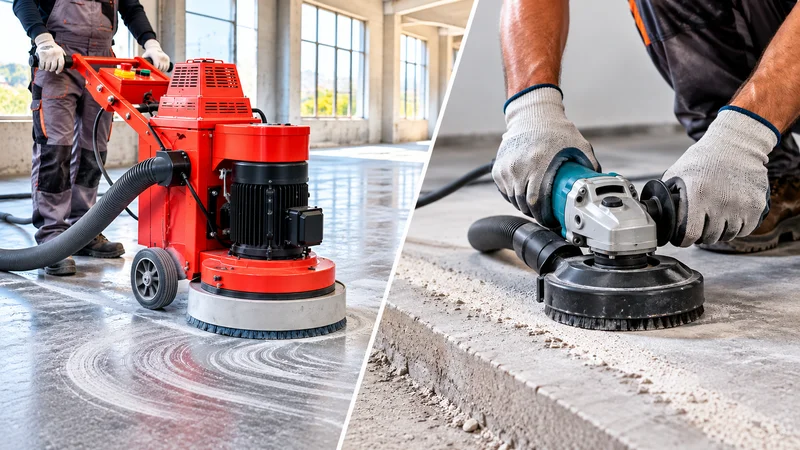
While an angle grinder concrete can grind a limited area, a floor grinder is better for grinding an entire floor. The guide by RNTR provides approximate numbers such as 50-150 square feet an hour for hand grinders and 500-2,000 square feet a day for walk-behind grinders. Treat these as approximate figures, depending on how much concrete you remove and other variables.
A hand tool is harder to keep steady in a large space; besides, you will get tired long before the machine does. You may opt for a smaller upgrade; in that case, the 7-inch 1.7HP floor grinder with a dust collection port will work for you.
When Should I Switch from an Angle Grinder to a Walk-Behind Concrete Grinder?
Switch when you spend most of your time on open floor, need an even finish for coating or epoxy floors, or your arms get tired before the floor is complete. Many concrete works require both: a walk-behind machine for the open floor and an angle grinder concrete for the edges.
One option is a 10-inch, 1.7 HP floor grinder for garage or basement floors. Since this machine requires a 10-inch disc, make sure your doorway and electrical supply can accommodate it, and consider how you plan to transport it. Smaller machines require narrower doorways, and in older houses that can be a deciding factor, so measure your door before ordering.
The machine’s weight matters, as it’s harder to carry a heavy machine up the stairs or load it into a car. The 1400W walk-behind grinder weighs 62.5 lb, so plan the lift and have a second pair of hands before you buy.
Conclusion
Grinding an angle grinder concrete can be done step by step: prepare the slab, manage dust, choose the right cup wheel, grind the edges, and finally grind the field. You’ll need a 4-1/2- to 5-inch grinder for the edges and a shroud to attach to the vacuum. When grinding a whole slab, use a walk-behind grinder.
Frequently Asked Questions
Can I use a metal grinding wheel on an angle grinder for concrete?
No. Use a diamond cup wheel to grind concrete and a diamond blade to cut concrete. Metal grinding and cutting wheels are not designed for masonry work.
Can an angle grinder cut concrete?
Yes, for shallow slots and short lines, use a diamond blade and a closed guard, but a concrete saw is better for deep cuts or long lines.
Is a 4.5-inch or 5-inch angle grinder better for concrete?
The 5-inch grinder removes more material at once, but the 4.5-inch grinder is ideal for tight spaces. Make sure the spindle fits your cup wheel.
What thread do cup wheels for an angle grinder use on concrete?
Many use 5/8”-11, but there are some grinders that use M14 thread, such as the Bosch GBR 18V-15 S. Check the threading of your grinder.