Agricultural spraying equipment is also crucial for modern farming, allowing farmers to accurately and efficiently apply pesticides, herbicides, fungicides, and fertilizers. Proper spraying equipment will not only help maintain the health and beauty of the crop but also reduce chemical waste and improve productivity. Today, the farmers have a variety of sprayers to choose from, such as backpack sprayers, tractor-mounted, self-propelled, and drone sprayers.
Before making any investment, it is important to know the different kinds, features, and applications of these machines. Whether it is a small farm or a business with a large agricultural operation, the proper use of a crop sprayer in farming operations can help to improve the efficiency and profitability of the operations, as well as help produce better crops.
Common Types of Agricultural Spraying Equipment Used on Farms
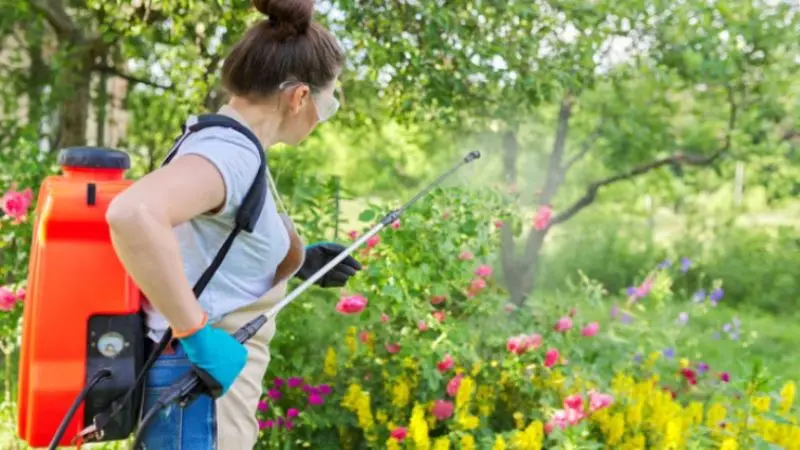
All modern forms of agriculture use agricultural spraying machines. They help farmers manage plant diseases, apply fertilizers, and manage pests without harming the environment.
The type of machine selection should inform the size of the farm, the type of crop, and the working conditions.
When it comes to knowing how to pick the best crop sprayer for farming, it’s crucial that you know about each type. The crop will be healthier, and losses will be minimized with the appropriate equipment. Some of the most common sprayers used in agricultural production are introduced briefly, and spray equipment used with these sprayers is mentioned where appropriate. Descriptions are kept simple, easy to understand, and comparative so a choice can be made when selecting the type of sprayer to use and to understand their use.
Simple Handheld Sprayers for Small Farming Tasks
Handheld sprays are easy to use for small gardens and for small areas on farms. They are operated by hand and are very easy to use. Usually, the farmers use them in watering or spraying a single plant or a single spot with pesticide or water-based fertilizer.
The sprayers are inexpensive and do not require special training. They take longer and more labor, and are not suitable for large fields. But in a small garden or as a small plot, they are very useful for day-to-day garden maintenance.
Comfortable Backpack Sprayers for Medium Farm Areas
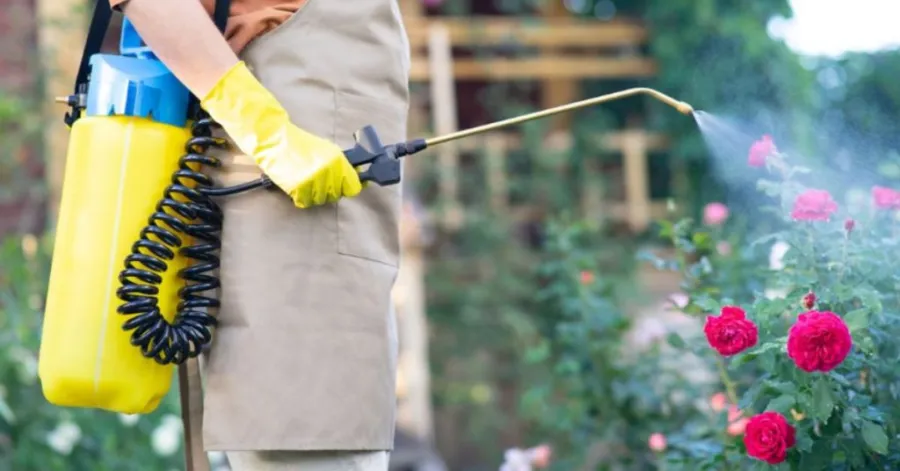
Backpack sprayers are designed for ease of movement in a field and to be carried on the back. They typically occur in vegetable farms and small/mid-size agricultural fields. Spraying may be done by walking in rows to obtain better control and accuracy in spraying.
More efficient, longer use life than handheld models. This is a popular option for many farmers due to its performance and value. If you are in the planning stages of what equipment you will use to spray pesticides on the crops, backpack sprayers are very handy and commonly used sprayers that are used in normal day-to-day farming operations.
@frankbrooks8 @Vevor_US battery powered backpack sprayer #vevor #vevortools #sprayer #gardensprayer #backpacksprayer #lawncare #yardwork #gardentok #tiktokshopcreatorpicks #tiktokshopsummerturnup
♬ original sound – FrankzFindz
Strong Knapsack Sprayers for Rough Field Conditions
Similar to backpack sprayers, knapsack sprayers are designed to meet the more challenging farming demands. They are extremely tough and robust, and are commonly required in rocky or tough terrain. Farmers use them for liquid fertilizers, herbicides, and pesticides.
These sprayers are easily repaired and serviced, and therefore trustworthy for prolonged use. They can be used in areas where machinery can’t easily reach. In S & M systems, simple but effective spray applications are still believed to be appropriate for knapsack sprayers.
Easy-to-Use Battery Backpack Sprayers for Modern Farming
The battery backpack sprayers are an upgraded version of manual sprayers. They are powered by a rechargeable battery that generates pressure to remove the need for manual pumping. This simplifies spraying for farmers and reduces the strain on their backs.
These sprayers are gaining popularity in modern agriculture due to the tremendous time and labor-saving advantages they offer. An agricultural sprayer for farms with battery power can enable farmers to work longer and more efficiently without fatigue. They are particularly beneficial in vegetable farms and orchards where frequent spraying is required.
Wide-Coverage Boom Sprayers for Large Farms
For large agricultural fields that need to be sprayed over a wide area, a boom sprayer is used. They come with long spray arms that ensure uniform liquid application over the crops in a single pass. Usually used with tractors to get to more areas in large fields.
They are very good for crops that are row-crop, such as wheat or corn. They are favored by more farmers, since they do not require too much time and are less labor-intensive. As such, they become significant components in the modern tractor-mounted sprayer for large farms found in commercial agriculture.
Air-Assisted Sprayers for Better Crop Penetration
Air-assisted sprayers push chemicals into plant canopies with high air pressure. This enables complete spraying of the plant, even the hidden areas. Generally planted in orchards and in close crop situations.
They are sprayers that decrease the chemical waste and improve the accuracy. When choosing an orchard sprayer for fruit tree control, farmers may think of fruit tree sprayers. They are effective in enhancing the effectiveness of test management and maintaining the quality of the crop.
Mist Blower Sprayers for Even Spray Coverage
Mist blowers will produce a fine mist, which will be distributed evenly throughout the plants and trees. They are frequently utilized in orchards and plantations that require full coverage in a short time. The fine droplets increase surface area, thus helping reach the surface area in the shortest possible time.
They are useful in tall, dense crops to control pests and diseases. Mist blowers are useful for farmers in situations where they require rapid and uniform spraying. They are very effective for fruit farming applications where uniform coverage is essential for the protection of the plants.
Tractor-Mounted Sprayers for Large-Scale Farming Operations
Sprayers mounted on tractors are directly connected to the tractor on large farms. They facilitate fast and efficient coverage of large fields by farmers. The machines are suitable for large-scale farming of crops.
A popular choice is the tractor-mounted sprayer for large farms, as it saves manpower and increases efficiency. These are high-cost agricultural sprayers, but they provide good value for commercial farming operations in the long term.
Self-Propelled Sprayers for High-Efficiency Commercial Farming
Advanced machines that travel without a tractor are self-propelled sprayers. They are used for large farms, where speed and accuracy of spraying over large areas are required.
These machines, which increase in speed, will save some labor and will offer improved control. They are often employed in commercial production where there is a high level of accuracy and efficiency required. They assist farmers in handling huge farmlands easily and efficiently.
Drone Sprayers for Smart and Precision Farming
Drone sprayers are examples of contemporary agricultural technology in precision agriculture. They are able to fly over fields and spray the crops with high accuracy. This can help cut down on chemical usage and increase efficiency.
They can be useful in places where traditional machines can’t easily reach. Smart farming is embracing drones as they become more prevalent because they provide a system for monitoring, spraying, and more. They are a modern approach to enhancing crop protection and farm management.
What Is a Backpack Sprayer and How Does It Work in Farming?
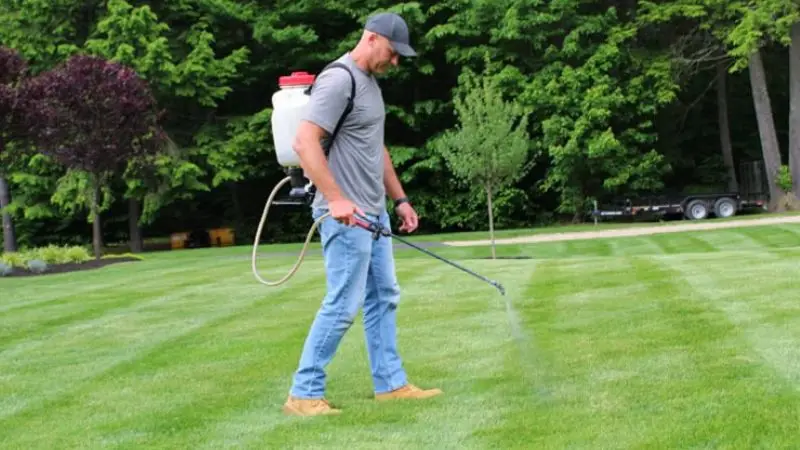
Backpack sprayers are widely used in modern farming for their ease of use, flexibility, and effectiveness. They are supported on the farmer’s back, and the farmer sprays liquids directly onto the crops as they walk through the field. They are applied to pesticides, herbicides, and fertilizers in small and medium farms.
When considering what crop sprays to use for agricultural purposes, it is important to know a bit about backpack sprayers, as many people will need to upgrade from their basic handheld sprayers to backpack sprayers. They are used in many instances as a step toward technically more efficient pesticide spraying devices in crops. Let’s delve into what they do and why they are so favored in daily farming.
Key Parts and Structure of a Backpack Sprayer
The backpack sprayer consists of several simple parts that are all important and necessary for it to function and apply liquid to the crop. Typically, it features a tank for storing the chemical solution, a pump to generate the pressure, a hose to transport the liquid, and a nozzle that sprays the liquid in a controlled pattern. The straps make it easy for the farmers to carry in the field.
Others have filters to prevent clogging up and pressure regulators to improve spray control. The design is engineered to be lightweight, yet strong enough for daily use. It can be used in small vegetable farms or in orchards with ease, and enables accurate spraying on various crop types.
Manual and Battery Backpack Sprayers Explained Simply
There are two types of backpack sprayers: manual sprayers and battery-powered sprayers. Manual sprayers need the farm worker to pump up a lever to create spray pressure. This type is simple, inexpensive, and easy to operate without electricity, but can be tiring when used for extended periods in large fields.
Battery-powered sprayers are fitted with a rechargeable battery and automatically maintain a constant pressure. This will make spraying easier, faster, and with less effort. A battery-powered agricultural sprayer for farms is particularly advantageous for the farmer who wishes to spray for an extended period without getting tired. It also enhances uniformity, which is a modern addition to the farmers’ armamentarium.
How Farmers Use Backpack Sprayers in Crop Fields
Sprayers with backpacks are quite common in many agricultural applications, particularly those that require precise and flexible application. They are used by farmers to spray their crops with pesticides to ward off insects, herbicides to control weeds, and liquid fertilizers to help them grow better. They are found in vegetable fields, orchards, and small grain fields.
They also work well for spot treatment – spraying only a portion of a field instead of an entire field. This minimizes chemical usage and increases efficiency. Often, farmers want to use them where larger machines cannot operate on uneven land.
Main Benefits of Using Backpack Sprayers in Agriculture
Sprayers are popular among farmers for a number of reasons. There are several benefits to using backpack sprayers: They are convenient to transport, user-friendly, and appropriate for various crops. They also enable better spraying control and so help to cut down on chemical overuse and crop safety.
They are also less costly and have less maintenance than larger machines. They are suitable for small and medium-sized farmers, which is why they are recommended. Together with modern agricultural techniques, they become part of agricultural spraying tools, allowing efficient and targeted protection of the crops, and saving time and resources in the field.
Important Features to Look for When Choosing Agricultural Spraying Equipment
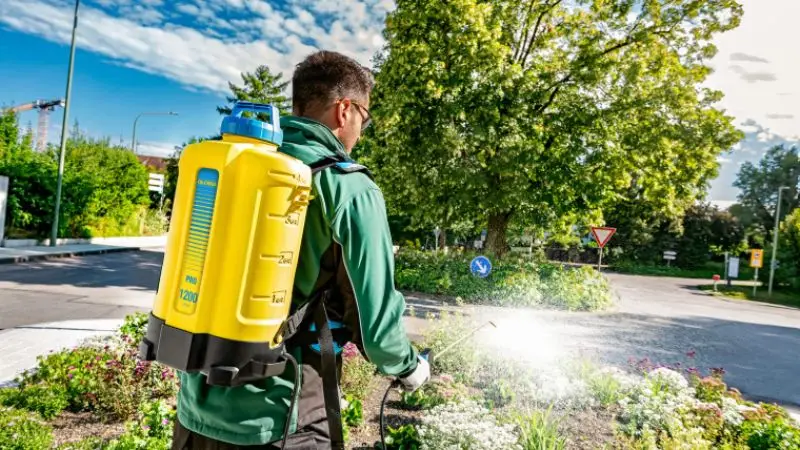
There is more to selecting the right spraying machine than simply the brand or the cost. It relies on numerous practical characteristics that impact the field performance. A well-designed sprayer can be a time-saver, a chemical-waster, and a better health provider for the crop.
If you are in the process of learning about crop sprayers for farming, it is significant to concentrate on the key features. The right choice allows you to achieve better results with agricultural spraying equipment and maximize the value of your investment. Here are the top features farmers should look for before they purchase a sprayer.
Tank Capacity and Its Importance in Farming Work
Tank capacity is the amount of liquid that can be accommodated in a sprayer at any one time. It has a significant impact on determining refill frequency in the field. Low-capacity tanks may be needed for the small farm; for the large farm, larger tanks can help minimize downtime.
The right-sized tank allows for efficiency and reduces manpower. It is common for farmers who farm in larger fields to use higher-capacity machines to cover large areas in one. This is even more crucial in instances of systems such as a tractor-mounted sprayer in a large-sized farm where continuous action is essential for serving greater productivity.
Nozzle Types and How They Affect Spraying Quality
Nozzles regulate the direction of the solution spray on the crops. The nozzle types are used for spraying in different ways, including fine mist, fan spray, or direct stream. Appropriate nozzle selection is critical to the distribution of chemicals.
An incorrect nozzle selection may cause uneven application or waste of chemical. Farmers typically use a different nozzle for each crop and/or application. Efficient pesticide-spraying equipment for crops will perform better with a good nozzle design that provides greater penetration and more accurate spraying.
Spray Width and Coverage for Better Field Efficiency
The width of the spray is the size of the area that can be treated in a single pass with a sprayer. This wider spray coverage reduces working time and increases efficiency, particularly on large farms. It plays a significant role in commercial farming enterprises.
Machines that provide better coverage will minimize overlapping and areas that are missed. This will help ensure that the crops are treated equally. Wider-coverage systems are often more desirable for large-scale farming due to faster coverage and lower fuel and labor costs.
Pump Performance and Pressure Control System
The pressure and flow of the liquid in the sprayer are under pump performance control. A good and stable pump guarantees even application of chemicals to crops. If the pumps’ performance is not as good, this can lead to a lack of uniformity of spraying and less effectiveness.
Another advantage of good pressure control is the ability to change the intensity of the spray as a function of crop type. The type or quality of pump (either manual or motor) can affect the performance and efficiency of the field. One of the most important parts of any spraying system.
Comfort and Ergonomic Design in Backpack Sprayers
Comfort is extremely significant in relation to long hours using sprayers. Backpack models should be padded, well-balanced, and well-controlled. This helps to reduce fatigue and increase productivity during field operations.
The farmers have long working hours, and ergonomic design should be ensured. The smooth operation and control can be achieved using a well-designed sprayer. This is important on medium-sized farms where manual spraying is still being used, and is where comfort makes a direct contribution to farm efficiency.
Automation and GPS Technology in Modern Sprayers
In modern farming, sprayers are getting more advanced and automated, and now include GPS. These technologies can help farmers to apply chemicals with precision and avoid wasted and/or missed applications.
GPS-based systems are typically used on large commercial farms where precise and efficient agricultural practices are crucial. They make the best use of resources and reduce waste. Automation plays a key role in modern agricultural spraying equipment, especially in large production areas, particularly in advanced farming systems.
Durability and Maintenance Needs for Long-Term Use
Durability is an important factor because sprayers are used in tough field conditions. Look for a high-quality construction, which will mean a longer lifespan and lower repair costs. Materials need to be chemically and weatherproof.
Also, it is important to do regular maintenance to ensure that it performs well. Cleaning nozzles, pump checks and tank inspections are minimized to extend the life of the machine. Using and managing the correct equipment improves the return on the farmer’s investment.
How to Choose the Right Agricultural Spraying Equipment for Your Farm
One of the most crucial decisions in contemporary farming is selecting the appropriate sprayer. An incorrect selection can waste time and money and reduce crop protection results. A suitable machine will help increase efficiency and promote the crop’s health during the season.
This section will help you choose a crop sprayer for farming easily if you still do not know how to choose one. With each type of land, crop, and work conditions, the best option is always going to be different. The right choice of agricultural sprayers helps farmers achieve better results and requires less effort in the field, consistently.
Farm Size and Its Impact on Sprayer Selection
The ultimate choice of a gardener when selecting a sprayer is the size of the farm. Small farms frequently get sprayers either by hand or by backpack. Battery sprayers or motorized sprayers are usually used on medium-sized farms. On large farms, use high-capacity machines for greater productivity.
For larger fields, farmers may want to use a tractor-mounted sprayer that can be used to cover more field area in a shorter period of time. The right size selection decreases unnecessary labor, boosts their productivity and efficiency, makes their farming system manageable, and prevents operational inefficiencies.
Crop Type and Its Role in Sprayer Choice
Different sprays are needed for different crops. Sprays frequently and accurately (in particular for vegetable crops) or wide-spraying (grain crops). Also, special equipment is required to access tall trees and the dense canopy of orchard crops.
The design of the nozzle, spray pressure, and machine should be appropriate to the crop. These farmers are more likely to receive positive outcomes and to have reduced amounts of chemicals in their production by coordinating the operations of their crops and equipment. For efficient crop spray equipment, it is important to consider the sensitivity (or the value) of the crop.
When a Backpack Sprayer Is the Best Choice for Farmers
Backpack sprayers are better suited for small and medium-sized properties where flexibility and control are desired. Easy to carry and can be used to spray crops when walking in the field. Ideal for vegetables, orchards, and spot treatments.
They are also useful if you need to spray only a certain part of the field and not the entire field. If farmers are seeking to become familiar with agricultural spraying equipment, and especially those who are new to the field, then the backpack-type models are logical choices to help with the learning curve.
Terrain and Field Conditions in Equipment Selection
Choices of sprayer will be greatly influenced by field conditions. For flat fields, large equipment (e.g., tractor sprayers) can be used, and portable equipment can be used on hilly or uneven fields. Rapid transport devices, such as light and flexible equipment, should also be employed in wet, narrow locations.
If the soil is stony, it would be more difficult to use heavy equipment, and the sprayer may work on a hand-held or backpack basis. Equipment selection based on land conditions increases safety, efficiency, and precision in spraying in various farming situations.
Budget and Long-Term Value of Spraying Machines
But budget is one of the most significant, if not all, considerations. Sprayers, especially those that are inexpensive, may help with the up-front expense, but may need to be maintained or replaced over time. It would be better to strike a balance between cost, durability, and performance.
Farmers should take the total value into consideration when investing in equipment. Improved machines will have a longer life and perform better, especially on commercial farms. In choosing agricultural sprayer machines, it is necessary to invest in an affordable one, as in the long term, more economic returns can be obtained.
Local Rules and Safe Use of Spraying Equipment
Safe and responsible farming depends on the local regulations. In many areas, there are various limitations on the use of chemicals, spraying methods, and equipment. Adhering to these rules can help to ensure both crop and environmental protection.
Farmers are responsible for making sure their machines are safe and in proper working order, and that they use them properly. Risk reduction and efficiency through safe handling and effective training. Compliance also has a part in sustainable agriculture and in long-term productivity in agriculture.
Wrap Up
Spraying of crops in agriculture is a key operation carried out by farmers to ensure their crop health and productivity. Use of the correct spraying equipment in agriculture will only result in proper use of chemicals, improved pest control, and reduced losses. If it’s the “right” type and being used correctly, the type of system is very important, whether backpack, tractor, or modern “smart” sprayer (see Physics of correct use below). Farmers have information that will allow them to make informed decisions. Utilizing proper mastern, sprays, and proper equipment for your farm can yield efficient, economical, and profitable crops year-round while using sustainable farming methods.
FAQ
In what is agricultural spraying equipment used?
For spraying of pesticides, herbicides, and fertilizers onto crops. It has beneficial effects on plant health against pests, weeds, diseases,ses and promotes growth and farm productivity efficiently.
How to choose a crop sprayer for farming
Choose based on the size of the farm, crop, row, and landscape. For small farms, backpack sprayers are required; for large farms, a tractor-mounted sprayer is required to spray the field and to spray efficiently.
Which of the following would work best in an orchard pest management program?
Orchards are best suited to use air-assisted blowers and mist blowers. They are employed to make it easier to spray chemicals deep into the tree canopy and therefore control and cover more fruit crops.
On a farm, what device is used to spray on plants and comes with a battery?
Rechargeable battery-powered sprayer. It will save the time of manual labor, will keep the pressure constant, and will help the farmers spray crops without getting tired and not so efficiently.
What are the factors that affect the cost of agricultural sprayer machines?
The price depends on the type, capacity, technology, and features. The advanced machines (e.g., tractor or self-propelled sprayer) are more expensive, but may be more efficient and beneficial in the longer term, particularly for large farms.