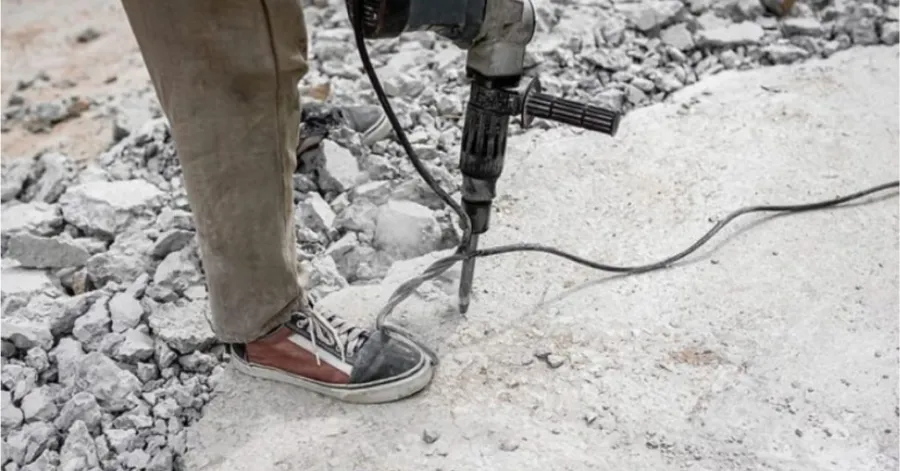
Not every concrete job calls for a big demolition machine, even breaking one up. For limited areas, small repairs, and thin slabs, a hammer drill plus the right technique can do the job — weakening the concrete before you pull it out. If you know how to break concrete with a hammer drill, small DIY jobs go faster and stay manageable. Before you start, get the right drill, masonry bits, chisel attachments, and safety equipment. Typically, the job means marking the area, drilling a series of holes, and using controlled impacts to loosen the concrete. In this guide, you will find the tools, methods, safety steps, and practical tips for breaking different types of concrete.
What You Need to Break Concrete With a Hammer Drill
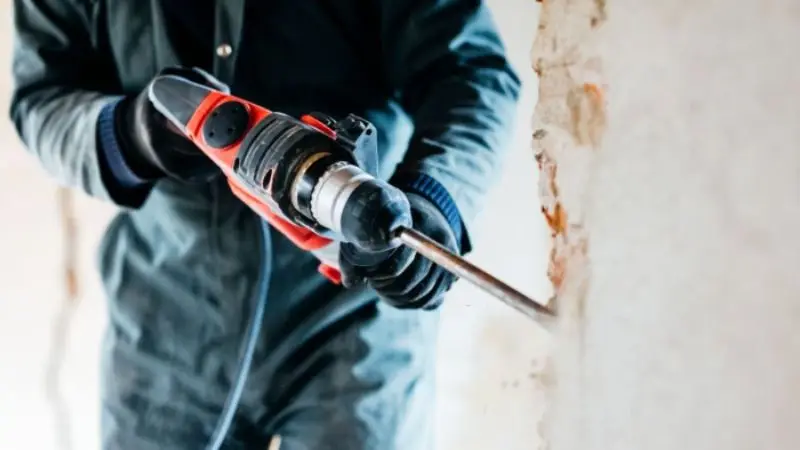
Get your tools and safety gear together before you break concrete with a hammer drill. With the right bit and attachment, a masonry drill is up to small concrete repairs and lighter demolition work.
Recommended For Your Project
What tools you actually need depends on how thick the concrete is and how big the area is. A standard hammer drill and masonry bits should do the job on small areas. Thicker sections, or larger ones, usually call for a more powerful rotary hammer.
Hammer Drill
A concrete drill runs two motions at once: regular rotation and a forward hammering action. That impact chips into the concrete while the bit keeps spinning and clears the material away. Pick a model that has a hammer mode and enough muscle for how thick your concrete is. Starting a hole gets easier if the trigger is variable-speed. A compact hammer drill handles small repairs just fine. Once the slab gets thicker, a rotary hammer with more impact behind it is the better pick. Don’t shove the drill; let it work on its own.
Masonry Drill Bits
These bits are designed specifically to drill through stone, brick, concrete, and comparable surfaces. Concrete wears down steel quickly, which is why the tip usually consists of durable carbide. Match the bit shank to your drill’s chuck system, and size the diameter to the holes you plan to drill. Use smaller bits for the starting holes, then switch to larger ones to widen them. Watch the bit while working, because any wear or damage will slow down your drilling and generate excess heat. Matching the bit to the job spares the tool unnecessary strain and makes busting concrete with a hammer drill much simpler.
Chisel Attachments
Once holes are drilled to weaken the concrete, you can use chisel attachments to clear it away. Both pointed and flat chisels are built for hammering, though which style suits the job depends on your specific drill. Because it focuses all the force onto a single narrow point, a pointed chisel works well for initiating fractures and tackling hard spots. You use a flat chisel to break apart loosened concrete and pry the chunks out. Make sure the chisel actually fits your hammer drill or rotary hammer before putting it to work. Because a dedicated rotary hammer with a chisel mode hits harder than an everyday hammer drill, it takes on heavier demolition jobs much better.
Safety Equipment
Breaking concrete kicks up dust and chips, produces high noise levels, and vibrates the tool intensely, making the right protective gear essential. Wear safety glasses or pull down a face shield so stray bits of concrete cannot hit your eyes. Put in ear protection, because hammer drills get extremely noisy when run for any length of time. Heavy-duty work gloves improve your grip and block sharp edges, while tough boots protect your feet from dropped chunks. Wearing an appropriate respirator or dust mask reduces the amount of concrete dust entering your lungs. Make sure there are no buried electrical, plumbing, or utility lines in the concrete before drilling, and clear all bystanders away from the work zone.
How to Break Concrete With a Hammer Drill
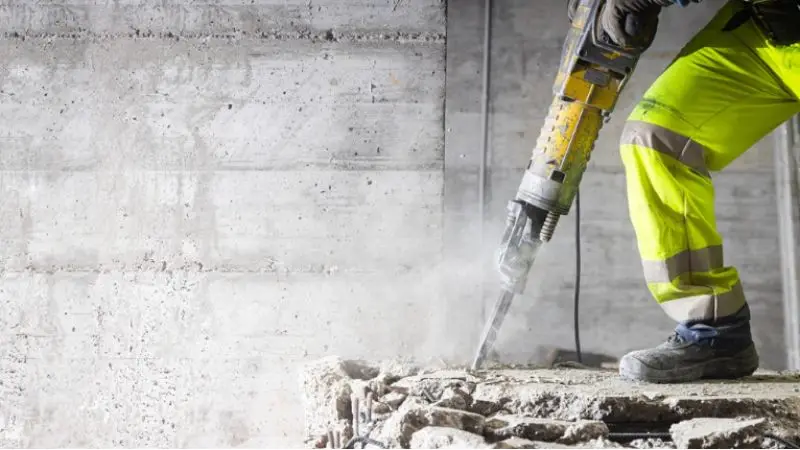
With your tools and safety gear in place, get the concrete ready before you apply heavy force. A planned pattern keeps the work controlled and cuts down on damage around the section you plan to remove.
Mark the area, drill several holes, weaken the concrete, then separate the pieces with a chisel. That is the basic process. These steps show you how to break up concrete with a hammer drill without forcing the drill through the whole slab in one go.
Mark the Area You Need to Break
Start by laying down distinct marks on the concrete so the cut line is unmistakable. Outline whatever is damaged or needs to go using chalk or a marker that stands out against the surface. If you are working on a patio, slab, or floor, make sure your lines stay well away from parts you want left alone. Check the surface for joints, cracks, and existing weak spots, because the break will tend to follow them. Make sure there are no buried pipes, power cables, or other utility runs beneath the spot before drilling into it. Get any loose debris or clutter out of your work area as well. Clear layout lines show you precisely where to hit and keep you from wrecking concrete beyond the line.
Choose the Right Drill Bit
Use a carbide-tipped masonry bit sized for your heavy-duty drill and suited to the concrete in front of you. The diameter you pick determines how fast you drill and what size holes you end up with. Starting out, a smaller bit is usually simpler to handle; as the concrete gives way, a larger one can clear more material. Check that the bit looks sound and is held tight in the chuck. Replace the bit if it turns very hot, gets damaged, or shows obvious wear. When the concrete is hard or thick, picking the right bit is a big part of using the hammer drill correctly.
Start With Small Holes
Rather than charging straight at the slab, begin by putting small holes inside your perimeter lines. Keep the bit at a clean 90-degree angle, maintain steady pressure, and grip the tool with two hands whenever possible. Begin each hole at low speed to get it started, then rely on the hammer action to do the heavy cutting. Match your drilling depth to the thickness of the slab and the limits of your gear. Never force your body weight down against the bit. Bearing down too hard just bogs down the drilling and burns through the tool quicker. Starting with small holes keeps the drill under control and establishes fracture points you can connect and break out with a chisel later.
Create a Series of Holes
Keep drilling across the marked section, adding hole after hole. Keep the spacing tight enough to actually weaken the concrete, and no tighter or wider than the target area requires. Laying the holes out in a grid or along a line keeps the work orderly. With thicker concrete, expect to go deeper or make more than one pass. Clear the dust out when it builds up; it keeps the bit cutting the way it should. Drilling through the whole slab isn’t really the point. What matters is making enough weak points for the concrete around them to crack and come apart. If you’re figuring out how to break a concrete slab with a hammer drill, this method is the one to use.
Use a Chisel to Break the Concrete
Once drilling has weakened the concrete, fit a compatible chisel, provided your tool can hammer without spinning. Set the chisel at the drilled holes or the existing cracks and hammer with control. Patience beats blunt force — move around the marked section rather than hammering at a single spot. A pointed chisel starts cracks; a flat one shatters and lifts the loosened chunks. With a concrete hammer drill on a floor, stay cautious near the edges and don’t hit anything you plan to leave in place. When the concrete resists, add more drilled holes instead of overworking the drill beyond its rated capacity.
Remove the Broken Concrete
Toss the broken pieces out of your working area the moment they break free. Use any hand tools within reach to pry up or hoist the slabs. Do not reach for them bare-handed, because broken concrete turns out far sharper than people assume. Load the bulkier chunks into a bucket or onto whatever pile you have going for the rubble. Sweep or vacuum the finer dust with concrete-safe gear so it cannot migrate into adjacent areas. Check what is left of the surface for any rough, pointed spots. You might have to go back over any stubborn bits that refused to break free the first time. Clearing out the debris round by round on a smaller demolition job lets you see the deck clearly and cuts down your final cleanup time.
What Type of Hammer Drill Is Best for Breaking Concrete?
Base your choice of hammer drill on the project’s scope, how often you’ll pull the tool out, and the type of concrete along with its thickness. A quick weekend DIY job won’t ask for much muscle, but a thick slab demands a lot more.
Look at the design first, then factor in how it’s powered, its impact force, and the specific style of drill. The sections below lay out when a standard hammer drill does the job and when you’d be better off moving up to a sturdier rotary hammer.
What’s the Difference Between a Hammer Drill and a Regular Drill, and When Should I Use Each?
Standard drills take care of wood, metal, plastic, and other comparable stock. While it turns the bit, it lacks the continuous hammering action that concrete demands. A hammer drill pairs that spinning motion with forward percussive hits, giving the bit the bite it needs for masonry and lighter concrete. Stick with a standard drill for routine household fastening and drilling jobs. Switch to a rotatory drill whenever you need to bore into concrete, brick, or masonry block. Just remember that if you’re trying to break up concrete, a hammer drill only really works on thin, smaller patches. Thicker concrete may require you to step up to a rotary hammer.
How Do I Choose Between Corded and Cordless Hammer Drills for Home Use?
You can tackle home tasks with either corded or cordless hammer drills, but each comes with its own set of advantages. Since corded tools draw steady power without dead batteries to swap, they hold up well on drawn-out jobs. Cordless options unchain your movements, proving useful outside or whenever you’re nowhere near an electrical plug. Base your choice on how large the concrete surface is, the amount of time you will be drilling, and access to an outlet. Battery capacity matters especially if you go cordless. Either type will suffice if you only need to make small, infrequent repairs. Do not judge a drill by its power source alone on heavier or extended projects; check its runtime and how hard it hits.
Which Hammer Drill is Best for Masonry Work for DIY Projects in 2025?
If you plan on DIY masonry projects in 2025, pick a drill that accepts quality masonry bits, feels comfortable in your hands, and features variable speed with respectable impact strength. The right choice comes down to the material you are drilling and the total scale of the work. A small hammer drill has plenty of muscle for installing fasteners, hanging fixtures, or doing quick patch-ups. When you are regularly tackling thick slabs or knocking out sizeable pieces, you will usually want a rotary hammer instead. Make sure you also factor in chuck design, anti-vibration measures, battery life on cordless units, and warranty terms. Work like this is easier to handle and wears you out far less when you have those features.
Hammer Drill vs. Rotary Hammer
While both tools utilize impact action, they are engineered to tackle entirely different tiers of work. Hammer drills work well on lighter concrete and masonry because they deliver rapid, gentle taps while the bit spins. Rotary hammers hit with considerably more force, making them suited for larger hole diameters, tough concrete, and heavy-duty tasks. A lot of rotary hammers let you switch off the spin completely to use the tool as a chisel. If you are just breaking up thin, smaller pieces of concrete, a hammer drill will do the job. For clearing out broader sections or dealing with thick concrete, though, you will usually want a rotary hammer.
| Feature | Hammer Drill | Rotary Hammer |
| Main use | Light masonry and concrete drilling | Heavy concrete drilling and demolition |
| Impact strength | Lower | Higher |
| Chiseling | Limited on some models | Common feature |
| Typical work | Small repairs and holes | Thick concrete and larger jobs |
| Weight | Usually lighter | Usually heavier |
| Best suited for | DIY and light-duty tasks | Heavy-duty masonry and demolition |
How to Pick the Right Impact Power
How well a tool chips hard concrete comes down to its impact power. Moderate impact gets an electric masonry drill through small holes and light breaking, though thick or dense concrete will stall it. Rotary hammers hit with more energy, so the tough jobs suit them better. Motor wattage alone should not decide which tool you buy. Look at the impact energy, the recommended bit size, and what the tool was built to do. When the task is breaking a concrete slab with a hammer drill, lighter tools work only if the slab is thin and the area is small. For a thick pour, a rotary hammer with higher impact is what makes the job doable.
How to Break Different Types of Concrete
No two projects have concrete of the same strength or structure, so the method for breaking it has to shift as well. Weakening a thin slab is easier than working on something thick or reinforced.
Look over the concrete’s thickness and condition first. With these methods, you can tune your drilling and get a clearer sense of whether a hammer drill fits the job.
How to Break Thin Concrete Slabs
A hammer drill handles thin concrete slabs more easily, since they take less drilling and less impact force. Mark off the section you plan to remove, then drill closely spaced holes across it. Begin smaller, then broaden your holes as you work around the marked area. When the concrete has weakened enough, switch to a compatible chisel attachment to open the cracks and break the pieces apart. Small walkways, thin patches, and jobs in that same DIY range respond well to this. If you’re figuring out how to break up a concrete patio with a hammer drill, check the slab thickness first, and keep your holes away from parts you want left whole.
How to Break Thick Concrete
Thick concrete eats up more time than a thin slab, and the equipment usually has to be stronger. Work out the approximate thickness first, then pick your tool. A hammer drill can bore holes that weaken a confined area, but for big stretches of thick concrete it’s the wrong tool. Follow a set pattern with the drill, then run the chisel along to join up the weak points. Pause regularly so heat doesn’t build, and the tool doesn’t wear excessively. For slabs on the very thick side, or big demolition runs, a rotary hammer or a dedicated demolition hammer is usually the better choice. A small drill used beyond its capacity ends up damaging both the drill and the bit.
How to Break Concrete Blocks
A concrete block tends to break more easily than a large solid slab, mostly on account of the hollow voids inside it. Draw the boundary around the portion you plan to take out, then start with a masonry bit that matches the material. Create weak points by drilling a series of holes along the line you marked. With the block weakened, switch to a chisel and work the section apart a little at a time. Keep eye protection on, since pieces can fly off without warning. For a wall instead of a loose block, check first whether it carries structural load. Do not take out structural masonry unless a qualified professional has assessed it. On small non-structural pieces, you get further with careful drilling and chiseling than with brute force.
How to Break Reinforced Concrete
Steel bars or mesh run through reinforced concrete, which makes it considerably harder to break. A hammer drill can weaken the concrete around the reinforcement, but cutting through substantial steel is not what it is built for. Check for hidden utilities and find out whether reinforcement is present before you drill. Take it slowly, and never drill deeper into an unknown slab on guesswork. With the concrete cleared from around the reinforcement, you may need specialized equipment to cut the exposed steel. When sections are large or structural, professional demolition is the safer and more appropriate route. Do not conclude that a slab is unreinforced just because you cannot see the steel on the surface.
Wrap Up
Small concrete-breaking jobs are where a hammer drill earns its place, as long as you bring the right equipment and technique. Mark the area first, pick a masonry bit that suits the job, then drill controlled holes to weaken the concrete. From there, a chisel attachment helps you separate the sections that have come loose. Protect your eyes, ears, and lungs at all times, and before you drill, confirm there are no hidden pipes or electrical wires. Keep in mind that a power hammer drill has its limits, and thick slabs, reinforced concrete, or large demolition jobs may fall outside them. When the work is demanding, a rotary hammer or a dedicated demolition tool gives you the extra impact power you need.
FAQ
Can you recommend the top 3 hammer drills under $200 that offer good percussion power and reliability?
Stick with well-known tool brands, and pick a model with strong impact ratings, variable speed, and a build that lasts. Prices move, warranties differ, chucks aren’t all the same, and reviews tell you plenty, so compare all four before choosing a hammer drill under $200.
What matters most when I’m picking out a jackhammer for home use?
Think about how thick the concrete is, how much area you’re demolishing, the impact energy, the weight, vibration, your power source, and which accessories come with it. Pick a model that fits the work you’re actually doing, not one with more power than the project calls for.
What’s the right way to run and maintain a jackhammer so it lasts longer?
Protect your eyes, ears, and lungs, keep the work area secured, and do what the manufacturer’s instructions say. After the job, clean the tool, check the attachments and moving parts, and do the maintenance the manual recommends.
How do pneumatic, electric/hydraulic jackhammers differ, and which one fits which situation?
Pneumatic jackhammers run on compressed air, electric ones on electricity, and hydraulic tools need hydraulic power. The decision comes down to your available power, where the job is, how intense the demolition is, portability, and what equipment you already own.
For heavy demolition versus light chiseling, which jackhammer fits best?
Heavy demolition usually calls for a jackhammer with more impact energy and a build that can take punishment. For light chiseling, a smaller and lighter model will do the job. Line up the impact strength, tool weight, and attachment type with the material you’re working on.
Can You Actually Break Concrete With a Hammer Drill?
Yes. Drilling a number of holes into thin or small concrete sections weakens the material until a hammer drill can break through. A rotary hammer or a jackhammer may be needed once the slab is thick or the demolition job gets large.