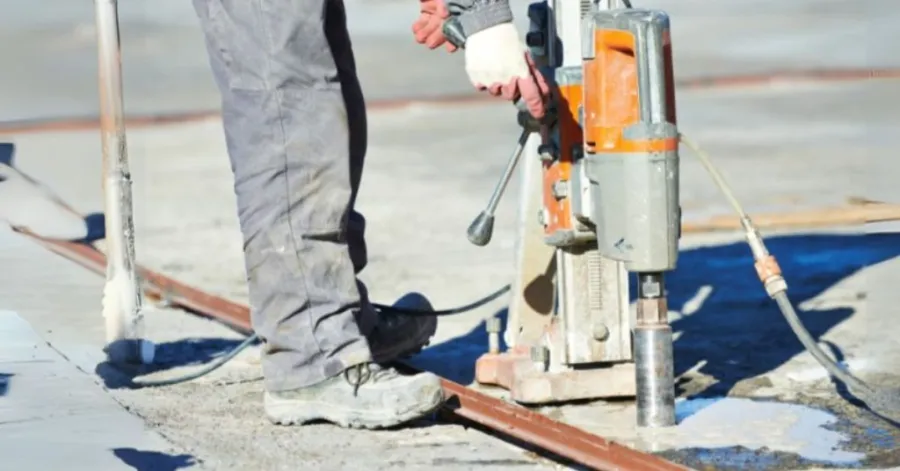
What is the price of concrete cutting? Cutting costs are $2- $12 per linear foot or $3- $8 per square foot for removal. The final concrete cutting and breaking costs depend on factors such as the thickness of the concrete slab, the cutting technique used, job site conditions, and project size. Small residential projects may be less expensive, and large commercial projects may be more expensive. The right concrete breaking tool can also affect labor time and overall costs.
This guide outlines what influences concrete cutting and breaking costs, and concealed costs as well, so that you can get a good estimate for your project. Typical hidden fees include travel costs, hazardous waste disposal, and equipment rental fees. You’ll discover how to identify hidden costs and how to make better comparisons. Choosing the right concrete breaking tool can help you break concrete easily, while understanding all potential charges helps you plan your project with greater confidence.
What Are Concrete Cutting and Breaking Costs?
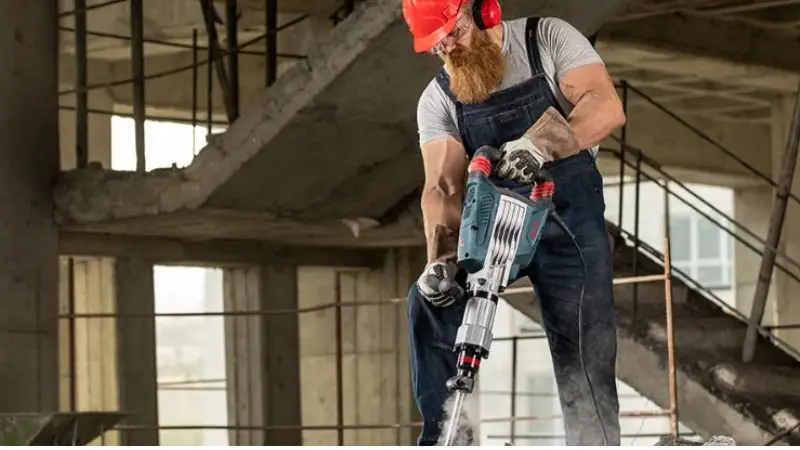
Concrete cutting and breaking costs include labor, equipment and disposal costs involved with concrete cutting and breaking, including how to cut and break concrete or demolish a slab. The actual time a crew is on site, the wear on the diamond blades or breaker bits, and hauling of debris are all costs that you pay. The most common types of bids that contractors give are flat rate bids or bids per unit of length or area. Your bill will depend on the slab size and the scope of work. Whether you need to learn how to cut concrete, how to break concrete, or hire a professional,
Recommended For Your Project
understanding these basic costs helps you plan the work and budget more accurately.
How Much Does Concrete Cutting Cost?
Most concrete cutting jobs will cost you anywhere from $2 to $12 per linear foot. That range encompasses small cuts for plumbing lines and large cuts through reinforced walls. At the bottom, there is a simple expansion joint in the driveway. At the high end, a thick foundation wall is made of rebar.
Various factors drive the price up or down. The thickness of the slab is most critical. A 4″ slab can be cut faster than a 12″ slab, so you buy the slab at a lower cost per foot. The cutting depth also affects the rate. A crew that has to “cut” all the way through a wall will cost more than a crew that scores a shallow channel. For smaller projects, learning how to cut through concrete can help you understand why different saws, blades, and cutting depths have different prices. How to cut concrete also depends on whether you are making shallow grooves or cutting completely through a slab.
The technique also affects the expenses. A saw equipped with a diamond blade is used for straight lines on level ground. A wire saw is used for a difficult task in a tight space and for a thick wall. Wire saws are more expensive because they require longer setup time and specialized equipment. The proper technique also facilitates safe and efficient concrete cutting.
How Much Does Concrete Breaking Cost? What Factors Affect Concrete Cutting and Breaking Costs?
Breaking costs will be $3 to $8 per square foot, which is the cost of removal. This cost includes the loading, hauling and demolition. That range is bounded by a thin patio slab close to the bottom. A reinforced foundation is located close to its top. If you are learning how to break concrete, the thickness and reinforcement of the slab are important cost factors to consider.
All quotes are based on a thickness. The thicker the slab, the more fuel, time and number of hammers will be required. The reinforcement in the slab is equally important. Large chunks of plain concrete break up. The steel is held together by rebar, and the crew has to make cuts in the steel prior to removal.
The effort varies depending on the type of concrete. Regular poured concrete cracks in a predictable way. High-strength mixes don’t take the hammer and slow the crew. There are times when older concrete walls contain wire mesh or other surprises, such as thickness.
The actual number depends on job-site conditions. Extra precautions must be taken by a crew working near a property line. Dust control and ventilation are required inside a building. If a crew is working on a slope, the slope must be shored, and any additional safety measures must be taken. Additional costs and time are added for each condition.
The cost of labour depends on the area. A crew living in a big city will cost more per hour than a crew in a rural area. Expenses for travelling distances are incurred if the site is located away from the contractor’s home base. It is important to check the travel charge prior to crew mobilization.
The table below summarizes the main cost drivers and how each one moves the price.
| Cost Factor | Effect on Price |
| Slab thickness | Thicker slabs cost more per foot and per square foot |
| Reinforcement | Rebar and mesh raise labor and blade wear |
| Cutting method | Wire saws and specialty saws cost more than flat saws |
| Access | Tight or finished spaces add labor hours |
| Disposal | Hauling and slurry treatment add a surcharge |
| Region | Metro labor rates exceed rural rates |
| Equipment | Larger machines cost more per hour but finish faster |
A single project rarely hinges on one factor alone. A thick, reinforced slab in a tight basement combines several cost drivers at once. A thin patio slab in an open yard combines almost none. You get the most accurate estimate when you describe every condition to your contractor up front. These details are especially important for projects involving how to cut concrete slabs or remove large sections of concrete.
How to Choose a Demolition Hammer for Concrete Breaking
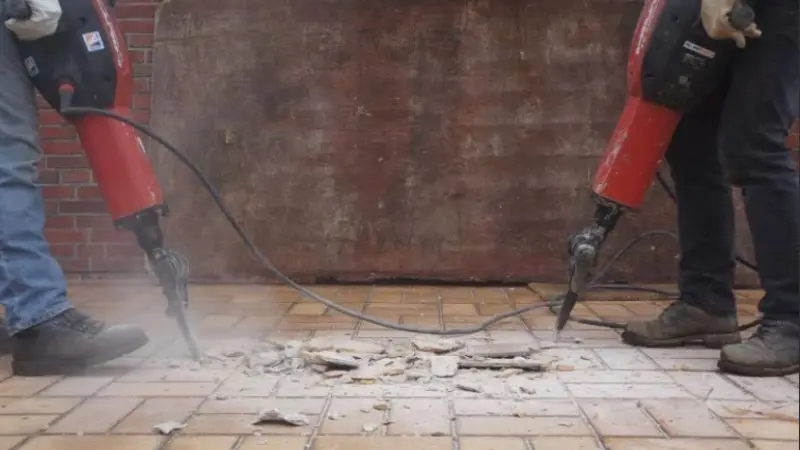
A demolition hammer is selected based on the amount of energy the hammer requires to break the concrete. The energy transferred by each impact is called impact energy and is measured in joules. More energy in the impact of a demolition breaker means that it breaks thicker, denser concrete more quickly. You also consider the weight of the tool, the type of handle and the power source.
Part of breaking concrete comes down to selecting the right hammer with enough power for the material. However, corded electric hammers are suitable for indoor applications. Heavy outdoor demolition calls for pneumatic hammers. Gas hammers are suitable for remote locations where power is not available. The right tool also matters when determining how to break concrete efficiently
Which Demolition Hammers Are Best for Breaking Up Driveways and How Does Their Impact Energy Compare?
Driveway slabs are usually 4 to 6 inches thick. A hammer with sufficient impact energy is required to crack that thickness but without too much effort. Most residential driveways can be covered by an electric power breaker that is a bit above the range of medium electric impact energy. The heavier the pneumatic breakers, the greater the impact energy they provide, and the faster the job will be done on thicker slabs. The following table shows the typical classes of impact energy for driveway work.
| Hammer Class | Impact Energy Range | Best For |
| Light electric | Low | Thin patios, small slabs |
| Mid electric | Moderate | Standard driveways |
| Heavy pneumatic | High | Thick driveways, reinforced slabs |
The greater the impact energy, the more rapidly the concrete will break, but the heavier the equipment will be, and the more physically fatiguing it will be to the breaker. You deal with the trade-offs between speed and control. A medium-powered electric hammer is ideal for most driveways. This is helpful when training how to break up concrete from a driveway or similar surface.
What Are the Best Breaker Hammers for Concrete Foundations and What Are Their Recommended Uses?
Driveways require less power than foundation walls and footings. The structures are thick concrete and steel-reinforced. A heavy breaker hammer with high impact energy is required to break material into pieces. These breakers are best suited when they deliver sustained, powerful claps, like the pneumatic type. For large foundation removal and controlled demolition jobs, hydraulic breakers on carriers are a good choice. Projects involving how to cut thick concrete may require specialized saws, diamond blades, and professional equipment before the remaining sections can be broken apart.
A corded electric breaker with high impact energy will control dust and exhaust for interior foundation work. It is combined with a concrete cutting saw to cut the edges first. This cut reduces the strength of the slab and directs the break along a clear line. This combination reduces vibration damage to nearby construction and speeds up the whole demolition process. It may also be useful for determining the procedures needed to divide a concrete slab into smaller, more manageable pieces.
Top Breaker Hammers for Professional Demolition
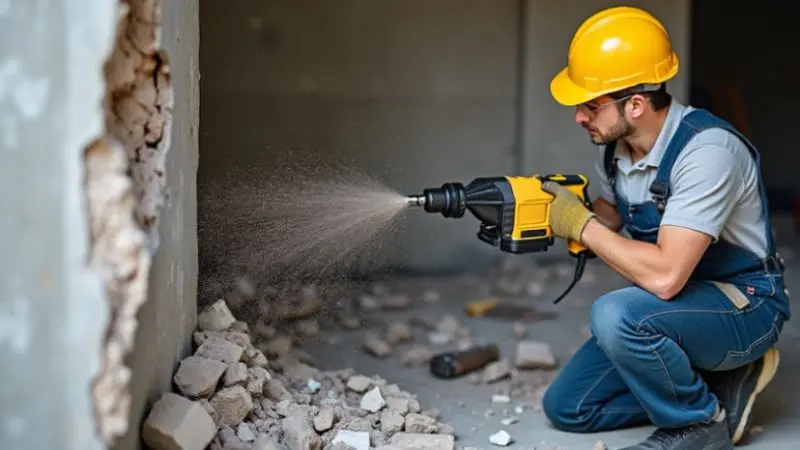
For every demolition task, you need the appropriate breaker hammer for the task. The speed at which you complete the job and the amount of labor that you spend depend on the tool you select. A professional concrete cutting crew will use the appropriate hammer based on the thickness of concrete and the reinforcement within the concrete. How to cut and break concrete is also more easily planned for various job sizes with the right tool.
What Are the Top 6 Breaker Hammers for Professional Demolition by Job Type and Cost in Euros?
There are six breaker hammer classes for most professional demolition applications. Each class caters to a specific type of job and price. The following table makes comparisons.
| Hammer Class | Job Type | Typical Cost Range (Euros) |
| Light electric breaker | Tile removal, thin patios | Under €150 |
| Mid electric breaker | Driveways, sidewalks | €150 to €300 |
| Heavy electric breaker | Foundations, thick slabs | €300 to €500 |
| Light pneumatic breaker | Interior concrete breaking | €500 to €900 |
| Heavy pneumatic breaker | Reinforced foundations | €900 to €1,500 |
| Hydraulic breaker attachment | Large controlled demolition | €1,500 and above |
Small concrete jobs are handled by light electric breakers. Standard driveways and sidewalks are broken by mid-electric models. Heavy electric breakers support thick slabs and foundation walls. Steady power for long demolition shifts with pneumatic breakers. Hydraulic attachments are attachments mounted on carriers on large construction sites. Depending on the thickness and location of the concrete, these options can be used for different ways of breaking concrete.
Which Demolition Hammers Give the Best Balance Between Price and Power in France Under €500?
In France, the most economical breakers in the mid- and heavy electric breaker range are the best value under € 500. They provide sufficient impact energy for light foundation work, patios, and driveways. It’s not a cheap breaker, but it gets the job done in less time and requires fewer tools.
Most residential concrete breaking is done with a mid-range electric breaker of less than €300. If thick slabs and light reinforcement are required, a heavy electric breaker €300 to 500) is added for more power. They both operate on standard power and do not include compressor rental fees. When cutting and breaking combined jobs, use a diamond blade saw with your breaker. This allows you to be sure your concrete cutting and breaking is within range and gives you the equipment you need when you’re working on how to cut through concrete.
Demolition Hammer Costs in France
Demolition hammers are a huge market in France at any price. If you are looking for good tools for small concrete jobs, then you won’t have to spend too much. Local brands and imported models are competing with each other in the French market on power and price. It will depend on the type of concrete that you are going to break and the frequency of the use of the tool. This is also relevant to the planning of breaking concrete for various projects.
What Are the Top 10 Demolition Hammers Available in France Under €300?
There are good choices in France, within €300. This is a typical price band for light electric breakers and medium electric breakers. These tools are used in driveways, patios, sidewalks and light foundation work. The table below shows ten popular models, class and typical usage.
The following is a list of popular models by class and typical use.
| Model Class | Typical Price Range | Best Use |
|---|---|---|
| Light SDS-max breaker | Under €150 | Tile removal, thin concrete |
| Light hex breaker | Under €150 | Small patio slabs |
| Mid SDS-max breaker | €150 to €200 | Driveways, walkways |
| Mid hex breaker | €150 to €200 | Sidewalks, small slabs |
| Mid electric breaker | €200 to €250 | Standard driveways |
| Mid electric breaker (high output) | €200 to €250 | Reinforced driveways |
| Heavy electric breaker | €250 to €300 | Thick slabs, light foundations |
| Heavy electric breaker (corded) | €250 to €300 | Interior concrete breaking |
| Combo breaker kit | €250 to €300 | Mixed cutting and breaking |
| Refurbished pro breaker | €250 to €300 | Occasional heavy work |
Each class gives you a different mix of power and portability. When using light breakers, you will need less weight and have less fatigue working overhead. Standard concrete removal requires a high impact energy, which is provided by mid breakers. The heavy electric breakers require thicker slabs and light reinforcement in this range. These days, a combo kit is usually available that includes chisels and points for cutting and breaking. A reconditioned commercial breaker can provide high impact energy at a lower cost. Before purchasing a refurbished unit, it is wise to research the warranty and service that is available. The right tool also comes in handy when determining the proper method of cutting and breaking concrete, depending on the material and size of the project.
What Are the Most Affordable Breaker Hammers Under €150 in France and How Do They Perform?
Breaker hammers in France up to €150 are manufactured for light-duty concrete breaking. The tools are designed for homeowners and small contractors who require demolition power to use occasionally. This will give you less impact when compared with mid-range models. The compromise is that thick concrete does not break as quickly. The table below shows the major types in this price range.
| Type | Performance Level | Best For |
| Light SDS-max | Low impact energy | Tiles, mortar, thin patios |
| Light hex | Low to moderate | Small slabs, walkways |
| Compact electric | Moderate | Light concrete breaking |
| Corded light breaker | Moderate | Indoor concrete work |
These hammers are suitable for use on thin concrete and brittle material. They find thick slabs and reinforced concrete difficult. It will take longer to complete a driveway using a light breaker. The tool is also more likely to wear out if used heavily all the time. If you need to do occasional jobs, a light breaker under €150 will provide good value. If you’re doing regular concrete cutting and breaking activities, you would want to consider a mid-range model. A light breaker is a good companion to a diamond blade saw when cutting small jobs. It helps you keep concrete cutting and breaking costs low for small jobs.
Detail work will usually be done with a professional crew who will have a light breaker on hand. Heavier hammers are used for main demolition work. This is a graduated system based on the cost of the tool according to the demand of the job. It will also help prolong the life of your main breaker. If you don’t have a lot of concrete work, and it’s not large, a light breaker for under €150 will make sense. If your project expands, you can upgrade to the mid or heavy electric model. The step up provides greater energy impact and quicker work rates for larger concrete projects.
At every price point, the French market offers you a lot of options. You can go small and build it up as your demolition requires. When tools and tasks are carefully matched, your construction budget is in check. It also aids you in selecting the correct equipment for the proper breaking of concrete without using more energy than the task needs.
Wrap Up
The cost you pay will be dependent on how thick the slab is, what type of cut it has, the equipment it is cut with, the labor costs, and your location. Simple home business jobs can run a couple hundred dollars. Big commercial projects can go over $25,000. You need to have at least three quotes in detail before you make a decision. Inquire from each contractor about the travel costs, disposal fees and treatment of slurries before the job even starts. All these additional costs can add to the price tag of concrete cutting and breaking.
Work with a licensed, insured contractor to ensure safe and efficient work. Review the license number and request a Certificate of Insurance. A competent crew will safeguard your property and complete the job on time. By following good planning, you can ensure that costs associated with concrete cutting and breaking are predictable. Investigating a contractor in detail up front can prevent unwanted “Band 4” expenses down the road for your building project. For both concrete cutting and breaking, choosing the right contractor and equipment can help you control overall project costs.
FAQ
How much does concrete cutting cost per linear foot?
The price of concrete cutting is $2 to $12 per linear foot. At the bottom are slab sawing processes. Wall sawing and wire sawing are at the top. The thickness, reinforcement, and access all contribute to the price in that range.
Can I cut concrete myself to save money?
Concrete can be cut into blocks using a rented saw if the size of the slab is small and thin. Professional concrete cutting crews are required to cut through thick slabs and reinforced walls. If the cut is wrong, it can damage the blade and cause structural damage. Expenses for renting and disposal can wipe out any savings.
How long does a typical concrete cutting job take?
A small driveway joint takes less than an hour to make. It takes more than a day to put in a foundation opening. Large commercial concrete cutting can take many days. The timeline is determined by crew size, slab thickness and site access.
What is the difference between cutting and breaking concrete?
Diamond blades used for cutting slice clean lines. Breaker hammers are used for breaking slabs. Both are used in most construction projects. A crew runs the perimeter first and then cuts the inside into manageable chunks that can be hauled.
Does concrete cutting create a lot of dust?
Yes. Fine silica dust is produced when a saw performs a dry cut. Water-fed saws are employed to control slurry in professional saws. They also use respirators and establish containment. Discuss dust issues with your contractor before the project starts.