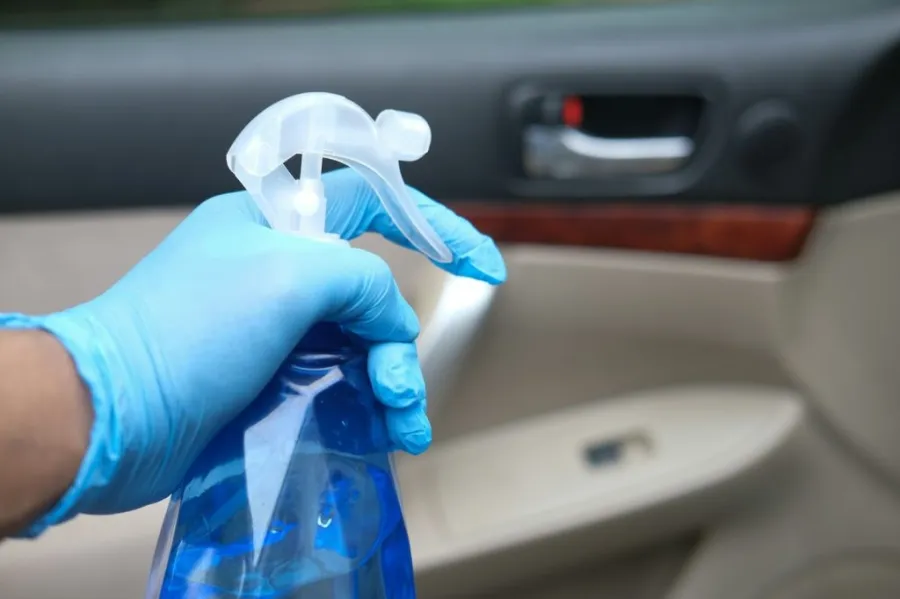
Have you ever seen a car that has been newly polished, and you said to yourself that your car would look like that? Car detailing is not just for professionals. You can deep-clean your car and bet it looks as good as any costly car wash with the right equipment and a bit of patience.
With this guide, you will learn how to detail your own car through a simple procedure and tools like car washing brushes instead of expensive gadgets. But first, let’s go through…
Types of car detailing
When we talk about car detailing, we usually mean more than a quick wash. It’s a thorough cleaning and reconditioning of your car’s exterior and interior.
- Exterior Detailing: This is concerned with the paint, wheels, tires, and trim. It entails cleaning, decontamination, and safeguarding (waxing or sealing). This is to refresh the shine and protect the finish against environmental degradation.
- Interior Detailing: This includes the interior of the car, such as seats, carpets, dashboard, and vents. It entails extensive cleaning, elimination of stains, and the conditioning of products such as leather or fabric in order to have an interior that is fresh and hygienic.
Tools and products you’ll need to detail your car
To earn a professional look, you will require several tools. One does not need to have a huge budget to start with. The investment in quality equipment will make the task much easier and quicker.
- Two buckets fitted with grit guards
- Two wash mitts
- Car wash soap (pH neutral)
- Car Wax
- Cordless pressure washer
- Paint protection
- High-quality ceramic coating.
- Microfiber drying towel
- Wheel brushes
- Tire brush
- Vacuum cleaner with other accessories, all-purpose cleaner, and special upholstery or
- Chemical working gloves.
To get all these tools working, you’ll need a stable extension cord reel in your garage. That way, you can power your tools without worrying about electric mishaps!
How to detail your car: exterior process
Getting the outside right is all about removing contaminants and locking in that glossy finish. It’s a precise process, but highly rewarding. This process will teach you how to detail your car:
Rinse and wash using the two-bucket method
It is the two-bucket technique that is required to wash without a scratch.
- Rinse: Use a lot of water to wash the entire car to remove the loose dirt and debris. Use of a pressure washer or a strong hose nozzle that is strong can provide the best results.
- The Two Buckets: Fill one of the buckets with soapy water (Wash) and the other with simple and clean water (Rinse).
- Wash: Add the wash mitt in the soap bucket, wash the car under one section, and immediately put the mitt in the rinse bucket. Wipe it with a grit guard.
- Final Rinse: You should now rinse off the soap and dry out the car by fully drying it.
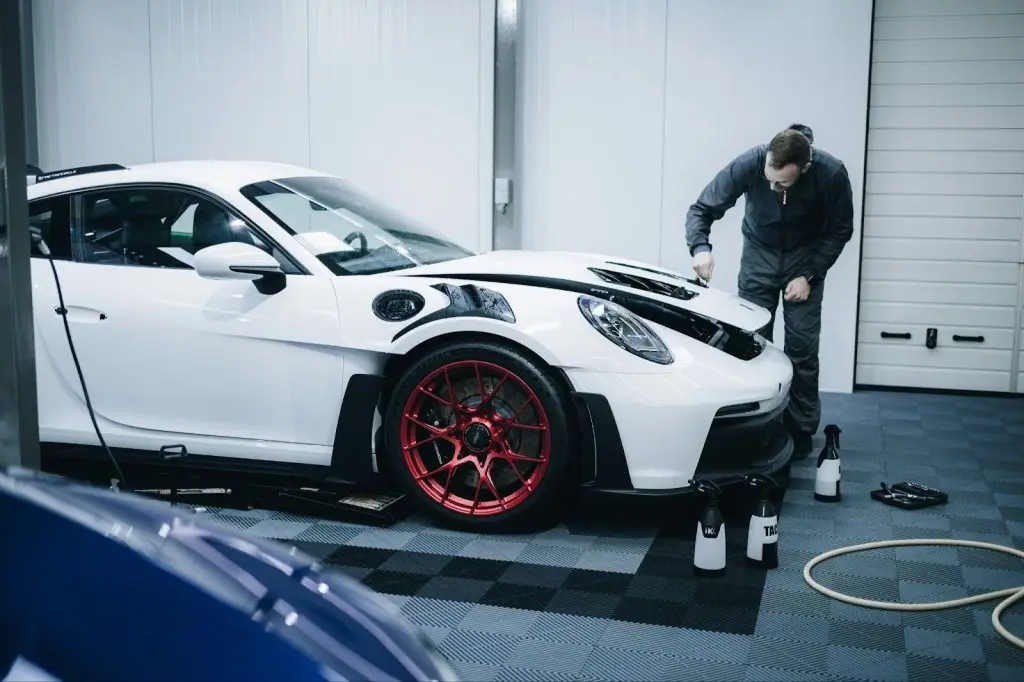
Decontaminate paint
Minor bonded contaminants like rail dust, brake dust, and industrial fallout are the ones that stay on your paint even after you have cleaned it. These make your finish coarse.
Spray an iron remover on the paint. It will turn purple when it is in contact with contaminants. When this time is past, pour it down.
Knead a little clay bar into a flat patty. Spray a lubricant on a small part of the paint. It depends on the lubricated area on which you slide the clay bar, so that the paint becomes smooth.
Polish and correct paint if needed
It is polishing that really makes the fine scratches and makes the picture of the paint alright. Here are the steps you need to take:
- Check on your paint to determine swirl marks and light scratches. They are popular and reduce the natural shine of your car.
- Wipe a small smear of polishing compound on a foam pad on your polisher, or on a microfiber towel, depending on whether you are using a polisher or hand polishing
- Work in small segments, overlapping each segment. Microscopic abrasives are used in polishing to level the clear coat, eliminate scratches.
Apply wax or sealant for protection
After cleaning and correcting the paint, it should be protected. It is your protection against UV rays, bird droppings, and environmental destruction. Here’s what to do:
- Use a foam applicator pad to spread a thin and consistent layer of wax.
- Cure or allow to haze as per the product instructions.
- Buff the residue with a clean soft microfiber towel, and a brilliant, rich gloss is revealed
Clean wheels, tires, and exterior trim
Wheels and tires gather the largest amount of dirt and brake dust, thus last to ensure that you do not splash the dirt onto your clean paint.
Here’s what to do for the wheels: Agitate and clean the wheel faces and barrels with the help of a non-acidic wheel cleaner and special brushes. Rinse well.
Using a hard brush and powerfully smelling degreaser, clean up the tire sidewalls of the old tire dressing and dirt on the road. Clean up the plastic and rubber trim with an all-purpose cleaner. When dry, rub on a slim restorer or dressing to give a deep black finish.
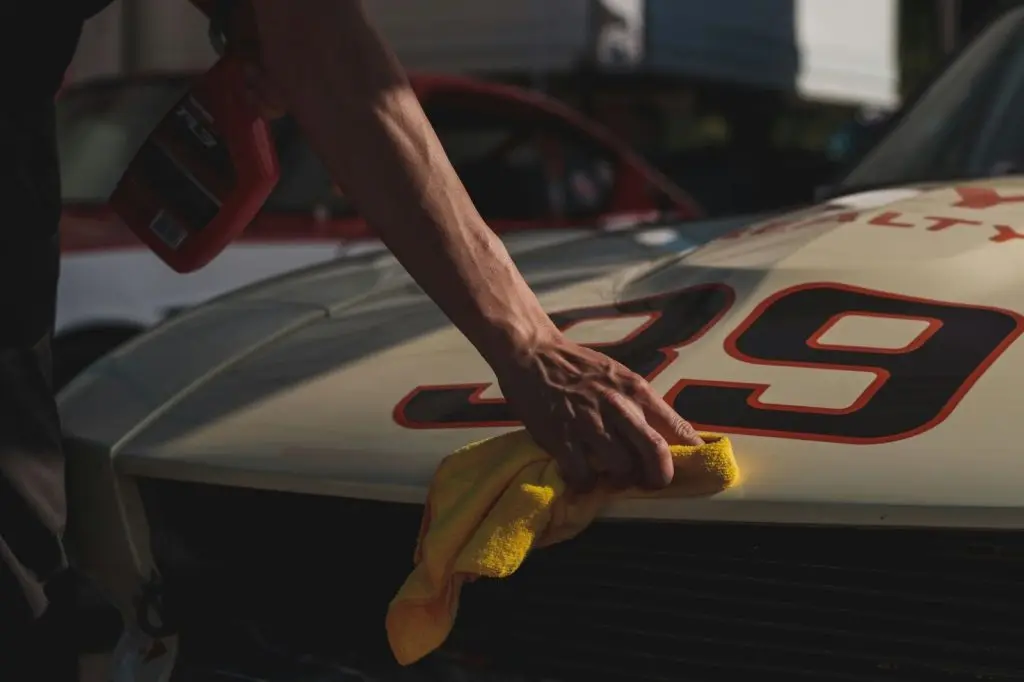
How to do interior detailing of your car
The interior detailing enhances the hygiene and comfort. You spend the greater part of your time there, and you should take it seriously. A good car detailing program involves an interior that is spotless.
Remove trash and clear all loose items
Start with a blank slate. This appears to be a given step, although once everything is removed, it is then much easier to do the rest of the work.
Empty door pockets, cup holders, and the center console. Take off the floor mats and shake them. Disposed of garbage, receipts, and rubbish. That’s it!
Vacuum carpets, seats, and crevices
Comprehensive vacuuming is used to remove most of the dirt and dust. Take the right attachments to reach every crevice.
- Deep Vacuum: Vacuum clean the carpets and floor mats by using a strong vacuum, such as a wet/dry vac. Apply a heavy traffic brush attachment.
- Crevices: Change to a crevice tool to access narrow areas – between seats, along the seat rails, and beneath the pedals.
- Seats: Clean the seats by vacuuming, focusing on the seams and folds at the corners where the crumbs and dirt accumulate.
Clean hard surfaces and condition leather or fabric
Comprehensive vacuuming is used to remove most of the dirt and dust. Take the right attachments to reach every crevice.
- Deep Vacuum: Vacuum clean the carpets and floor mats by using a strong vacuum, such as a wet/dry vac. Apply a heavy traffic brush attachment.
- Crevices: Change to a crevice tool to access narrow areas – between seats, along the seat rails, and beneath the pedals.
- Seats: Clean the seats by vacuuming, focusing on the seams and folds at the corners where the crumbs and dirt accumulate.
Tip: Use a good quality extension reel to power your tools for cleaning these surfaces.
Clean windows and mirrors, refresh vents
Clean windows enhance visibility and make the entire car look cleaner. So, clean glass surfaces with an ammonia-free glass cleaner and a special glass cleaning towel.
Wash the windows and wipe them down. Wipe continuously in the same direction so that it is easy to notice the streaks. For the air vents, you’ll need a soft-bristled brush or a cotton swab. Switch the A/C to high and blow out any dust that is left!
Apply final touches: air freshener, boost shine
The minor details count a lot in a car detailing venture. First, coat the surfaces of the vinyl and plastic with a UV protectant dressing to avoid fading and cracking with time.
Spray a light and pleasant scented cloth spray or insert a fresh air freshener. Finally, have a final walk-through to check that everything is clean and without streaks.
Maintenance tips after detailing your car
It is easy to keep your details, and that will last longer on your protection layer. Car detailing should not be a one-time affair.
- Frequent Washing: The two-bucket technique should be used after every two weeks so that there is no accumulation of large amounts of grime.
- Quick Detailer: This is a quick detailer spray that can be used to wipe off bird droppings or fresh light dust safely without needing to wash.
- Increase the Protection: Re-wax or seal the paint surface every 3-6 months, or as long as your water continues to bead effectively.
- Interior Wipes: Have a store of interior cleaning wipes that you can use to do a quick dust off on the dashboard and spills on the cup holders.
FAQs
How often should I detail my car?
Professional-level car detailing is advisable once or twice a year. Nevertheless, it is important to wash your car and vacuum the inside of your car once in two weeks and once a month, respectively. As maintenance practices make your car look good, as well as to maintain the protective sealant or wax.
Can I detail my car myself without professional tools?
Absolutely! Although an extension cord or an iron remover product can make the task less difficult and increase the outcome, you can begin with a good soap, microfiber towels, a high-quality wax, and a good household vacuum.
What’s the difference between polish and wax in car detailing?
Polish is rough; it cleanses off no-larger scratches and swirls of the paint, even-handing the paint with a smooth finish. Wax has a supportive property; it provides a protective coat over the transparent coat to block the UV and any contamination to the paint to provide a deep gloss to the paint.
Will detailing remove deep scratches and swirl marks?
Light swirling and light surface scratches can be removed with standard car detailing that involves light polishing. Deep scratches that extend into the clear paint and the base paint need more developed wet-sanding skills, and sometimes, by a professional, to fully repair.
Conclusion
Learn how to detail your car so you can save a lot of money on your car. It is not only a way to increase the curb appeal of your vehicle, but a frequent deep cleaning and protection is very important to keep the value of your vehicle in the long run.
Using these simple steps of a beginner, such as a two-bucket wash or a protective sealant application, you are guaranteed an amazing and professional finish in your driveway. For the best results, consider utilizing reliable equipment like the extension cord reel to achieve that long-lasting, deep shine.