Your first capped frames are ready, but the comb you worked on all year is cracking in your hands, the kitchen is already sticky, and the bucket keeps toppling over. There is a 2 frame honey extractor in a specialty kitchen gadgets line because of that mess. It leaves the drawn comb whole for the bees to replenish while spinning clean honey out of two or three hives. This guide covers the types, key build details, and how to match a honey extractor to a small French apiary. The following works well with small honey extractors and this detailed honey extraction guide.
- What a 2 Frame Honey Extractor Is and Who It Suits
- Manual vs Electric: Choosing Your Drive Type
- Tangential vs Radial: How the Basket Design Changes Your Harvest
- Look for Material and Build Quality of 2 Frame Honey Extractor
- Matching a 2 Frame Honey Extractor to French Apiaries
- Which honey extractors are best matched to French frame standards?
- Which compact honey extractors are best for limited workshop space in France?
- Which honey extractors are most commonly recommended for urban rooftop beekeeping in France?
- Which honey extractors are most popular with French allotment and urban beekeepers?
- Growing Past Two Frames
- Value, Resale, and Long-Term Ownership
Recommended For Your Project
What a 2 Frame Honey Extractor Is and Who It Suits
A 2 frame honey extractor is a small centrifugal honey extractor with two frames that spins rather than squeezes honey out. It’s a great starting point for powered harvesting and stays useful as you add more hives.
How the Drum and Baskets Work
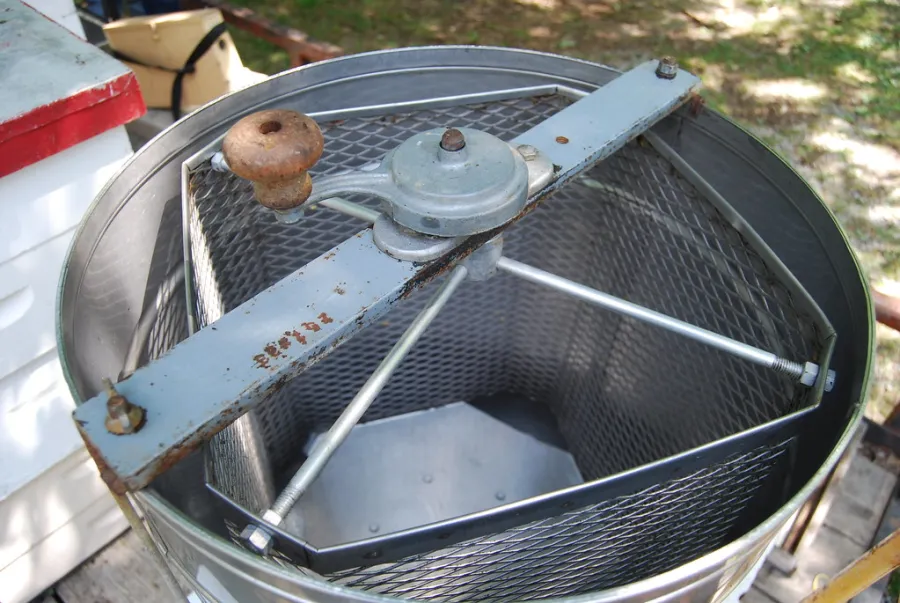
A basket holds two frames inside the barrel. Centrifugal force draws honey from the open cells as it rotates, tosses it onto the honey extractor wall, and directs it to a honey gate at the bottom. After surviving the spin, the comb returns to the hive while remaining in its frame. A typical 2 frame honey extractor machine flips the frames halfway and uses a tangential basket, with one face pointing outward. This small frame honey extractor is gentle on fresh comb because of its careful handling.
Why Two Frames Is the Right Starting Size
Most first-timers are confused by the idea that bigger is always better. The narrow honey extractor of a two frame honey extractor can be lifted onto a bench by itself, cleaned in a small sink, and stored in a corner when the season is over.
It keeps up with your uncapping for one to about five hives harvested once or twice a year, and if you crank by hand, a small frame honey extractor is free. This walkthrough of a commercial honey extractor in operation shows how the broader range of honey extraction equipment supports growers as they scale up.
Manual vs Electric: Choosing Your Drive Type
The basket gets its spin from the largest fork. Your arm, your budget, and the number of supers you process in a single sitting are the main differences, but both leave you with clean honey.
How a 2 Frame Manual Honey Extractor Works
A manual 2-frame honey extractor uses a hand crank geared to a 3:1 ratio. First it holds two frames of honeycomb at one time. When you turn the handle by hand, the inside basket spins three times for every single turn of the handle. The gears multiply your effort to spin the honey out quickly and easily.
The best part is it doesn’t require electricity. This is very important in a field without an outlet, a shed, or a greenhouse. The crank effort remains comfortable for two or three frames at a time and a few harvests annually. The most affordable, honest way to do centrifugal work is with a 2 frame manual honey extractor, such as the VEVOR 2-frame manual honey spinner. This is the ebay option, especially for outdoor operations.
How a 2 Frame Electric Honey Extractor Works
A motor, typically rated between 120 and 180 watts, replaces the handle in a 2 frame electric honey extractor, which drives the basket at about 600 to 1,300 rpm. As the frames lighten, you accelerate after starting slowly to prevent the comb from blowing out.
While the reliable honey extractor spins, you uncap the next batch, which is the true victory of hands-free labor. Five to eight hives are suitable for a 2 frame electric honey extractor, as cranking becomes tedious.
Manual vs. Electric 2 Frame Honey Extractor
| Feature | 2 Frame Manual Honey Extractor | 2 Frame Electric Honey Extractor |
| Best hive count | 1 or 5 hives | 5 or 8 hives |
| Power needed | None | Mains outlet |
| Effort per session | Steady cranking | Hands-free |
| Typical speed | 3:1 gearing | 600 or 1,300 rpm |
| Upfront cost | Lower | Higher |
| Example of Models | VEVOR 2-Frame manual honey extractor | VEVOR 2 frame electric honey extractor |
Tangential vs Radial: How the Basket Design Changes Your Harvest
The basket shape determines how quickly thick honey clears and how often you touch each frame. This matters less than drive type at the two-frame size, but it’s still worth knowing before you buy.
When a Tangential Basket Makes Sense
A tangential basket is used in most two-frame honey extractor to keep each frame flat against the drum wall. You stop, flip both frames, and start over because only the outward face empties each spin. It’s gentler and slower per frame, which a delicate new comb requires. Tangential is the forgiving option for a hobbyist operating a honey extractor for beekeeping on recently drawn frames, and a two-frame honey extraction machine of this build seldom blows comb when you start the first pass slowly.
When a 2 Frame Radial Honey Extractor Helps
A 2-frame radial honey extractor saves time because it positions frames like spokes on a wheel with the top bar facing out. This smart setup means both sides of the comb empty at the exact same time. It means you never have to stop and flip them. The trade-off is that it struggles with thick honeys like heather that do not flow easily.
To clear out that thick honey, you will need to run the machine at higher speeds and for longer periods. A 2-frame radial model works perfectly if most of your crop is runny spring honey, but a tangential model drains thick regional honeys more thoroughly. Be sure to check the product listing carefully before buying, because radial baskets are quite rare at this small size.
Which vertical vs. horizontal honey extractors are better for a small French apiary?
Horizontal honey extractors are large commercial machines. They’re best for hundreds of hives. Vertical drums suit small apiaries because they require less floor space. Both manual and electric two-frame honey extractors are built this way. The vertical build is the obvious choice if space is limited.
| Factor | Vertical honey extractor | Horizontal honey extractor |
| Footprint | Small, it fits tight spaces | Large, it needs floor space |
| Scale | Small apiaries, hobby use | Commercial, hundreds of hives |
| Build | Both manual & electric 2-frame units | Big powered commercial machines |
| Best for | Small French apiary | High-volume operations |
Look for Material and Build Quality of 2 Frame Honey Extractor
The difference between a machine that lasts three seasons and one that lasts thirty is known as build quality. There are a few key differences between a 2 frame stainless steel extractor you give away and a deal that rusts.
Why a 2 Frame Stainless Steel Extractor Matters
Painted or galvanized steel rusts and taints the crop over time because of honey’s mild acidity. A 2 frame stainless steel extractor will have a drum and basket made of 304-grade food-safe steel. Barrel walls typically have smooth welds that don’t trap wax and are between 0.4 and 0.6 mm thick. A honey gate that is at least 40 mm wide will not clog with wax caps, and a conical bottom drains more thoroughly. You can learn more about honey extraction equipment for beekeepers from the welds, gate width, and steel grade than from the price.
Bearings, Stand, and Easy Cleaning
Cheap open joints wear first, but top and bottom sealed bearings keep the shaft rotating and prevent honey from seeping into the mechanism. A 2 frame honey extractor that wobbles at 1,000 rpm is dangerous, so the stand legs should bolt down firmly. Many add height-adjustable feet so the gate clears your bucket. These details are actually the foundation of a reliable two frame honey extraction machine.
Here’s a quick checklist:
| Part | What to look for | Why it matters |
| Drum | 304 stainless, 0.4 or 0.6 mm | Food-safe, resists rust |
| Bottom | Conical shape | Drains more honey |
| Honey gate | 40 mm or wider | No wax clogs |
| Bearings | Sealed, top and bottom | Smooth, long-lasting |
| Stand | Bolt-down, adjustable feet | Safe at speed |
Matching a 2 Frame Honey Extractor to French Apiaries
French beekeepers share plots, use small city spaces, and use specific frame sizes. A good local fit is very important for them. That’s why here we have covered the most common questions from French readers before they buy.
Which honey extractors are best matched to French frame standards?
First of all your frame must fit the basket first. Most French apiaries use Dadant frames. Some also use Langstroth and national sizes. You should look for a shallow Langstroth extractor that cannot hold a deep Dadant frame. Consider an adjustable or Dadant-compatible basket. Before you buy, always check the internal dimensions. The safest option is a versatile 2 frame honey extractor machine. It actually tells you exactly which frame sizes it accepts.
Which compact honey extractors are best for limited workshop space in France?
This is where many people get stuck in a tiny cellar or garage. Of all the centrifugal honey extractors, a vertical two frame honey extractor has a height-adjustable stand. Its smallest footprint can be folded into a corner. For this particular tight-space issue, a small 2-frame or 2/4-frame stainless steel honey spinner is the best choice.
Which honey extractors are most commonly recommended for urban rooftop beekeeping in France?
Rooftop beekeeping requires specific gear choices. That’s why manual extractors are the top recommendation because they provide silent operation and are light enough to carry up stairs. It doesn’t require electricity on the roof, and operates silently close to neighbors. For example, you can consider 2 frame manual honey extractor models. They usually come in smaller sizes and are best for urban rooftop beekeeping in any state.
Which honey extractors are most popular with French allotment and urban beekeepers?
A small, inexpensive, easy-to-store spinner wins when multiple beekeepers share a plot or city garden. For inexpensive and easy storage, the 2 frame manual honey extractor and compact electric two-frame honey extractors are the most popular allocation options. Seeing a VEVOR honey extractor in action helps a group decide what to buy together. Many clubs have a small-frame honey extractor that members borrow in turn.
| Factor | Limited workshop space | Urban rooftop | Allotment or shared plot | French frame standards |
| Recommended type | Compact vertical stainless 2-frame | Manual 2-frame Honey extractor | Compact manual or small electric 2-frame | Adjustable and Dadant-compatible 2-frame |
| Key feature | Smallest footprint, height-adjustable stand | Light, no power, quiet near neighbors | Low cost, easy to store and share | Basket fits Dadant; check internal dims |
| Why | Folds into a cellar or garage corner | Carries upstairs, no roof outlet needed | Several members can borrow one unit | Most French apiaries run Dadant frames |
| Example to consider | VEVOR 2-frame stainless spinner | VEVOR 2-frame manual spinner | VEVOR 2-frame manual spinner | VEVOR 2/4-frame extractor |
Growing Past Two Frames
When hives reach five or six, it’s time to take a closer look. A 2/4-frame electric honey extractor connects small-scale and hobby beekeeping. It loads two frames radially or four tangentially. For larger crops, beekeepers often use a faster 3-frame honey spinner. They save their initial honey extractor as a backup. A 2/4-frame manual honey spinner maintains the hand crank while adding capacity to grow without a motor. These appliances are part of VEVOR’s line of specialty kitchen tools and gadgets.
Value, Resale, and Long-Term Ownership
Because a small extractor is a multi-season tool, its long-term value matters more than its initial cost. Buyers often resell these.
Keeping 2 Frame Honey Extractor Worth Reselling
Which honey extractors have the best resale value in France? Because food-grade steel resists rust, maintains hygiene, and meets consistent demand from new beekeepers, stainless steel two-frame units are the most valuable.
If resale is important, buy stainless steel. You should also keep it dry and clean because a well-maintained 2 frame stainless steel extractor sells much more readily than a dented, painted drum.
A little caution protects both the honey and the resale price.
- Immediately after extraction, rinse the drum with warm water to prevent the wax from forming a film.
- Then dry it completely and store it under cover.
- Season after season, the machine remains clean thanks to the same methodical extraction process.
These appliances are part of VEVOR’s larger kitchen ranges and kitchenware.
Conclusion
You should choose your 2 frame honey extractor based on your situation. For example, if hands-free speed becomes important, you have to choose a 2 frame electric honey extractor. You can also consider a 2 frame manual honey extractor for up to five hives and off-grid days.
If you want durable and reusable models, 2 frame stainless steel extractor made of 304-grade steel with sealed bearings and a bolt-down stand will be best choices. If you choose the right honey extractor, your honey extractor will grow with your apiary for many seasons. It will also protect your comb, and spin clean crops.
FAQ
How much honey can a 2 frame extractor hold at once?
A two-frame drum spins two frames for each load, which is equivalent to one to two hives of honey per session. For a larger harvest, you run multiple loads. Instead of bulk, same-day processing, it is sized for hobby apiaries.
Can I extract Dadant frames in a 2 frame honey extractor?
Yes, as long as the basket fits Dadant frames in size or is adjustable. A basket designed for shallow Langstroth will not fit a deeper Dadant frame, so always check the internal frame dimensions before purchasing.
Is a manual or electric 2 frame extractor better for beginners?
A manual two-frame unit is the best option for most novices with a few hives because it is less expensive, quieter, and requires no power. When using multiple supers becomes too taxing, switch to an electric model.
How do I stop my extractor from wobbling while spinning?
To keep the basket balanced, load the frames uniformly and fasten the stand legs to a stable surface or weighted board. Before increasing speed, start spinning slowly. At high rpm, a wobbling drum strains the bearings and is dangerous.
How often should I clean a stainless steel honey extractor?
After each extraction, rinse it with warm water to prevent the wax from solidifying into a film. Avoid hot water, as it melts wax onto the surface. To prevent the sealed bearings from rusting, let it dry completely before storing.