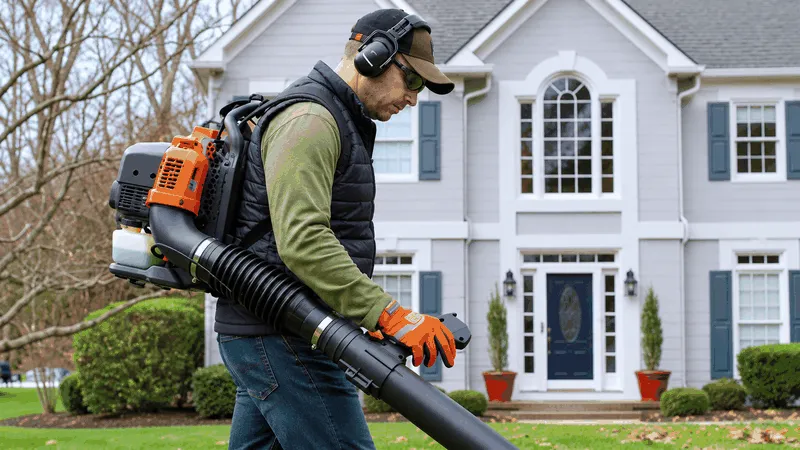
This comparison focuses on two gas-powered backpack leaf blowers for weekly property clearing. One is lightweight for the power it generates. The second operates smoothly. Which one will be better for the task? A 2-cycle backpack blower is usually more powerful for its weight; however, it has requirements for fuel and exhaust emissions. Knowing this ahead of time can help you avoid serious problems in the fall. The gas-powered leaf blower range covers more than one engine design, and gas leaf blower basics explains how they differ.
What a 2 Cycle Backpack Blower Gets Right
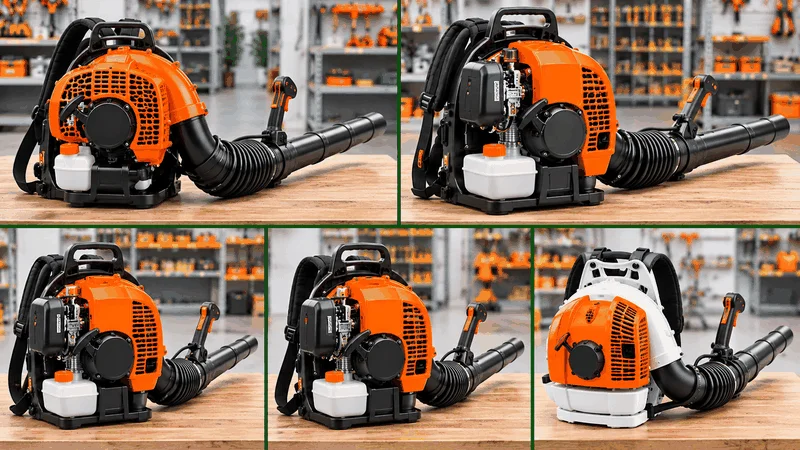
But first things first, why does the 2-cycle backpack blower reign supreme in the category? It comes down to a simple equation: power over weight. The difference is that a 2-stroke engine combusts on every rotation, while a four-stroke does so every other rotation. This design factor favors a better power-to-weight ratio, though it doesn’t apply to all models.
Mechanically, the 2-stroke is much simpler, with no sump or valves. As a result, your 2-cycle gas-powered backpack leaf blower has fewer moving parts to maintain than most others.
What are the best two-stroke gas-powered leaf blowers compared by performance and maintenance?
Among 2-cycle backpack blower options, the Echo PB-580T leads with a 58.2cc displacement, delivering 517 CFM and 216 MPH on verified statistics, and weighing 22.7 pounds dry.
| Model | Engine | Airflow, as published | Weight |
| Echo PB-580T | 58.2cc two-stroke | 517 CFM at nozzle | 22.7 lb |
| VEVOR 79cc Backpack | 79cc two-stroke | 0.35 m³/s (~740 CFM) | 24.8 lb |
| VEVOR 62cc Backpack | 63cc two-stroke | 0.23 m³/s (~487 CFM) | 22 lb |
| VEVOR 52cc Backpack | 52cc two-stroke | 0.2 m³/s (~424 CFM) | 20.8 lb |
| Stihl BR 600 | 64.8cc 4-MIX | 1,150 m³/h (~677 CFM) | 22.5 lb |
Two things to keep in mind while reading that. In all three VEVOR models, the CFM figure mentioned doesn’t match the air volume figure on the same page, so contact the seller to confirm which figure refers to which measurement. Also, the machine’s weight won’t feel the same as it does on the scale because the harness distributes it across your shoulders, back, and hips. CFM ratings for leaf blowers are discussed here.
For 2-cycle backpack blower maintenance, use the schedule in your manual rather than a seasonal rule of thumb, since these schedules usually depend on hours of operation. The 79cc backpack leaf blower is the largest, most powerful 2 cycle backpack blower in this group, and formats across the leaf blower listings differ in what they need.
Recommended For Your Project
Where a 2 Cycle Backpack Blower Falls Short
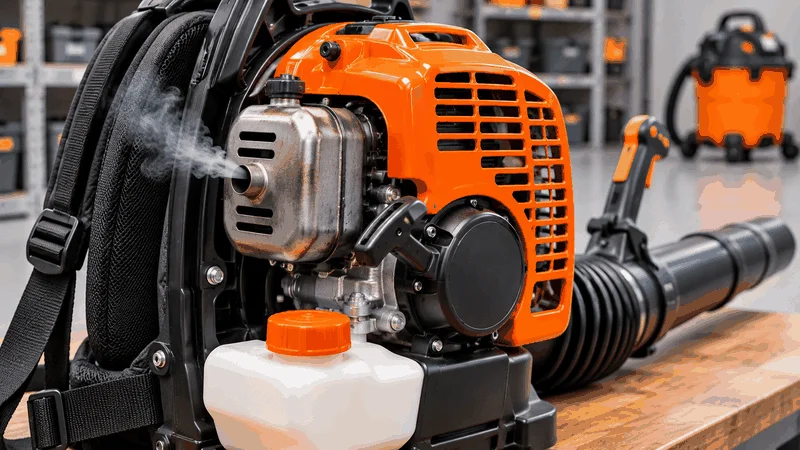
But here comes the other side of the story. By design, the two-stroke engine in a 2-cycle backpack blower burns oil along with the fuel, and that has consequences. Because the oil goes through the combustion chamber, a two-stroke engine emits more unburned hydrocarbons than other engines. The oil isn’t mixed into the fuel charge the same way. That is why regulations have targeted small engines, and why California’s zero-emission standard starts to apply in 2024. One trade-off is the noise profile. Two-stroke engines usually operate at higher revs, producing a higher-pitched tone.
Which four-stroke gas-powered leaf blowers are recommended for lower emissions and smoother operation?
STIHL BR 600 employs the 4-MIX engine. The engine operates on a four-stroke combustion principle but uses a 50:1 petrol-to-oil mixture for lubrication. It offers an alternative to the standard two-stroke engine. Thus, it is not a traditional four-stroke engine with a lubricating oil reservoir, and it still requires a fuel mixture. It offers an alternative combustion process, shown in the figures below in terms of vibrations.
What are the top gas-powered leaf blowers for users who want low emissions but need gas power?
It needs to be clear that if emissions are a priority, a 2-cycle backpack blower isn’t the way to go. One such engine design is the 4-MIX, and batteries emit nothing. Here are the pros and cons of gas vs. electric leaf blowers.
Fuel, Run Time, and the Mixing Routine.
This is where new 2-cycle backpack blower users get confused. Two-stroke engines don’t run on petrol straight from the can. They require petrol mixed with two-stroke oil in the ratio stated in your manual.
Mix this up, and you will destroy the engine. Plain petrol will jam it. Excess oil will coat the spark plug and cause smoke. There are no tricks, and this is what makes a two-stroke engine different from a regular engine.
Which gas-powered leaf blowers have the best fuel efficiency and longest run time?
You can calculate run time from published data; you can’t calculate fuel efficiency. None of these models list their fuel consumption rate; therefore, tank capacity provides the best basis for comparison.
Here, the tanks range from 1.37 liters to 3 liters. The 79cc model has a 3-liter tank capacity, compared to the 52cc backpack leaf blower’s 1.37 liters, so you’ll refuel roughly half as often.
Which gas-powered leaf blowers are easiest on fuel costs for frequent use?
However, no manufacturer’s fuel efficiency is known in this case, so you can’t compare them on that basis. What is known, though, is that using a smaller engine, depending on the size of your garden, will cost less than using an oversized engine; additionally, using mixed fuel means buying oil along with gasoline. Fueling and starting are described in the leaf blower technique.
Vibration and All-Day Comfort
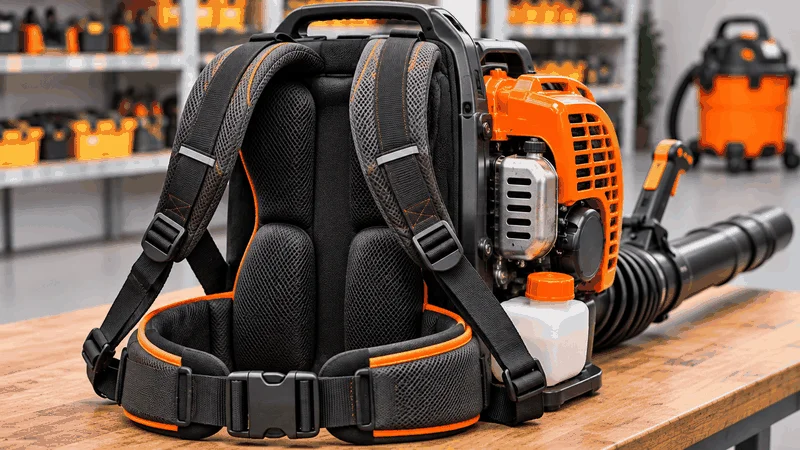
Vibration is the compromise no one mentions at the checkout counter, but you feel in your hands after an hour. Only one of these machines provides any data.
Which gas-powered leaf blowers are recommended for people who need low vibration?
Stihl reports 2.5 m/s² and 1.8 m/s² for the BR 600. These are both very low values, but vibration ratings are affected by engine balance, mounting, harness construction, and tube support, as well as the combustion process itself, so they shouldn’t be interpreted as solely due to engine design.
The VEVOR 2-cycle backpack blower models don’t specify a vibration rating, so you can’t compare those models with others. If that matters to you, contact the seller and ask for an m/s² rating for their machines. An unpublished value isn’t low, but unknown.
Three things to lower what gets to your hands:
- Make sure the harness fits right. A loose harness means more goes through the frame.
- Holding the tube loosely will help. Holding tightly gives you more vibration in your wrist.
- Take rests. Prolonging your exposure is what makes the difference, not every single period.
Let’s consider a professional 2 cycle backpack leaf blower here. The 62cc backpack leaf blower weighs 22 pounds. The backpack leaf blower buying guide covers harness fitment.
Reliability and What Buyers Report
Which gas-powered leaf blowers have the most reliable engines according to user reviews?
No failure statistics exist for leaf blowers, and retailer ratings rely on unverified user testimonials. So, you can’t rate reliability for any brand.
The only thing that you can examine is what the company promises in writing. Echo promises a two-year guarantee for its backpack blowers if used commercially and five years for homeowners. Stihl promises two years on the BR 600 model. VEVOR promises no guarantee period; ask for one.
Which gas-powered leaf blowers have the fewest common complaints from buyers?
Neither are complaint figures verifiable. Gaps in documentation make for a much more accurate indicator, and they point to the same tests. One list mentions airflow in two ways and lacks figures for vibration and warranty period, leaving you three issues to verify.
Selecting the best 2 cycle backpack leaf blower depends on your answers to the three. The 26cc 2-in-1 gas blower works well if you have a small area to clean. Quieter options fall under the cordless leaf blower category.
Conclusion
A 2-cycle backpack blower typically provides a good power-to-weight ratio and easy maintenance. However, you have to compromise on fuel, with higher emissions and increased vibration. If you want a good power-to-weight ratio, that trade-off is acceptable. Otherwise, an alternative engine type or a battery-powered blower would work better. When you decide to purchase one, lock in three numbers: the quoted airflow rating, the vibration rating, and the warranty period. Related machines sit across the outdoor power equipment range.
Frequently Asked Questions
What does 2-cycle mean on a backpack blower?
A 2-cycle backpack blower engine fires once per revolution using petrol that is mixed with two-stroke oil. The engine delivers plenty of power for its weight and has fewer moving parts, though the oil increases emissions.
Can I run a 2-cycle backpack blower on straight petrol?
No. A 2-cycle backpack blower requires petrol to be mixed with the right amount of two-stroke oil. Pure petrol can jam the engine, while too much oil will foul the spark plug.
Is a two-stroke or 4-MIX blower better?
It depends on what matters most to you. The two-stroke usually wins on power-to-weight ratio and is easier to service. Stihl’s 4-MIX operates like a four-stroke engine but requires a 50:1 fuel ratio.
Do 2-cycle backpack blowers vibrate more?
Usually, yes, because they often run at higher RPM, but vibration also depends on balance, mounting, and harnessing. However, only one type in this group provides figures. Compare m/s² values, not engine types.