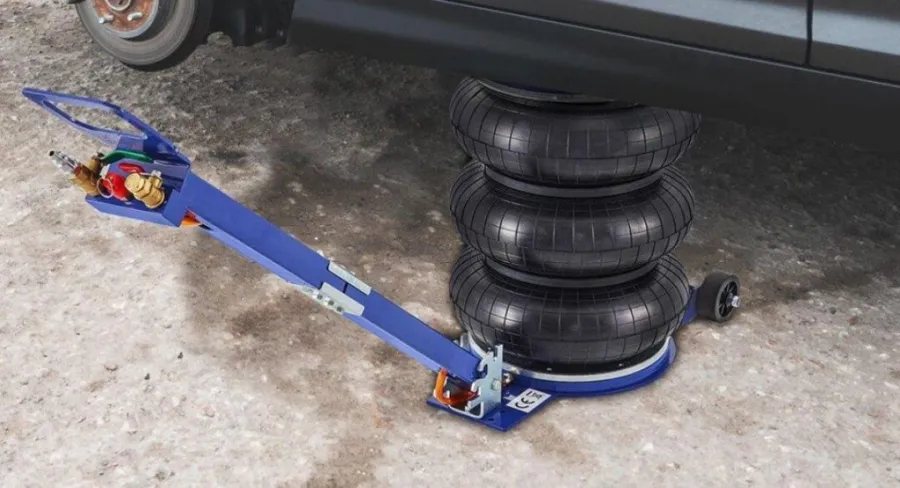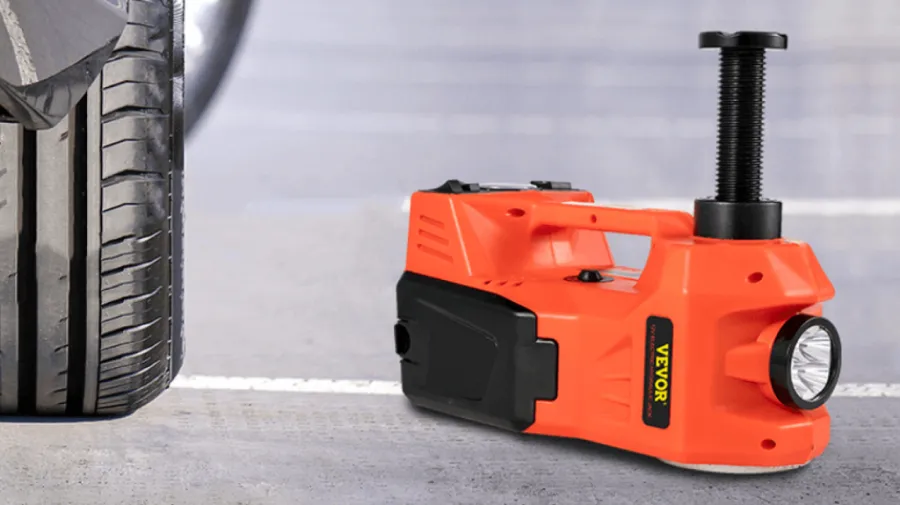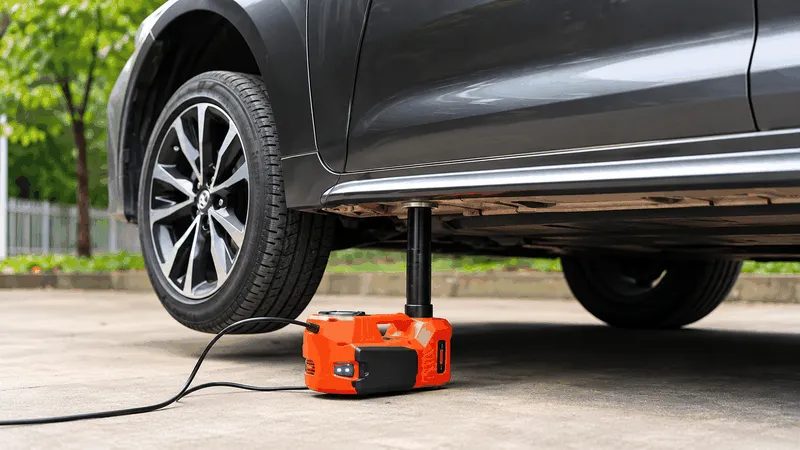
A car jack for SUV faces more demands than a regular car jack. The vehicle is heavier, rides higher off the ground, and needs more wheel clearance. So you have less room for error than with a normal car tire change. Using a car jack safely on an SUV depends almost entirely on preparation, and all electric car jacks require the same prep. These six steps cover the job from parking to stowing the tools. To choose the best car jack for SUV use, check its lifting capacity, minimum height, and maximum lift range. Before you buy, choose capacity and lift height; see how to pick the best car jack for your SUV.
What You Need Before Lifting an SUV
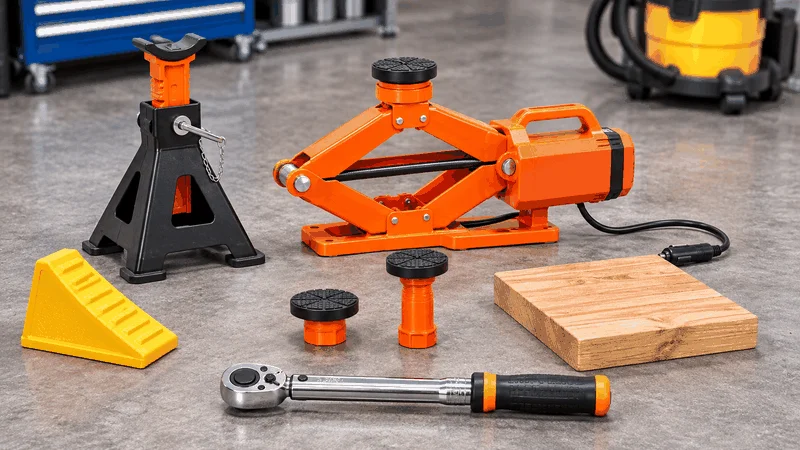
Have everything ready before you start lifting the car, because missing parts while you are lifting the car is how people cut corners. Consider four things, one of which is the jack. Figures are stated below, with blanks filled.
Which electric car jacks are best for lifting SUVs and crossovers?
Choose the best electric car jack for SUV use based on your vehicle’s weight, lifting points, and ground clearance. Check the jack manufacturer’s recommendations for your make, your vehicle manufacturer’s recommended lifting points in your owner’s manual, and the load at each point. Weight distribution depends on the vehicle make and how it is loaded.
Which electric car jacks are most portable while still offering good lift height?
Weights range from 13.9 pounds for a bare scissor jack with saddles to 27 pounds gross for a complete jack package. Maximum lift ranges are typically 16.5 inches or 17.7 inches, regardless of lifting capacity. Therefore, a heavier or higher-lift jack does not provide more travel. A best portable car jack for SUV use should balance weight, lifting height, and storage space.
| Item | Why it matters for an SUV | What to check |
| The jack | Must be able to fit beneath the vehicle and rise high enough to raise a large wheel | Published minimums 5–6.3 in, maximums 16.5–17.7 in; confirm against your clearance |
| Jack stands | Carry the load before anyone gets underneath it | Rated for your vehicle; not supplied with any kit here |
| A load-spreading base | Could be used to assist in load distribution on a flat, level surface | Sizing depends on vehicle weight, jack base and ground; follow the jack manufacturer’s guidance |
| A calibrated torque wrench | Tightens wheel nuts to the vehicle manufacturer’s specifications | Your vehicle’s specified figure, from the owner’s manual |
Impact wrenches and torque wrenches serve different purposes. The wrenches in these kits are rated 400-480 N·m without a measurement standard, making them useful for loosening and initial tightening but not for achieving a required value. Other car jack kits differ in height and lifting distance.
Step 1: Park and Assess the Ground
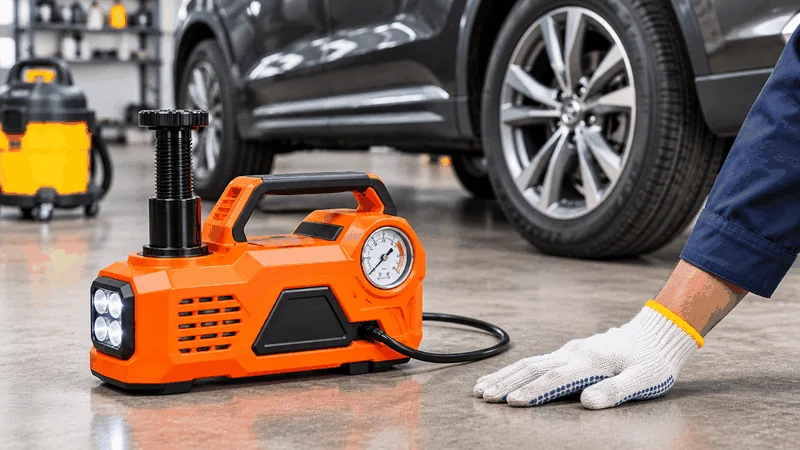
The surface determines whether the remaining steps are safe, so you do this step first. The equipment is designed for firm, level ground. If you can’t attain this, stop.
Which electric car jacks are best for use on unpaved or uneven surfaces?
None of these methods rate soft ground, and none specify a maximum slope, so none of the listed approaches is suitable for an uneven or unprepared surface. No car jack for SUV in this comparison has an off-road or soft-ground rating. Always use a firm, level surface. You need to decide where to drive the car, not how to jack it up.
Take the car to solid ground only if you can do so safely, and the tire still has enough air. Do not ride on a flat or significantly damaged tire. If you can’t safely reach a stable location, contact roadside assistance.
An appropriate spreader base can help on firm, flat ground, but it is no substitute for a stable lifting area. The base might crack, bend, sink, or lean and will never turn inclined or shaky ground into a good one. Never attempt to lift from soft, uneven, or shaky ground. Compare formats by jack type.
Step 2: Secure the Vehicle
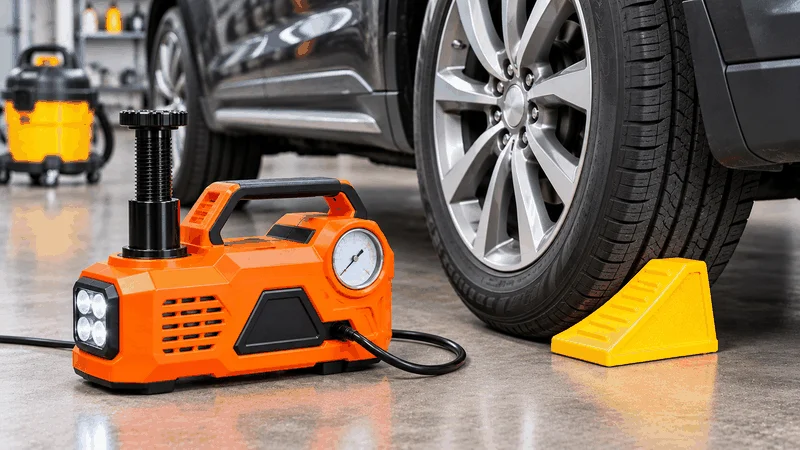
Lifting a moving SUV is extremely dangerous, and it takes less than a minute to stabilize the vehicle. The following three steps must be taken in the correct sequence. Do them all even if the ground seems to be completely level.
Activate the parking brake. Ensure the manual transmission is in gear, and the automatic transmission is in park. Next, block the wheels that will remain on the ground, placing the blocks on the downhill side if there is any slope.
Turn off the engine unless the jack manufacturer or your owner’s manual says otherwise, but never run an engine in an enclosed space. Ensure there are no passengers in the car.
Step 3: Locate the Approved Lifting Point
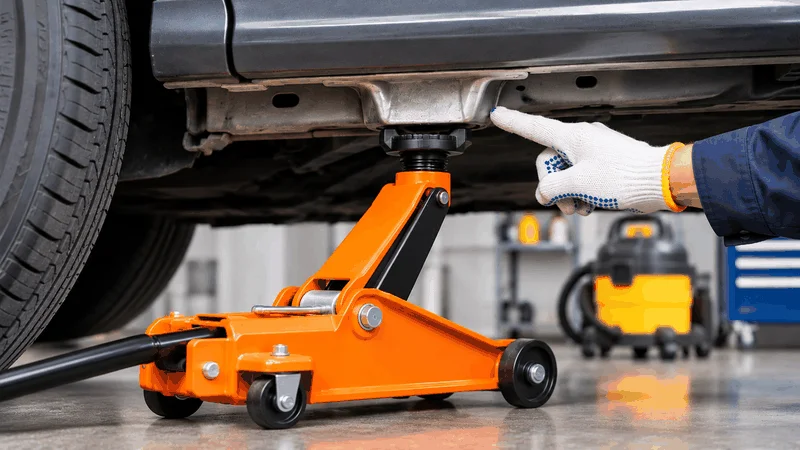
Lifting points vary by car, and guessing can lead to crumpled sills and jack failure. Before using a car jack lift for SUV repairs, check the approved lifting points in your vehicle manual. The owner’s manual is the only trustworthy source. Prepare the surface before lifting anything.
Locate the manufacturer-designated lifting points, usually indicated on the vehicle or in a diagram in the manual. Designs differ; some SUVs have reinforced pinch welds, some use frame rails as lifting points, and some use specially made lifting plates. Your vehicle is no exception.
Never lift using the floor pan, fuel or brake line, suspension arm, or differential. Also avoid selecting a point based on its strength. Also, confirm the jack saddle is compatible with the lifting point, as a saddle that doesn’t fit snugly could slip. Wipe off mud and road grime to allow metal-to-metal contact. This is discussed in the safe use of a car jack.
Step 4: Position the Jack Squarely
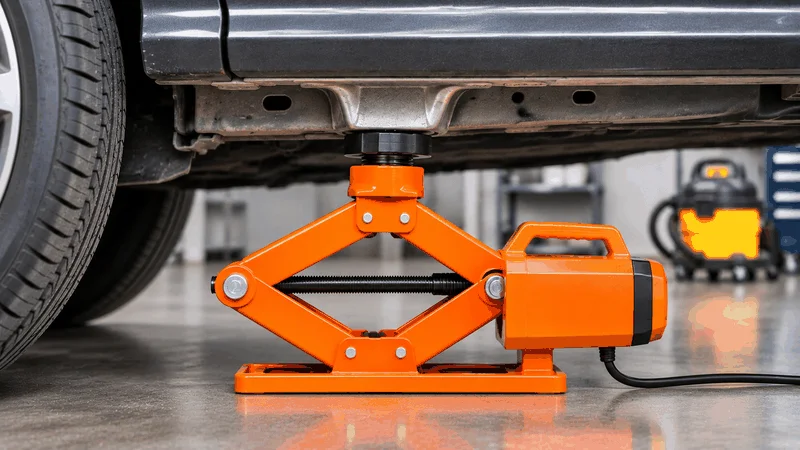
This alignment determines whether the lift remains balanced throughout its entire course. An SUV’s height makes the jack hard to spot once it is under the vehicle. Check the squareness before applying any load.
Align the jack so the saddle sits directly under the lifting point, is parallel to both the ground and the vehicle, and is not tilted. If the surface needs load spreading, do that first and level it out. If the jack provides more than one saddle, use the one that corresponds to the lift point. Scissor jack models come with two saddles.
The car jack for an SUV is available in two saddles: a short saddle that measures 5.1 inches and a long saddle that extends to 16.5 inches. This is because of its taller clearance. Lift it manually up until it slightly touches and stops.
Step 5: Raise the SUV and Fit Jack Stands
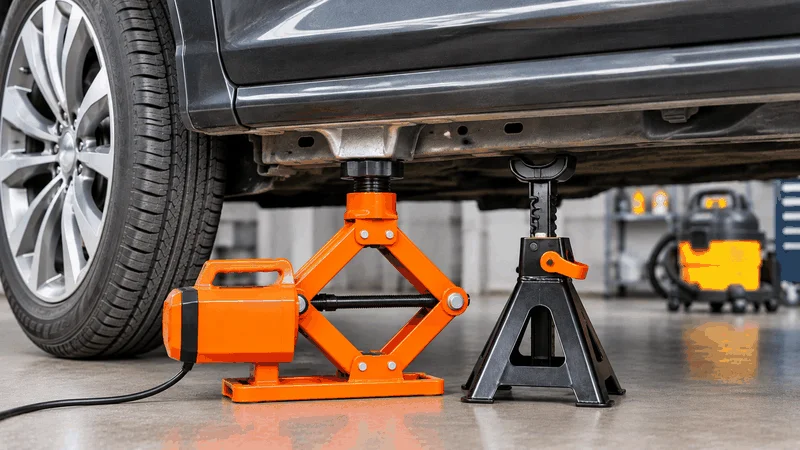
Lifting is the shortest stage of the process and should be closely monitored. Stay away from the vehicle as it rises. Install the stands when space becomes available. Lift steadily, and watch the saddle, not the wheel. Lifting takes about one minute with hydraulic jacks and two minutes with scissor jacks. This is according to manufacturers, not based on testing any load or methods published.
Only raise the car as high as the job requires. The required distance depends on the car, tires, and work involved; therefore, measure it yourself instead of using a fixed figure. The highest travel for floor jacks is 17.7 inches.
The 5-ton electric hydraulic jack with inflator meets this requirement. When the distance is adequate, place correctly rated jack stands in the spots your car’s manufacturer designates and lower the vehicle onto them. Do not use a jack stand under a car being worked on; it is not included in this range.
Step 6: Lower, Torque and Stow
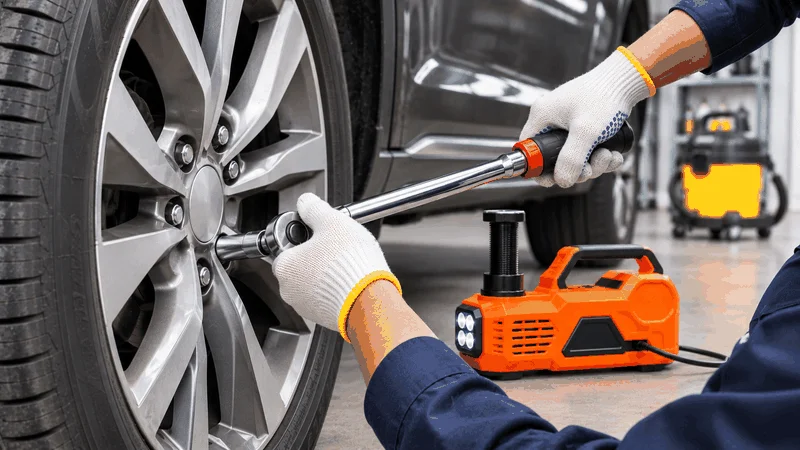
A proper ending is just as important as the lift. One process is missed more than others. That process is using a calibrated torque wrench. Lift the car just enough to clear the jacks, remove the jacks, then lower the car. Cars equipped with a manual pressure relief valve will descend without strain.
Tighten wheel nuts using the star technique, then finish with a calibrated torque wrench to your manufacturer’s specification. The impact wrenches provided here are for loosening and preliminary tightening purposes only.
Recommended For Your Project
What are the best electric car jacks that fit easily in an SUV cargo area?
Calculate the volume of your cargo space and compare it with published volumes, leaving room for stands and a base. Cases in this category range from 14.2 x 13 x 6.3 inches to 17.3 x 5.1 x 10.6 inches, while the Hydraulic Jack 5 Ton with Impact Wrench has no published case dimensions. The best portable car jack for SUV travel should fit your cargo area without taking up space needed for other emergency tools.
Off-Road and Trail Situations
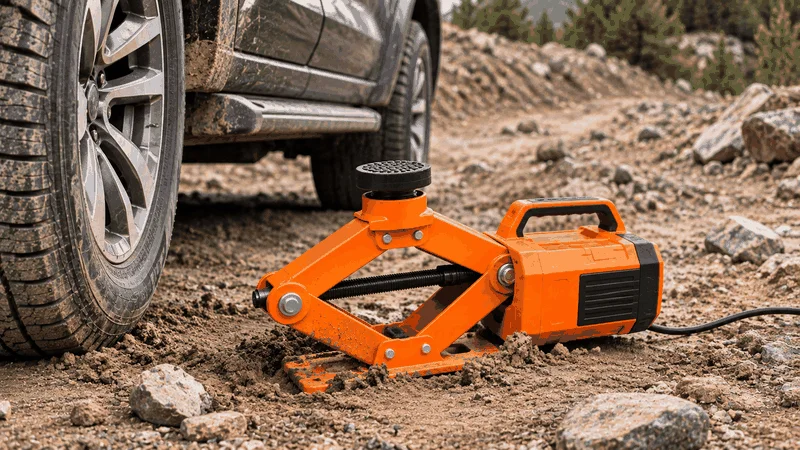
Off-road creates issues the machines cannot overcome, and it is important to be honest about that. The models mentioned above are not designed for off-road. Location is more important than products.
What are the top electric car jacks rated for off-road vehicles and trucks?
No car jack for SUV in this comparison has an off-road rating. Do not use these models on soft or unstable ground. Load distribution will not make a difference, as there is no rating anyway.
If you can’t park the vehicle on stable ground, use recovery aids or call roadside assistance instead of raising it. If you are considering lift travel distance, compare your requirements with the maximum lift travel distances of 16.5 to 17.7 inches.
The 5 Tons Portable Jack Kit with remote control runs on its own lithium pack rather than vehicle power, so it works well without power but isn’t ideal for unstable ground. Its minimum operating temperature is 32°F. Roadside situations are explained in the roadside emergency partner article.
One Jack for Several Vehicles
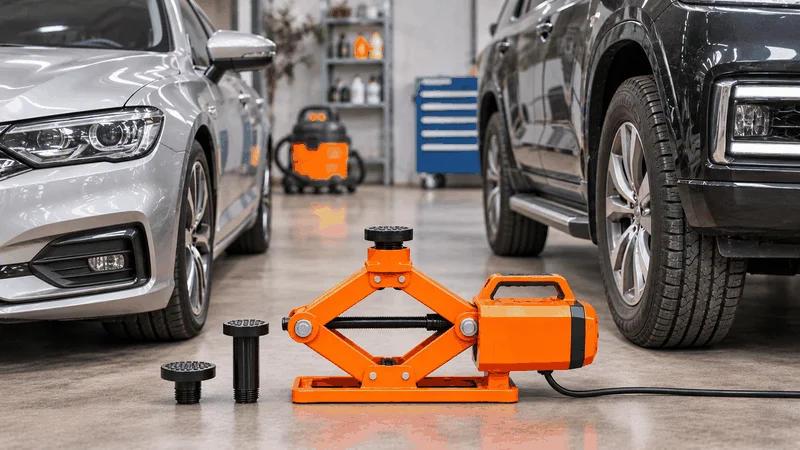
Each household jack must be strong enough to lift the toughest car in every category, and that car isn’t necessarily the same. Two criteria make this easy to verify.
What electric car jacks are most recommended for families with multiple vehicles?
Match the jack to the heaviest vehicle by capacity and the smallest by minimum height. A jack designed to lift an SUV might not fit under a sedan. And a jack that fits under a sedan might be underpowered for an SUV.
Published minimum heights range from 5 inches to 6.3 inches, so the smallest car determines that value. The 3 Ton Automotive Electric Scissor Car Jack Lift lifts up to 16.5 inches, but check each vehicle’s capacity separately according to the manufacturer. Types of jacks are discussed in car jack versus floor jack.
Conclusion
Safely lifting an SUV depends on preparation, not just having the right gear. The best electric car jack for SUV use must match your vehicle’s weight, clearance, and approved lifting points. Before lifting, ensure you have level, solid ground; the car is securely supported; you’re using the manufacturer’s recommended lifting point; and you have a square jack cover.
If the surface is soft or uneven, don’t lift the car; call roadside assistance. Keep correctly sized jack stands with the jack since none of these kits include any. Use a calibrated torque wrench to finish wheel nuts. When lifting on a prepared workshop floor, we recommend the larger shop equipment category.
Frequently Asked Question
Where are the lifting points on an SUV?
Refer to the owner’s manual, where the lifting points are indicated with a diagram. Designs vary from one car to another; some have reinforced pinch welds, while others have frame rails or special pads. You should never lift at the floor pan or fuel line area.
How high do I need to lift an SUV?
Lift as high as needed for the task, but without lifting the tire off the ground. The required travel varies based on your car, tires, and what you want to accomplish. So you’ll need to measure it yourself rather than rely on any published maximum of 16.5 or 17.7 inches.
Can I change an SUV tire on grass or gravel?
No, not safely, because no jacks are rated for soft ground. If you can safely move the vehicle to a firm surface, do so.
Do I need jack stands for a quick tire change?
Yes, if any part of your body will go under the vehicle. Place them on the manufacturer-recommended points that can carry your vehicle’s weight. Stands are included with automobile tools and are separate from each kit.
Is an impact wrench enough to tighten wheel nuts?
No. Use it to loosen and for preliminary tightening, then use a calibrated torque wrench to the vehicle manufacturer’s recommendation. Since these kits specify 400 to 480 N•m without any measurement standards, they cannot meet any desired specification.