







Download VEVOR App 

Get $5.00 Off $99.00+ Orders on Your First 3 App Orders
Scan the QR code to download
SKU: JBXSD16INCH2IOAWY001V0
Copy


+12
More


VEVOR Empty Sandbags, 200 Packs 16 x 26 in, Heavy Duty Sand Bags Sacks with Ties, 50lb Capacity Woven Polypropylene Sandbags, Tear-Resistant & UV-Resistant Sand Bags for Flood Protection Barrier
4.7 11 Reviews
$ 70 90
Earn at least 2% points on purchases or save up to 15%.
Each when you buy 0+.
Shop
Get -% off for new user
Get $5.00 Off $99.00+ Orders on Your First 3 App Orders.
Download Now


Features & Details
- Flood & Storm Protection: Designed for flood & storm defense, our sandbags are an essential part of disaster preparedness kit. Quickly filled and strategically placed, they create barriers to protect your home and business from potential flood damage
- High-Strength Material: Crafted from premium woven polypropylene, these heavy duty sandbags are leak-resistant and durable enough to bear heavy loads. Tear-resistant and wear-resistant, the empty sandbags offer long-lasting performance
- UV-Resistant: These woven polypropylene sandbags provide superior UV protection, lasting up to 1600 hours. Built to endure harsh weather, they remain sturdy and durable even after prolonged outdoor exposure, significantly extending their lifespan
- Easy to Fill & Use: These floods sandbags are designed for quick filling and sealing, easy to carry and store. With tie straps for secure closure, the wide opening allows easy filling of up to 50 lbs /22.68 kg of sand or gravel.
- Versatile Applications: While primarily used for flood control and construction projects, our woven polypropylene sandbags are also ideal for landscaping, dry material storage, and many other applications.
Product specification
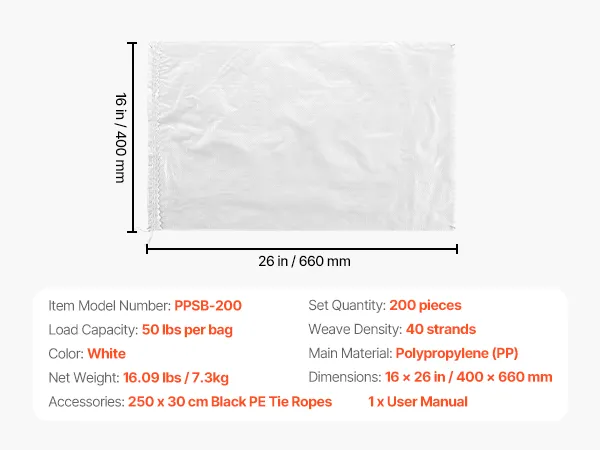
- Item Model Number PPSB-200
- Set Quantity 200 pieces
- Load Capacity 50 lbs per bag
- Weave Density 40 strands
- Color White
- Main Material Polypropylene (PP)
Frequently Bought Together
Reviews
About this item
Questions and Answers
Explore
Reviews
No customer reviews
Be the first to rate this product. your feedback will helps others make informed decisions.
Write a Review
Top Reviews
About this item
Product specification
- Item Model Number
- PPSB-200
- Set Quantity
- 200 pieces
- Load Capacity
- 50 lbs per bag
- Weave Density
- 40 strands
- Color
- White
- Main Material
- Polypropylene (PP)
- Net Weight
- 16.09 lbs / 7.3kg
- Dimensions
- 15.75 × 26 in / 400 × 660 mm
Description


Heavy-Duty Sandbags
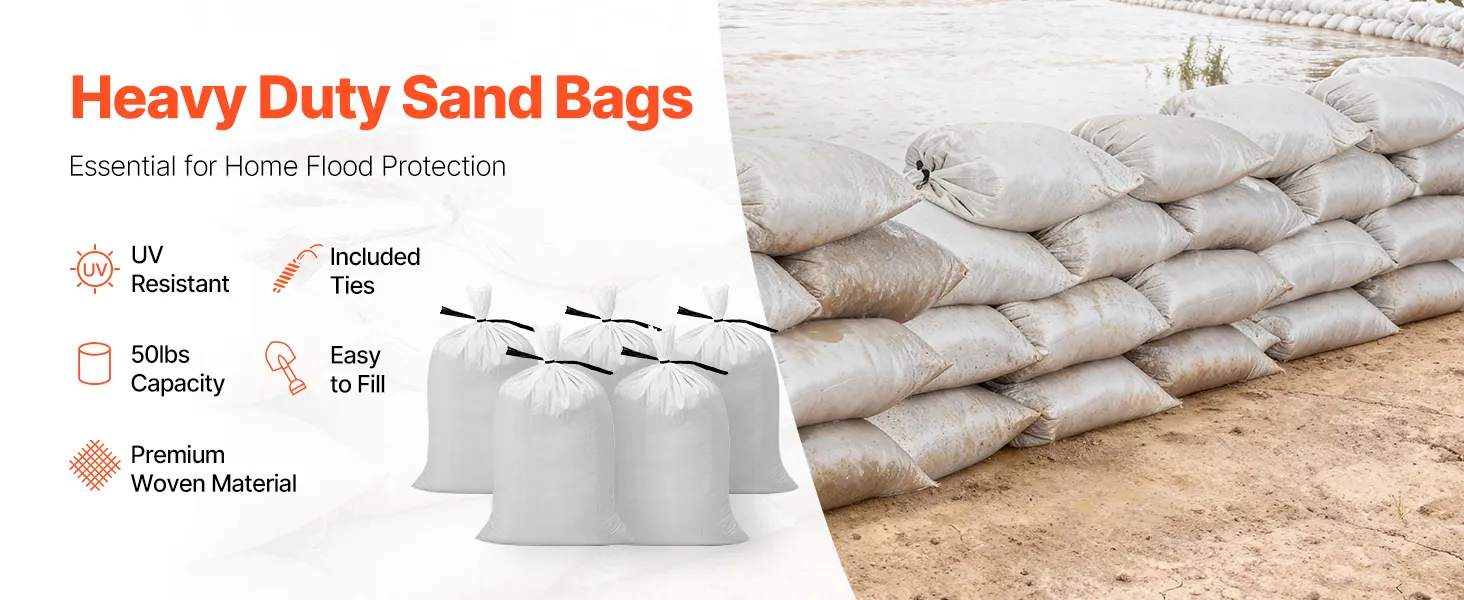
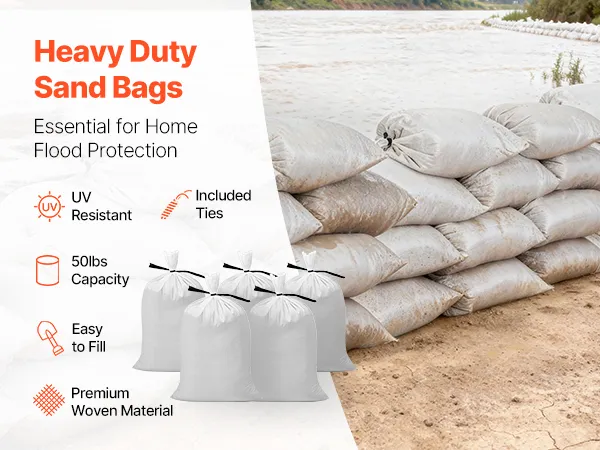
These essential flood protection sandbags are made from durable polypropylene material, that make it UV-resistant. A wide opening for easy filling with sand or gravel. Be prepared for heavy rainfall and easily create a strong defense barrier.
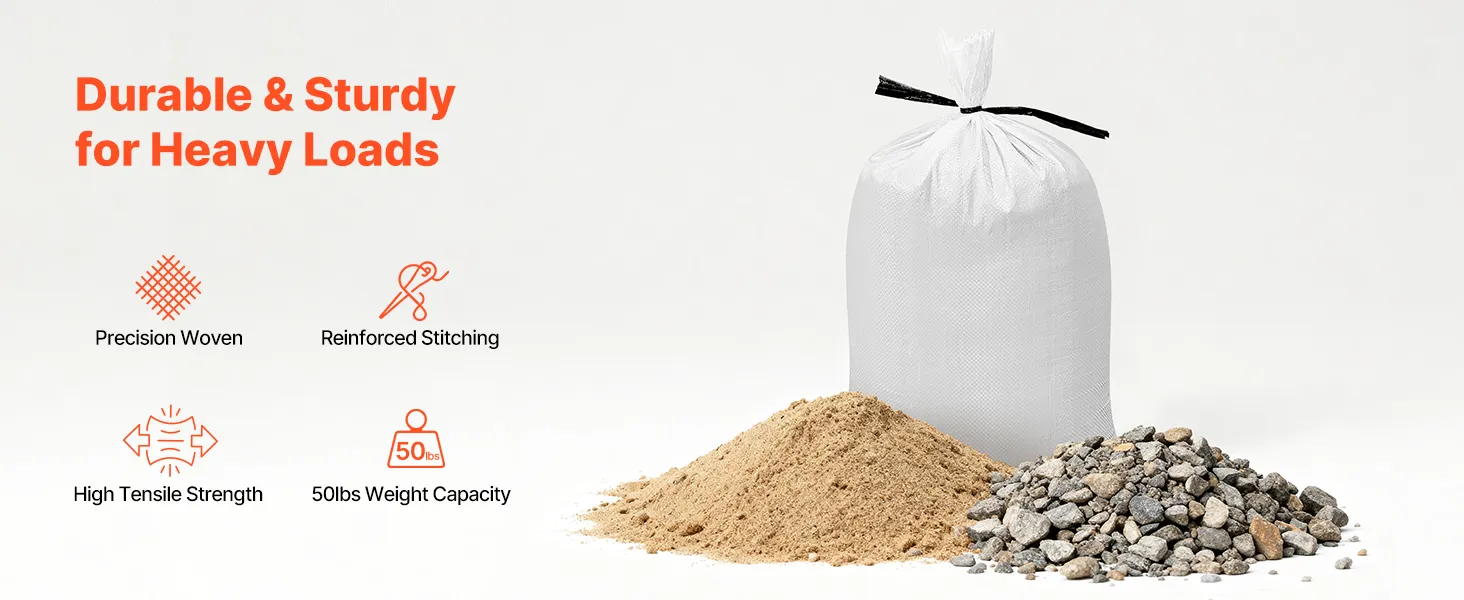
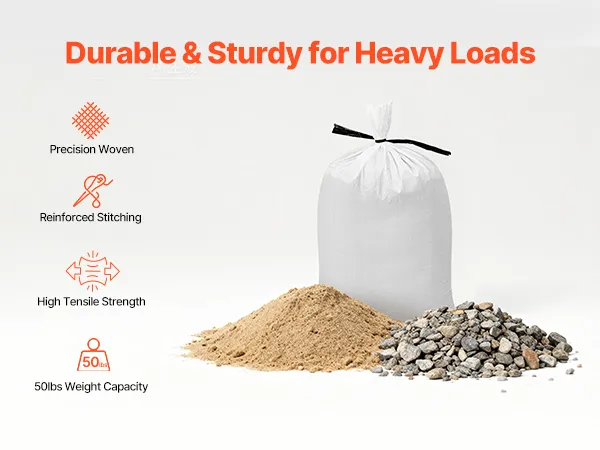
Crafted with precision weaving and reinforced stitching, these heavy duty sandbags offer excellent tear resistance, with each bag capable of holding up to 50 lbs. They are built to withstand heavy pressure and last through tough conditions.
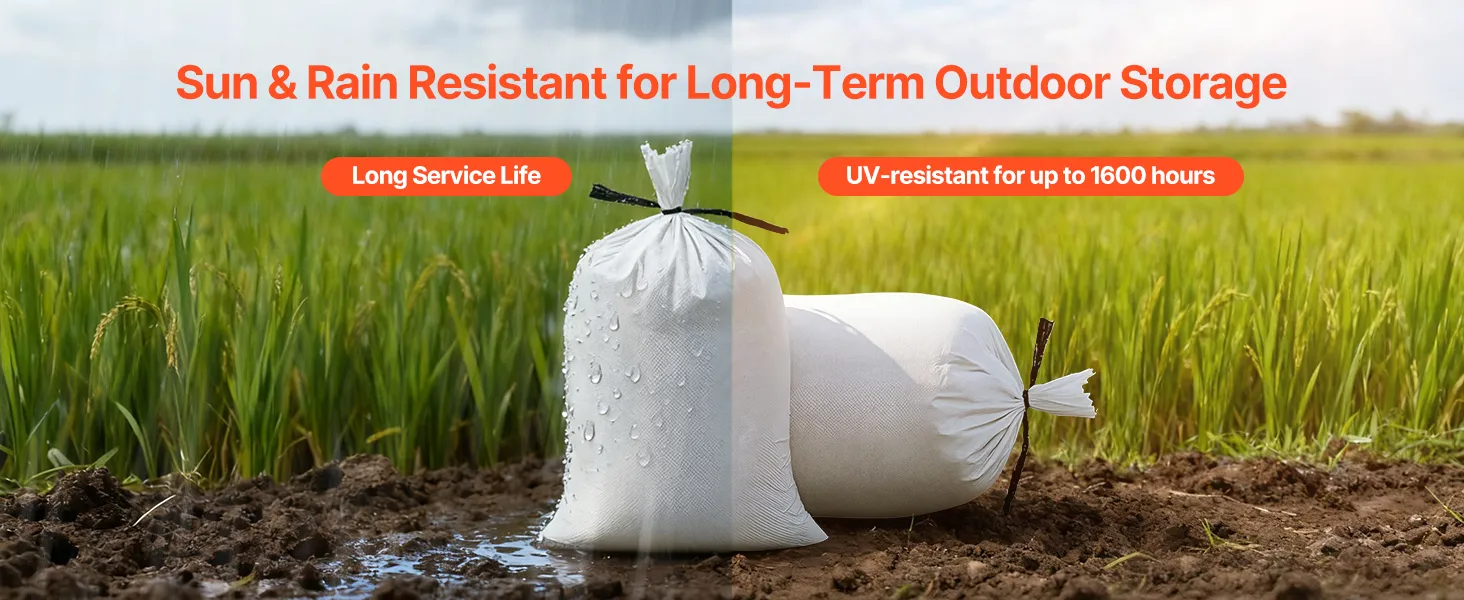
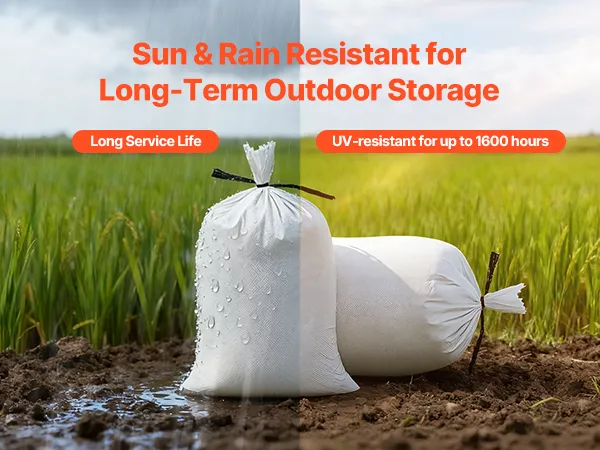
Designed for long-term outdoor use, these empty sandbags offer up to 1600 hours of UV protection, resisting sun and rain exposure. This greatly extends their lifespan, making them a reliable, long-lasting choice.
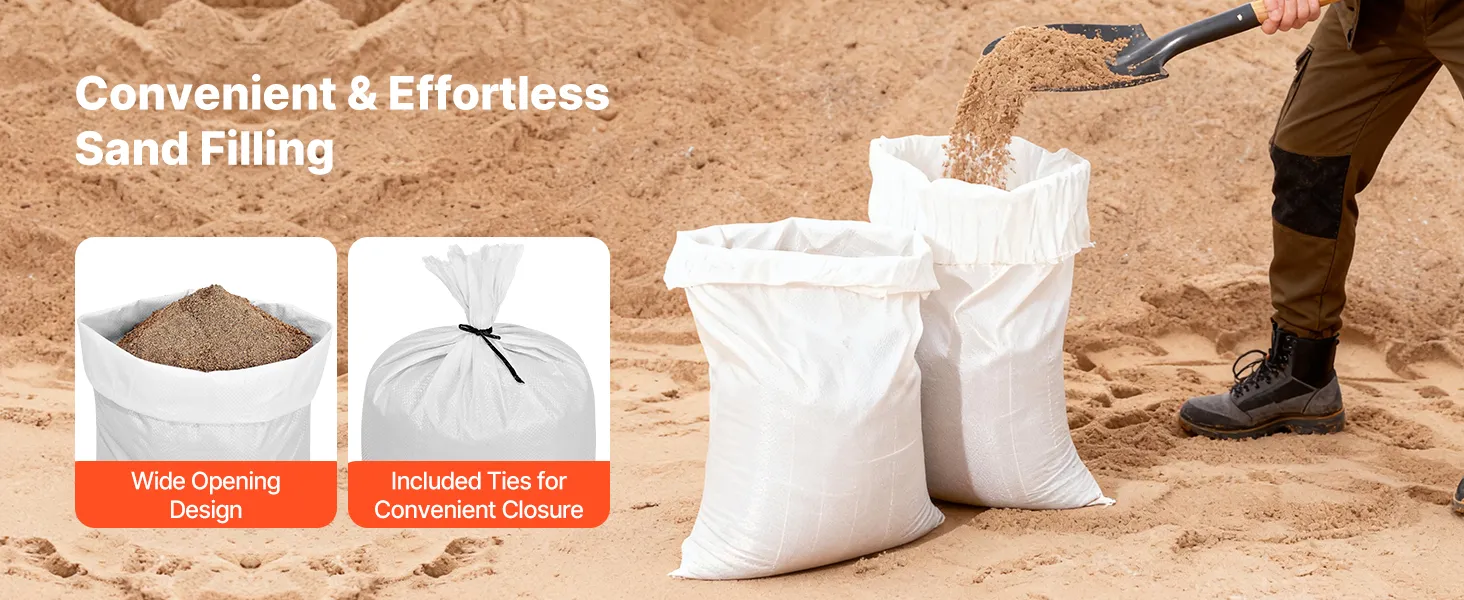
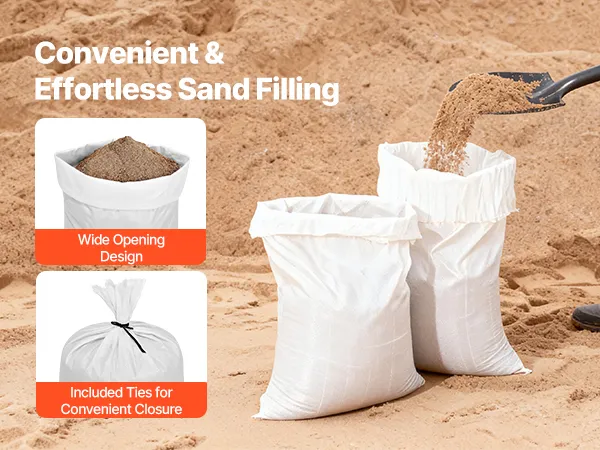
With a wide opening for easy sand filling and a built-in plastic tie for quick sealing, these polypropylene sandbags are simple to fill and secure without mess or spillage.
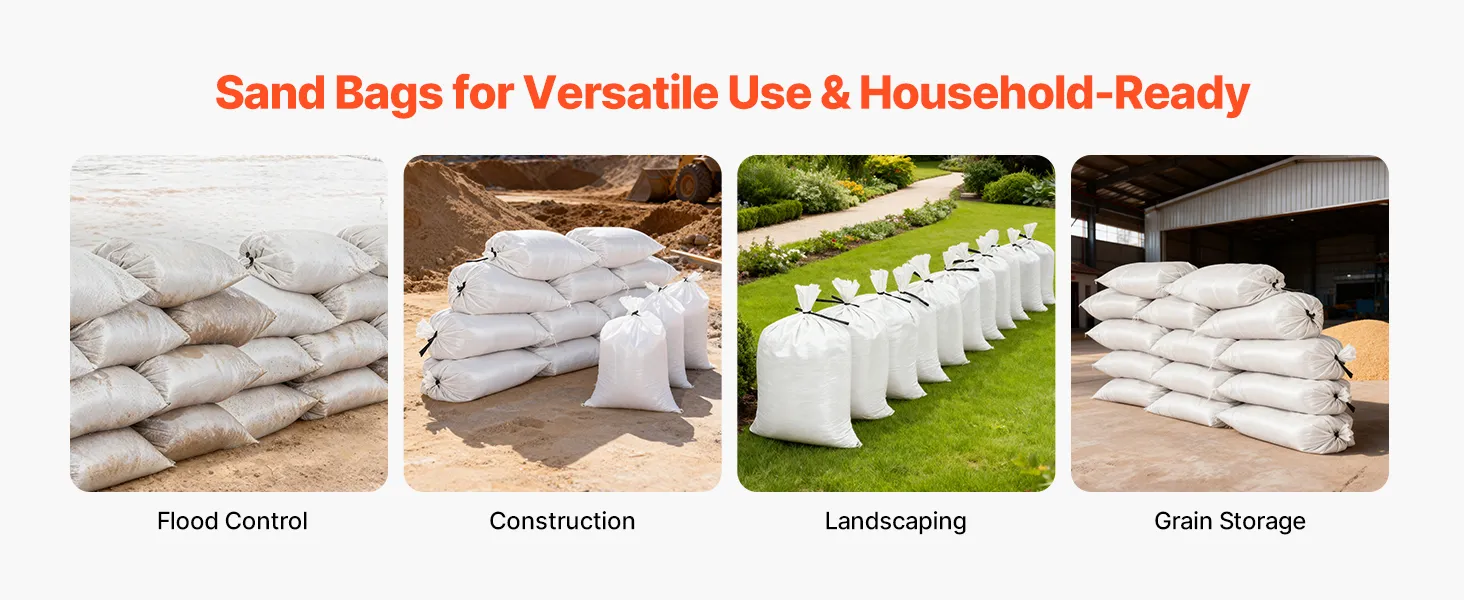
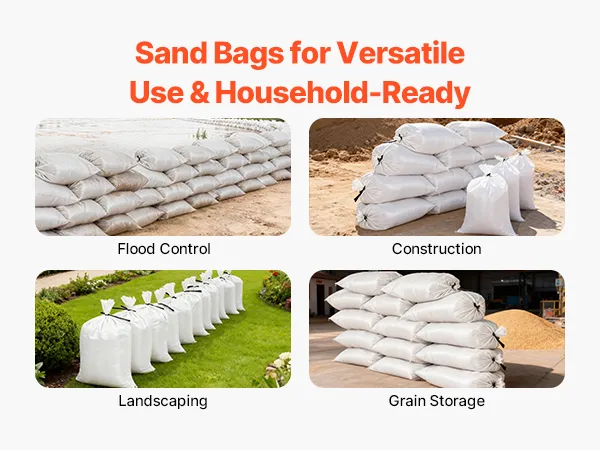
Not only ideal for flood control and construction projects, these sandbags can also be used for landscaping, grain storage, and more. A multi-purpose solution for your home or business.

VEVOR Empty Sandbags 200 Pack for Large-Scale Flood Protection
The 200-pack of VEVOR empty sandbags is great for stopping large-scale flooding and being ready for emergencies. People can use this much to build long walls, make doors, strengthen roads and property lines, or fence off the edges of their properties without having to get more materials. The pack is large enough to keep all your homes safe from storms.
When there are storms or high water, having a lot on hand speeds up the time it takes to move. You won't have to buy it again when it floods frequently, because there is plenty available. For homes, public safety teams, and emergency managers, the 200-pack is a good pick.
Woven Polypropylene Material for Tear-Resistant Strength
The woven polypropylene cloth used to make each sandbag is strong enough not to tear when heavy things are put on it. Sharp objects, rough ground, or repeated handling during filling and placement are less likely to damage the tight weave structure. This material works reliably in harsh outdoor situations.
Plastic made of polypropylene stays strong even when it's full. It doesn't tear easily and stays in shape when pressed. This means the empty sandbags can be used repeatedly to prevent flooding, keep building sites safe, and prevent workers from getting hurt.
16 × 26 Inch Dimensions for Efficient Filling and Placement
Each bag is 16 inches by 26 inches, the right size for what it can hold and how easy it is to carry. The opening of the bag is large enough for most shovels, making it easier to fill with sand, dirt, or gravel. The bag is easy to stack because, when full, it stays flat and compact.
The barrier is also stronger because there is less room between the bags at this size. Because of the sizes, it can tie at the top without extra fabric getting in the way when putting it on. Sandbags of these sizes can be used to make weighted shields, flood walls, and erosion barriers.
50 lb Load Capacity for Heavy-Duty Applications
The 50-pound weight limit per sandbag helps keep the site stable and prevents floods. With this much weight, the bag can be fully loaded without overstressing the fabric or sides. Spreading the weight evenly across the bag's structure helps it maintain its shape and strength.
The bag's strength is sufficient for its intended purpose, and its 50-pound grade is ideal. You don't need any special tools to move big bags. These qualities make sandbags useful in situations where speed and physical control are very important.
Empty Sandbags with UV-Resistant Fabric
The woven polypropylene has been treated to be UV-resistant so that the sun won't harm it. The cloth won't break, crack, or become weak after being out in the weather for a long time. The bags will still work even during strong storms.
This ability to block UV light also helps materials stay bendable in hot places. There's no need to worry about the bags getting damaged in the sun. They'll last a long time outside, so you can keep them there and use them multiple times as the seasons change.
Included Plastic Ties for Secure Closure
The empty sandbags comes with plastic ties to close the opening once it's full. To keep the sand or gravel from spilling out during shipping, stacking, or water flow, use the tie.
The barrier is more stable with this closure method, and cleanup takes less time after setup. You don't need any other tools to use the ties. They hold tight even when you apply pressure or move the bags. Because of this trait, deployment goes faster, and containment works better in such situations.
White Color Scheme for High-Visibility Identification
The sandbags' white color makes them easier to see in low light and emergencies. This helps people quickly locate sandbag walls when it's raining or flooding at night. It's safer to deploy the barriers when you can see everything more clearly, which reduces mistakes during setup.
Another way the white color keeps the cloth from getting too hot is by reflecting sunlight. In addition to making it easier to find bags, storing or stacking them together also makes them last longer.
Foldable Design for Compact Storage and Transport
The empty sandbags fold flat when not in use, making them easy to store in small spaces such as boxes, cars, or storage rooms. It's possible to store hundreds of bags without taking up much room. This design supports emergency preparedness and long-term readiness planning.
The folding design also makes it easier to move. It's easy for users to take large amounts and use them quickly when needed. This design allows for quick action without making storage hard.
Multi-Purpose Use Beyond Flooding for Construction and Weighting
There are other uses for these empty sacks besides keeping out floods. They can also be used for building, gardening, and managing temporary worksites. Filling them with dirt makes makeshift walls, keeps ditches stable, or keeps tarps from flying away. Their strength makes them useful for many tasks at home, on-site, or in the yard.
To prevent water from running off, you can also add gravel or dirt to the bags to make them heavier. This makes them more useful because they can handle a range of materials without breaking or leaking. In case of an emergency or at work, it's helpful to have these on hand.
Product guides and documents
User manual-en (PDF) Review
Questions and Answers (0)
Typical questions asked about products: Is the product durable? ...
Select product protection plan
Accident and warranty protection by Xcotton (partner with AIG)
No thanks
3-Year
2-Year
1-Year
In Stock
Security & Privacy
FREE Returns
Professional Service
Compare with similar items
Similar Items You Might Like
People Who Bought This Item Also Bought
Best sellers in this category
People Who Viewed This Item Also Viewed
Your Browsing History