


Ask about this product by AI

VEVOR Oxygen Acetylene Regulator Set, Oxy-Acetylene Regulators, 0-4000PSI and 0-400PSI Welding Gas Gauges with CGA-540/CGA-200 Inlet Connection & 9/16"-18 Outlet Connection, PC Knob Adjustment

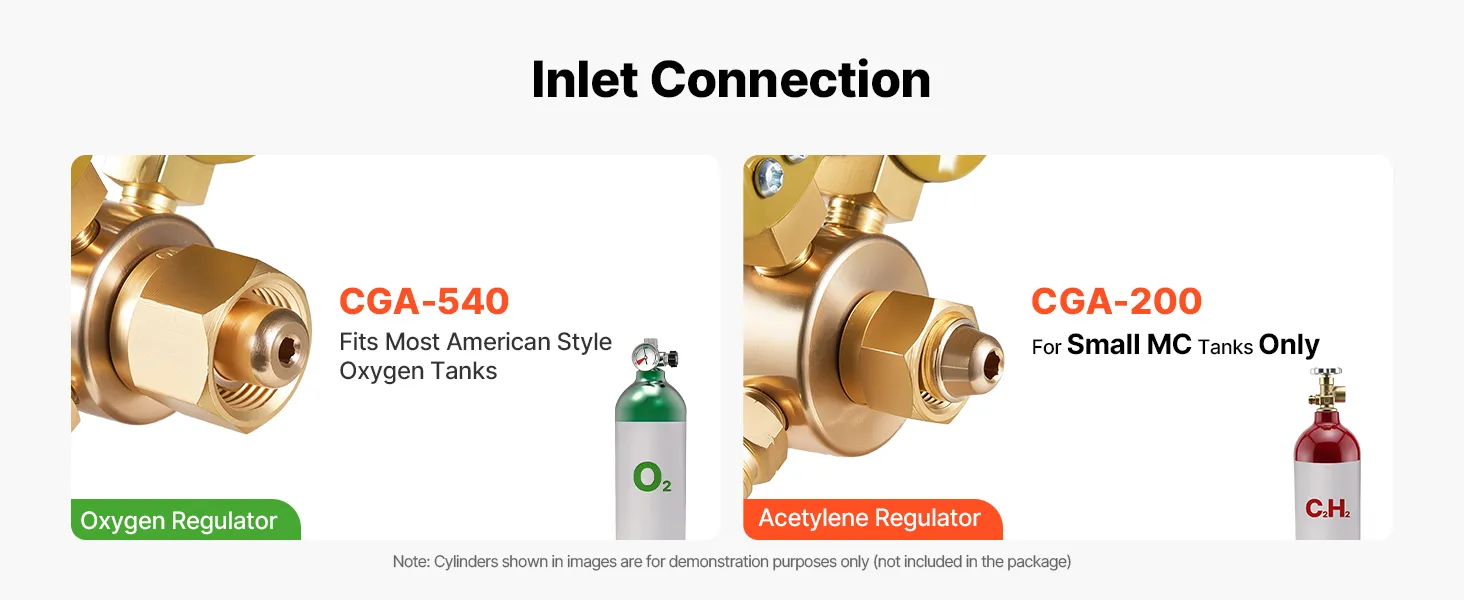
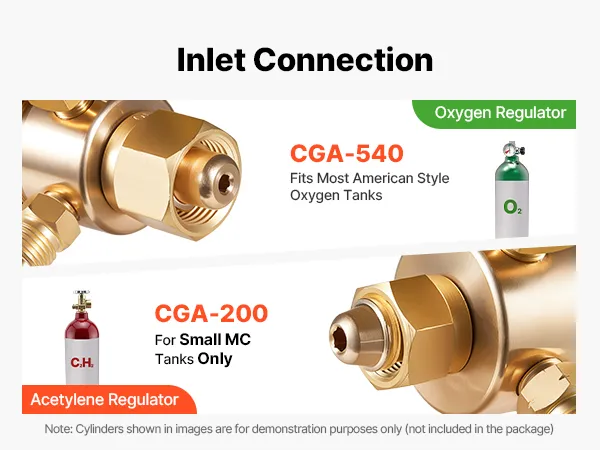
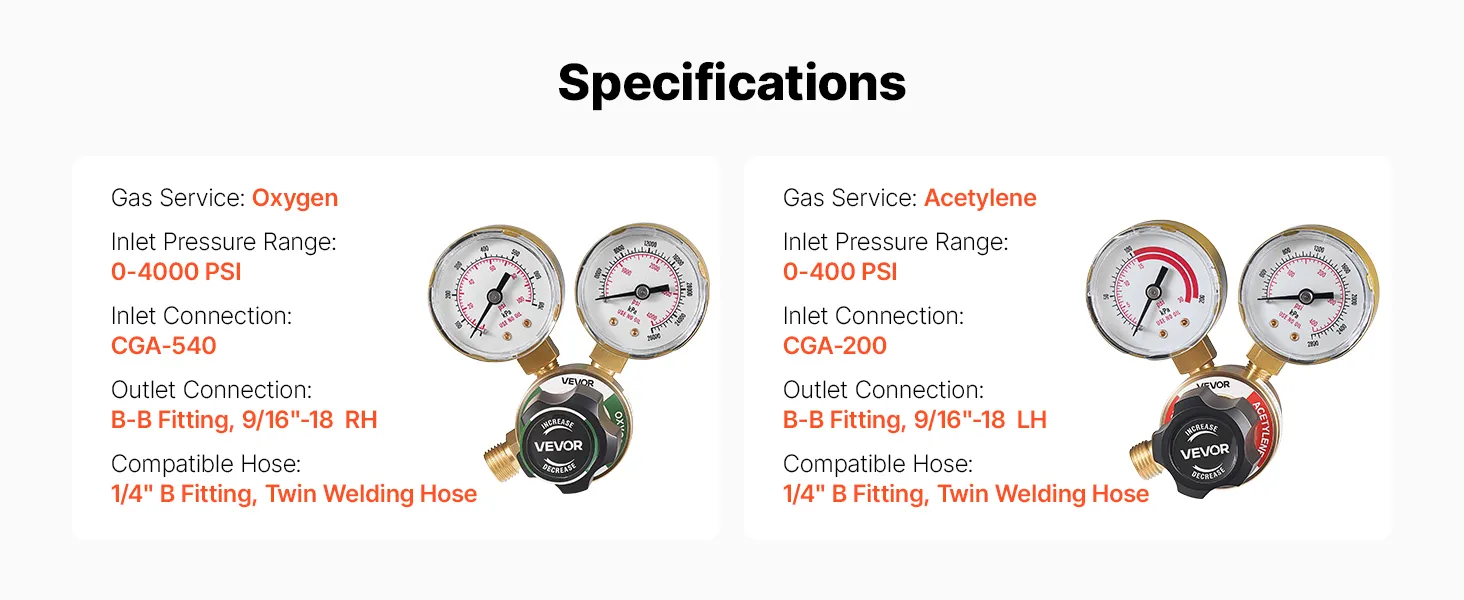
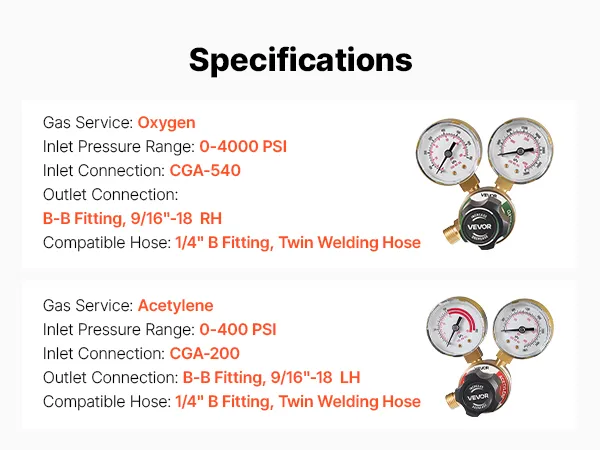
- Inlet Connections: Featuring a CGA-540 oxygen connection compatible with most American-style oxygen cylinders, and a CGA-200 acetylene connection that fits small MC cylinders only. Fitting Type: B-B Fitting
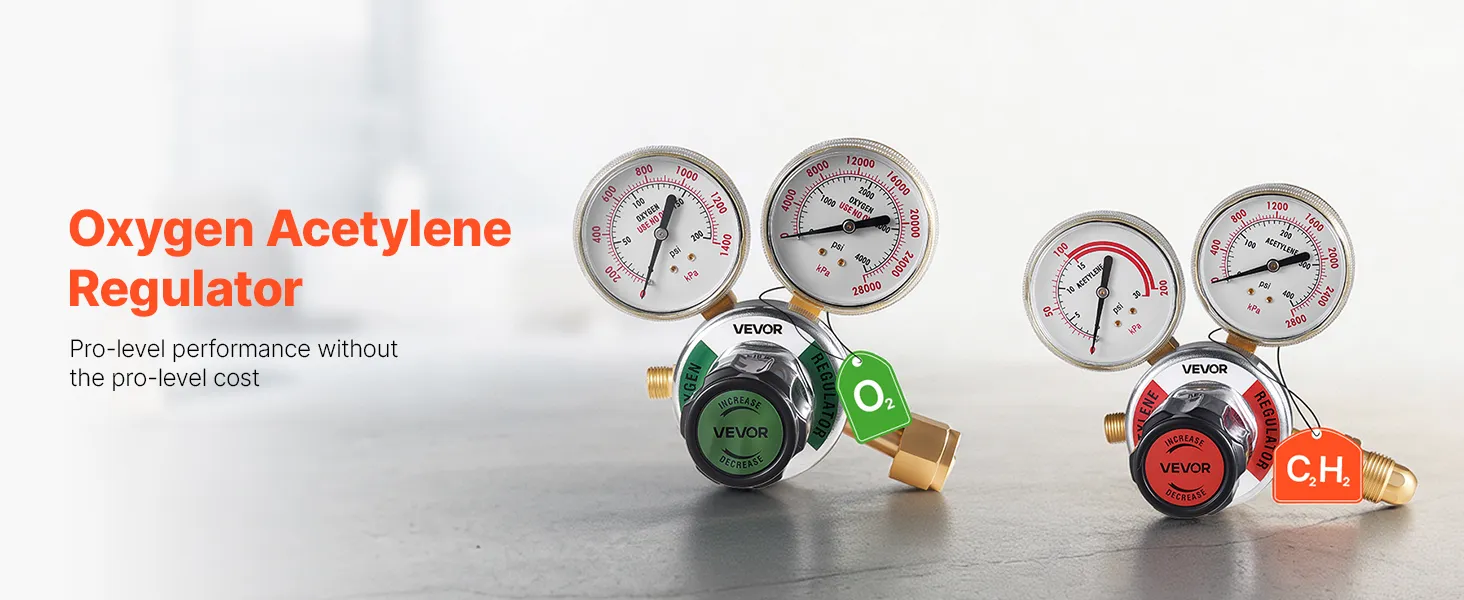
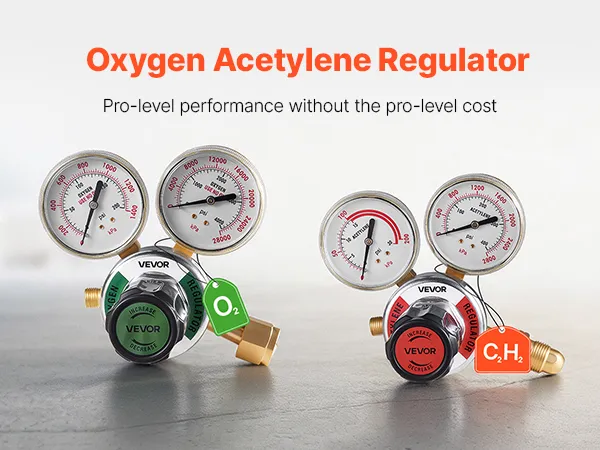
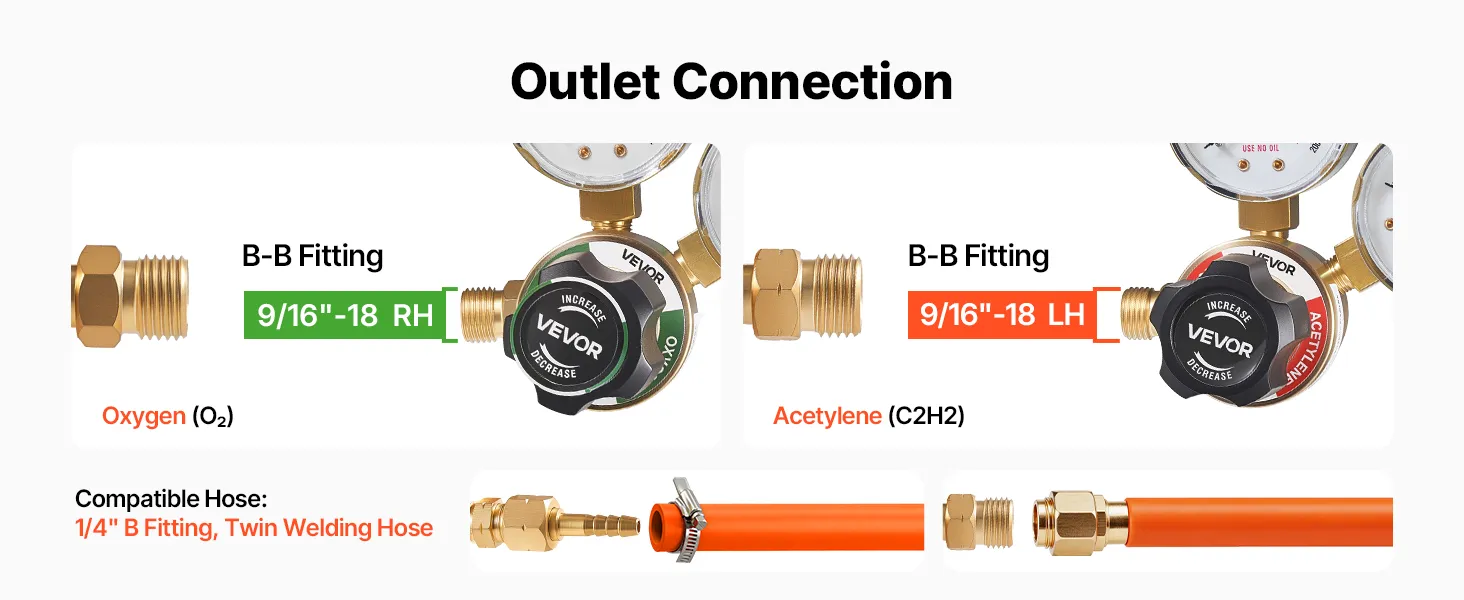
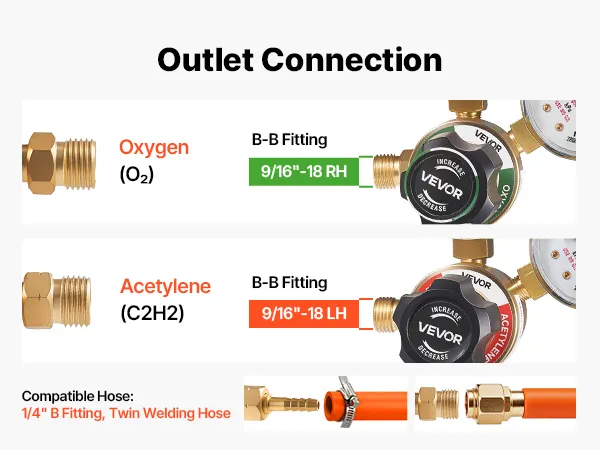
- Oxygen Regulator: Designed with a CGA-540 oxygen connection with a 0–4000 PSI gauge display for clear pressure monitoring and reliable oxygen regulation. Outlet Connections: 9/16"-18 RH
- Acetylene Regulator: Designed with a CGA-200 acetylene connection with a 0–400 PSI gauge display for clear pressure monitoring and reliable acetylene gas regulation. Outlet Connections: 9/16"-18 LH
- Premium Brass Build: This oxygen acetylene regulators main body are built with durable brass for excellent airtight sealing, strong high-pressure resistance, and long-lasting durability in demanding working conditions
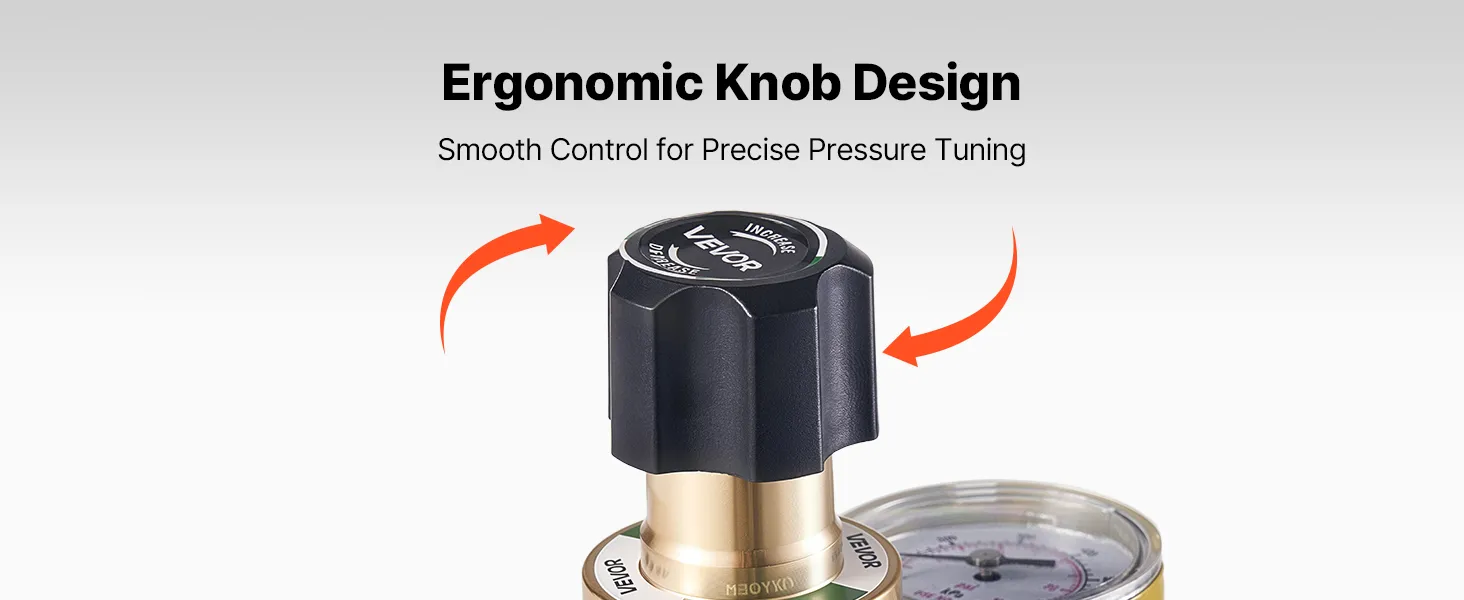
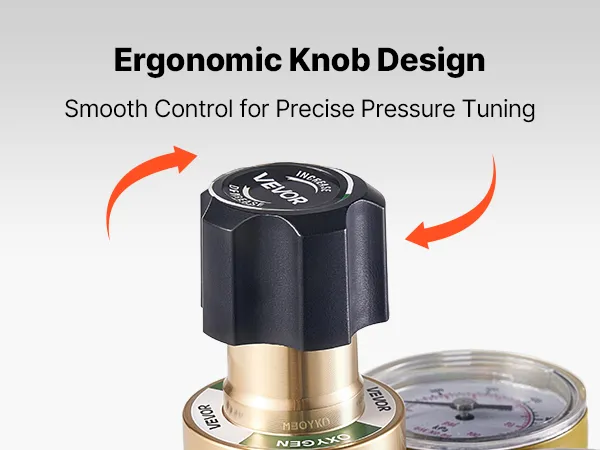
- PC Knob Adjustment: Designed for a comfortable grip and smooth turning, allowing more precise pressure adjustment and easier gas control during operation
Reviews summary
Al-generated from customer reviews
Frequently Bought Together
Reviews
 j.houle jabodkin@hotmail.com Chief Engineer Ja***
 About this item


0–4000 PSI and 0–400 PSI Oxy Acetylene Welding Regulator Set
This set includes the two regulators required to operate an oxy-acetylene torch. The acetylene regulator covers 0 to 400 PSI, which is the safe working range for each gas, while the oxygen regulator reads 0 to 4000 PSI on the high-pressure side. Since each has a gauge of its own, you can monitor the delivery pressure and cylinder pressure while working rather than making educated guesses.
Buying the pair together ensures the two regulators are compatible with each other and the gases they manage. This oxy-acetylene regulator set supports cutting, brazing, and welding right out of the box. Since acetylene becomes unstable at higher pressures, the wide oxygen range and the lower acetylene range are not accidentally interchangeable. If each regulator has the proper gauge, you can read accurate numbers for the gas you’re actually adjusting.
CGA-540 and CGA-200 Inlet Connections for Standard Cylinders
The CGA-540 inlet, the typical connection on most American-style oxygen cylinders, connects to the oxygen regulator. The acetylene regulator uses a CGA-200 inlet. Before you buy, keep in mind that the CGA-200 fitting is intended only for small MC acetylene cylinders, not larger tanks. Verify the connection on your acetylene bottle to ensure that you order the correct setup and avoid getting a regulator that is impossible to mount.
A regulator that won’t thread onto your tank is useless, so the first thing to get right is matching the inlet to your cylinder. According to CGA regulations, these CGA fittings attach to the cylinder valves they are intended for, without adapters. Confirm the connection type up front to avoid the annoyance of a regulator that doesn’t fit the bottles you already have.
9/16"-18 RH and LH Outlets for Correct Hose Hookup
The acetylene regulator has a 9/16"-18 left-hand outlet, while the oxygen regulator has a 9/16"-18 right-hand outlet. This difference isn’t accidental: fuel gas fittings are intentionally left-hand threaded, making it impossible to physically connect an oxygen hose to a fuel line, or vice versa. The threading serves as an integrated safety check before any gas flows.
The right-hand oxygen and left-hand acetylene convention matches industry standards, so this set fits a standard torch setup without special adapters. These outlet sizes match standard oxy-fuel hose fittings, so your existing twin welding hose threads right on without purchasing new parts. Standard threading on each side greatly reduces the risk of a dangerous mistake when connecting gas under pressure.
Premium Brass Body for Airtight, High-Pressure Sealing
Each regulator’s main body is made of sturdy brass, the industry standard for gas regulators because it seals tightly and withstands high pressure without corroding or cracking. This airtight seal prevents gas leaks at the connections, which is crucial when one gas is flammable and the other feeds a flame.
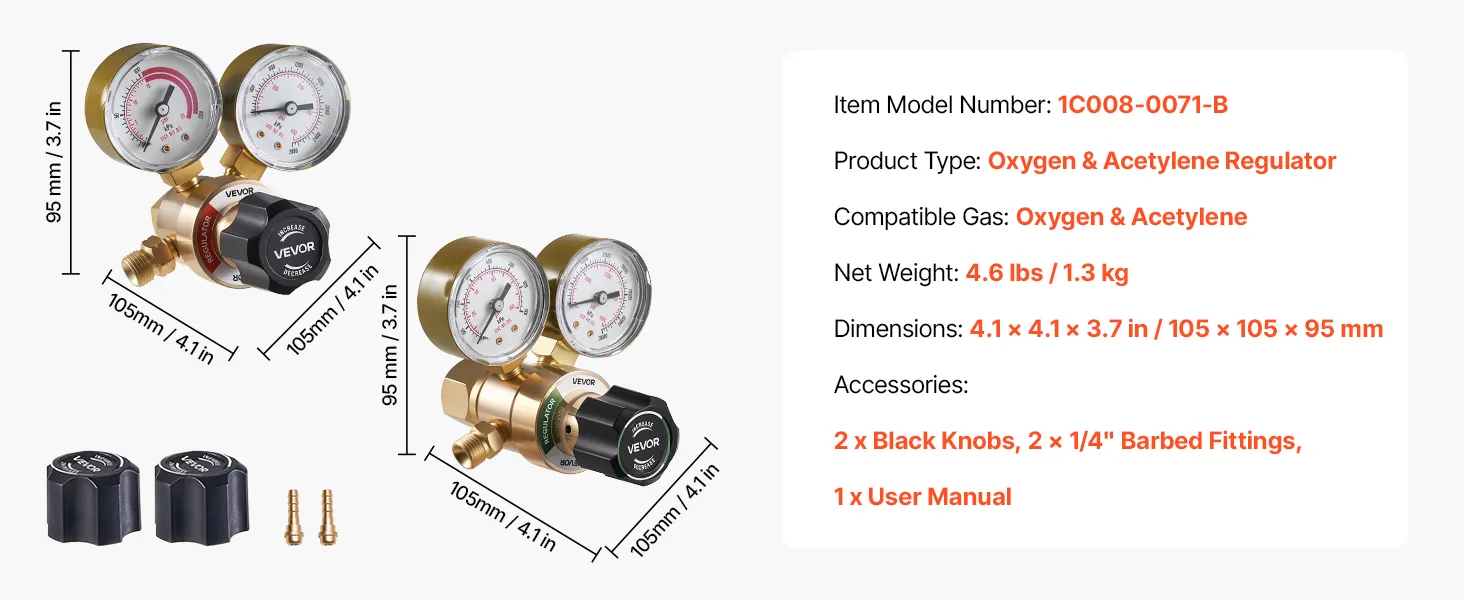
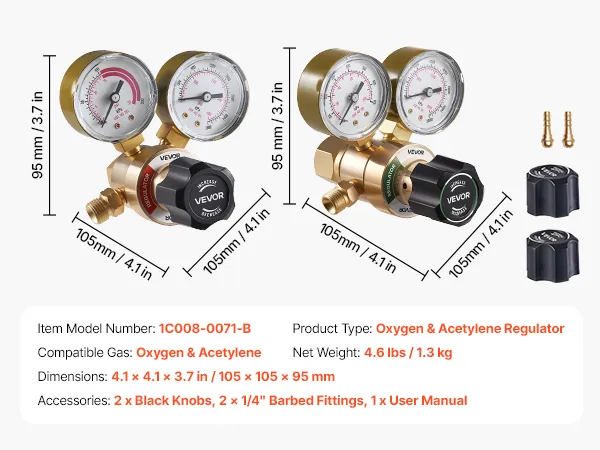
Brass resists wear, so an oxy acetylene welding regulator built this way remains dependable through years of shop use. At 4.6 lbs for the set, the regulators have the solid heft you expect from real brass, not thin cast metal. The brass construction also helps them last longer in demanding conditions. A regulator takes constant pressure cycling every time you open and close a cylinder, and cheaper materials fatigue and start weeping gas.
PC Knob Adjustment for Precise, Comfortable Pressure Control
Each regulator has a PC adjustment knob that is made for a comfortable grip and smooth turning; the torch pressure setting is a fine adjustment, and a cleanly turning knob allows you to dial in the precise delivery pressure rather than overshooting and then backing off; the grip shape makes it easy to turn even with greasy hands or shop gloves on.
The smooth knob action lets you make small adjustments without overshooting your target, which is exactly what you want from a reliable oxy acetylene welding regulator. Precise pressure control is what gives you a stable, consistent flame; too much fluctuation at the regulator shows up as an unsteady torch, which affects both cut quality and weld consistency.
Dual-Gauge Oxy Acetylene Welding Regulator for Clear Pressure Monitoring
Because each regulator has its own gauge, you can always read the pressure for the gas you’re adjusting. The acetylene gauge is scaled to 400 PSI and the oxygen gauge is scaled to 4000 PSI. The clear, dedicated readouts let you quickly monitor pressure and spot a dropping cylinder before it affects your work.
A dual-gauge oxy acetylene welding regulator gives you clear visibility of both regulators at once, allowing you to see what each gas is doing in real time, exactly what you want when working with pressurized, flammable gas. Reliable gauges are as much a safety tool as a convenience. Knowing your exact acetylene pressure matters because that gas becomes unstable if you push it too high, and a clear gauge keeps you in the safe range.