








Download VEVOR App 

Get $5.00 Off $99.00+ Orders on Your First 3 App Orders
Scan the QR code to download
SKU: YWCLYLSDQBWL3HKAI002V9
Copy


+12
More


VEVOR Automotive Smoke Machine Leak Detector, DC 12V EVAP Vacuum Diagnostic Tester with Built-in Air Pump, Dual-Mode Vacuum Pipeline Fuel Diagnostic Detector for Cars, Motorcycles, Trucks, Boats, ATVs
4.6 176 Reviews
$ 61 99
Earn at least 2% points on purchases or save up to 15%.
Each when you buy 0+.
Shop
Get -% off for new user
Get $5.00 Off $99.00+ Orders on Your First 3 App Orders.
Download Now
Features & Details
- Wide System Coverage: This automotive smoke machine leak detector supports leak detection for EVAP lines, vacuum hoses, intake passages, turbo piping, and exhaust systems. It is suitable for cars, trucks, boats, motorcycles, and ATVs
- Dual-Mode Testing: Our automotive smoke tester allows you to use Air Mode first to check the system sealing condition. Then switch to Smoke Mode to visually locate leak points, reducing unnecessary smoke fluid consumption
- Dual Air Pump Output: The automotive smoke machine is equipped with dual built-in air pumps that provide stable airflow and dense smoke. It makes leak points easier to detect, even in tight engine compartments
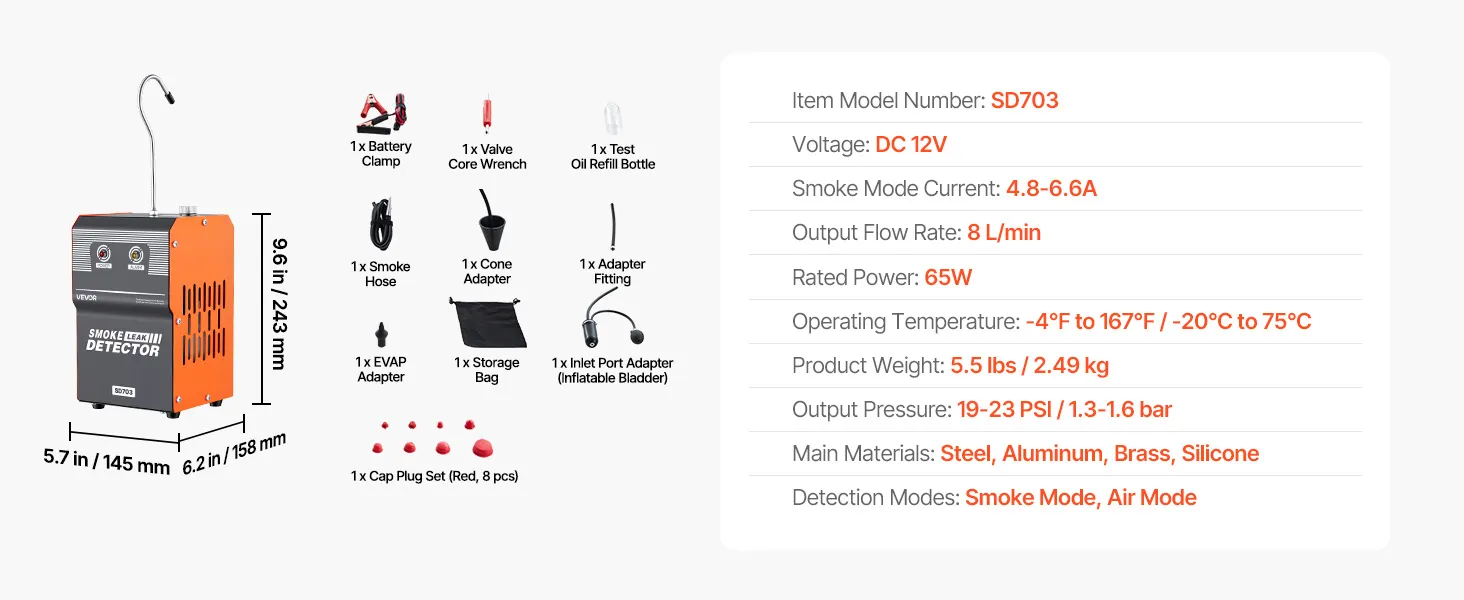
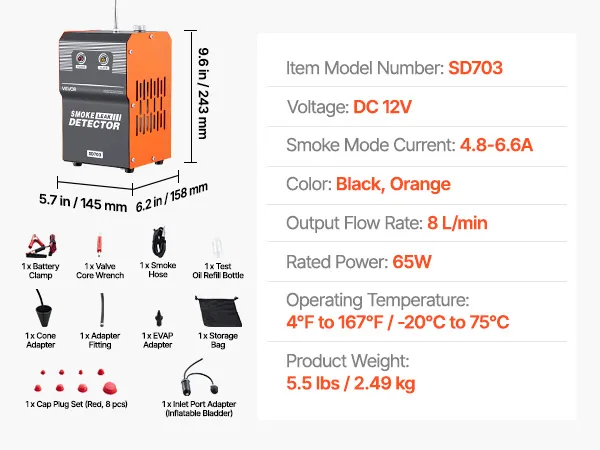
- Practical Sealing Kit: This car smoke machine comes with an 8-piece cap plug kit, cone adapter, and EVAP adapter. It allows you to seal various lines and passages for accurate leak detection
- Stable Operation: Our auto smoke machine operates in temperatures from -4℉ to 167℉ / -20℃ to 75℃. It features an overheat indicator and automatic shutdown for protection. Add 10-20 ml of smoke fluid, massage oil, or glycerin before use
Product specification
- Item Model Number SD703
- Voltage DC 12V
- Smoke Mode Current 4.8-6.6A
- Output Pressure 19-23 PSI / 1.3-1.6 bar
- Output Flow Rate 8 L/min
- Rated Power 65W
Frequently Bought Together
Reviews
About this item
Questions and Answers
Explore
Reviews
No customer reviews
Be the first to rate this product. your feedback will helps others make informed decisions.
Write a Review
Top Reviews
About this item
Product specification
- Item Model Number
- SD703
- Voltage
- DC 12V
- Smoke Mode Current
- 4.8-6.6A
- Output Pressure
- 19-23 PSI / 1.3-1.6 bar
- Output Flow Rate
- 8 L/min
- Rated Power
- 65W
- Operating Temperature
- -4℉ to 167℉ / -20℃ to 75℃
- Color
- Black, Orange
- Main Materials
- Steel, Aluminum, Brass, Silicone
- Product Weight
- 5.5 lbs / 2.49 kg
- Product Dimensions
- 5.7 x 6.2 x 9.6 in / 145 x 158 x 243 mm
Description


Pro-level performance without the pro-level cost
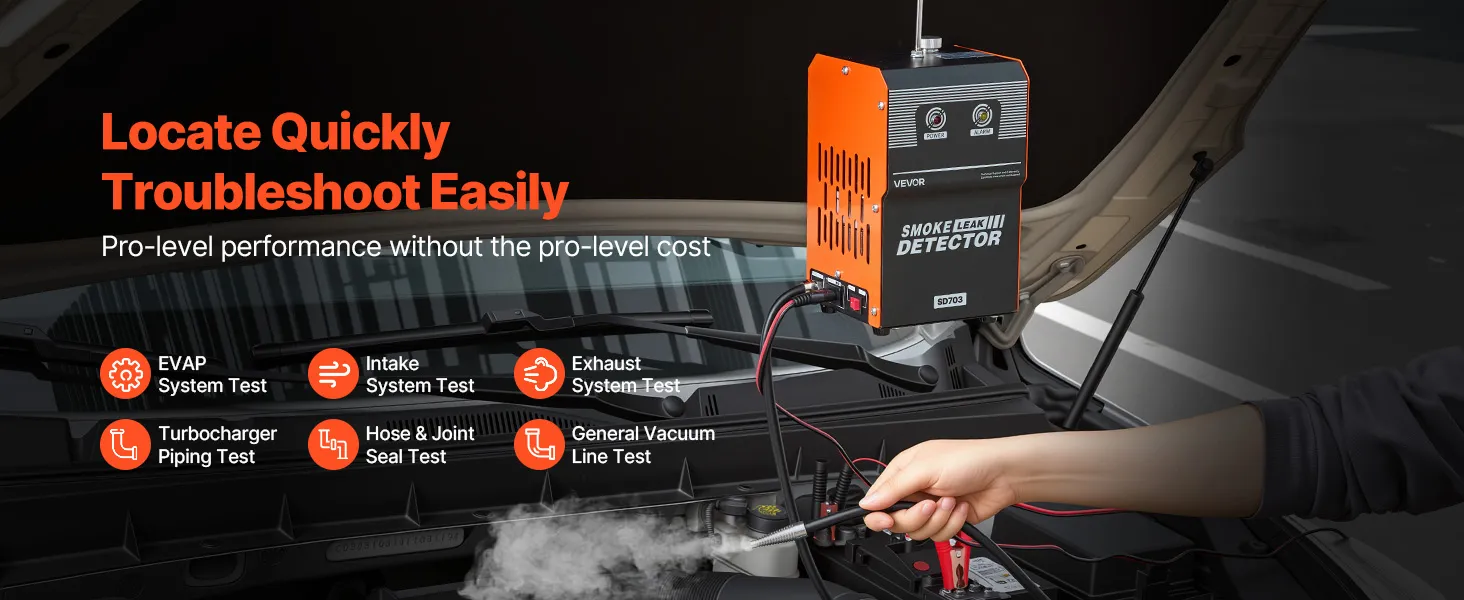
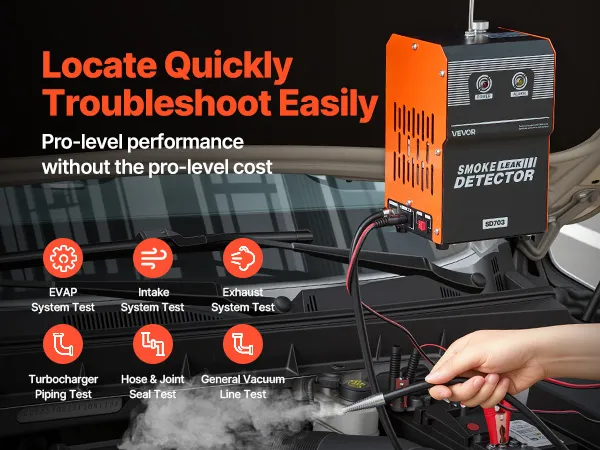
This automotive smoke machine leak detector is designed to detect hidden leaks in vehicle systems. It helps quickly pinpoint leak locations for efficient diagnostics.
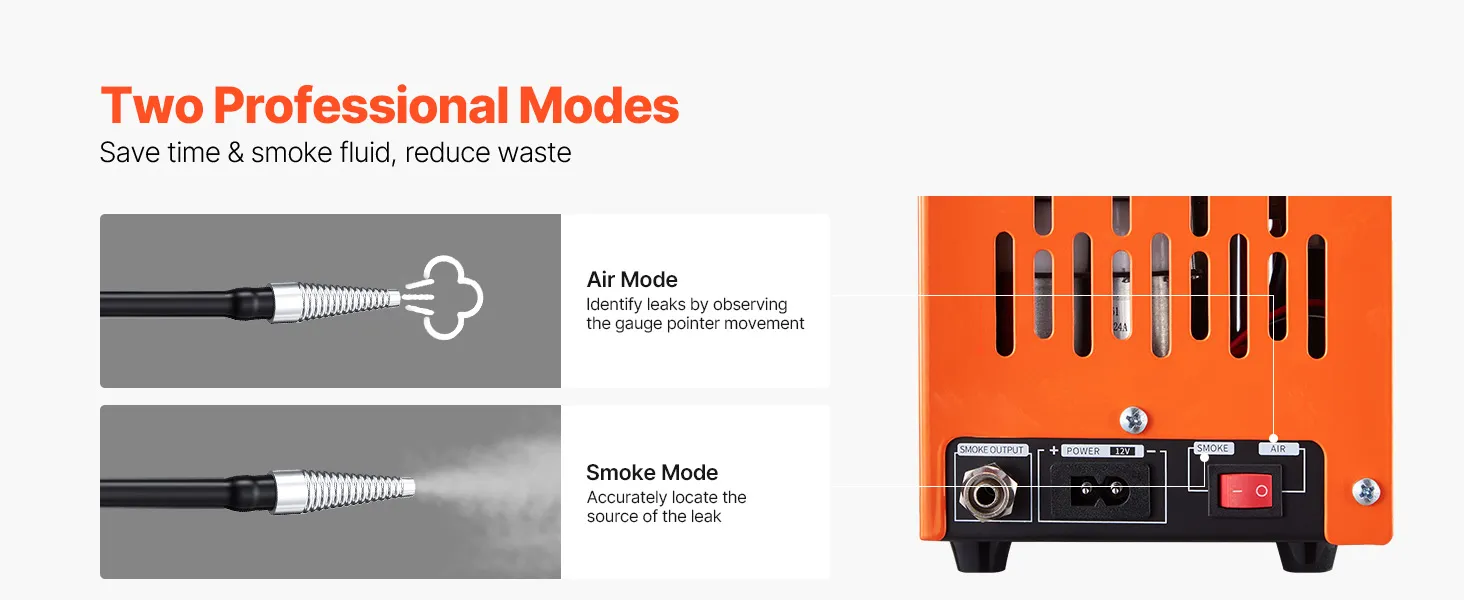
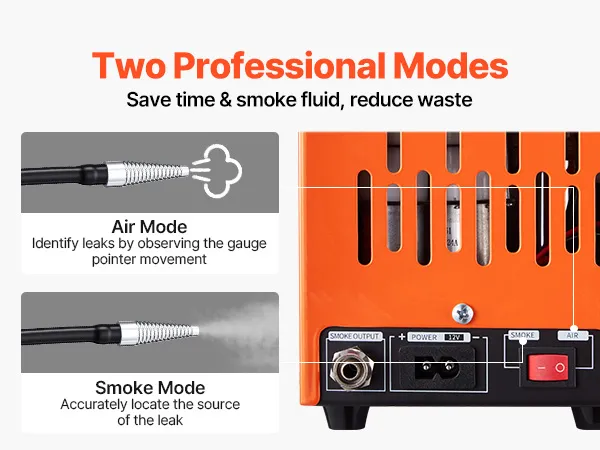
Our automotive smoke tester allows you to switch between Air Mode for seal testing and Smoke Mode for leak detection. The two-step process reduces fluid use and speeds up troubleshooting.
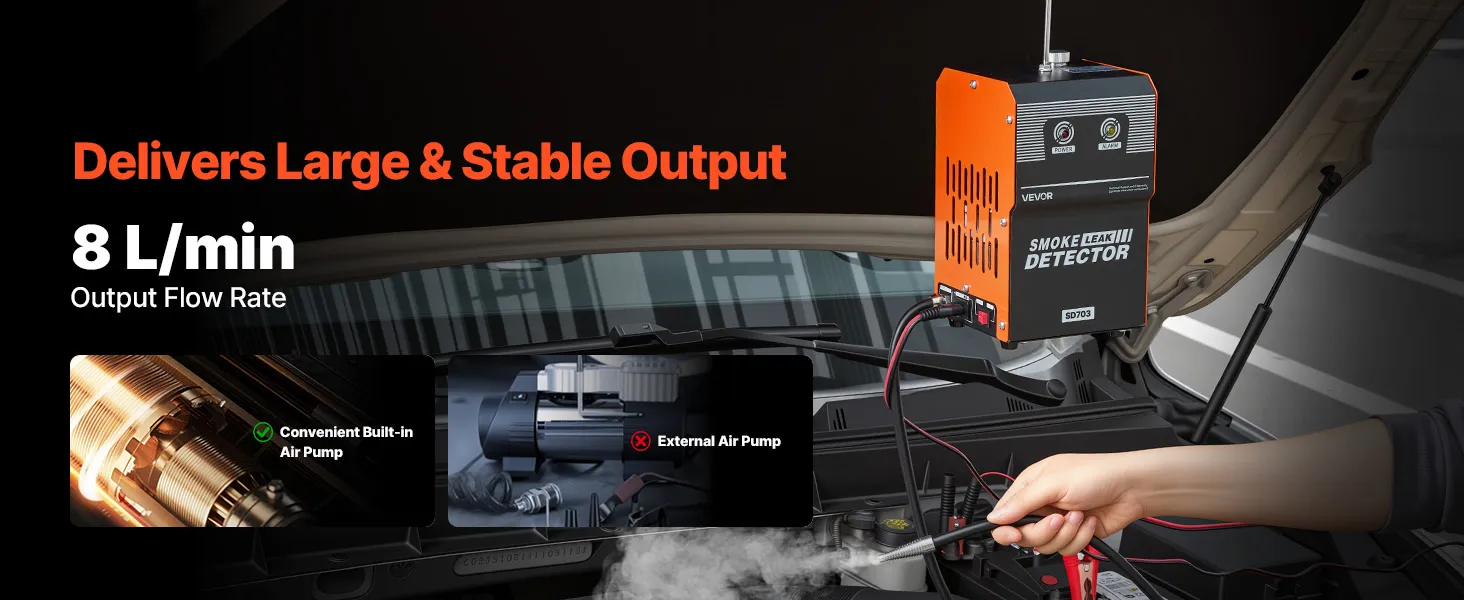
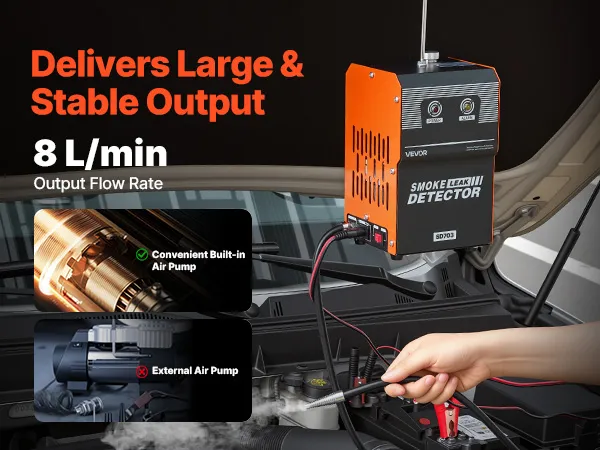
The automotive smoke machine includes a built-in air pump for standalone operation. No external pump is required, and the compact design allows easy storage and portability.
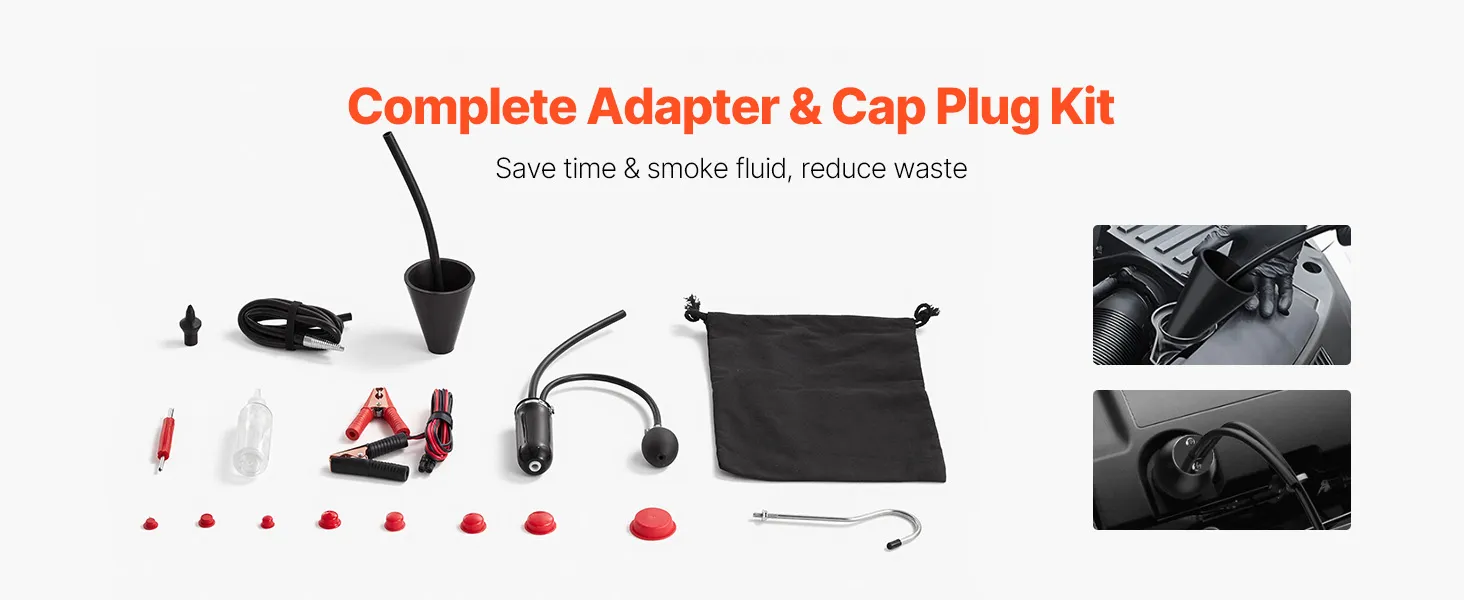
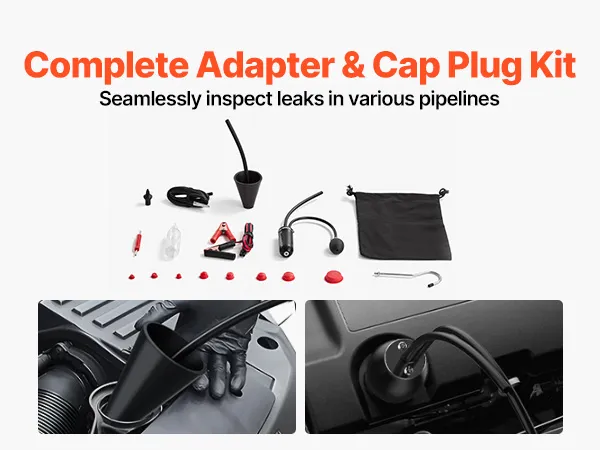
This car smoke machine works with proper adapters and plugs before testing. This ensures more accurate leak detection.
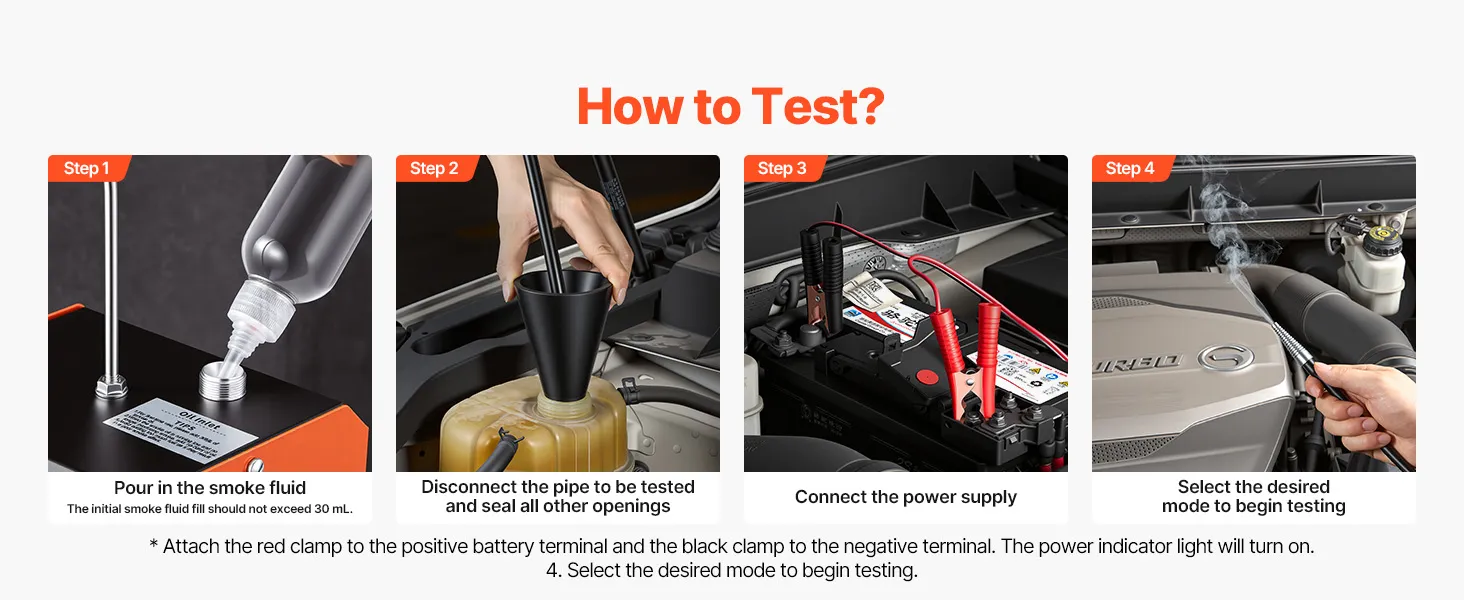
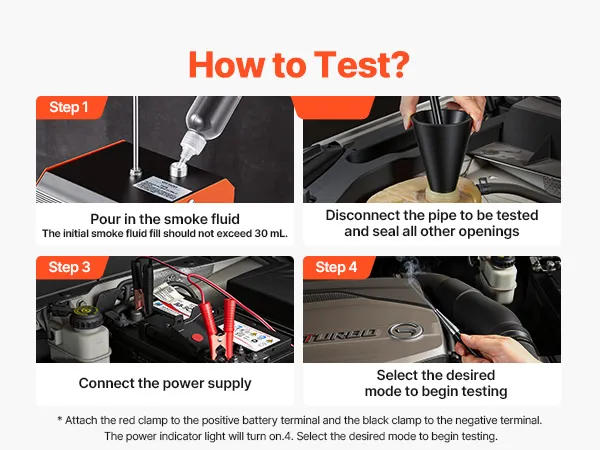
Our auto smoke machine includes a power indicator and an overheat indicator. It will automatically shut down to cool when overheating occurs.
EVAP Leak Detector with Dual-Mode Air and Smoke Testing
This EVAP leak detector uses a two-step technique to determine whether a leak is present before wasting time searching for it visually. To verify whether the system is sealed without using smoke fluid, Air Mode is operated first to pressurize the system. When an issue is verified, the system is filled with visible vapor by switching to Smoke Mode, which allows the exact leak site to be determined rather than relying solely on pressure loss.
Both accuracy and efficiency depend on this order. Smoke Mode can waste fluid on systems that might not even leak, whereas Air Mode alone can verify the existence of a problem without ever indicating its location. The SD703 uses this dual-mode method to reduce unnecessary smoke fluid use while providing an accurate visual leak location as testing advances to the second stage.
Dual Air Pump Output for Dense Smoke and Stable Airflow
Smoke that is dense enough to be seen is essential for finding a leak in a small engine bay, and this machine uses two integrated air pumps to provide that airflow. When leaks are tiny or hidden behind other parts in a compact space, two pumps working together produce denser smoke and more consistent pressure than a single-pump configuration. Before a technician can visually identify the source of weak, thin smoke emissions, the smoke usually disperses.
Instead of falling off midway through a test cycle, the dual-pump system, rated at 65W with an output flow rate of 8 L/min, maintains consistent output. This EVAP leak detector is useful for diagnosing leaks across several systems in a single session, without stopping to let pressure rebuild between tests, thanks to its steady output.
19-23 PSI Output Pressure for Wide System Leak Detection
This unit provides 19-23 PSI (1.3-1.6 bar), which is sufficient to force smoke through EVAP lines, vacuum hoses, intake passageways, turbo pipework, and exhaust systems without overpressurizing delicate components. The amount of pressure output dictates the extent to which a system is examined. Because that pressure range is specially calibrated for automobile diagnostic use, there is no chance that a higher-pressure industrial instrument may damage seals or connections.
The tool's ability to cover so many different systems on a single device is also explained by this range. A fixed 19–23 PSI output provides sufficient range to test both vacuum hoses and EVAP lines without the need for separate equipment calibrated for each vehicle, truck, motorbike, boat, or ATV. Vacuum hoses and EVAP lines often require lower pressure than intake piping.
8-Piece Cap Plug Kit for Sealing EVAP Lines and Passages
Proper sealing of the system under test is essential for accurate testing, and this package includes an 8-piece cap plug set, a cone adapter, and a special EVAP adapter. Having a variety of cap sizes on hand allows one kit to seal connections across a wide range of vehicle makes and models without requiring the purchase of additional adapters, since different systems and vehicles use different-sized fittings and holes.
By connecting directly to evaporative emissions systems to ensure a safe, leak-free seal during testing, the specialized EVAP adapter particularly handles a common diagnostic task for this instrument. When the connection point isn't properly sealed, smoke or air pressure escapes at the adapter instead of the real problem, creating a misleading reading that leads a technician to pursue an imaginary leak.
Overheat Protection Rated for -4°F to 167°F Operation
For a diagnostic tool used in garages, shops, and outdoor settings in various climates, reliability under actual working conditions is important. This unit is rated to operate between -4°F and 167°F (-20°C to 75°C). Because of this broad range, interior components can be used in both hot summer weather and frigid winter climates without malfunctioning.
An overheat warning and automatic shutdown are part of the built-in protection that prevents internal damage from heat accumulation during prolonged operation. This is especially important during back-to-back testing sessions, since the dual pumps may stress the motor if they run constantly without a cooldown interval. To produce the visible smoke output necessary for Smoke Mode testing, 10–20 ml of smoke fluid, massage oil, or glycerin must be applied before each use.
EVAP Leak Detector Compatible with Cars, Trucks, and ATVs
Multiple types of vehicles can use this leak detector. It is a useful tool for companies or individuals working with multiple vehicle types because of its dual-mode testing, interchangeable sealing kit, and calibrated pressure output, which are compatible with automobiles, motorbikes, trucks, boats, and ATVs. The tool's pressure output and adapter kit are sized for automotive-scale systems in general rather than being constructed around the criteria of a single car category, which accounts for this variety of compatibility.
Measuring 5.7 x 6.2 x 9.6 inches and weighing 5.5 pounds, the device is small enough to be kept in a toolbox or work cabinet between uses. One piece of equipment that covers that range eliminates the need for separate detectors calibrated to different vehicle types for technicians or do-it-yourselfers troubleshooting EVAP, vacuum, or intake leaks across a varied fleet of vehicles.
Product guides and documents
User manual-en (PDF) Review
Questions and Answers (0)
Typical questions asked about products: Is the product durable? ...
Select product protection plan
Accident and warranty protection by Xcotton (partner with AIG)
No thanks
3-Year
2-Year
1-Year
In Stock
Security & Privacy
FREE Returns
Professional Service
Compare with similar items
Similar Items You Might Like
People Who Bought This Item Also Bought
Best sellers in this category
People Who Viewed This Item Also Viewed
Your Browsing History