Could not be happier with the vevor 13ft bell tent. I took it elk hunting in the black hills of south dakota. Spent 6 nights in it. I was by myself and had it set up in 20 minutes. Had a couple buddies offer to let me borrow their wall tents but I told them I couldn't set it up by myself and I had already bought this one. The day it showed up I set it up in the back yard. Directions said to wet it down and let it dry for best results..I guess it's supposed to help with keeping the rain out of it when gets wet then dries. 2 days later we got 60mph winds and an inch of rain. It only lasted about 1.5 hours but but I watched the tent through my back window and checked it after the rain quit. And it performed perfectly. The material is strong. The floor is made out of a very durable tarp material. Highly recommend this tent. I'm sure the larger tents set up just a easily. I don't use it as a canopy like the pictures show it can do and probably won't since I have a couple of fame style canopies already.
SKU: KJZPSLS82FT4A0XFC001V0


Top highlights
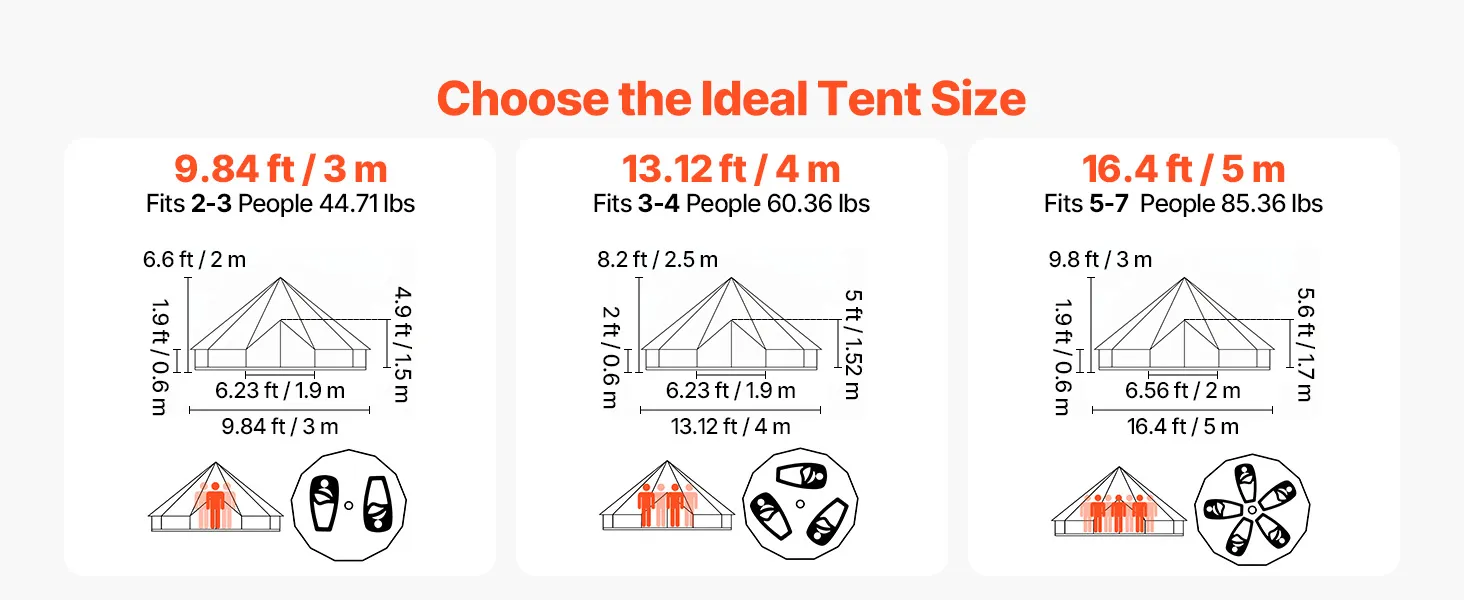
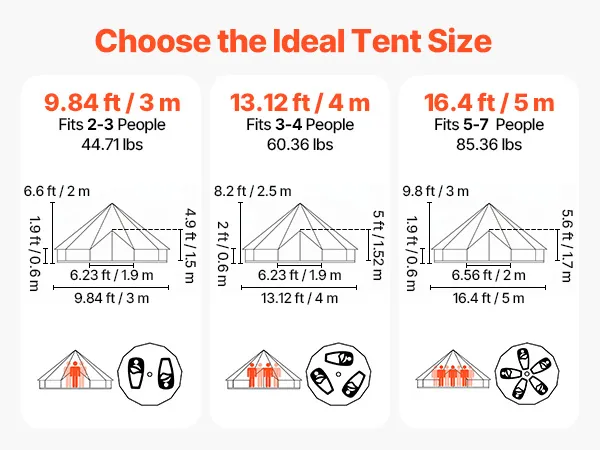
- Fits 3-4 people with 8.2 ft peak height for free movement
- Durable poly-cotton canvas with reinforced poles for stability
- Mesh windows, vents, and stove jack for all-season comfort
AI Summarized from product information
How many people can fit inside the VEVOR Canvas Bell Tent?
Is the VEVOR Canvas Bell Tent waterproof?
What materials are used in the construction of the VEVOR Canvas Bell Tent?
How many people can fit inside the VEVOR Canvas Bell Tent?
Is the VEVOR Canvas Bell Tent waterproof?
What materials are used in the construction of the VEVOR Canvas Bell Tent?
Specifications
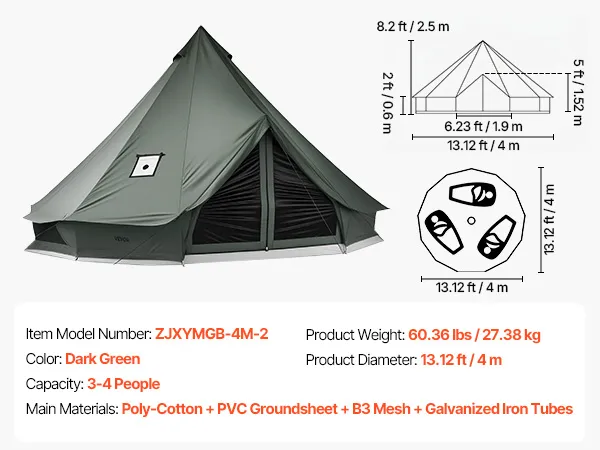
- Item Model Number ZJXYMGB-4M-2
- Color Dark Green
- Capacity 3-4 People
- Product Diameter 13.12 ft / 4 m
- Peak Height 8.2 ft / 2.5 m
- Door Height 5 ft / 1.52 m
Reviews · 4.4
Reviews · 4.4
AI Review Summary: The tent is highly praised for its spaciousness, durability, ease of setup, weather resistance, and quality materials, though some users noted issues with zippers, minor leaks, and weight.
 Rodney Larson
in
 on Oct 05,2026
on Oct 05,2026
Poly-Cotton Dark Green 13.12 ft
 ivana.ferreira
in
 on Sep 10,2026
on Sep 10,2026
4m
Tenda mesmo top. Fechada e com os fechos tapados com as abas nem sequer chove lá dentro. É top para alinhar visitas
About this item
Description


Pro-level performance without the pro-level cost
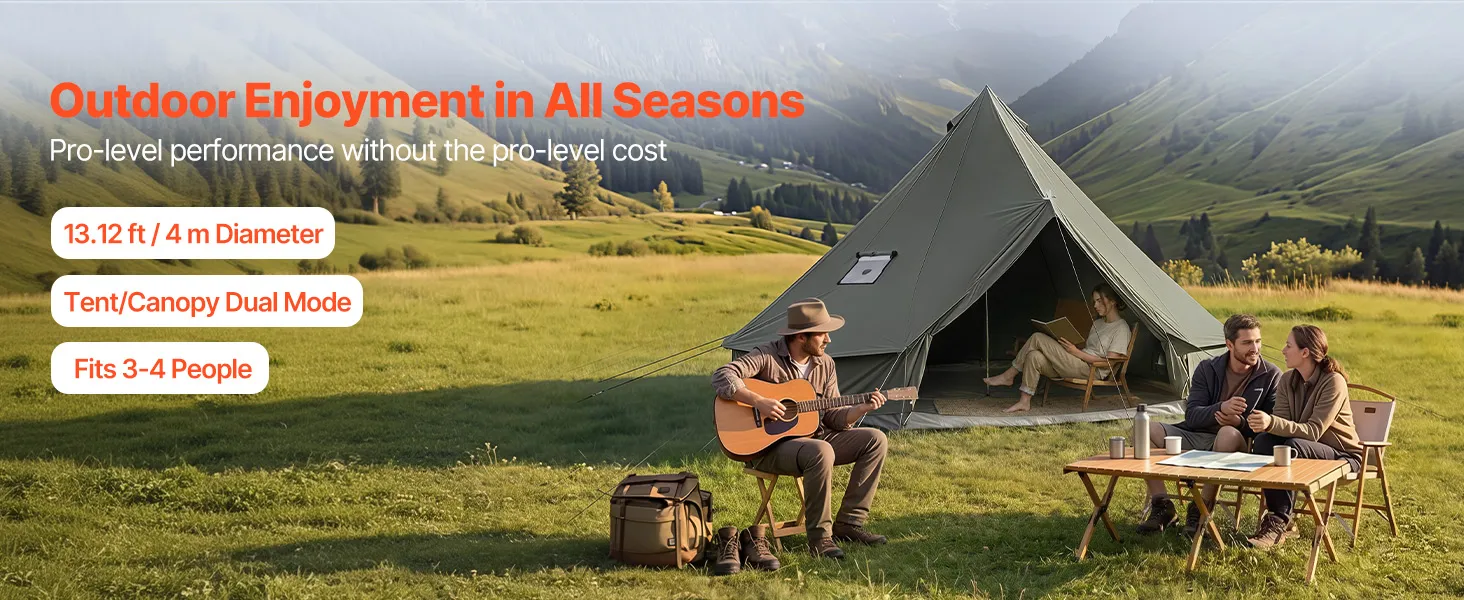
Choose this 13.12 ft / 4 m canvas bell tent for outdoor camping. The spacious interior fits 3-4 people comfortably, great for family camping and group gatherings.
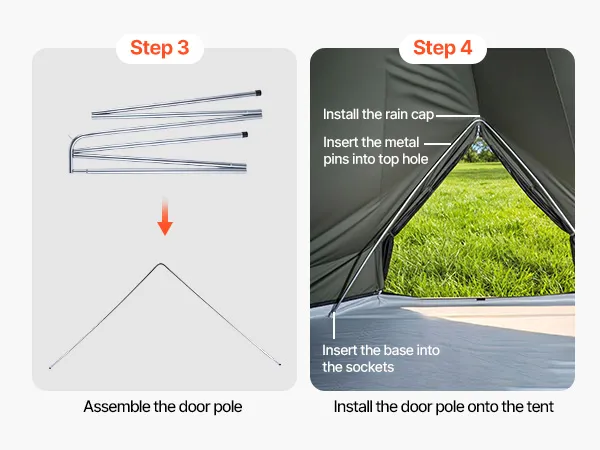
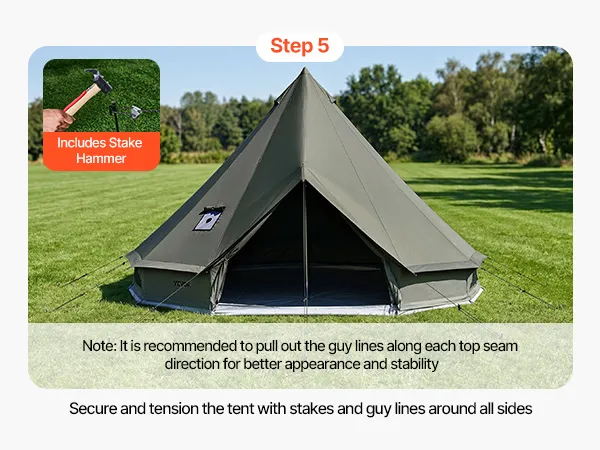
Key Features
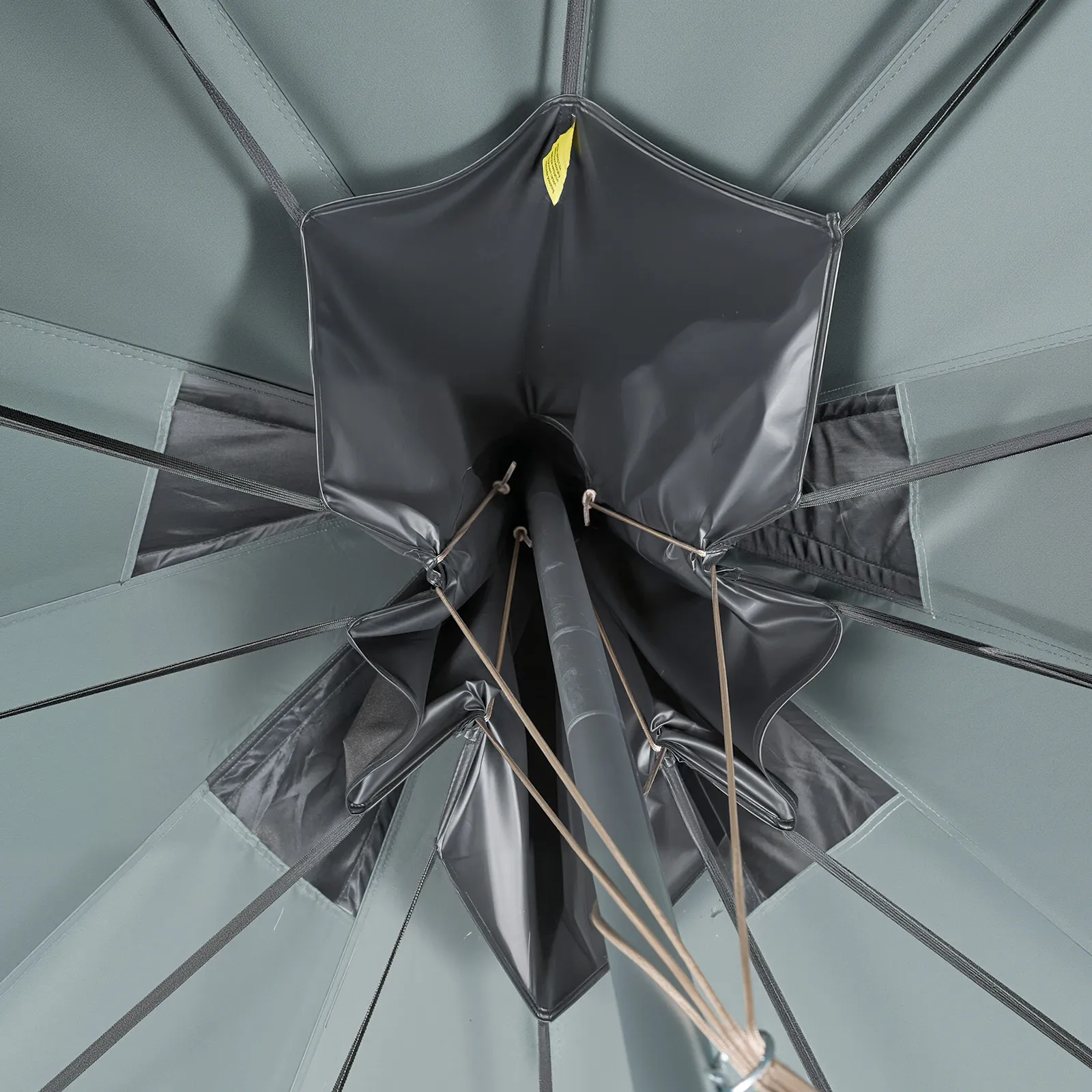
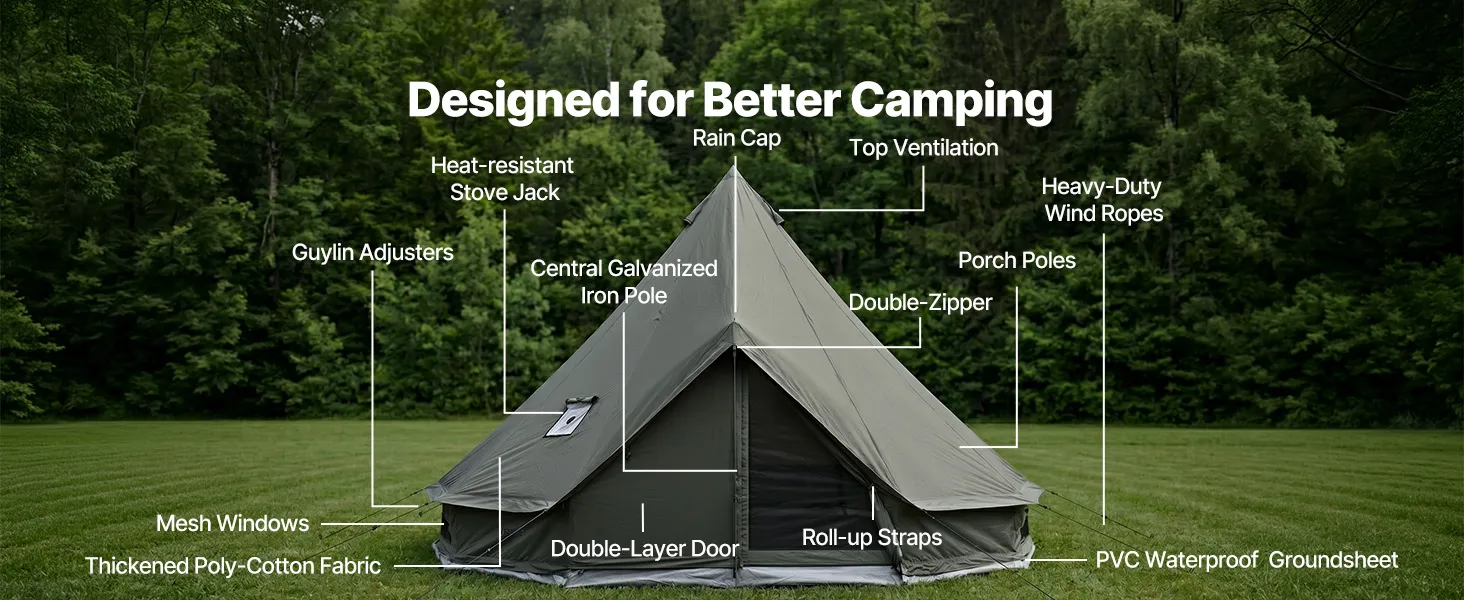
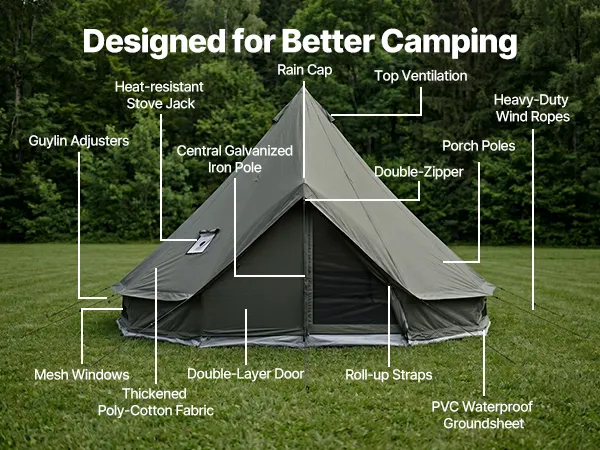
Top Ventilation
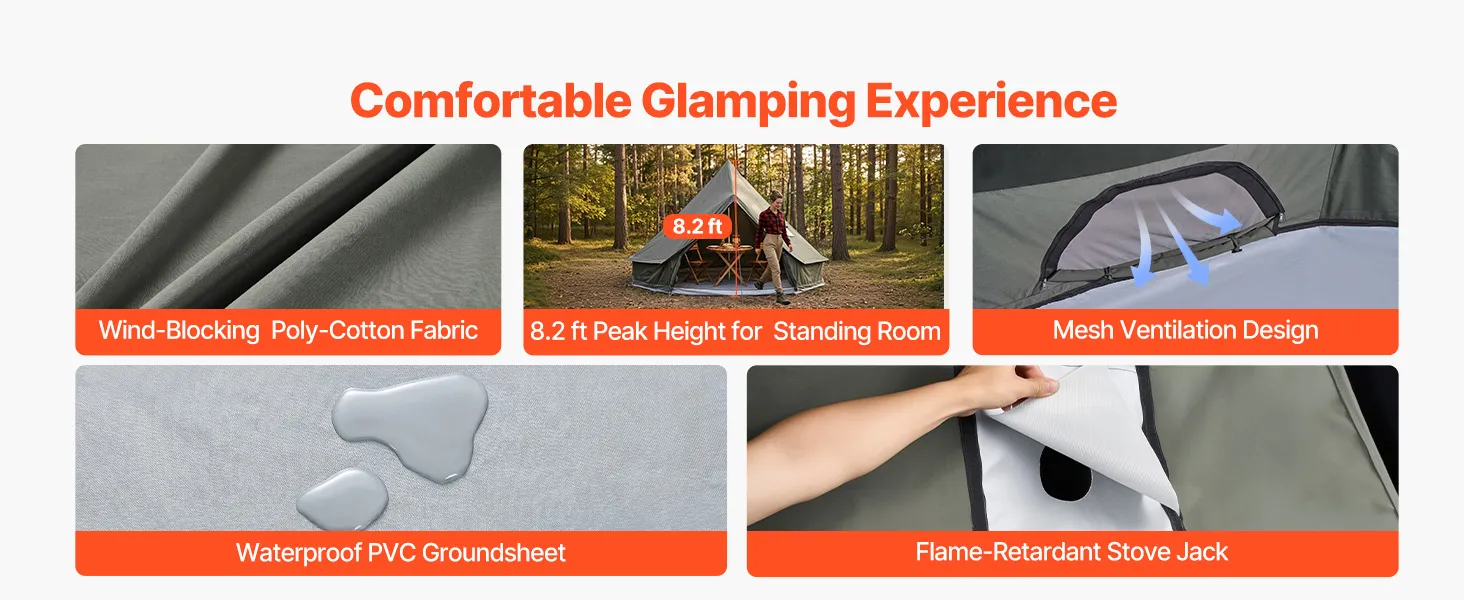
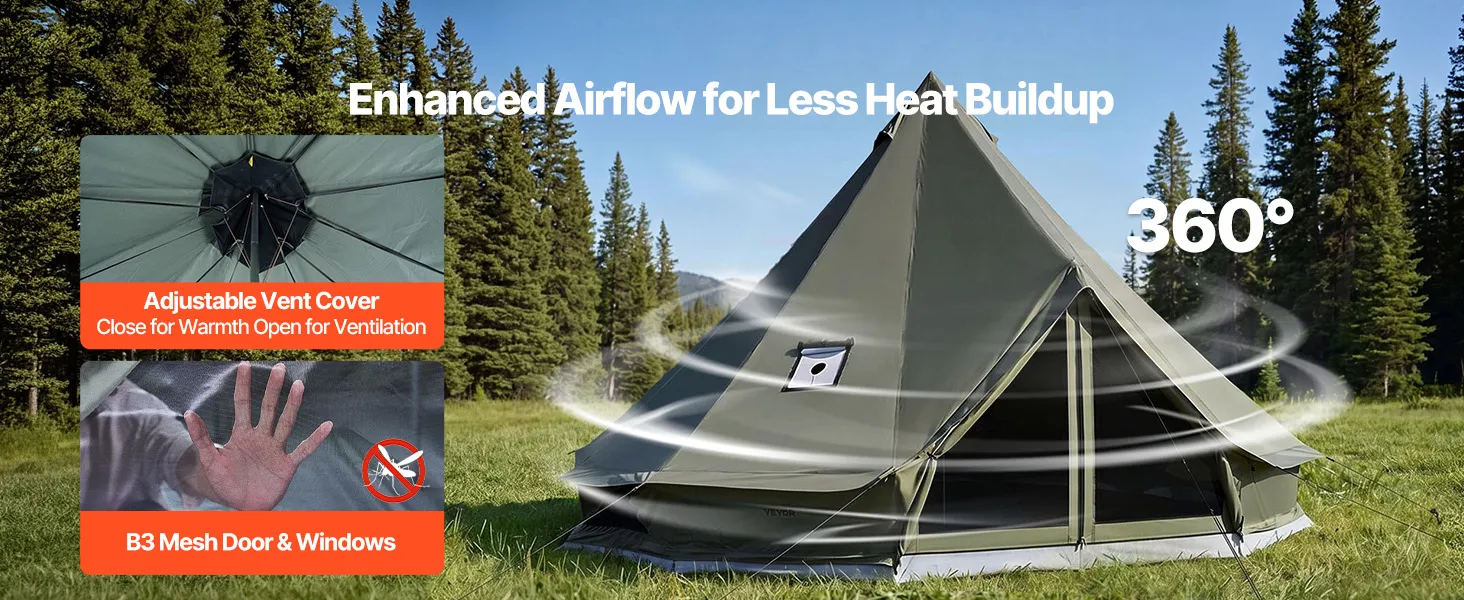
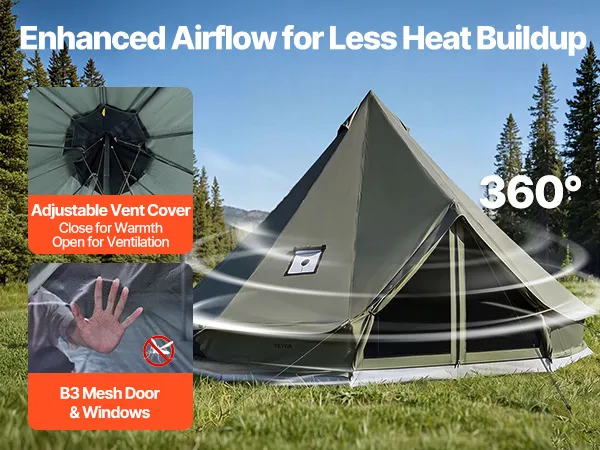
This canvas bell tent features multiple top vents and an adjustable vent cover. Easily control airflow inside the tent with the drawstring design.
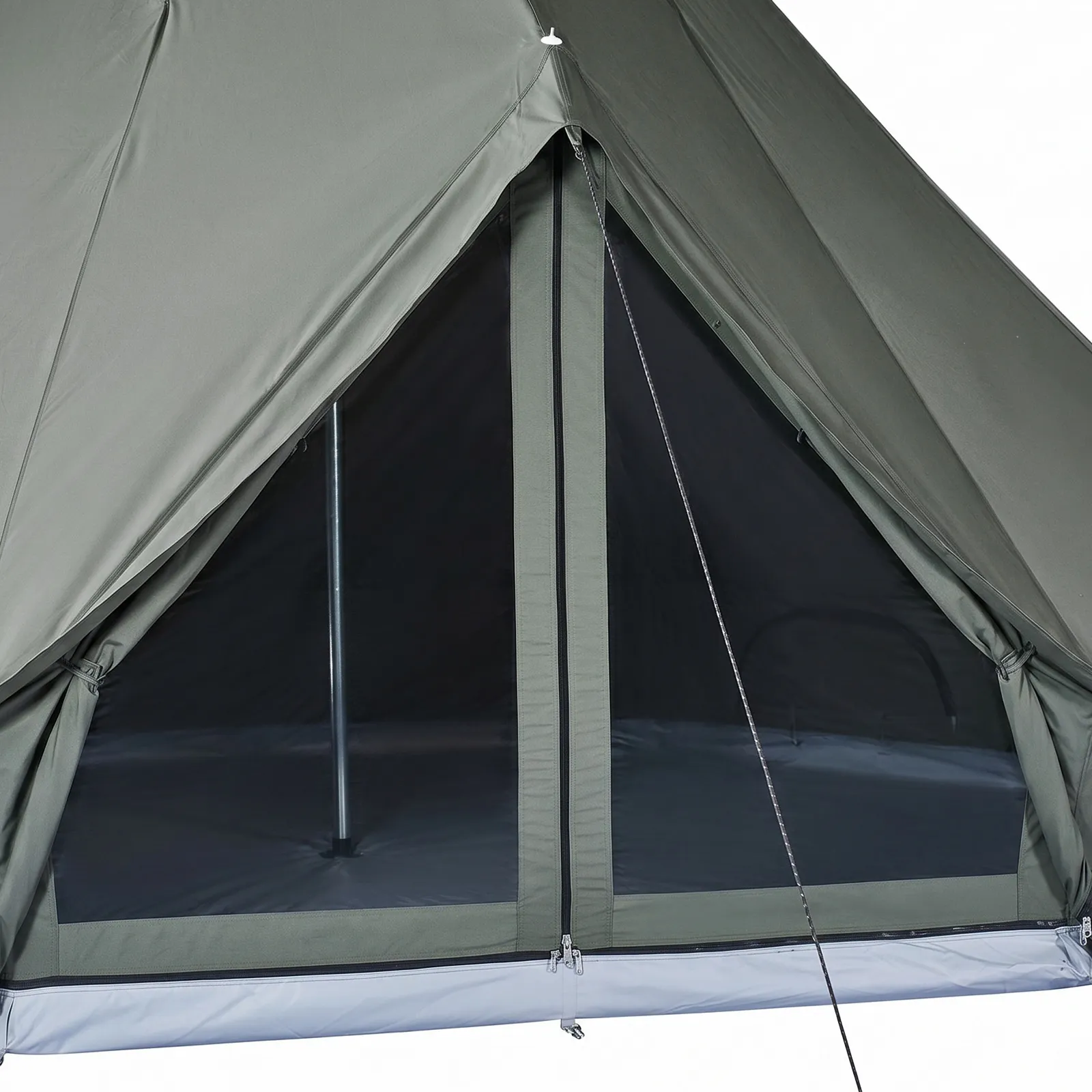
Double-Layer Door
Our yurt tent features dual-direction zippers for easy entry and exit. The outer canvas door helps block wind, while the inner mesh door improves airflow and comfort.
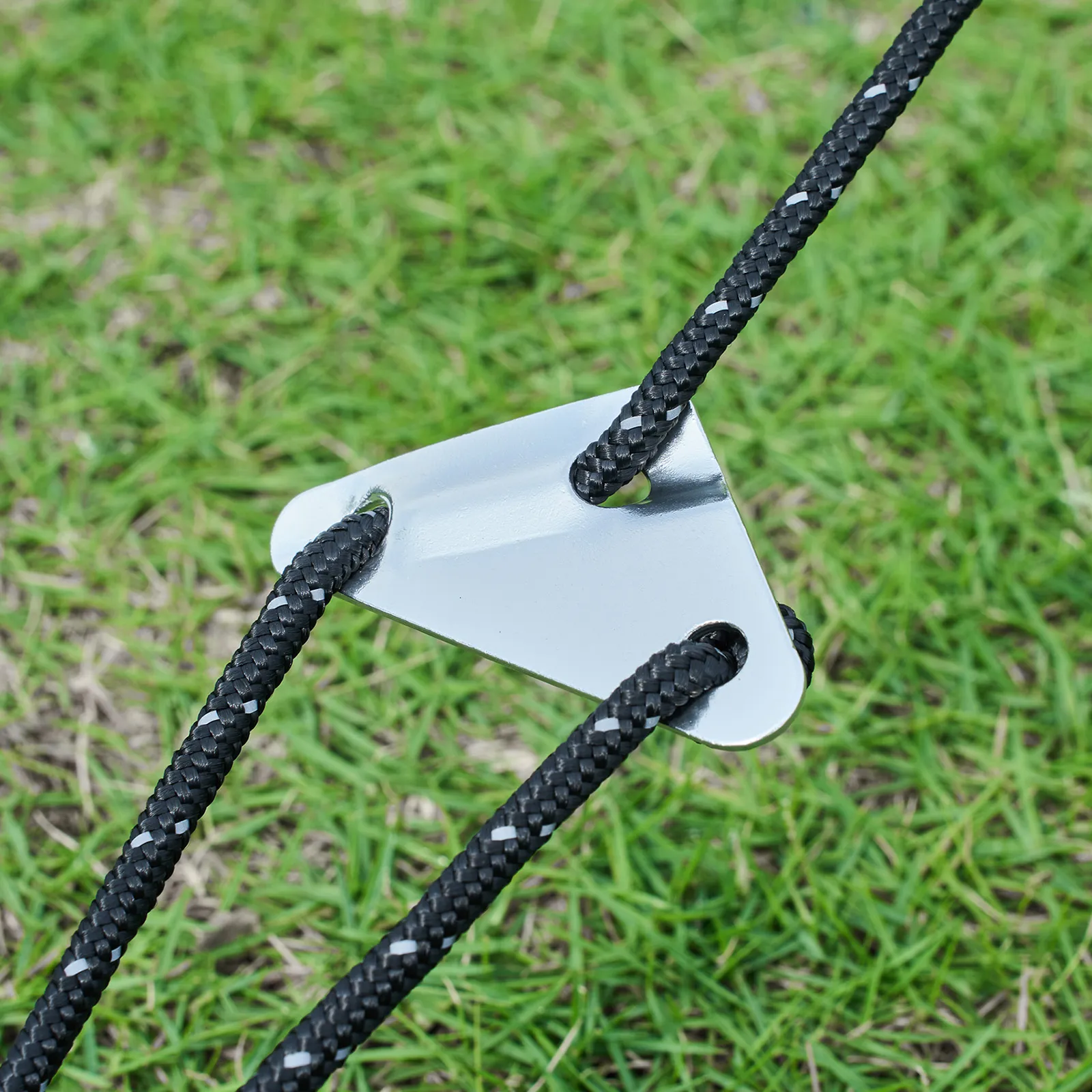
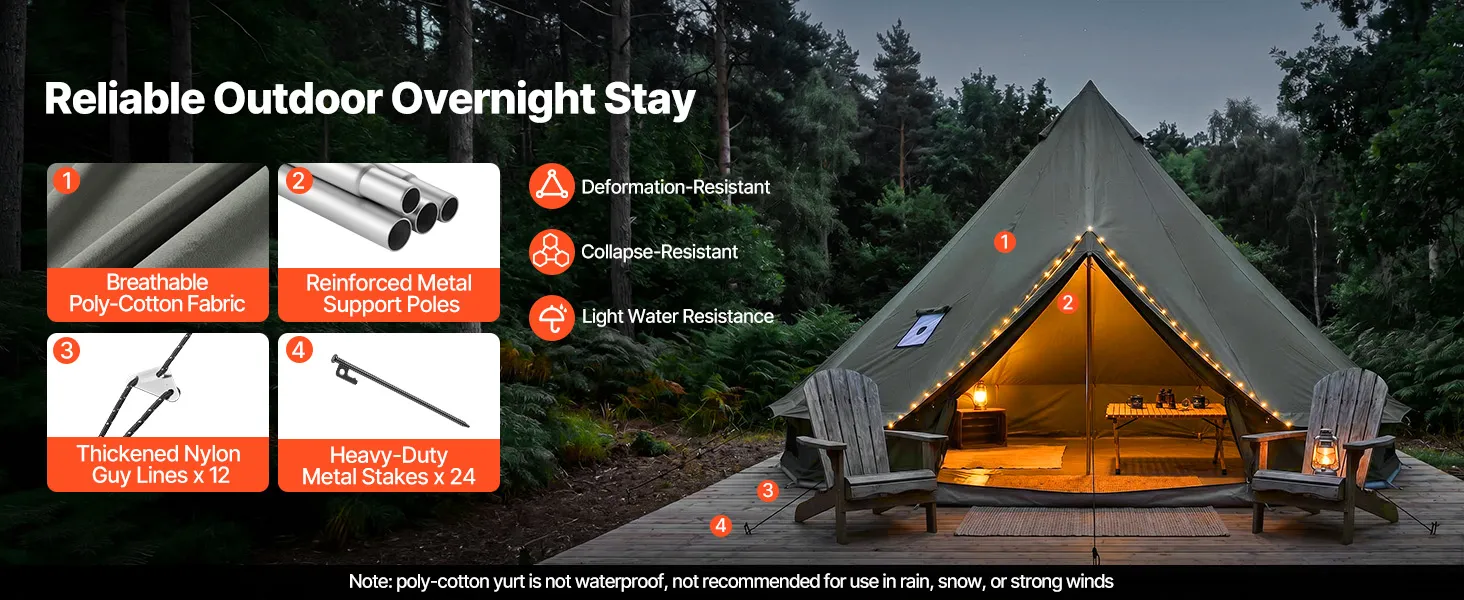
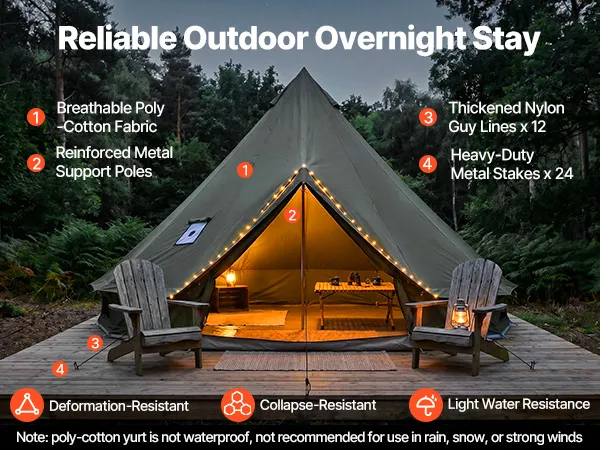
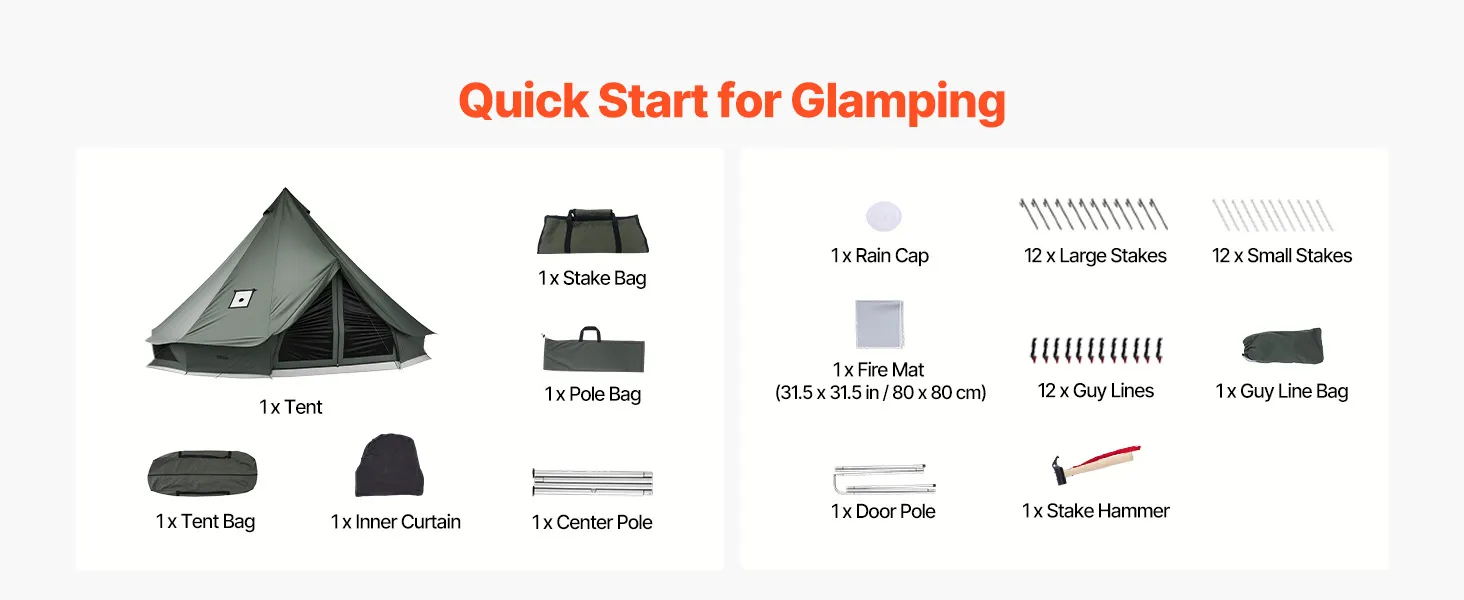
Adjustable Nylon Guy Lines
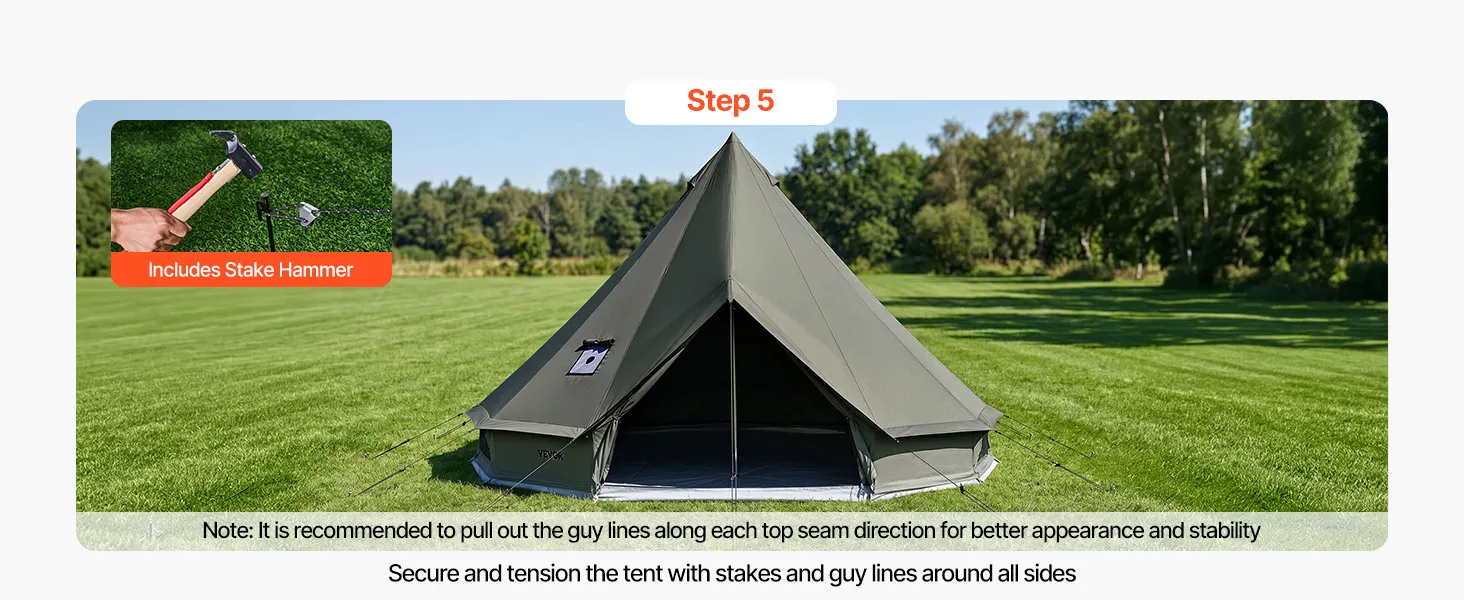
The bell tent includes adjustable nylon guy lines with buckles for easy length adjustment. Keeping the tent taut helps reduce movement and improve stability.
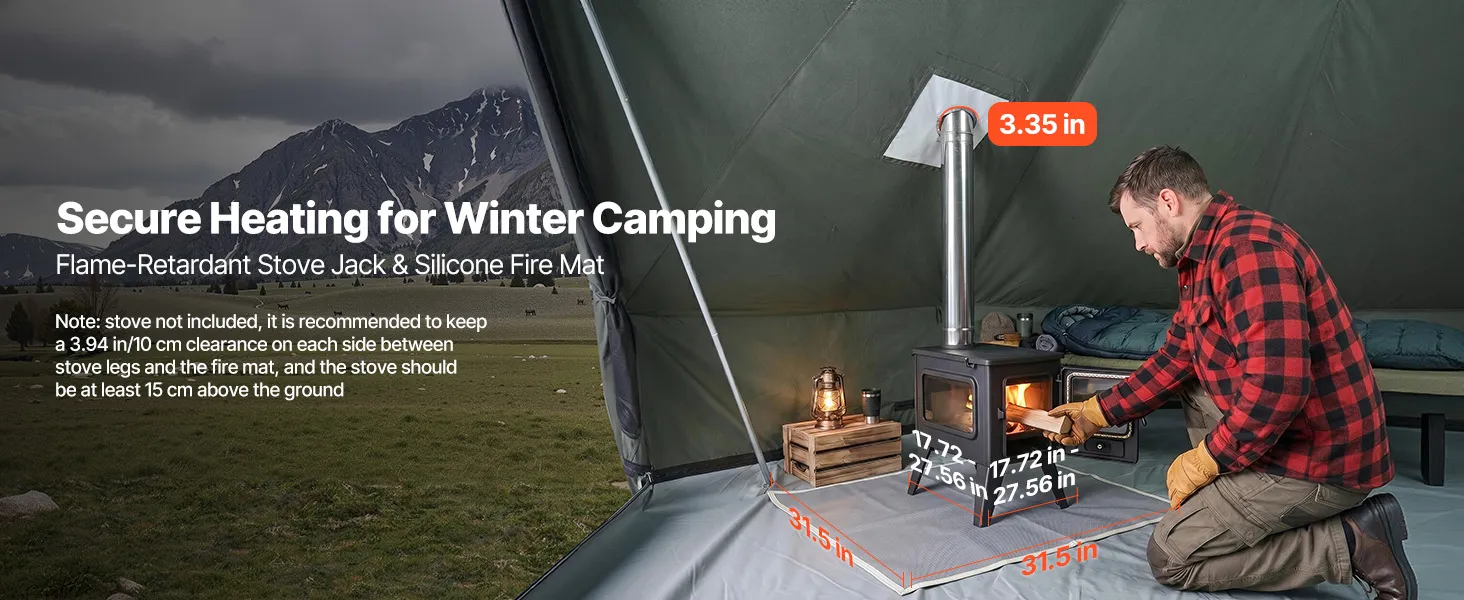
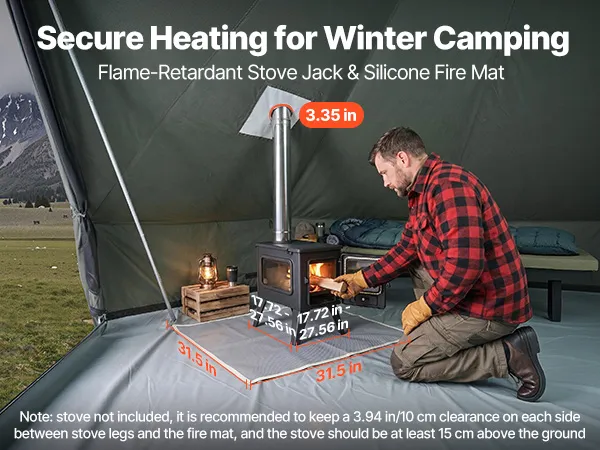
Stove Jack and Silicone Fire Mat on This Canvas Bell Tent with Stove Jack
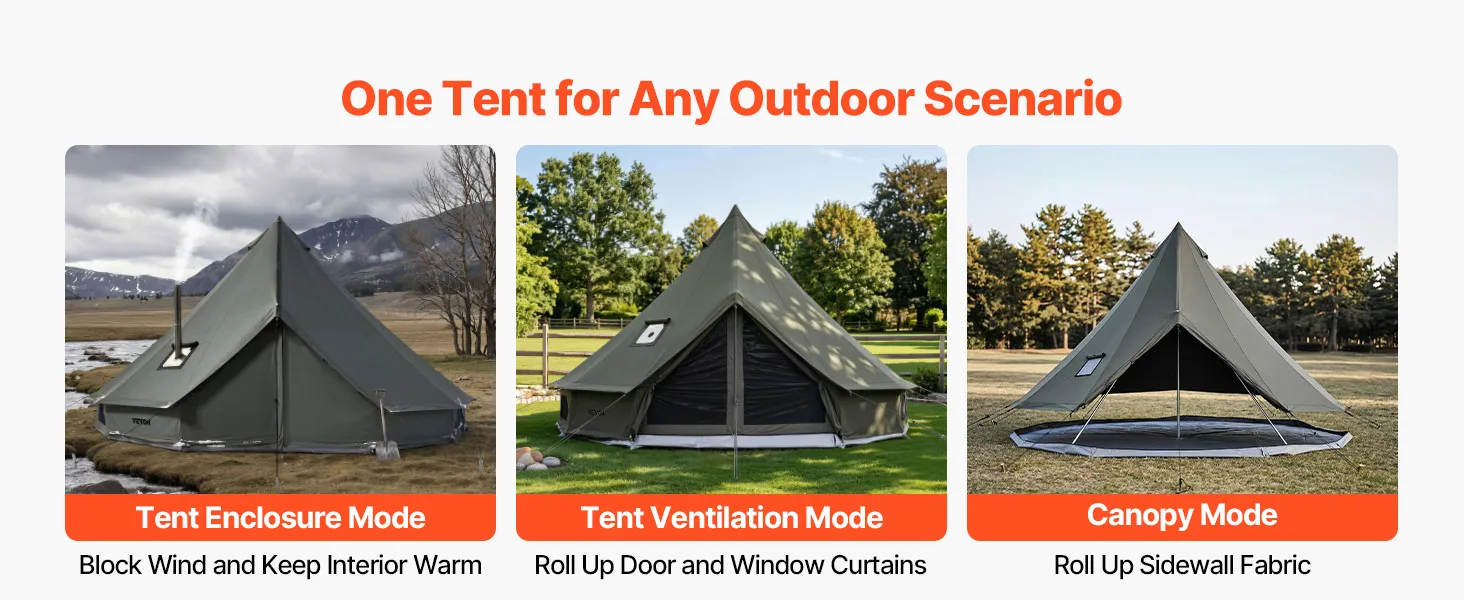
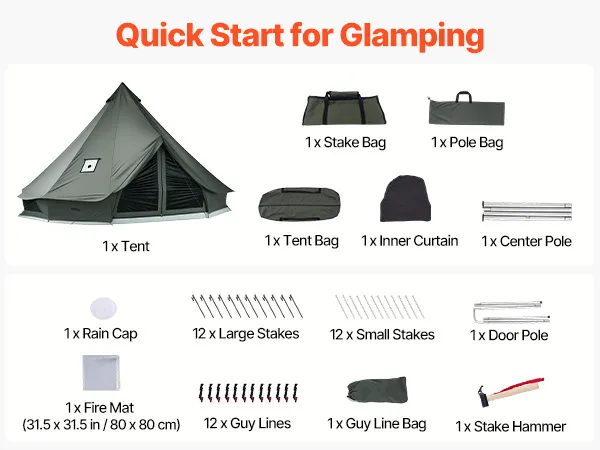
The majority of conventional camping tents cannot be heated; anything more than a battery heater is impractical due to their synthetic fabric and lack of a smoke ventilation system. Specifically designed to address that issue, this canvas bell tent with stove jack features a silicone fire mat and factory-installed stove-jack openings, allowing campers to safely run a wood stove inside for heat during cold-weather excursions.
This one feature opens up shoulder-season and cold-climate use, where a heat source is essential, changing the type of camping trip for which this tent is appropriate. The movable vent cover should never be completely closed while a stove is operating, as adequate airflow is necessary to vent combustion byproducts safely. This guideline is a crucial safety tip that applies to all seasons.
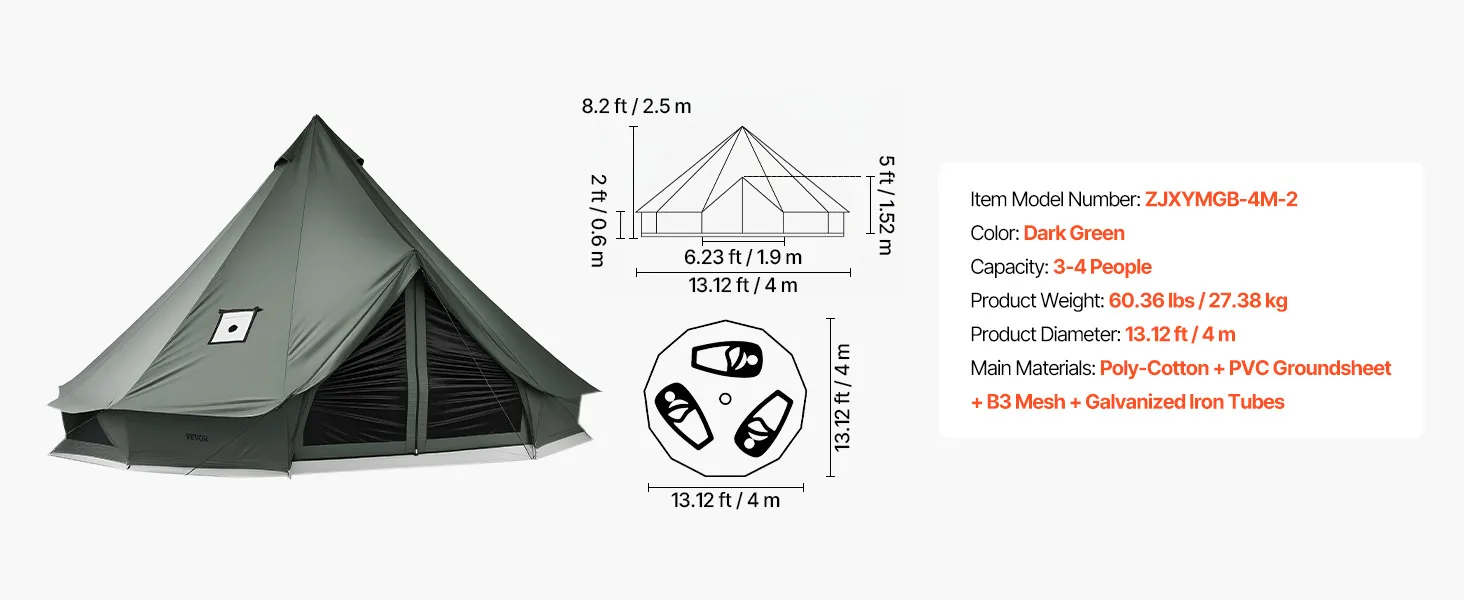
13.12 ft Diameter Fits 3-4 People in a Circular Layout
This tent's diameter of 13.12 feet (4 meters) makes it suitable for smaller groups, such as couples, small families, or a couple of hunting or camping partners, without the extra bulk of a larger group tent that no one is using to its full potential. Compared to a rectangular tent of comparable square footage, the circular yurt-style design distributes usable floor space more evenly, reducing wasted corners that cut into a regular tent's actual capacity.
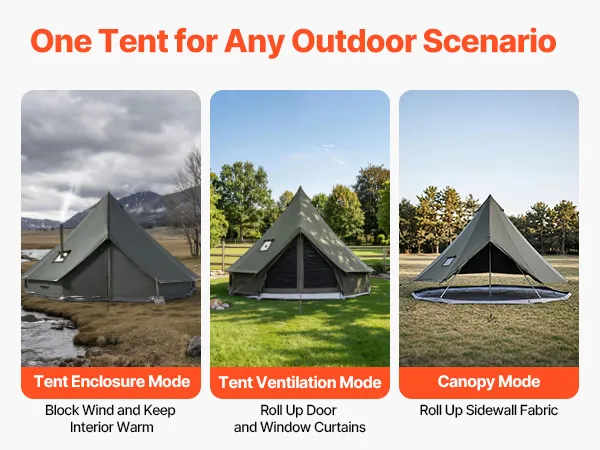
The room, which can accommodate three to four people, is ideal for a small gathering that prefers greater mobility over a minimal sleeping setup. Depending on the weather and how the party wishes to use the area, the sidewalls may be raised or lowered, allowing the same structure to serve as either an open-canopy setup during the day or a completely enclosed shelter at night.
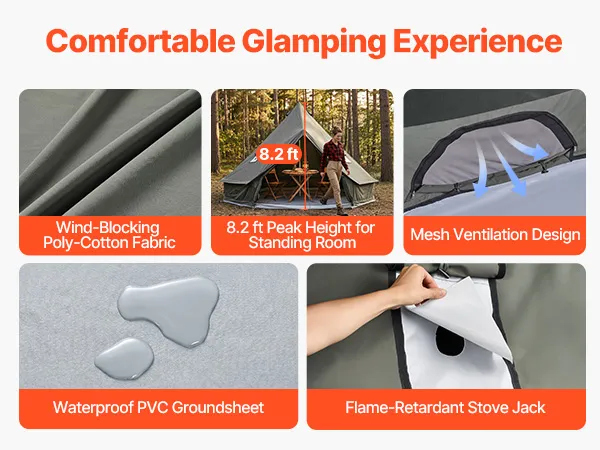
8.2 ft Peak Height for Full Standing Room Inside
This canvas bell tent with stove jack maintains a true 8.2 ft (2.5 m) peak height despite its smaller 4-person footprint. Tents suited for smaller groups typically compromise on height to save weight and material. Most adults can stand upright close to the center with that clearance, rather than stooping to perform simple chores like changing clothes or setting up equipment.
Moving in and out with packs or firewood for the stove is manageable thanks to the door's 5-foot height and 6.23-foot width, eliminating the need to squat through a small opening. In the case of a stove-equipped setup in particular, the additional headroom helps distribute heat more evenly throughout the tent rather than trapping it in a small, low area.
Poly-Cotton Canvas with No PU Coating for Breathable Comfort
In a tent intended for stove use, material selection is especially important because a heat source exacerbates issues with retained moisture and inadequate ventilation. In contrast to entirely synthetic, coated tents, this tent features thickened poly-cotton canvas with reinforced stitching and no PU coating, allowing the fabric to breathe freely and minimizing moisture buildup.
Galvanized metal poles designed to withstand bending or deformation under wind pressure provide structural support, preventing the canvas from sagging or warping after repeated setup cycles. This canvas bell tent with stove jack features breathable fabric and sturdy poles, keeping it structurally sound and comfortable through repeated seasonal use, not just one trip.
PVC Groundsheet and Rain Cap for Everyday Weather Protection
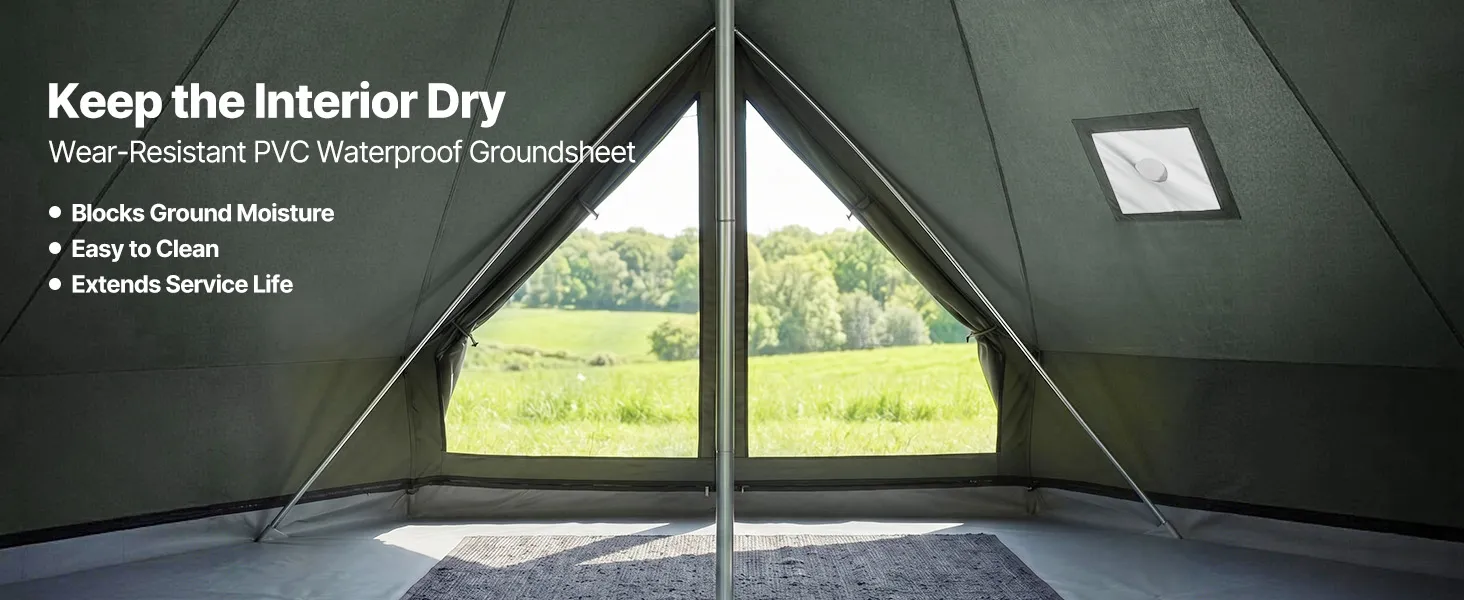
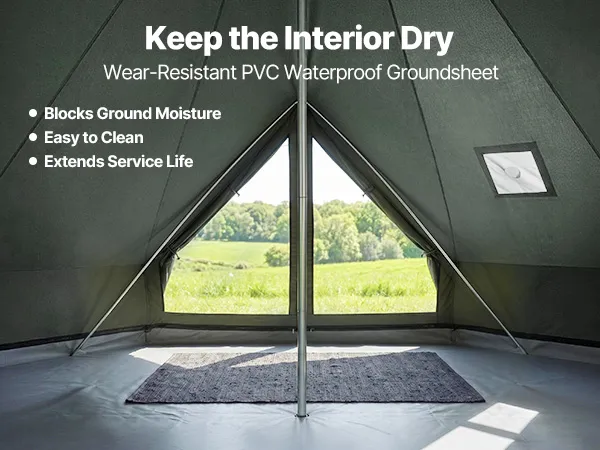
Any tent must deal with ground moisture, and this type has a PVC groundsheet designed to prevent moisture from penetrating the bottom of the tent. The floor can be completely removed for cleaning or open-canopy arrangements when a solid floor is not required, thanks to its removable, zippered construction.
One of the most frequent leak sites on tents this size is the zipper seam, which can be prevented by placing a rain cap over the door. It's important to be clear about this: the tent should not be left unattended during severe weather; instead, it should be taken down during heavy rain, snow, or strong wind.
Canvas Bell Tent with Stove Jack Packs Down for a Two-Person Setup
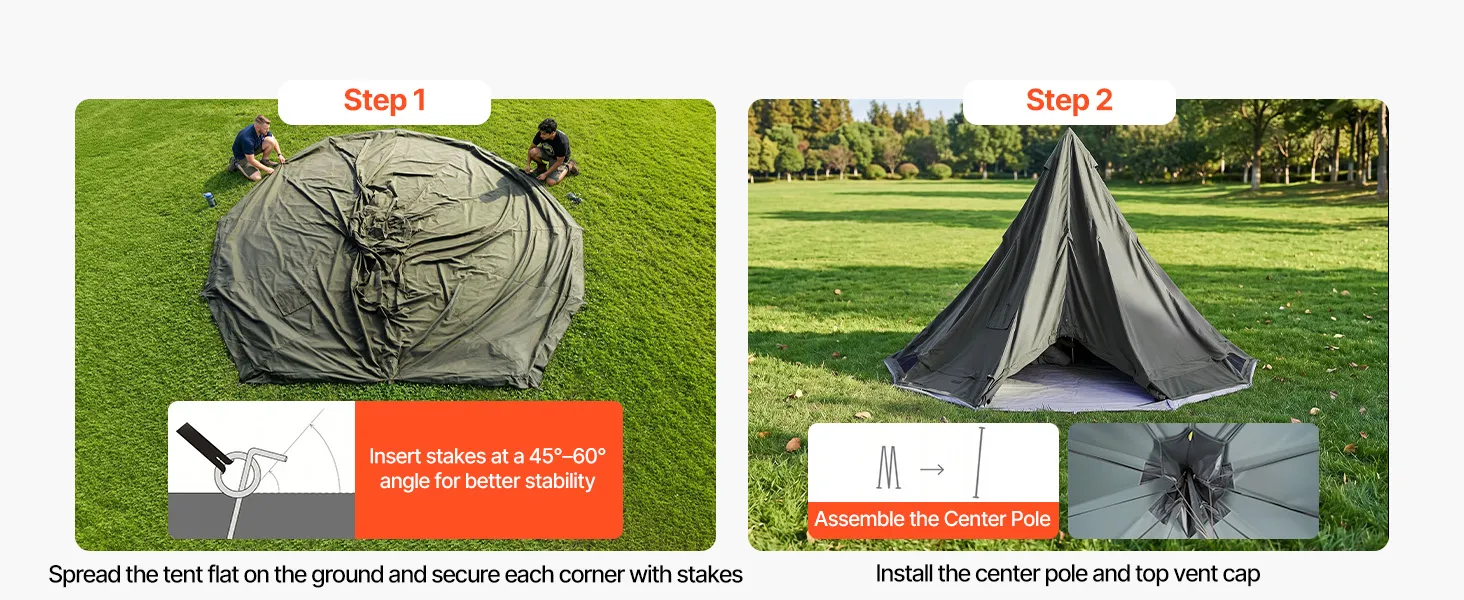
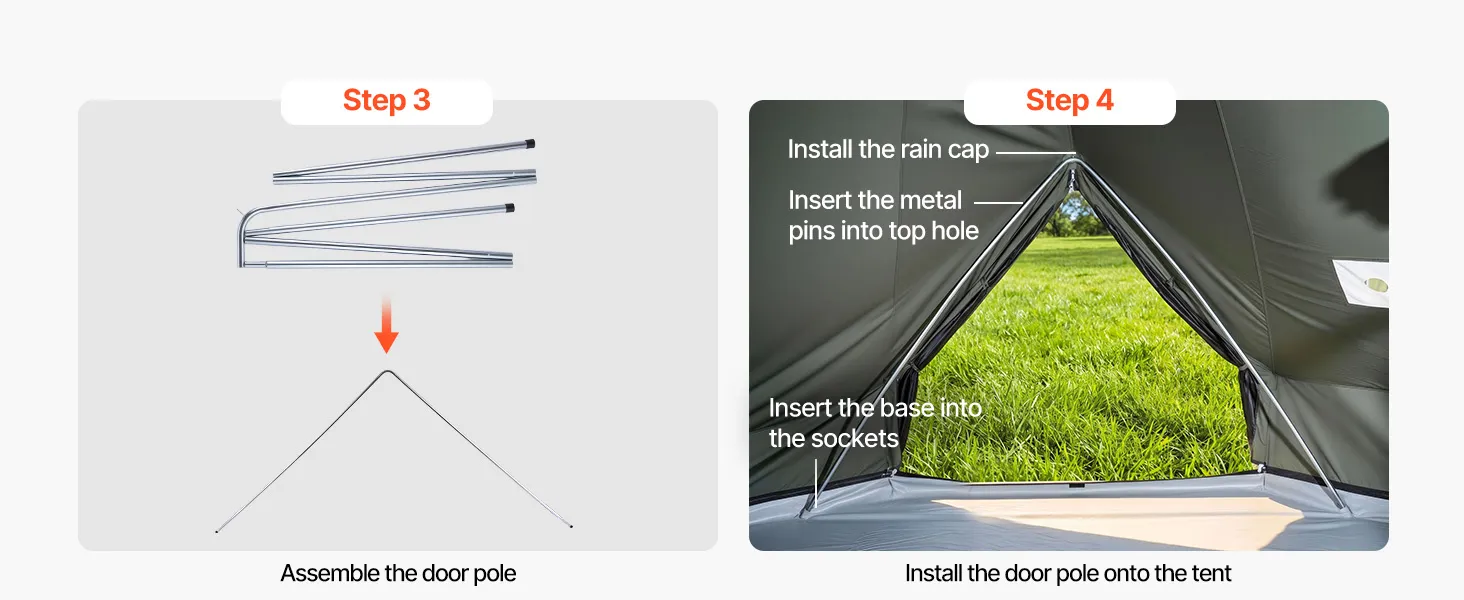
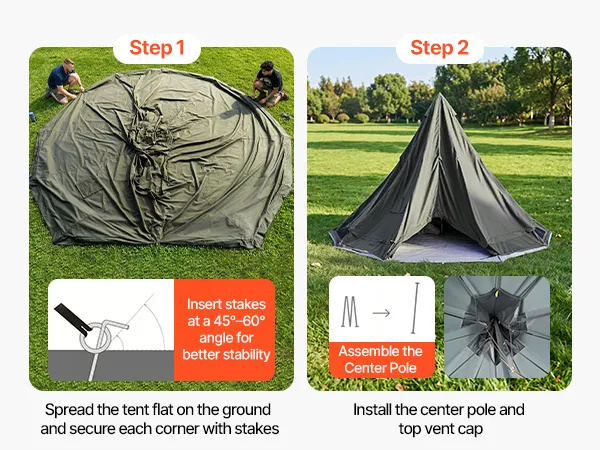
Large canvas tents are known for being challenging and time-consuming to set up, but this 13.12-foot model is small enough for two people to pitch it in a respectable amount of time without the need for a larger staff. Once the structure is erected, nylon guy lines and spikes firmly anchor it, providing stability against moderate wind.
For transportation and off-season storage, the tent, which weighs 60.36 lbs (27.38 kg), compresses into special storage bags that keep the canvas, poles, and hardware neat rather than disorganized in a car or garage. Once pitched, interior storage pockets and a lantern hook provide everyday convenience, completing a configuration designed for frequent use in backyards, at campsites, or during long outdoor stays.
Product guides and documents
Frequently Bought Together
VEVOR Canvas Bell Tent, 4 Seasons 13.12 ft Yurt Tent for Camping with Stove Jack, Canvas Breathable Holds up to 4 People with Zipped Detachable Floor, for Family Camping Glamping Outdoor Hunting Party
4.4 397
$ 324 90
Get -% off for new user
Each when you buy 0+.
Shop
$5.00 off 1st App Order $99.00+

Select Product Protection
Accident and warranty protection by Xcotton (partner with AIG)
3-Year
2-Year
1-Year
In Stock
Compare with similar items
Explore your interests
Recommended Searches
needs for camping motorcycle storage facility used tents outside tents electric motorcycle conversion kit electric mini motorcycle for adults new motorcycle best motorcycle electric motorcycle for adults portable awning awnings near me electric motorcycle under $5000 electric conversion motorcycle electric motorcycle for sale tents with kitchen folding motorcycle trailer motorcycle tent cover bag awning air caravan awning best dual sport motorcycle