







Download VEVOR App 

Get $5.00 Off $99.00+ Orders on Your First 3 App Orders
Scan the QR code to download
SKU: TSGCJDPYMQTSQEW9J001V1
Copy


+13
More


Deals
VEVOR Lawn Mower Blade Sharpener, 1HP Lawnmower Blades Grinder with 9" Ceramic Grinding Wheel, Grit Collector & Balancer, 30°/40° Blade Sharpening Machine for High Lift, Low Lift, Gator & Flat Blades
Deals
4 57 Reviews
$ 239 90
Earn at least 2% points on purchases or save up to 15%.
Each when you buy 0+.
Shop
Get -% off for new user
Get $5.00 Off $99.00+ Orders on Your First 3 App Orders.
Download Now

Features & Details
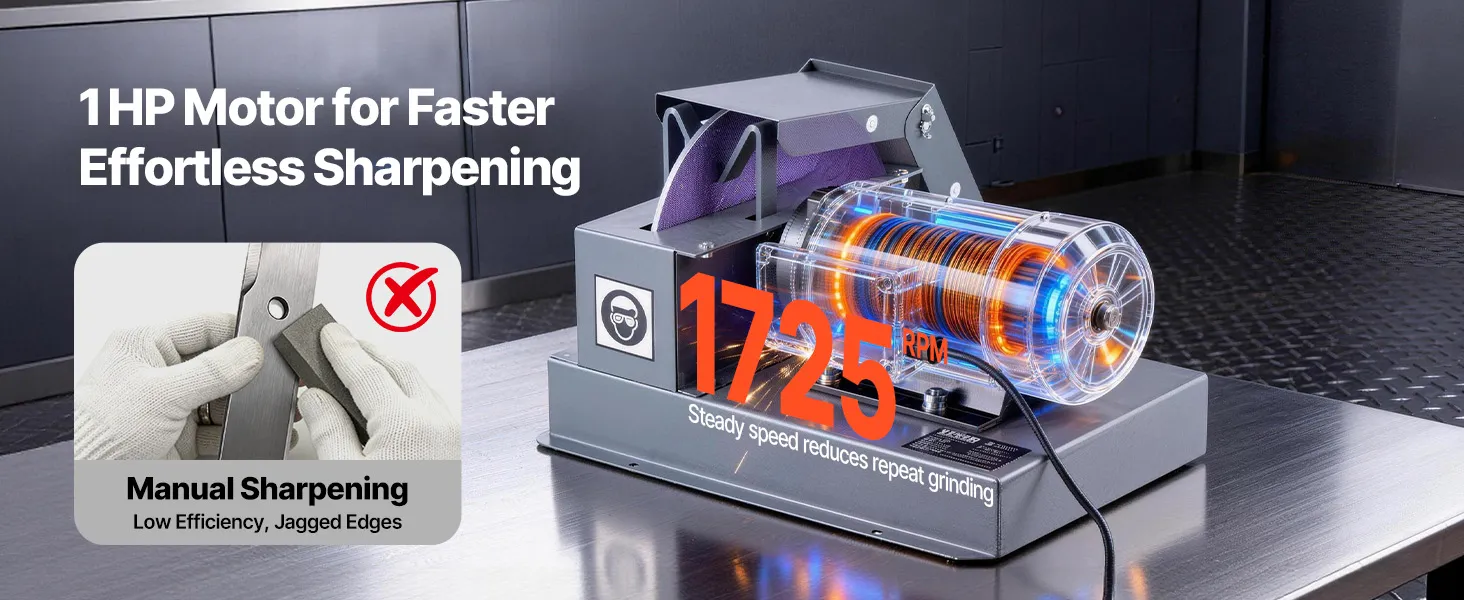
- Efficient, Powerful Sharpening: Powered by a 1HP high-performance motor running at 1725 RPM, this VEVOR lawn mower blade sharpener quickly restores dull and worn blades for sharper, more efficient and precise cuts
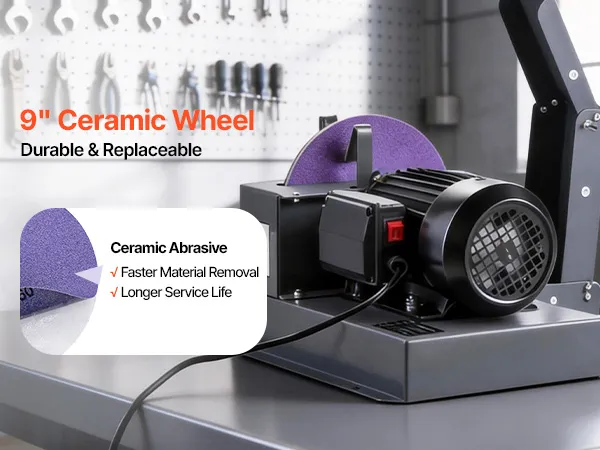
- Durable Grinding Wheel: This lawnmower blade grinder features a 9" 60-grit ceramic wheel for efficient material removal, sharpening worn-out blades to a smooth finish while extending service life. Also includes 2 replacement sandpapers
- Multi-Blade Compatible: Includes one 30° fixing bracket (pre-installed) and one 40° fixing bracket, allowing precise angle control for different blade sharpening needs. Fits most mower blades, including high/low-lift, gator, and flat blades
- Precise Blade Balancing: After sharpening, you can use the included blade balancer to ensure your blades are properly balanced, reducing vibration and engine wear for a smoother, more efficient mowing experience
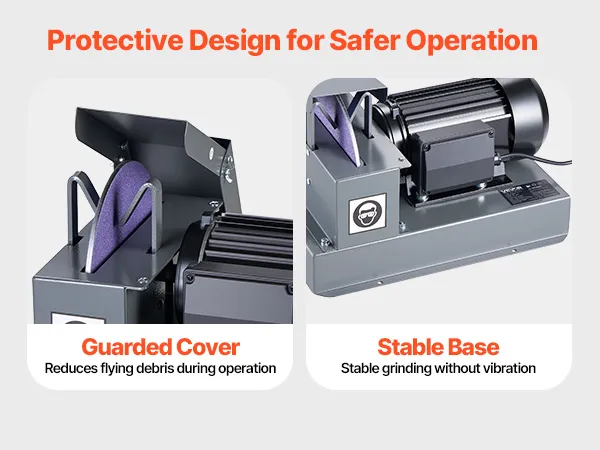
- Enhanced Design: Our mower blade sharpening machine is designed with a grit collector to reduce flying debris for safer operation, a stable base that minimizes shaking for smoother sharpening, and a sturdy steel plate construction for durability
Product specification
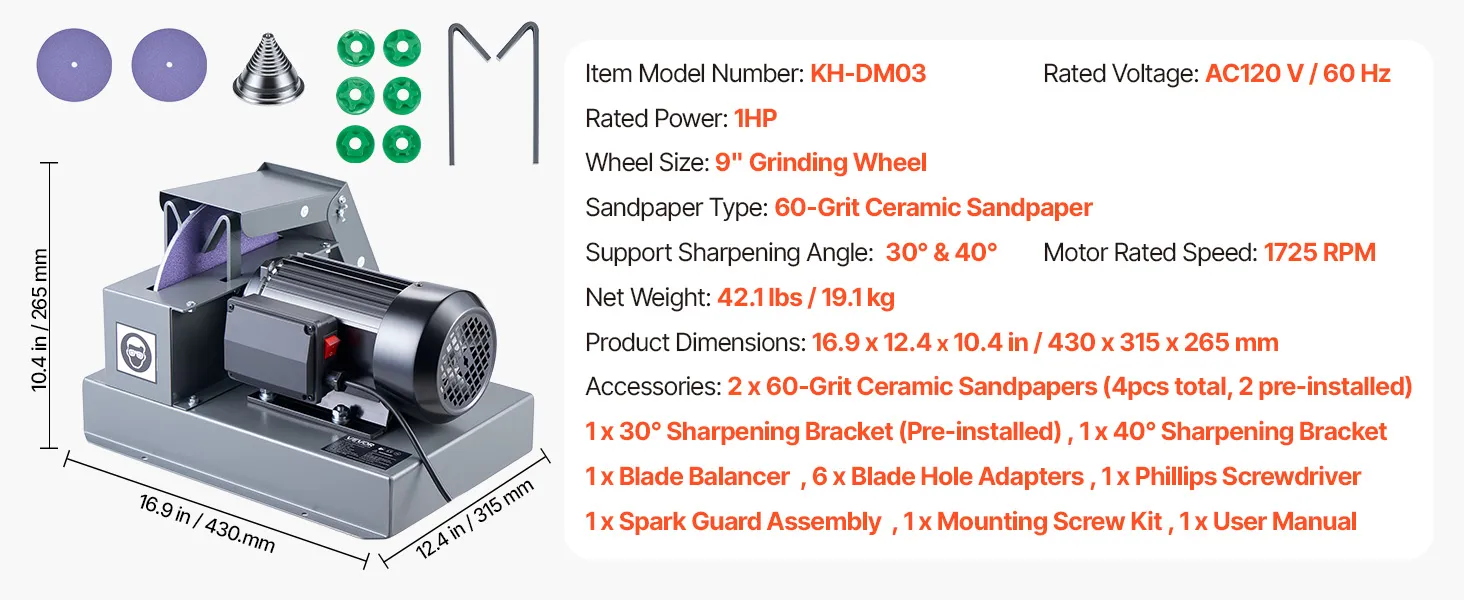
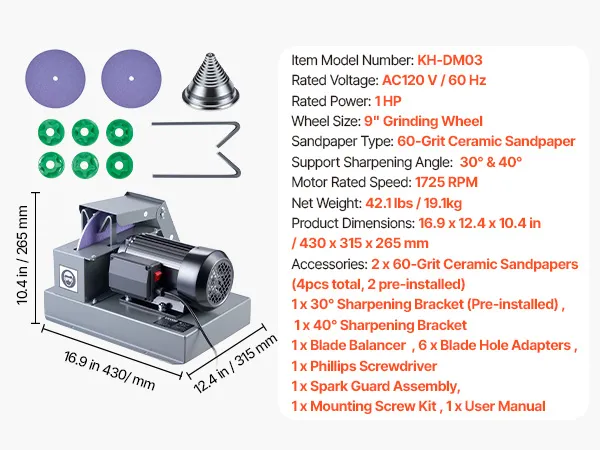
- Item Model Number KH-DM03
- Rated Voltage AC120 V / 60 Hz
- Rated Power 1 HP
- Wheel Size 9" Grinding Wheel
- Sandpaper Type 60-Grit Ceramic Sandpaper
- Support Sharpening Angle 30° & 40°
Reviews summary
4 57 Reviews
Customers say: The product is generally praised for being effective, sturdy, and easy to use once mastered, though some users report issues with power, stability, instructions, and replacement parts.
Al-generated from customer reviews
Frequently Bought Together
Reviews
About this item
Questions and Answers
Explore
Reviews
No customer reviews
Be the first to rate this product. your feedback will helps others make informed decisions.
Write a Review
Customers say
The product is generally praised for being effective, sturdy, and easy to use once mastered, though some users report issues with power, stability, instructions, and replacement parts.
Al-generated from customer reviews
Top Reviews
About this item
Product specification
- Item Model Number
- KH-DM03
- Rated Voltage
- AC120 V / 60 Hz
- Rated Power
- 1 HP
- Wheel Size
- 9" Grinding Wheel
- Sandpaper Type
- 60-Grit Ceramic Sandpaper
- Support Sharpening Angle
- 30° & 40°
- Motor Rated Speed
- 1725 RPM
- Net Weight
- 42.1 lbs / 19.1 kg
- Product Dimensions
- 16.9 x 12.4 x 10.4 in / 430 x 315 x 265 mm
Description
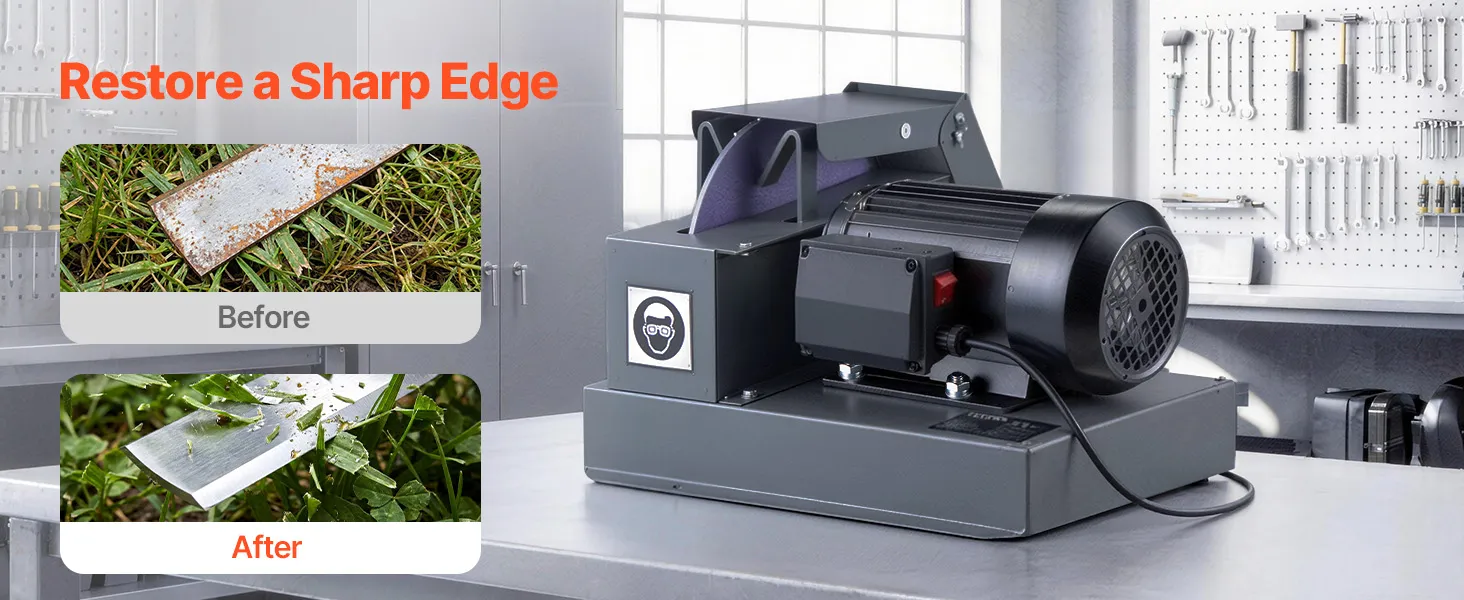
Restore Blade Sharpness for More Efficient Mowing
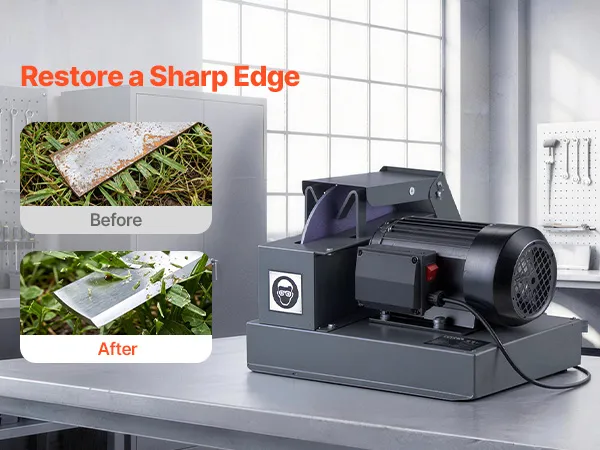
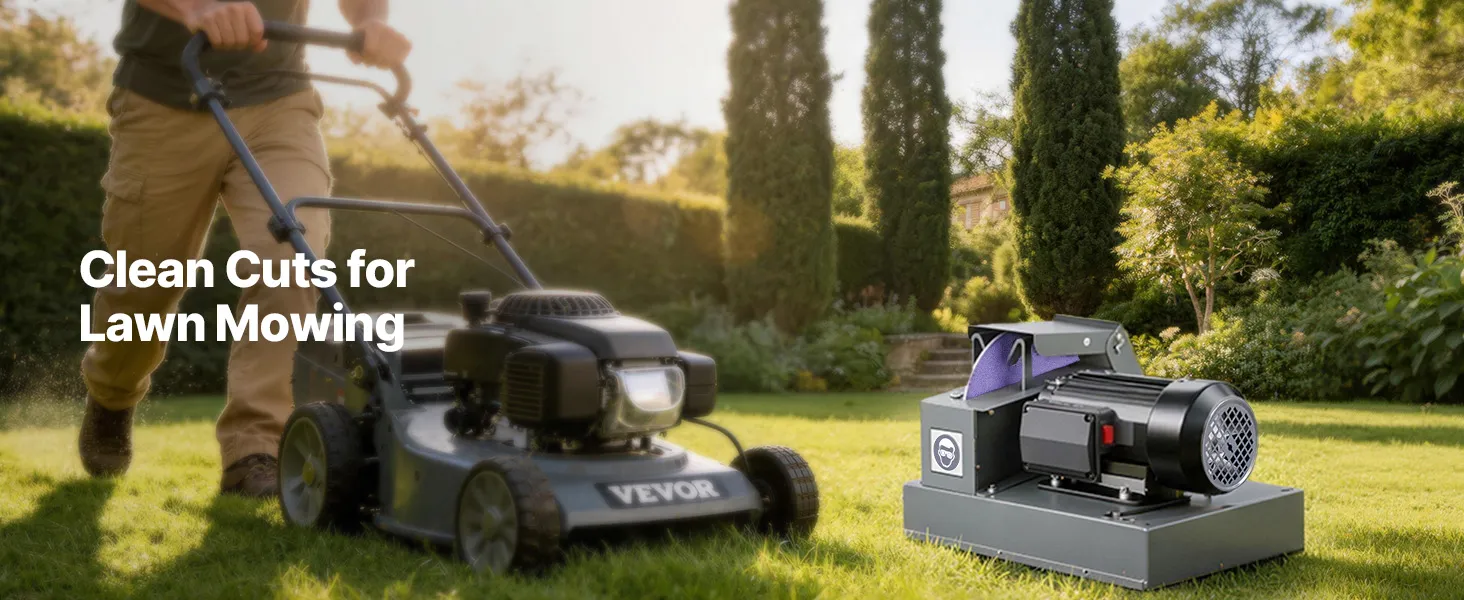
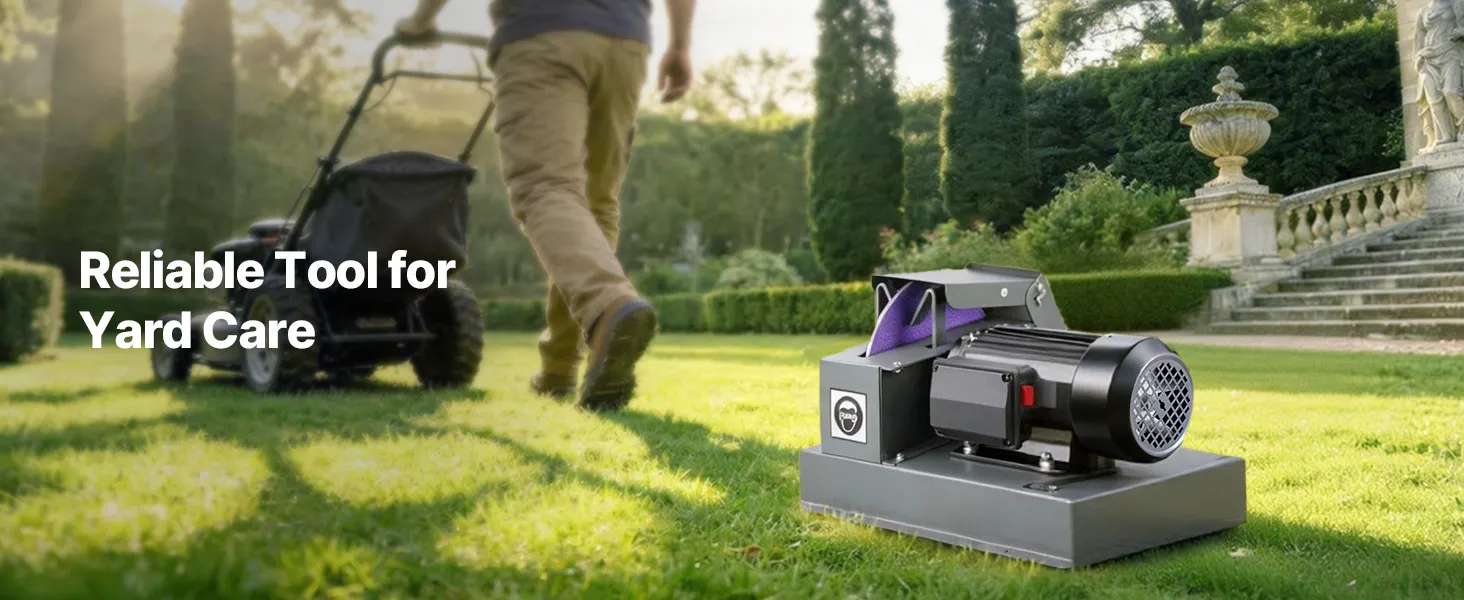
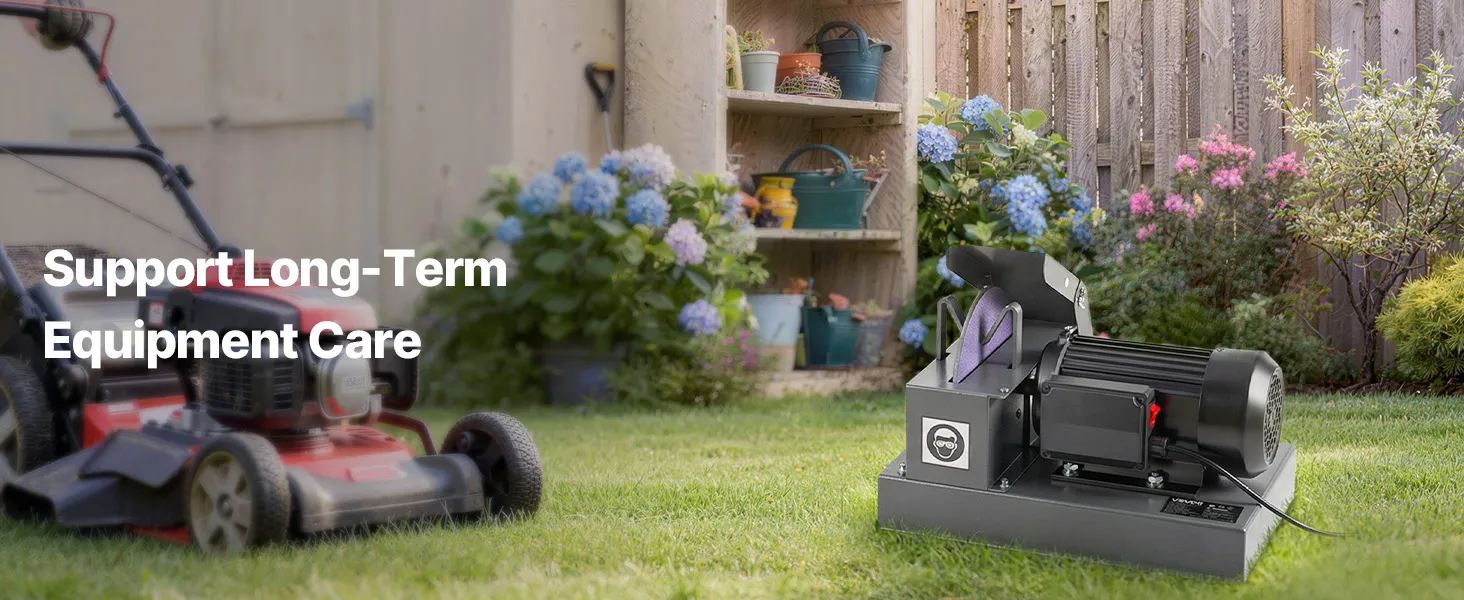
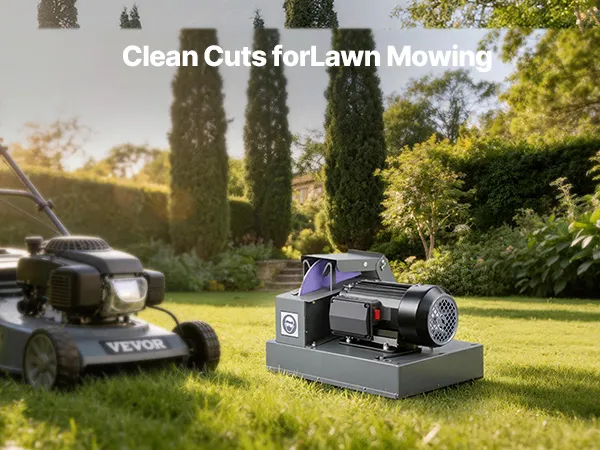
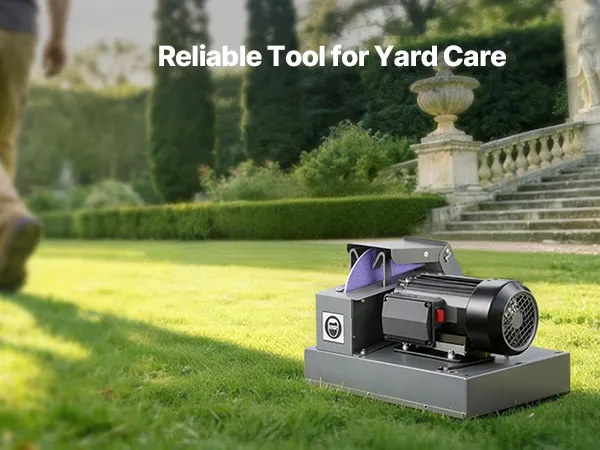
The VEVOR lawn mower blade sharpener combines a powerful 1 HP motor with a blade balancer and a 9" grinding wheel to quickly restore worn, dull blades to a sharp cutting edge. Regular sharpening improves mowing efficiency and helps reduce equipment wear for long-term performance.
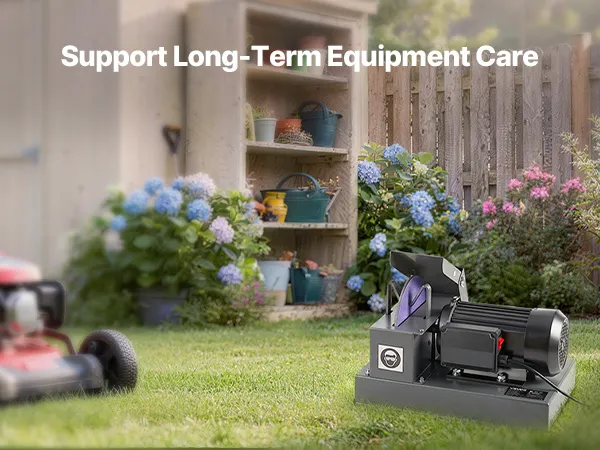
Key Features
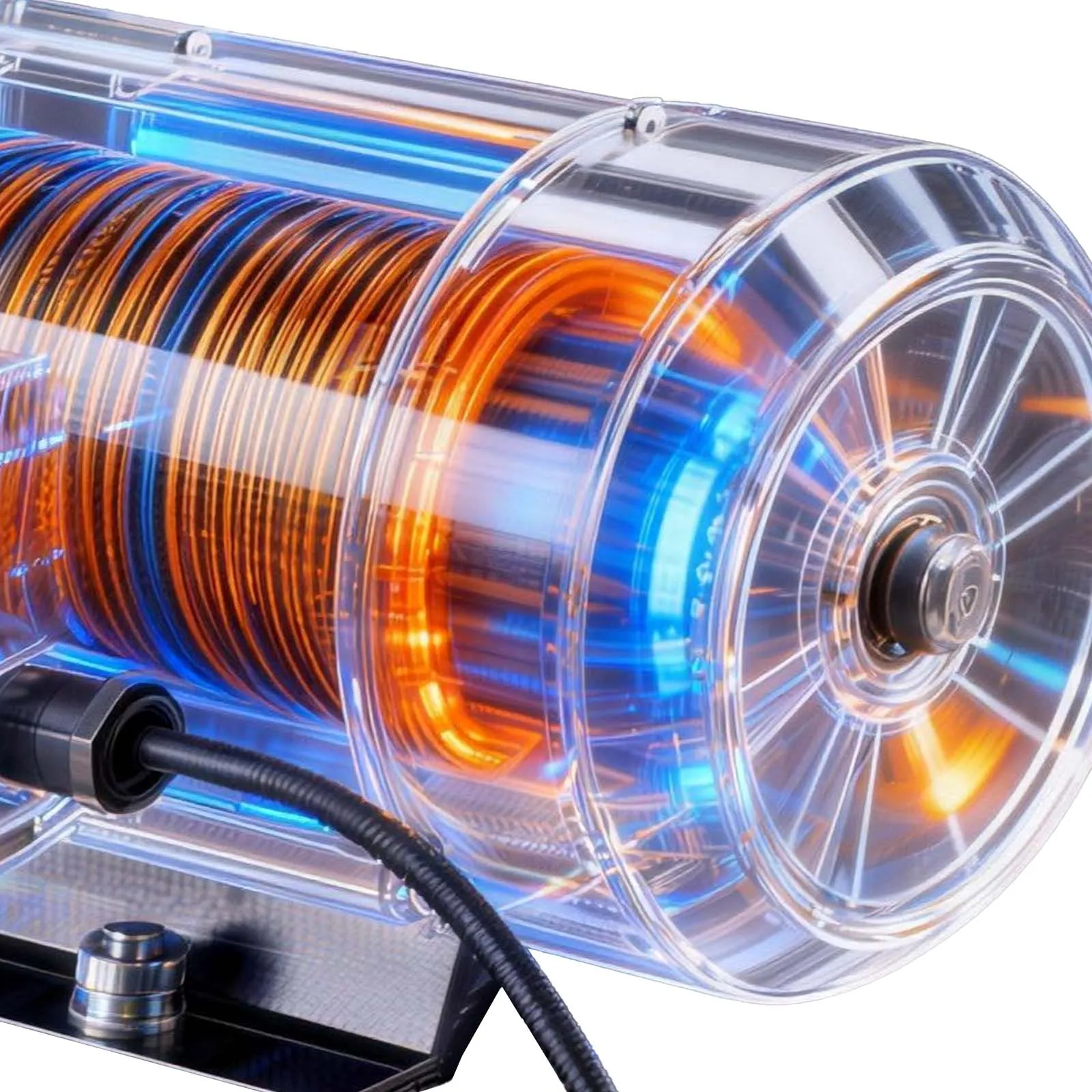
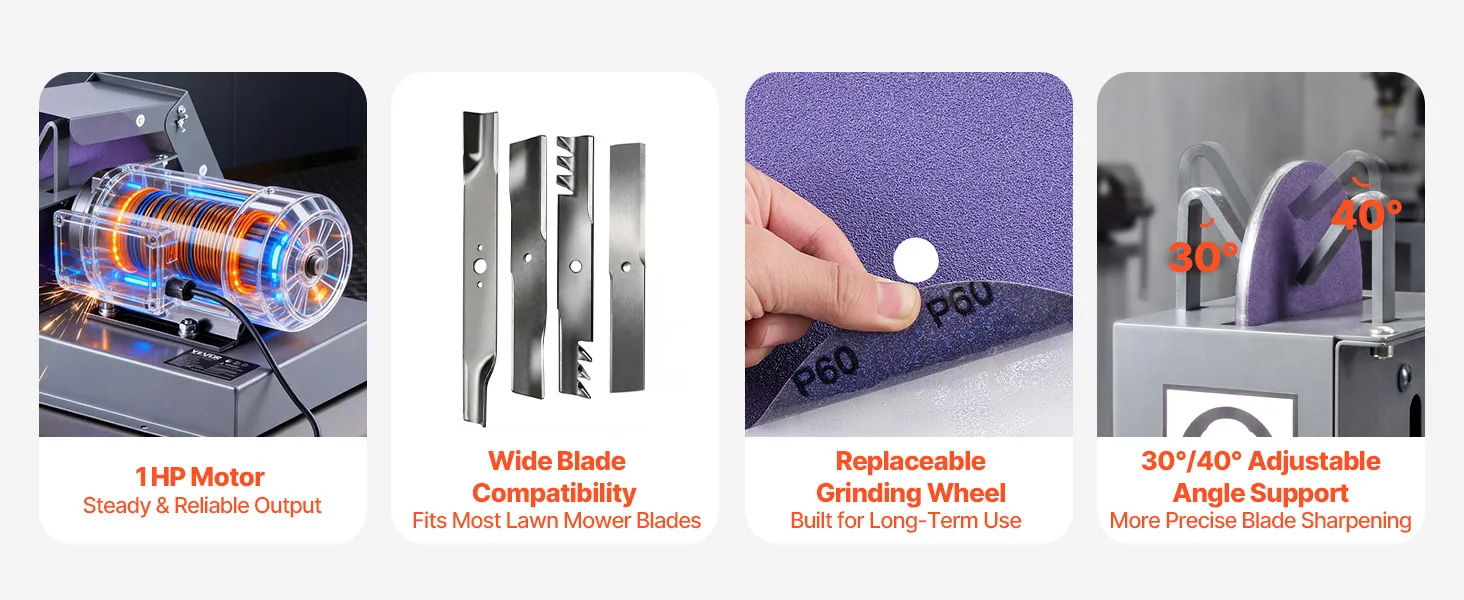
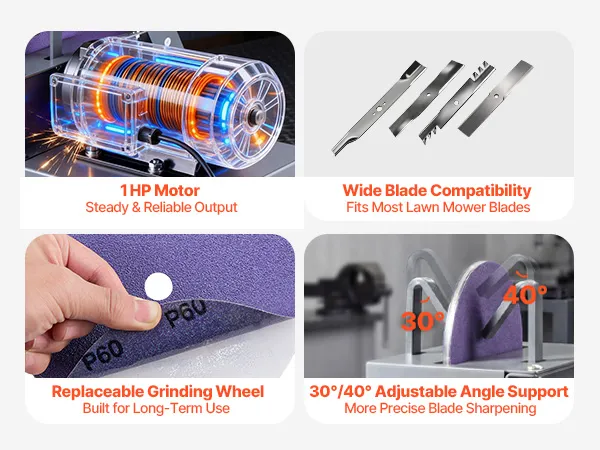
Powerful Motor Performance
Delivers steady power for consistent grinding, maintaining stable operation to efficiently restore dull blades.
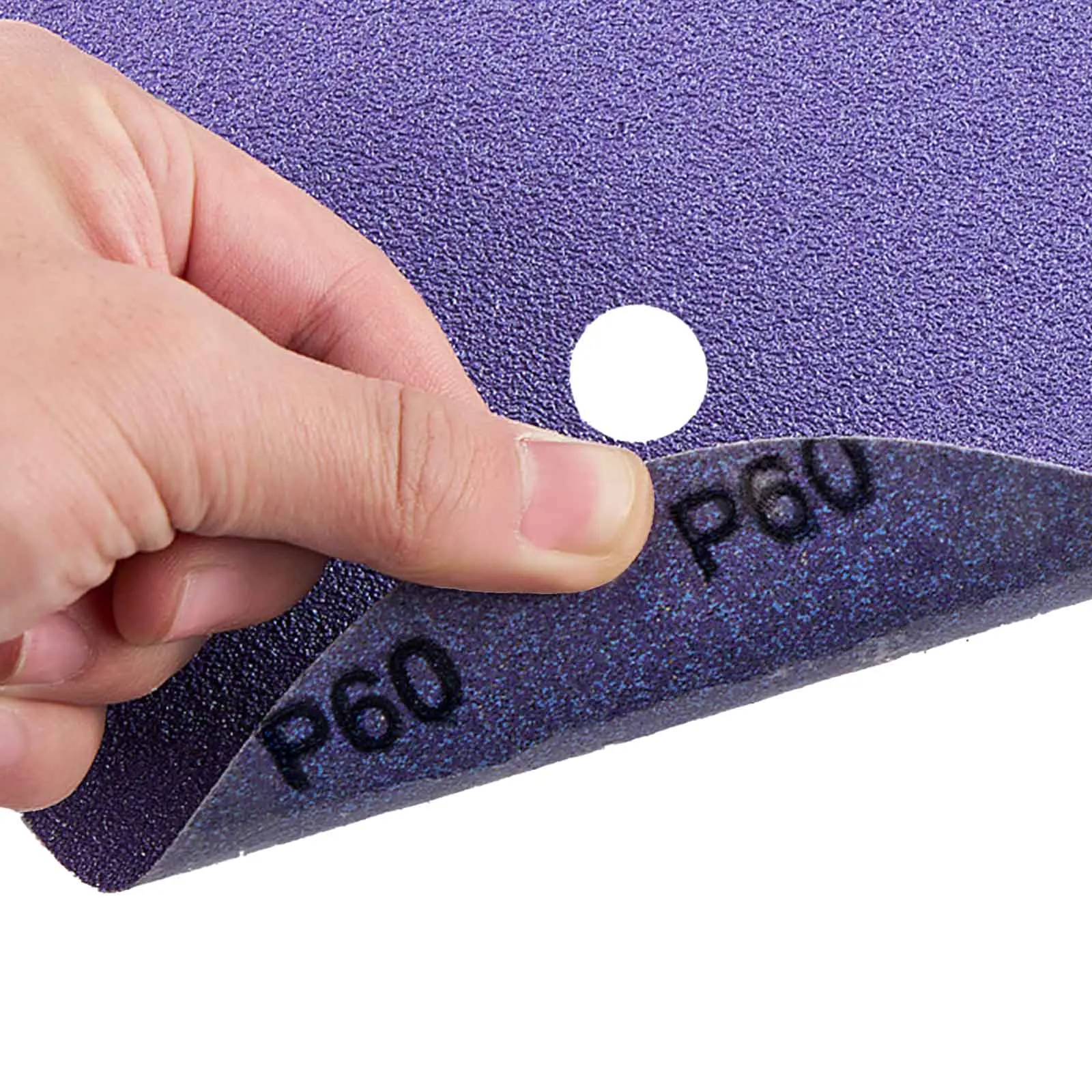
60-Grit Ceramic Sandpaper
The 60-grit ceramic sandpaper removes material efficiently, delivering clean and even sharpening results.
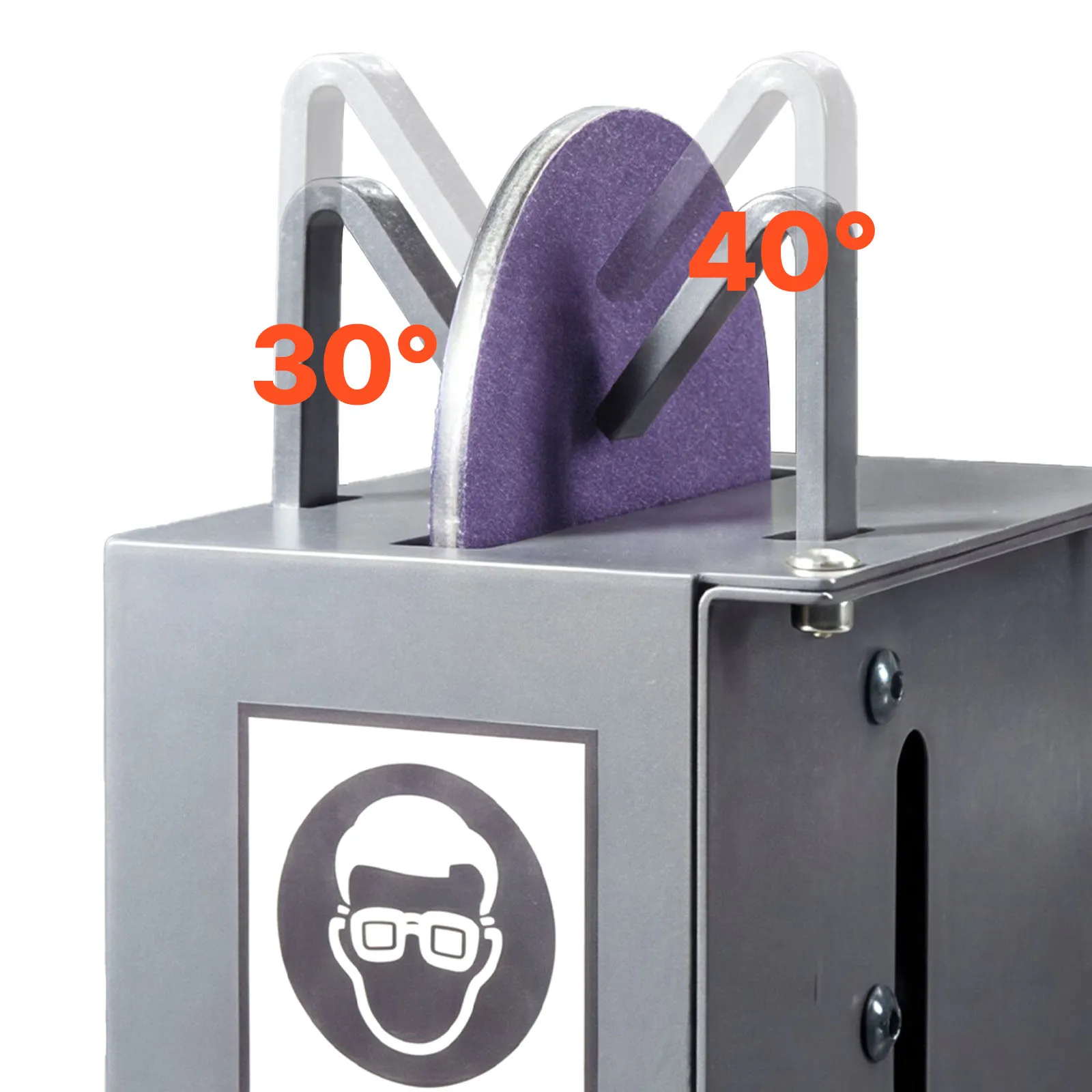
30° / 40° Sharpening Jig
Dual-angle sharpening jig provides precise edge control for different mower blade types, ensuring consistent sharpening results.
1HP Motor at 1725 RPM Delivers Professional Grade Lawn Mower Blade Grinder Sharpener Performance
The motor on this lawn mower blade grinder sharpener is powerful and runs at a steady 1725 RPM. It can sharpen very dull blades or blades with broken edges faster than typical hand sharpening. The motor maintains a steady torque throughout the sharpening cycle, ensuring the blade edge removes material evenly without overheating or changing speed during long sessions.
This level of motor output is very helpful for landscaping companies and property maintenance workers who sharpen many blades every day. The grinding wheel puts enough pressure on the blade steel at 1725 RPM to quickly remove rust, nicks, and rolled edges. It reduces the time required to sharpen each blade and makes high volume blade maintenance workflows more efficient.
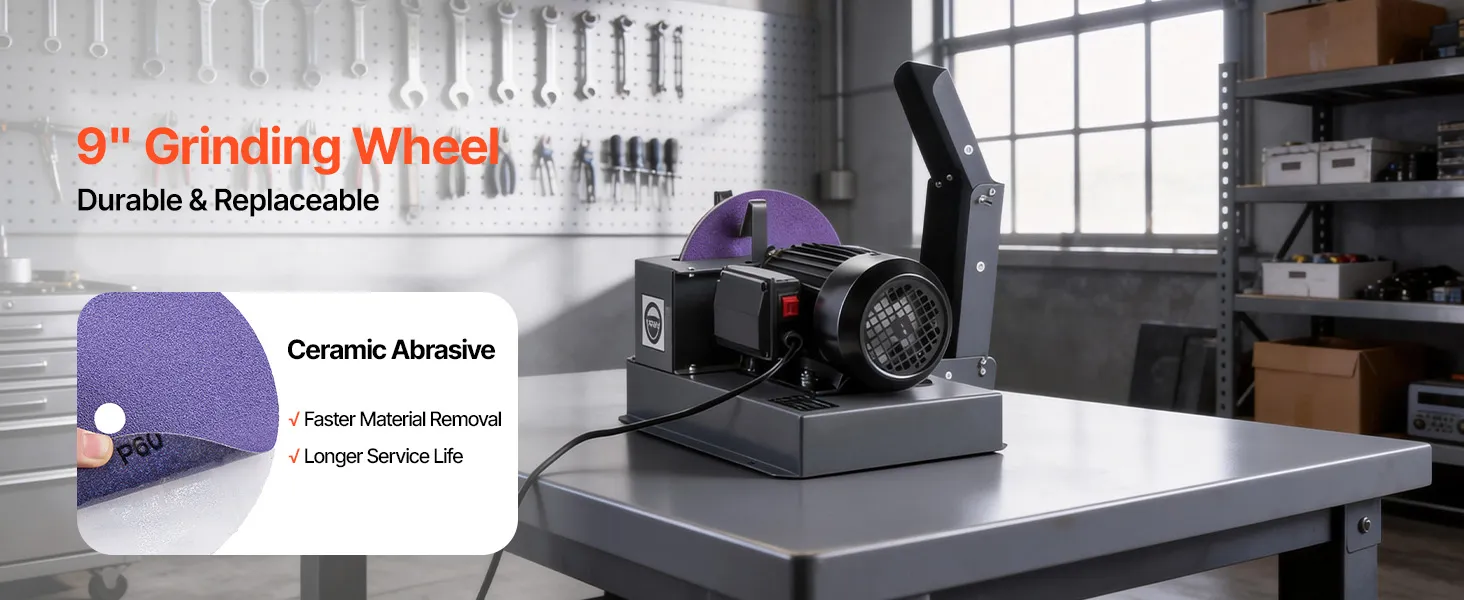
9” 60 Grit Ceramic Grinding Wheel Ensures Consistent Lawn Mower Blade Sharpener Results
The 9” ceramic grinding wheel has a 60 grit rating, which means it can remove material quickly while still leaving a nice finish. Ceramic abrasive compounds are harder and more stable at elevated temperatures than regular aluminum oxide ones. It means the wheel keeps its cutting profile longer, helping maintain a more consistent edge shape over many sharpening cycles.
Two replacement abrasive strips are also included, helping the machine last longer without having to buy new parts right away. The 60-grit ceramic construction works best on high-carbon steel blades that have been dinged or have uneven wear. A coarser abrasive would remove too much material, and a finer one might not adequately address deep surface irregularities.
Dual 30°/40° Fixing Brackets Allow Precise Angle Control for Multi Blade Compatibility
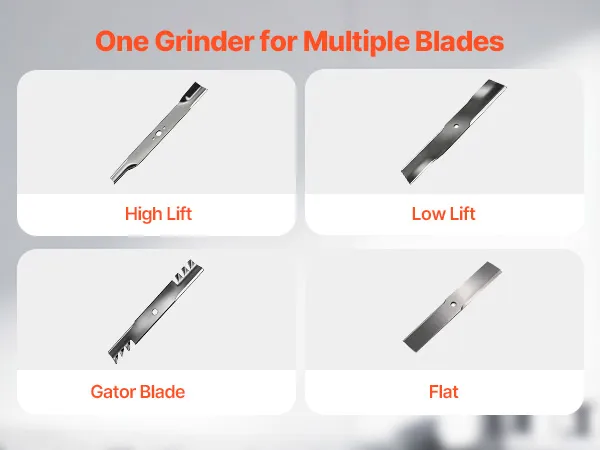
One of the biggest problems with single-angle blade sharpeners is that they can't work with different blade shapes. This sharpener comes with both a 30-degree and a 40-degree fixing bracket, which solves that problem. The 30-degree bracket comes already installed and works with most standard flat and low-lift blade profiles. The 40-degree bracket is designed for high-lift and Gator Blade profiles that require a sharper sharpening angle to maintain optimal cutting performance.
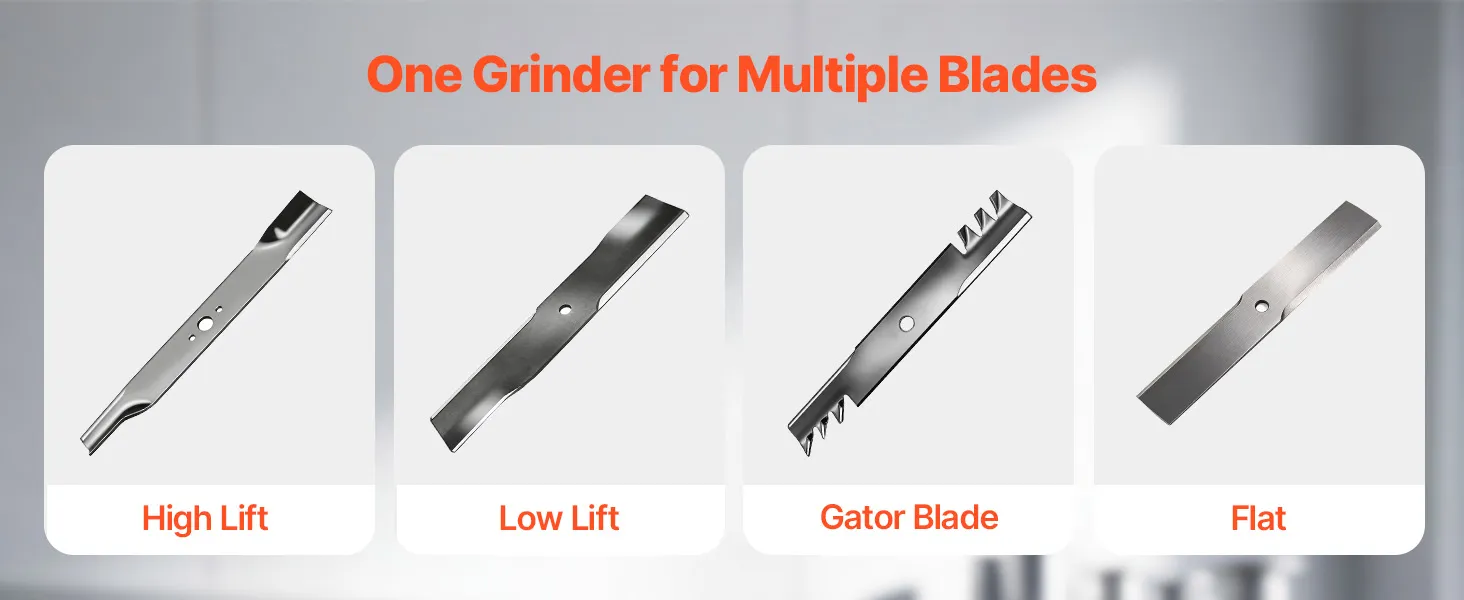
It generally doesn't take long to switch between brackets, and you don't need any special tools. This feature makes it easy to switch between blade types during multi-blade sharpening sessions. This compatibility range includes most residential and commercial mower blade profiles, such as high-lift, low-lift, gator, and flat blade designs. It means that one machine can service an entire fleet of mowing equipment while helping maintain angle accuracy.
Blade Balancer Integration Reduces Vibration and Prevents Engine Wear After Sharpening
A built-in blade balancer lets users check the blade's weight distribution right after sharpening. An unbalanced blade, even one with a sharp edge that is well angled, sends vibrations through the mower spindle. It can wear out the bearings faster, put more strain on the engine, and lower the quality of the cut over time. By identifying heavier parts that require more material to be removed, balancing reduces this risk.
This feature is critical for high-RPM walk-behind and zero-turn mowers, as even small imbalances can cause noticeable vibration and accelerate part wear. By using the balancer as the last step in the sharpening process, you can help ensure that every blade returned to service is sharp and better balanced. It protects the mower's drivetrain and gives you a smoother, more even cut on all types of grass.
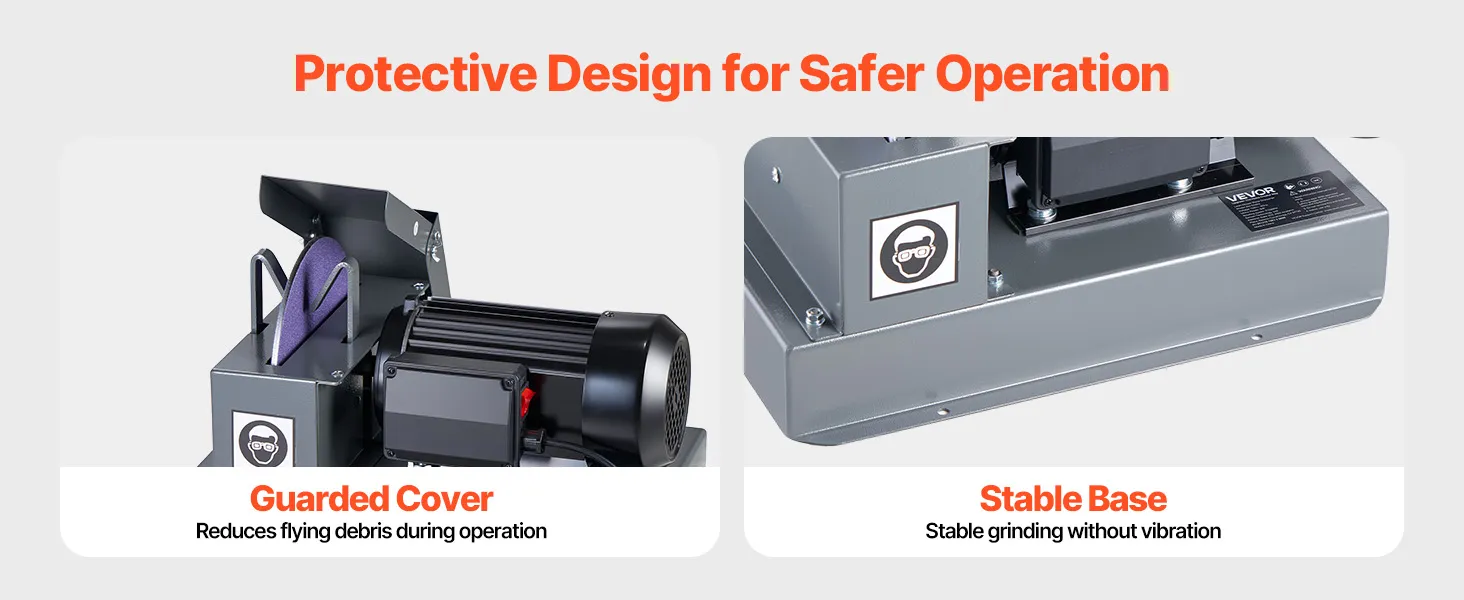
Lawn Mower Blade Grinder Sharpener Grit Collector System Minimizes Airborne Debris for Safer Sharpening Operation
The built-in grit collector collects the metal filings and grinding particles produced when you sharpen. It helps reduce them from flying through the air or landing on nearby surfaces. This containment system addresses a real safety issue in grinding operations: fine metal grit can irritate your eyes and lungs and dirty your equipment if you don't clean it up.
In addition to keeping the operator safe, the grit collector reduces cleanup time after sharpening and keeps the work area cleaner when the tool is used continuously. When you store other tools and equipment nearby in a workshop or garage, containing grinding debris helps reduce abrasive contamination of sensitive surfaces and parts. It extends the life of nearby machinery and lowers maintenance costs.
Stable Steel Plate Base Construction Minimizes Operational Vibration During Sharpening
The base of the lawn mower blade grinder sharpener is made of a heavy-gauge steel plate. It makes sharpening more accurate by preventing the blade from moving too much when grinding forces are applied. A stable base keeps the blade in contact with the grinding wheel at all times, resulting in more consistent edge angle and surface finish than on machines with plastic or light bases.
Steel plate construction also helps the structure last longer when used frequently. Welded steel plate doesn't change shape under load and maintains its size over a wide range of temperatures, which is important for both indoor workshops and outdoor equipment storage areas. This structural integrity is important for maintaining consistent sharpening geometry across many blade cycles.
Compatible With High Lift, Low Lift, Gator, and Flat Blades Across Residential and Commercial Mowers
The lawn mower blade grinder sharpener can sharpen four common blade types: high-lift, low-lift, gator, and flat. These are the most common types of blades found on residential push mowers, riding mowers, and commercial zero turn platforms. The dual bracket angle system and the large 9-inch grinding wheel work together to accommodate a wide range of blade widths and profiles. The grinding wheel provides sufficient space and contact area for these blade types.
This flexibility means that operators who manage mixed fleets or service equipment for multiple clients may not need to buy multiple different sharpeners. A single machine can handle the various shapes of common mower blades, reducing capital equipment costs and making the sharpening process easier. The result is a very useful solution for lawn care professionals, equipment rental companies, and serious homeowners who need to keep all of their blades in good working condition.
Product guides and documents
User manual-en (PDF) Review
Questions and Answers (2)
Why do you not ship to Australia
This product is not currently sold in Australia.
By vevor
Helpful
(
0
)
Why carnt we get these here in Australia, you would sell heaps of them ,
We apologize, but this product is not currently sold in Australia. We are working hard to add it to our listings.
By vevor
Helpful
(
0
)
56% Left
Select product protection plan
Accident and warranty protection by Xcotton (partner with AIG)
No thanks
3-Year
2-Year
1-Year
In Stock
Security & Privacy
FREE Returns
Professional Service
Compare with similar items
Similar Items You Might Like
People Who Bought This Item Also Bought
Best sellers in this category
People Who Viewed This Item Also Viewed
Your Browsing History