







Download VEVOR App 

Get $5.00 Off $99.00+ Orders on Your First 3 App Orders
Scan the QR code to download
SKU: YXDDGYJ135AM7189H001V1
Copy


+12
More


VEVOR Corded Electric Tiller, 18 Inch Tilling Width Garden Rototiller, 13.5-Amp Motor Heavy-Duty Tilling Machine, Cultivator with Steel Tines and Foldable Handle, for Lawn, Yard, and Gardening Care
4.6 212 Reviews
$ 126 90
Earn at least 2% points on purchases or save up to 15%.
Each when you buy 0+.
Shop
Get -% off for new user
Get $5.00 Off $99.00+ Orders on Your First 3 App Orders.
Download Now

Features & Details
- Powerful Core Motor: The electric tiller is equipped with a 13.5A full copper motor. It works efficiently even in hard soil without jamming, fits the North American 120V standard voltage, and meets the tilling needs of both farmers and home gardeners
- High-Efficiency Tilling: 18-inch ultra-wide tilling width boosts efficiency by over 30%; Max 8.7-inch depth meets deep planting needs; 6 blades x 4 tines design helps shorten working time. Our garden tiller is ideal for farmland and home gardens
- Secure & Mobile Operation: The heavy-duty tilling machine is equipped with a lock and overload guard to reduce accidental activation and help safeguard the motor. Durable PP wheels allow smooth, all-terrain movement, improving control
- Reinforced Build: The shield plate helps block flying debris, while the high-hardness tines resist edge rolling during long-term use. Thickened screws fasten directly to the electric rototiller body, enhancing vibration resistance at key joints
- Ergonomic & Space-Saving Design: The corded garden rototiller features a H-shaped handle for more comfortable and flexible operation. A built-in cord retention device avoids cable tangling. It folds down to half its size, making storage simple
Product specification
- Item Model Number WR7032-1800-13.5-450H1
- Voltage/Frequency AC 120V, 60Hz
- Current 13.5A
- Max Tilling Width 17.72 in / 450 mm
- Max Tilling Depth 8.66 in / 220 mm
- Blade Diameter 8 in / 205 mm
Frequently Bought Together
Reviews
About this item
Questions and Answers
Explore
Reviews
No customer reviews
Be the first to rate this product. your feedback will helps others make informed decisions.
Write a Review
Top Reviews
About this item
Product specification
- Item Model Number
- WR7032-1800-13.5-450H1
- Voltage/Frequency
- AC 120V, 60Hz
- Current
- 13.5A
- Max Tilling Width
- 17.72 in / 450 mm
- Max Tilling Depth
- 8.66 in / 220 mm
- Blade Diameter
- 8 in / 205 mm
- Speed
- 380 RPM
- With Wheels
- Yes
- Product Weight
- 22.71 lbs / 10.3 kg
- Product Dimensions
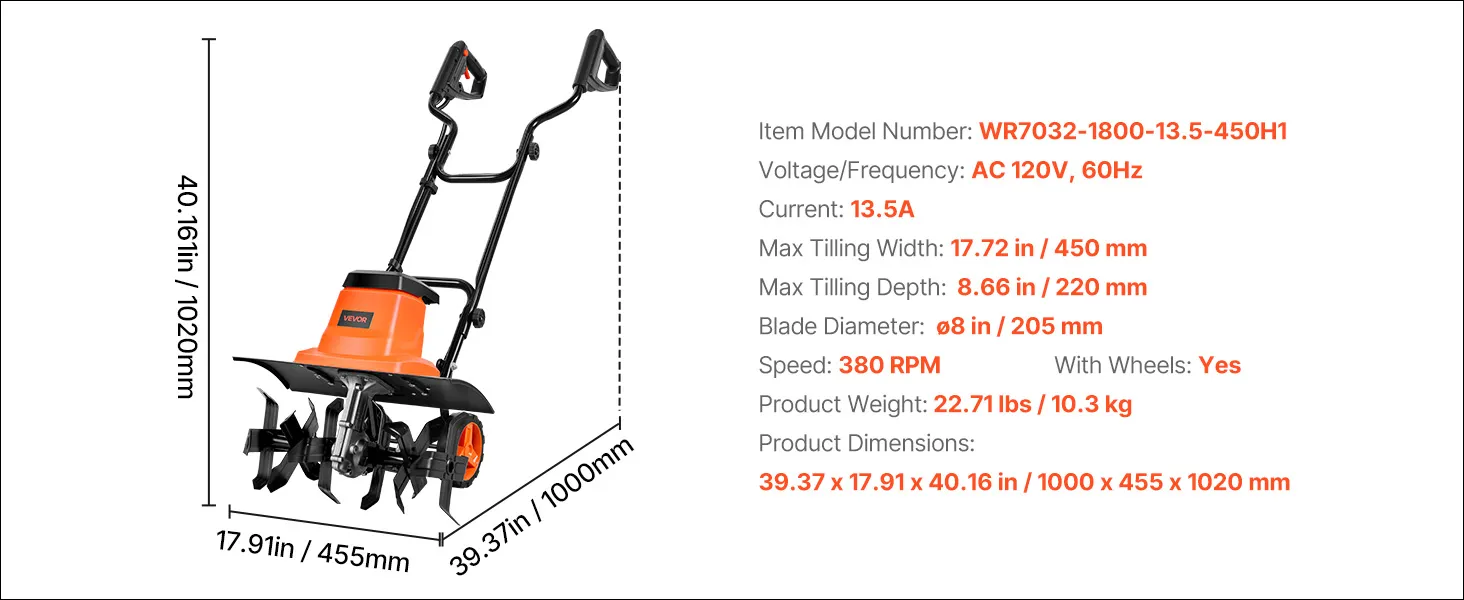
- 39.37 x 17.91 x 40.16 in / 1000 x 455 x 1020 mm
Description


Electric Tiller
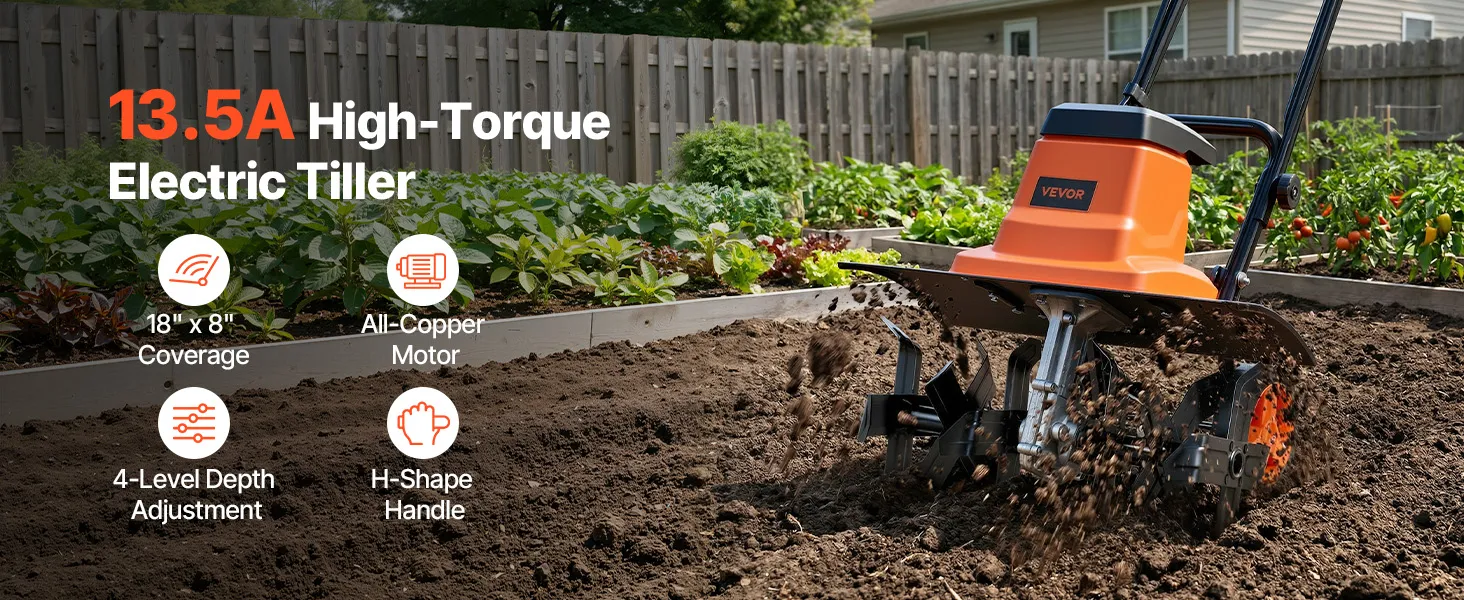
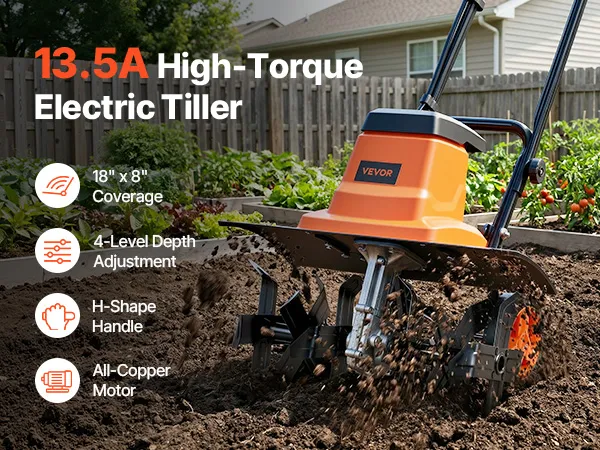
120V/13.5A pure copper motor with all-copper windings supports stable output under heavy resistance. Four depth levels help match output to soil conditions.
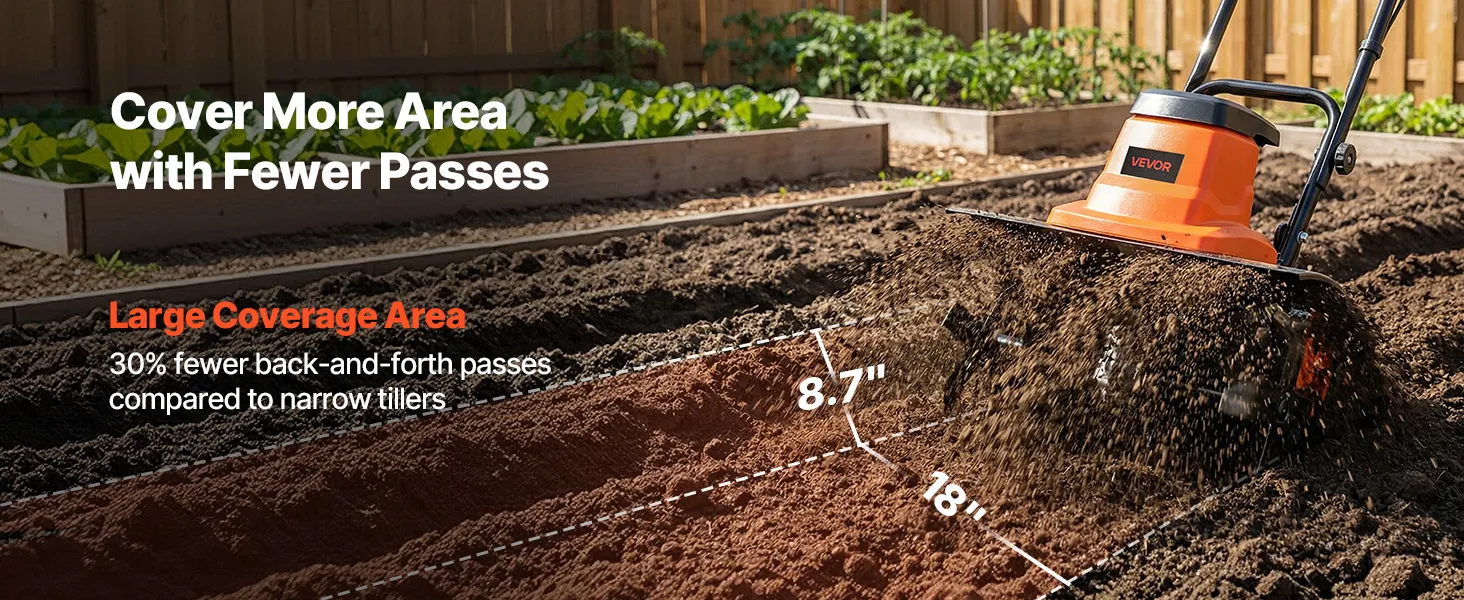
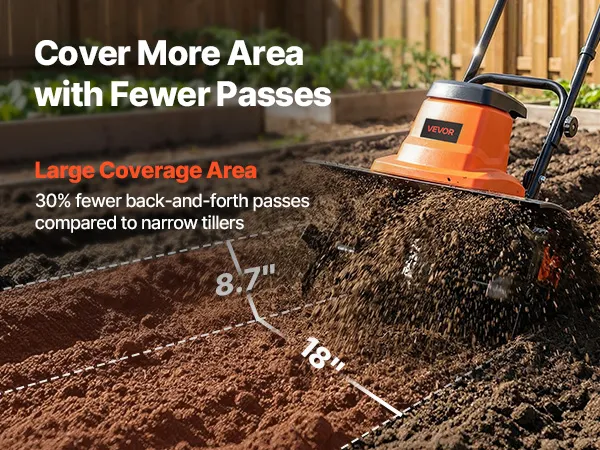
18 in/450 mm tilling width and up to 8.7 in/220 mm depth cover larger areas with fewer passes, this electric rototiller is ideal for home gardens, lawn renovation, and early-stage field prep.
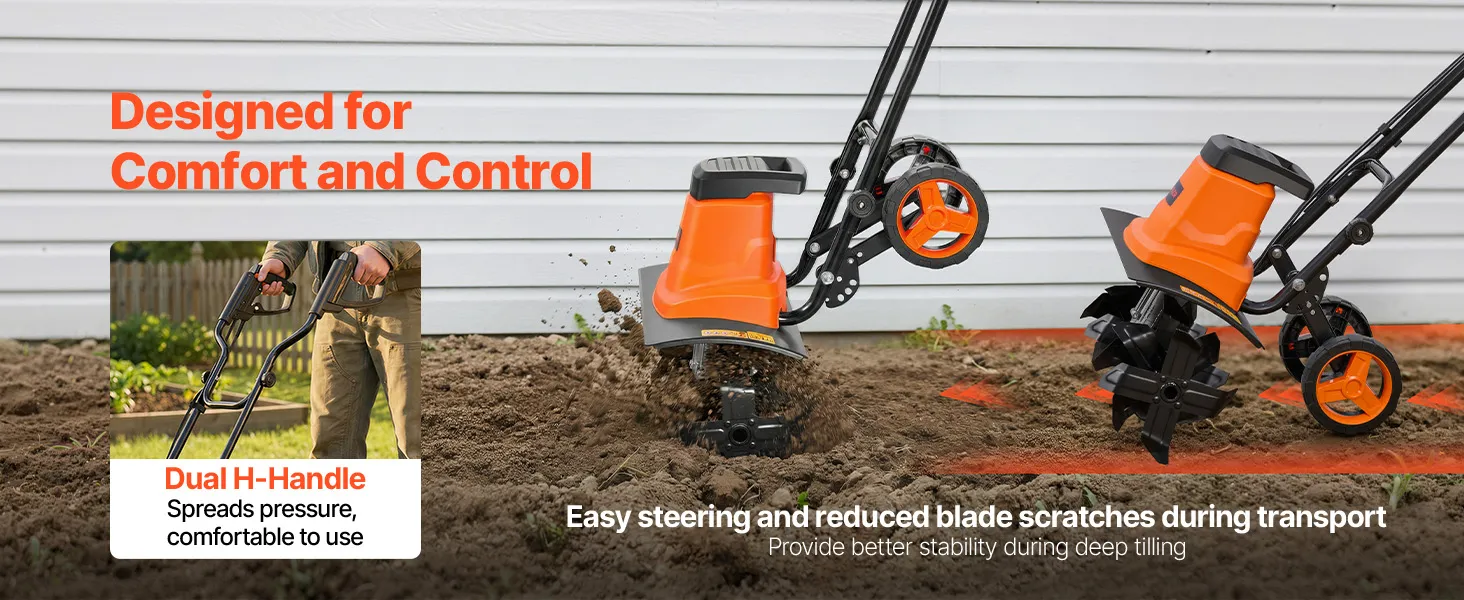
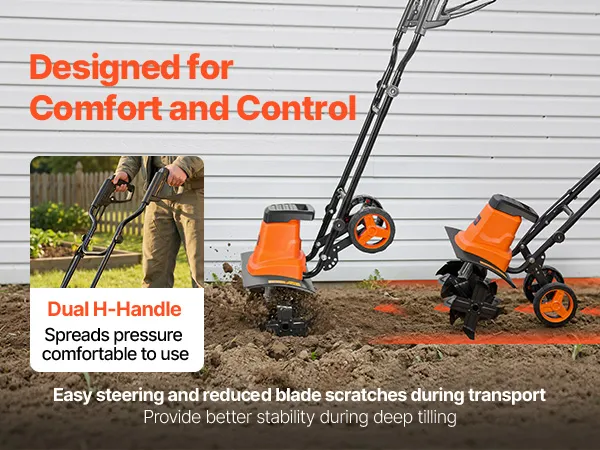
Dual H-handles with two-point support spread rebound force and improve steering. Wheels lift tines during transport and help maintain a consistent depth while working.
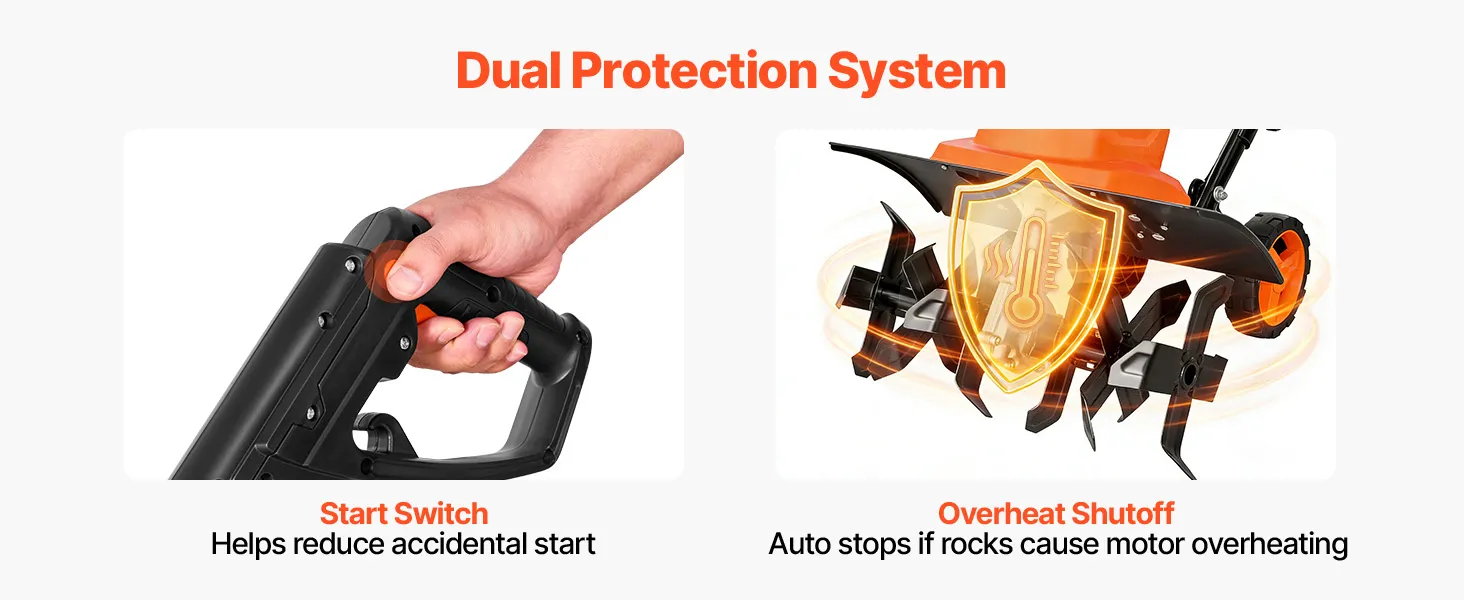
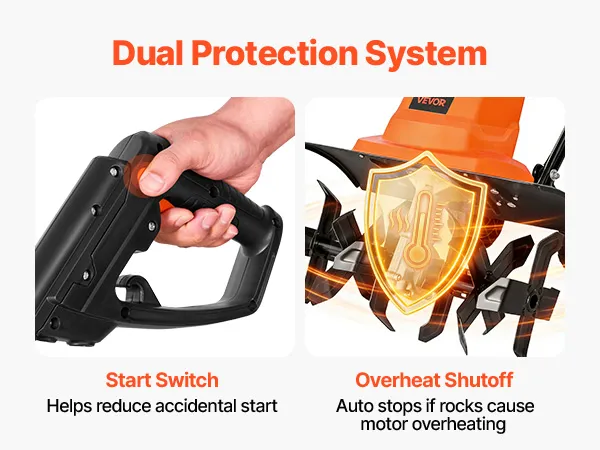
The corded garden rototiller operates by pressing the lock button and trigger together, helping reduce accidental starts. An automatic overheat shutoff cuts power if rocks or obstacles overload the motor, supporting more reliable operation.
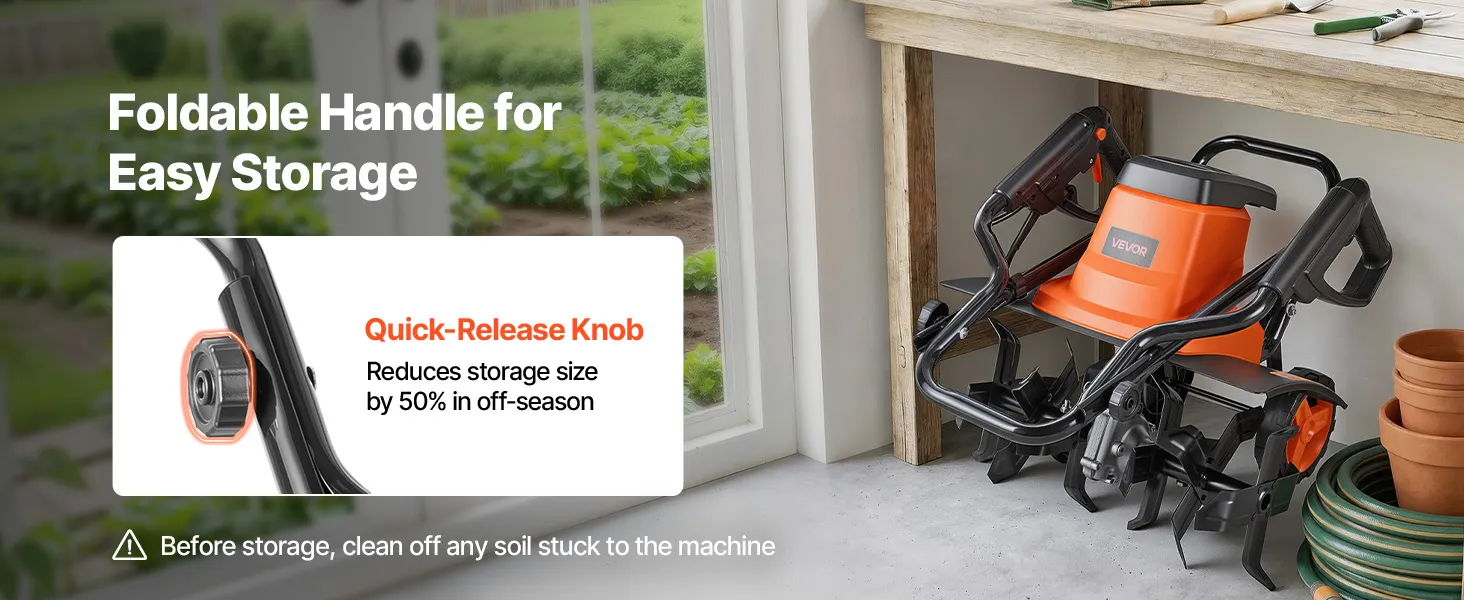
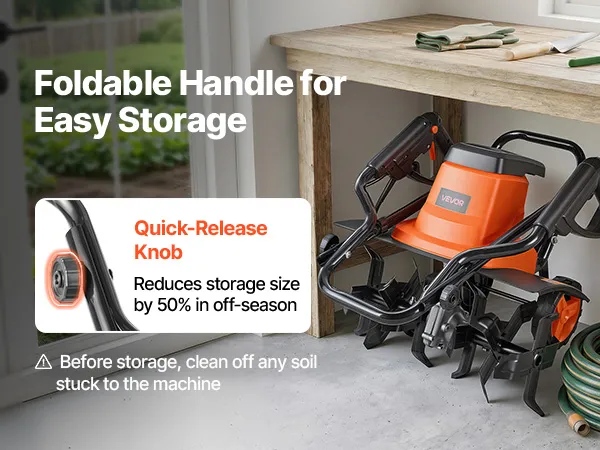
Quick-release knobs fold the handle for about 50% less storage volume. lightweight and built-in cord retainer support easier carrying and storage.
13.5A Copper Motor Powers This Corded Rototiller Through Hard Soil
This corded rototiller is designed to prevent underpowered tillers from stalling or bogging down in compacted or rocky soil. The machine is powered by a 13.5A full-copper motor that provides sufficient steady power to operate through dense, hard ground without jamming or losing momentum mid-pass, a common failure point in lighter-duty electric tillers.
There is no need for a specific outlet or generator setup because it runs on ordinary 120V North American voltage; plug it in and go. This corded rototiller is a practical choice, whether you are breaking fresh ground for a large plot or maintaining an established backyard garden each season, thanks to its accessibility and motor output, rated for both large-scale and home garden use.
17.72" Tilling Width and 8.66" Depth for Efficient Coverage
Compared to narrower consumer models, this tiller's working width of 17.72 in (450 mm) is large enough to reduce the number of passes required for a task. Bigger beds and plots can be tilled more quickly without compromising the flexibility needed for raised-bed spacing or tighter plant rows. That combination saves actual time on each tilling session, whether you are maintaining rows on a larger plot or preparing an entire backyard garden.
For actual planting preparedness, depth is just as important as width. This unit reaches a maximum tilling depth of 8.66 in (220 mm), which is sufficient to break up compacted subsoil layers and adequately aerate the ground for deep-rooted planting. This corded rototiller is designed to prepare planting-ready soil in fewer passes than narrower or shallower options, thanks to its large working width and true tilling depth.
6 Blades x 4 Tines Design Shortens Working Time
It is not simply raw motor power that influences how finely a tiller breaks up dirt, but also the configuration of its blades and tines. Compared to simpler tine setups, this machine's 6-blade x 4-tine design chops and turns soil more completely per pass at 380 RPM, requiring fewer passes to achieve a workable, planting-ready condition.
The cutting method uses an 8-inch (205 mm) blade, which gives the tines ample reach to churn soil uniformly across the tilling width, rather than leaving uneven strips or missed areas. Compared with underpowered tillers that require numerous redundant passes to achieve the same effect, the combination of blade count and RPM translates into real-time savings for anyone preparing a full garden bed or working a larger plot.
Lock Switch and Overload Guard for Secure Operation
Powered yard equipment poses a serious risk of accidental activation, particularly when navigating around obstructions or changing position mid-task. To lower that risk, this tiller has a lock switch that must be intentionally engaged before the motor starts, rather than a straightforward trigger that may be inadvertently bumped.
If it encounters unusual dirt, roots, or soil, it could otherwise strain the system; an overload guard provides an additional layer of safety to help protect against it. The operator has greater control when repositioning the machine between rows or across larger plots, without struggling with the equipment's weight or balance, thanks to the sturdy PP wheels, which enable smooth travel over uneven or all-terrain surfaces.
Reinforced Shield Plate and High-Hardness Tines for Long-Term Durability
This machine has a shield plate positioned to prevent soil, rocks, and plant material from kicking back toward the operator during use, as flying debris is an inevitable part of tilling. That is a minor detail that has a significant impact on safety, particularly when operating in areas with unknown debris content, such as newly or previously tilled plots.
To prevent edge dulling, a common failure mode in which tine edges dull or distort after repeated contact with compacted or rocky soil, the tines are constructed from a high-hardness material. Thickened screws improve vibration resistance and reduce loosening that usually occurs with long-term use of inferior hardware by fastening directly to the tiller body at critical stress points.
Foldable H-Shaped Handle Makes This Corded Rototiller Easy to Store
With a handle that folds down to half its usual size when not in use, this corded rototiller solves the storage space issue that most home garden equipment faces. For those who store equipment in a shed, a garage corner, or a small outdoor storage area instead of a designated equipment barn, the folded footprint is important.
Compared with single-bar handle designs, the H-shaped handle design further enhances daily usability by providing operators with a more comfortable and flexible grip. A minor but incredibly helpful feature for anyone who has struggled with movement when operating a tiller through tight garden rows is an integrated cord retention device that keeps the power line tidy and prevents tangling during use.
Product guides and documents
User manual-en (PDF) Review
Questions and Answers (1)
Can the outer blades be removed for a narrower cut?
This is a one-piece blade that cannot be disassembled.
If this answer does not resolve your issue, please contact us again for assistance.
By vevor
Helpful
(
0
)
Select product protection plan
Accident and warranty protection by Xcotton (partner with AIG)
No thanks
3-Year
2-Year
1-Year
In Stock
Security & Privacy
FREE Returns
Professional Service
Compare with similar items
Similar Items You Might Like
People Who Bought This Item Also Bought
Best sellers in this category
People Who Viewed This Item Also Viewed
Your Browsing History
Recommended Searches
tools used for gardening black edging landscaping gardening services near me professional gardening tools garden tillers for sale near me gardening tools for beginners best tiller for large garden garden shredder mulch garden shredder mulcher used garden tillers for sale treated pine garden edging best cultivator garden cultivator tool garden cultivator cultivator tool garden hand cultivator hand cultivator tool hand cultivator tiller cultivator battery powered cultivator