







Download VEVOR App 

Get $5.00 Off $99.00+ Orders on Your First 3 App Orders
Scan the QR code to download
SKU: ZXKQXNKJ5MSJK31CX001V9
Copy


+12
More


 Ask about this product by AI
What is the maximum length the camera can reach, and is the cable flexible enough for tight spaces?
Can this borescope be used in wet or submerged environments?
Does the borescope support dual-angle viewing, and how does the split-screen feature work?
Ask something else
VEVOR Endoscope with Light, 360° View Coverage Industrial Borescope Inspection Camera with Rotating Probe, 1080P HD Rigid Snake Scope Cam for Wall Automotive Engine Inspect-16.4FT
4.5 548 Reviews
$ 99 90
Earn at least 2% points on purchases or save up to 15%.
Each when you buy 0+.
Shop
Get -% off for new user
Get $5.00 Off $99.00+ Orders on Your First 3 App Orders.
Download Now

Features & Details
- 360° Coverage Without Blind Spots: The VEVOR borescope features innovative 360° motorized rotation + dual front/side lenses let you steer the probe remotely and instantly switch between views. No more twisting your wrist or guessing – capture every crack, leak, or worn component from any angle.
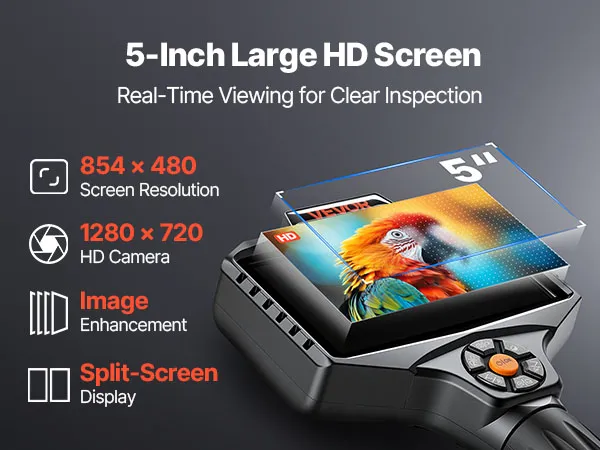
- HD Clarity, True Color: The VEVOR borescope is equipped with HD lens + 5" IPS screen with image enhancement deliver sharp, true‑to‑life colors. 8+1 adjustable LEDs eliminate dark spots and glare, while split‑screen dual‑view lets you compare front and side angles instantly. No more guesswork required to spot hairline cracks.
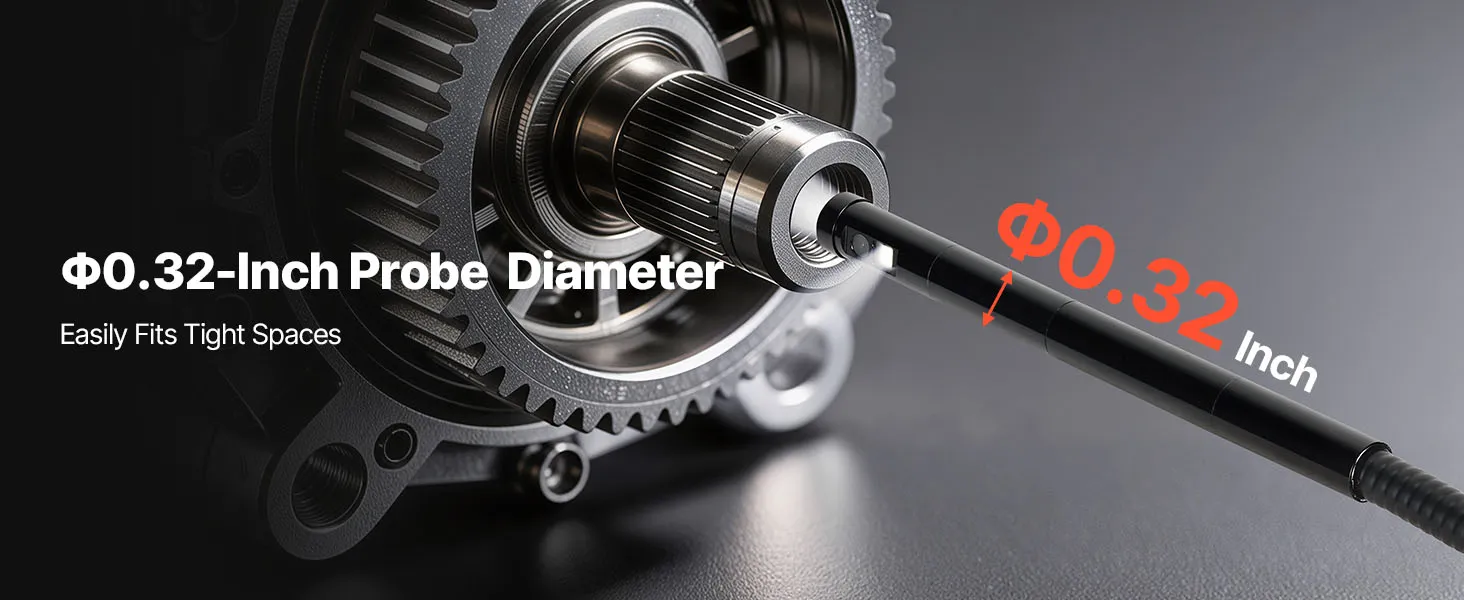
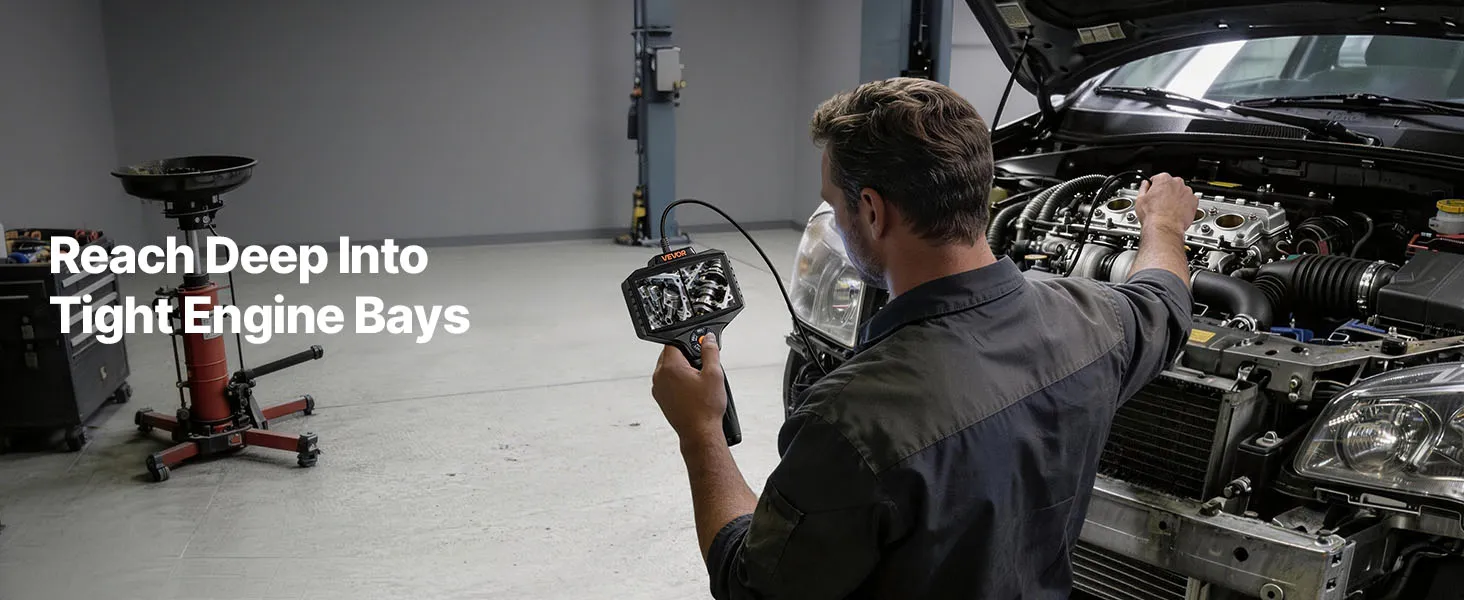
- Effortlessly Reach Tight Spot: The 16.4 ft rigid snake cable offers the perfect balance of flexibility and pushability – it goes deep without kinking. With a slim 0.32 in camera head, you can slide into the tightest gaps, from cylinder walls to intake manifolds. No more getting stuck – just smooth, precise access to every hard‑to‑reach area.
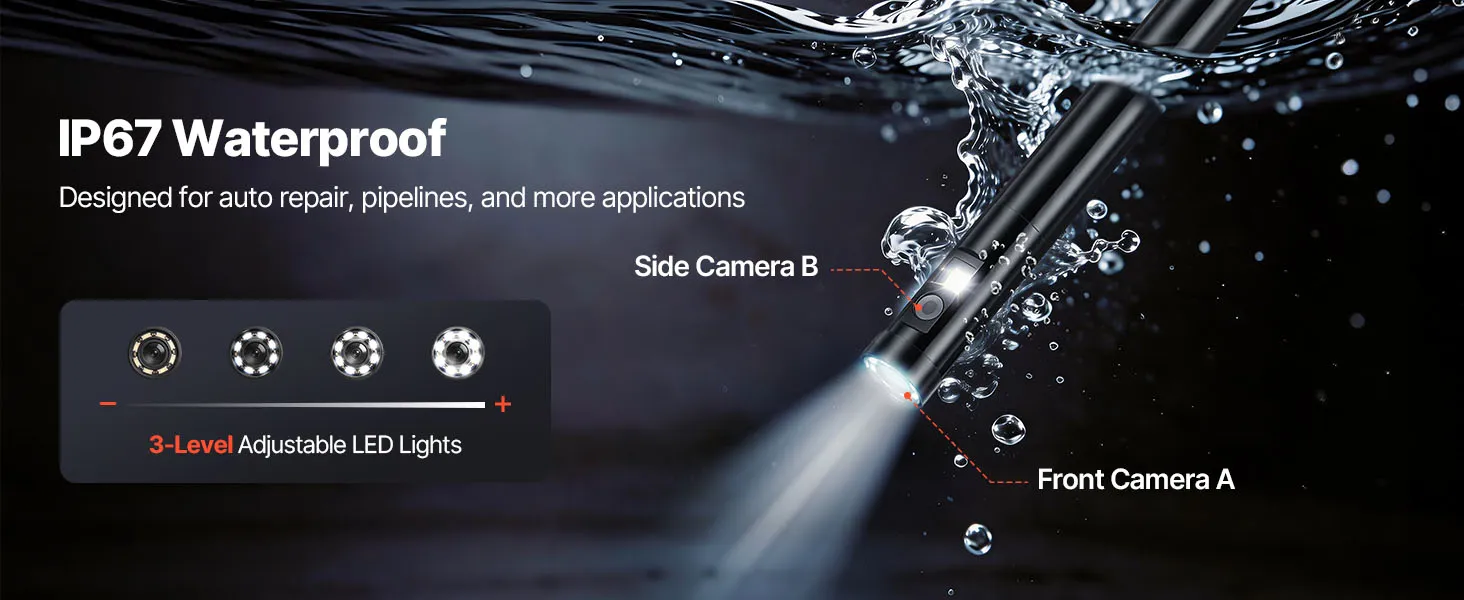
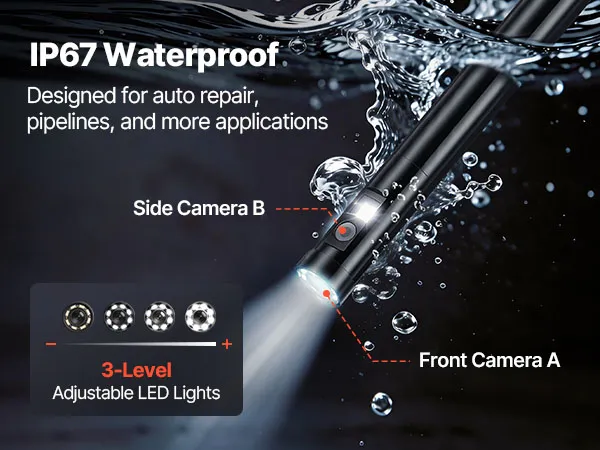
- Work in Harsh Conditions Without Worry: The IP67-rated waterproof camera works reliably in wet, submerged, and oily environments. It delivers clear details even in low-light or complex conditions, making it suitable for automotive repair and other mechanical applications, as well as for drain and pipeline inspections.
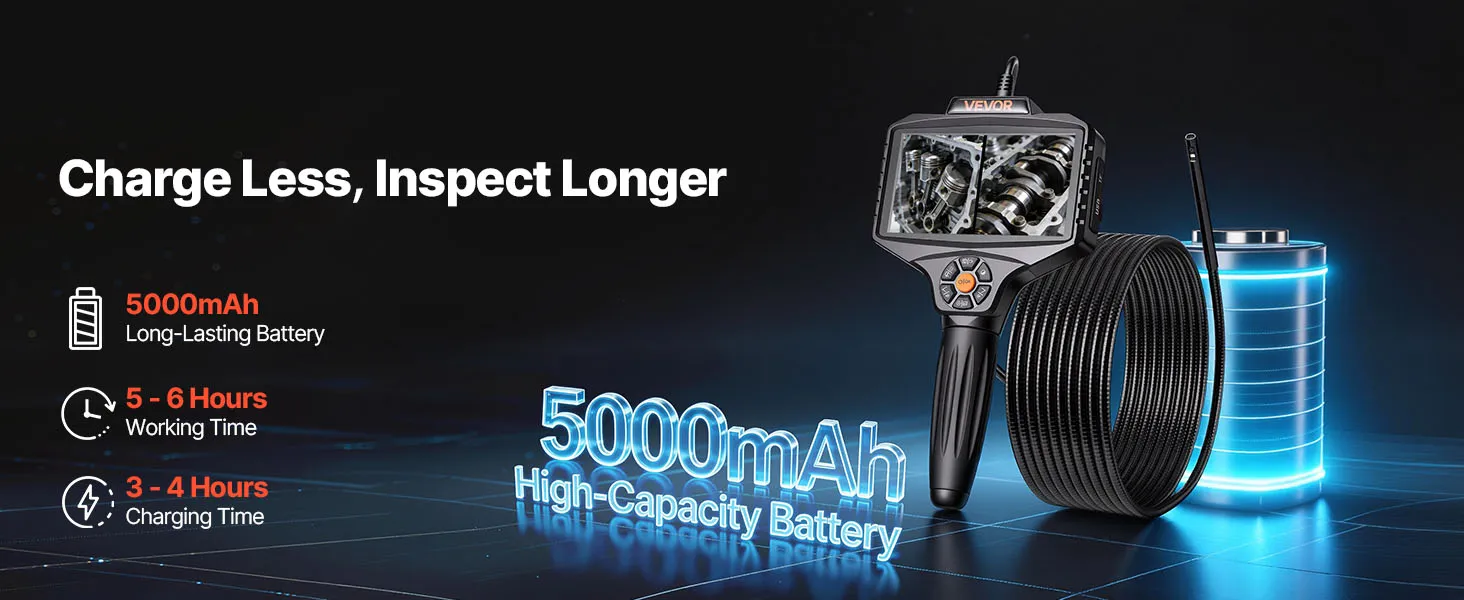
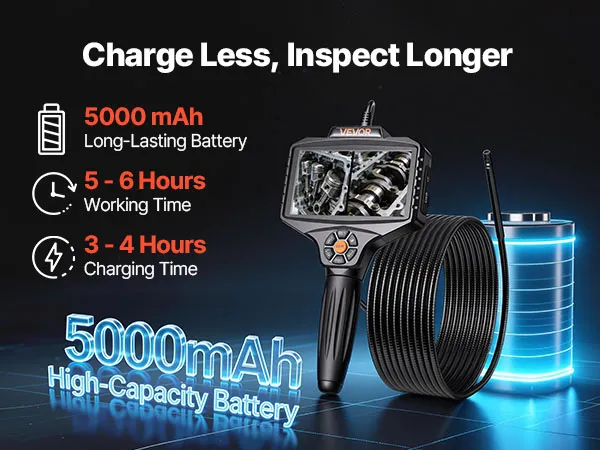
- Keep Working All Day on a Single Charge: 5000mAh high‑capacity battery powers up to 5–6 hours of continuous operation – enough for multiple vehicle inspections, long HVAC runs, or an entire shift. Stop searching for chargers and focus on getting the job done.
Product specification
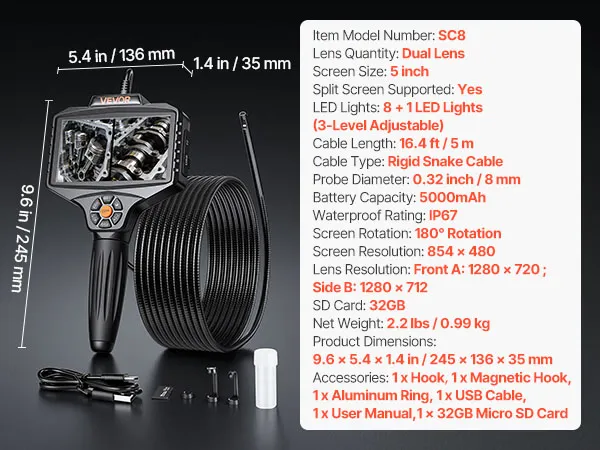
- Item Model Number SC8
- Lens Quantity Dual Lens
- Screen Size 5 inch
- Split Screen Supported Yes
- LED Lights 8 + 1 LED Lights (3-Level Adjustable)
- Cable Length 16.4 ft / 5 m
Reviews summary
4.5 548 Reviews
Customers say: The product is praised for its excellent image quality, functionality, articulation, and build, but some concerns include durability, weak mechanisms, and minor design flaws.
Al-generated from customer reviews
Frequently Bought Together
Reviews
About this item
Questions and Answers
Explore
Reviews
No customer reviews
Be the first to rate this product. your feedback will helps others make informed decisions.
Write a Review
Customers say
The product is praised for its excellent image quality, functionality, articulation, and build, but some concerns include durability, weak mechanisms, and minor design flaws.
Al-generated from customer reviews
Top Reviews
About this item
Product specification
- Item Model Number
- SC8
- Lens Quantity
- Dual Lens
- Screen Size
- 5 inch
- Split Screen Supported
- Yes
- LED Lights
- 8 + 1 LED Lights (3-Level Adjustable)
- Cable Length
- 16.4 ft / 5 m
- Cable Type
- Rigid Snake Cable
- Probe Diameter
- 0.32 inch / 8 mm
- Battery Capacity
- 5000mAh
- Waterproof Rating
- IP67
- Screen Rotation
- 180° Rotation
- Screen Resolution
- 854 x 480
- SD Card
- 32GB
- Net Weight
- 2.2 lbs / 0.99 kg
Description


Pro-level performance without the pro-level cost
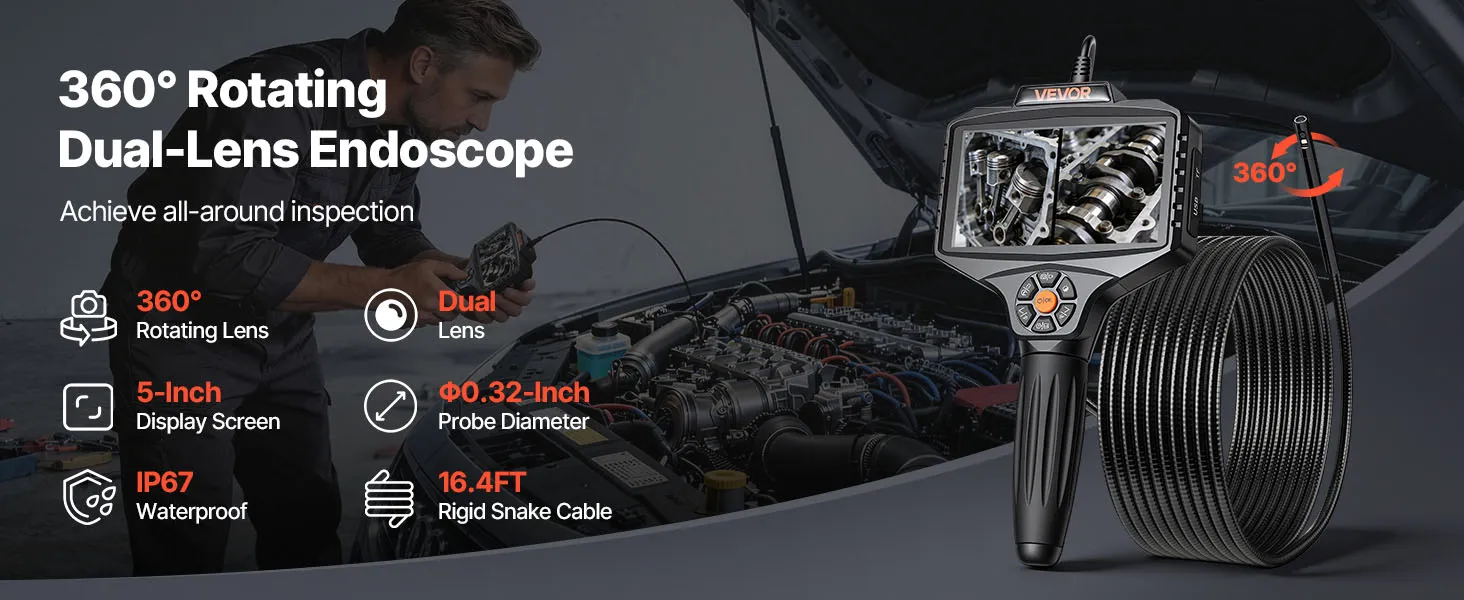
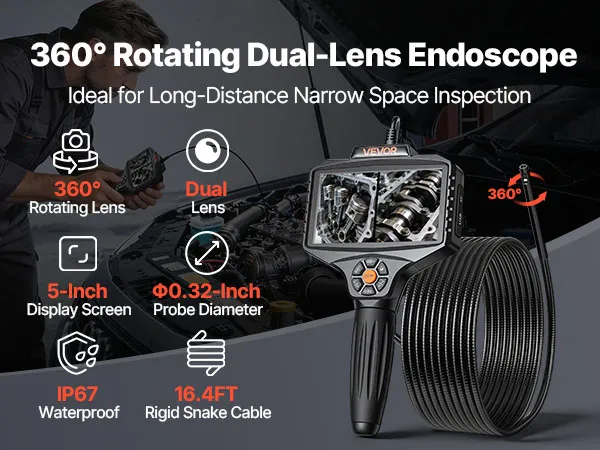
This dual-lens endoscope features a 360° motorized rotating design, 5-inch HD IPS split-screen, a 16.4 ft extended rigid cable, 0.32-inch slim lens, and 5000mAh long battery life, allowing you to observe narrow spaces from multiple angles and making inspection more efficient.
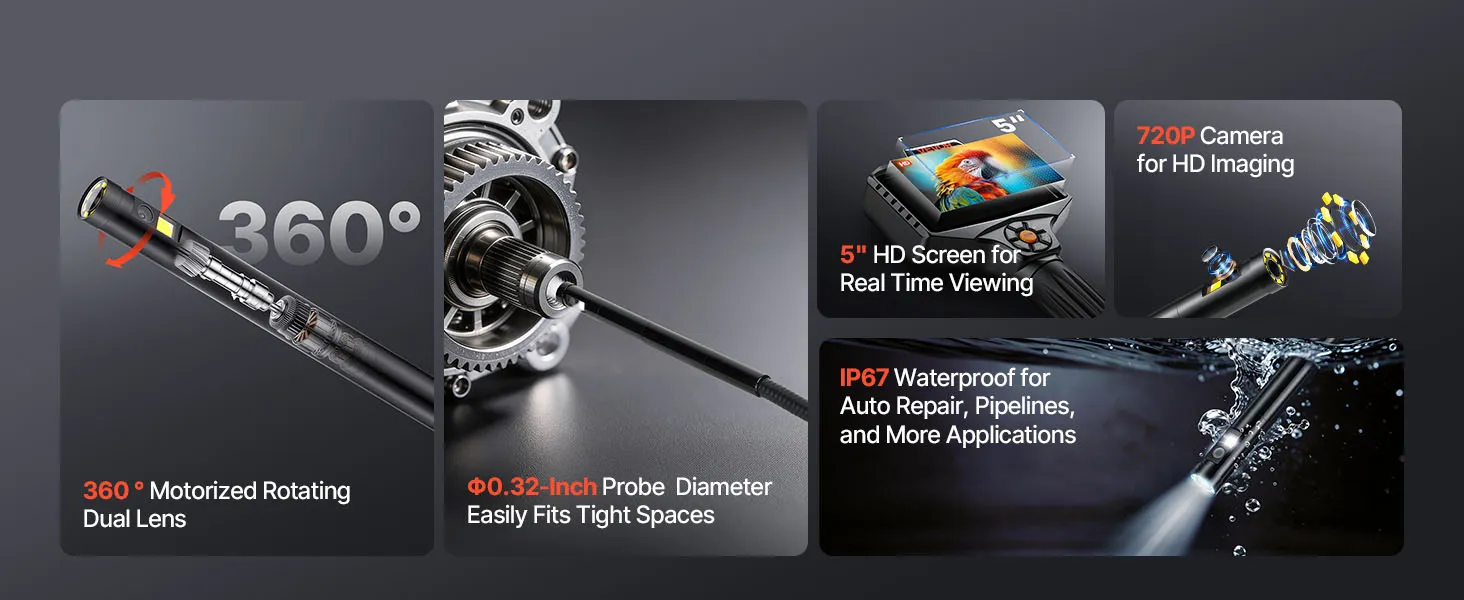
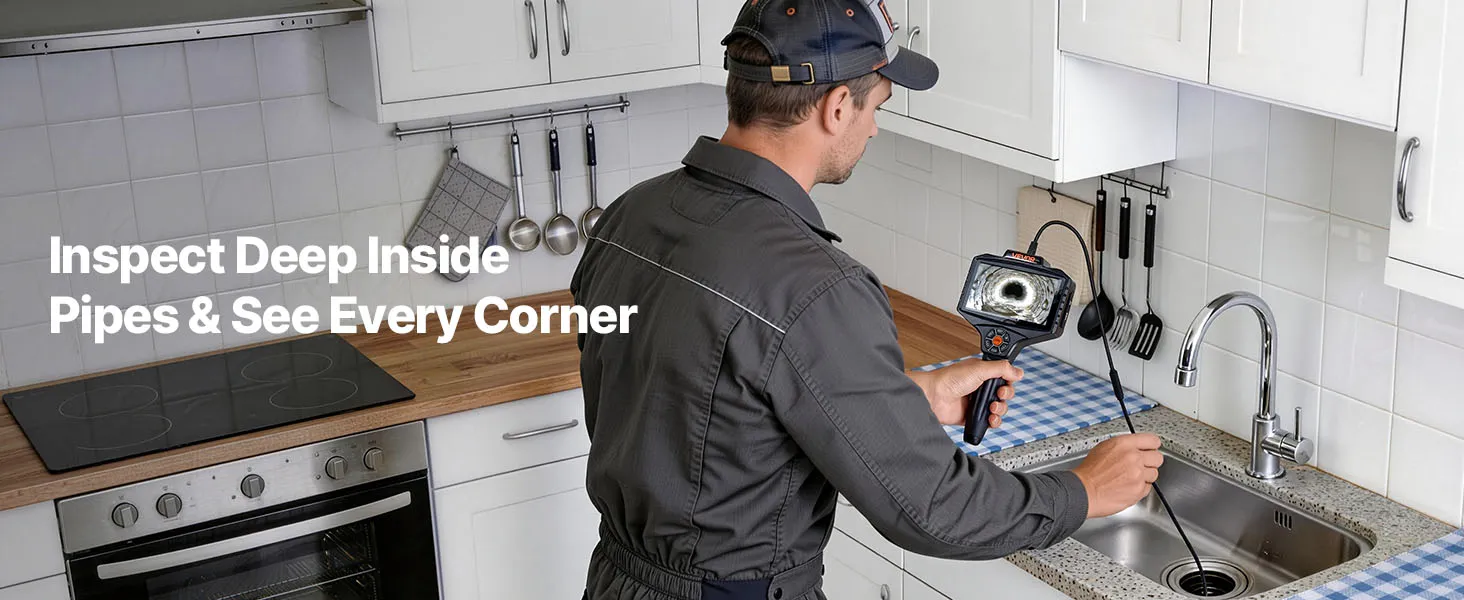
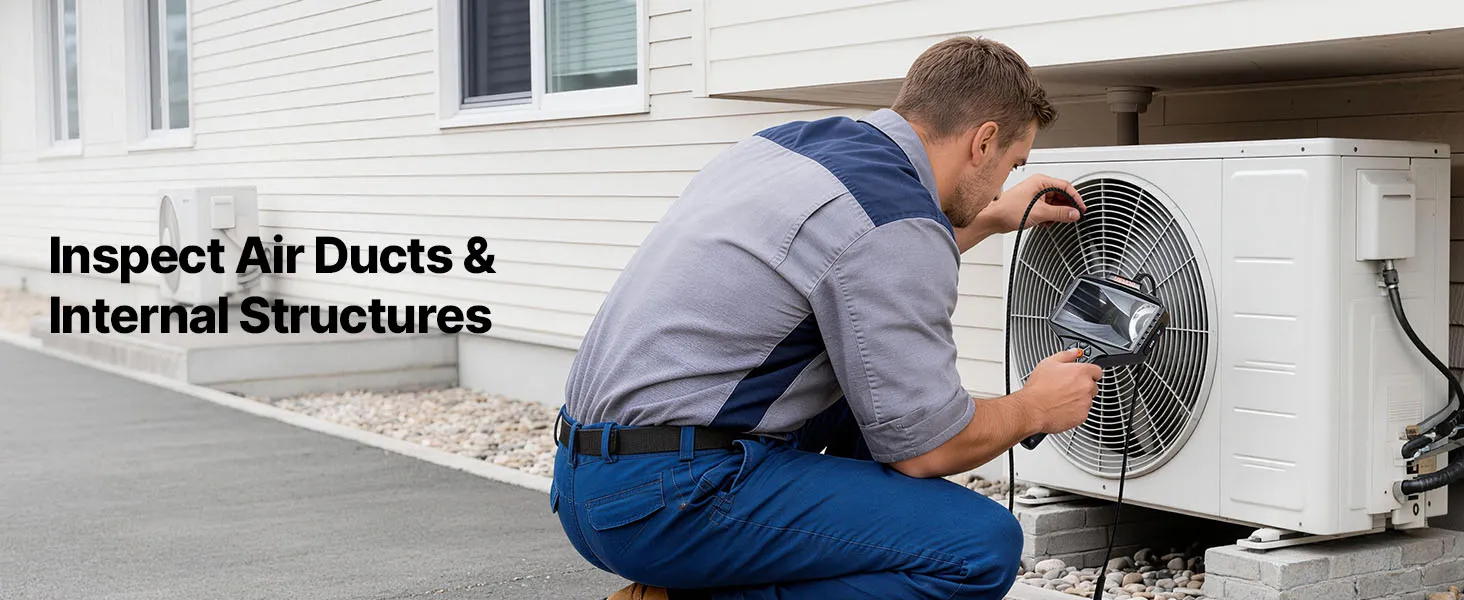
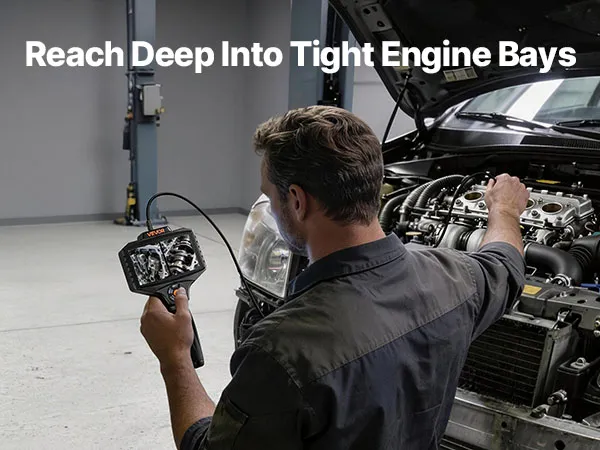
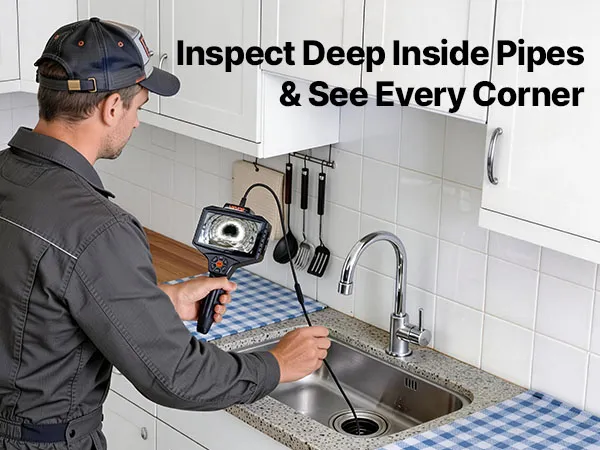

Key Features
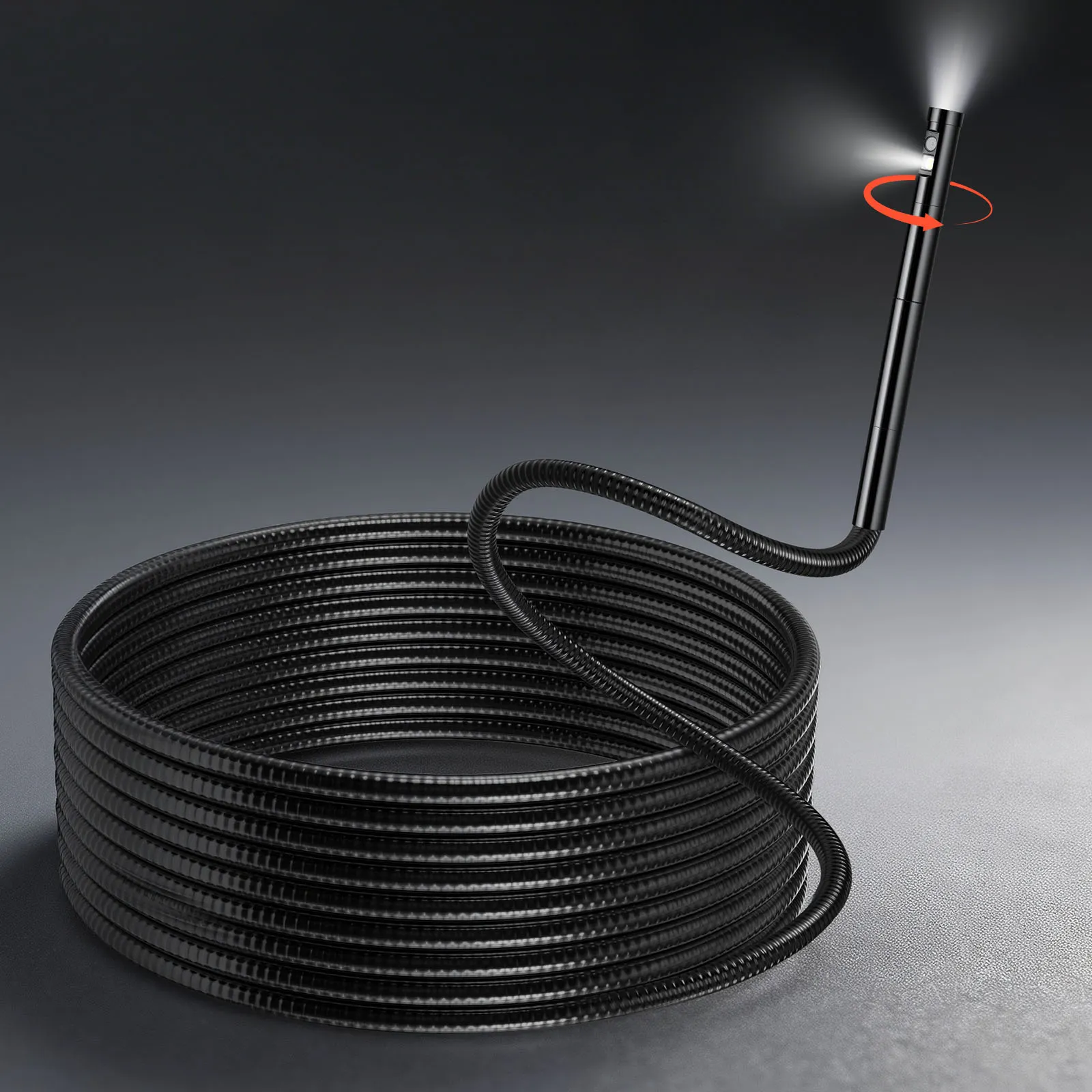
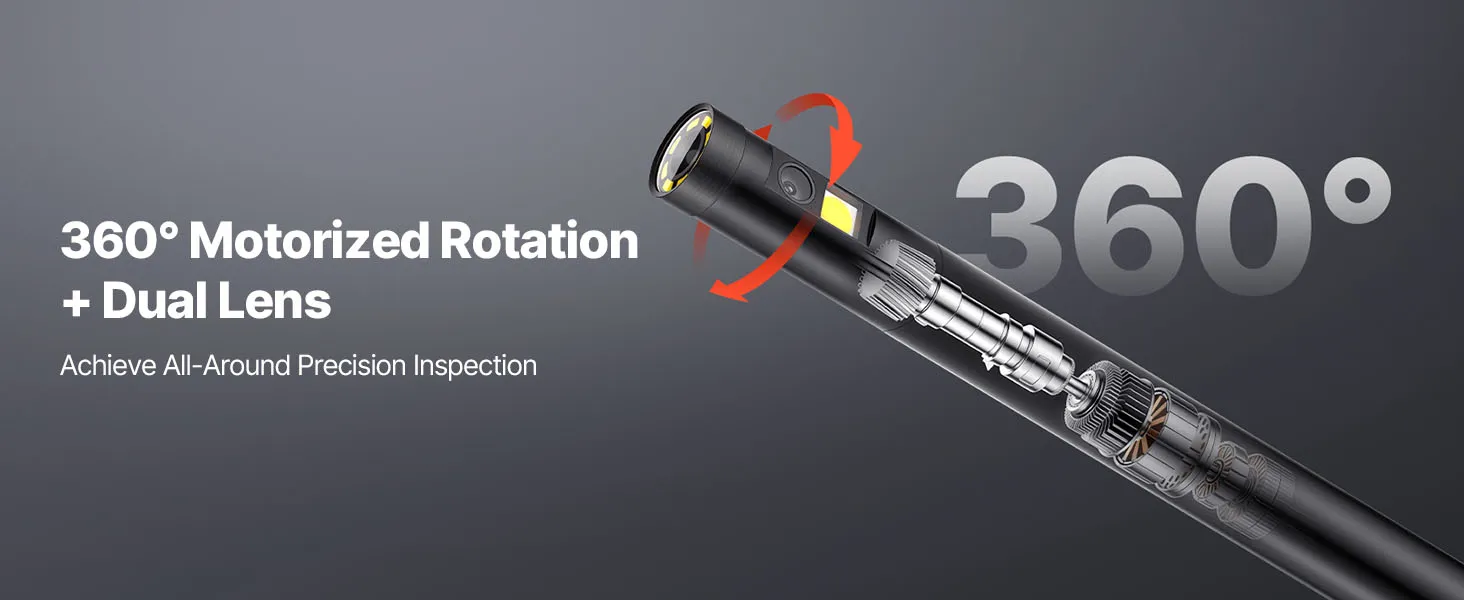
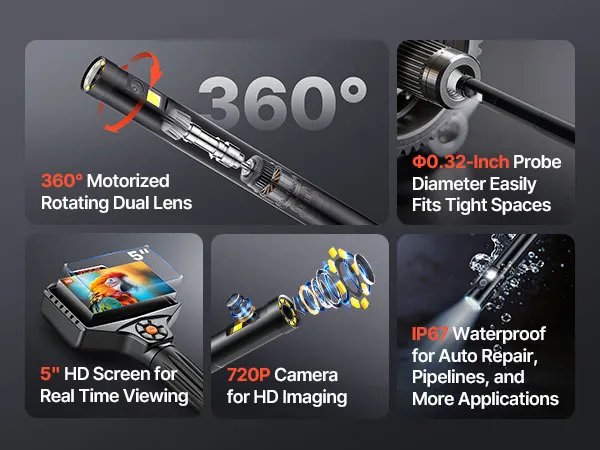
360° Motorized Rotation Lens
Provides flexible viewing angles and clearer observation for accurate inspections in narrow spaces.
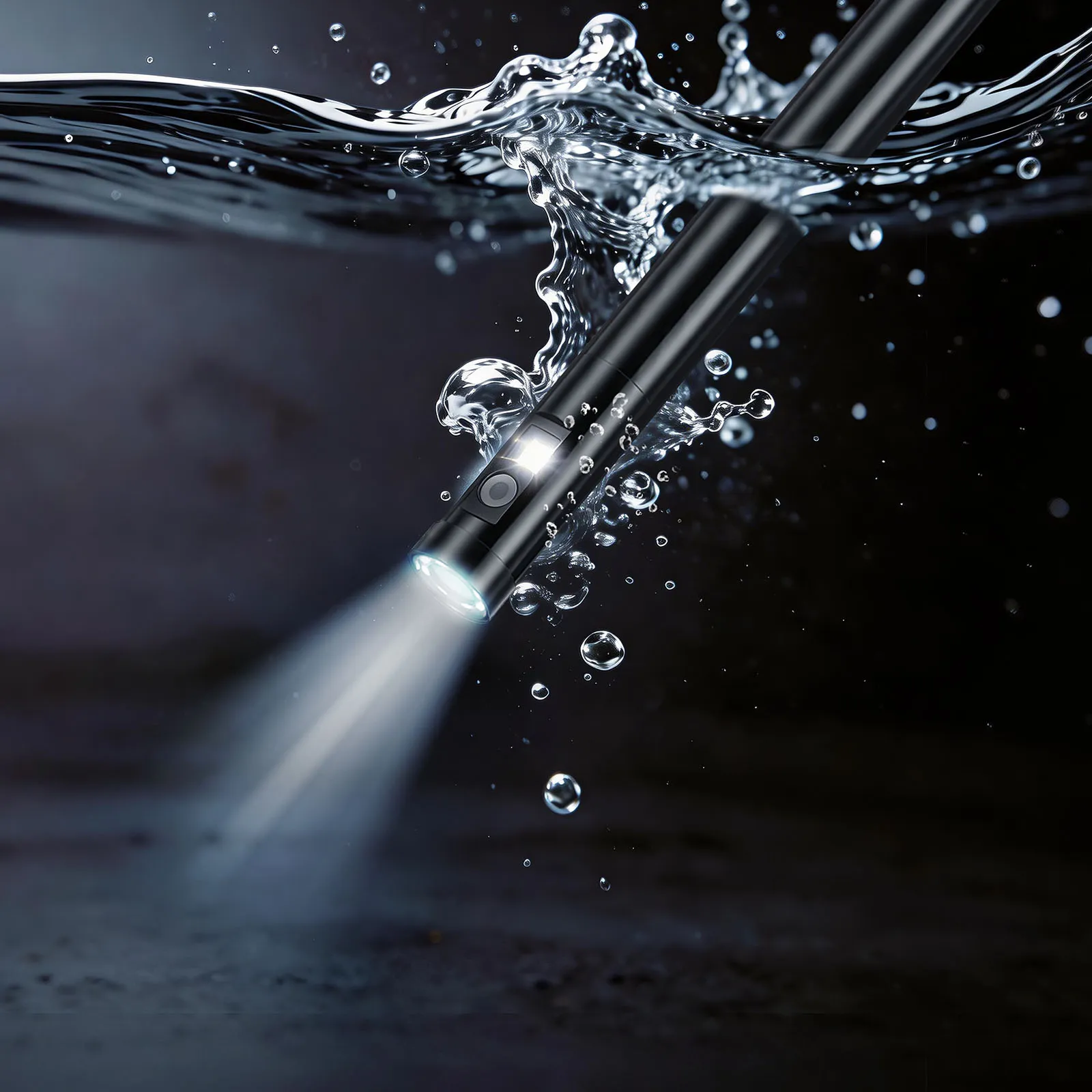
IP67 Waterproof
Designed to work reliably in wet environments such as pipelines, automotive repairs, and other demanding inspection areas.
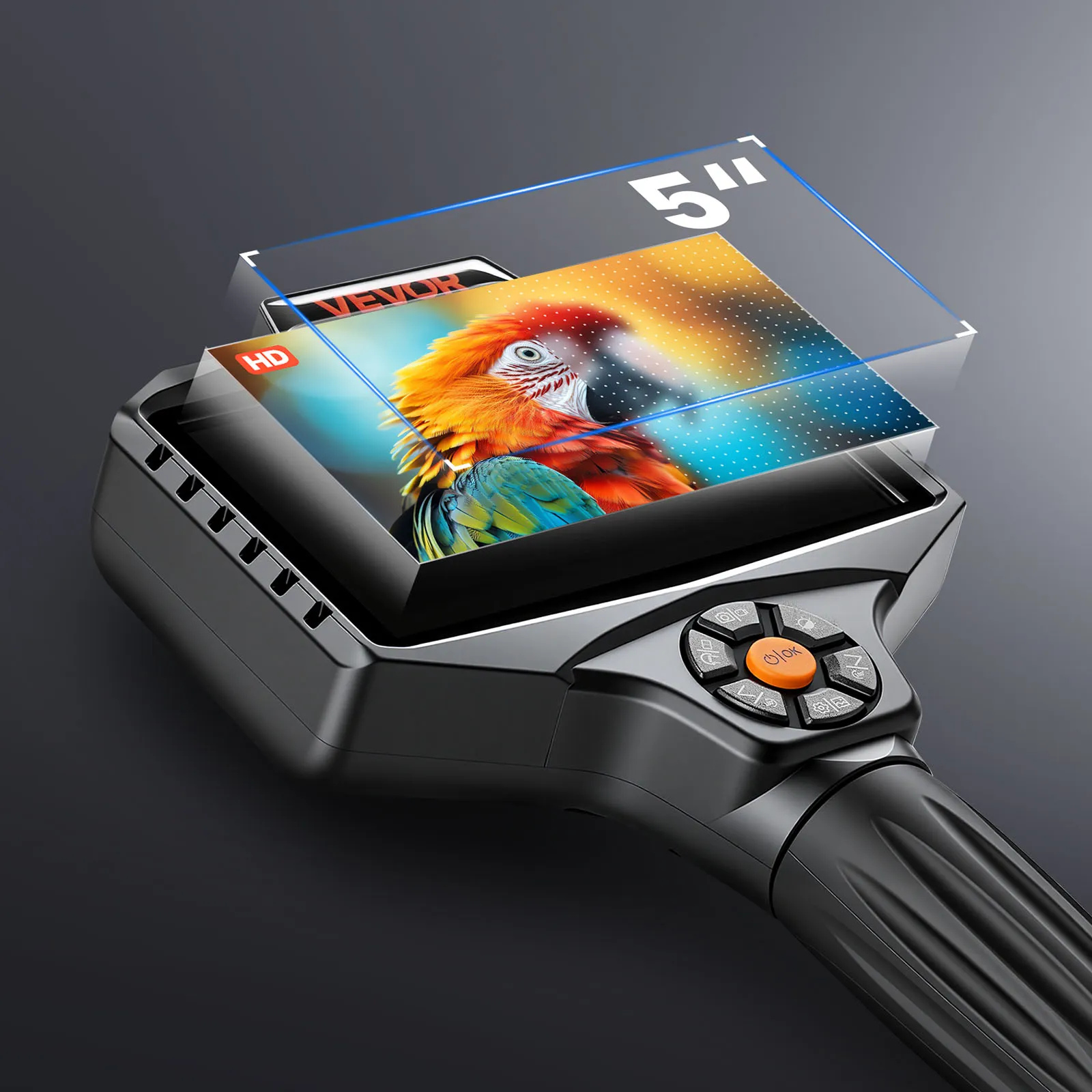
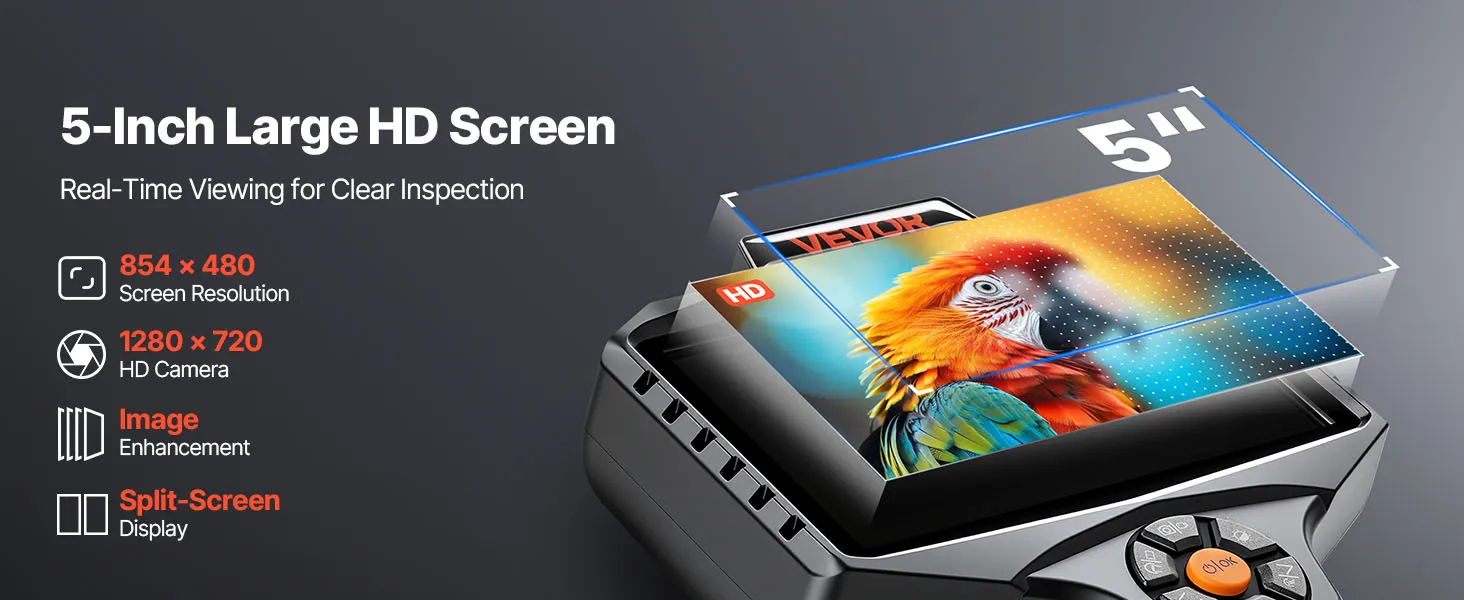
5" HD Split-Screen Viewing
Delivers clear real-time images and detailed visuals, helping make inspection tasks faster and more efficient.
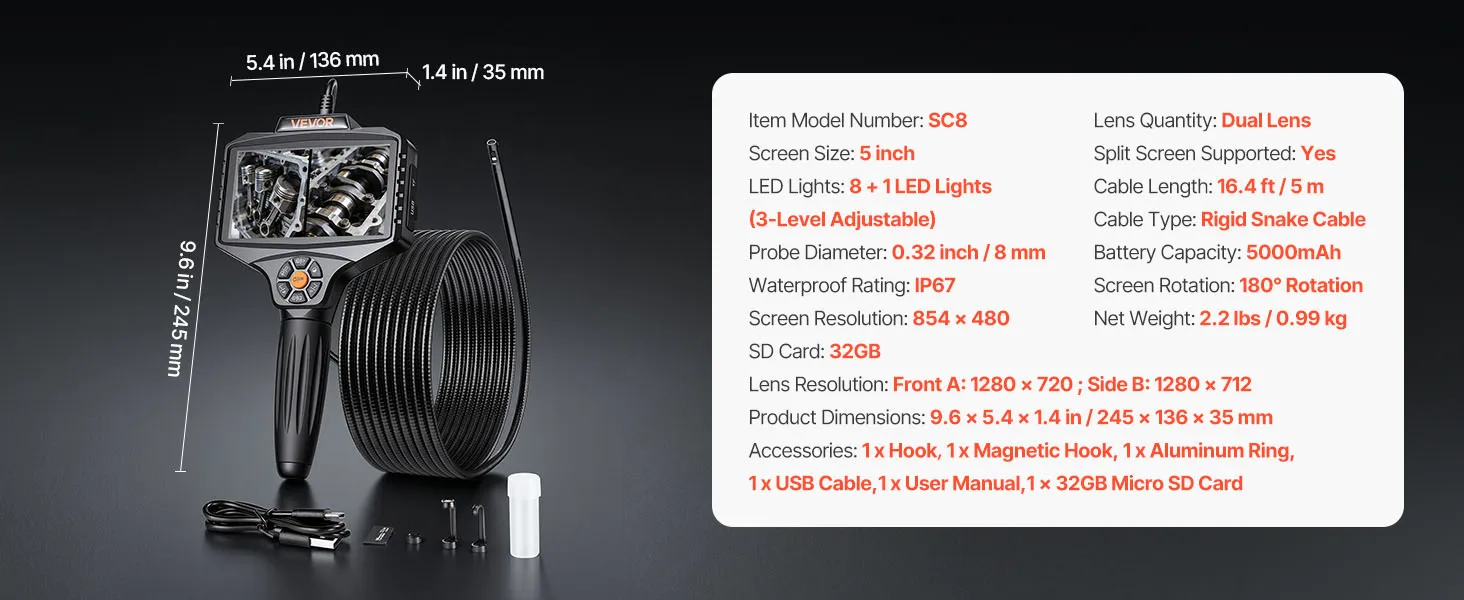
Borescope Snake Rigid Camera with 16.4 ft Rigid Cable That Reaches Far Beyond Standard Models
Most inspection cameras are supplied with 3- to 5-foot wires, which limit the depth you can explore in long pipe runs, ductwork, or long engine tunnels. This borescope snake rigid camera reaches a full 16.4 feet (5 meters), which is more than three times the depth of a conventional-length model. That extra length of cable allows you to trace a drain line far beyond the foundation wall, or run an HVAC duct from the register to the junction without running out of reach halfway through.
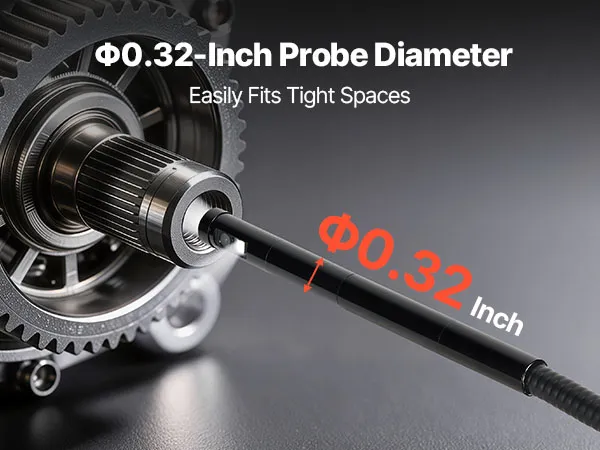
The rigid snake structure ensures the cable pushes forward smoothly over the whole distance without folding over or losing momentum at bends. The camera head is 0.32 inches (8 mm) in diameter, allowing it to be inserted through standard access ports and traverse curved parts while remaining stable on course. Whether you are inspecting a 15-foot industrial pipe or traveling the complete length of an exhaust system, the cable is pushable from the first inch to the last.
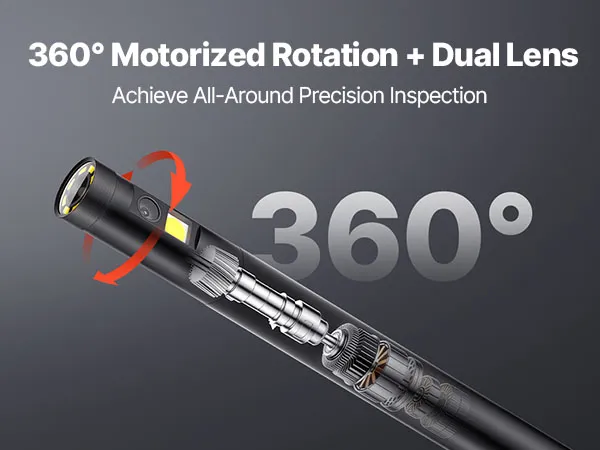
360° Motorized Probe Rotation Replaces Manual Wrist Twisting Entirely
Rather than articulated joints or twisted physical cables, this machine uses motorized rotation of the probe tip through a full 360-degree sweep. You can remotely control the rotation from the handset, pointing the camera to any clock position within a pipe, hole, or cavity. This motorized approach allows smoother, more accurate positioning than is achievable manually, especially deep in the passage, where the cable response is slow.
Motorized rotation also eliminates the cumulative torque that hand-twisting places on the cable over time. As the cable is repeatedly wound and unwound to adjust viewing angles, the internal wiring is ultimately weakened, and signal quality diminishes. The design keeps the cable stationary; only the probe tip is mechanically moved, extending the unit's lifespan and allowing you more directional control than your wrist could provide from 16 feet away.
Dual Front and Side Lenses with Split-Screen Comparison View
The probe head has two cameras, one forward-looking and one geared to capture the walls and surfaces along the channel's sides. The split-screen mode displays both feeds simultaneously on the 5-inch screen, so you do not have to choose between seeing where the probe is going and inspecting the condition of the surfaces it passes through. As the probe moves, lateral cracks, sidewall corrosion, and joint separations are immediately displayed on the side-view feed.
This dual-lens method turns a single insertion into a complete scan that would otherwise require numerous passes or constant probe repositioning. The forward camera lets you maneuver around cylindrical objects like engine bores, sewer pipes, and conduit runs. In contrast, the side camera tracks wall conditions in real time. Having both perspectives on one screen allows you to link what you see in front with what’s around the probe at that particular point, making it much easier to identify where a fault is located over the length of the run.
8+1 LED Lighting System Covers Both Camera Angles Without Dark Spots
Nine LED lights illuminate both camera lenses: eight for the front-facing view and one for the side-angle camera. It offers three brightness levels to let you dial in the exact amount of light for each environment, from full power in pitch-black sewer systems to lower levels when working with reflective stainless steel or chrome-plated components. It is important to have good illumination on both feeds. Having a well-lit forward view with a dark side view contradicts the purpose of having twin lenses.
Balanced illumination on both perspectives also makes what you see on the split-screen display more accurate overall. Uneven LED coverage can cause deceptive shadows that could appear as fissures or hide real problems in the regular surface texture. Each borescope snake rigid camera has its own dedicated lighting zone, so you can be confident that both sides of the split screen are evenly lit for diagnostic judgments.
5" IPS Display with 1080P HD Capture for Professional-Grade Imaging
You get a 5-inch IPS display, which gives you ample room for dual split-screen feeds without cramping each image or making it hard to read. The camera lens is 1080P HD and records source footage with sufficient quality to detect hairline fractures, pitting, and early corrosion. The screen resolution is 854 by 480, keeping both camera angles crisp on the panel.
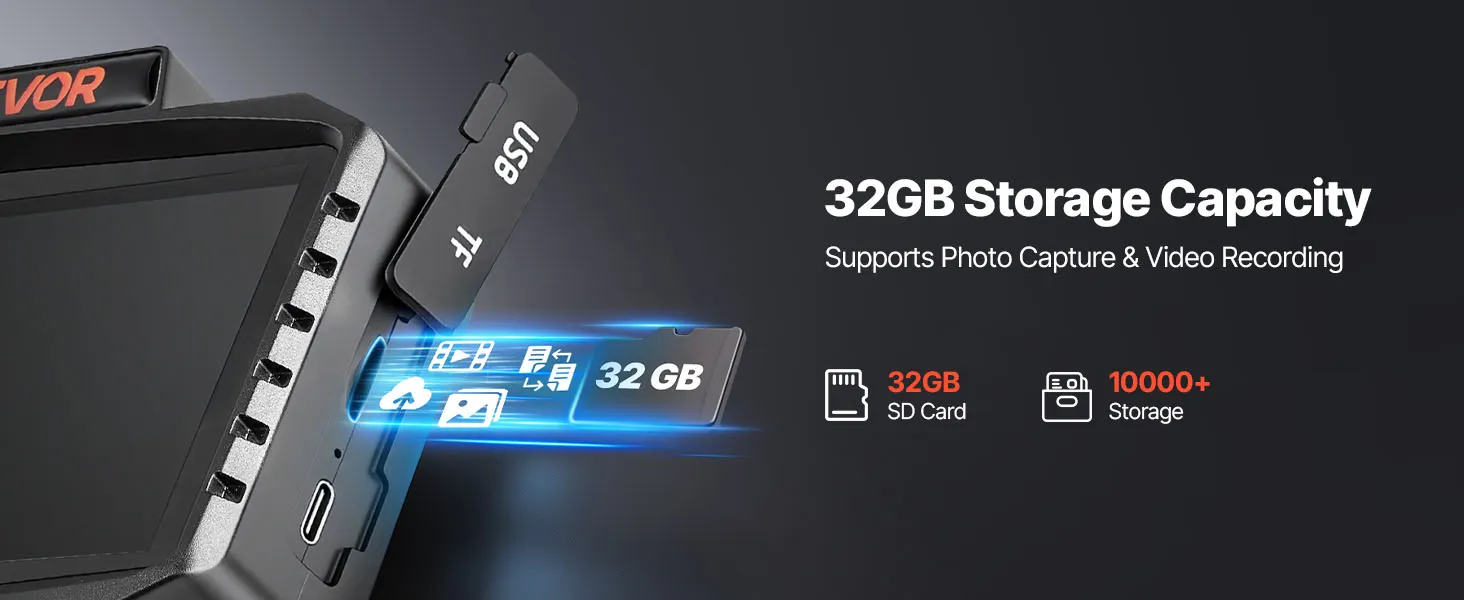
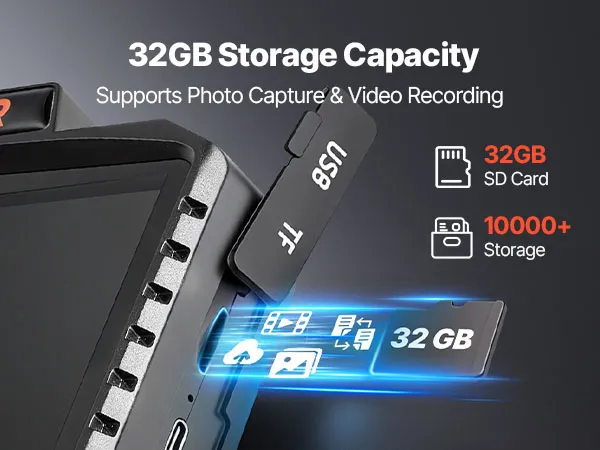
Use the 180-degree screen rotation to flip the screen display to your work position, whether you are crouched under a car, reaching up into a ceiling cavity, or lying flat in a crawl space. Photos and videos are saved directly to the device's 32GB SD card, creating a portable inspection archive that travels wherever the tool is used, without requiring a phone connection or wireless transfer. That archived footage can serve as instant documentation for client reports, repair approvals, or your personal reference files.
5000mAh All-Day Battery Makes This Borescope Snake Rigid Camera Field-Ready
Thanks to its powerful 5000mAh rechargeable battery, our borescope snake rigid camera can run continuously for 5 to 6 hours, so you can complete a full shift of inspections without searching for a charger. The dual lenses, nine LEDs, and motorized rotation all put more strain on a battery than a simple single-borescope snake rigid camera, and this cell is sized to cope with that demand and cover a full working day. The handset is still light and manageable, even for extended overhead or single-handed use, at a total weight of 2.2 lbs.
An IP67 waterproof rating means the probe will withstand the harsh environments you put it through during long working hours. Standing water in drain lines, oil-soaked engine internals, or moisture inside HVAC systems do not affect the dual-lens assembly or the motorized rotation mechanism. You may go from a wet plumbing scope to a greasy engine inspection to a dusty wall cavity check without stopping for specific preparation, and a quick wipe-down between jobs keeps the camera running at full capacity throughout the day.
Product guides and documents
User manual-en (PDF) Review
Questions and Answers (1)
Is there a protective case for this.
The product comes with a matching cardboard box, but no other protective sleeve.
By vevor
Helpful
(
0
)
Select product protection plan
Accident and warranty protection by Xcotton (partner with AIG)
No thanks
3-Year
2-Year
1-Year
In Stock
Security & Privacy
FREE Returns
Professional Service
Compare with similar items
Similar Items You Might Like
People Who Bought This Item Also Bought
Best sellers in this category
People Who Viewed This Item Also Viewed
Your Browsing History