Ask about this product by AI

VEVOR Canvas Bell Tent, 4 Seasons 16.4 ft Yurt Tent for Camping with Stove Jack, Canvas Breathable Holds up to 7 People with Zipped Detachable Floor, for Family Camping Glamping Outdoor Hunting Party

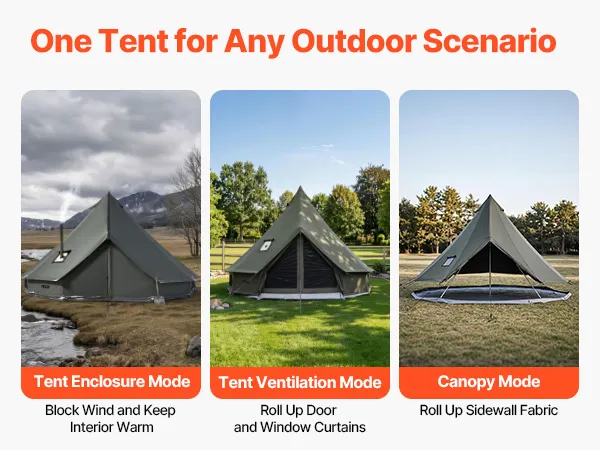
- Spacious Interior: This 16.4 ft / 5 m canvas bell tent fits 5-7 people comfortably. The 9.8 ft peak height lets you stand and move freely inside. Roll up or lower the sidewalls to switch easily between an enclosed tent and an open canopy setup
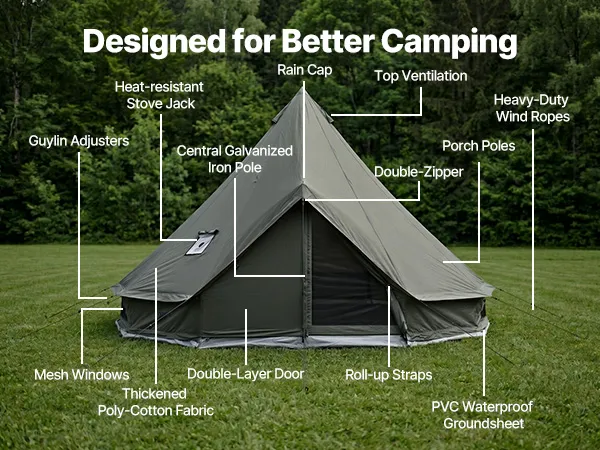
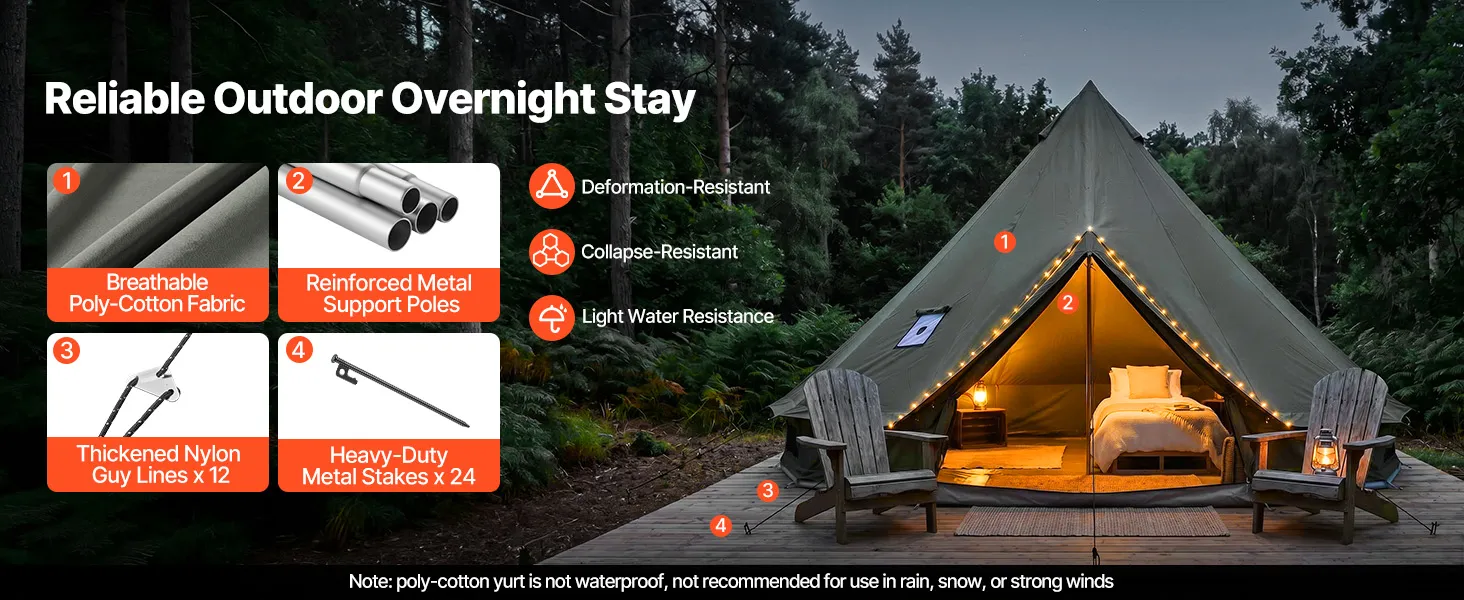
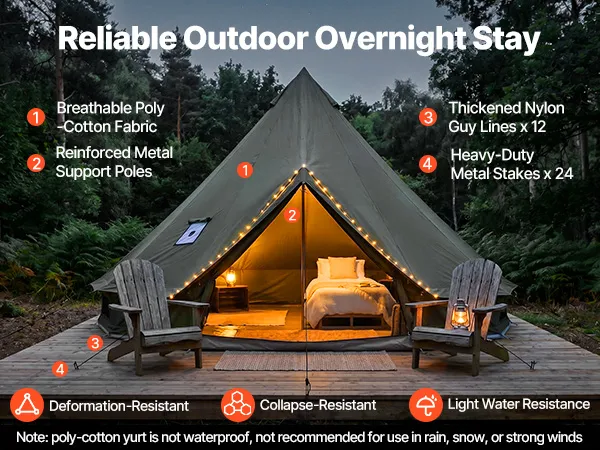
- Enhanced Stability: Our yurt tent features thickened poly-cotton canvas, reinforced stitching, and galvanized metal poles for added durability. The breathable fabric has no PU coating, while strong poles resist deformation and improve outdoor stability
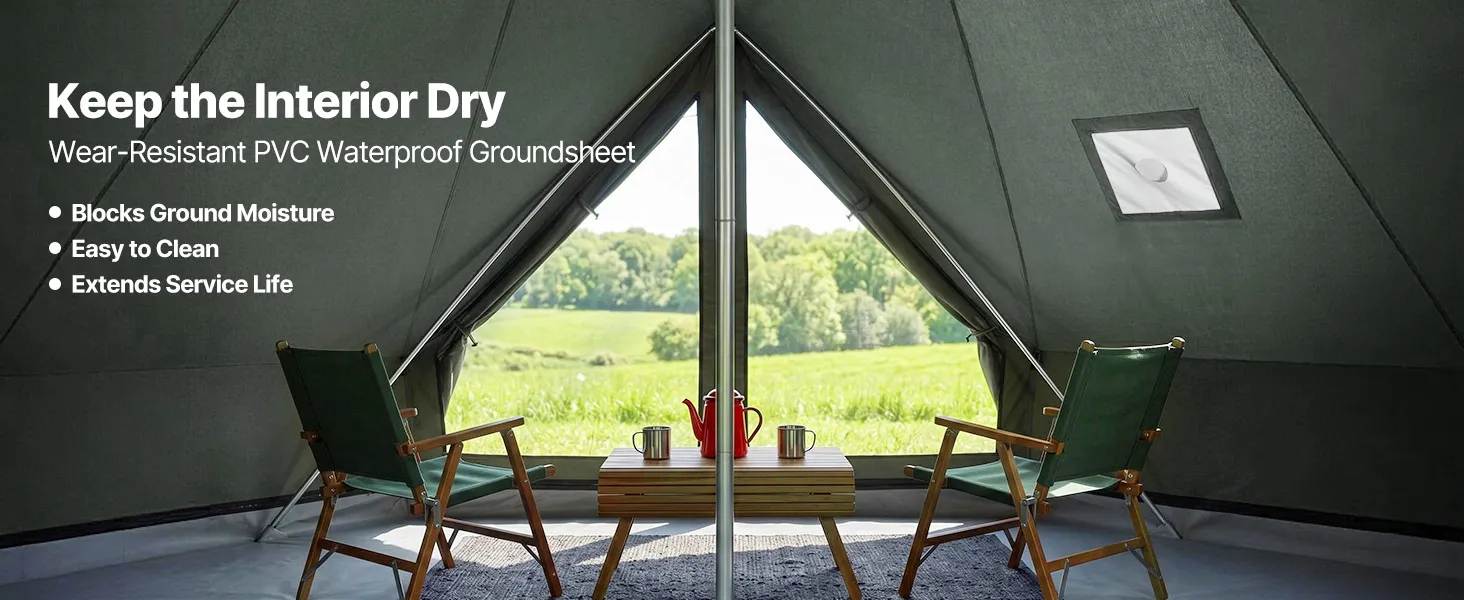
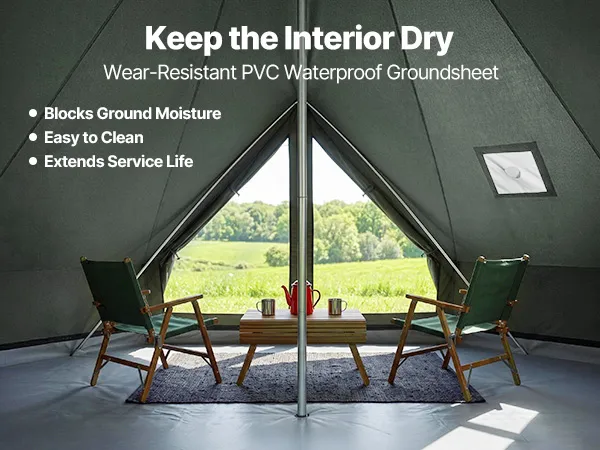
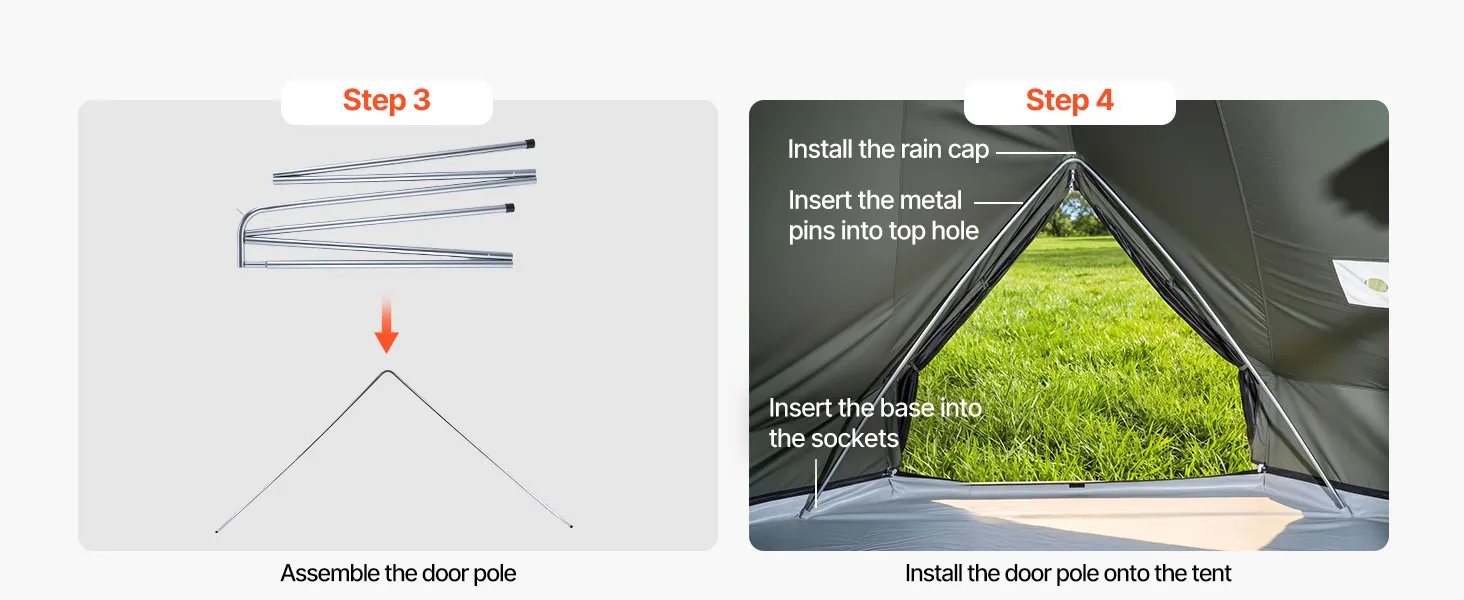
- Reliable Outdoor Shelter: The bell tent includes stakes and nylon guy lines for better stability. The PVC groundsheet blocks dampness, while the door rain cap reduces leaks. Note: Not waterproof. Take down the tent during rain, snow, or strong winds
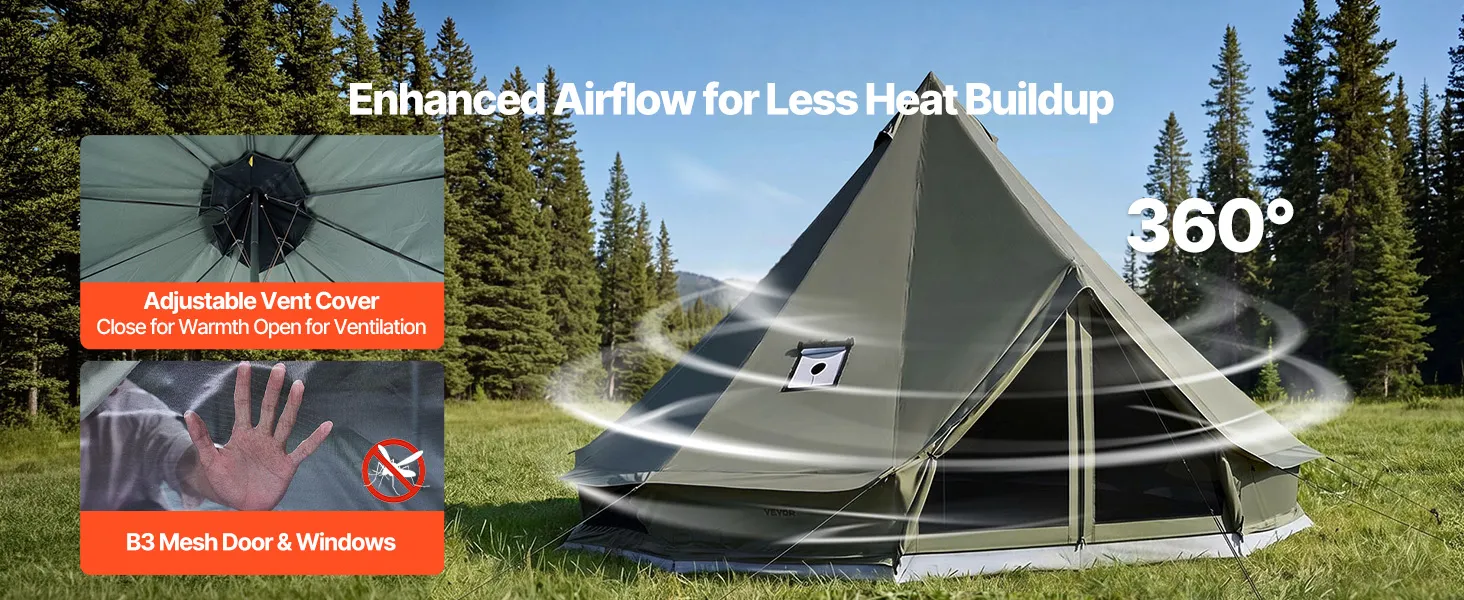
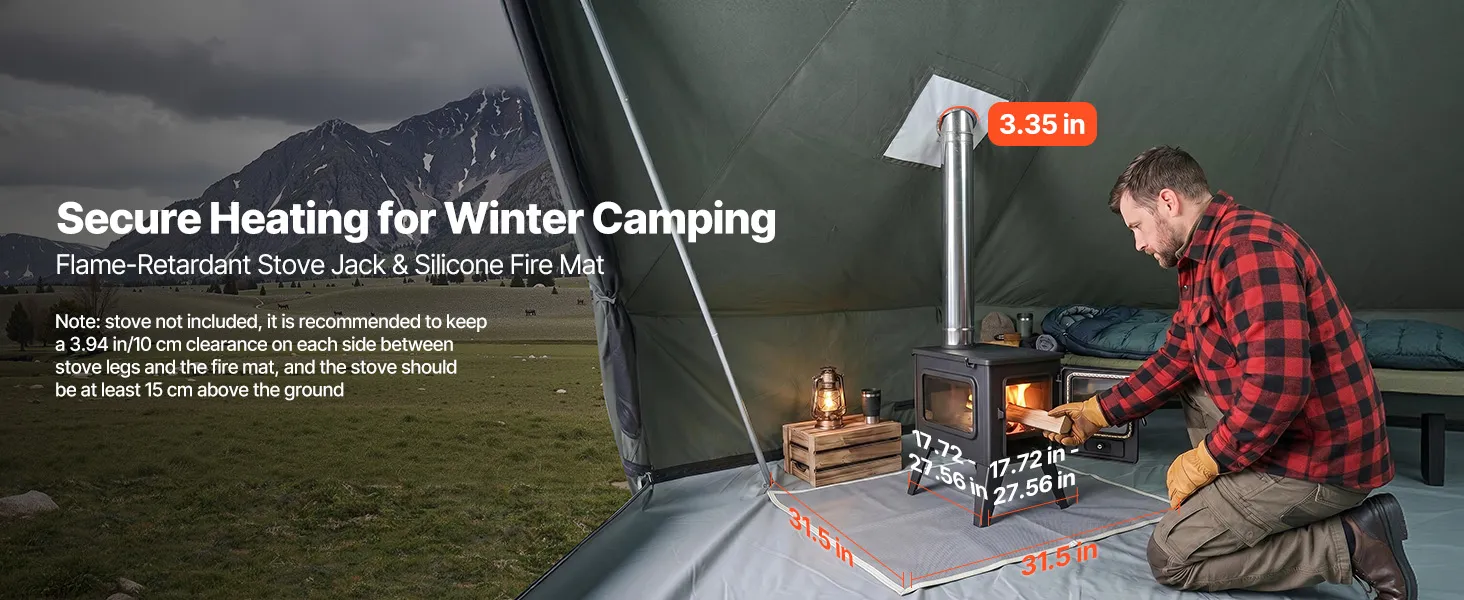
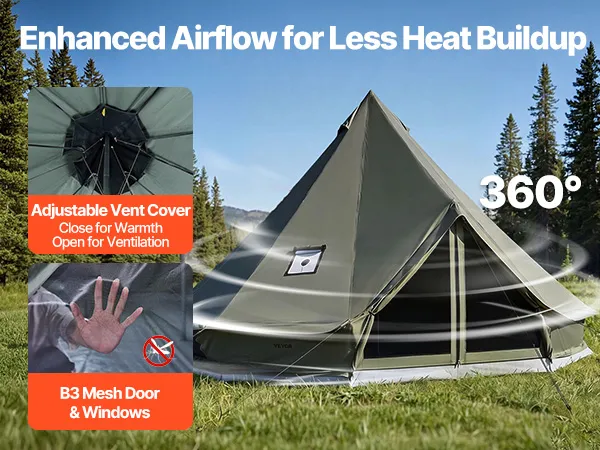
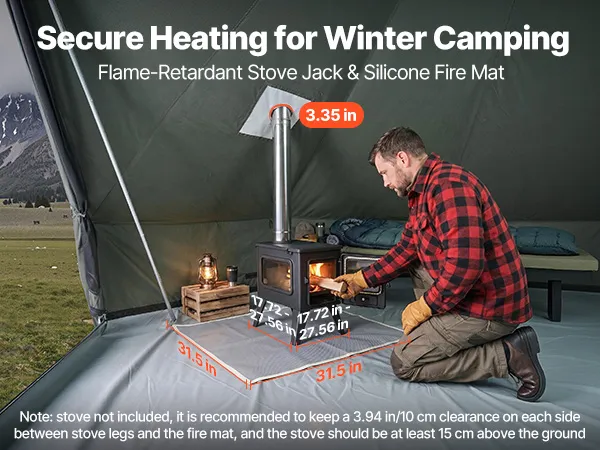
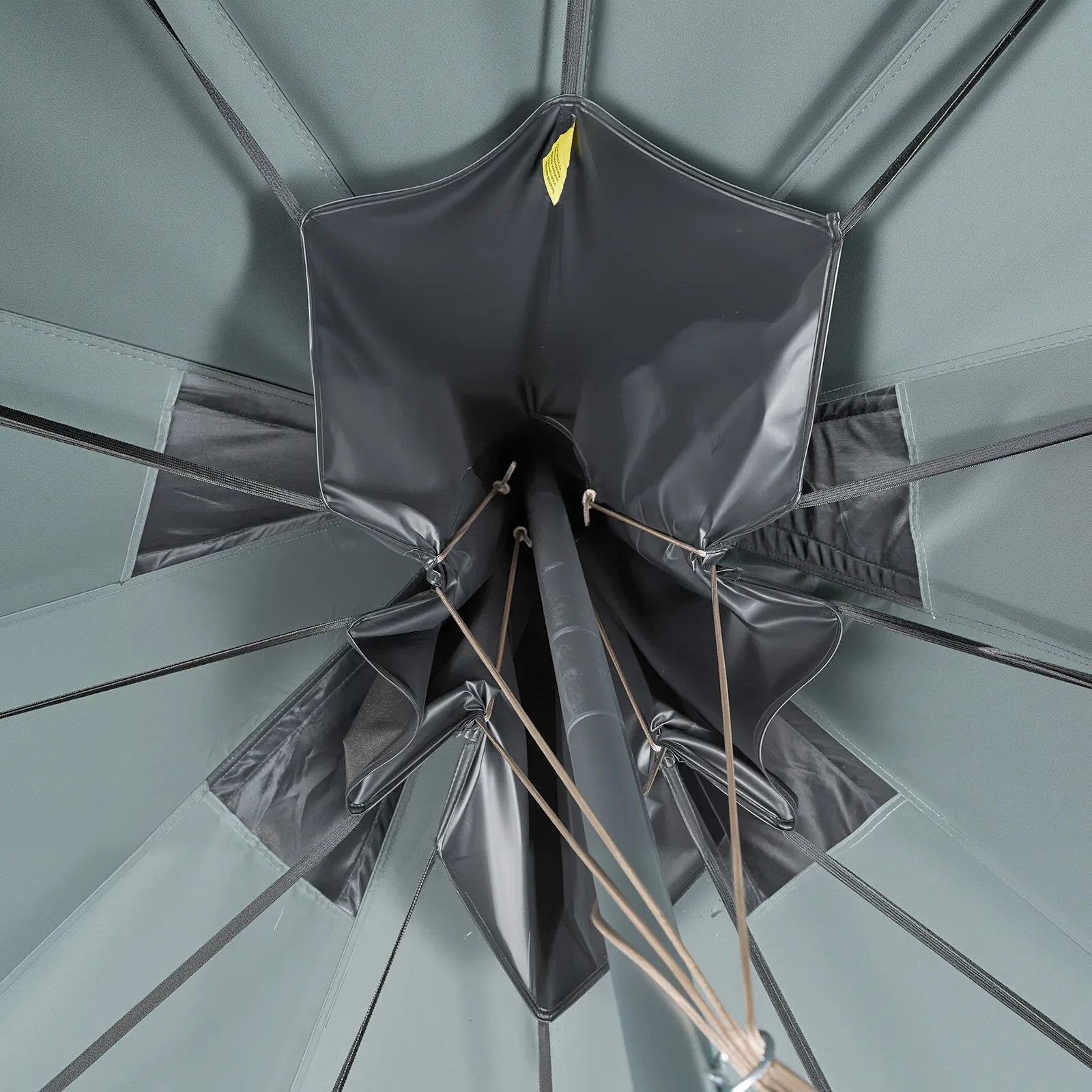
- All-Season Comfort: This canvas tent has mesh windows, top vents, and an adjustable vent cover for airflow. Roll down the curtains for wind protection. Includes a stove jack and silicone fire mat. Note: Do not fully close the vent cover when using a stove
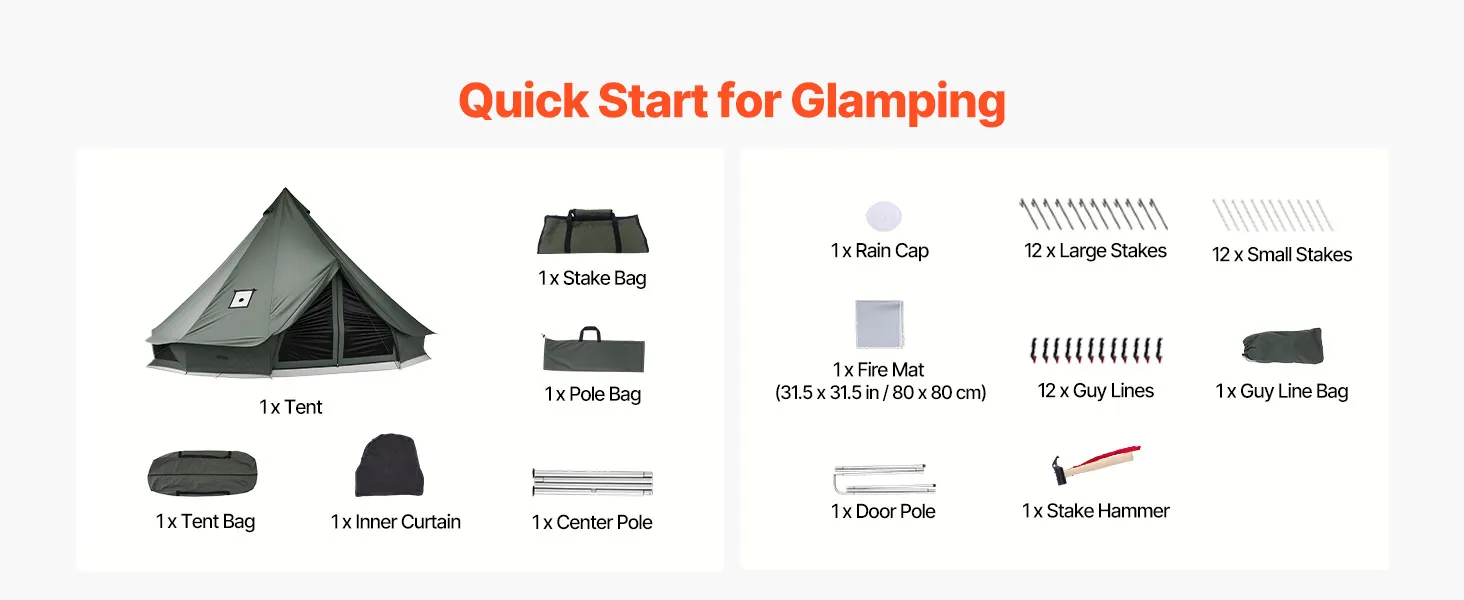
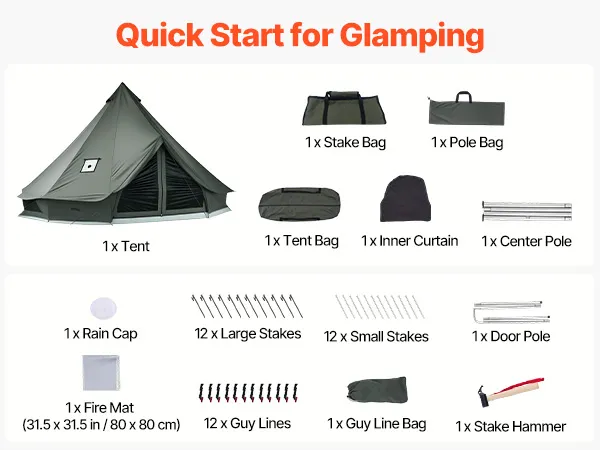
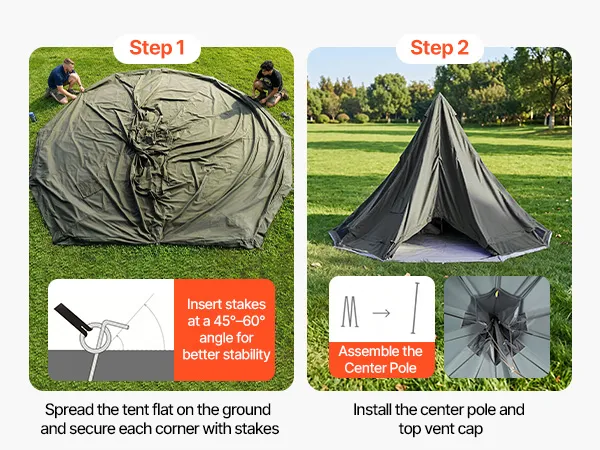
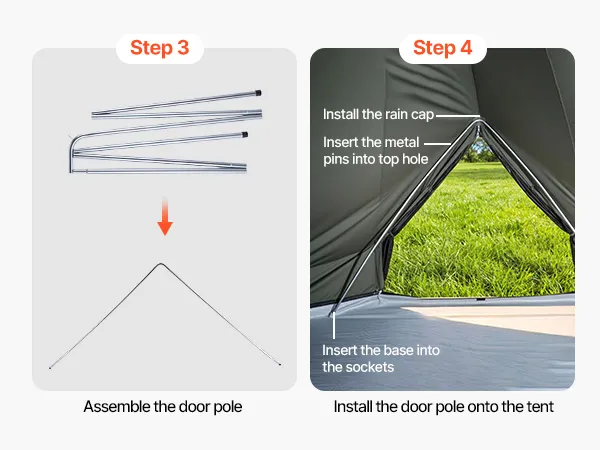
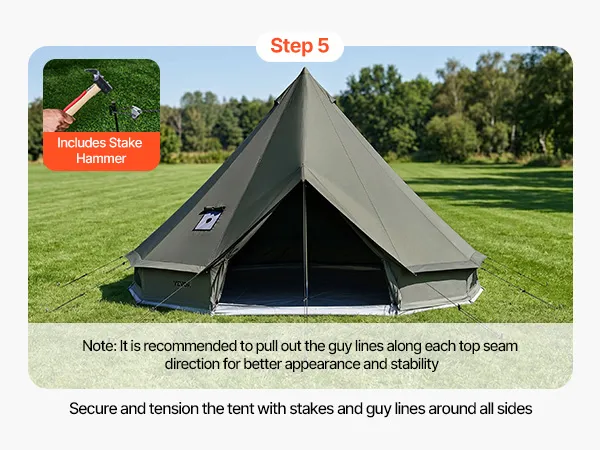
- Easy Setup & Storage: Our bell tent with stove jack includes storage bags for easy carrying and storage. Two people can quickly complete setup. Interior storage pockets and a lantern hook add convenience, great for campsites, backyards, and outdoor events
Reviews summary
Al-generated from customer reviews
Frequently Bought Together
Reviews
 Lenny
Lenny 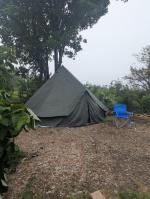
 ivana.ferreira
 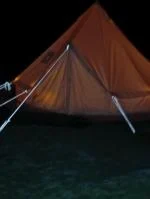 Marcel Roy
  Cornelia Prophet
 About this item


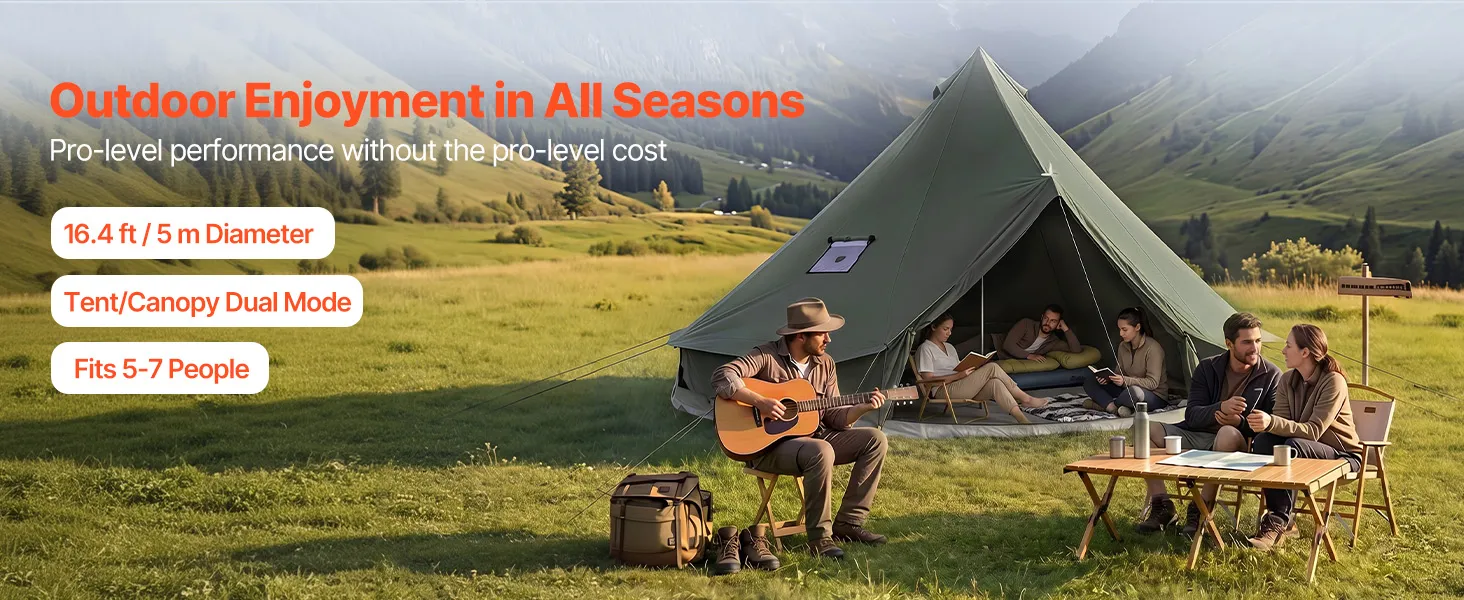
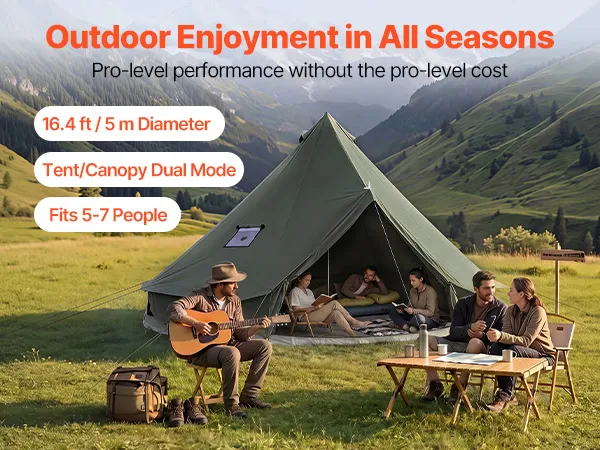
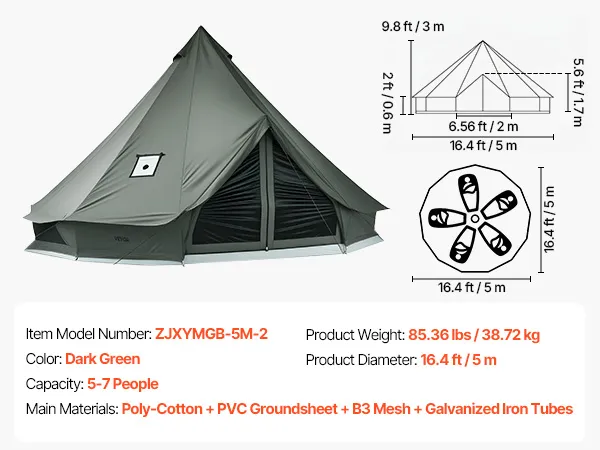
16.4 ft Diameter Yurt Tent for Camping Sleeps Up to 7 People
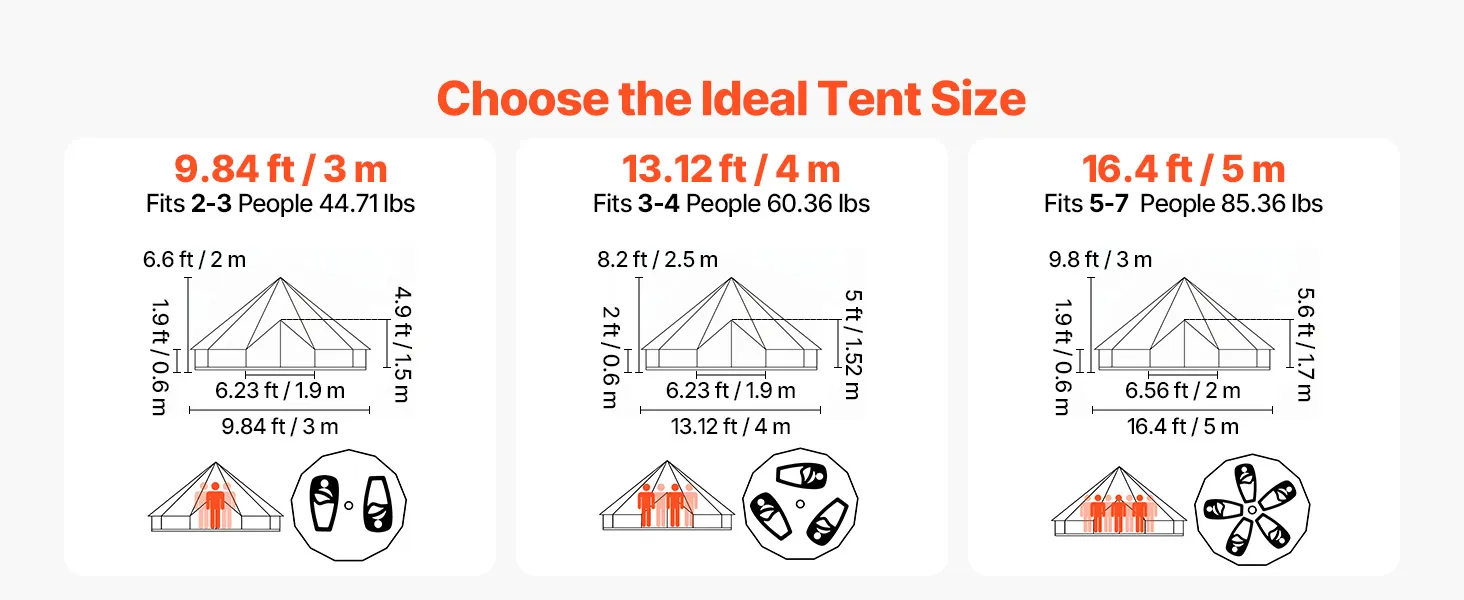
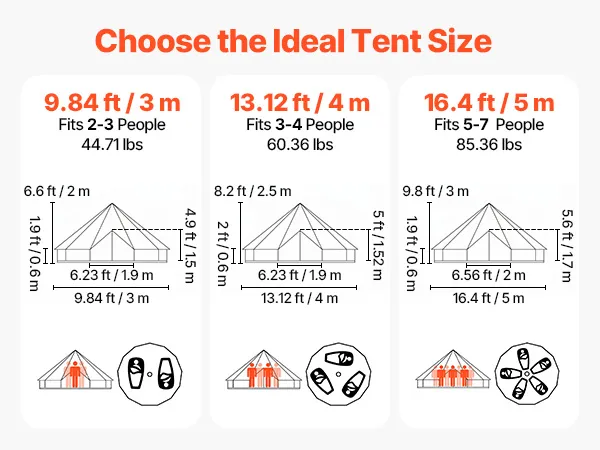
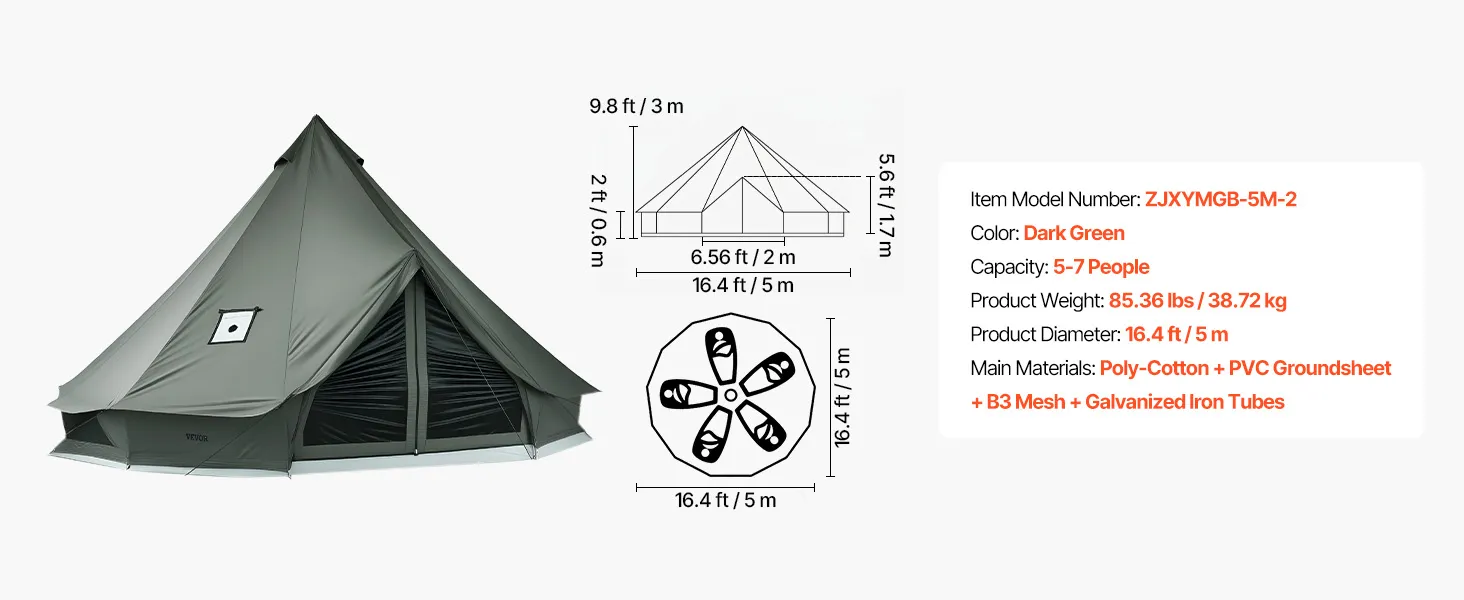
Interior space is crucial for group camping excursions, and this camping yurt tent is designed to solve that very issue. The tent's diameter of 16.4 feet (5 meters) allows it to accommodate five to seven people without the claustrophobic, cramped feeling that smaller tents impose on larger gatherings. That is plenty of space for a small glamping setup, a hunting party, or a family vacation without having to set up two or three different tents.
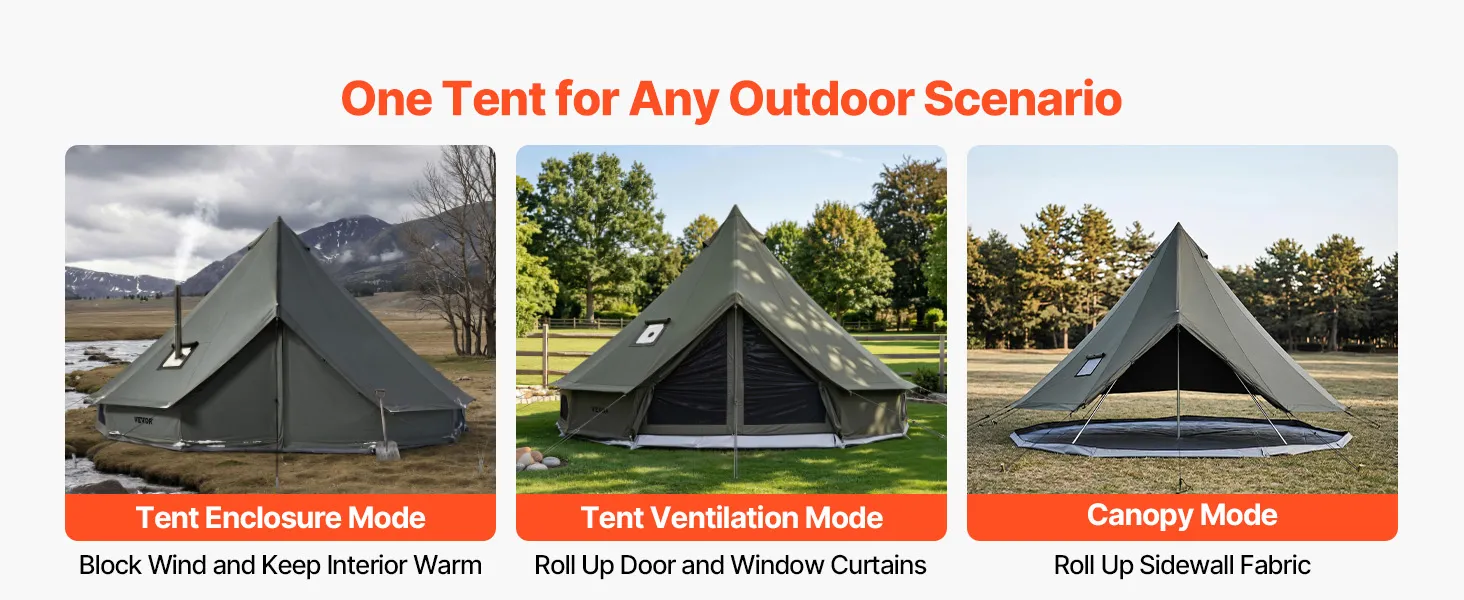
In addition to distributing usable space more evenly than a conventional rectangular tent, the circular yurt-style layout avoids the wasted corner space that reduces a dome tent's actual capacity. Depending on the weather and group preferences, the sidewalls may also be rolled up or lowered, allowing the same yurt tent for camping to alternate between an open-air canopy and a completely enclosed shelter.
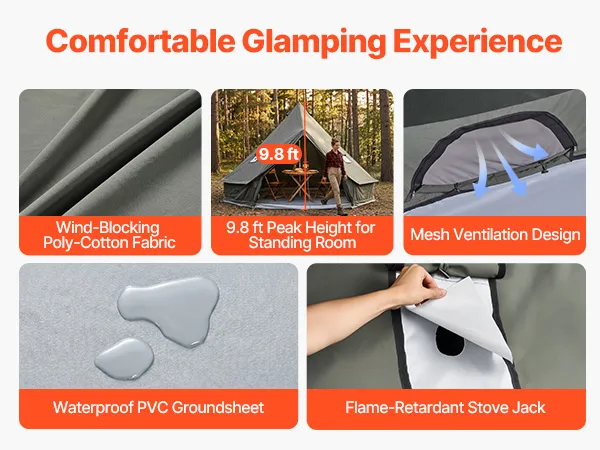
9.8 ft Peak Height Gives This Yurt Tent for Camping Full Standing Room
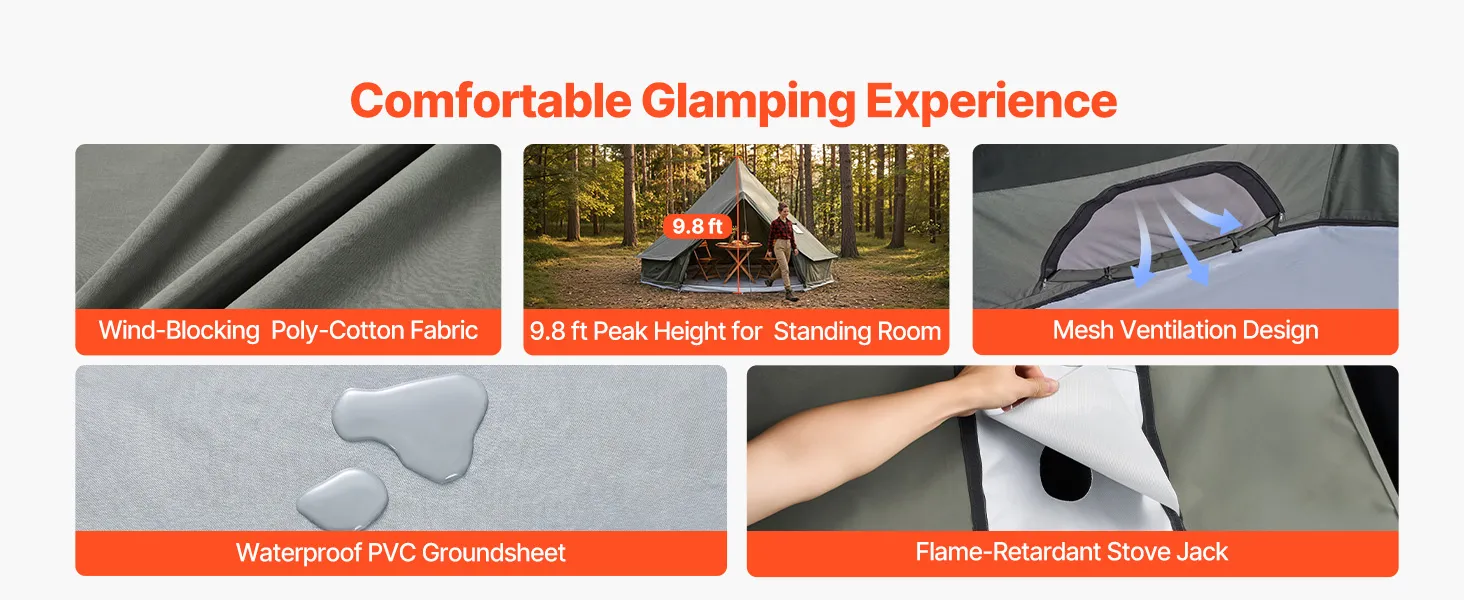
Many large-capacity tents still require campers to crouch close to the walls or the center pole, but crouching during a multi-day camping excursion quickly grows tiresome. The 9.8-foot (3-meter) peak height of this tent immediately addresses that issue by providing adults with sufficient space to stand upright and move around freely, rather than kneeling to change clothes or retrieve equipment.
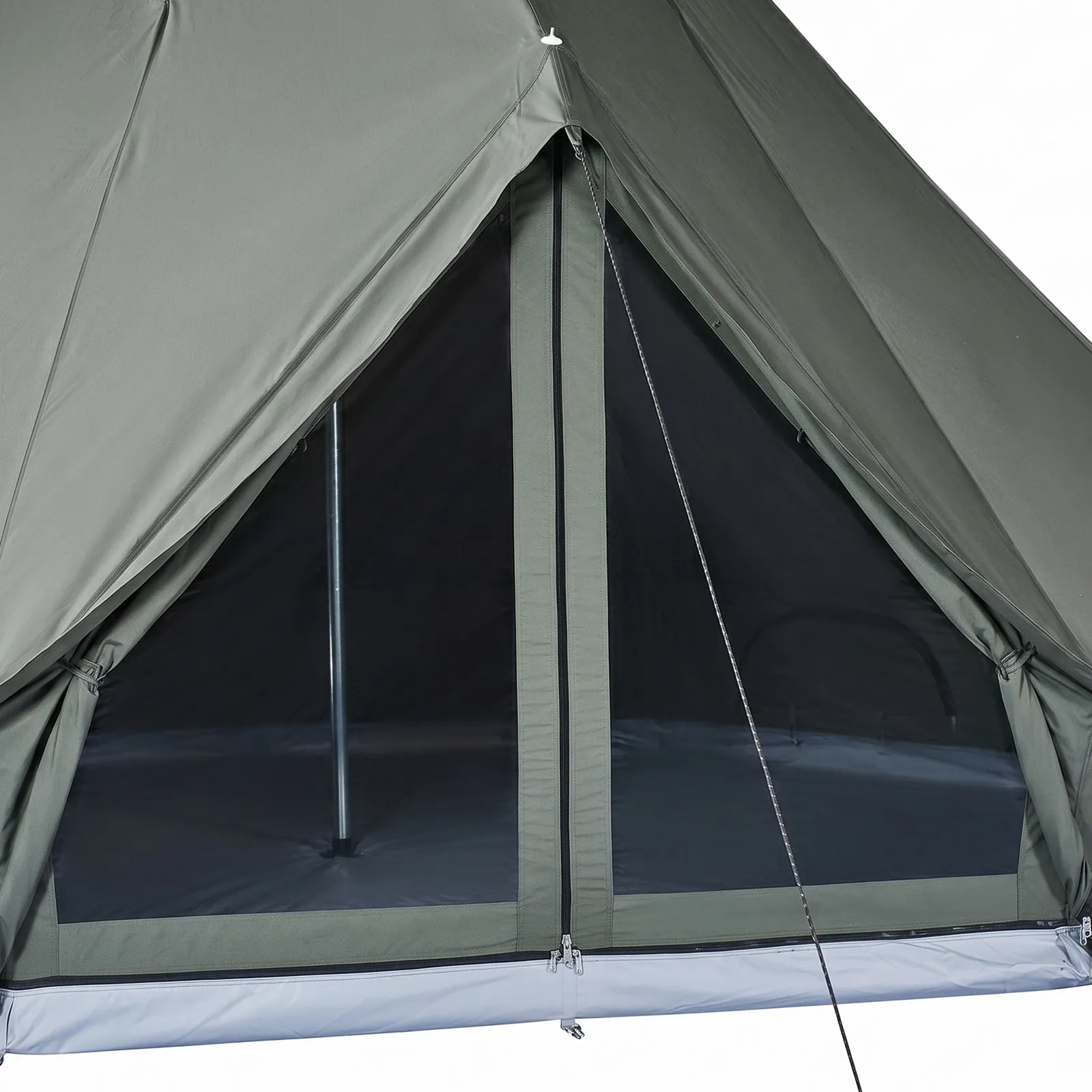
Compared with lower-profile tents, this height also makes the area more livable for longer stays by improving airflow, making it easier to set up furniture (cots, tables, and camp chairs), and reducing the overall sense of being cramped. Entry and departure remain simple even while dragging gear in and out, which is more important than most people realize on a multi-day journey, thanks to the 5.6-foot door height and 6.56-foot door width.
Poly-Cotton Canvas and Galvanized Poles for Reinforced Stability
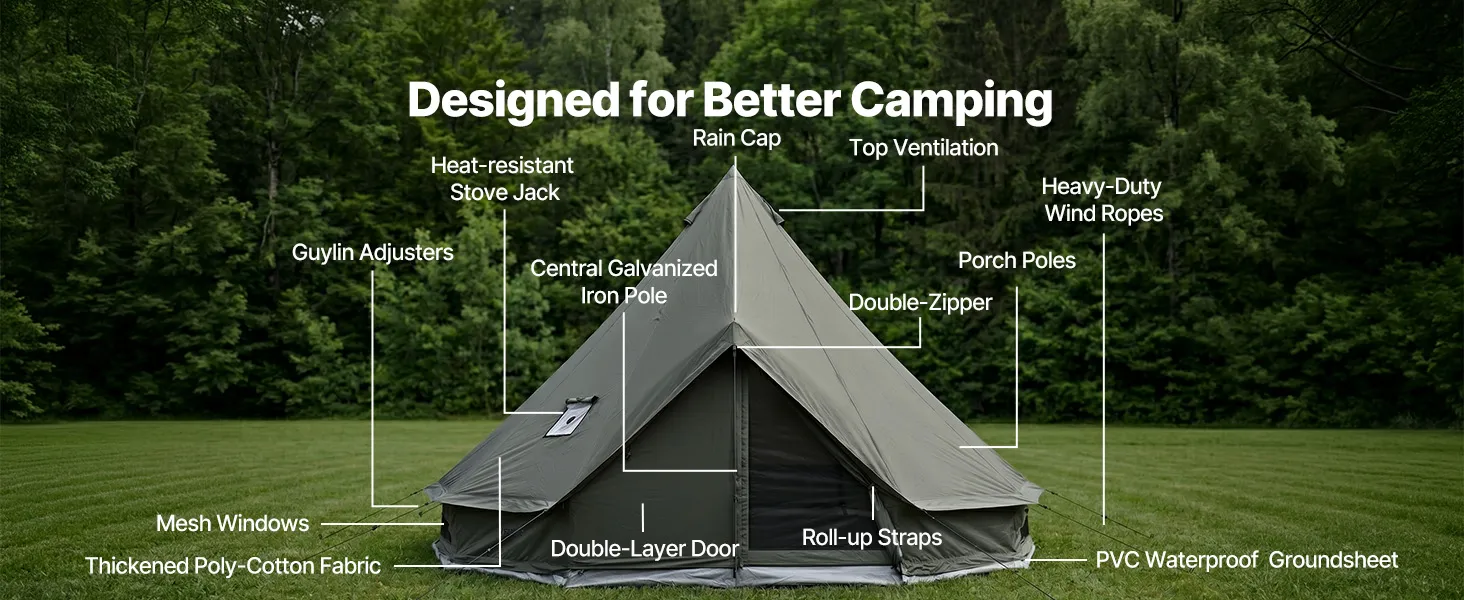
Thickened poly-cotton canvas with reinforced stitching, rather than a thin single-layer synthetic fabric, gives this tent its structural resilience. Because the poly-cotton blend is permeable and lacks a polyurethane coating, it helps prevent condensation from building up inside the tent, a common issue with entirely synthetic tent fabrics in colder or humid climates.
Instead of flexible fiberglass poles that can warp or snap with repeated use, galvanized metal poles provide support and withstand bending and deformation under wind loads and ordinary outdoor stresses. The construction is designed to last several seasons of setup, disassembly, and storage, rather than deteriorate after a few journeys, thanks to the reinforced stitching at the seams.
PVC Groundsheet and Door Rain Cap for Weather Resistance
This model has a PVC groundsheet designed to prevent moisture from seeping into the tent, as the tent floor is constantly exposed to ground moisture, dirt, and pebbles. The floor may be removed for cleaning or for open-canopy configurations when a solid floor is not required, thanks to the zippered, removable construction, which adds flexibility based on the campground.
To prevent water entry around the zipper area, one of the most frequent leak points on large tents, a door rain cap is installed above the entrance. However, this is not a completely waterproof structure; the manufacturer specifically advises taking the tent down during rain, snow, or severe winds. Instead of relying on the tent to withstand an unattended storm, campers should make plans based on the weather forecast.
Mesh Windows, Top Vents, and Stove Jack for All-Season Airflow
This camping yurt has mesh windows and top vents, with an adjustable cover to control ventilation as conditions change. Airflow control is just as important as weather protection. On cooler evenings, roll down the curtains to protect yourself from the wind; in warmer weather, open the vents completely to keep the air flowing and prevent condensation.
During shoulder-season or winter excursions, campers can securely run a wood stove for heat thanks to the attached stove jack and silicone fire mat, a feature that most basic canvas tents completely omit. One crucial safety tip is that to properly remove smoke and combustion byproducts from the tent, the vent cover should never be fully closed while a stove is operating.
Two-Person Setup with Storage Bags for Fast Deployment
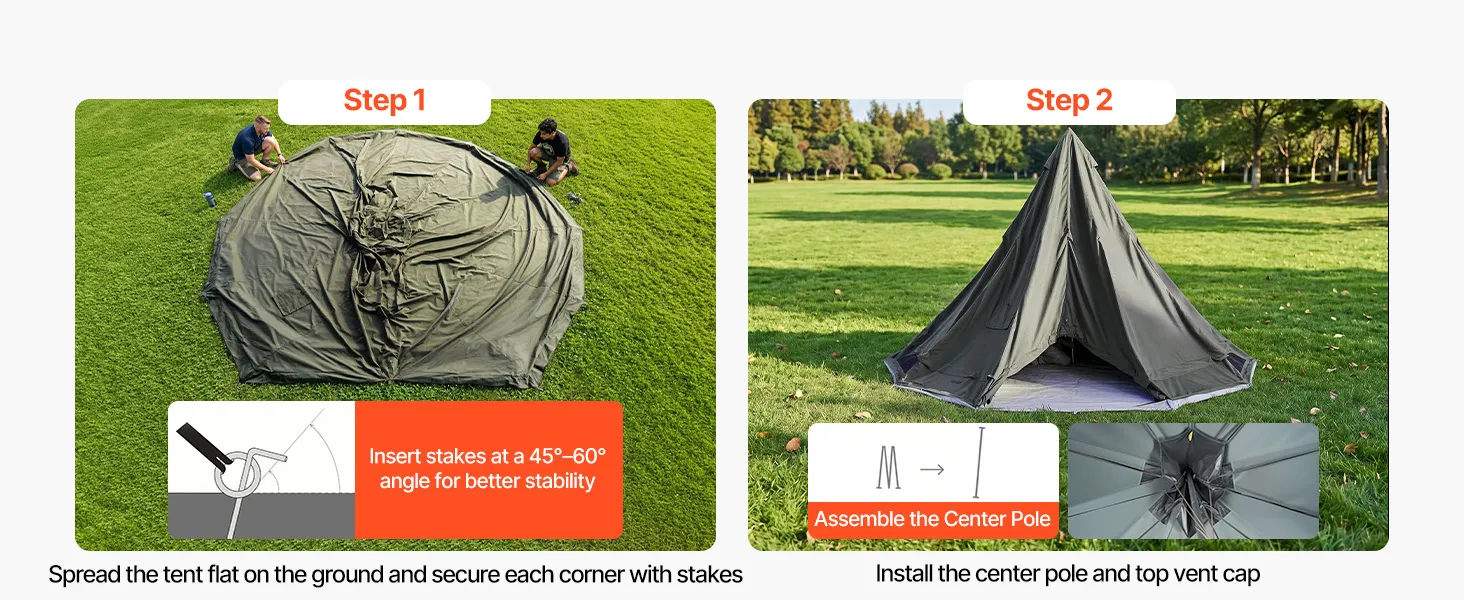
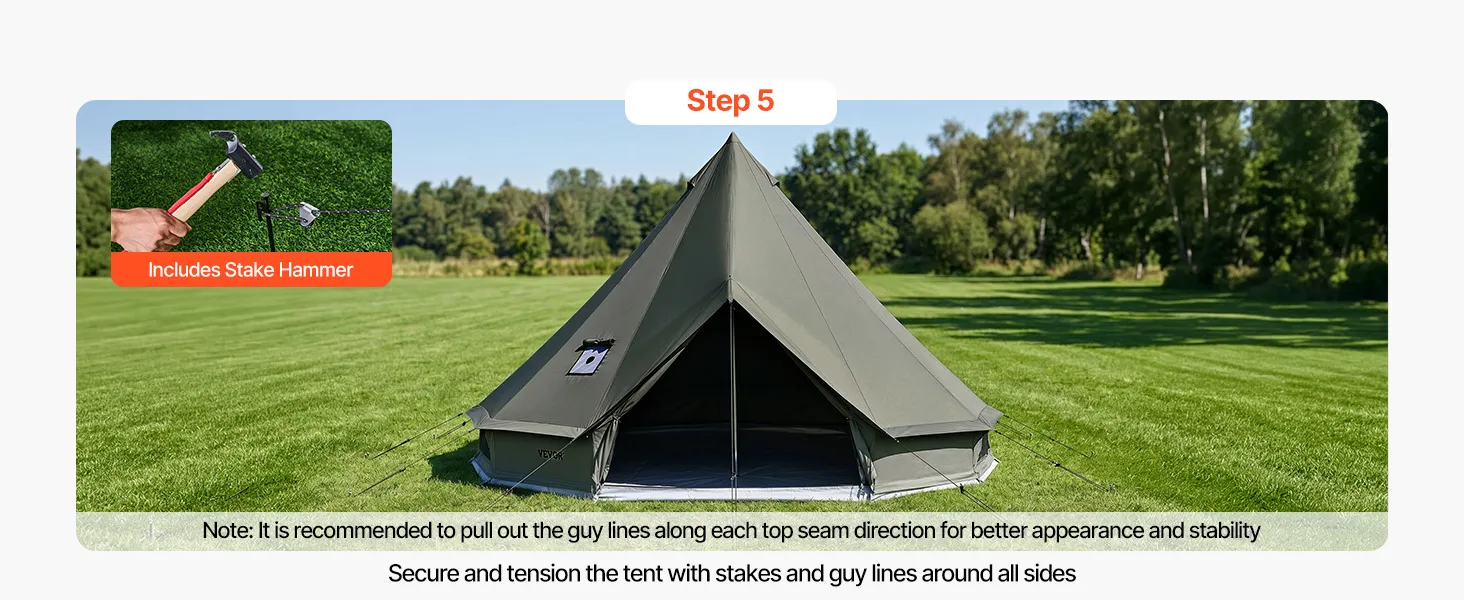
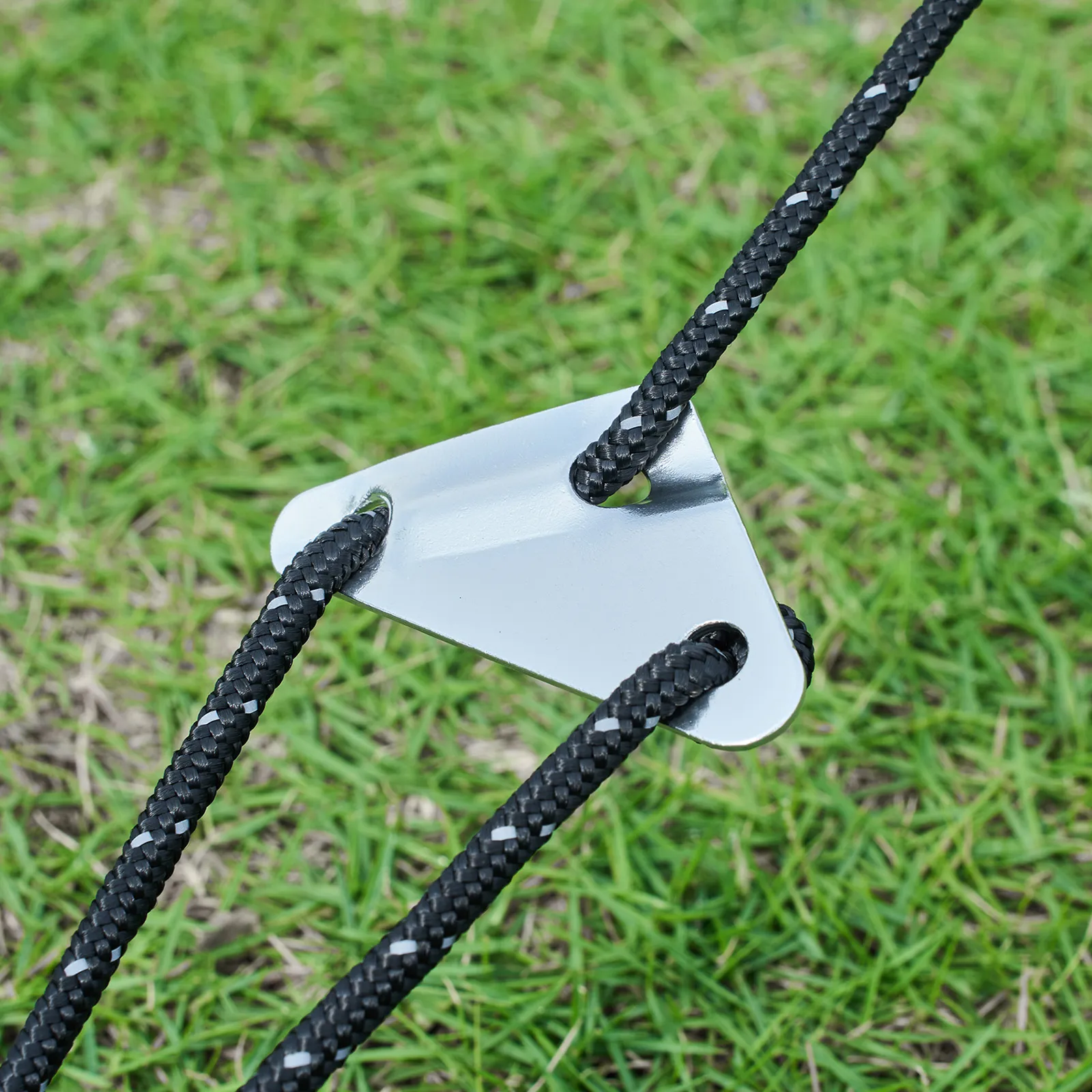
Large tents are known for taking a long time to set up, but this one is designed so that two people can pitch it in a reasonable amount of time, instead of making the trip to camp take an hour. Once the structure is up, nylon guy lines and spikes firmly attach it, providing stability against moderate wind without the need for a sizable support staff.
Instead of storing the canvas, poles, and hardware haphazardly in a trunk or garage, they are stored in special carrying bags. Once the yurt tent for camping is set up, interior features like storage pockets and a lantern hook provide daily convenience, completing a setup designed for frequent use in backyards, at campsites, and for outdoor gatherings rather than a single one-time excursion.