Wheel Dolly



















Results for Wheel Dolly
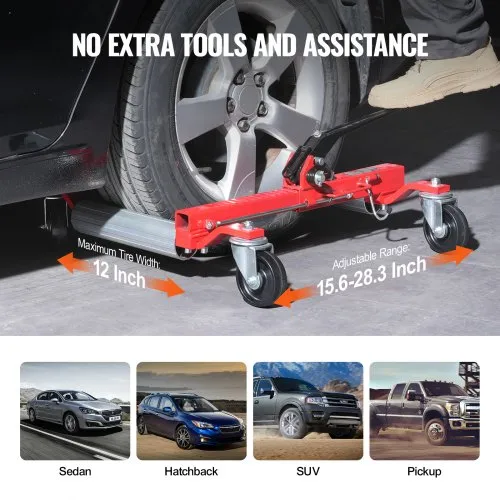
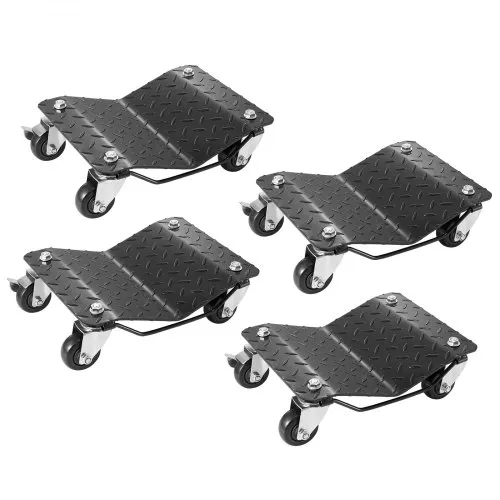
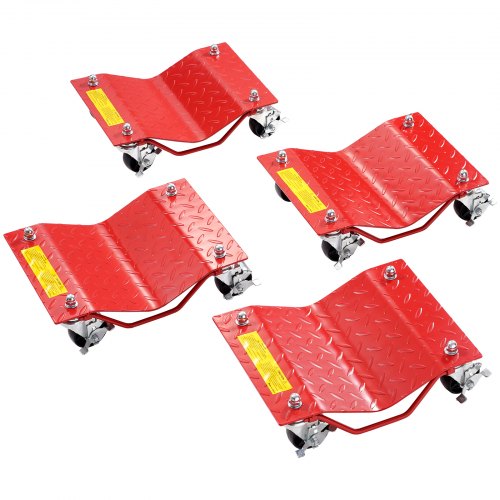
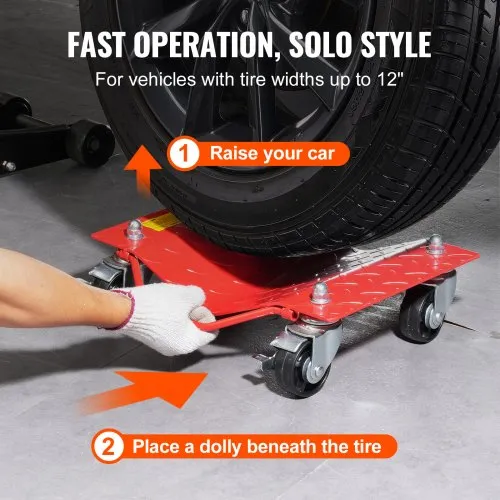
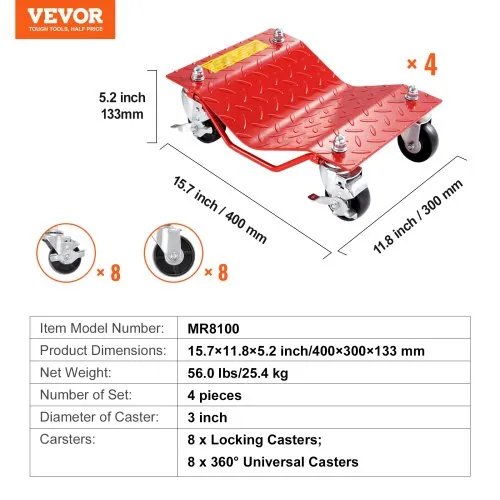
Discover VEVOR's complete collection of wheel dolly tools designed for home workshops, repair shops, body shops, and storage facilities. This range includes hydraulic locking models, self-loading models, and low-profile units. Each dolly can hold up to 1,250 pounds. Heavy-gauge steel frames, polyurethane wheels, and rubber-lined arms protect the wheels and allow one person to move a full-size car by hand. We offer a set for every floor and budget, whether you need to move project cars, swap out stock, or work on a wreck that will not roll.
VEVOR Heavy Duty Wheel Dolly Sets for Tight Garages and Busy Workshops
Having trouble moving a car that does not have any drivetrain or brakes? A wheel dolly slides under each tire of a dead car, making it easy for one person to push it into a corner. VEVOR automotive wheel dollies are a must-have for collectors, mechanics, and anyone working in a crowded workshop because they make parking, engine swaps, and detailing easier without a tow truck.
Weight Capacity and Application: Matching a Wheel Dolly to Your Vehicle
Lots of people get this number wrong because it is the first one they check. It is easy to choose when you know how the vehicle's weight is distributed across four points.
Understanding Per-Dolly and Per-Set Load Ratings
Manufacturers list car wheel dollies by how much weight they can carry per unit. A set of four dollies increases that number by four. With a rating of 1,250 pounds per dolly, the whole set can hold 5,000 pounds, which is plenty for most cars, crossovers, and light SUVs.
The catch is that vehicle weight is never split evenly. Most front-engine cars have between 55 and 60% of their weight on the front axle. This means the front set of wheel dollies has to work much harder than the back set. When you rate, use the heaviest part as a guide, not the average.
Always add the street weight plus any items still inside. For example, a full gas tank, tools, or a bed full of things adds hundreds of pounds. Check the sticker on the doorjamb for the GVWR, and do not exceed it. Do not go over the stated weight limit of a wheel dolly, even for a short time, and do not work under a vehicle that is only supported by dollies.
Passenger Cars, Classics, and Daily Drivers
A basic 1,250-pound set is enough for sedans, hatchbacks, and coupes that weigh between 2,800 and 4,000 pounds. This is the best spot for collectors who take old cars in and out of storage and for homeowners who need to slide a second car to make room in the bay.
In this case, rim protection is more important than raw volume. When shopping for lifting arms, make sure they have rubber pads or polymer faces that grip the tire sidewall rather than the wheel face. A bare steel arm can damage expensive metals or chrome on a restored car.
For lowered cars and sports cars, you should look for low-profile designs. There is not much room for the fender to slide under a tire dolly with an entry plate less than 2 inches thick. Self-loading ratchet types are great for daily drivers because they let you engage the tire and lift it all at once. This reduces the setup time to less than a minute per corner.
Trucks, SUVs, and Heavy-Duty Requirements
Full-size pickups, three-row SUVs, and work vans weigh more than 5,500 pounds, so they require a heavy-duty wheel dolly capable of supporting at least 1,500 pounds per unit. This level has thicker frame tubing, better weld quality, and larger wheels for a good reason.
Wider shoulders need wider arms. A 35-inch off-road tire will not fit on a dolly designed for 225-section passenger tires, so check the maximum tire width and diameter, as well as the load rating, before you buy.
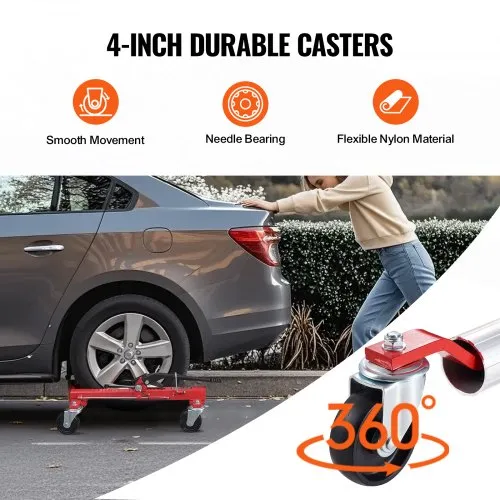
Caster size is also very important for heavier cars. When smaller casters would stop, larger polyurethane wheels could easily roll over expansion joints, power lines, and other small obstacles. When shops that work with commercial vans and fleet trucks compare auto wheel dollies, caster diameter should be the top factor.
Garage Floors, Surfaces, and Working Conditions
Surface condition affects effectiveness as much as the dolly itself. An epoxy-coated or sealed surface makes the roll easiest, and one person can easily move a full-size car on it. Concrete that is bare, broken, or covered in gravel makes it much harder to push and can even jam a caster in the middle of a push.
The secret danger is the slope. Garage car dollies will drift under their own weight on even a mild drainage slope, so always work on level ground and chock or brake the unit before leaving the area.
The best places to be are indoor storage units and detailing bays. When used outside, make sure the steel frames are dry between uses and that the casters are clean. Over time, grit in the polyurethane wears down the tread and makes the turn less flexible.
Duty Rating and Features That Define a Quality Wheel Dolly
Two units with the same size numbers may not perform the same. Which one still works well after three years depends on the construction details and the lifting system.
Hydraulic, Ratchet, and Self-Loading Mechanisms
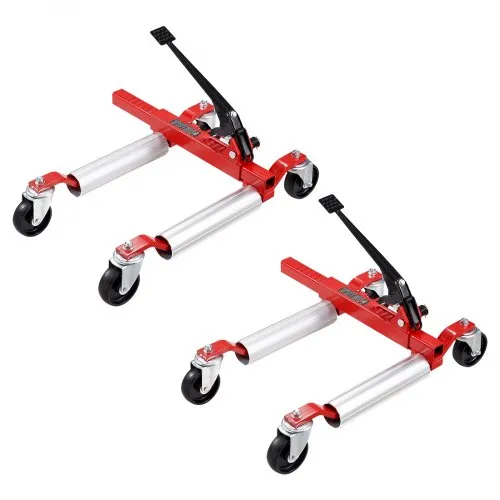
Hydraulic models raise the arms with a foot pump or a hand-lever ram. These models require the least physical effort and suit shops that move cars every day. Ratcheting designs give up a little speed for simplicity. Fewer seals can fail, so nothing can leak in cold storage.
For one-person work, a self-loading wheel jack dolly is the fastest choice. When you roll it up against the tire and activate the mechanism, the arms move inward and upward all at once, without needing to jack it up first.
Choose based on how often you use it. Ratchet units work well for occasional users, but shops that use them frequently will save enough on labor costs to cover the cost of hydraulic units within a few months.
Casters, Frame Construction, and Safety Features
Choose polyurethane casters over hard nylon ones because they are quieter, grip better, and will not leave marks on cement floors. All four corners have swivel casters, so you can move in any direction. This means you can slide a car into a space it could never fit in by driving it.
Welds and steel thickness speak for themselves when it comes to frame quality. Under repeated load cycles, cheap units break first at the reinforced gussets of the arm pivots. Make sure at least two casters have locking brakes and that the car wheel roller has a positive tire-retention feature so nothing falls off while moving.
Why Choose VEVOR Wheel Dolly Equipment?
VEVOR offers a full range of hydraulic, ratcheting, and self-loading vehicle wheel dolly designs, with weight capacities of 1,250 lb and 1,500 lb. They also offer low-profile options for cars with lower suspensions and wide-arm builds for trucks. The heavy-gauge steel, protected lifting arms, and smooth polyurethane casters on every unit make it a great value compared to professional shop equipment brands. With fast shipping and helpful after-sale customer service, there is no reason to keep wrestling with a dead car. Browse the entire collection and order today.
FAQs
How much weight can one dolly hold?
Each set includes four VEVOR units, and each can hold 1,250 to 1,500 pounds. Use your largest axle as a guide, not the weight of each corner.
Do I need all four dollies?
For full side-to-side movement, yes. You can use two to move or lift a single axle, but four give you full control and ensure the load is spread evenly across the car.
Will they scratch my alloy wheels?
Models with polymer or rubber-pad arms grip the tire sidewall rather than the rim face. This keeps alloy and chrome finishes safe while lifting and rolling.
Can I use these on a sloped driveway?
No, you should always work on level, sealed concrete. When the vehicle is on its casters, even a small slope can cause it to roll freely, which is very dangerous.
Are they safe for working under a car?
Never. Only move things with dollies. Put the car on rated jack stands before you do any work that will put you under it.