
With VEVOR's wide selection of cabinet hinges, you can keep every cabinet door straight, seamless, and safe. VEVOR offers hinges for every application, door weight, and overlay style, from kitchen cabinet door hinges for extensive remodeling projects to replacement cabinet door hinges for expedited repairs. Look through a comprehensive selection designed for woodworkers, contractors, and homeowners who require dependable hardware that installs neatly and endures.
Are you designing bespoke cabinetry from scratch, repairing worn-out hardware, or remodeling a kitchen? The correct cabinet door hinges can be the difference between hardware that sags, squeaks, or breaks too soon and doors that hang straight and close smoothly for years. Every door style, overlay type, and weight need is catered to in VEVOR's cabinet hinges, which provide consistent performance in bathrooms, laundry rooms, kitchens, and other areas.
Knowing which hinge type best fits your door arrangement and whether its load rating corresponds to the weight of your door is the first step in choosing the appropriate cabinet hinges. With clearly rated capacities to match doors ranging from lightweight overlay panels to heavier solid-wood frames, VEVOR's array includes all of the primary hinge types.
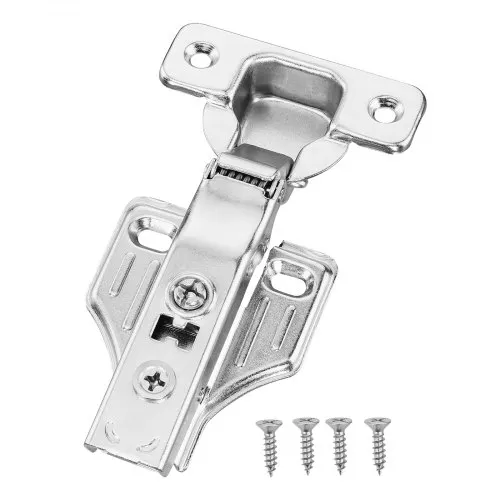
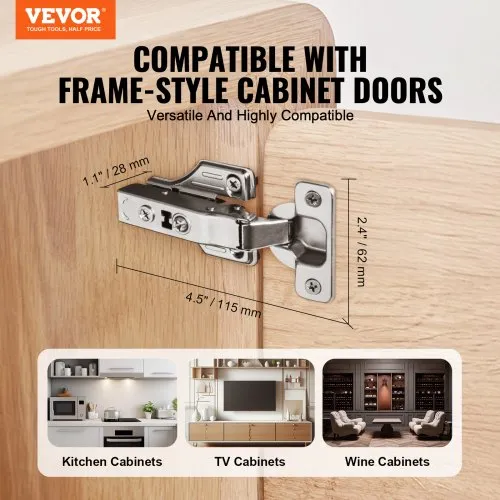
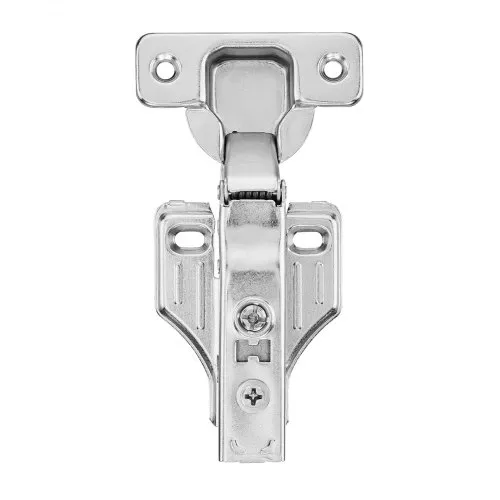
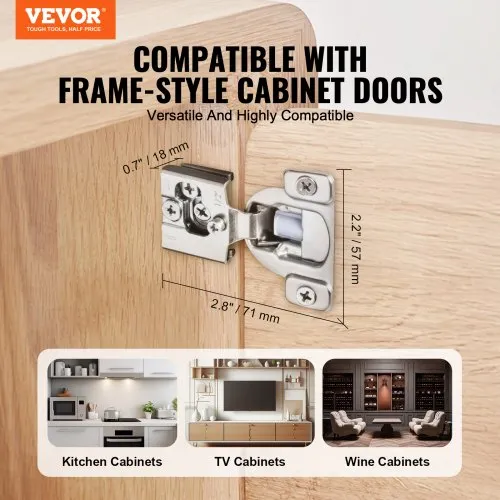
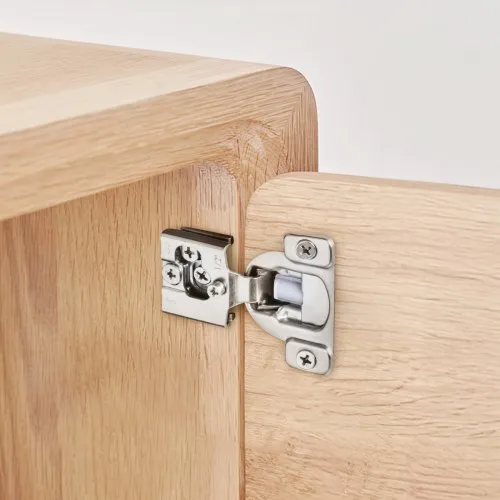
In contemporary kitchen and bathroom cabinetry, concealed hinges, also known as European-style or cup hinges, are the most commonly used cabinet door hinges. They mount completely inside the door and cabinet, leaving the outside face free of any hardware. Because of this, concealed hinges are the standard option for frameless cabinet construction and modern kitchen designs, as they provide a smooth, seamless appearance that exposed hinges cannot match.
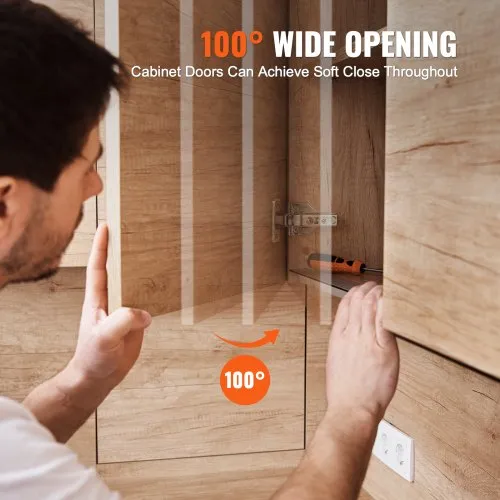
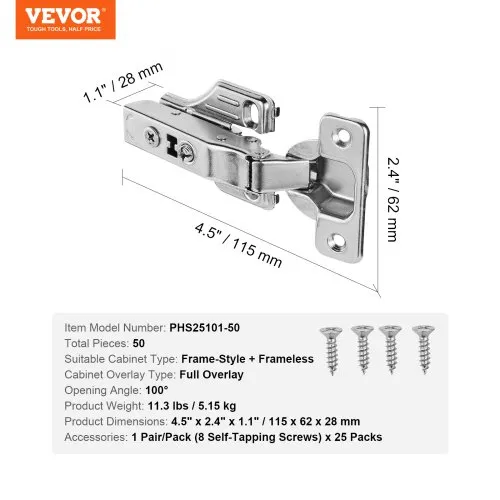
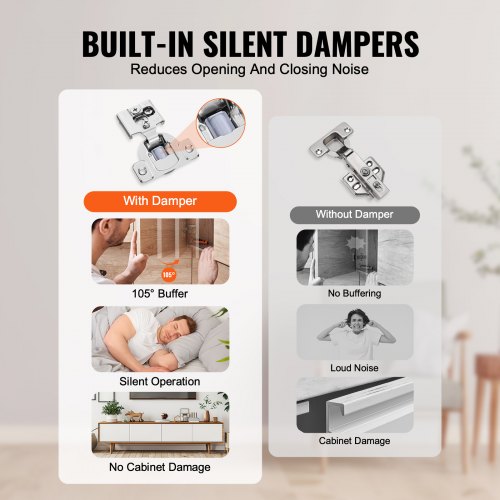
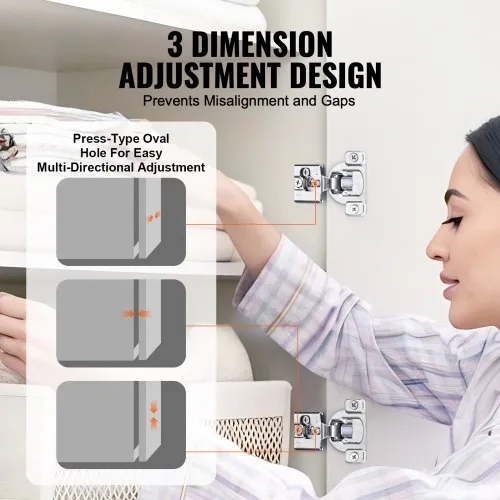
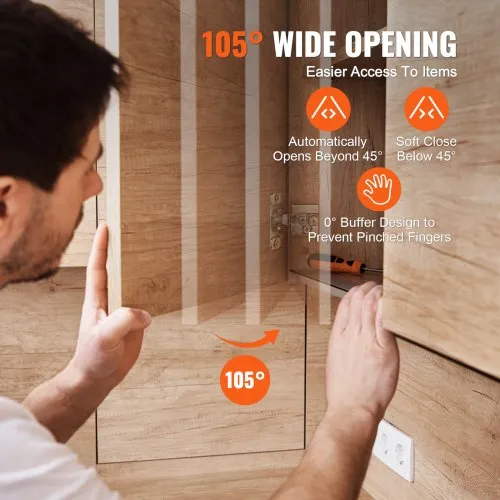
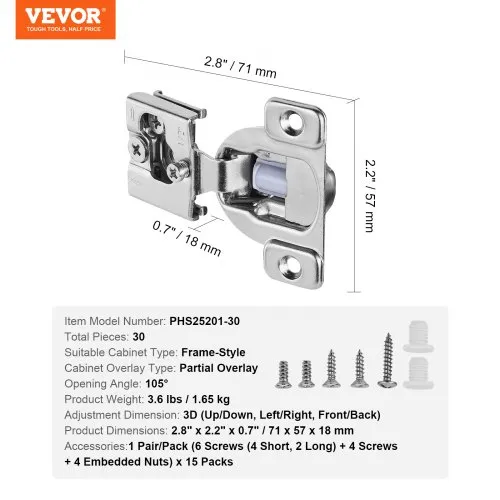
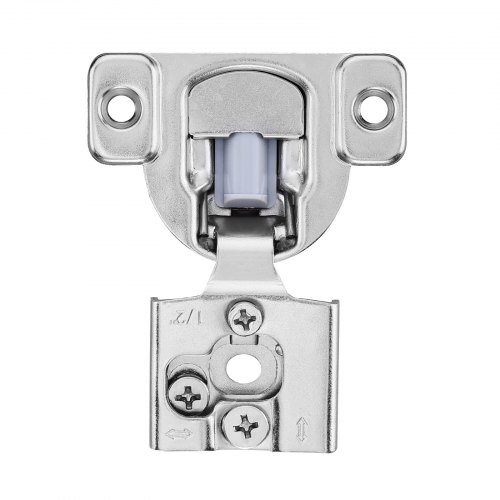
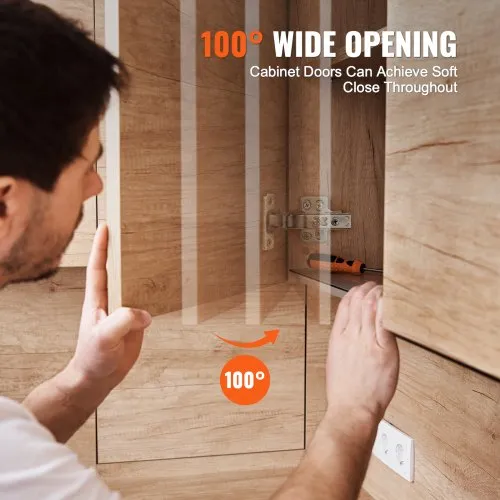
To accommodate the three main door-to-frame connections in both residential and commercial cabinetry, VEVOR offers concealed kitchen cabinet hinges in full overlay, half overlay, and inset configurations. Doors that cover the entire face frame opening are suitable for full overlay hinges; doors that share a central partition are compatible with half overlay hinges; and doors that sit flush within the cabinet frame are suitable for inset hinges. The majority of VEVOR concealed hinges feature an integrated soft-close mechanism that prevents slamming and reduces long-term wear on the hinge and the cabinet box by slowing the door during the last inch of closure. One important practical benefit of VEVOR concealed hinges is their three-way adjustment: up/down, left/right, and in/out. This allows for accurate door alignment after installation without requiring the hinge plate to be removed and repositioned. This flexibility alone makes concealed hardware a better option than visible hardware for kitchen renovations or new construction when precise door alignment is crucial.
Applications for surface-mount and butt hinges differ from those for concealed types; these include classic face-frame cabinetry, utility rooms, workshops, and period-style kitchens, where visible hardware is either appropriate or contributes to the desired aesthetic. In retrofit installations, when it is not possible to route a cup hole for a concealed hinge, these hinges are also a sensible option.
Installing VEVOR surface-mount cabinet door hinges is simple because they screw directly onto the door face and the cabinet frame, eliminating the need for drilling or mortising. Because of their simplicity, they are perfect for do-it-yourself repairs, replacement jobs, and utility cabinet constructions where speedy installation is more important than concealed hardware. A useful compromise for face-frame kitchen cabinet hinges with a traditional appearance, butt hinges, which mortise into the door edge and the frame, provide a neater profile than fully visible surface mount hinges while still being more accessible than concealed cup hinges. Both types are available from VEVOR in a variety of finishes, such as satin black, oil-rubbed bronze, brushed nickel, and polished chrome, so the hardware blends in rather than detracts from the kitchen's current handles and fixtures. VEVOR's heavier-gauge surface-mount hinges offer the load capacity and corrosion resistance required in tough situations, making them ideal for utility and garage cabinet applications where strength is more important than finish aesthetics.
One of the most often disregarded factors in choosing cabinet hardware is hinge weight capacity, which directly affects how long a hinge lasts before sagging, loosening, or failing. Each cabinet door has a quantifiable weight, and to guarantee long-term alignment and seamless operation, the total rating of the hinges supporting it should exceed that weight with an appropriate safety margin.
Standard kitchen cabinet hinges can easily support the weight of lightweight MDF or thin plywood overlay doors, which usually weigh between 5 and 15 lbs. Larger doors on pantry cabinets or built-in appliance panels, solid hardwood doors, and thick slab-style panels can commonly weigh between 25 and 40 lbs, necessitating hinges with correspondingly greater load ratings. It is easy to match hardware to door weight without guesswork thanks to VEVOR's clear listing of each cabinet hinge model's weight capacity. With a thicker steel structure and larger mounting footprints that distribute stress across more screw points, VEVOR provides heavy-duty concealed and surface-mount hinges for heavier doors. It is much simpler and less expensive to avoid premature cabinet door drooping at the hardware selection stage than it is to fix it after installation. A common cause of this issue is the use of inadequate hinges on heavy doors. Before choosing hinges, always determine the door's total weight. Then, consider the number of hinges on each door to estimate the load on each hinge.
Because it dictates the hinge's physical form, overlay type is a distinguishing specification for kitchen cabinet hinges. No amount of post-installation modifications can completely fix issues such as doors that do not close flush, gaps that are out of alignment with nearby doors, or interference between adjacent door edges caused by using the wrong overlay hinge for your cabinet structure.
When doors are positioned side by side across a row of cabinets, and each door fully covers its own cabinet partition, full-overlay kitchen cabinet hinges are used. When two doors share a single central partition, each door overlaps the partition by half its thickness, a feature known as half-overlay hinges. Doors that lie flush inside the cabinet frame, rather than overlapping it are a popular construction style in conventional and Shaker-style kitchens and require inset hinges. For each kitchen cabinet hinge in the lineup, VEVOR's product pages explicitly state the overlay type, eliminating any confusion that could lead to incorrect orders and delayed return shipments. The easiest method to determine your overlay type when replacing existing kitchen door hinges is to measure the distance the door face extends past the edge of the cabinet partition; this measurement precisely matches the overlay specification. Regardless of your cabinet's construction style, VEVOR's range offers all three overlay types in both soft-close and standard variants, ensuring a proper replacement or a new-build alternative.
A cabinet hinge's longevity, ability to withstand harsh conditions, and appearance over time are all influenced by the material it is made of. Quality materials ensure that cabinet door hinges will last for many years without loosening, corroding, or losing their finish when properly installed.
The three main materials used to make cabinet hinges are zinc alloy, stainless steel, and steel. Each has unique performance qualities suited to various settings. The most popular and economical choice for internal kitchen and bathroom cabinetry when moisture exposure is moderate is standard steel hinges with a powder-coat or plated finish. They provide reliable performance and strong load capacity in indoor climate-controlled settings.
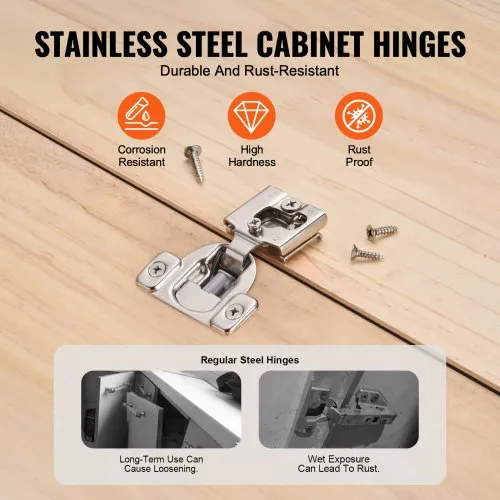
For high-moisture settings, such as outdoor kitchens, laundry rooms, seaside residences, and professional food preparation areas where humidity and water contact are constant, stainless steel cabinet door hinges are the ideal option. Instead of depending on a surface coating that may chip or wear, stainless steel prevents rust and surface corrosion. Because they are more corrosion-resistant than regular steel and have a smoother, denser casting finish that takes ornamental plating better, zinc alloy hinges are a popular choice for visible surface-mount hardware where aesthetics are important. With detailed environment and application instructions on each product page, VEVOR offers kitchen cabinet hinges across these three material categories, allowing customers to choose based on their specific installation circumstances rather than guessing. The best strategy to prolong hinge service life and prevent premature hardware replacement is to match the material to the environment.
The installation technique directly affects a hinge's longevity and ease of adjustment or replacement, and it varies greatly among hinge types. Using a Forstner bit in a drill press, or a specialized hinge-boring jig with a handheld drill, it is straightforward to bore a 35 mm cup hole into the door face for concealed European hinges. After initial configuration, the mounting plate attaches to the cabinet interior independently, enabling tool-free hanging and removal of the door.
Kitchen door hinges that mount on the surface do not need to be bored, as they use the hinge leaf's pre-drilled holes to screw directly to flat surfaces. They remain a popular choice for do-it-yourself repairs and utility cabinet construction because they are among the quickest and easiest hinge types to replace. Though more work-intensive, butt hinges produce a neater finish than fully exposed surface mounts because they require shallow mortises to be routed or chiseled into the door edge and frame for a flush-set fit. Along with its cabinet hinges, VEVOR includes all required mounting screws and offers detailed installation instructions for each kind. VEVOR's consistent 35mm cup sizing for concealed hinges makes straight replacement easier without re-drilling. This sizing is compatible with the majority of current European hinge mounting plates and conventional hinge-boring jigs. The two most crucial installation factors are the pilot hole diameter and screw length. VEVOR's hardware is tailored to fit common cabinet panel thicknesses, guaranteeing a stable, long-lasting installation from the very first fix.
VEVOR cabinet hinges are available in all the types, overlay styles, and materials required for custom cabinet construction, bathroom restorations, and kitchen makeovers. Heavy-duty surface-mount alternatives and soft-close concealed kitchen cabinet hinges are just two examples of the products designed to provide dependable, long-lasting door operation. VEVOR offers high-quality hardware at affordable prices for all projects, with competitive pricing across the entire product range and reliable after-sales service. Find the ideal fit right now by looking through the entire collection at VEVOR.com.
Determine the distance that your door face protrudes past the edge of the cabinet partition. The inset sits flush within the frame, the full overlay covers the entire partition, and the half overlay covers half of a shared partition. This dimension tells you exactly which kitchen cabinet overlay hinge to use for your project.
The majority of typical cabinet doors that are less than 24 inches tall have two hinges. Three hinges are necessary for taller or heavier doors, especially those with solid oak panels, to distribute weight properly and prevent drooping over time. Always compare the total door weight to the per-hinge weight rating.
Yes, VEVOR provides heavy-duty cabinet hinge versions designed especially for large slab doors and solid hardwood. These models have thicker steel construction and higher load ratings. Before making a purchase, always make sure the hinge weight capacity matches the actual weight of your door.