Hydraulic Gear Pumps




Results for Hydraulic Gear Pumps
Do you require dependable power to operate tractor-driven machinery or split wood? VEVOR has a targeted selection of hydraulic gear pumps, including complete pump kits, 540 RPM PTO units, and log splitter variants with 11 to 22 GPM. Each option features a durable aluminum alloy body that withstands constant use and resists rust. There is a match for your engine size, pressure target, and mounting setup here, all ready to ship, whether you are building a backyard splitter, upgrading a production rig, or powering a dump trailer.
VEVOR Hydraulic Gear Pumps for Log Splitters, PTO Drives, and 2-Stage Builds
Are you pairing a pump to a big production splitter, a tractor PTO shaft, or a tiny engine? These applications require a wide range of flow rates, pressure ratings, and inlet sizes, and VEVOR hydraulic gear pumps can handle them. The range meets real needs, from 11 GPM units for small garden use to 22 GPM, 4000 PSI performers for hardwood. Every pump comes with the expected build quality and fittings, making setup easy.
Matching Stage Configuration and Drive Type to Your Application
The first two questions to consider when choosing a pump are how the pump generates pressure and what drives it. If you can answer those two questions correctly, the rest of the specifications will be easier to understand.
How 2-Stage Hydraulic Pumps Work
Because 2-stage hydraulic pumps handle a straightforward problem: you want speed until the wood resists, then raw force, so most splitting jobs use them. In the first stage, the ram moves swiftly toward the log as the pump moves oil quickly at low pressure. If the grain resists and pressure rises, the pump automatically switches to its second stage, reducing flow and increasing pressure to complete the split. This automatic transition makes two-stage hydraulic gear pumps work so well with small engines.
For example, the 16 GPM 2-stage hi-lo gear pump, a 4000 PSI unit coupled with a 6.5 HP motor, can generate the tonnage needed for seasoned hardwood without stalling. Because the engine only runs hard during the short high-pressure phase rather than the entire stroke, the design also saves gasoline. For most homeowners, a splitter's two-stage behavior is the only thing that makes it feel quick instead of slow. The automated shift ensures you never pause to adjust a setting between logs when splitting a mix of dry and green wood.
Hydraulic Log Splitter Pumps for Wood Work
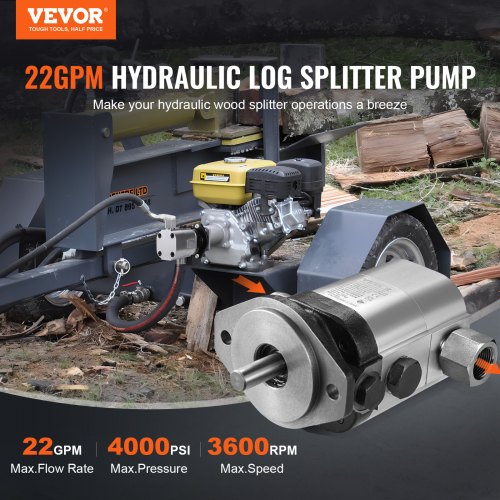
With ratings of 11, 13, 16, and 22 GPM, dedicated hydraulic log splitter pumps are the mainstays of our line. Lower-flow types, such as the 11 GPM 3000 PSI pump, are ideal for small backyard projects where cost-effectiveness is more important than cycle speed. A 16 GPM or 22 GPM unit will significantly reduce cycle times, which firewood vendors need over a long day.
Each of these hydraulic gear pumps has an aluminum alloy body to resist rust and dissipate heat during continuous operation. You rarely need adapters because the mid-range 13 GPM model's 1'' inlet and 1/2'' NPT outlet match the fittings on most aftermarket splitter frames. To manage its increased flow, the larger 22 GPM version upgrades to a 1-1/4'' inlet and a 3/4'' NPT outlet.
The ram moves at a constant, predictable speed, and the pump stays cool by matching flow to engine horsepower. Before you buy, consider how much wood you actually process. A small pump on a weekend pile is cost-effective, but an undersized pump on a commercial load wears out faster.
PTO Hydraulic Gear Pumps for Tractor-Driven Jobs
PTO hydraulic gear pumps allow you to completely avoid the separate engine if you currently operate a tractor. The tractor's power take-off shaft powers VEVOR's 540 RPM units, rated at 16.6 GPM and 21.2 GPM. One pump can power multiple machines on the property because it's designed for log splitting, truck tailgate lifts, scissor lifts, and dump trailers.
These hydraulic gear pumps deliver powerful flow without a separate gas engine for fuel and maintenance because the tractor provides the muscle. The 2250 to 2500 PSI ratings and SAE 12 outlet connection suit rigorous lift and splitting tasks on farms. This drive method is often the most cost-effective way to get significant hydraulic output when you already have a functional tractor parked in the barn.
Setup is also simple: plumb the outlet to your valve, connect the pump to the PTO shaft, and get to work. To ensure the pump consistently reaches its rated flow and pressure, make sure your tractor's PTO rotates at or near 540 RPM at the PTO.
Wood Splitter Hydraulic Pump Kits for Complete Builds
Wood splitter hydraulic pump kits combine the pump with the components that typically require a second shopping trip for a turnkey configuration. With VEVOR's 13,16, and 22 GPM kits, you can mount and plumb the system in a single session by adding a directional control valve, a coupling, and an installation base to the core pump. This is especially important for novice builders who might otherwise guess at valve sizing and thread matching.
These hydraulic gear pumps arrive as matched kits that avoid mismatched fittings and pressure ratings, a common cause of leaks later on, because each component is selected to function together. The 13 GPM kit keeps smaller tasks manageable, while the 4000 PSI kits with 3/4'' NPT outlets handle the largest logs. A full kit reduces construction time and speeds up splitter assembly.
Knowing the exact valve and coupling fitted also provides a baseline for future maintenance. Starting with a matched kit eliminates most of the uncertainty and the need to make many trips to the hardware store for a do-it-yourself splitter project.
Flow Rate and Features That Set VEVOR Hydraulic Gear Pumps Apart
Beyond stage design, two things separate a good buy from a frustrating one: how much oil the pump moves and how well it's built to last.
Flow Rate, RPM, and Real Output
The flow rate, expressed in GPM, determines your ram speed, while pressure affects force. Pairing is crucial because higher GPM hydraulic gear pumps cycle faster but require more horsepower to spin. The VEVOR PTO units rotate at 540 RPM off the tractor shaft, while VEVOR's log splitter models operate at 3600 RPM. Both types deliver the pressure needed to split thick wood. Compared to an 11 GPM unit, a 22 GPM 4000 PSI pump moves significantly more oil per minute, resulting in shorter cycle times on a busy day.
These hydraulic gear pumps also list their inlet and outlet sizes clearly, from 1'' up to 1-1/4'' inlets, so you can confirm a clean match to your tank and valve before ordering rather than after. A high GPM rating does not necessarily mean high pressure at the same time because flow and pressure trade off in a two-stage system. Consider the two-stage flow and pressure ratings together, and size your tractor or engine to get the flow figure without straining the motor.
Build Features That Extend Pump Life
When it comes to materials and design, hydraulic gear pumps stand the test of time. The aluminum alloy housings dissipate heat that would otherwise deteriorate seals and prevent corrosion from continuous fluid contact. Many systems incorporate hi-lo gear sets and hydraulic motors to reduce internal component wear and smooth stage transitions. Because leaks are the most common cause of failure, VEVOR's tight machining and high-quality fittings help these hydraulic gear pumps maintain pressure for extended periods.
If you want the pump to withstand actual workloads, look for a sturdy design with sealed connections, matching threads, and an integrated mounting base. Precisely machined gears can reduce vibration that gradually loosens fittings; well-built hydraulic gear pumps also operate more quietly. The right hydraulic oil, proper storage, and routine fluid checks will further extend service life. If you keep the filter clean and the reservoir topped, a high-quality pump can last several demanding splitting seasons. A few precautions can protect your investment in the pump itself.
Why Choose VEVOR Hydraulic Gear Pumps?
VEVOR has everything you need for splitting and lifting. They have 11 GPM garden pumps, 22 GPM production units, and 540 RPM PTO drives. Each pump offers a strong mix of tough aluminum construction, clear specs, and fair value, so you get reliable output without overspending. Kits come with valves and couplings included, and we provide technical support after purchase for all orders. Check out VEVOR's hydraulic gear pumps to find the right one for your project in terms of flow, pressure, and drive type.
FAQs
What size engine do I need for a 2-stage log splitter pump?
Match horsepower to flow rate. A common 11 to 13 GPM pump runs well on a 6.5 HP engine, while 16 to 22 GPM units generally need 9 HP or more to reach full pressure without stalling.
Can I run a PTO pump instead of a gas engine?
Yes. A 540 RPM PTO pump draws power directly from your tractor's shaft, so it needs no separate engine. It suits splitters, tailgate lifts, scissor lifts, and dump trailers around the property.
What does a 2-stage pump actually do?
It moves oil fast at low pressure to advance the ram quickly, then shifts automatically to low flow and high pressure when the log resists. This saves time and fuel during each splitting cycle.
Are the pump kits ready to install out of the box?
The kits include the pump, a directional control valve, coupling, and installation base, so you get matched components in one package. You still supply the engine or PTO source, hoses, and hydraulic fluid.