Um lago que está perdendo água é um problema que se agrava. A perda do nível da água estressa peixes e plantas, altera a química da água e, eventualmente, expõe o revestimento ou a estrutura aos danos dos raios UV, o que acelera a causa do vazamento. A boa notícia é que a maioria dos vazamentos em lagos pode ser diagnosticada e consertada sem a necessidade de esvaziar todo o lago ou começar do zero. Este guia aborda o assunto. como consertar um lago com vazamento Revestimento, como consertar um lago com vazamento em segurança perto de animais, as melhores opções de selante para vazamentos em lagos e a resposta sincera para a pergunta se um lago com vazamento se fechará sozinho.
Localize o vazamento antes de consertar qualquer coisa.
O erro mais comum cometido por quem faz reparos em lagos por conta própria é aplicar selante ou material de reparo antes de confirmar a localização exata do vazamento. A água no solo se move. A mancha úmida que você vê na parte externa da parede do lago raramente fica exatamente ao lado do ponto de entrada na lona ou na estrutura.
Como localizar o vazamento
Método do nível da água: É uma maneira de descobrir como consertar um lago com vazamento. Primeiro, você precisa parar de adicionar água ao lago. Depois, todos os dias, observe o nível da água. Anote para poder acompanhar o progresso.
Quando a água para de vazar, significa que o nível da água está no mesmo nível do vazamento. Isso ocorre porque, quando a água fica abaixo do nível do vazamento, ela não vaza mais.
Inspeção visual na superfície da água: Assim que o nível se estabilizar, inspecione a lona logo abaixo da superfície, em toda a sua extensão. Verifique se há rasgos, furos, perfurações e quaisquer áreas onde a lona tenha se desprendido de uma borda ou conexão.
Verifique primeiro as conexões e penetrações: As fontes comuns de vazamentos são caixas de skimmer, conexões da linha de retorno, vertedouros de cascata e penetrações de encanamento através do revestimento. Não tire conclusões precipitadas sobre um revestimento perfurado até que você tenha inspecionado as juntas em todas as conexões.
Verifique a borda do lago: Os pontos de vazamento mais comuns incluem caixas de skimmer, juntas da linha de retorno, vertedouros de cascata e orifícios de encanamento na lona. Não tire conclusões precipitadas sobre uma lona danificada sem antes verificar as juntas de todas as conexões.
Um lago com vazamento pode se selar sozinho?
Essa pergunta surge constantemente, e a resposta depende da causa do vazamento.
Às vezes, sim. Lagoas com fundo de argila natural ou revestimentos com argila podem se autovedar à medida que o lodo e os detritos orgânicos se acumulam em pequenas fissuras ao longo do tempo. Essa é a base do método de reparo com adição de argila bentonítica. Em uma lagoa de terra com pequenas infiltrações, em vez de um vazamento definido, isso pode funcionar.
Geralmente, não. Uma lona com furo ou rasgo não se veda sozinha. Lonas flexíveis de EPDM e polietileno não possuem propriedade de autorreparação. Lagoas de concreto com rachaduras podem apresentar vedação parcial devido a depósitos minerais ao longo do tempo, mas vazamentos ativos através do concreto geralmente pioram à medida que a pressão da água erode continuamente as bordas das rachaduras.
Nunca espere para ver o que acontece com um lago de peixes. A queda do nível da água concentra amônia, nitritos e desequilíbrios de pH que se tornam perigosos para os peixes rapidamente. Se o lago tiver peixes, encontre e conserte o vazamento assim que for identificado.
Como consertar um vazamento na lona do lago
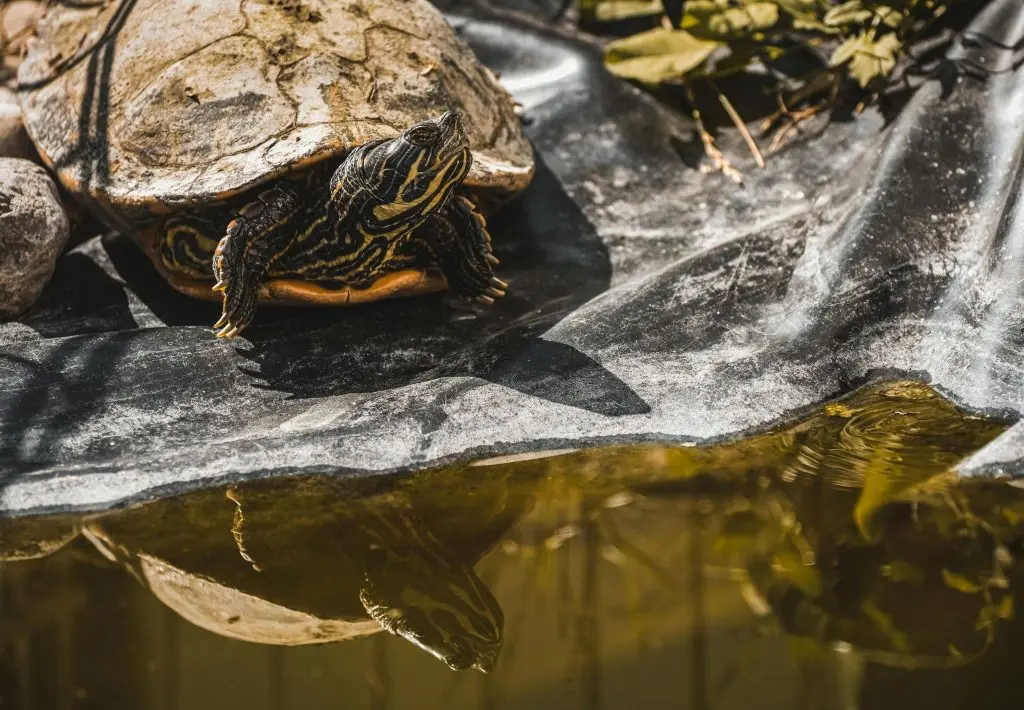
O método de reparo depende do material do revestimento.
Reparo de revestimento de borracha EPDM
O EPDM é o material de revestimento flexível mais comum. Ele pode ser reparado com fita adesiva para reparo de revestimento de EPDM ou com um kit de remendo que utiliza o mesmo material colado com cola de contato.
- Baixe o nível da água abaixo da área danificada.
- Deixe a superfície do revestimento secar completamente — a cola de contato e a fita de reparo não funcionam em EPDM molhado.
- Limpe a área reparada com álcool isopropílico ou produto de limpeza para revestimentos, a fim de remover todas as algas, detritos e biofilme.
- Aplique o adesivo pelo menos 7,5 cm (3 polegadas) além da área danificada em todas as direções.
- Pressione firmemente do centro para fora, eliminando todas as bolhas de ar.
- Aguarde o tempo de cura completo antes de reabastecer — normalmente 24 horas.
Reparo de revestimento de polietileno
O reparo de lonas de polietileno para lagoas envolve o uso de uma fita adesiva compatível com polietileno ou produtos específicos para reparo de lonas de polietileno; o procedimento é o mesmo utilizado para EPDM. A película de polietileno não adere aos materiais de reparo de lonas de EPDM.
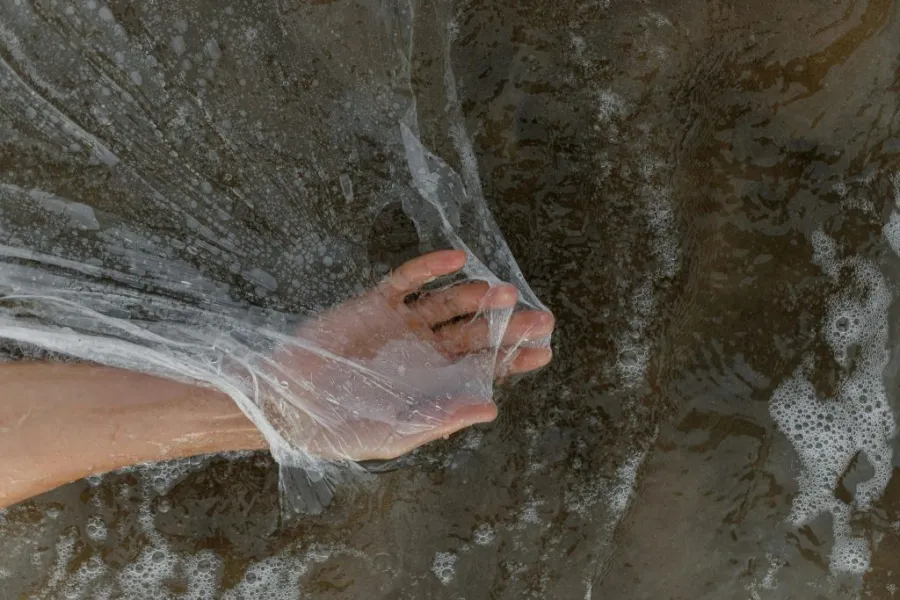
Para lagoas com revestimento de polietileno onde o revestimento original se degradou a ponto de não ser possível repará-lo, o Lona plástica VEVOR de 10 mil (0,254 mm), 10 x 100 pés (3 x 30,48 m) Fornece polietileno de alta qualidade para revestimento, com espessura suficiente para substituir ou sobrepor a seção danificada. Com 10 milésimos de polegada (0,254 mm), resiste à perfuração e à degradação por raios UV que causam falhas prematuras em filmes mais finos. O formato de 10 x 100 pés (3 x 30,5 m) cobre a maioria dos tamanhos de lagos residenciais sem necessidade de emendas.
Para um lago maior ou quando a lona de substituição precisa cobrir uma grande área sem emendas, o Lona plástica VEVOR de 14 mil (0,254 mm), 10 x 100 pés (3 x 30,48 m) Oferece proteção de calibre mais grosso, adequada para instalações de lagoas de longa duração. A espessura adicional é importante em lagoas com substrato rochoso ou onde a intrusão de raízes seja uma preocupação.
Reparo de lagoa de concreto
Lagoas de concreto rachadas constituem uma categoria de reparo diferente. Opções:
- Cimento hidráulico: Para vazamentos ativos onde a água está infiltrando. Endurece na presença de água e estanca o fluxo.
- Injeção de epóxi: Para fissuras finas com boa integridade estrutural ao redor. Cria um preenchimento rígido e impermeável.
- Tinta para lagoas ou membrana impermeabilizante: Aplicada sobre a área reparada e totalmente curada para restaurar a impermeabilização da superfície. São necessárias múltiplas demãos.
O concreto que apresenta fissuras extensas em toda a sua extensão representa um problema estrutural, não uma questão de reparo superficial. Nesse caso, a instalação de um revestimento flexível sobre o interior do concreto costuma ser mais prática do que o próprio reparo.
Como consertar um vazamento em um lago de peixes
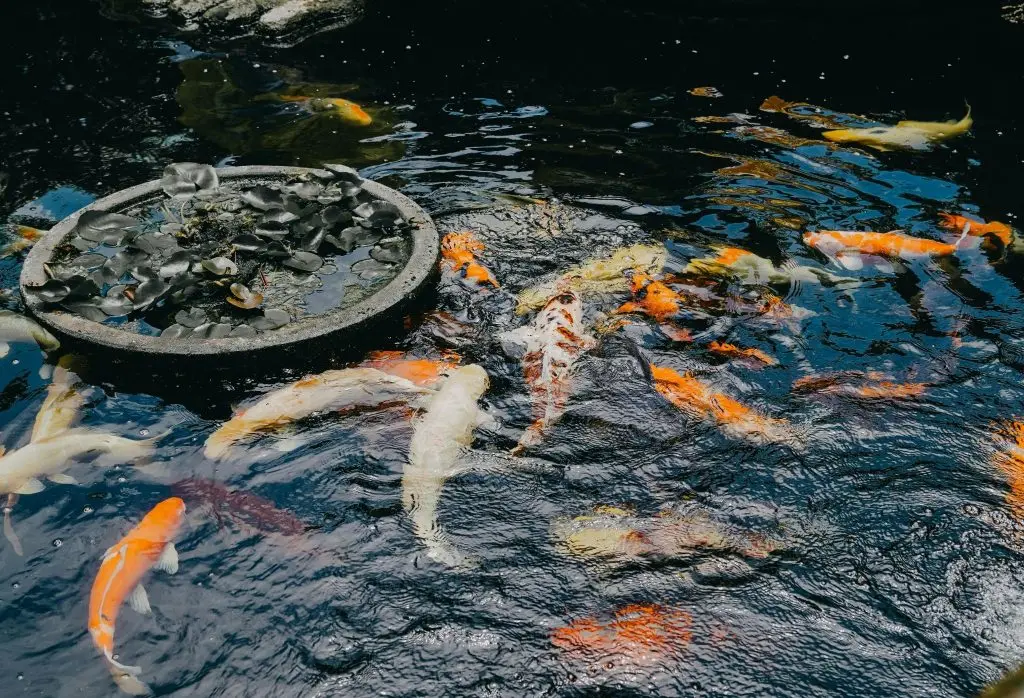
Os tanques de peixes exigem tudo isso, além de precauções extras ao trabalhar perto de animais. É igualmente importante manter a qualidade da água ao aprender como consertar um tanque com vazamento.
Antes de baixar o nível da água
- Instale um tanque de armazenamento com água envelhecida ou água declorada.
- Retire os peixes do tanque de retenção antes de reduzir drasticamente o nível da água no lago.
- Nunca faça reparos no revestimento do fundo do tanque enquanto houver peixes dentro.
Opções de selante para vazamentos em lagoas seguras para peixes
Nem todos os selantes são seguros para a vida aquática depois que o lago é reabastecido. Os produtos especificamente rotulados como seguros para peixes ou para ambientes aquáticos são os que devem ser usados.
- Fita e kits de reparo em EPDM: Inertes após a cura. Seguros para uso em lagoas.
- Tinta para lago segura para peixes: Desenvolvida especificamente para lagos de carpas e outros peixes. Tintas e epóxis comuns liberam substâncias químicas tóxicas para os peixes.
- Argila bentonítica: É natural e não tóxica; comumente usada para impermeabilizar tanques de peixes de terra.
- Revestimento de borracha líquida para lagos: Existem muitas variedades de borracha líquida que não prejudicam os peixes após a cura.
Reabastecimento após o reparo
Ao reabastecer um tanque de peixes após o reparo do revestimento:
- Use um declorador ou encha lentamente ao longo de 24 a 48 horas para permitir a liberação do cloro.
- Analise a composição química da água — pH, amônia, nitrito — antes de devolver os peixes.
- Reintroduza os peixes gradualmente, não todos de uma vez, para minimizar o estresse.
Prevenção de futuros vazamentos em lagoas
Prevenir é mais fácil do que remediar. Causas mais frequentes de vazamentos persistentes em lagoas:
- Deslocamento da borda do revestimento: Quando as bordas do revestimento não estão devidamente ancoradas, elas se movem, principalmente quando submetidas a ciclos de congelamento e descongelamento. Certifique-se de que as bordas do revestimento estejam ancoradas sob as pedras de coroamento ou com placas de ancoragem.
- Danos causados pelas raízes das plantas: As raízes de árvores e arbustos buscarão água e eventualmente penetrarão a lona. Não coloque raízes de plantas perto do lago ou use tecido de barreira contra raízes entre o solo e a lona.
- Objetos estranhos sob o forro: Objetos pontiagudos, como pedras, podem exercer pressão sobre o forro e eventualmente perfurá-lo. Sempre utilize uma camada de base antes de instalar o forro.
- Deterioração das bordas do revestimento devido à exposição aos raios UV: Os revestimentos ficam propensos à degradação e se tornam quebradiços sempre que expostos à luz solar. As bordas do revestimento devem ser protegidas do sol por meio de bordas, pedras ou solo.
Perguntas Frequentes
Por quanto tempo os peixes podem sobreviver em um tanque de contenção durante reparos em um lago?
Peixes saudáveis de lagoas podem sobreviver por vários dias em aquários, desde que haja aeração e filtragem adequadas. Se o aquário não tiver aeração, o período de sobrevivência será muito curto, dependendo da quantidade de peixes e da temperatura da água.
Como posso saber se o vazamento no meu lago vem da lona ou de uma conexão?
Caso o nível da água se estabilize em ou abaixo de uma determinada conexão, essa conexão está com vazamento. Caso o nível da água baixe abaixo de todas as conexões, mas continue baixando, o próprio revestimento é o responsável pelo vazamento. Todas as juntas das conexões devem ser verificadas antes da troca do material do revestimento.
Vale a pena consertar uma lona de lago antiga ou devo substituí-la?
Um único furo ou pequeno rasgo em um revestimento que, de outra forma, esteja em boas condições, justifica o reparo. Um revestimento que se tornou quebradiço, apresenta múltiplos pontos de falha ou tem mais de 15 a 20 anos (no caso de borracha) ou 8 a 10 anos (no caso de filme de PE padrão) geralmente é mais econômico de substituir do que reparar repetidamente.
Posso usar lona plástica comum como revestimento para lago?
O polietileno de alta resistência, com 10 milésimos de polegada (0,254 mm) ou mais, funciona como um revestimento adequado para lagos de jardim, sendo uma solução particularmente econômica. Embora não ofereça a mesma resistência a longo prazo aos raios UV e a perfurações que o EPDM, um material específico para lagos, é uma opção prática para lagos sazonais ou projetos com orçamento limitado.
Qual o melhor selante para vazamentos em lagos de concreto?
A aplicação de cimento hidráulico selará instantaneamente quaisquer fissuras com infiltração ativa. Caso seja necessário proteger toda uma lagoa contra vazamentos de água, deve-se considerar o uso de um revestimento específico para lagoas, desenvolvido para essa finalidade.
Conclusão
Para começar, saber como consertar um lago com vazamento exige identificar a localização exata do vazamento, e não simplesmente presumir e resolver o problema com base em palpites. Siga os passos para estabilizar o nível da água, verifique as conexões antes de suspeitar de um furo no revestimento e certifique-se de que o conserto seja adequado ao tipo de revestimento utilizado. Se você tem peixes no lago, é importante levar em consideração a química da água ao fazer os reparos. Quando o revestimento não puder mais ser reparado com um remendo e a substituição for a melhor opção, Lona plástica VEVOR de 10 mil (0,254 mm), 10 x 100 pés (3 x 30,48 m) Oferece um polietileno durável, de qualidade para revestimento, com a espessura ideal para substituição em lagos residenciais, e o VEVOR 14 mil Aumenta a durabilidade para lagos maiores ou condições de substrato exigentes.