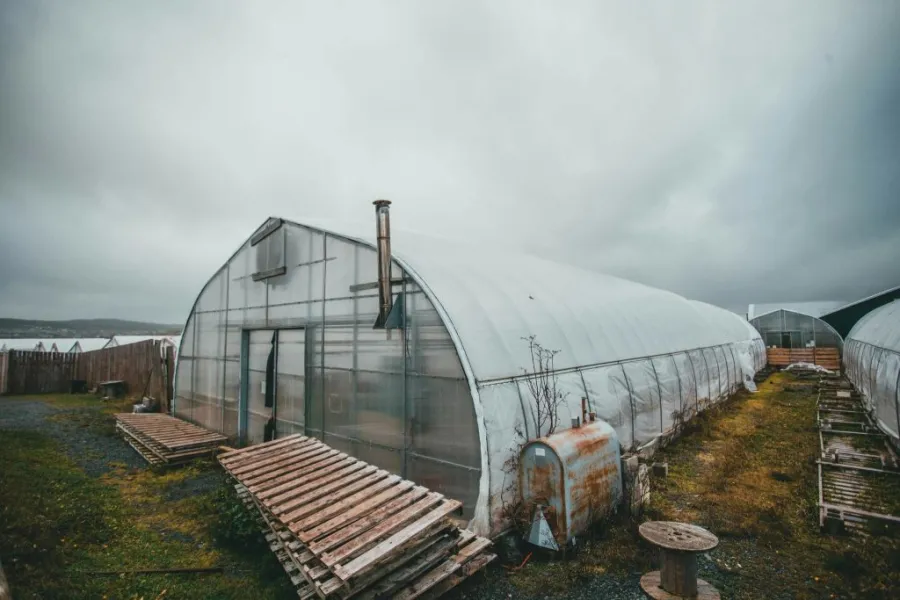
A cobertura é a própria estufa. Os demais componentes — a estrutura, as aberturas de ventilação e os bancos — servem apenas para sustentar o material da cobertura, já que é ela que cria o efeito estufa. Se houver falhas nesse ponto, você perderá calor, deixará entrar muita luz, terá desgaste prematuro ou gastará o triplo do que gastaria. Aqui, abordaremos as opções de materiais para cobertura de estufa, como construir uma cobertura do tipo "faça você mesmo", como impermeabilizar a cobertura da estufa em áreas externas e como usar a cobertura da estufa como jardineira.
Material para cobertura de estufa: quais são as opções disponíveis?
Cada material de cobertura para estufa envolve um equilíbrio entre transmissão de luz, retenção de calor, durabilidade e custo. Saber quais são esses fatores em jogo é fundamental para fazer a escolha certa.
Filme de Polietileno
A cobertura para estufas mais comum no mundo. De baixo custo, flexível, fácil de adaptar a qualquer formato de estrutura e disponível em diversas espessuras e formulações. Excelente capacidade de transmissão de luz, com o polietileno transparente padrão apresentando uma capacidade de transmissão de 85 a 90%.
Desvantagem: o filme de polietileno padrão, sem inibidor de UV, se deteriora quando exposto diretamente à luz solar. Filmes de polietileno de qualidade para estufas geralmente possuem inibidores de UV e, às vezes, revestimentos infravermelhos (IV), que ajudam a reter o calor durante a noite. A vida útil do filme varia de 2 a 4 anos no caso de filmes de qualidade para estufas, enquanto em uso na construção civil, dura apenas de 1 a 2 anos como cobertura de estufa.
Recomendado para: coberturas de estufas de quintal, estufas tipo túnel, estruturas temporárias para jardinagem, etc.
Painéis de Policarbonato
Duas ou mais camadas de painéis de policarbonato proporcionam valores de isolamento mais elevados em comparação com o filme (valores R variando de 1.5 a 2.0 para painéis de duas camadas e até 3.5 para painéis de três camadas), boa transmissão de luz (70 a 85%) e maior durabilidade.
Desvantagens: alto custo em comparação com o filme, necessidade de enquadramento que se ajuste à largura dos painéis rígidos e difusão de luz em vez de transmissão.
Recomendado para: estufas permanentes ou semipermanentes onde a conservação de energia é essencial e o orçamento o permite.
Vidro
Máxima transmissão de luz e construção permanente. O material padrão usado em estufas comerciais e estufas de alta qualidade para amadores. Caro, pesado e requer estrutura robusta.
Recomendado para: estufas permanentes com fundação e estrutura sólidas. Não recomendado para coberturas de estufas do tipo "faça você mesmo".
Tecido para sombreamento e cobertura de fileiras
Não é uma cobertura à prova de intempéries, mas vale a pena incluir. A tela de sombreamento bloqueia uma porcentagem da luz (de 30 a 90 por cento, dependendo da qualidade) e é usada no verão para evitar o estresse térmico nas plantações. O tecido para cobertura de fileiras é um polipropileno spunbond leve que protege contra geadas sem bloquear muita luz.
Cobertura de estufa faça você mesmo: construa sua própria estrutura
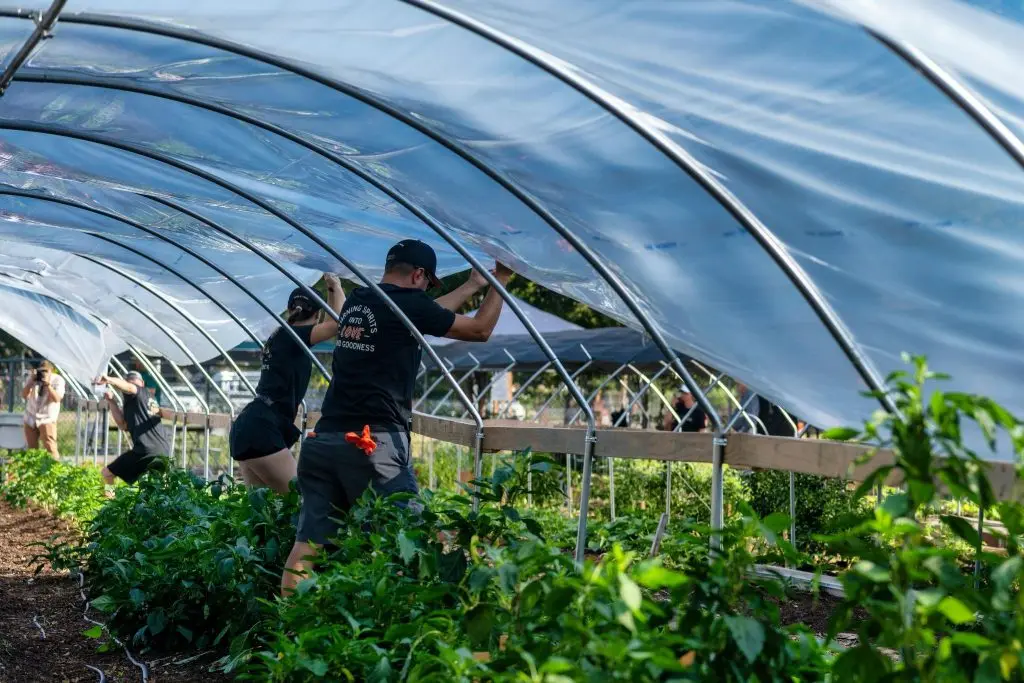
A maneira mais acessível de construir uma cobertura para estufa do tipo "faça você mesmo" utiliza filme de polietileno sobre uma estrutura simples em forma de arco ou A. Veja como fazer isso corretamente.
Construa primeiro a estrutura
Opções comuns de molduras "faça você mesmo":
- Arcos de PVC para conduítes: Flexíveis, baratos e ideais para estufas tipo túnel baixo e em arco. Dimensione o diâmetro do arco de acordo com a largura do canteiro.
- Eletroduto (EMT): Mais rígido que o PVC, mantém melhor a forma com o vento, ligeiramente mais complexo de dobrar.
- Telhado em forma de A de madeira: Estrutura mais simples, fácil de construir com vigas de 2x4, acomoda naturalmente layouts de painéis de telhado plano ou com cumeeira.
- Estacas de vergalhão com tubo de PVC: Crave as estacas de vergalhão no chão, deslize o tubo de PVC sobre elas para criar o arco e, em seguida, cubra-as.
Qualquer que seja a estrutura utilizada, ela precisa ser ancorada. Uma estufa em arco não ancorada se transforma em uma vela ao vento, e a cobertura rasga em todos os pontos de contato.
Aplicação da película plástica protetora
Para estufas tipo túnel e estufas pequenas:
- Meça o filme em tamanho grande, de 18 a 24 polegadas em todos os lados, maior que a própria moldura.
- Coloque a película sobre a moldura, começando do centro e seguindo para as bordas.
- Aperte bem a película enquanto a fixa ao solo com terra, madeira ou estacas.
- Nas extremidades, dobre o excesso de filme e prenda-o a um dos postes.
O Lona plástica VEVOR de 6 mil (0,254 mm), 10 x 100 pés (3 x 30,48 m)É ideal para túneis de cultivo padrão ou pequenas estufas em forma de A. A largura de 10 metros cobre um vão do túnel sem emendas, e o comprimento de 30 metros acomoda túneis de até 100 a 35 metros com sobreposição adequada nas extremidades.
Para estufas com vãos maiores — uma estufa em arco de 12 metros de largura ou uma grande estrutura em forma de A — o Lona plástica VEVOR de 6 mil (0,254 mm), 24 x 100 pés (3 x 30,48 m) A cobertura cobre toda a largura em uma única passada, eliminando a emenda no meio do telhado, que é um ponto de falha comum em construções de estufas largas.
Cobertura impermeável para estufa: o que procurar
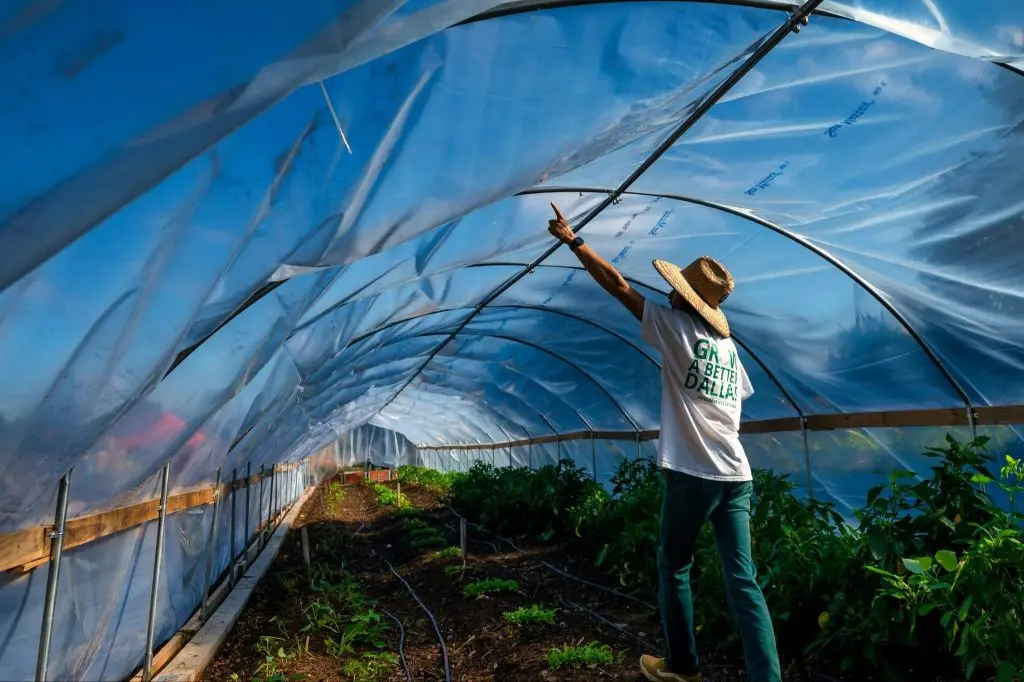
Tecnicamente, toda película de polietileno sólido é impermeável. A questão prática é como a instalação se comporta sob condições reais de chuva e condensação, e por quanto tempo a impermeabilização se mantém em ambientes externos.
Fatores-chave para uma cobertura impermeável de estufa:
- Espessura mínima da película: 6 milésimos de polegada para todas as aplicações externas. A película sofre microfissuras nos pontos de tensão quando a espessura é insuficiente para suportar a infiltração causada por chuvas excessivas.
- Qualidade da película: Películas deterioradas são afetadas pela luz solar, criando microfissuras na superfície. Quando a película começa a ficar esbranquiçada ou rachada, sua capacidade de impermeabilização diminui. Verifique a presença de inibidores de raios UV na película.
- Gestão de juntas e sobreposições: A cumeeira do telhado ou as paredes laterais devem ser dispostas de forma a garantir que as sobreposições escorra a água em vez de a reter. Certifique-se de que as secções sobrepostas tenham as secções superiores a escoar apenas para as secções inferiores.
- Tensão: Uma película frouxa acumula água devido à pressão da chuva, rasgando-se nos pontos de acúmulo. Mantenha sempre a película com tensão suficiente.
Para uma cobertura de estufa que se espera que suporte várias temporadas sem substituição, o Lona plástica VEVOR de 10 mil (0,254 mm), 10 x 100 pés (3 x 30,48 m) Oferece espessura e durabilidade adicionais que prolongam a vida útil em comparação com o filme padrão de 6 mil.
Cobertura para estufa em vasos: aplicações em pequena escala
Nem todo projeto de cultivo precisa de uma estrutura completa. Uma cobertura para um canteiro elevado ou vaso é uma versão em escala reduzida do mesmo princípio: uma película protetora sobre uma pequena estrutura para prolongar a estação de cultivo, proteger contra geadas ou criar um microclima quente para as mudas.
Como construir uma cobertura para estufa com jardineira
- Corte pedaços de tubos de PVC ou fios para formar um arco sobre o espaço de plantio, que pode ser cravado no chão ou inserido em buracos feitos nas laterais do canteiro elevado.
- Coloque os arcos a uma distância de 2 a 3 cm uns dos outros dentro do espaço de plantio.
- Cubra os arcos com folhas de plástico e fixe-as nas laterais e nas extremidades.
- Um dos lados deve ficar solto para permitir o levantamento fácil quando necessário.
Para vasos menores, o Lona plástica VEVOR de 4 mil (0,254 mm), 3 x 50 pés (3 x 30,48 m) é o tamanho prático. A largura de 3 cm cobre a largura padrão de um canteiro elevado sem excessos, e a espessura de 4 milímetros é adequada para uma aplicação em jardineira protegida, onde o filme não fica exposto a ventos fortes ou chuvas intensas constantes.
A ventilação é imprescindível.
Mesmo em uma pequena cobertura para vasos, o acúmulo de calor em um dia ensolarado pode danificar ou matar as mudas mais rapidamente do que a geada. Considere um sistema que permita abrir a cobertura durante o dia ou utilize tecido para cobertura de canteiros (polietileno spunbond) em vez de filme plástico rígido para uso diurno na primavera e no outono.
Perguntas Frequentes
Qual a durabilidade do filme de polietileno em uma estufa?
Película de construção padrão: uma a duas temporadas sob sol direto. Película estabilizada contra raios UV para estufas: duas a quatro temporadas. Película reforçada de 10 milésimos de polegada com inibidores de UV: três a cinco temporadas na maioria dos climas. A exposição direta aos raios UV é o principal fator de degradação.
Devo usar plástico transparente ou branco para cobrir uma estufa?
A película transparente transmite a maior quantidade de luz e é a opção padrão para o cultivo de plantas. A película branca ou opaca difunde a luz e reduz o acúmulo de calor, o que é benéfico em climas quentes ou no cultivo de verão, mas reduz o potencial fotossintético em épocas de pouca luz.
A cobertura plástica de uma estufa precisa de furos de ventilação?
O filme de PE sólido não possui ventilação integrada. É necessário criar ventilação através de paredes laterais que possam ser abertas, painéis removíveis ou laterais que possam ser enroladas. Estufas de plástico seladas superaquecem rapidamente sob o sol da primavera e do verão, danificando as plantas.
Posso usar lona plástica preta comum como cobertura para estufa?
A película preta absorve luz em vez de transmiti-la, o que a torna inadequada como cobertura para uma estufa de cultivo de plantas. Ela funciona bem como cobertura de solo dentro de uma estufa para suprimir ervas daninhas e reter o calor do solo, mas não como material de cobertura.
Como faço para consertar um rasgo na cobertura plástica de uma estufa?
Use fita adesiva de polietileno (fita resistente a raios UV para uso externo) aplicada em ambos os lados do rasgo sobre uma superfície limpa e seca. Reparos temporários costumam funcionar bem em áreas da cobertura com menor tensão. Um rasgo em uma linha de crista ou ponto de tensão geralmente significa que a cobertura precisa ser substituída nessa seção.
Conclusão
Para obter o melhor desempenho da sua cobertura de estufa, é importante selecionar uma adequada para a tarefa em questão. Se você estiver construindo uma estufa para sua própria casa ou jardim, o filme de polietileno de 6 milímetros é a melhor opção. Esse tipo de filme cumprirá sua função e durará por mais de uma estação. Se precisar de uma cobertura para vários anos, use um filme de 10 milímetros. Linha de lonas plásticas VEVOR de 6 mil, em larguras de 10 e 24 pés, abrange toda a gama de construções de estufas do tipo "faça você mesmo", e o Lona plástica VEVOR de 10 mil É a escolha certa quando a durabilidade é a prioridade.