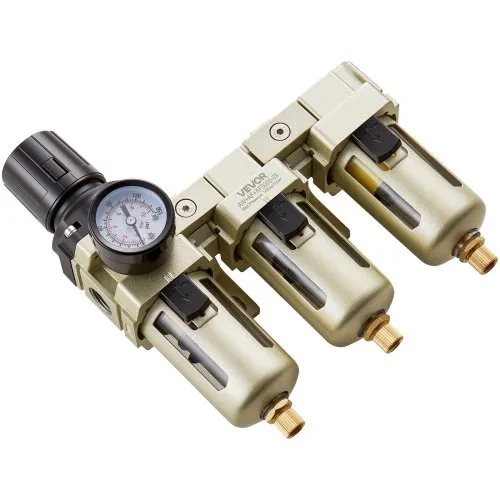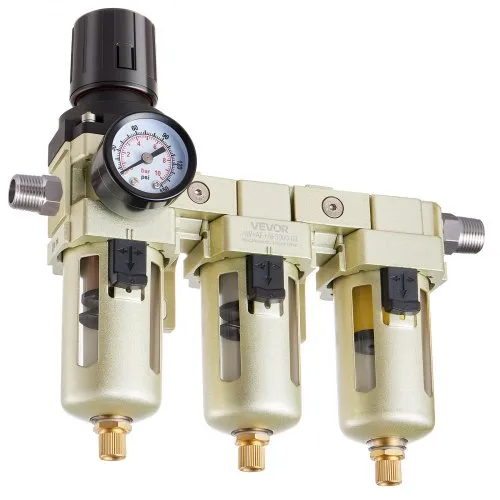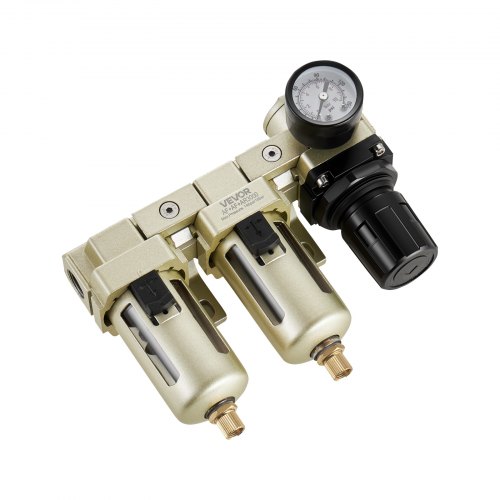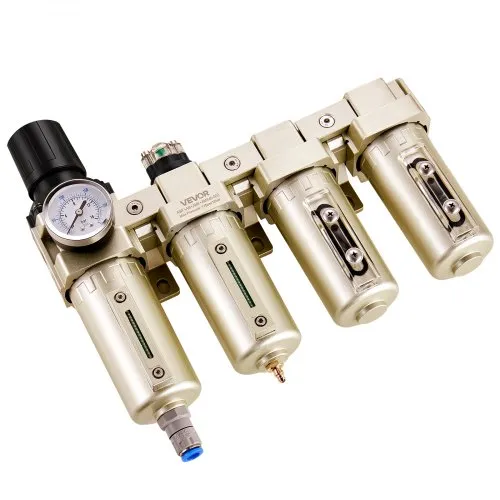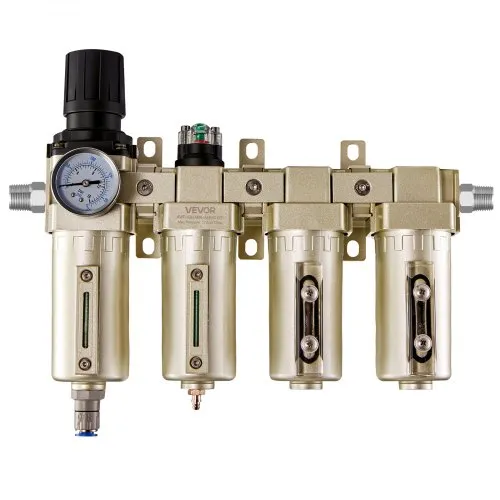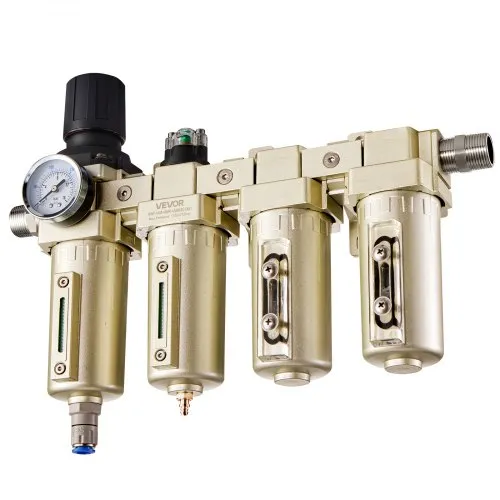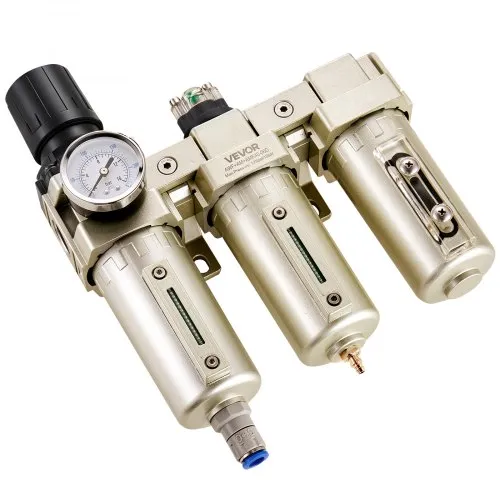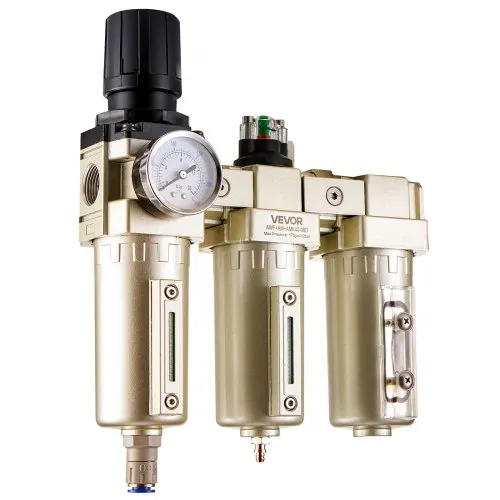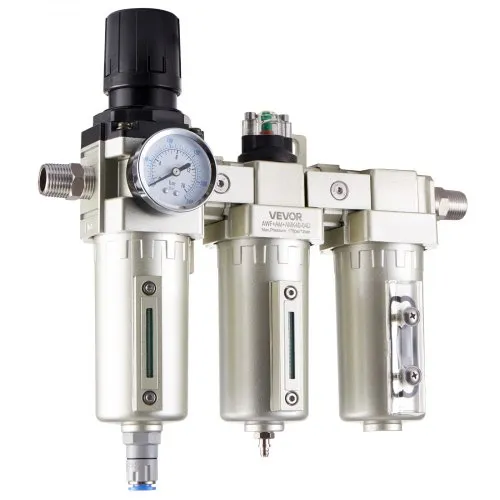

Explore VEVOR air compressor filter regulator systems designed to maintain stable air pressure while removing oil, moisture, and other contaminants. These air compressor filter regulator systems help keep pneumatic tools, spray equipment, and production lines safe by providing consistent airflow and efficient filtration. They range from 3/8" NPT semi-auto drain units to 3/4" NPT multi-stage desiccant systems that can handle up to 175 PSI.
Are you dealing with moisture buildup, unstable air pressure, or premature tool wear in your workshop? If compressed air isn't dry, clean, and properly controlled, tools wear out faster and finishes suffer. VEVOR air compressor filter regulators are small, robust units that combine pressure control and staged filtration. Air compressor filter regulator systems deliver reliable workshop and industrial performance, whether you need a simple air filter regulator for compressor setups or a multi-stage air compressor regulator with filter and desiccant dryer.
It's not just about the pressure in a compressed system; it's also about how well that pressure is controlled and how effectively contaminants are removed before they reach your tools.
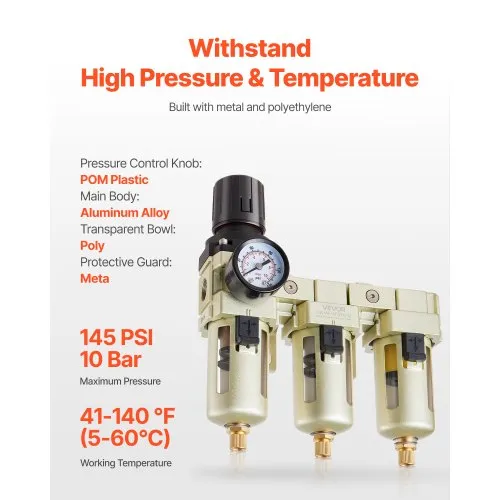
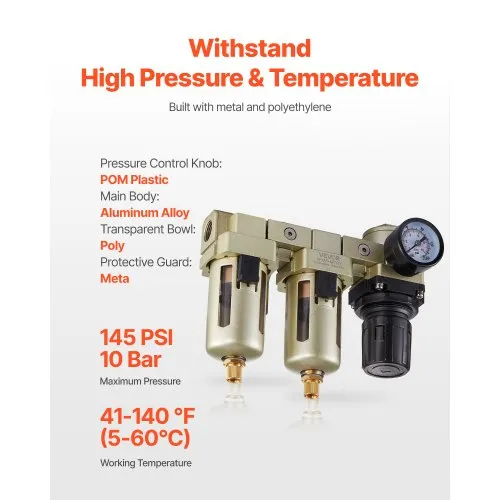
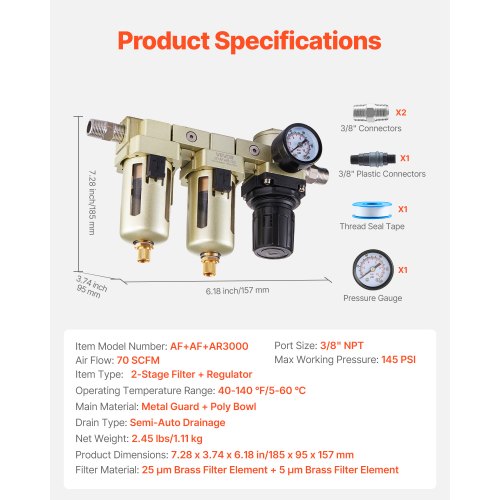
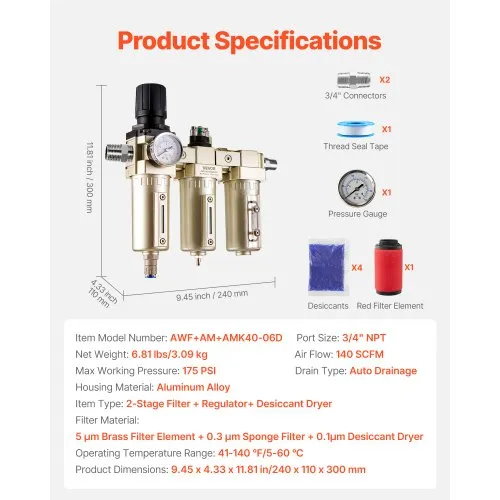
Every air compressor filter regulator is designed to operate within a specific pressure range. Depending on the configuration and port size, VEVOR models can typically handle working pressures up to 145 PSI or 175 PSI. A 145 PSI unit with 3/8" NPT fittings is suitable for light-duty workshops, tire inflation, and occasional use of pneumatic tools. These air compressor filter regulator systems maintain a steady outlet pressure and prevent water vapor from building up.
For tougher jobs like CNC systems, plasma cutters, and automotive paint booths, a 175 PSI air compressor air filter regulator has a more robust construction and can deliver higher airflow. The higher pressure ceiling ensures it works with industrial compressors that operate at high outputs.
Maximum rating is not as important as precision control. Users can fine-tune downstream pressure with adjustable knobs, which help protect sensitive equipment from pressure surges. Picking the right pressure-rated air compressor filter regulator stops seals from wearing out too soon, spray patterns from being unstable, and tools from not working as well as they should. To ensure the entire pneumatic network has safe, balanced airflow, the PSI capacity must match the compressor's output.
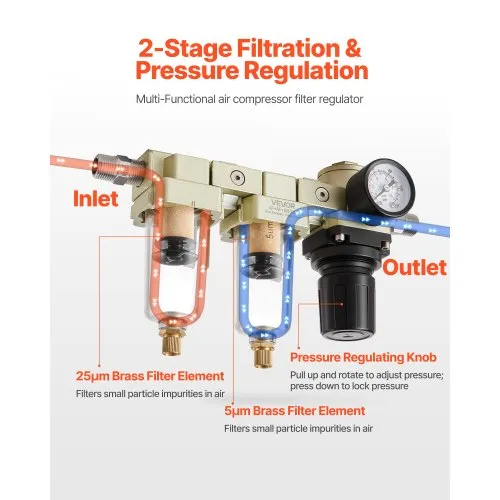
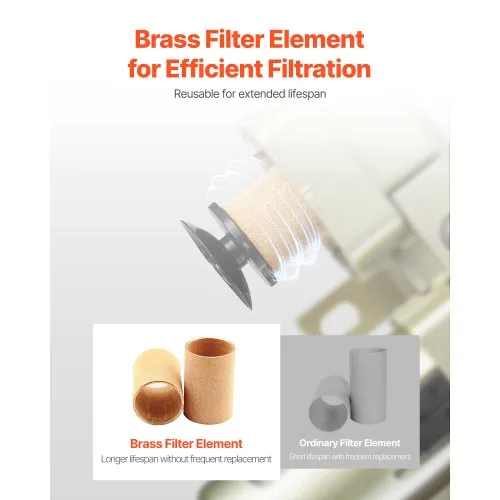
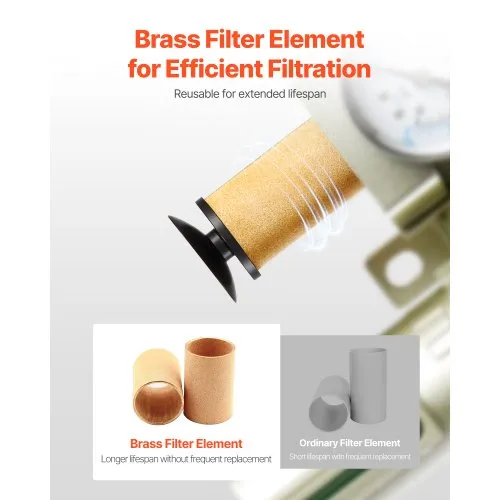
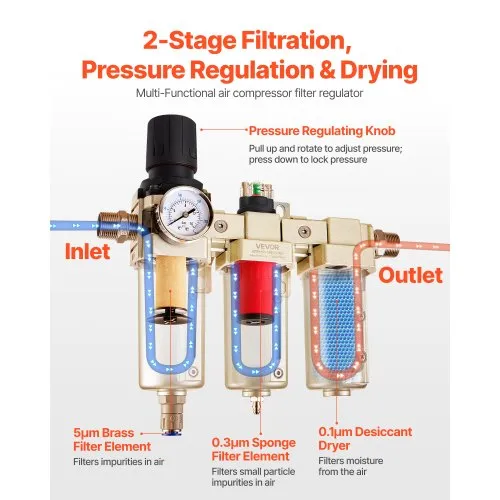
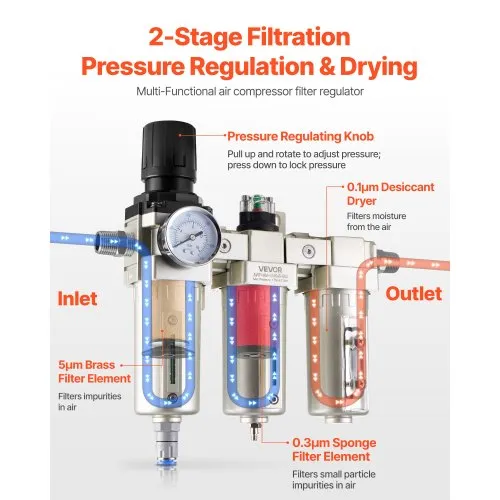
Not every filtration system performs as effectively as the others. Some entry-level air compressor filter and regulator units come with just one 5 μm brass filter element, which captures larger particles and moisture droplets. Dual-stage setups use both 25 μm and 5 μm filters, which work better at removing water and debris that has built up. This air compressor filter regulator level of protection is generally sufficient for most workshop tools such as nail guns, impact wrenches, and air ratchets.
Advanced systems do even more. Three- and four-stage assemblies use progressively finer elements, with nominal ratings as low as 0.3 μm and even 0.01 μm. These very fine filters remove oil aerosols and tiny particles that can harm paint jobs or sensitive pneumatic valves.
For air compressor filter regulator systems with desiccant drying, a high-performance air filter regulator adds an additional level of moisture control. Desiccant chambers absorb any remaining moisture, producing very low-moisture outlet air. Choosing the right micron rating ensures that your air compressor regulator with filter meets the quality requirements of your job, whether it's basic maintenance or precise coating work.
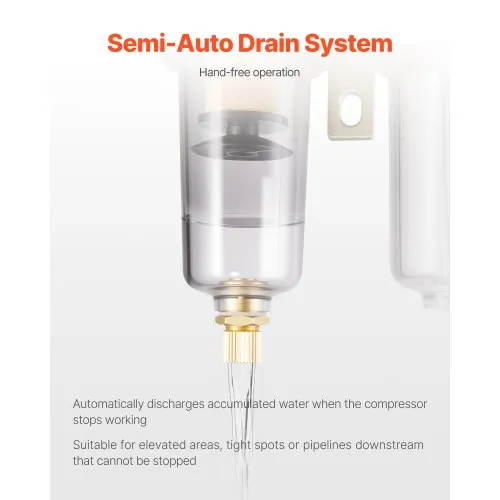
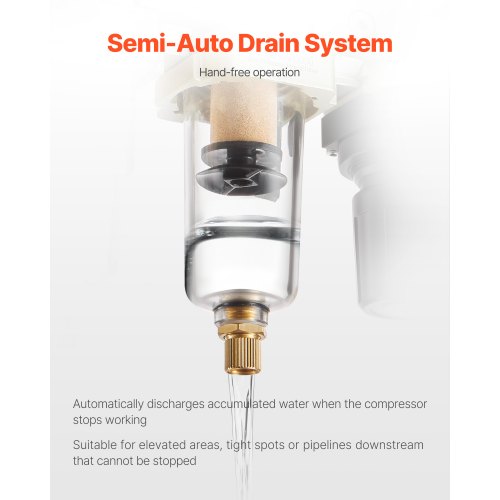
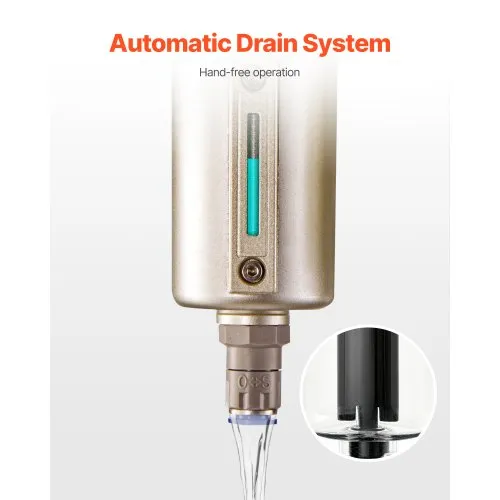
In compressed air systems, moisture will always build up. The difference is in how well it is managed. Many air compressor filter regulators have semi-automatic drain systems that release water when the pressure drops. Semi-auto drain systems work well in workshops where compressors are turned off every day. Air compressor filter regulators with semi-auto drains reliably remove collected moisture without manual operation. Auto-drain versions work all the time, letting water out without losing pressure. These are especially useful in places where compressors run for long periods of time or in noisy environments.
It depends on how the work flows. Semi-auto drains may be useful and cost-effective for people who only use them sometimes. Auto-drain consistency helps industrial operators reduce downtime and maintenance needs. A properly drained air compressor air filter regulator prevents rust inside and maintains airflow performance. Even the best filtration systems can break down if you don't pay attention to drainage systems. Managing moisture effectively directly extends tool life and maintains the air quality to standards.
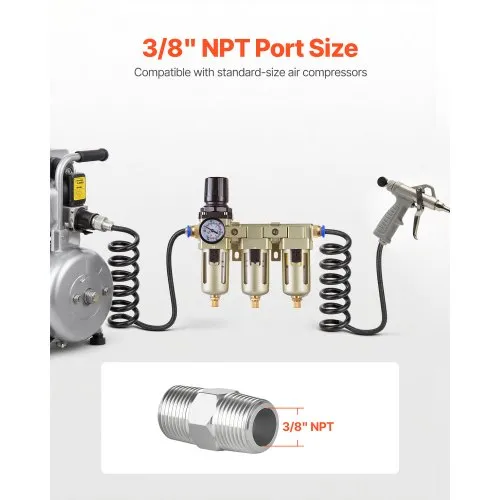
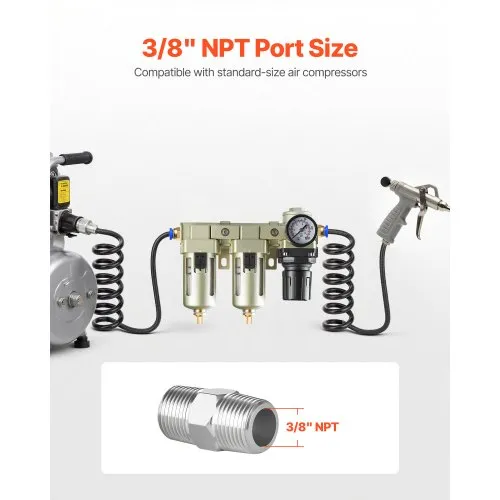
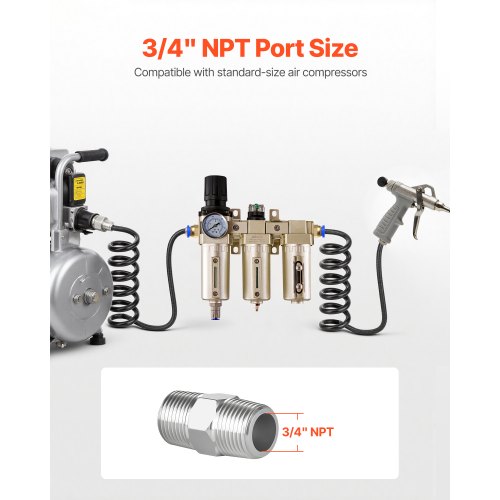
Not only does pressure affect flow rate, but so do the sizes of the inlet and outlet. Most VEVOR air compressor filter regulator systems have NPT ports in 3/8", 1/2", or 3/4" sizes. A 3/8" NPT air compressor filterregulator setup works with smaller compressors and lighter pneumatic tasks. Compact air compressor filter regulator units fit right into bench-mounted setups. 1/2" NPT systems can move more air, so they are good for multi-tool workstations or automotive service bays. For big jobs, 3/4" NPT models can handle more air without slowing down performance.
If you install a port that is too small for your compressor, it will slow down the tools and make them less efficient. On the other hand, using fittings that are too big on small systems might not help. If you want your air filter regulator for compressor applications to maintain a steady airflow, make sure the NPT size matches the compressor's CFM output.
After choosing the pressure range and filtration stages, the next step is to make sure they work well with your compressor setup and to learn about the features that will make your daily work easier. Compatibility and functional details are often what make something reliable over time.
To choose the correct filter regulator for your air compressor, make sure it works with both the compressor's output and the tools you plan to use. Please ensure you verify the CFM rating and port size of your compressor first. A 3/8" NPT unit is great for small garage compressors that power one nail gun or tire inflator. In places where there is a lot of demand, like auto body shops or fabrication bays, 1/2" or 3/4" NPT systems keep the airflow going without causing problems. When more than one tool is running at the same time, an air compressor air filter regulator must handle all the airflow. Fittings that are too small reduce volume, lowering efficiency and causing pressure drops at the ends of tools.
If pneumatic motors need lubrication, think about an FRL setup that adds lubrication after filtering and regulating. Pairing an air compressor filter and regulator with desiccant drying ensures the output is always stable and dry for tasks sensitive to moisture, like painting. When you match the right systems, an air filter regulator for compressor installations can go from a simple accessory to a key part of the system's performance.
The durability of the air compressor regulator with filter directly affects its performance over time. To withstand pressure and vibration changes, VEVOR air compressor filter regulators feature reinforced housings and corrosion‑resistant bowls. Polycarbonate bowls let you see the moisture collected, while aluminum alloy bowls are stronger in high-pressure situations. Drain systems also affect how well things work over time. When the pressure drops, semi-automatic drains let out moisture. They are well suited for compressors that start and stop daily. Automatic drain versions constantly remove condensation, making them ideal for industrial settings where equipment runs for extended periods.
Accessible pressure gauges let you calibrate downstream accurately, preventing tools from being damaged by excessive pressure. Replaceable filter elements make routine maintenance easier without requiring the disassembly of the entire assembly. A good air compressor filter regulator not only controls the air but also reduces downtime. Stable output, longer tool life, and consistent air quality in tough situations are all possible thanks to careful construction and a design that makes maintenance easy.
VEVOR offers air compressor filter regulators for a wide range of needs, from small 3/8" units to large 3/4" multi-stage systems with desiccant dryers and 175 PSI ratings. These systems are made for workshops, automotive shops, and factories. Air compressor filter regulators offer precise pressure control, staged filtration, and strong construction at reasonable prices. Explore VEVOR today to help keep your compressed air clean, stable, and ready to use.
Five microns of filtration is enough for most pneumatic tools. For painting or precision tool use, you might need multi-stage systems with 0.3 μm or 0.01 μm particle sizes. Finer filtration removes oil mist and tiny particles that can alter the appearance of surfaces.
Units with 145 PSI are good for light-duty jobs. 175 PSI systems can handle compressors with more power and industrial airflow needs. Choosing the right rating prevents pressure from rising too high and ensures stable downstream performance.
Desiccant drying makes the air much cleaner for jobs that require a dry environment, like painting or assembling electronics. It removes any leftover moisture that regular mechanical filters may miss.
It depends on how often you use it and how clean the air is, but checking it every few months makes sure the filter works well all the time. In areas with high moisture or heavy use, you may need to replace the elements more often.
Yes, as long as the airflow and port size meet the total CFM needs. For setups with more than one tool, pick bigger NPT sizes. When several pneumatic tools are running simultaneously, proper sizing prevents pressure from dropping.