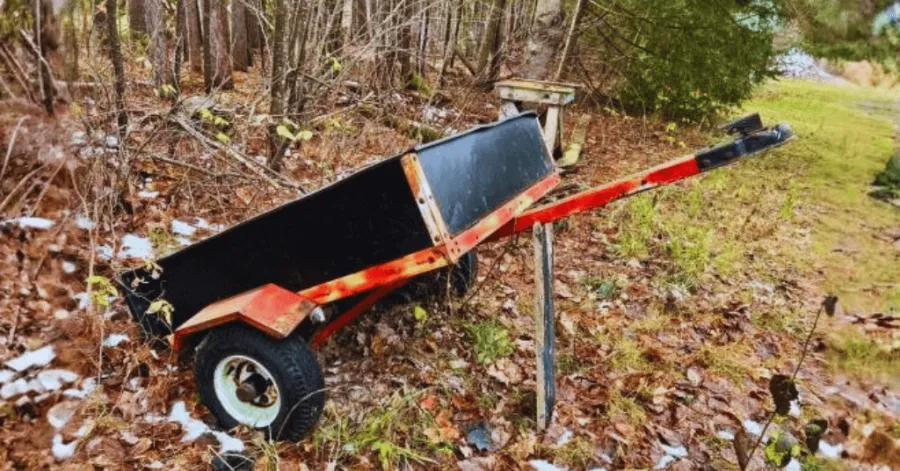
Imagine yourself scooping gravel out of your utility trailer with a shovel in hand. Now, add to it the backaches and fatigue from bending and lifting, making you wonder if there was an easier way. Well, UTV dump trailers are just the thing for you!
If you own a UTV or tractor and regularly haul materials around your space, you’ve probably wondered if owning a UTV dump trailer makes sense over the standard model. Now, the choice between the two affects not just your wallet, but also the time and physical effort you need to put in on every project. This blog will break down the real differences so you can make the right choice for your specific needs.
Differences between Dump Trailers and Utility Trailers
The key difference between the UTV trailer and a regular utility trailer is in unloading. Where a regular utility trailer requires manual labour, a dump trailer uses a mechanical tilting system to ease things up for you. With hydraulic systems fitted to the trailer, you can unload it with comparatively less effort.
Unloading Mechanism
Standard utility trailers have fixed loading beds. Whether you’re hauling firewood, gravel, or yard debris, everything stays in its location until it is moved manually. This works fine for lighter loads or items, like equipment or furniture.
UTV Dump trailers are equipped with hydraulic lifting mechanisms and manual rack lifting systems, depending on the model you choose. So, with a button or by rotating a handle, you can easily lift the trailer bed and unload the contents in mere seconds. This saves time and manual effort.
Load Capacity Considerations
A majority of UTV dump trailers can handle between 750 and 2000 lbs of load. Common models sit around the 1500 lbs mark with 15cu ft of space. Heavy-duty versions designed for bigger tractors can manage up to 3000 lbs as well.
Regular utility trailers, on the other hand, can offer similar weight ratings, but the real question is what you’re hauling. Dense materials like wet soil or gravel can be backbreaking to shovel out. This is where the mechanical dump function pays off.
Price Reality
Dump trailers cost 2-3 times more than regular utility models. A basic 5*8 utility trailer might cost around $200-$600, while the dump version of a similar size can be 2 times this amount.
The additional cost is due to the tilting/lifting mechanism, reinforced frame, and dump-specific engineering. The question is whether the extra cost you pay justifies the labor savings or not.
Construction and Durability
UTV dump trailers need strong frames to handle the stress from repeated tilting while loaded. Look for reinforced steel construction with thick pipe walls and heavy-gauge beds. The pivot points and lift mechanisms add complexity but also potential maintenance costs later on.
Utility trailers are simpler and have fewer moving parts. This means fewer parts wear down, and minimal maintenance is needed. These trailers are lighter and help if your UTV sits on the smaller side.
When does a UTV Dump Trailer Make Sense?
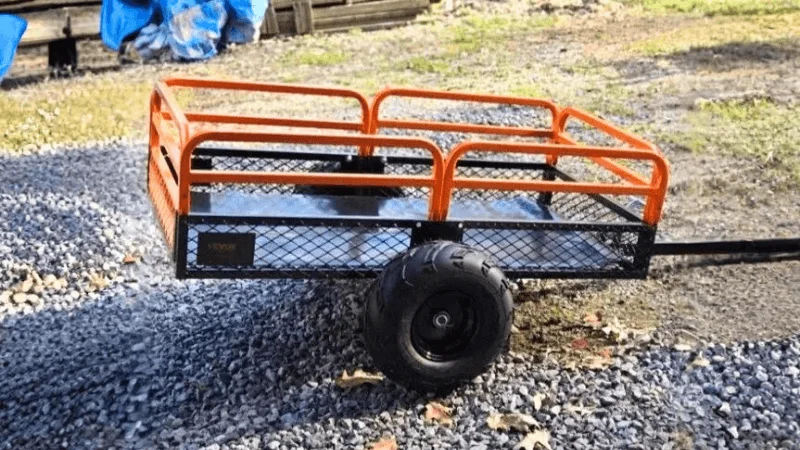
Dumping won’t be for everyone, but some situations make it practically essential.
Landscaping and Property Maintenance
A dump trailer is invaluable if you’re regularly transferring mulch, top soil, compost or gravel. But landscapers who spend all day on properties already understand the math. It can take 15 to 20 minutes just to shovel a single cubic yard of damp soil. You’re done in 30 seconds with a dump bed.
This is equally true when clearing brush, downed limbs and yard waste. Just dump it in and take it to the burn pile or compost area, and tip it out easily.
Farm and Ranch Operations
Ranchers look after all kinds of work, from feed bags to fence posts to manure. All kinds of other jobs are made easier by a UTV dump trailer, and it can also be used for faster cleanup. That’s because if you’re feeding animals in several paddocks, having the ability to dump hay or grain at each location rapidly saves time during your daily circuit.
Construction and Heavy Materials
Anyone who has used sand, gravel, quickcrete or stone can attest to how difficult these materials can be to move. It could be 30 to 40 minutes of shovelling a full utility trailer load of gravel. That load can also be emptied in less than a minute, and get you back to working on what’s important.
Age and Physical Limitations
This is more consequential than most people realise. Manual unloading of cargo is more than just physical labour. For some people, such as those with chronic back pain, arthritis, or who are just getting older, the physical strain can add up considerably. Sometimes, people buy dumb trailers because they do not want to do the labour.
However, companies such as VEVOR understand this need and accommodate it to make it easier for people to buy their trailers. VEVOR designed their dump trailers with dual-mode dumping mechanisms. You can use a hand or a foot pedal. This provides options to users and is more flexible than forcing people to use one mode.
When do Regular Utility Trailers Excel?
Dump trailers are not always the best choice for every job, and in some cases, utility trailers are better.
Transporting Equipment and Tools
Loading a riding mower, ATV, or other wheeled equipment onto a flat utility bed is a lot easier. At a lower height, loading is simpler, and you also don’t want items rolling around on an angled surface.
Utility trailers also often have removable side rails or have the ability to be converted into flatbeds. This is helpful when you need to haul some lumber, PVC pipe, or really anything longer than the trailer bed itself.
Budget-Conscious Buyers
If your hauling needs are light to moderate and you don’t mind doing the physical work, saving money is important. The $1,500 to $2,000 you save on a utility trailer could buy a lot of other equipment or materials for your property.
Lighter UTV Models
Not all UTVs can pull heavy trailers effectively. If you have a 500cc model or smaller, the added weight of a dump trailer’s frame and mechanism may exceed your machine’s limits. A basic utility trailer makes it easier to handle.
Hauling Delicate Items
Sometimes you need control when unloading. Garden plants, seed bags, or anything else that needs careful placement don’t work well with a dump function. You want to lift items out one by one, without everything sliding into a pile.
Most Useful Features Compared
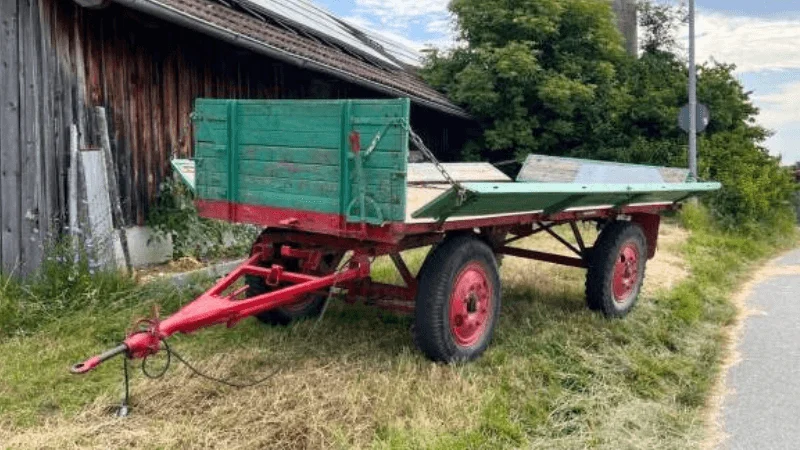
When you make your choice, pay attention to the features that will impact your daily use.
Bed Size and Volume
Most UTV trailers are 4×6 feet to 5×8 feet. That 15 cubic feet of space comes up often because it balances capacity and UTV fit. Smaller beds around 12 cubic feet are suitable for light-duty tasks, while models with over 20 cubic feet require more powerful tow vehicles.
Tire and Suspension Quality
Pneumatic tyres absorb shock better than solid tyres. Choose tyres that are at least 16 inches in diameter and have good tread. Walking beam or independent suspension systems work better on rough terrain. They keep the trailer stable when you cross ruts or rocky ground.
Hitch Compatibility
Universal pin hitches fit most UTVs, ATVs, and lawn tractors. Some dump trailers require ball hitches, which need a 2-inch receiver. Ensure that whatever you buy matches your equipment without the need for adapters.
Removable Side Rails
This feature links various trailer types. Removable sides let you transport tall items or long lumber. You can put them back on when you need the box setup. It’s like having two trailers in one.
Build Material and Coating
Steel is still the standard, but the gauge matters. Heavier 12-14 gauge steel resists bending and lasts longer than lighter 16-18 gauge options. Powder coating works better than regular paint for preventing rust, especially if your trailer is kept outside.
Making a Decision

Here’s how to think about your specific situation. Answer these questions honestly:
How often do you move loose, heavy materials like soil, gravel, or debris?
Does unloading by hand cause physical discomfort or take more than 15 minutes?
Can your budget handle the cost, which is 2-3 times higher, for the dumping capability?
Will you use the trailer often enough to make the extra expense worthwhile?
If you answered “frequently” to question 1 and “yes” to question 2, a dump trailer probably makes sense for you. If you have a tight budget (question 3) but still need the functionality, look for more affordable options that balance features and price.
VEVOR, for example, offers dump trailers that work well and are reasonably priced. Their models typically have reinforced construction, dual dumping mechanisms, and pneumatic tyres. These features are valuable, and they don’t come with high prices.
If you answered “occasionally” or “no” to questions 1 and 2, save your money. A good utility trailer can get the job done.
FAQs
Can I add a dumping mechanism to my existing utility trailer?
Some aftermarket dump kits are available. However, installing them requires welding and engineering skills. The cost can approach that of a purpose-built dump trailer. You might also compromise the frame’s integrity. It makes more sense to start with a dump trailer.
Do dump trailers require special maintenance?
Basic care includes checking hydraulic fluid levels if hydraulic, lubricating pivot points, and inspecting the lift mechanism for wear. These tasks only take a few minutes every few months. Manual dump trailers require less attention.
Are utility trailers better for steep terrain?
Not necessarily. Both types manage slopes based on their hitch design and suspension. Look for pivoting hitches that let the trailer move independently from your UTV. This is more important than whether you pick a dump trailer or a utility trailer.
Can I use a UTV dump trailer for highway travel?
Most UTV dump trailers are designed for off-road use only. They lack the needed lighting, brakes, and DOT compliance for highway speeds. If you want a road-legal option, say so while shopping and expect higher prices.
The Final Word
Choosing between a UTV dump trailer and a regular utility trailer depends on your work habits and budget. Dump trailers make unloading heavy materials easier. They can turn a 30-minute shovelling session into a 30-second unload. This convenience costs two to three times more upfront, but it saves you time and effort if you frequently transport soil, gravel, debris, or bulk materials.
Utility trailers are flexible, budget-friendly, and simple to maintain. They work well for moving equipment, light loads, or when you need to unload carefully. The key is to pick a trailer that matches your actual needs instead of getting features you won’t use. Consider your physical abilities, how frequently you will be hauling, your budget, and the materials you will be handling. Your trailer should help make your work easier, not create more challenges.