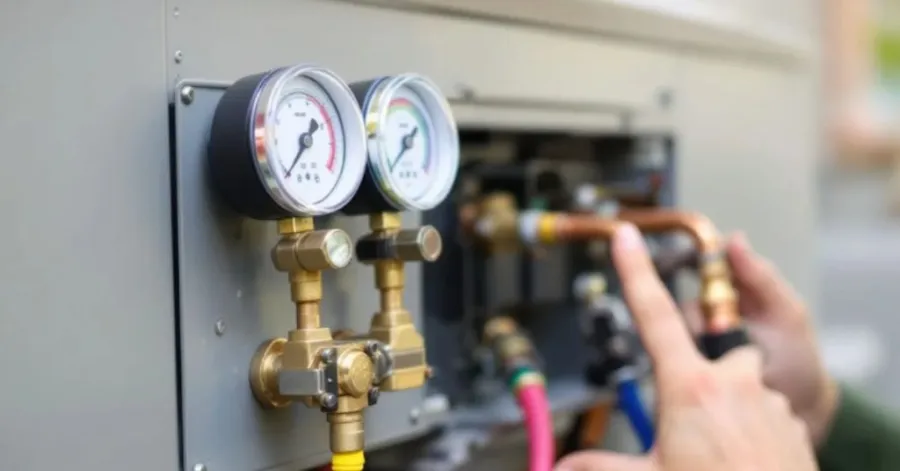
Refrigerant is essential to air conditioning systems to achieve the appropriate cooling action, and thus proper handling and charging are of paramount importance to technicians. Learning how to charge refrigerants and service air conditioning systems can help ensure a safe, efficient, and reliable system in the long run. Regardless of the residential unit or commercial unit, it is crucial to understand the refrigerant cycle and how to control the level of pressure. This guide covers all the fundamental topics through to the step-by-step procedures of service, such as tools, safety measures, and general system troubles. It also discusses proper use of an AC recovery machine during servicing and practical techniques applicable to HVAC work to ensure stable cooling and efficient energy use.
Signs That Your Air Conditioner Needs Refrigerant Charging
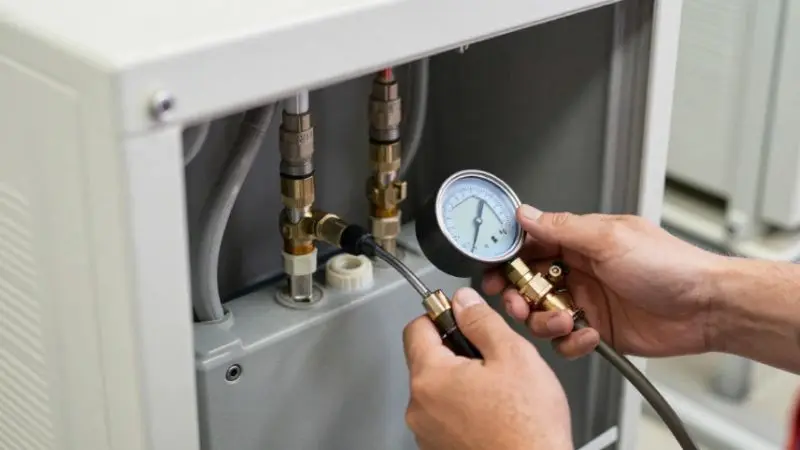
Identifying whether the system requires refrigerant is very important before commencing any air conditioning service and refrigerant charging. Low levels of gas or leakage problems are usually associated with many cooling problems. Early recognition of symptoms will prevent significant damage and enhance the efficiency of the system.
This knowledge of these signs can also help in using appropriate refrigerant charging procedures at the appropriate time. This will guarantee improved performance and prevent needless repair expenses.
Weak Cooling Or Warm Air Output
Weak cooling is one of the most frequent and oldest indications of low refrigerant. In case the system lacks sufficient refrigerant, the system will not be able to uptake heat adequately in the indoor air. Consequently, the air that is expelled through vents might be warmer or even colder.
This is normally a gradual problem, and therefore, users might not realize it at the same time. In the long term, rooms will require more time to cool, and the air conditioner will be running without achieving the desired temperature. This is a definite sign that this system may need refrigerant charging of residential air conditioners or even refrigerant charging of commercial HVAC systems, depending upon the type of use.
In most situations, this symptom is directly related to the necessity of a step-by-step procedure of refrigerant charging to ensure the correct cooling performance and the balance of the system.
Ice Formation On Evaporator Coils
Another good indication that the amount of refrigerant is not right is the presence of ice on evaporator coils. With low refrigerant, the pressure inside the system reduces, hence leading to a lower coil temperature than normal. This causes freezing of moisture on the coils.
This accumulation of ice blocks airflow and decreases the cooling ability of the system. Because of this, the AC can cease cooling or even turn off. The ice can melt in certain situations and lead to the leakage of water in the room.
These conditions usually allude to the necessity of how to charge refrigerant in an air conditioning system properly, as well as proper inspection prior to implementing refrigerant charging and service procedures for air conditioning.
Unusual Energy Consumption
The rise in electricity bills is also a sudden change that may be a result of refrigerant-related problems. In case of low refrigerant content, the AC system must exert itself more and take a longer duration to get the same cooling effect. This adds to the total energy consumption.
The compressor will operate in longer cycles, which not only consumes more electricity but also causes additional strain on system components. This may shorten the lifespan of the unit with time and cause frequent maintenance issues.
This scenario explains why it is important to observe appropriate procedures when charging a refrigerant to regain system efficiency. Ongoing balancing using a step-by-step refrigerant charging process helps restore normal energy consumption levels.
Hissing Or Leakage Sounds
The presence of abnormal noises, like hissing or bubbling of the AC unit, can be an indication of refrigerant leakage. These noises tend to happen when gas leaks out of the tiny fissures or faulty pipes within the system.
Any leakage of a refrigerant compromises the performance of the cooling system and may lead to the system running in unsafe conditions. Otherwise, it can result in the loss of cooling and costly repairs.
This is critical to identify early enough, prior to the application of refrigerant charging and service procedure to air conditioning. It should be repaired by first properly diagnosing and sealing, and then charging with proper refrigerant to residential air conditioners or commercial systems to get it back to normal functioning.
Essential Tools And Equipment For Refrigerant Charging
Prior to undertaking any refrigerant charging/service operation on air conditioning, the tools needed to undertake the job safely and correctly must be understood. Adequate equipment is necessary to make sure the system is charged properly and assists in keeping the cooling system efficient.
The correct tools are also useful in promoting the right refrigerant charging procedures, thus eliminating chances of making mistakes during maintenance. Before starting the process, an AC recovery machine is used to safely recover and store the existing refrigerant from the system. All of the tools play a particular role in ensuring a competent step-by-step refrigerant charging process.
@truckintoby Replying to @Toneloke Stop wasting time on slow, unreliable recovery machines! 🚧 The VEVOR 1 HP Dual Cylinder AC Recovery Machine is built for HVAC pros who demand power, speed, and reliability. With high-pressure protection, dual-cylinder design, and fast recovery speed, it’s perfect for car AC repair, HVAC service, and refrigerant recycling. Get the job done FASTER, SAFER, and SMARTER. ⚡.. #HVACTools #ACRecovery #VevorPro #WorkSmarter #TikTokShopLaborDaySale @Vevor_US
♬ original sound – TruckinToby
Manifold Gauge Set
One of the most significant tools that is employed in refrigerant charging work is a manifold gauge set. It assists the technicians in gauging system pressure on the high-pressure and low-pressure sides of the air conditioning system. This reading is vital in knowing the performance of the well-running system.
Technicians are able to measure the flow of refrigerant and indicate whether an imbalance has occurred by connecting the gauges to service ports. This enables better adjustment during the charging process. It is particularly handy when studying how to fill a refrigerant in an air conditioning system since the pressure measurements are used as a guideline throughout the whole procedure.
In HVAC services, a manifold gauge set is typically utilized in refrigerant charging of residential air conditioners as well as refrigerant charging of commercial HVAC systems, and is a universal tool in HVAC service.
Refrigerant Cylinder
The storage and supply of refrigerant gas is achieved in a refrigerant cylinder. These cylinders are available in various types with regard to the refrigerant, e.g., R22, R410A, or R32. All types need to be treated with caution as they work under high pressure.
Safe handling is very important when working with refrigerant cylinders. They must never be laid flat and must always be kept in a cool place, and should never be subjected to direct heat. Poor handling may cause safety hazards or leakage of gas.
Learning about types of cylinders and safety is a major aspect of air conditioning service and guides the practices of refrigerant charging. It also guarantees the easy process of refrigerant filling and service of air conditioning without being dangerous.
Vacuum Pump
The vacuum pump is used to take out air, moisture, and unnecessary gases in the air conditioning system, and then refrigerant charging commences. This is an important step since moisture in the system may lead to freezing, corrosion, and performance problems.
The vacuum procedure maintains the cleanliness of the system, and it is prepared to be filled with refrigerant accurately. It assists in the establishment of a stable internal environment in which the refrigerant can be used effectively.
A vacuum pump is a necessary component of an appropriate procedure of refrigerant charging since the basic performance of the system directly depends on it. It is constantly done prior to any step-by-step process of charging refrigerant to guarantee long-term reliability.
Thermometer And Leak Detector
The temperature of the air at various points in the system is measured using a thermometer. It assists the technicians in establishing whether the cooling output is as per the performance expectations. Proper temperature measurements are valuable in regulating the levels of refrigerants appropriately.
A leak detector, on the other hand, is used to discover refrigerant leakages in the pipes, joints, or coils. Even minor leaks can reduce the system’s effectiveness and lead to its long-term failure if not repaired in time.
The two instruments are critical to ensuring safety and precision during the charging and servicing of refrigerant in air conditioning. They also favor correct diagnosis prior to the use of refrigerant charging of either residential air conditioners or commercial systems.
Refrigerant Charging And Service Procedures For Air Conditioning Step-By-Step
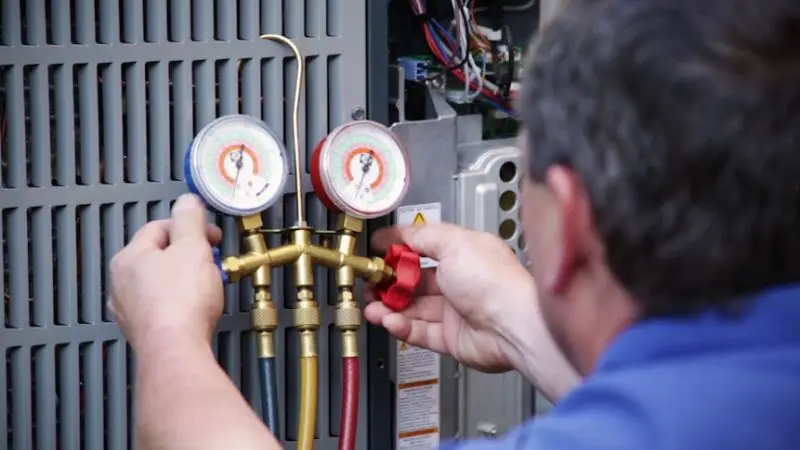
Any refrigerant charging and service procedure of air conditioning should be preceded by a systematic process before beginning to perform any of the procedures. The step approach will provide safety, precision, and consistent cooling. All steps of the process are aimed at preparing, testing, and charging the system adequately.
Adhering to a proper procedure is also used to ensure technicians use appropriate techniques of charging refrigerants to avoid errors. This enhances efficiency and minimizes the risk of system failure or loss of refrigerant.
Step 1 – Inspect The Air Conditioning System
The initial one is the thorough check-up of the air conditioning system. These involve inspection of indoor and outdoor units and any visible signs of damage, oil stains, or refrigerant leakage. It should detect any kind of physical problem before going any further.
An adequate checkup helps ensure the system is safe to charge. It also avoids loss of refrigerant upon filling. This is required during refrigerant charging of air conditioners in the house and refrigerant charging of commercial HVAC systems because unnoticed damage may impact the total performance.
This preliminary step is an important component of a step-wise refrigerant charging process, as all the faults will be rectified before proceeding.
Step 2 – Connect Manifold Gauges Properly
Upon inspection, the manifold gauge set is attached to the system. The blue hose is attached to the low-pressure side, and the red hose is connected to the high-pressure side. Yellow hose is normally attached to the refrigerant cylinder or vacuum pump.
A correct connection is highly valued, as improper fitting may destroy the system or provide inaccurate pressure measurements. Sealing will guarantee proper monitoring throughout the charging process.
This is an important stage of the process of learning how to fill a refrigerant in an air conditioning system, since pressure measurements guide the technician in the process.
Step 3 – Perform Vacuuming Of The System
The process of vacuuming is carried out to get rid of air, moisture, and other undesired gases in the system. This is connected to a vacuum pump, which is pumped until the desired vacuum is achieved. This forms a clean internal environment.
Drying is also necessary since moisture may freeze up in the system and inhibit the circulation of refrigerant. The system may also decrease cooling efficiency and cause an imbalance in pressure due to air in the system.
This is one of the essential stages of the correct refrigerant charging process, which is necessary to make sure that the system is completely ready before beginning to fill it with refrigerant.
Step 4 – Check For Leaks Before Charging
After vacuuming, a test of pressure hold is conducted to test the system to see whether it has any leakages. The pressure is monitored over time to ensure stability.
A fall in pressure means that there is a leak, which has to be fixed before moving on. Only repeated failure and performance problems will be generated when refrigerant is charged into a leaking system.
This measure is to ensure safe refrigerant charging and service processes for air conditioning, particularly those systems that demand long-term service.
Step 5 – Start Refrigerant Charging Process
Once the system is checked to be leak-free, the process of refrigerant charging commences. The process of adding refrigerant may be performed either with the weight or pressure method, depending on the needs of a system and the specifications of manufacturers.
The charging should be carried out gradually and cautiously to prevent the overcharging or undercharging of the system. To achieve high performance in cooling, it is necessary to have a proper balance. During this stage, an AC recovery machine is used beforehand to safely recover and store any remaining refrigerant before the charging process begins.
This is the main step of the step-by-step refrigerant charging process, in which precision is a direct influence on system efficiency and stability.
Step 6 – Monitor Operating Pressure And Temperature
System pressure and temperature have to be constantly measured with gauges and thermometers during charging. These readings are useful in avoiding excess or insufficient amounts of refrigerant in the system.
When pressure or temperature measurements are not within the recommended range, then corrections should be made right away. This will make the system run in safe and efficient conditions.
This is necessary in both refrigerant charging of residential air conditioners and refrigerant charging of commercial HVAC systems because performance is affected by the balance.
Step 7 – Disconnect Tools And Finalize System Setup
After obtaining the right amount of refrigerant, any equipment, such as manifold gauges and hoses, is disconnected very carefully. Service valves are appropriately closed to avoid leakage.
Testing is then done to ascertain that the system is stable in terms of cooling performance. Final tests are done to ensure that there is no pressure loss and all is functioning as intended.
This is the last process that completes the air conditioning service and refrigerant charging guide, making sure that the system is well prepared to operate normally.
Safety Precautions During Refrigerant Charging
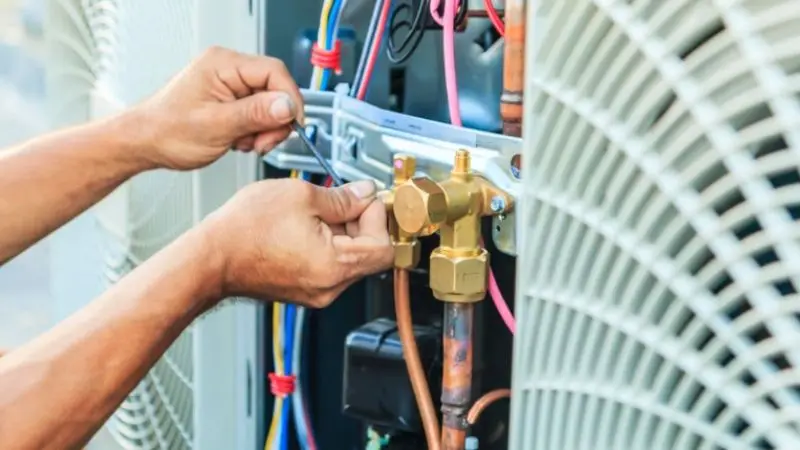
Any air conditioning refrigerant charging and serving procedures necessitate safety as a very important aspect. A minor error in the course of handling or charging can impact the system and pose a health or environmental risk. This is the reason why technicians should observe appropriate rules of safety during the process.
A careful approach also favors the proper techniques of charging refrigerant so that the technician and the system are not put in danger. The practice of steps to follow in order to use any step-by-step procedure of refrigerant charging in actual working conditions will need some understanding of safety measures before putting the steps into practice.
Personal Protective Equipment (PPE)
When handling refrigerants, personal protective equipment (PPE) is needed. The technicians need to be equipped with gloves that will cover their hands in case they come into direct contact with the refrigerant gas or very cold surfaces. Goggles are also required to guard the eyes against any leaks or splashes when charging or disconnecting.
Correct and protective attire minimizes the risk of injury and ensures the safe operation of equipment. The gases used in refrigeration may produce frostbite or irritation when they come into direct contact with the skin, and thus, safety precautions should not be disregarded at all.
Wearing PPE is a fundamental requirement when filling refrigerant in residential air conditioners and commercial HVAC systems; hence, it is standard practice in every HVAC maintenance job.
Avoiding Overcharging Or Undercharging
Balancing the appropriate level of refrigerant is highly relevant to the systems. The overcharging may create pressure within the system, which might cause damage to the compressor and a lack of efficiency. Conversely, undercharging results in poor cooling and increased operating costs.
These two conditions influence the energy use and system reliability. It is the reason why proper measurement during the charging process is needed to ensure equilibrium and stable functioning.
This necessitates a step-by-step charging of refrigerant, which is important in order to add the right quantity of refrigerant. Balance is an important component of the process of charging refrigerant in an air conditioning system safely and efficiently.
Environmental Safety Guidelines
Refrigerants should be handled carefully, as they may harm the environment if released improperly. Evacuation of gases of refrigerant causes environmental pollution and could be against the safety rules in most areas.
Proper sealing of systems should be maintained by technicians during charging and after charging. Any refrigerant removed should be reclaimed with the help of approved equipment rather than being discharged into the air. Safe storage and disposal are also concerns.
Adhering to the environmental guidelines is a significant portion of the air conditioning service and refrigerant charging guide, as a responsible way of working. It also aids in the safe implementation of refrigerant filling and service operations of air conditioning and reduces environmental impact.
Conclusion
The correct use of refrigerant is vital in ensuring efficient and reliable cooling performance of the air conditioning. Through a well-defined step-by-step process of refrigerant filling, technicians can prevent damage to the systems, decrease energy usage, and guarantee the uniform cooling outcomes. From inspection to final testing, each step is significant to system health. The knowledge on charging refrigerant in an air conditioning system also aids in avoiding the common problems such as overcharging, undercharging, or leakages. Both residential and commercial HVAC systems can be enhanced by regular maintenance and proper service practices. Finally, safe and precise refrigerant charging guarantees the sustainability of performance, environmental safety, and enhanced comfort in any form of cooling systems.
FAQs
What is refrigerant charging in air conditioning?
Refrigerant charging or topping up of refrigerant in an AC system. It maintains correct cooling performance, equal pressure levels, and effective heat transfer to operate the system smoothly.
What is the importance of refrigerant in AC systems?
Refrigerant takes away the heat of the indoor air and expels it to the outside. This cycle brings about cooling. The system is unable to keep the right temperature and energy efficiency without the right levels of refrigerant.
Which are typical symptoms of low refrigerant?
Signs include weak cooling, warm air, ice on coils and increased electricity bills. These show that the system might require checking and adequate filling of refrigerants.
Which refrigerant charging tools do you use?
Manifold gauges, vacuum pumps, refrigerant cylinders, thermometers and leak detectors are used by technicians. These tools assist in guaranteeing the security, proper and effective charging of the AC system.
Can refrigerant charging be performed without training?
No, it takes good training and safety knowledge. Improper handling might harm the system, leak or become health and environmental hazards.