A clean lawn will always appear fresher, healthier, and better maintained, and the right tools will make the task much easier. A push lawn sweeper is an easy and efficient way to gather leaves, grass clippings, and light debris without much strain. When in the right place, it will save time and improve the ranking. Learning about the correct configuration, sweeping method, and maintenance process will contribute to overall performance. Whether it’s dry leaves, rough terrain, or light yard waste, it is always best to learn the proper technique to achieve better results. This guide illustrates everything in a clear, practical manner to help you use your sweeper confidently.
- How to Prepare Your Lawn Sweeper Before You Start Cleaning
- Step-by-Step Guide to Using a Push Lawn Sweeper for Easy Lawn Cleaning
- Best Practices for Maximum Leaf Collection with a Lawn Sweeper
- Common Mistakes to Avoid When Using a Lawn Sweeper
- Maintenance Tips to Keep Your Lawn Sweeper in Good Condition After Use
How to Prepare Your Lawn Sweeper Before You Start Cleaning
It is highly desirable to have a proper setup before you begin using your lawn sweeper in order to clean the area with ease. The machine will move freely, collect leaves more efficiently, and miss no spots when everything is set up and configured accordingly. It also makes it easy and wastes less time when washing up your yard. This is particularly useful when you are getting ready to use a push lawn sweeper for leaves, as proper preparation can make the entire job much easier to manage.
How to Set the Brush Height for Proper Leaf Pickup
Getting the correct height of the brush is crucial for effective cleaning. The brushes must only touch the ground to be able to remove the leaves without damaging the grass. When the brushes are not adjusted high enough, they can cut into the grass, making them more difficult to push. When they are excessive, numerous leaves will be abandoned. This is especially true when a manual yard sweeper is used to clear leaves and debris, as lawns have varying surface conditions.
Short grasses tend to require a higher setting, whereas thick leaf cover can require a lower setting to pick up better. In the case of a push lawn sweeper, it is always advisable to have a test area first. This will assist you in setting it to the correct height and allows you to clean the whole yard without having to go over and over it.
How to Check and Prepare the Collection Bag Before Use
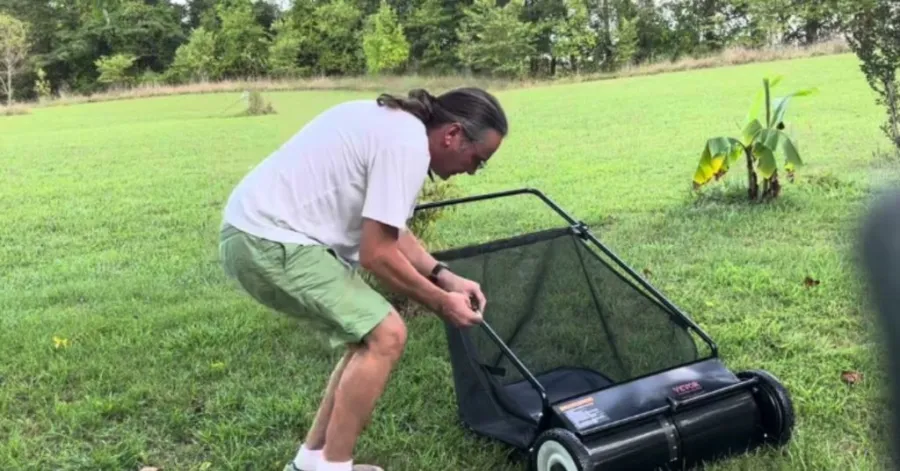
Always check your collection bag before you begin your work to ensure it is in good condition. When cleaning, the bag should be empty to maximize the number of leaves it can hold. A well-fastened, clean bag will help the machine perform better and prevent the leaves from falling out as you push it. This can be particularly helpful when a push lawn sweeper is used to pick up sticks and leaves, as it can handle various types of debris.
The sweeper is also kept steady by a tightly secured bag and is thus easy to move about the lawn. Regardless of the size of the garden you have to work with, be it a small or a large yard, this is a simple step that will help you enhance performance and make the cleaning process smoother and more efficient.
Step-by-Step Guide to Using a Push Lawn Sweeper for Easy Lawn Cleaning
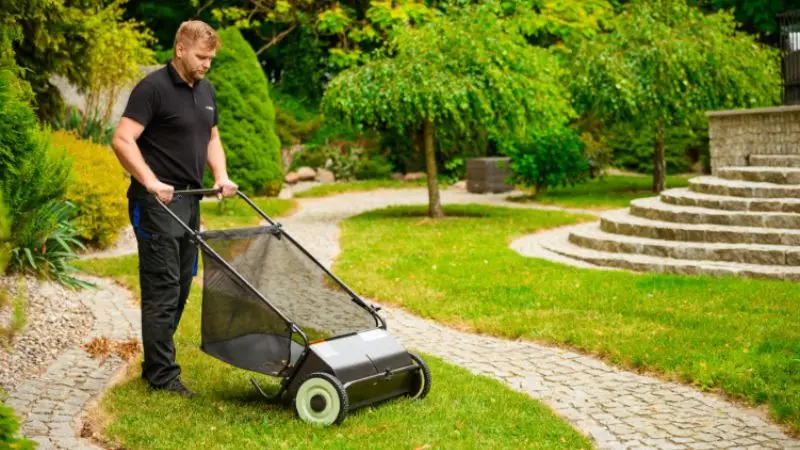
The proper use of a lawn sweeper can make a huge difference in the appearance of your yard. By taking the correct action, the machine gathers leaves in a more efficient way and saves you the trouble of having to go through the same section over and over. It also helps you work at a slower pace, making the job less exhausting. This guide will help you understand each step you will perform to get the best out of your push lawn sweeper on various types of lawns.
Step 1: Start Sweeping in Straight Lines for Even Coverage
Start by moving the lawn sweeper in long, straight lines in your yard. This is the best for even coverage and not missing patches of leaves. Move very slowly and steadily to allow the brushes time to collect debris appropriately. Do not take sharp turns or make random movements, as it may leave uneven outcomes.
A linear solution is particularly beneficial when sweeping leaves and debris with a manual lawn sweeper because the equipment can operate at maximum capacity. This is also a good step to follow when using a push lawn sweeper to clean up the leaves, so that you can be organized and eliminate duplicate errors towards the end of the task. The idea is to mow the lawn in clean, organized lines so that each part of the lawn is well swept without extra effort or multiple movements.
Step 2: Overlap Each Pass for Better Leaf Collection
When you have finished your first line, pass the next one by slightly overlapping the first line at the edge. This simple measure will be used to ensure that no leaves are left between rows. Even a slight opening may leave debris behind, particularly in thick or dry leaf conditions. The overlap also helps the sweeper cover more of everything and minimizes the repetitive effort of covering the same area.
This method comes into play particularly where a push lawn sweeper that gathers sticks and leaves is used, as larger pieces of debris may be easily missed when the sweeps are too far in between. It also enhances overall efficiency and provides your lawn with a more refined look. With constant overlap, you form a natural cleaning pattern that is effective over both small and large yards.
Step 3: Adjust Your Technique for Different Lawn Surfaces
Different lawns require minor adjustments for your sweeper. You can use steady speed and normal brush contact on dry and smooth grass to clean the grass smoothly. When on uneven surfaces, reduce speed slightly to keep the brushes in constant contact with the surface and avoid skipping low spots. On light slopes, push gently and maintain balance to avoid losing contact and the sweeper slipping. This is particularly significant when using a push lawn sweeper on rough terrain, where stability is more important.
Whatever the circumstances, maintain control of movement and do not rush. In the case of learning to operate a push lawn sweeper to collect leaves, changing the surface to be covered is useful in improving performance and sweeping up all the leaves. This step will help you achieve uniform results throughout your yard, regardless of terrain variations.
Best Practices for Maximum Leaf Collection with a Lawn Sweeper
To get the most out of your lawn sweeper, it is important to consider the timing and manner of its operation. Even minor adjustments to your approach will make a big difference in the quantity of leaves and debris you pick up on each pass. Properly using a push lawn sweeper to remove leaves can get your lawn clean in a fraction of the time and with fewer trips around it, making it easier to maintain your lawn and less exhausting.
Why Dry Conditions Improve Leaf Collection
Dry weather greatly influences the performance of a lawn sweeper. Dry leaves are lighter and can be lifted off the grass by the brushes easily. This enables the sweeper to pick up more debris at a time. Wet leaves, on the other hand, are more likely to clump and adhere to the ground, which is more difficult to remove.
Even a powerful push lawn broom on wet grass can be difficult to operate, and it may take more than one run to clean. Wetness can also cause debris to stick in the hopper, reducing hopper capacity and slowing the process. It is always best to wait until the lawn is fully dry before cleaning it to make the process smoother and more efficient. This guarantees improved airflow, easier pickup, and a cleaner end result with minimal effort.
How Sweeping Speed Affects Cleaning Performance
The faster you move the lawn sweeper, the more it is able to collect the leaves. Excessive speed gives the brushes too little time to push debris up, leaving behind spots. The constant, regulated speed ensures the machine is more effective and collects more leaves in a single run. This comes in particularly handy when one is mowing a small yard with a lightweight push-type lawn sweeper, since one can be more careful about it. The slower movement also helps keep the sweeper more in touch with uneven surfaces, enhancing overall pickup. In a small garden or a larger open area, a consistent speed will ensure more thorough cleaning and minimize the need to traverse the same area multiple times.
Common Mistakes to Avoid When Using a Lawn Sweeper
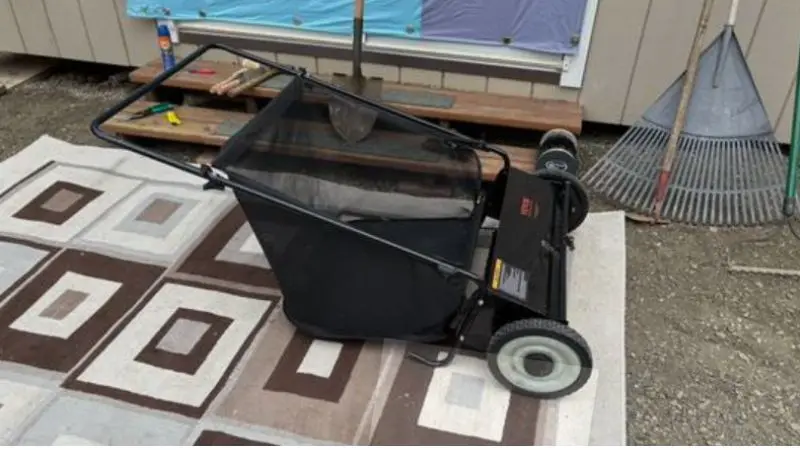
Operating a lawn sweeper may sound easy, but minor errors can limit its functionality and unnecessarily prolong the cleaning process. The machine will leave leaves behind, will have to pass more times, or will be more difficult to push when not used in the right way. By preventing these typical problems, you can make your push lawn sweeper of leaves more efficient and your lawn cleaner with less effort.
Why Incorrect Brush Height Reduces Cleaning Performance
The most common fault is to set the brush height incorrectly. When the brushes are adjusted too high, they will not touch the grass properly, and the leaves will be left behind each time they go over them. When they are too low, they might cut into the soil or grass, making it harder to push the sweeper up and potentially damaging the lawn.
Both scenarios make the cleaning process less efficient and sluggish. This is even more evident when the manual lawn sweeper is in use to sweep away leaves and debris, and in this case, it is necessary to adjust it properly to work smoothly. An improperly adjusted height can also diminish a push lawn sweeper’s performance on uneven surfaces. The proper balance can make the brushes slide while still collecting leaves effectively, providing a cleaner and more consistent end result across the entire lawn.
Why Overloading the Hopper Reduces Efficiency
An additional error is to have the hopper or collection bag filled too full before it is emptied. Overloading the bag reduces airflow in the sweeper, so the machine cannot collect more leaves. This may result in debris falling back on the lawn, or it may get entangled in the mechanism. Regular emptying helps maintain high suction and consistent performance during the cleaning process.
It also reduces the sweeper’s weight and makes it easier to push, especially in larger areas. This is especially necessary when the push lawn sweeper is used and leaves the sticks as it picks them, because the heavier ones can easily fill the bag. By making sure the hopper does not overflow, it can be operated more easily, it will balance better, and it will be much easier to clean at the beginning and at the end.
Maintenance Tips to Keep Your Lawn Sweeper in Good Condition After Use
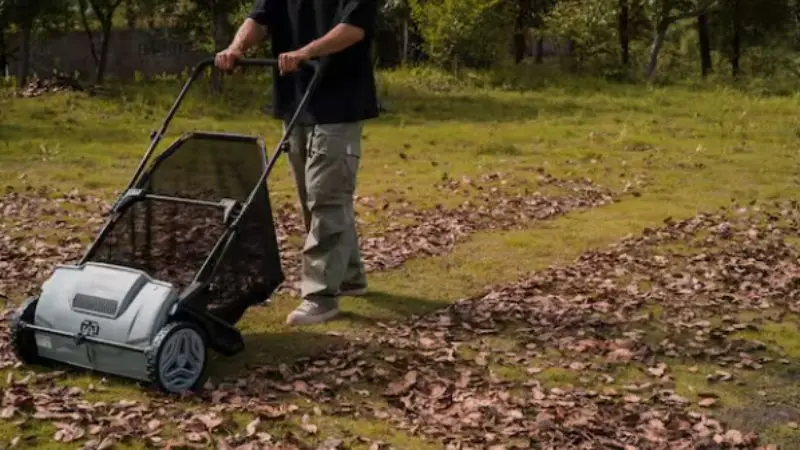
It is equally important to take care of your lawn sweeper after every use as well as to use it properly. With proper maintenance, the machine will last longer and maintain its performance with each yard clean-up. Once the sweeper is swept and the garbage is removed, it operates efficiently with no obstructions and at a lower efficiency. This is more critical with a push leaf sweeper since regular maintenance will guarantee the same outcome in the long run.
How to Clean the Brushes After Using a Lawn Sweeper
Once you are done with cleaning the lawn, make sure you clean the brushes by removing any leaves, grass, or debris that is stuck. Gradually, the bristles may become clogged with tiny particles, reducing the brush’s cleaning ability over time. Gently clearing this accumulation helps the brushes move freely and achieve good pickup performance. This is particularly beneficial for leaves and debris with a manual lawn sweeper, since manual models rely on brush movement, which not only cleans but is also flexible.
When debris is not removed, it will solidify and be harder to remove in the future. To ensure improved outcomes, you should always clean the brushes after use, especially when working on wet or highly adorned surfaces. This is an easy routine that will have the sweeper active and ready in case of a second usage.
@melaniejustmel8 The Vevor Push lawn sweeper makes yard cleaning so much easier #vevor #vevortools #lawn #lawnsweeper #tiktokshopspringsale #ttslevelup #ttsdelightnow #tiktokshoprestock #tiktokshopspringglowup
♬ original sound – Mel & AL Gifts
How to Store Your Lawn Sweeper Safely for Long-Term Use
Good storage is important in prolonging the life of your lawn sweeper. Remember to clean it and then store the machine in a covered and dry place to avoid moisture and rust, as well as weather. Leaving it outside may cause parts to wear out more quickly and slow down performance. Dry storage area also aids in maintaining the brushes and the collection bag in good condition.
This is particularly crucial in the case of a push-type lawn sweeper on rough surfaces, as the machine tends to experience more wear over time. It is also advisable to keep the sweeper off wet surfaces to avoid unnecessary wear and tear on the moving parts of the sweeper. However frequently you use it, it is best to store it correctly so it is in good working order and ready to take out and clean the lawn next time.
Wrap-Up
When you have the correct procedure in mind, it becomes easier to use a push lawn sweeper. The right brush height, proper installation, and constant sweeping methods all combine to enhance performance. Listening to surface conditions and avoiding common errors will also help you achieve a cleaner lawn without working as hard.
Maintenance after use also ensures the machine remains in good condition over a long period. It doesn’t matter how big or small your yard is; you have to practice regularly in order to achieve higher results. With the right technique, cleaning the lawn becomes quicker, simpler, and more effective, giving your outdoor space a neat, well-maintained look.
FAQs
What is the correct way to use a push lawn sweeper to collect the leaves?
Move slowly, in straight lines, and maintain a regular overlap. This assists the sweeper in collecting more leaves uniformly without leaving any spots or traces of the leaves on the lawn surface.
Will a push lawn sweeper cut wet leaves?
It is possible, but performance is reduced. Wet leaves cling to grass and form clumps, making them more difficult to clean and sometimes requiring more than one pass to ensure a cleaner finish.
What is the optimum brush height?
The ideal location is where brushes barely touch the grass. Excessively low causes turf damage, excessively high will leave a lawn without leaves, and cause the cleaning to be ineffective.
What is the frequency of emptying the hopper?
Regularly empty the hopper to keep air flowing and suctioning. Overfilling will decrease efficiency, push harder, and result in the debris falling back onto the lawn.
What do I do to clean up a lawn sweeper?
Clean brushes by scrubbing off the stuck debris and store them in a dry place. This will avoid rust, ensure smooth operation of parts, and prolong the overall life of the equipment.