Industrial cooling systems help maintain heavy machinery and production equipment at safe temperatures. Industrial water-cooled chillers are some of the best alternatives as they offer effective cooling to factories, processing plants, and large commercial facilities. And if you are asking what an industrial water-cooled chiller is or how it works, it is best to understand the different parts of the system, its cooling process, and its usage so that you can make the right choice. This guide covers all the details, including benefits, typical applications, required maintenance, and reasons these chillers are a reliable solution for industrial temperature regulation.
Understanding Industrial Water-Cooled Chillers
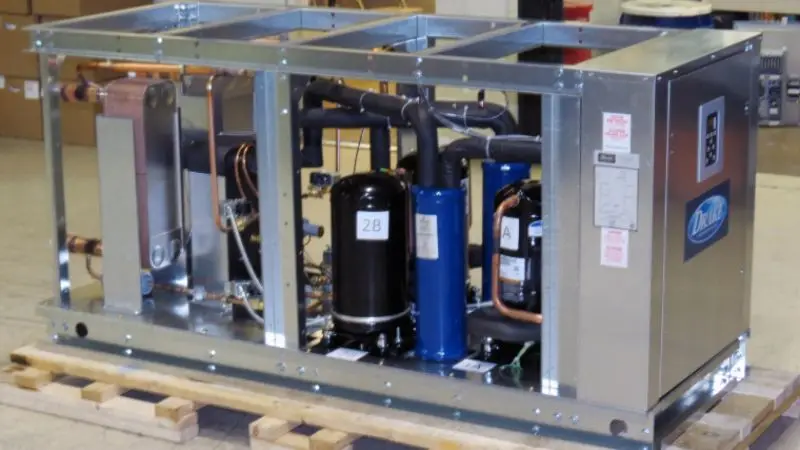
Cooling systems in industries are crucial in maintaining equipment at a safe operating temperature. They help ensure stable production environments, enhance efficiency, and prevent overheating of valuable machines. It is necessary to know what these systems are, where they are implemented, and to compare them with alternative cooling systems before understanding how they work.
What Is an Industrial Water Cooled Chiller?
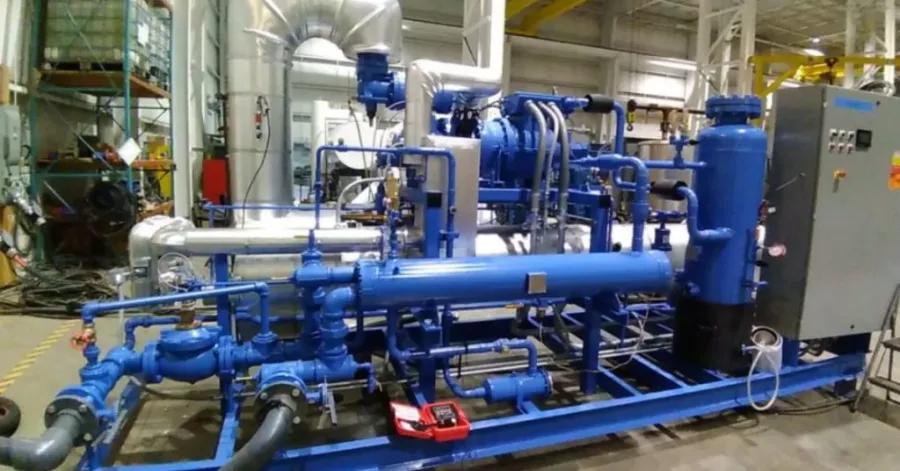
In case you are asking yourself, what is an industrial water-cooled chiller, then it is a cooling mechanism that is used to cool down the unwanted heat in industrial equipment, machinery, or production processes. It uses water as the primary cooling medium to remove heat from the system; hence, it is suitable for a facility that requires continuous, dependable cooling. Compared with smaller cooling units, industrial water-cooled chillers are designed to handle large cooling loads without temperature fluctuations. They are commonly used in industry, where precise temperature control is necessary to ensure product quality, prevent equipment damage, and save energy. Their reliability in performance has made them a favorite among factories, processing plants, and large commercial facilities.
Industries That Use Industrial Water-Cooled Chillers
Industrial water-cooled chillers are widely used across many industries to ensure production can continue without a hitch and equipment does not overheat. These systems are used in manufacturing plants to cool the machinery, molds, and production lines in continuous operation. Food and beverage industries rely on the chillers to ensure safe processing temperatures, and pharmaceutical firms use them to ensure high standards of quality. Molding plants need chillers to maintain safe production in chemical processing plants, and plastic producers have chillers in their molding plants. A water-cooled chiller is particularly useful in manufacturing since it offers reliable cooling, increased production, and reduces the amount of time equipment is out of service in the heavy manufacturing industry.
Industrial Water Cooled Chiller vs Air Cooled Chiller
Whether to go with a water-cooled or air-cooled chiller depends on your cooling requirements, available space, and operating environment. In water-cooled chillers, water is used to cool down the heat by the cooling tower, whereas in air-cooled, it is the air outside and the condenser fans. Water-cooled systems tend to have more equipment and higher initial cost, but in most cases, they are more efficient in industrial water-cooled chillers, particularly in large plants that run 24 hours a day. They also work more reliably in hot weather since their cooling potential is not as sensitive to weather in the outdoors. Air-cooled chillers have fewer installation and maintenance requirements; however, water-cooled systems tend to be preferable in large-scale industrial applications where a reliable, long-term performance is needed.
Main Parts of an Industrial Water-Cooled Chiller
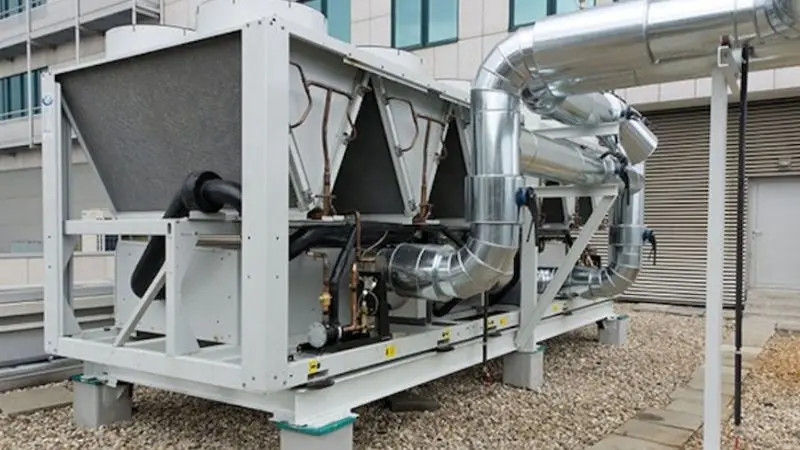
All industrial water-cooled chillers consist of a few major parts that all combine to ensure effective cooling. Each component plays a distinct purpose in the elimination of heat, regulation of the flow of refrigerant, and stabilization of temperatures. Being aware of these elements simplifies the process of learning how an industrial water-cooled chiller works and why it is vital to take good care of it in order to ensure long-term performance. With properly functioning parts, the chiller provides a stable cooling effect, reduces energy expenses, and helps maintain the continuous work of industries.
Compressor: The Heart of the Chiller
The most crucial part of an industrial water-cooled chiller is the compressor since it maintains the refrigeration cycle. It squeezes the refrigerant gas, raising the pressure and temperature of the gas, and then passes it to the condenser. This process enables the refrigerant to remove heat from the industrial equipment and production systems. There are various compressor types, such as scroll, screw, reciprocating, and centrifugal compressors, depending on the required cooling capacity. A dependable compressor helps maintain consistent temperatures, minimize unnecessary energy use, and ensure continuous production. Routine checkups and maintenance also prevent unforeseen breakdowns and extend the availability of the overall cooling system.
Evaporator: Where the Cooling Happens
The cooling process starts at the evaporator, where cold refrigerant is introduced and cools the water flowing through the system. As the refrigerant becomes heated, it turns into a gas, and the water becomes cooler and is reintroduced into industrial equipment. This is an ongoing heat exchange that is used to keep machines and production lines at the required operating temperature. A clean evaporator enhances the transfer of heat, thus enabling the system to cool faster and with lower energy use. Maintaining the evaporator in optimal condition also improves the efficiency of industrial water-cooled chillers and helps prevent performance problems in the long run.
Condenser: Removing Heat from the Refrigerant
When the refrigerant exits the compressor, it enters the condenser, where it absorbs heat during the cooling process. Using a water-cooled chiller, the water passes through the condenser to engage this heat and is sent to the cooling tower. The refrigerant returns to liquid as heat is removed, and the refrigeration cycle repeats. A good condenser will ensure that cooling performance remains stable and reduce operating costs. Dirt, scale, and mineral deposits may also reduce heat transfer over time, so regular industrial water-cooled chiller maintenance is necessary to keep the condenser clean and the system running at peak capacity.
Expansion Valve: Controlling Refrigerant Flow
The amount of refrigerant that goes into the evaporator is regulated by the expansion valve. When the high-pressure liquid refrigerant passes through the valve, its pressure decreases rapidly, thereby cooling it before it enters the evaporator. This gets the refrigerant ready to absorb heat in the cooling process. A properly operating expansion valve will ensure the appropriate amount of refrigerant flows under various operating conditions to keep the chiller at a constant temperature. When the valve is not functioning properly, it can reduce the cooling performance, and other components of the system will be subjected to unnecessary strain. Periodic checking will maintain a well-balanced and efficient refrigeration cycle.
Cooling Tower and Water Pump: Supporting the Cooling Process
The cooling tower and the water pump work together to remove heat from the condenser and maintain the cooling process under normal conditions. Once the heat has been absorbed, the cooling water moves to the cooling tower, where the heat is expelled into the atmosphere, and the cooled water is pumped back into the condenser. The pump continuously circulates water throughout the system at the correct rate to maintain effective heat transfer. With the installation of proper industrial water-cooled chillers, these components are properly sized and linked to achieve maximum performance. Routine cleaning of the cooling tower and pump enhances the reliability of the system, minimizes the amount of energy consumed, and prolongs the life of the whole chiller system.
How an Industrial Water-Cooled Chiller Works
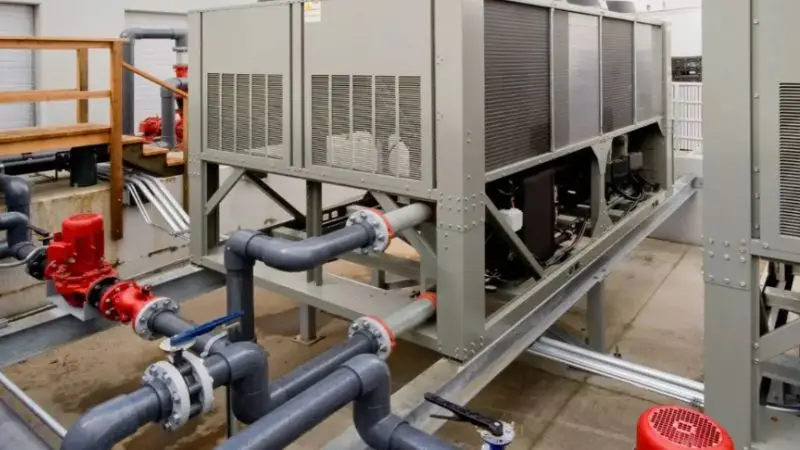
Knowing the cooling cycle, you will realize how all the components work together to eliminate unwanted heat. The cycle is continuous and constantly maintains industrial machinery at the appropriate working temperature. Have you ever asked yourself how an industrial water-cooled chiller works? The steps of the whole cooling process are explained in a simple and easy-to-understand manner below.
Step 1: The Evaporator Removes Heat from the Process Water
The cooling cycle starts with the evaporator, through which the refrigerant draws heat from the warm process water that comes back via industrial equipment. This heat is absorbed by the refrigerant, which transforms it into a low-pressure gas. Meanwhile, the water is cooled and pumped back into machines, production lines, or manufacturing equipment that need to be kept at a certain temperature. This initial phase is critical as it initiates the heat removal cycle and guarantees the continued safe operation of equipment in the daily production without overheating.
Step 2: The Compressor Increases the Refrigerant Pressure
The low-pressure refrigerant gas leaves the evaporator and gets into the compressor. The compressor compresses the refrigerant, which increases its pressure and temperature. This transformation prepares the refrigerant to release the heat it has absorbed in the subsequent phase of the cooling cycle. Since the refrigeration process is driven by the compressor, the compressor plays a key role in ensuring steady cooling performance. A well-maintained compressor will also provide more efficiency to an industrial water-cooled chiller, decrease unnecessary energy consumption, and increase the reliability of the system to operate longer.
Step 3: The Condenser Transfers Heat to the Cooling Water
This hot, high-pressure refrigerant is pumped into the condenser, where it is cooled by the cooling water. The refrigerant is cooled down to a high-pressure liquid as the heat is absorbed by the cooling water. This warmed cooling water then exits the condenser and goes to the cooling tower, where additional heat is extracted. Effective heat transfer within the condenser is important to ensure the refrigeration cycle operates efficiently and is cost-effective in energy consumption, while maintaining smooth cooling performance throughout the industrial process.
Step 4: The Cooling Tower Releases Heat into the Air
The hot water of the condenser is pumped to the cooling tower, where the remaining heat is discharged to the air. Evaporation of water and air cooling of the water occur in unison to cool the water moving back to the condenser to undergo another cooling process. The sustained circulation of this system enables it to eliminate heat without consuming huge volumes of water. Effective cooling tower operation helps to ensure reliable operation, reduce operating temperatures, and enhance the overall performance of industrial water-cooled chillers in large industrial facilities.
Step 5: The Expansion Valve Reduces Refrigerant Pressure
The high-pressure liquid refrigerant gets out of the condenser and passes through the expansion valve. The valve narrows the flow of the refrigerant, causing a decrease in pressure and temperature, which is then pumped to the evaporator again. This decrease in pressure gets the refrigerant ready to take out additional heat in the next cooling cycle. A well-functioning expansion valve ensures the refrigeration system remains in equilibrium, improves cooling accuracy, and eliminates the need for additional system components that would be unnecessarily strained by improper refrigerant flow or pressure changes.
Step 6: The Cooling Process Continues Without Interruption
When the refrigerant is pumped back to the evaporator, the entire cooling process repeats. This is an ongoing process that enables the chiller to cool the industrial equipment during the production process without failure. The system maintains a stable temperature even during demanding operations because the cycle repeats automatically. Efficient chiller maintenance on indiscriminate waters of industries ensures that all the parts of the chiller work effectively, avoids unforeseen downtime, and prolongs the lifespan of the equipment. A well-maintained industrial water-cooled chiller in manufacturing provides reliable cooling, promotes productivity, and saves on long-term operating expenses.
Common Uses of Industrial Water-Cooled Chillers
Many industries use industrial cooling systems to control temperatures and ensure equipment production and safety. Various manufacturing operations produce a lot of heat, which needs to be eliminated to ensure efficiency and the quality of products. Industrial water-cooled chiller applications are used to enable businesses to be more productive, ensure that equipment wears less, and continue to operate economically without interruption in a vast number of industries.
Plastic Injection Molding
The plastic injection molding process releases a lot of heat, thus necessitating effective cooling. A water-cooled chiller in an industrial manufacturing process cools down the molds and machinery to allow the plastic products to cool uniformly and retain their proper shape. Constant temperatures minimize production flaws like warping or shrinkage and reduce cycle time. Consistent cooling enhances product quality and production speed and assists manufacturers in working efficiently during lengthy production processes. A stable temperature will also provide longevity to costly molding equipment.
Food and Beverage Processing
The food and beverage industry requires a high level of temperature control to ensure that products of the same quality are produced and, in the case of safety. Water-cooled chillers are used to cool ingredients, processing equipment, storage tanks, and packaging lines during production. Stable temperatures maintain freshness, enhance consistency, and prevent spoilage. These cooling systems are also used in the production of beverages, dairy, meat, and bakery products where there is a need to have a constant temperature. With effective cooling, manufacturers are able to keep their production schedule without violating the strict food safety regulations.
@truckintoby VEVOR 14,000 BTU Portable Air Conditioners, 3-in-1 Portable AC Unit with Remote Control, for 550-700 Sq.Ft, Cool/Dehumidifier/Fan Mode &Low Noise & Rich Accessories for Home/Office/Dorms, White.. Nice! #vevor #dormlife #TikTokShopCreatorPicks #portableac #TikTokShopBacktoSchool @Vevor_US
♬ original sound – TruckinToby
Pharmaceutical Manufacturing
During pharmaceutical production, temperature must be properly controlled throughout the process to ensure product quality and regulatory compliance. Industrial water-cooled chillers are used to cool reactors, mixing equipment, laboratories, and manufacturing machines that are used to make medicines and medical products. Regular cooling of temperature-sensitive materials will prevent temperature changes that might compromise their performance. Quality manufacturing environments, minimized production risks, and enabling companies to achieve high-quality standards whilst ensuring efficient and continuous running of the operations are also supported by reliable cooling systems.
Chemical Processing Plants
Reactions during the processing of chemicals tend to generate a lot of heat. High temperatures may impact product quality and efficiency and pose a safety risk without efficient cooling. Cooled water chillers take away the unnecessary heat in reactors, heat exchangers, and processing apparatus to keep the operating temperatures steady. Constant cooling enhances control of the processes and prevents overheating of the important machinery. These systems also assist in minimizing production downtime and aid safe operations in the factories where the level of temperature control is both crucial to facility performance and safety.
Metalworking and CNC Machining
CNC machining machines and metalworking machines heat up during cutting, drilling, grinding, and milling. High temperatures may lower the accuracy of machining, cause cutting tools to wear out, and interfere with the quality of finished products. Industrial water coolers chill machine spindles, hydraulic systems, lubricants, and cutting fluids to ensure that the operating temperatures remain constant. Stable cooling enhances precision in machining, prolongs the life of the tools, and minimizes wear and tear on the equipment. Consequently, manufacturers are in a position to be more productive and manufacture high-quality metal components with fewer interruptions.
Data Centers and Electronics Manufacturing
Electronics manufacturing plants and data centers need reliable cooling to ensure that delicate equipment does not heat up. Constant heat is produced by servers, processors, and electronic manufacturing machines and may cause performance to degrade when the temperature becomes too high. Water-cooled chillers offer effective cooling that aids in maintaining the operating conditions and ensures the reliable operation of the system. They are highly efficient in chiller performance, thanks to their excellent industrial water-cooled chillers, which are ideal for facilities that operate 24/7. Proper maintenance of industrial water-cooled chillers will also guarantee reliable operation, reduce energy costs, and extend the lifespan of the electronic equipment.
Wrap Up
An industrial water-cooled chiller is a reliable cooling device suitable for industries where continuous temperature control and high performance are needed. These systems increase the productivity of manufacturing and food processing, as well as pharmaceuticals and data centers, and ensure that the equipment of invaluable value is not overheated. Knowing how an industrial water-cooled chiller works, its parts, and uses will enable you to make a well-informed choice when deciding on a cooling system. Effective installation and maintenance of industrial water-cooled chillers are key to long-term reliability, improved energy efficiency, lower operating costs, and consistent cooling performance for years of successful industrial operation.
FAQ
What is an industrialwater-cooledd chiller?
Industrial coolers. An industrialwater-cooledd chiller is a cooling device that uses water and refrigerant to remove heat from industrial machinery. It is an effective cooling system that safeguards equipment and ensures constant temperatures to keep production effective.
What is the operation of an industrial water-cooled chiller?
It cools the system by the evaporator, compressor, condenser, cooling tower, and expansion valve. This is a continuous refrigeration process that maintains safe and consistent temperatures of industrial equipment.
Which industries are using industrial water-cooled chillers?
The chillers have many applications in manufacturing, food processing, pharmaceutical manufacturing, chemical plants, plastic molding, metalworking, electronic manufacturing, and data centers that need dependable cooling.
What is the recommended frequency of maintenance for a chiller, which is a cooler for industrial water?
Inspections, cleaning, water treatment, and performance checks should be taken year-round. Preventive maintenance also enhances efficiency, minimizes downtime, and increases the life of the equipment.
What is the reason why water-cooled chillers are more efficient than air-cooled chillers?
Water is more effective in transferring heat than air, enabling water-cooled chillers to serve well in high workloads, consuming less energy and ensuring uniform cooling in big plants.