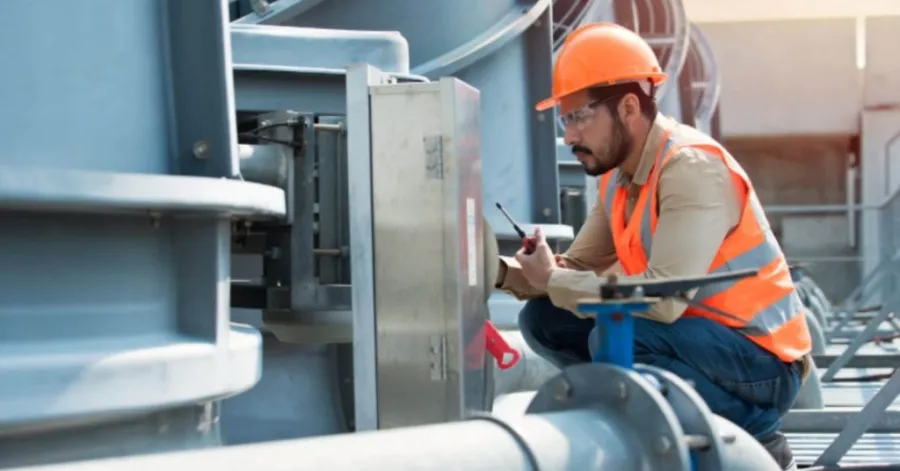
Industrial chiller repair is needed to ensure stable cooling in manufacturing facilities, processing units, and heavy-duty industry processes. As these systems begin to malfunction, the entire production process may be affected, resulting in downtime and energy loss. Problems like refrigerant leakage, compressor malfunction, electrical malfunction, and low cooling efficiency are common and must be addressed promptly. Knowledge of how these systems function and how they break down can be used to prevent significant damage. Frequent monitoring and adequate maintenance are important for system stability. Early warning of chiller failure symptoms in an industrial system, in most instances, is used to prevent expensive repairs and loss of operation.
Common Problems In Industrial Chillers
Chillers in the industry are complex cooling systems, and over time, they may develop various technical problems. These issues tend to begin small, but over time, they will impact performance in general when they are not corrected in the initial stages. These faults have a direct effect on the production efficiency and energy consumption in most industrial setups.
Being aware of these frequent problems can assist in early diagnosis and quicker repair reaction. It also minimizes the risk of unforeseen malfunctions and the expensive downtime. Most of these issues are strongly associated with the indicators of chiller malfunction in industrial systems, which can never be overlooked.
Correct repair of industrial chillers requires finding out the problems in the proper way and addressing them before they lead to serious system failures.
@truckintoby VEVOR 14,000 BTU Portable Air Conditioners, 3-in-1 Portable AC Unit with Remote Control, for 550-700 Sq.Ft, Cool/Dehumidifier/Fan Mode &Low Noise & Rich Accessories for Home/Office/Dorms, White.. Nice! #vevor #dormlife #TikTokShopCreatorPicks #portableac #TikTokShopBacktoSchool @Vevor_US
♬ original sound - TruckinToby
Refrigerant Leakage And Pressure Problems
One of the most prevalent issues with industrial chillers is refrigerant leakage. In case of a decrease in the refrigerant level, the system becomes unable to maintain the cooling effect and begins working more intensively than usual. This leads to pressure imbalance and reduced efficiency.
The causes of leakages may include worn-out seals, damaged pipes,s or long-term vibration within the system. Otherwise,e it may cause severe damage and a high cost of repair when not fixed immediately. Refrigerant pressure, in most cases, users experience problems in the cooler not cooling when troubleshooting the industrial chiller. They should be detected early to avoid additional damage to the system.
Compressor Failure And Overheating Issues
The compressor is central to the chiller system, and any problem in the compressor may result in serious breakdowns. Poor lubrication, overloading, or limited airflow are all common causes of overheating. In case of compressor failure, all cooling will cease.
One of the costliest aspects of the industrial chiller repair is the repair or replacement of a compressor. Failure to heed the initial warning signs may raise the downtimes and repair costs. In the worst-case scenario, overheating may cause permanent damage to internal parts of the system, resulting in a total shutdown of the system.
Electrical Faults And Control System Errors
Unpredictable chiller behavior may be caused by electrical problems and failures in the control system. Such issues can be improper wiring, sensor malfunction, or broken control boards. Failure of the control system will make the chiller unresponsive or will go off unnoticed.
These defects may sometimes be hard to identify without the right inspection equipment. They may also cause an industrial chiller not to cool properly, troubleshooting when the system is operating but does not accomplish effective cooling. It is essential to detect the problem in time to prevent additional damage and guarantee stable work.
Reduced Cooling Efficiency And Performance Drop
Reduced cooling efficiency is a typical indication of something missing within the system. This may occur as a result of dirty coils, a deficiency in refrigerant, or deteriorated parts. The system does not shut down, and the cooling output is weak.
The problem is not considered seriously at the initial stage, but it might cause severe failures if it is not treated. In numerous situations, it is one of the most important indicators of chiller failure in industrial systems. It requires proper inspection and maintenance to restore performance and prevent long-term damage.
Step-By-Step Industrial Chiller Repair Process
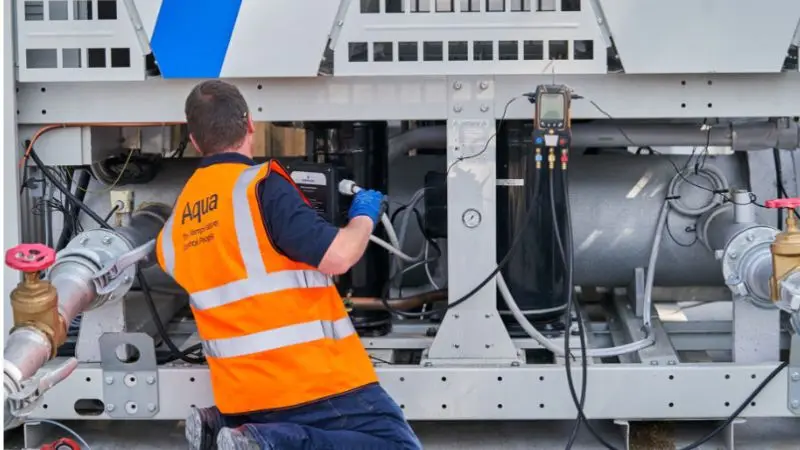
Once an industrial chiller fails to operate properly, it requires a structured repair process to restore its normal functioning. It is not only a process of correcting the faults but also a process of enhancing the entire system’s efficiency. All the steps are aimed at determining the actual root of the issue and avoiding its recurrence in the future. Quick fixes never work in an industrial setting where a systematic approach would be more effective.
Timely repair work will help reduce downtime, manage energy waste, and enhance cooling stability. It is necessary to recognize that the key to successful repairs is an accurate diagnosis and attention to detail before proceeding.
Industrial chiller repair primarily aims to restore full cooling capacity while ensuring long-term reliability and safe operation.
Step 1: Checking The Chiller And Identifying The Problem
A thorough check of the chiller system is the initial step. The technicians inspect major components like compressors, condensers, evaporators, and control panels to uncover any conspicuous or covert problems. This is done to get an idea of what is leading to the cooling failure.
Also involved in diagnosis is checking pressure levels, temperature levels, and electrical signals. It is often due to bad cooling that causes poor cooling of the industrial chiller, which is a troubleshooting problem that needs to be analyzed attentively. It is extremely important to correctly identify the problem since improper diagnosis may cause unnecessary repairs and expenses.
Step 2: Fixing Or Replacing Faulty Parts
Once the problem is determined, the second thing to do is to repair or replace damaged parts. These could be sensors, valves, pumps, or compressor components based on the state of the system. Replacements are made in a very meticulous way so as to achieve proper compatibility and performance.
Small defects are also repaired to avoid breakdowns in the future. This is a very crucial step, as neglecting minor problems might cause more damage in the long run, and add to the overall expenses of repairing the services of industrial chillers. Adequate replacement of parts can be used to restore the efficient functioning of a system.
Step 3: Cleaning And Refilling The Refrigerant System
The refrigerant system is important in the cooling process, and therefore, it should be treated with care. Old refrigerant is removed safely during repair without leakages and contamination. The system is then washed and vacuumed to get out any moisture and undesired particles.
Once it is cleaned, the appropriate quantity of refrigerant is replenished as per the specifications of the manufacturer. Poor cooling or overloading of the system can be caused by incorrect levels of refrigerant. Knowing how to repair an industrial chiller also means knowing how vital this is to the performance and efficiency of the system.
Step 4: Testing Cooling Performance After Repair
Performance testing is the last step to be taken once all repairs have been made. Normal operation of the chiller is done to test the cooling output, stability in the pressure, and general efficiency. This makes sure that the system has been repaired.
Any other problems are fixed as soon as they arise, before the system is fully started. This measure will ensure that previous indicators of chiller malfunction in industry systems are addressed. Correct testing guarantees good working and minimizes the chances of future failure.
Industrial Chiller Repair Services For Heavy-Duty Systems
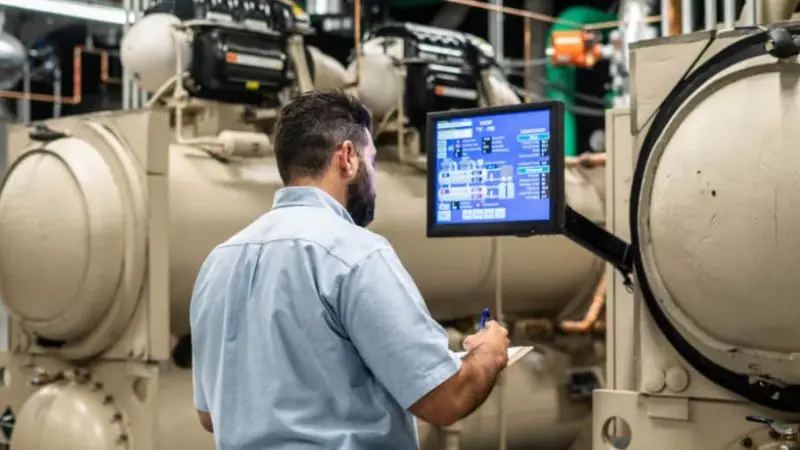
Large manufacturing facilities, processing units, and nonstop production settings require heavy-duty industrial chillers because a constant cooling effect is crucial. Failure of these systems can be experienced instantly, and it may impact the whole operation. This is why there are professional repair services, which are tailored to the precise and fast handling of complex and high-capacity systems.
In these kinds of environments, it is expensive to be down, and therefore, quick response and correct repair techniques are very important. These services are not only aimed at problem resolution, but also at enhancing the reliability of the system in the long term. In most situations, problems associated with chiller failure in industrial systems manifest prior to total failure.
Properly maintained industrial chiller repair service will provide value to the heavy-duty systems operating in extreme working conditions.
Emergency On-Site Chiller Repair Services
On-site repair services are emergency ones applied in those situations when one of the chillers suddenly fails and requires immediate fixing. Technicians go to the location of the industry instead of transporting the machine. This is to minimize downtime and minimize production loss.
It involves rapid inspection, rapid fault detection, and immediate repair measures. These services are often needed in troubleshooting scenarios of industrial chillers that are not cooling correctly, and when cooling ceases suddenly. The key is to restore the operation of the system in the safest and quickest way.
Preventive Maintenance And Scheduled Service Plans
Preventive maintenance services are aimed at preventing the occurrence of problems. Checkups, cleaning, and system checks are done regularly to maintain the chiller’s good condition. These services are normally scheduled according to usage and operational load.
This method can be used to minimize sudden breakdowns and enhance the efficiency of the system in the long run. It also reduces the long-run repair costs, such as the total cost of industrial chiller repair service. The system operates more efficiently and with fewer breakdowns during the work period with correct maintenance scheduling.
Expert Repair For Large Industrial Chiller Systems
Big industrial chillers should be managed by experts as they are more complicated and loaded. Such systems need qualified technicians who are knowledgeable about high-capacity cooling systems and sophisticated control systems.
Specialized repair work comprises comprehensive diagnostics, compressor repair, and system calibration. It is experience and technical accuracy that are needed to know how to repair an industrial chiller at this level. Effective maintenance means that even within industrial conditions where large systems are required, they will work efficiently.
Cost Of Industrial Chiller Repair Services
Knowledge on the cost of repairing an industrial chiller should be used to make an appropriate budget and long-term planning. The cost of repair may be highly varied based on the state of the system, nature of the fault, and parts needed. Delays in the decision to repair, even in the industrial setting, can cause increased losses in operation.
The total cost cannot be a fixed price since each chiller system is unique in size, use, and complexity. This is the reason why it is vital to assess the problem properly prior to estimating costs. In most scenarios, timely identification of indicators of chiller malfunction in industrial systems could save a lot of money in repairs.
An effective industrial chiller repair strategy can help manage unforeseen costs and provide more efficient budgeting for maintenance and servicing.
Factors That Affect Chiller Repair Cost
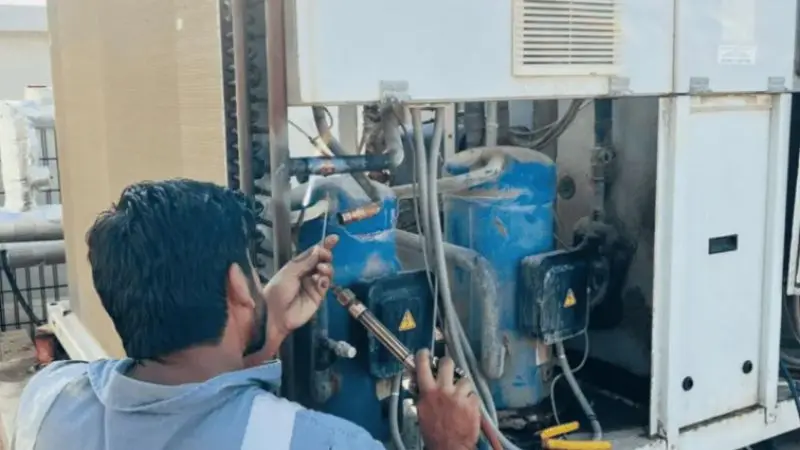
This is because a number of factors determine the ultimate repair cost of an industrial chiller. These are the severity of the fault, the type of components that are involved, the size of the system, and the urgency of the repair. The labor costs and availability of spare parts also contribute to the overall pricing.
In other instances, extra expenses are incurred when the system indicates an industrial chiller is not cooling as expected, necessitating troubleshooting and detailed diagnostics. Complex issues require more time and expertise, translating to a higher overall service fee. The cost of repair can also be influenced by the age of the system and the environmental conditions.
Cost Difference Between Minor And Major Repairs
Minor repairs typically include minor solutions like sensor replacement, cleaning of parts, or system reconfiguration. These are typically faster and cheaper. Major repairs, however, include compressor replacement, repair of the refrigerant system, or rebuilding of parts to a great extent.
There is a huge price gap between the two types. More labor, special tools, and costly parts are needed to do major repairs. Postponing minor problems in most situations would increase the cost of industrial chiller repair services in the future. Knowing the methodology of fixing an industrial chiller at the initial stages can assist in minimizing minor failures from becoming an expensive failure.
Maintenance Contract Pricing And Long-Term Costs
Maintenance contracts will minimize the long-term repair costs through regular checking at a fixed or planned cost. Inspections, cleaning, and minor repairs are normally done as a package contract.
Although it might appear more expensive in the short term, it prevents unexpected breakdowns and reduces total repair costs in the long term. Companies with scheduled services can have fewer failures and also improve system performance. This will also contribute to minimizing emergency repair cases and enhancing operational stability in the long run.
Wrap Up
To ensure an efficient operation in harsh conditions, industrial chillers should be maintained on a regular basis and repaired on time. Major breakdowns start with minor problems such as loss of cooling, pressure differences, or electrical issues that, over time, worsen. Early detection of problems and implementation of correct industrial chiller repair techniques can save a lot of time and money in terms of downtime and operating expenses. Long-term system reliability is guaranteed by regular maintenance, proper installation, and professional servicing. Failure to follow warning signs can result in costly repairs and decreased production times. With knowledge of the system’s behavior and the ability to fix faults promptly, industries will be able to keep their processes running smoothly, prevent unforeseen failures, and increase overall energy efficiency and equipment lifetime.
FAQ
What are typical symptoms that an industrial chiller requires service?
The typical symptoms are decreased cooling efficiency, strange noises, regular shutdowns, and changes in pressure. These problems tend to point to internal defects that need to be inspected and repaired by the professionals as soon as possible to avoid additional damage.
What is the frequency of servicing industrial chillers?
In most cases, industrial chillers need to be serviced after 3-6 months based on usage and load. Timely servicing is useful to ensure efficiency, eliminate any breakdowns, and increase the overall lifespan of the system.
What can make an industrial chiller cease cooling?
Common causes of poor cooling are leakage of refrigerant, contaminated condenser coils, compressor malfunctions, or electrical malfunctions. Such issues lower the efficiency of a system and demand its appropriate diagnosis and repair measures.
Is it costly to repair industrial chillers?
The cost of repair is based on the level of the problem, the category of damaged elements, and labor. Small repairs can be cheap, whereas large compressor/system failures can add up to huge expenses.
Does routine maintenance save money on repair costs?
Yes, checking it regularly will allow you to identify potential faults early and avoid significant breakdowns. This saves on repairs in case of an emergency and enhances performance, as well as the long-term cost of repair service of industrial chillers is greatly reduced.