You want your tools to work better and last longer, which is precisely why information on sharpening drill bits at home is so handy. People find it challenging to deal with boring sections and assume the only way is to replace them, but that is not the case. The moment you know how to sharpen drill bits, you can easily revive them and make any project you are working on better. This helps whether you are using a simple hand drill or even a magnetic drill for tougher jobs. Begin today and observe how the keen edge of a drill bit will smooth your work, making it quicker and far more accurate.
How to Know When Drill Bits Need Sharpening
You must clearly understand when it really requires sharpening its drill bits before you can be taught how to sharpen them. Most of them continue to use old, worn-out parts without realizing the harm they are causing. This results in ineffective drilling, loss of effort, and even damaged tools.
Being able to spot the signs early will give you the opportunity to correct the problem as soon as possible and choose the most appropriate method for sharpening dull drill bits at home before things get out of control. The most prevalent symptoms and performance issues are explained in a straightforward and balanced manner.
Common Signs of Dull Drill Bits
The dull drill bits normally provide warning signs as you continue working. If you pay attention, you will easily notice them before they destroy your project.
- The exercise begins to make a squeaking sound or a screeching sound.
- During drilling, you might be able to see smoke or smell burning.
- The bit slides rather than sticking to the surface properly.
- You must work too hard just to make a hole.
- The holes appear to be rough, uneven, or messy.
In addition to these indicators, there is another clear one: the bit’s tip. When the edges appear smooth, rounded, or shiny rather than sharp, the bit is no longer effective. Then, by learning to sharpen small hand-drilled bits by hand, you can replenish their cutting edges without needing to purchase expensive replacements.
How Dull Drill Bits Affect Your Work
Working with dull drill bits not only slows you down but also affects the quality of the entire project. Once the bit loses its sharp edge, it can no longer cut smoothly, leading to various issues during drilling.
- Drilling becomes more tedious and needs additional power.
- The material may crack, splinter, or get damaged
- The drill machine heats up at a higher rate than usual.
- Holes lose accuracy and become uneven.
This additional pressure may also reduce the life of your tools. Rather than forcibly drilling bits, you are better off following a step-by-step guide to sharpening drill bits properly, so your time will be spent working clean and efficiently. Sharpening drill bits on a bench grinder is also a favorite method because it restores sharpness quickly and improves overall performance.
Tools and Safety for Sharpening Drill Bits
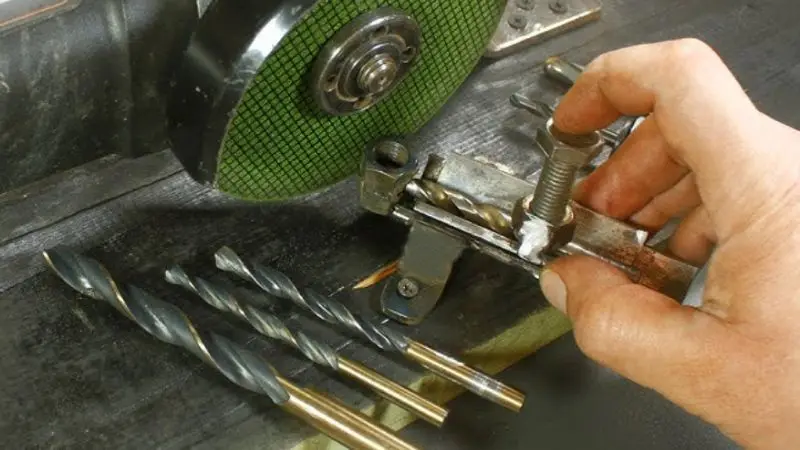
The first thing you need to know before you start learning how to sharpen drill bits is what tool you are going to use and what safety precautions you must adhere to. Sharpening can be made easier, more precise, and much safer with proper preparation. Quite a number of amateurs will jump into sharpening without preparation, and this is what causes the irregularity of the edges or even a cut.
Spending a few minutes to have your tools and safety equipment in place will also help you select the step-by-step guide to sharpening drill bits correctly with a greater degree of confidence. We will divide all of it into easy-to-use tools, precautions, and preparations below.
Essential Tools for Sharpening Drill Bits
Depending on the level of skill that you have, as well as the kind of drill bit, there are a number of tools that you can use. All tools provide various degrees of speed and control.
- A bench grinder to sharpen and sharpen with the power of a grinder.
- A belt sander is used to achieve smoother edge control.
- A Dremel tool that is used with small or detailed bits.
- Slow yet accurate sharpening using hand files.
- Special sharpening drill bits are used by novices.
A bench grinder is a tool that is likely to yield immediate results when used to sharpen drill bits correctly. But if you need total control and accuracy, hand filing is a better choice to practice. Simple sharpeners designed specifically for drill bits can also be used by beginners.
Safety Rules You Should Always Follow
When handling any sharpening tool, safety is very important. The slightest error can result in injury or damage to your drill bits. Always stay focused and work in a clean, organized environment.
- Wear safety glasses to protect your eyes.
- Wear gloves to prevent cuts by sharp edges.
- Wear a dust mask to avoid breathing fine particles
- Always have grinder guards near the wheel (less than 1/8 inch)
- Perform work in a well-illuminated and clean space.
These few measures render the sharpening far less dangerous and uncontrolled. They also assist you to stand firm whilst learning to sharpen the drill bits by hand for beginners, without losing track or control.
Preparing Drill Bits Before Sharpening
It is very important to prepare before you begin sharpening. A clean, sound bit is more effective and will assist you in preventing any mistakes along the way.
Start by closely inspecting the drill bit to identify any cracks, chips, or excessive rust. Clean it with a towel to remove dirt, oil, or debris on it. Then hold it in place so that it may not twist in the sharpening process.
Various kinds of bits require different consideration:
- Auger bits ought to be neatly cut on the cutting edge.
- The sharpness of spade bits must be made on a flat surface and in the middle.
Once sharpened, always examine the cutting edge. It must appear sharp, clean, and smooth. This final check ensures you are following the best way to sharpen dull drill bits at home for safe, accurate, and long-lasting results, whether for everyday drilling or use in a magnetic drill setup.
@chris_lynn_guads #vevor #vevortools #tiktokshop #welding #weldingtiktok #weldingshop #industrial #tiktokshop #drill #drillpress
♬ original sound – chris_lynn_guads
Step-by-Step Guide: How to Sharpen Drill Bits Easily
You are now prepared to know how to sharpen the drill bits in a simple and practical manner. This section provides various methods, one by one, so even amateurs can follow without hassle. Both processes enable you to resharpen blades and enhance drilling performance.
By following these steps, you will also learn how to sharpen dull drill bits at home and not destroy your tools. We shall consider each method in a clear, easy-to-follow format.
How to Sharpen Drill Bits Using a Bench Grinder (Fast Method)
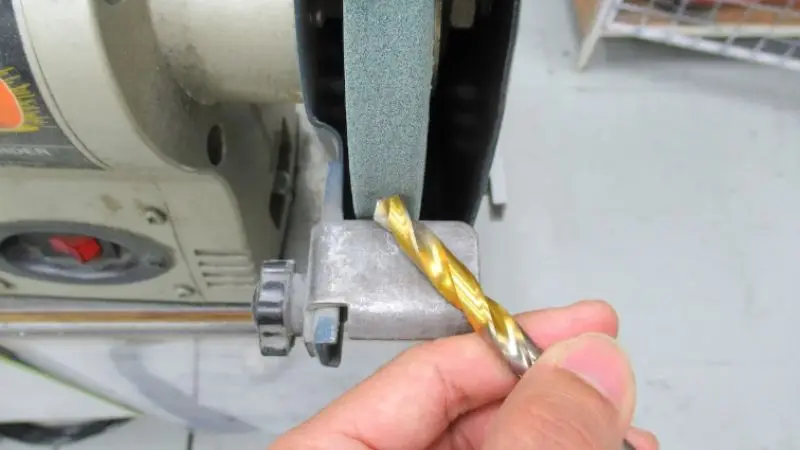
The quickest method of sharpening drill bits is by using a bench grinder, which is most commonly used when you need quick results. It is effective with typical bits and produces good cutting edges when used properly.
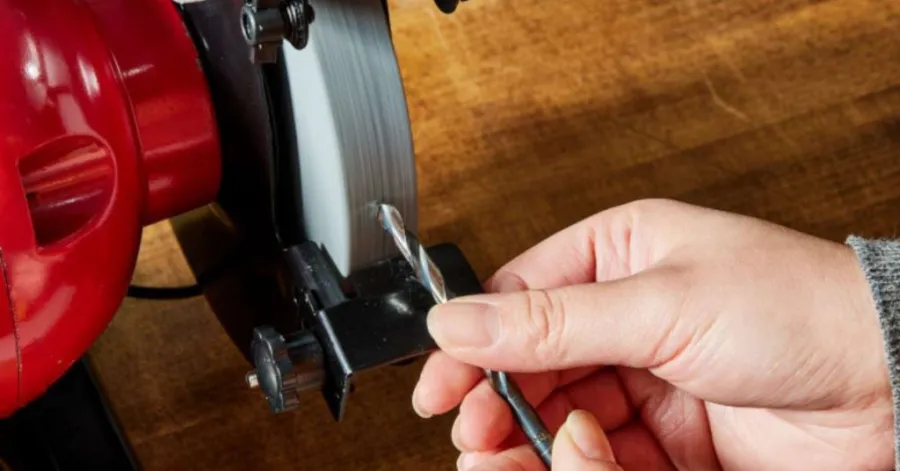
First, use the grinder and ensure that the safety guard is close to the wheel in order to guard it. The drill bit is held at a fixed 60-degree angle and barely touches the cutting edge of the grinding wheel. Slowly move the bit alternately to both sides until both sides are shaped the same way. Never press too hard; you risk upsetting the tip or making it lopsided.
To avoid overheating, wet the bit with water after every few seconds. This maintains the metal cool and powerful. Repeat this procedure with both sides in order to make them look sharp and balanced. To be able to teach yourself about how to use a bench grinder to sharpen drill bits in the most correct way, then focus on the light press and constant pressure.
How to Sharpen Drill Bits by Hand Using a File or Stone (Beginner Method)
Hand sharpening of drill bits is slower but offers better control, making it best for beginners. Another application of this technique is when you wish to be exact without using power tools.
To begin with, hold the drill bit firmly in a vise. Take a flat file or sharpening steel and simply wipe it along the cutting edge, following the bit’s original angle. After working on one side, it is time to work on the other side. But first, it is necessary to flip the bit.
Also, be careful to check the tip frequently so as to ensure that both sides remain flat. Should the bit remain dull, keep on filing slowly with controlled strokes. This is an excellent starting point for anyone who needs to know how to sharpen drill bits by hand safely and simply.
How to Use a Drill Bit Sharpener (Easy Automatic Method)
The simplest tool beginners can rely on is a drill bit sharpener, which automatically sets the angle. It eliminates the element of guesswork and helps you achieve the same results each time.
Install the sharpener holder and the drill bit, and set the angle according to the instructions. Depending on the model, turn on the device or rotate the handle to allow it to sharpen the bit. Once you have completed it, remove the bit and examine whether you can see clean edges and evenness.
Removing the sharpener after use contributes to lengthening its service life and increasing its accuracy. This technique is ideal for step-by-step instructions on how to sharpen drill bits the right way without necessarily requiring advanced skills.
How to Sharpen Drill Bits with a Dremel Tool (Precision Method)
A Dremel tool can be handy when you require more detailed sharpening or fine-tuning. It provides fine control over small or broken bits but should be handled with caution.
Before starting, place the drill bit in a vise. Cutting a grinding stone with the Dremel and holding it at the same angle as the cutting edge. Lightly rub each side, keeping the tool in motion to prevent sharp edges. In case the bit gets hot, put some water over the metal to cool it.
This process should always be done with safety glasses, since metal particles can fly. If the edge is not straight, redo it until it is. This is also useful when learning to use a bench grinder to sharpen drill bits properly, as it will help you be much more precise and in control of the final edge.
Common Mistakes to Avoid When Sharpening Drill Bits
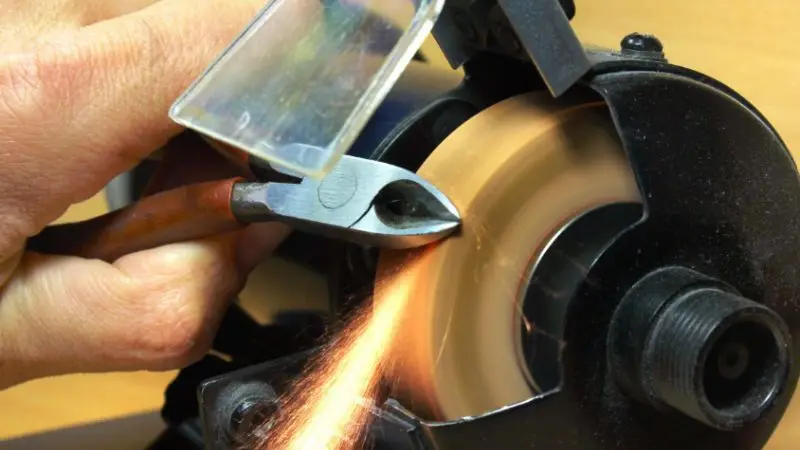
As newcomers learn to sharpen drill bits, small errors may occur that worsen the sharpening or even break the bit. Knowing these mistakes early can help you achieve better results and avoid wasting time and effort.
Knowing what not to do is as important as taking the right steps if you wish to sharpen dull drill bits at home. The errors are as follows: the most common mistakes are explained simply so you can easily avoid them.
Applying Too Much Pressure While Sharpening
Among the major errors is overworking the grinder, file, or tool. Most novices believe that increased pressure will hone quicker, yet it actually harms the cutting edge. It also has uneven grinding and reduces the life of the bit.
With forceful application, the metal will become hot and thus weaken the tip. Rather, it is always best to apply light and steady pressure. This is particularly important when learning to use a bench grinder to sharpen drill bits to a better finish, as controlled movement yields a better finish and sharper drill bits.
Not Maintaining the Correct Angle
The other major error is changing the drill bit’s initial angle. Each bit is cut at a specific angle, and if you switch it, the bit will not drill well. It can fall, tremble, or form irregular holes. This becomes even more noticeable when working with tools like a magnetic drill, where precision and stability are very important.
To prevent this, always ensure the original shape is retained when sharpening. Be slow and often check on both sides. This is highly significant when learning to sharpen drill bits by hand, when working with beginners, and when control and accuracy are of utmost importance.
Overheating the Drill Bit
The grave error that may spoil the hardness of the metal used in the drill bit is overheating. When the bit turns discolored or blue, it indicates that the bit has been overheated and weakened.
This normally occurs when you fail to cool the bit during sharpening. Never forget to immerse it in water a few seconds after grinding. This helps keep it strong and durable. Even when following a step-by-step guide to sharpening drill bits correctly, cooling is a key step you should never skip.
Grinding Unevenly on Both Sides
If both sides of the drill bit are not equally sharpened, the bit will not work properly. It can bore crooked holes or vibrate in use. This is one of the common problems of beginners who hurry the process.
It is always important to ensure that both sides are trimmed evenly and identically. Be sure to look at the tip periodically, say every several strokes. This will help you balance and enhance accuracy as you learn to sharpen drill bits with various tools or methods.
Wrap Up
The ability to sharpen drill bits is one simple skill that could save time, money, and effort on each project. After you have learned to recognize the indications of dull bits and have followed the proper methods, you can readily restore its cutting power at home. Regardless of whether you have a grinder, file, sharpener, or Dremel, the trick of it all is to be patient, control the angle, and apply light pressure.
Through practice, you will be more accurate and confident. The sharp drill bit will always be quicker, cleaner, and safer than the dull one, and your work will be much more efficient in the long run.
FAQ
What is the frequency of your sharps?
When you find that your drill bits are becoming dull, you should sharpen them. When you use them frequently, examine them after every couple of projects.
Is it possible to sharpen all kinds of drill bits at home?
The majority of standard bits can be sharpened in the home workshop. Specialty bits, such as masonry or carbide-tipped, require special tools or expert assistance.
And what would you do to a drill bit that still fails to cut well after being sharpened?
Attempt again to sharpen both sides. Ensure that there is a match of the angles. In case it has not yet worked, then it is possible that the bit is bent or has worn out too much.