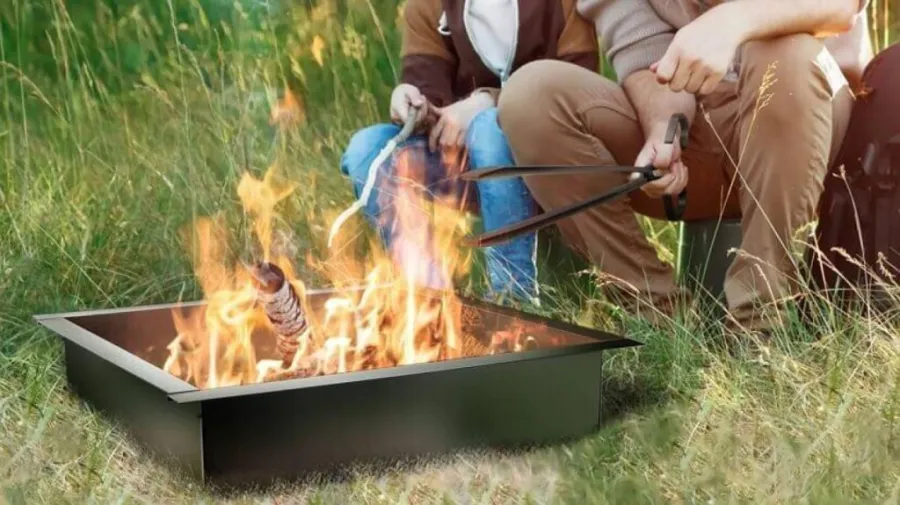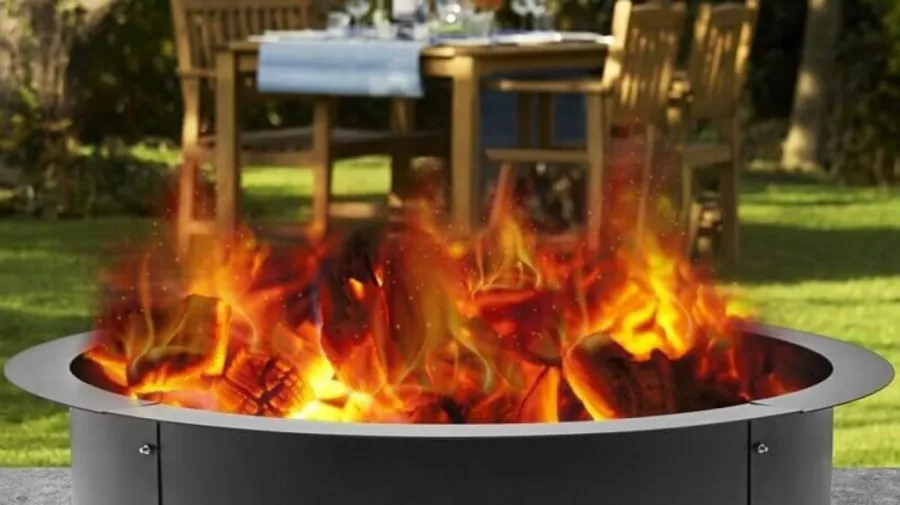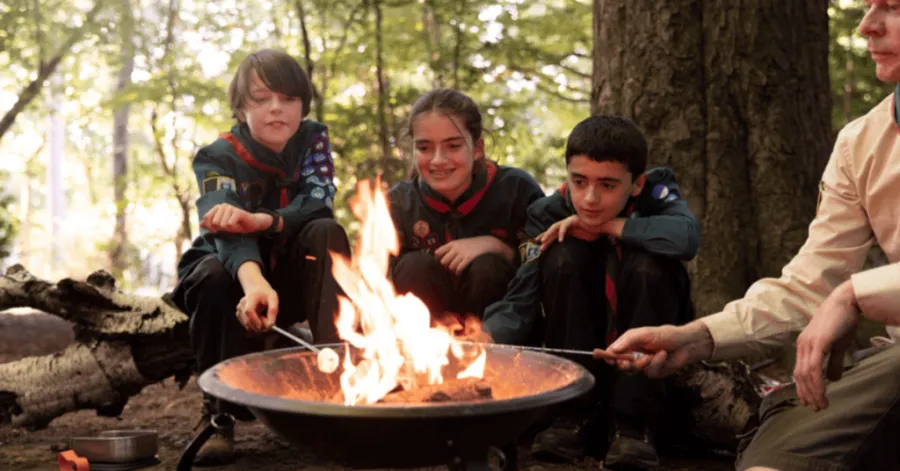
Grilling over a campfire isn’t just about cooking—it’s about adventure, flavor, and fun. The smell of wood smoke, the crackle of the fire, and the taste of food grilled under the open sky all come together to create a one-of-a-kind outdoor experience.
Whether you’re camping deep in the woods or relaxing in your backyard, this guide will show you how to enjoy grilling over a campfire like a pro. Even if you’ve never cooked over an open flame before, don’t worry—we’ll make it simple and enjoyable, one step at a time.
Step 1: Pick the Right Spot to Build Your Campfire
Before lighting your fire, make sure you’ve found a safe place. A good location is key to both safety and successful cooking.
- Look for a clear, flat area that’s free of dry grass, leaves, or low-hanging branches. These can easily catch fire and cause accidents. If you’re in a designated campground, always use the fire ring or fire pit provided—it’s the safest and most controlled spot for building a fire.
- Keep a safety zone by setting up your campfire at least 10 feet away from tents, chairs, tables, and any cooking equipment. This space gives you room to move safely around the fire while keeping your gear out of harm’s way.
- Avoid windy spots when choosing your location. Strong wind can make it difficult to light the fire, blow smoke into your face, and scatter hot embers. Try to find a place sheltered by rocks, bushes, or natural windbreaks.
- Also, make sure there’s a water source or fire extinguisher nearby. Whether it’s a bucket of water, a shovel for dirt, or sand, always be ready to put out the fire quickly if needed.
Taking a few extra minutes to choose the right location can help you avoid problems and enjoy your campfire cooking safely.
Step 2: Choose the Right Wood
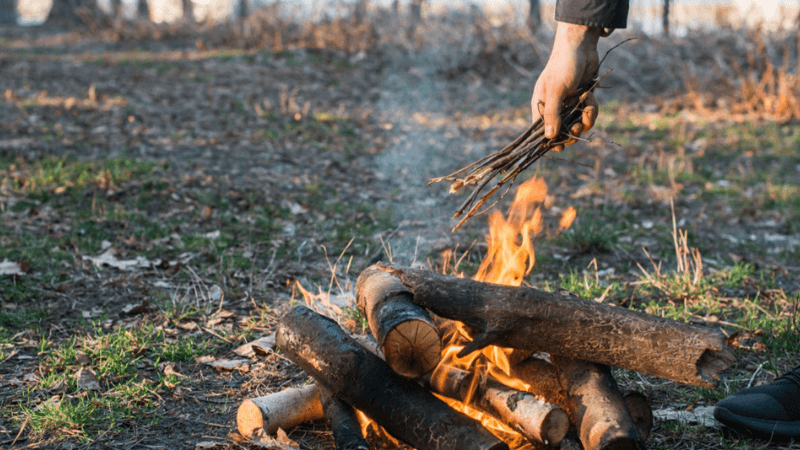
Not all wood burns the same, and the type of wood you use affects both the heat and the flavor of your food, so choose wisely.
- Stick with hardwoods like oak, hickory, maple, or mesquite. These woods burn longer and hotter, creating steady, glowing coals that are ideal for grilling. They also add a rich, smoky flavor that enhances your food.
- Use softwoods like pine, fir, or cedar to start a fire. These catch fire quickly and are great for kindling, but they burn too fast and create a lot of smoke and sap, so avoid using them to cook.
- Gather a good mix of wood. Use small twigs and dry leaves to start your fire, medium branches to build it up, and larger logs to maintain consistent heat throughout your cooking session.
Never use treated or painted wood, as it can release toxic fumes. Stick to natural, dry wood only. Choosing the right wood makes all the difference in how well your campfire cooks and how great your food tastes.
Step 3: Build the Fire
Here’s how to build a solid campfire for cooking—it’s simple, and with a bit of practice, you’ll get the hang of it in no time.
- Teepee Style: This is the fastest way to start a fire. Arrange small sticks upright in a cone or teepee shape, leaving a little space in the middle for kindling like dry grass, paper, or small twigs. Light the kindling, and the flames will climb up and ignite the larger sticks. It’s a great method to get your fire going quickly.
- Log Cabin Style: If you’re looking for the best way to grill over a fire, the Log Cabin Style is perfect for campfire cooking. Stack larger logs in a square shape like a tiny log cabin, and fill the center with kindling and smaller sticks. As it burns, this layout creates an even, steady heat and long-lasting coals—perfect for grilling over.
Whichever style you choose, allow your fire to burn for 20–30 minutes until you have a solid bed of glowing coals. Avoid cooking over high flames—they burn food on the outside while leaving the inside raw. Coals provide consistent, controllable heat, which is what you want for the best campfire meals.
Step 4: Use the Right Cooking Tools
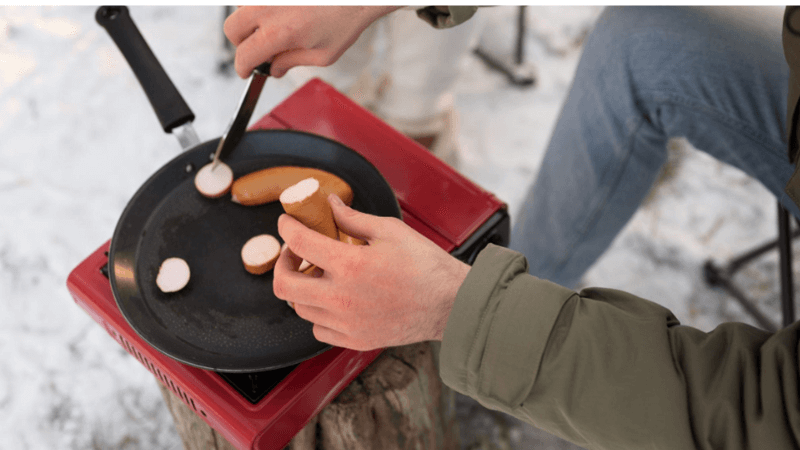
Bringing the right tools can make your campfire cooking much easier—and safer. Here are a few essentials you don’t want to forget:
- Grill Grate: A sturdy grill grate gives you a flat, secure surface to cook on. It keeps food steady and prevents it from falling into the fire. Look for one that’s foldable or adjustable for easier packing and setup.
- Cast Iron Skillet: This is a campfire favorite. Cast iron skillets heat evenly, hold up to high temperatures, and are great for frying, sautéing, or even baking. Plus, they last a lifetime if cared for properly.
- Metal Skewers: Perfect for grilling kebabs, veggies, sausages, or marshmallows. Choose stainless steel skewers—they’re reusable, easy to clean, and hold up well over the fire.
- Long Tongs and Heat-Resistant Gloves: Long-handled tongs help you turn food safely without getting too close to the heat. A good pair of fire-safe gloves protects your hands when moving cookware or adjusting burning logs.
Step 5: Control the Heat
A campfire cooking guide wouldn’t be complete without explaining how to control the heat. Unlike a kitchen stove or backyard grill, a campfire has no knobs or dials. But don’t worry—you can still manage the heat with a few simple tricks:
- Wait for Glowing Coals: Don’t cook directly over big flames. Flames burn the outside of your food too fast and leave the inside undercooked. Let the fire burn down for 20–30 minutes until you have a thick bed of glowing red coals. These give steady, even heat that’s perfect for grilling.
- Create Heat Zones: Push most of the coals to one side of the fire pit to make a hot zone. The other side, with fewer coals, becomes your cool zone. This gives you more control: grill meats on the hot side and move them to the cooler side to finish cooking or stay warm.
- Adjust the Cooking Height: If you’re using a grill grate, raising it higher will lower the heat, and lowering it will give you more direct heat. Some grates are adjustable, but even placing your grate on rocks or bricks at different heights can help.
- Move Food, Not the Fire: Shift your food between heat zones instead of constantly adjusting the fire. It’s the easiest way to prevent burning and cook everything just right.
Step 6: Choose Your Cooking Method
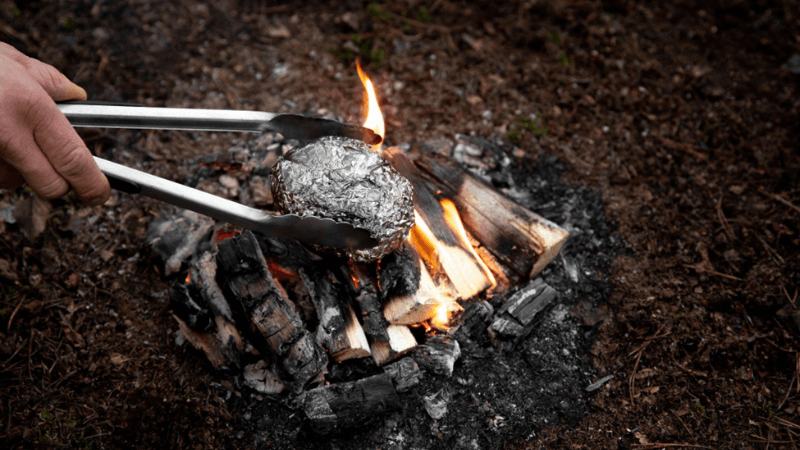
Now it’s time to decide how you’ll cook your food. There are several great methods for grilling over an open flame:
- Direct Grilling: Place your food right on the grill grate above the hot coals. It’s the classic way to cook burgers, hot dogs, steaks, or chicken. Flip your food often to avoid burning and get even cooking.
- Foil Packets (Also called “Hobo Meals”): Wrap chopped veggies, fish, or seasoned meats in aluminum foil. Seal the edges tightly and place the packet directly on the coals. This steams the food inside, locking in moisture and flavor. Plus, there’s almost no cleanup.
- Skewers or Kabobs: Thread meat, veggies, or even fruit onto metal or soaked wooden skewers. Hold them over the fire or rest them across rocks or a grill. Turn them often so they cook evenly. This is a fun and easy option for group meals.
Each of these methods offers a different experience and is a great way to practice grilling over a campfire.
Step 7: Stay Safe While Cooking
Cooking over a campfire can be a lot of fun, but safety is key. Keep these campfire grilling tips in mind to avoid accidents:
- Keep Water Nearby: Always have a bucket of water, sand, or a fire extinguisher nearby in case the flames get out of control.
- Clear the Area: Keep children and pets at least 10 feet away from the fire to prevent accidents.
- Use Heat-Safe Tools: Don’t touch hot pans, grills, or skewers with your bare hands. Use long tongs, heat-resistant gloves, or a spatula to handle food and tools safely.
- Cook Food Thoroughly: Always check that food, especially meat like chicken and pork, is cooked all the way through. Use a meat thermometer to be sure it’s safe to eat.
- Let Ashes Cool: Once you’re done, pour water over the fire and let the ashes cool completely before leaving. This prevents accidental fires after you leave the site.
Following these simple steps will help you enjoy your campfire meals safely.
Easy Campfire Recipes for Beginners
Here are a few beginner-friendly recipes that are simple, delicious, and hard to mess up:
- Grilled Steak: Season steaks with salt and pepper. Place them over the coals, flipping every 2–3 minutes until they reach your preferred level of doneness. Let the steak rest for a few minutes before slicing to keep it juicy. This is one of the best ways to learn how to grill steaks over a campfire.
- Foil-Wrapped Veggies: Chop zucchini, onions, and peppers. Toss them in oil and seasonings, then wrap them in foil. Place the packet on the coals and cook for 15–20 minutes, turning once for even cooking. Open carefully—hot steam escapes fast.
- Skewered Kebabs: Thread chunks of chicken, bell peppers, and mushrooms onto skewers. Brush with BBQ sauce and grill over the fire, turning often for even cooking. Soak wooden skewers in water for 30 minutes first to prevent burning.
These easy recipes will ensure you have tasty meals without the stress, perfect for beginner campfire chefs.
Common Campfire Cooking Mistakes to Avoid
Preparation of food near campfires creates enjoyable moments, except when beginners make standard errors. The following list includes typical issues that you should recognize when cooking over a campfire:
Cooking Too Soon
The severe error happens when people start cooking while fire temperatures remain high. High, flaming temperatures and heat inconsistency occur in campfires. The flames will crisp the surface of your food while the inside remains partially uncooked. Before adding food to the grill, let the flames reduce into mild glowing embers. Coals give steady, even heat. Using coals to grill will result in complete food cooking.
Not Enough Wood
You should always stockpile firewood beyond what you initially estimate will be sufficient. The successful grilling process at a campfire requires an ample amount of wood that sustains uniform heat output. Running out of wood during cooking will force you to interrupt your meal preparation.
It is essential to maintain a sufficient firewood supply, which should include sizable logs for sustained warmth and small twigs for starting the fire. Extra fuel is important because it prevents running out of wood in the middle of meal preparation.
Wrong Foods
An open flame creates difficulties when certain foods try to cook properly. Fish and delicate vegetables together with thin slices of meat have a tendency to catch fire or become disassembled. Thick cuts of steak and chicken along with potatoes and peppers or corn make satisfactory choices for outdoor cooking sessions.
The cooking method of placing food inside foil packets proves suitable for preparing delicate foods. Along with preserving moisture the packets create a safeguard that protects against food burns.
Leaving the Grill Dirty
Most people make the mistake of skipping grill maintenance after they finish cooking. The work of cleaning a grill becomes simpler when performed when it is still warm. A wire brush or scraper should be used to remove food stuck between the grill grates during cleaning.
There will be cleaning difficulties when you let the grill remain dirty. The improper cleaning of your grill will lead to next meal dishes having compromised flavors. Thorough cleaning immediately after cooking will result in improved results when you grill again.
Final Thoughts
Grilling over a campfire is a fun and rewarding way to enhance any outdoor adventure. Following these campfire grilling tips will help you achieve great results. Whether you’re learning how to grill steaks over a campfire or just enjoying the outdoors, cooking over an open flame is a special experience. The smoky flavors and warmth of the fire create an unforgettable experience, making every meal feel special. So, gather your wood, light the fire, and enjoy cooking delicious food under the open sky. It’s the perfect way to bring friends and family together, creating memories with every bite. Happy grilling!
FAQs
Which hardwood should I choose for campfire grilling?
You should use hardwoods such as oak, hickory, maple or mesquite as the top wood types for campfire grilling. The cedar closed fire produces both a consistent heat output and produces excellent smoky notes in the food. Softwoods including pine and cedar do not provide good campfire grilling because they ignite fast and produce toxic smoke that contains sap.
How long should I wait before cooking over a campfire?
You should wait between twenty to thirty minutes after starting your fire before using the cooking surface. The flames will diminish while hot ash forms into a stable cooking surface that enables even results during grilling.
Is it possible to set my food on the active flames?
The correct method for cooking involves using hot coals instead of exposed flames. Having flames near your food will quickly sear the surfaces while keeping the interior raw. Using coals for cooking leads to improved temperature management along with steady and reliable outcomes.
Do I need a special grill grate for campfire cooking?
The use of a fire-safe, sturdy grill grate enables users to perform successful campfire grilling procedures. A suitable foundation for your meals and protection against accidental item drops into the flames are its main benefits. Your search should lead you to steel or cast iron adjustable grates.
Which basic campfire dishes can be easily prepared?
Starting grillers should consider preparing steaks by grilling together with foil-wrapped vegetables, as well as hot dogs and kebabs. These dishes are easy to prepare, yet cook well on