A portable air conditioner is an easy and convenient way to cool your home when you are in need of immediate comfort, and can be easily moved without needing to be installed. Lots of individuals desire to know how to use a portable air conditioner to be able to receive the maximum cooling with the least amount of work.
Each step, whether during setup or day-to-day operation, is of significance in performance. It is efficient in cooling down bedrooms, small apartments, or offices when used properly. This manual covers it all in a simplified manner as to how to install, use, maintain, and troubleshoot, in order to have a smooth cooling and improved energy efficiency during the hot season.
- Important Things To Know Before Using A Portable Air Conditioner
- Step-by-Step Guide To Set Up A Portable Air Conditioner Easily
- How To Use A Portable Air Conditioner For Best Cooling Performance
- Common Mistakes To Avoid When Using A Portable Air Conditioner
- Maintenance Tips for Long-Lasting Portable Air Conditioner Performance
Important Things To Know Before Using A Portable Air Conditioner
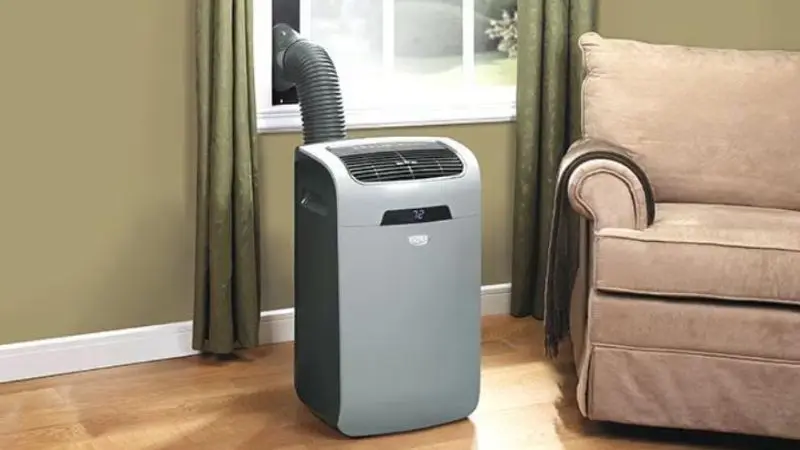
You must learn some ground rules about how to set up a portable air conditioner before you comprehend how to use it. These initial measures assist the unit in cooling your room in the right way and prevent frequent performance problems. Some individuals do not prepare and end up with poor cooling or airflow issues in the future.
Portable AC is easy to operate, but it should be operational under proper space, power, and ventilation. When all things are in place, the cooling is quicker and more consistent.
Now we will go through the most significant items that you have to check before turning on your portable air conditioner.
How To Choose The Right Room Size For A Portable Air Conditioner
One of the most significant measures of effective cooling is the selection of the right room size. When the room is too big, the AC will not be able to evenly cool the room. When it is too small a room, it will cool too fast and be uncomfortable. This is why it is important to match the unit’s capacity (BTU rating) to the room’s size.
Whenever individuals look into a step-by-step tutorial on how to utilize a portable air conditioner, the initial action is the room selection. Bedrooms tend to require consistent and noisy cooling, and bigger areas such as living rooms require greater air circulation. An adequate ratio of the room size to AC power means that it will be more comfortable, save energy, and operate more smoothly throughout the day.
How To Understand Power And Ventilation Needs For Portable AC Setup
A portable air conditioner requires proper ventilation as well as adequate electricity to be effective. Never use extension cords since they may decrease the performance and safety of the unit. A constant source of power will guarantee that the AC will not get cut off or overheat.
Ventilation is also crucial since the unit expels the hot air in the room using an exhaust hose. Without the proper release of this hot air, the cooling effect will be ineffective. It is particularly significant when teaching to install a portable AC for the first time, as numerous novices do not pay much attention to airflow installation. The ventilation makes the cooling balanced, and the machine continues to run smoothly.
How To Check Window Compatibility For Portable AC Exhaust Installation
The last thing that you should consider before installing your portable air conditioner is whether or not your window can accommodate the exhaust hose system. The majority of them are equipped with a window kit that expels hot air. In case the window is not appropriate, the hot air would remain in the room, resulting in lower cooling effectiveness.
This step is easier when one knows how to install a portable air conditioner with a window kit. The kit is typically installed on sliding or casement windows and forms a closed system, preventing outside air from entering the house. In case your type of window is different, there might be some minor modifications required to fit in. Proper window configuration will make sure that there is efficient cooling, and the room temperature will remain constant without the use of excess energy.
Step-by-Step Guide To Set Up A Portable Air Conditioner Easily
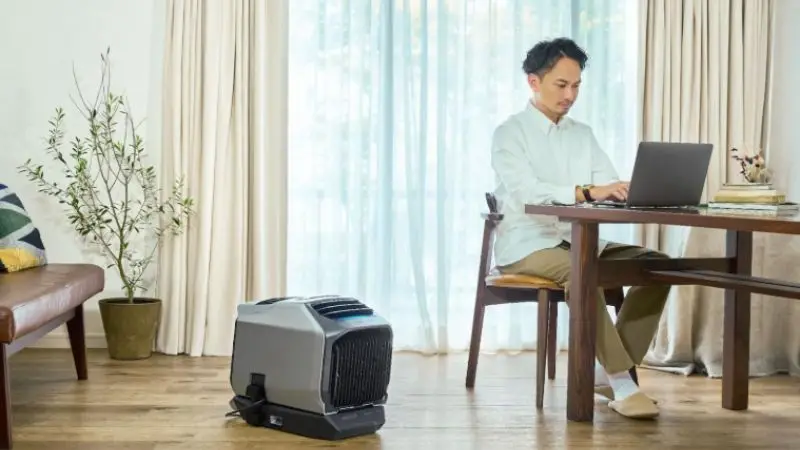
With an easy-to-follow step-by-step process, it becomes easy to set up a portable air conditioner. When you are first learning how to install a portable AC, you should take it step by step to ensure that nothing is overlooked. All components of the system influence the effectiveness of your AC in cooling the room.
You should have space by a window and a good power outlet, before you begin. A prepared installation location is time-saving and can prevent errors during installation.
Here we will go step by step in a simple and easy-to-follow manner.
How To Unbox And Place A Portable Air Conditioner In The Right Position
The first step is to carefully unbox your portable air conditioner and check all included parts. These typically consist of the main unit, exhaust hose, window kit, and drainage accessories. When all has been established, select a nice place with a window and a wall socket.
It is essential that the right positioning is done to ensure adequate cooling. The unit must be on a level area, and there must be sufficient space surrounding it to allow free movement of air. When you are studying how to use a portable air conditioner in a bedroom, the issue of location is even more significant since bedrooms have limited space. Have it near the window to be vented easily, but not to block the movements or furniture. Proper positioning aids the AC to cool quickly and work effectively.
How To Install The Exhaust Hose And Window Kit For Proper Venting
The next thing to do after installing the unit would be to install the exhaust hose and window kit. This arrangement enables the hot air to exit the room, and this is required in the process of effective cooling. Attach one end of the hose to the back of the AC and make sure it is tightly secured.
Then put the window kit in your window opening with the hot air going out. This is a significant step in the process of installing a portable air conditioner with a window kit since an appropriate seal would ensure that hot air does not re-enter the inside of the building. When all is properly installed, the AC is able to cool the room in a more efficient manner and not waste power.
How To Set Up The Drainage System For Water Removal
Portable air conditioners trap moisture in the air during cooling, and the moisture should be emptied out in a proper manner. Your model might require a drainage pipe or emptying a built-in water tank. Always refer to your product guide to know what system your AC is.
Should you need to know how to drain water out of a portable air conditioner, this step is extremely crucial since the accumulation of water may prevent the proper functioning of the unit. There are also models available with continuous drainage by means of a pipe, and some that have to be emptied manually. Maintaining a clean drainage system is important in order to have a smooth operation without interruption in cooling.
How To Turn On And Check Your Portable Air Conditioner After Setup
After all the installation is done, simply plug the AC into a wall socket and switch it on. Extension cords should be avoided due to their possible impact on performance and safety. Once it is switched, make adjustments to basic settings such as cooling mode, fan speed, and airflow direction.
This last test is to make sure that your configuration is complete and functional. This check is to make sure that all goes well when using a portable air conditioner, and you are following a step-by-step guide to use it. A fast system check is to ensure that you are enjoying your experience of smooth cooling at first instance.
How To Use A Portable Air Conditioner For Best Cooling Performance
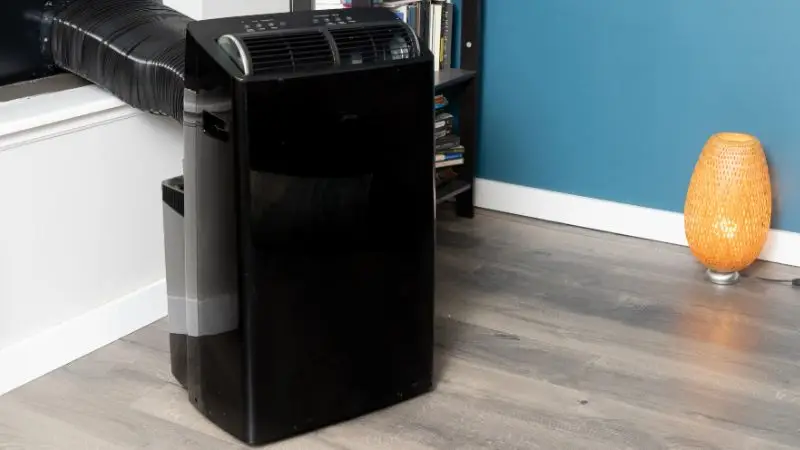
After you have successfully installed your unit, the next thing to do is to learn how to make the most out of your unit as far as cooling is concerned. The question many people would have is, how do you use a portable air conditioner in such a manner that you can actually cool the room more quickly and uniformly?. The solution is not in turning it on, but also in using the correct settings and room conditions.
When temperature, airflow, and insulation of the room combine, then a portable AC works. Even slight changes in settings can result in a significant difference in comfort and energy consumption.
Now we will consider the most successful methods to enhance the cooling performance.
How To Set The Correct Temperature And Mode On A Portable Air Conditioner
One of the most significant activities to ensure efficient cooling is the setting of the appropriate temperature. When you make it too low, the unit will have to work harder and use more energy. When it is too high, the room will not be comfortable. A temperature control will allow for maintaining stable cooling without putting pressure on the machine.
A majority of the portable air conditioners have various settings such as cool, dry, and fan. The mode to select depends on your comfort needs and weather conditions. When you are reading a step-by-step guide on how to use a portable air conditioner, it is important to understand these modes since each mode regulates airflow and cooling in a different way. Cool mode is suitable during hot days, and fan mode is effective when there is light air circulation and does not need heavy cooling.
How To Use Fan Speed And Timer Settings On A Portable Air Conditioner
The speed of the fans is set to regulate the speed of cool air distribution in the room. Faster fan speed cools quicker but can be more aggressive, whereas slower has a softer and quiet airflow. The ability to adjust the fan speed according to the quiet size of the room and the level of comfort will contribute to the overall experience.
The timer settings come in handy as well, since the AC can be set to be on or off automatically. This will conserve energy and keep the room comfortable without having to run the unit continuously. The first time people look at how to set up a portable AC, they usually do not consider the possibility of using timer functions, which can significantly enhance efficiency and convenience during everyday use.
How To Improve Cooling By Closing Doors And Insulating The Room
Insulation of the room is a significant factor in the performance of a portable air conditioner. When doors or windows are open, then the cool air flies outside, and the hot air comes inside, which increases the effort of the AC. It is best to keep doors shut when the unit is running.
Curtains and small gaps can also be sealed, which are just simple steps of insulating to enhance the speed of cooling. This step is particularly crucial in case you are learning how to use a portable air conditioner in a bedroom since bedrooms require a stable and quiet cooling. Insulation is good to retain temperature, save energy, and enable the AC to cool the room more efficiently without any additional efforts.
Common Mistakes To Avoid When Using A Portable Air Conditioner
Portable air conditioners can be easily used and still fail to cool properly due to minor errors. Low airflow or uneven cooling often becomes a problem for many users since they overlook simple setup guidelines. When you are learning how to use a portable air conditioner, it is just as important to know what to avoid as it is to know how to do it.
The majority of issues are related to installation mistakes, improper airflow control, or the incorrect room size. With a bit of attention, these problems can be easily avoided.
We will discuss the most widespread errors so that you can avoid them at the beginning.
Problems Caused By Incorrect Exhaust Installation
One of the biggest mistakes is not installing the exhaust hose correctly. The exhaust system controls the elimination of hot air in the room. In case of a loose hose or one that is bent or not sealed, the hot air can re-enter the house and lower the cooling efficiency.
This is particularly significant when reading on how to install a portable air conditioner with a window kit, since the slightest space between the window seal can influence performance. Always ensure that the hose is firmly attached and the window kit is completely sealed. A proper exhaust system guarantees that the unit is able to correctly remove heat and maintain a consistent cooling without undue burden.
Poor Ventilation And Airflow Problems In Portable Air Conditioners
A portable AC should be properly ventilated. When there is a blockage or restriction of airflow, the unit will not be able to remove hot air effectively. This causes slower cooling and increased consumption of energy.
Numerous users put the AC in small spaces or even inside pieces of furniture, and this obstructs airflow. In case you are attempting to install a portable AC for the first time, it is highly important to plan the airflow appropriately. Always maintain a distance around the unit, and do not block the exhaust hose. The correct ventilation assists the system in having a constant cooling and enhances overall performance.
Using A Portable Air Conditioner In Spaces That Are Too Large
The other frequent error is to install a portable air conditioner in a room that is bigger than its capacity. Each unit is specified to fit a particular size of room, and a size bigger than that limit decreases cooling performance.
When the area is too large, the AC will run all day without the desired temperature. This is commonly observed when individuals experiment with how to use a portable air conditioner in a bedroom setup and use the same unit in bigger living rooms. The BTU rating should always be compared with the size of the room. Correct sizing will guarantee more effective cooling, consume less energy, and last longer without the system being overloaded.
Maintenance Tips for Long-Lasting Portable Air Conditioner Performance
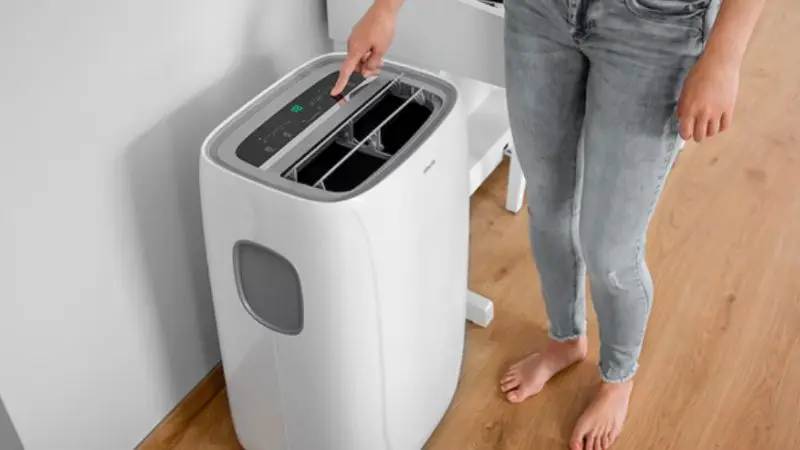
It is also important to maintain your portable air conditioner in good condition in case you want uninterrupted cooling over an extended period of time. The second thing after knowing how to use a portable air conditioner is to know how to keep it so that it continues working effectively.
Routine maintenance prevents airflow problems, water stoppages, and loss of performance. It also enhances efficiency in the use of energy and increases the lifespan of the unit.
We will discuss the basic maintenance procedures that can help your portable air conditioner work more efficiently on a daily basis.
How To Clean Air Filters For Better Cooling Performance
Air filters are important in maintaining the smooth flow of air. Dust and dirt build up on the filter over time, and this reduces the cooling efficiency and compels the unit to exert more effort. This is why cleaning on a regular basis is crucial.
When you are studying how to use a portable air conditioner step by step, maintenance is not only a part of the long-term use but also of the installation. Never leave the filter outside. Always take it out and rinse it with water, and make sure it is dry, then replace the filter. A clean filter enhances a better air quality, aids in the enhancement of a better airflow, and assists the AC in cooling down the room quicker with no additional burden to the system.
How To Check the Water Tank And Drainage System In A Portable Air Conditioner
Water tank or drainage system: A portable air conditioner traps moisture as it cools down, and thus it is important to ensure that the tank or drainage system is looked after regularly. In the event of filling the tank, the unit can either break down or slow down until it is emptied.
The knowledge of how to drain water in a portable air conditioner comes in handy in this case, since various models have different systems. There are those that have a removable tank and those that have a continuous drain pipe. Frequent cleaning helps to avoid water accumulation and maintain a smooth, uninterrupted cooling. Maintaining the drainage system will also prevent damage to internal parts due to moisture.
How To Store A Portable Air Conditioner Properly After Use
When the AC is not used extensively, e.g., after summer, it should be stored properly. Always wipe the filters, empty the water tank, and ensure that the unit is thoroughly dry before storing to prevent any problems with mold or odor.
When you are learning how to set up a portable AC, it would also help to know how to pack it properly to use in the future. Store the unit in a cool, dry place and cover it to protect it from dust. When properly stored, the system will be in good condition, and it will work well when you next make use of it.
Wrap Up
With a portable air conditioner, you can easily use it after knowing the right setup, positioning, and even the maintenance process. Starting with the very first experience of installing a portable AC and ending with airflow and drainage, every detail enhances the cooling. The unit works well with proper installation using a window kit, selection of the right room size and cleaning. Preventing typical errors also achieves long-term performance and enhanced comfort. A portable AC can be a useful tool that can help to make hot days a lot more comfortable and manageable when used properly by supplying the required cooling in bedrooms and small areas.
FAQ
What do you do with a portable air conditioner?
The key to the proper use of a portable air conditioner is to place it close to the window, connect the exhaust hose, and select the correct mode and temperature. To be effectively cooled and perform smoothly, always make sure it is properly ventilated.
What is your use of a portable air conditioner in a bedroom?
When it is used in a bedroom, install the unit near a window, close doors and windows, and use a low fan speed to cool without much noise. This aids in keeping a comfortable temperature during the night.
How to install a portable air conditioner with a window kit?
Install the window kit: You should place the window kit in your window frame and attach the exhaust hose with a tight fit. Ensure the seal is tight so that the hot air does not get back into the room.
What is the way to empty the water from a portable air conditioner?
Drain water by filling up the built-in tank or hooking up to a drainage pipe to flow continuously. Regular maintenance avoids overflow and ensures that the unit runs continuously without overflow and leakage issues.
What is the first-time configuration of a portable AC?
First-time installation: Unbox it and set the unit up close to a window, install the exhaust hose and window kit, plug it in, and check all settings.