High-airflow ceiling fans are designed to provide powerful, consistent air circulation and are suitable for large rooms, high temperatures, and areas requiring enhanced ventilation. They also emphasize increased CFM output, enhanced blade design, and efficient motor performance, unlike ordinary fans, to deliver maximum cooling with minimal energy consumption. The selection of the appropriate fan is based on the room size, the mounting height, and the airflow needs. This guide has covered the main characteristics, room-by-room selection, installation considerations, and best practices. Knowing these things will help you choose the right high-airflow ceiling fans to achieve greater comfort, energy efficiency, and long-term cooling in any area.
Important Features to Check Before Buying a Ceiling Fan
When purchasing a ceiling fan, one should be aware of the features that affect a room’s cooling effectiveness. Many people focus on design, yet actual performance depends on airflow, motor type, and energy consumption. Such information is even more critical in big rooms or warm seasons where ideal air circulation is required.
The features are described in simple terms in the sections below so that you can easily see what to look at. This will assist you in comparing the various fans and selecting appropriate fans to enhance comfort and cooling.
Airflow Power (CFM Explained Simply)
Airflow power is determined using CFM, which indicates the amount of air that a fan is able to move within one minute. An increased CFM indicates greater airflow and improved cooling. This is critical when selecting high-airflow ceiling fans, particularly in large rooms, where low airflow may not be sufficient to keep one comfortable.
When you are enquiring about the ceiling fan that provides the maximum airflow, you ought to seek fans with high CFM ratings and well-designed blades. These fans are designed to deliver more air over a larger area and, as such, are suitable for living rooms, halls, and offices. In day-to-day operation, higher airflow typically translates to better cooling.
Motor Type (DC and AC Motors)
The motor is the component that determines the power and efficiency of the fan. AC motors are more widespread and allow good airflow, but tend to use more electricity. DC motors are more recent and more energy-efficient, with smoother performance and lower power consumption.
DC motor fans are usually more appropriate for energy-efficient ceiling fans with good air circulation. They provide good air circulation and consume less power, thus lowering power bills. The type of motor also influences the fan’s running smoothness and longevity.
Blade Size and Shape
The size and shape of the blades are significant to the amount of air a fan can move. Bigger blades can move more air; hence, they are suitable for larger rooms. The shape of the blades also helps ensure smooth airflow without energy loss or noise.
Blade design is crucial to the optimal cooling of fans during summer. Properly designed blades evenly distribute air throughout the room, and hence, all corners feel cool. This is particularly useful in larger areas where constant air circulation is required for comfort.
Speed Options and Controls
You can control the fan speed using the speed options. The majority of fans offer several speed levels to regulate airflow according to your comfort. Other modern fans also come with remote controls or wall switches for easy operation.
In high airflow ceiling fans in hot climates, the different speed settings come in handy. When it is hot, you can use high speed, and in mild weather, low speed. This is flexible to ensure comfort during the day without the use of additional cooling devices.
Energy Saving and Power Use
The importance of saving energy is due to the fact that ceiling fans can be on most of the time in a day. An electric fan that consumes less electricity and yet offers a powerful airflow can assist you in saving on your monthly bills. This is why energy ratings are important when choosing a fan.
When choosing energy-saving ceiling fans with good air circulation, be sure to check the efficiency with which the fan consumes power. Good cooling is done efficiently without the need to waste electricity. This, in the long run, makes them more affordable and eco-friendly.
Noise and Sound Level
The noise level should also be taken into consideration, particularly when the fan is going to be used in bedrooms or study rooms. An effective fan must be capable of delivering good airflow without causing loud noises. Good motor and balanced blades help minimize vibration and noise.
The current high airflow ceiling fans are designed in such a way that they operate quietly at high speeds. This predisposes them to quiet settings where silence is valued, like in sleeping or workplaces.
Smart Features for Easy Use
Ceiling fans are made smart so that they can be easily controlled. Remote controls enable you to adjust speed and settings without rising. Mobile applications or smart home voice control and automation are also connected by some fans.
Smart features are an added bonus when comparing the best ceiling fans to use in summer to get maximum cooling. They enable you to make rapid changes to suit your comfort requirements, simplify your daily use, and modernize your setup.
Best High Airflow Ceiling Fans for Large Rooms (Top Picks)
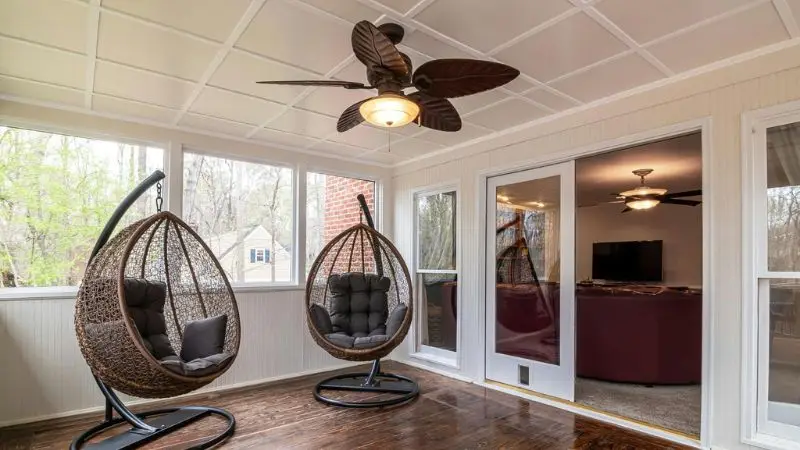
The selection of the appropriate ceiling fan to be used in large rooms does not only involve style. It has to do with high airflow, wide blade span, good motor performance, and high CFM output. In larger rooms, small fans cannot evenly distribute air, which creates hot spots and a lack of comfort. It is due to this reason that high-capacity models are necessary to cool properly.
The following are the most suitable high-airflow ceiling fans based on criteria such as cost, high-end use, smart functionality, and energy efficiency. The former choice is dedicated to high performance in large rooms and heavy-duty airflow.
VEVOR 96-Inch Ceiling Fan – Best Overall High Airflow
VEVOR ceiling fan 96 inch is built to meet the extreme airflow requirements, which is why it is one of the strongest ceiling fans to use in large rooms, halls, and open areas. Its large blade span and high CFM output deliver powerful airflow that easily covers large areas. It is particularly applied in commercial areas or extremely large living rooms where the regular fans are not able to provide consistent cooling. Its DC motor helps maintain consistent airflow and control energy consumption. This fan is designed for people who want maximum cooling capacity but do not need to rely on air conditioning.
Pros
- Very high airflow that is adequate in very large rooms.
- Big 96-inch blade span with extensive coverage.
- A DC motor that is energy efficient and has stable performance.
Con
- Should not be used in small or medium rooms because of high airflow.
Hampton Bay Industrial Style Fan
This low-priced ceiling fan is aimed at providing high air movement at a low cost and thus is suitable for users who desire performance but at a low cost. It is usually installed in big living rooms, garages, and open spaces where a regular flow of air is required. Its fan is more practical and less smart, thus keeping the cost down. The minimalist design and the dependable motor make it a good option to use in daily life in hot climates, where the powerful airflow is more significant than the appearance.
- Low-cost solution to large room cooling.
- Good and constant airflow performance.
- Simple, robust design for long-term use.
Con
- Locks have intelligent capabilities and contemporary controls.
Modern Forms Hydra Series
Modern Forms Hydra smart ceiling fan is designed to suit the needs of individuals who desire high-level technology to be used in addition to high airflow performance. It provides home automation, controlled by an app, and voice recognition, so that it can be easily adjusted either at home or at work. It has a design of aerodynamic blades that enhance the circulation of air and yet operate quietly. The fan will be suitable in contemporary houses where comfort, automation, and cooling effectiveness are of equal significance. It is also effective in big living rooms where there is a need to have controlled airflow throughout the day.
Pros
- Intelligent control, app, and voice support.
- Silent operation even at greater speeds.
- Effective airflow planning of large rooms.
Con
- Expensive as opposed to normal ceiling fans.
Big Ass Fans Haiku L Industrial
The Big Ass Fans Haiku L Industrial ceiling fan is a premium solution designed for large commercial spaces, warehouses, gyms, and open halls. It is designed to operate around the clock and pump large volumes of air efficiently. The large blade range ensures that air reaches all corners of the area, prevents heat buildup, and enhances ventilation. It can be applied particularly in places where size or the open plan makes temperature control hard. It is also tough in construction and thus can be used in harsh conditions.
Pros
- Ideal for factory and large-sized areas.
- Extremely high airflow coverage of large areas.
- Good and robust construction.
Con
- Powered too highly to be used at home.
DC Motor Large Room Fan
This is an energy-saving ceiling fan, meant to provide powerful air flow at minimal electricity usage. It has a contemporary DC motor, which gives it a smooth operation and superior speed control. It is best suited to users who want energy-efficient ceiling fans with good air circulation, especially in hot climates where the fans are used extensively. It uses less power, but it also provides efficient cooling of large rooms, so it is a good compromise between performance and efficiency.
Pros
- High airflow with low energy consumption.
- A silent DC motor operates silently.
- Appropriate to use on hot days.
Con
- A little less airflow than industrial-grade models.
High Airflow Ceiling Fans for Different Room Types
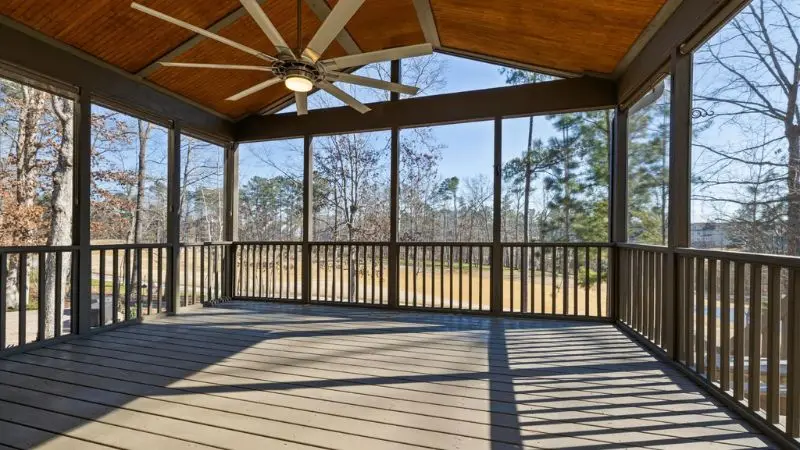
The selection of the appropriate fan will be based on the size of the room and the use of the space. Different rooms have different cooling needs, and the wrong fan can result in poor air circulation or energy waste. Big rooms should have more aggressive air movement, whereas smaller rooms should have weaker cooling and be quieter.
Each room type is described below in a straightforward manner to help you easily determine which fan would best suit you. This will assist you in selecting the appropriate high-airflow ceiling fans to ensure greater comfort and adequate air circulation in each space.
Ceiling Fans for Living Rooms
Living rooms are typically medium or large areas where families spend most of their time. These spaces require a constant, uniformly distributed air circulation to make everyone feel at ease. A wide-blade fan that can be adjusted to a variable speed is best used in this area.
Living rooms have been found to be the best place to install ceiling fans that can provide the best cooling in summer without being too noisy. This keeps the room cooler during gatherings, movie watching, or just relaxing, without causing unnecessary noise or disturbance. Even distribution of air is significant in ensuring a pleasant environment.
Ceiling Fans for Bedrooms
The bedrooms should have soft and noiseless air circulation since the primary concern is comfort and quality of sleep. An electric fan that does not produce noise or does not need a powerful wind pressure is perfect in this area. balanced speed control, medium-speed fans are best.
When selecting energy-efficient ceiling fans with good air circulation, bedrooms should prioritize low-noise operation and consistent airflow. This will ensure a comfortable sleeping temperature at night without overheating the room. The light breeze is sufficient to have a good sleep.
Ceiling Fans for Offices
Offices should have clean, consistent air that enhances comfort without distraction. An excellent office fan must circulate air throughout the desks and workspaces and should have a low noise level. Adjustable speed controllers are used to ensure that various comfort levels are maintained throughout the day.
In high airflow ceiling fans in hot climates, office areas are enjoying efficient types of fans that do not interfere with the airflow. This helps enhance concentration and efficiency, as well as keep the environment cool, particularly when working long hours in hot conditions.
Ceiling Fans for Warehouses and Large Commercial Spaces
The large commercial areas and warehouses require very strong airflow due to their open structure and tall ceilings. These settings require more than ordinary fans, and large-blade fans or industrial-grade fans are usually utilized.
In these spaces, which ceiling fan gives the highest airflow is an important consideration. The most suitable fans would be the high-CFM industrial fan,s as they can move a significant amount of air over a large area to assist in the reduction of heat and general ventilation.
@ashtonbrown007 VEVOR Wall-Mount Misting Fan #VevorMistingFan #WallMountFan #Vevor #PatioMistingFan #MistingFan
♬ original sound – AshtonBrown007
Ceiling Fans for Outdoor Covered Areas
The fans in the outdoor covered spaces, such as patios, balconies, and verandas, must be able to perform in changing weather conditions. These fans should be durable and able to provide consistent airflow even in semi-open environments.
When choosing high-airflow ceiling fans for outdoor areas, opt for models that maintain stable performance even in high humidity and airflow resistance. This assists in making outdoor places comfortable and usable in warm weather, and also allows fresh air to flow in the space.
Installation Tips for Maximum Airflow Performance
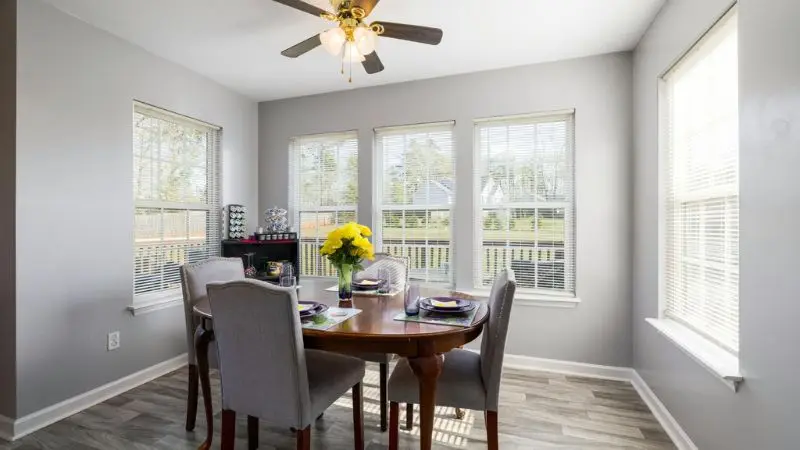
Proper installation significantly affects the performance of a ceiling fan. Even a strong fan could give poor airflow when it is placed at the incorrect height or position. The placement, type of mounting, and simple safety measures should be considered in order to achieve maximum cooling effect. These are used to provide a smoother airflow throughout the whole room.
The following are some easy installation tips that will enable you to achieve the best out of high airflow ceiling fans, particularly in big rooms where airflow circulation is essential for the comfort of the room.
Ideal Ceiling Height for Better Airflow
The ceiling height directly affects a fan’s air-movement efficiency. When the fan is too near the ceiling or too low, the airflow will be uneven and inefficient. The correct height will ensure that the air moves freely and has a more extensive coverage, which enhances the overall cooling.
To achieve optimal cooling in the summer with ceiling fans, a perfect ceiling height will allow air to circulate in the entire room without any hindrance. Generally, longer downrods should be used with higher ceilings, and shorter mounting should be done with shorter ceilings. The right choice of height will also ensure the same comfort in big and small rooms.
Best Fan Placement in the Room
The location of fans is significant in the equal distribution of air. Placing the fan in the middle of the room will enable the air to move in every direction uniformly. When it is not placed in the center, it may result in uneven cooling and a lack of comfort in some places.
In hot climates where high-airflow ceiling fans are used, proper placement ensures good air circulation throughout the room. This is particularly essential in big areas where heat is likely to accumulate. Proper placement enhances overall performance and increases the cooling effect.
Downrod vs Flush Mount Installation
Flush mount installation and downrod mounting are two frequently used types of mounting, depending on the ceiling height. Higher ceilings have downrods to get the fan nearer to the living area to enhance the efficiency of the airflow. Flush mounts are applied in low ceilings where there is a lack of space.
To save energy with ceiling fans, it is always best to select the appropriate mounting style to enhance their performance. Downrods suit large rooms due to their effectiveness in moving air, and flush mounts suit small spaces. The correct option guarantees safety as well as efficient cooling.
Safety Tips for Ceiling Fan Installation
Ceiling fan installation is a process that includes safety. The fan should be firmly attached to a good ceiling support that will not vibrate or topple. All electrical connections should be properly insulated and checked before use. Periodical maintenance also contributes to the long-term safety and performance.
When installing high-airflow ceiling fans, it is particularly crucial to ensure they are mounted securely, as more powerful fans create greater movement and airflow. Correct installation can minimize noise, damage, and ensure a stable operation. Installed safely, a fan will not only last longer, but it will also be more efficient in cooling.
Conclusion
Selecting the appropriate ceiling fan has the capability to enhance the comfort of the indoors considerably, particularly when one has a big room and their surroundings are hot. Each aspect, such as airflow rating and motor type or blade design and installation height, influences performance. Good quality fans not only supply good circulation of air but also assist in cutting electricity costs in the long run.
No matter whether you are looking to cool the bedroom, office, or warehouse, the right model will provide you with the balance in the air flow and increased energy efficiency. The most effective high airflow ceiling fans are those that have combined a powerful yet economical and intelligent design to provide uniform cooling. The right kind of fan makes life worth living by alleviating the buildup of heat and improving the general living or working environment.
FAQ
What are the high airflow ceiling fans?
They are big rooms, halls, and hot climates where high airflow ceiling fans are employed to circulate a lot of air efficiently. They enhance cooling and ensure a stable indoor comfort.
What ceiling fan has the greatest airflow?
The fans that provide the maximum airflow are those with high CFM ratings, large blade spans, and powerful motors. Industrial and large-room models are optimized for maximum air-movement efficiency.
Do large rooms respond to energy-saving ceiling fans?
Yes, energy-efficient fans with powerful motors provide good airflow while consuming less electricity. They are suitable for long-term application in big rooms and hot weather.
What is the optimum number of blades to use?
The majority of high airflow fans have 3-5 aerodynamic blades. Design and angle are more important than the number of blades to have good and effective air circulation.
Does ceiling height have any influence on airflow performance?
Yes, the ceiling height is important. The adequate height will guarantee an improved air distribution. Downrods enhance air circulation in high ceilings, whereas flush mounts are applicable to low-ceiling rooms.