For most of us, a garage is just a storage space, a workshop, or a space to park a car. That’s the reason we all ignore its wiring. Whereas, having proper garage electrical wiring is just as important as other parts of our house.
When it comes to electricity, safety and smart planning are the non-negotiables. If you clearly understand the garage wiring perks, you can do it yourself. This blog post guides homeowners like you on installing garage wiring, maintenance tips, and best practices.
Planning your garage wiring setup
An accurate garage wiring project begins with a clear planing and right tools. Furthermore, you need to clarify your power needs, proper wiring materials, and design a layout that supports both current and future expansion.
If you often use power tools or need flexible connections, having reliable extension cord reels can make your life easier. You can opt for a retractable power cord reel. It offers flexibility and safety by keeping cables off the floor. Furthermore, it helps you neatly manage your garage.
Assessing load, appliances and future needs
Your first step should be finalizing what you’ll power. Garages often support more than just lighting. You should consider air compressors, refrigerators, EV chargers, and other high-draw devices.
- Make a list of your equipment: Make a note of watts of each appliance you are using.
- Decide your amperage: Divide total watts by volts (typically 120V or 240V).
- Prepare for future expansion: If you have a plan to expand your garage, add more plugs accordingly. It’s easier to add extra capacity now than to redo wiring later.
Choosing wire type, conduit methods and panel location
Your garage is very different from other parts of your home. Some garages are exposed to temperature fluctuations, moisture, and humidity. Therefore, selecting the right materials is important for their safety and efficiency.
- Which type of Wire You Should Use: Use NM-B for interior walls or THHN/THWN wires inside conduits.
- Guide on Choosing Conduits: Usually, PVC or metal conduits are the most widely used materials. They protect wires from moisture, heat, and impact, especially in unfinished or detached garages.
- Select a Suitable Panel location: You should find a suitable location for your panels. Ideally, you should install panels in a dry, easily accessible area with enough clearance.
In case of a detached garage, you may require a sub-panel, connected to your home’s main panel with a properly sized feeder cable.
Pro Tip: For projects that need flexible power access, consider adding a retractable extension cord reel. These make it easy to plug in tools without overloading fixed outlets.
Outlet layout
A well-planned outlet layout keeps your garage functional, organized, and safe. Here’s how to design it effectively:
- Tips on Wall Outlets: You need to install wall receptacles every 6–8 feet and make sure there’s at least one outlet on every wall. That spacing prevents overloading of a single outlet, reducing the need for long extension cords.
- Workbench Outlets: The experts recommend mounting outlets slightly above workbench height to make plugging in tools and chargers easy without bending or reaching.
- Ceiling Outlets Procedure: Add outlets in the ceiling for overhead lighting, garage door openers, or retractable extension cord reels. This setup keeps cords off the floor and maximizes workspace.
- GFCI Protection Guide: Electricity is one thing in the building process where safety should not be compromised. You shall always use protected GFCI outlets, especially near damp areas or outdoors. These prevent electric shock and satisfy safety code requirements.
- Dedicated Circuits for Extra Safety: Do not forget to add dedicated circuits for high-draw equipment, such as air compressors, welders, or EV chargers. This prevents tripped breakers and ensures consistent power supply.
- Cord Management: Finally, put in extension cord reels. This will reduce clutter and tangles of the cords and extend reach for portable tools or lighting.
In short, a thoughtful combination of lighting, outlet placement, and dedicated circuits will make your garage safer, more efficient, and ready for any project.
How to install garage wiring safely
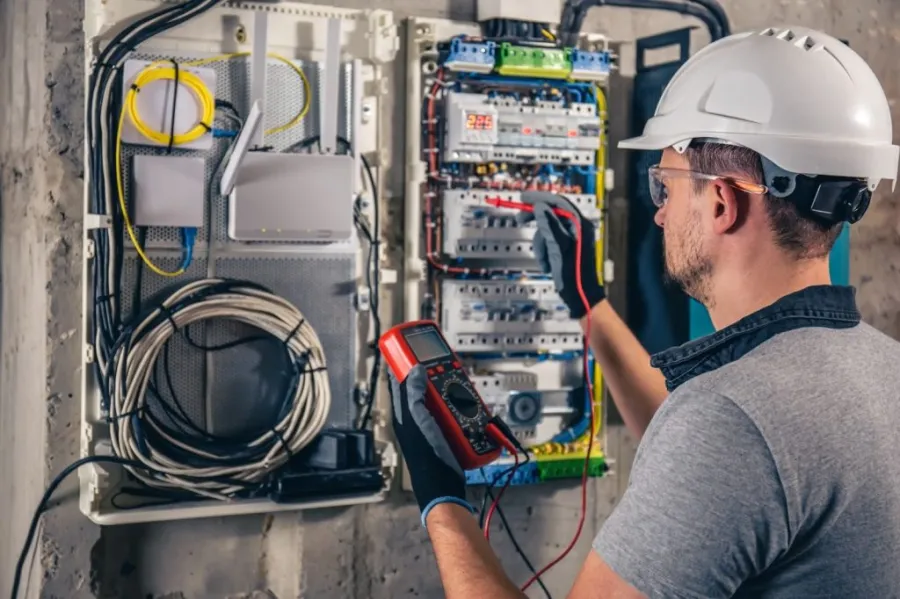
Electrical wiring is a sensitive process and requires many precautions. Therefore, when you plan your garage wiring installation, keep these safety measures in mind to help you stay safe and avoid any potential hazards.
Step 1: Shut off power and obtain the permit (if required)
Switch off power and get the permit if needed. First, switch the power off at the main circuit breaker before doing any electrical work. Once this is done, check with a non-contact voltage tester to make sure that the circuits are dead.
Most communities require a permit before installing new wiring. You should be aware of the legal requirements in your area and ensure that your project meets local codes and passes inspection.
Step 2: Run cable or conduit and install the panel
When installing wiring, begin by running your main feeder cable or conduit from your home to the garage.
It is always better to choose a safe path that is direct. If you are wiring a detached garage, you’ll want to bury underground-rated cables to protect them against physical damage and from weather exposure.
Next, securely mount your sub-panel in a convenient location and make sure it’s properly grounded to maintain electrical safety. As you go along, keep all cable runs neat, well-organized, and supported with clamps or straps to prevent sagging or wear over time.
Step 3: Install receptacles, lighting fixtures, and ground fault circuits
The moment you begin installing the receptors, light fixtures, and grounds for circuits, colour coding needs to be carefully followed:
- Black or red is for hot wires
- White means neutral
- Bare or green means ground
For lighting, LED fixtures are efficient and long-lasting. You can find vapor-tight models for damp areas. All outlets in the garage must be GFCI-protected to protect against shock.
You can also install a retractable power cord reel near your workbench for convenience. It will keep the cords neat and provide you with extra outlets when needed.
Step 4: Make connections, label circuits and test the system
After wiring is complete, follow these important steps:
- Connect circuits to breakers.
- Label each breaker clearly for your peace of mind.
- Check all the connections for tightness and correct polarity to avoid any short circuit. When powered, use a circuit tester to make sure every outlet is working.
Step 5: Inspection and final sign-off
DIYs are pretty pocket-friendly; however, regarding your life and safety, you should be very cautious. In case you are not so sure about the reliability of your wiring. You can schedule an inspection with your local building department, if necessary. Inspectors will ensure your wiring and grounding, and GFCI protection meet safety code standards. Passing inspection gives you the confidence in knowing your installation is safe and to code.
Maintenance and best practices for garage wiring

Often, people complete the installation and then forget about it. However, garage wiring also needs maintenance for long-term safety and lifespan. Here are a few tips that will help you maintain your garage wiring.
Conduct regular checks
Electrical components are sensitive to moisture, heat, and humidity. With the passage of time, they corrode and lose their efficiency.
- You need to inspect outlets, switches, and cords for signs of wear or discoloration. If you notice any, repair them immediately.
- Tighten loose screws or covers to minimize hazards.
- Replace damaged cords immediately to avoid short circuits.
If you frequently use power tools, keep them connected via a retractable extension reel to prevent cord stress and tangles.
Avoid overloads, misuse, and wear in the garage
Overloaded circuits can result in tripped breakers and sometimes even fire. It’s hazardous for the safety of your house. A few tips to avoid this are:
- Try not to plug heavy-duty equipment into the same outlet; it may overload and short-circuit.
- High-power equipment requires a higher voltage compared to ordinary electric devices. Therefore, use a dedicated circuit for high-power equipment.
- People commonly leave the tools plugged in, even if they are not in use. This loses the plugs, and you often need to replace them. Therefore, unplug tools when not in use.
- Extension cord reels, such as the 45ft Retractable Cord Reel, are designed for high-power loads and help distribute power safely across the garage.
Learn proper usage of power tools, EV chargers, and storage
You must become proficient with power tools before installing garage wiring. In addition to preserving safety, this will help guarantee precise installation.
- Power instruments: Before using, make sure the voltage and amperage ratings match.
- Install EV chargers on circuits that are specifically designed for 240V power.
- Storage: To avoid wear, do not run cords through doorways or under carpets.
When not in use, a retractable extension cord reel neatly stores cables, keeping your workspace safe and orderly.
FAQs
What circuit amperage do I need for my garage wiring?
The circuit amperage of garage wiring depends on the particular power requirements. Most garages use 20-amp circuits for outlets and lighting, but high-power tools or EV chargers may need 30–50 amps on dedicated circuits.
Can I reuse existing wiring when installing garage wiring?
You can reuse wiring only if it meets modern code standards and is in good condition. You should replace old or damaged wiring to prevent overheating or shorts.
Do I need a separate ground rod for a detached garage?
Yes. You need to detach garages typically need their own grounding electrode (ground rod) connected to the sub-panel for safety.
What outlets should I use in a garage?
Always use GFCI-protected and weather-resistant (WR) outlets, especially for areas that easily catch moisture.
Is it safe to install garage wiring myself?
If you follow proper codes and use high-quality materials, then installing garage wiring yourself is safe and cheap. However, for complex installations like sub-panels or EV chargers, it is wise to hire a professional electrician.
Conclusion
Garage wiring is not especially complex, but it does call for some care, precision, and the proper tools. With a little planning, some quality materials, and close attention to grounding, you’ll be able to put together a power system that’s functional and safe.
And finally, add an extension cord reel to your workspace. Durable, retractable reels make power management simple and keep your garage organized and hazard-free.