The garage floor gets hit like no other floor in the house does. In just a few winters, hot tires, dropped sockets, road salt, and slow oil drips can turn a brand-new slab into a cracked, stained mess. Bare concrete, by contrast, stays cold and slippery year-round. That’s when people start pricing garage flooring tiles to fix the damage.
This guide covers several garage flooring types and explains each one in detail. It also covers how to install them and keep the whole garage clean afterward. By the end, you’ll know which new garage floor works best for you, your budget, and your needs.
The Main Garage Flooring Types And Materials
It’s good to see the field before you buy anything. Garage floor surfaces come from a few main flooring systems. The material type determines how well the floor handles cars, tools, and spills.
Four Garage Flooring Types Worth Knowing
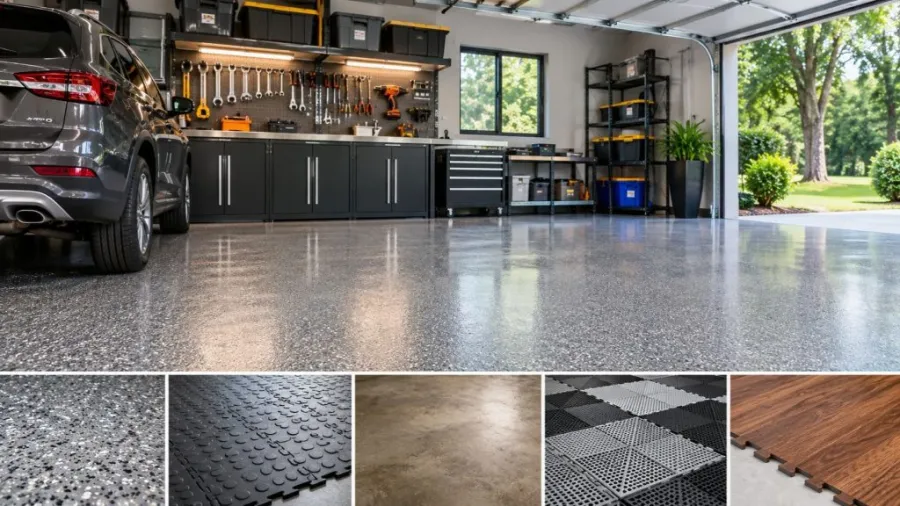
Interlocking tiles, roll out flooring, resin coatings, and containment mats are the four garage flooring types that work in almost any space. You can build a 2 car space in just one afternoon because the tiles snap together over the pavement without glue. You can see the whole line of garage flooring rolls on one surface. Resin based sealants, such as epoxy, stick to the slab and create a hard, shiny finish.
Which Materials Stand Up Best
Garage flooring materials matter as much as the layout. First, answer a key question What are the best materials for durable garage flooring? These four make the most sense:
- Chemicals do not damage PVC, and it is soft on your feet during long workdays.
- PVC is stiff and strong, so it can handle heavy toolboxes and moving jacks.
- For dropped tools and gym corners, stick with thick, soft SBR rubber.
- For a poured finish, epoxy resin provides a smooth, hard coat.
Most interlocking garage floor tiles are made of PVC or polypropylene because they are strong, do not shift around, and are not too expensive. A 50 pack of double sided textured interlocking tiles covers one bay without any special tools.
A roll of SBR rubber flooring is better than any tile for heavy-duty corners because it can handle impact better. For years, these garage flooring materials will keep the concrete safe and clean from oil, water, and road salt.
How do I choose between epoxy, tiles, and concrete coatings for a home garage?
Interlocking tiles are best for most home garages because they are easy to install and flexible. Epoxy is best for a smooth, long-lasting look, and concrete coatings are in the middle. All of them fall under the broader range of flooring you can install over concrete. The table puts the main garage floor solutions side by side. Roll-out mats were added because people also compare those.
| Flooring type | Install effort | Durability | Best for |
|---|---|---|---|
| Interlocking tiles | Snap together, no glue, one afternoon | High; swap a single damaged tile | DIY home garages, renters |
| Roll-out mats | Unroll, tape down, trim to fit | Good; very few seams | Fast cover of large bays |
| Epoxy coating | Grind or etch slab, roll on, cure days | Hard, glossy; chips can spread | Permanent showroom finish |
| Concrete sealer | Brush or roll on, light prep | Moderate; reapply over time | Low-cost dust control |
| VEVOR example | Double-sided textured interlocking PVC tiles | Snap-lock, non-slip both sides | Weekend home-garage upgrade |
Recommended For Your Project
Cleaning, Spills, And Everyday Upkeep
On a bad day, a floor is only as good as its clean-up. The real tests are oil, coolant, and winter slush, and the right garage floor surfaces can clean them up quickly. Two habits keep it sharp.
Easiest To Clean And Most Spill Resistant Options
Non-porous garage floor surfaces are the easiest to clean. A good question is: Which garage flooring options are easiest to clean and most resistant to spills?
- For PVC rolls and tiles, you can just wipe or hose off oil or stains.
- Spills and chemicals do not stick to SBR rubber in heavy shops.
- Sealed epoxy is a smooth coat with no grout lines to collect dirt.
V-shaped or rough tiles make the floor easier to walk on when it is wet. A guide on how to clean a garage floor can help remove stains that have been there for a while. If you work in your garage on a floor that would not get dirty, you will not have to scrub it every weekend.
Simple Upkeep That Keeps It Looking New
All of them need little maintenance. Move the dirt around, mop with gentle soap, and lift one or two tiles to clean under them. The same habits that keep a whole garage tidy apply to the floor. You can hose down tiles and mats. This 1 piece repair design is a big part of why a tiled garage floor lasts longer than a coating that wears down.
Installing And Finishing A New Garage Floor
People worry about the installation, but it’s easier than most think. A garage needs more than just a floor to be useful, and the gear mechanics rely on matters once the floor is down.
What installation steps are needed for garage floor tiles or coatings?
It takes a lot of different steps to put down tiles and coatings. To cut a long story short:
- Clean and dry the slab, then use a broom to remove all the grit.
- Dry-lay one row of tiles, then snap the rest of them together from a corner.
- Use a pocket knife or jigsaw to cut edge pieces to size so they fit on walls and posts.
- Either etch or grind the concrete, then roll on the glue and let it dry.
- Put down tape or transition edges to keep things from curling or moving.
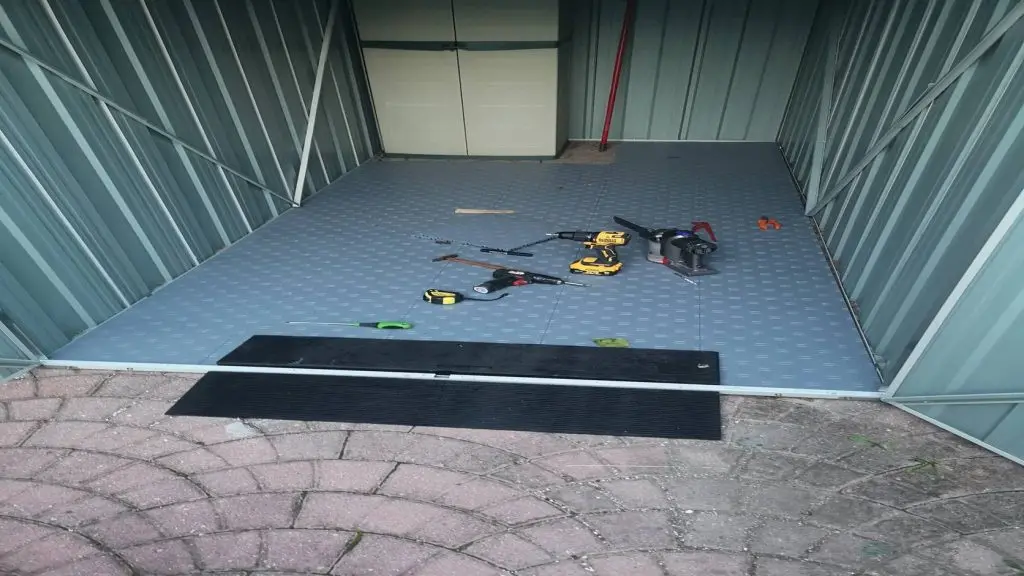
If you mess up, you can easily fix tiles because you can lift and redo a row in seconds. But once you pour a coating, you can’t fix it. There is only one way to click together a pack of diamond-plate PVC floor tiles, no matter how big or small the task is. That’s how most interlocking garage flooring systems work, so it’s not hard to get started.
Finishing Edges And Trimming To Fit
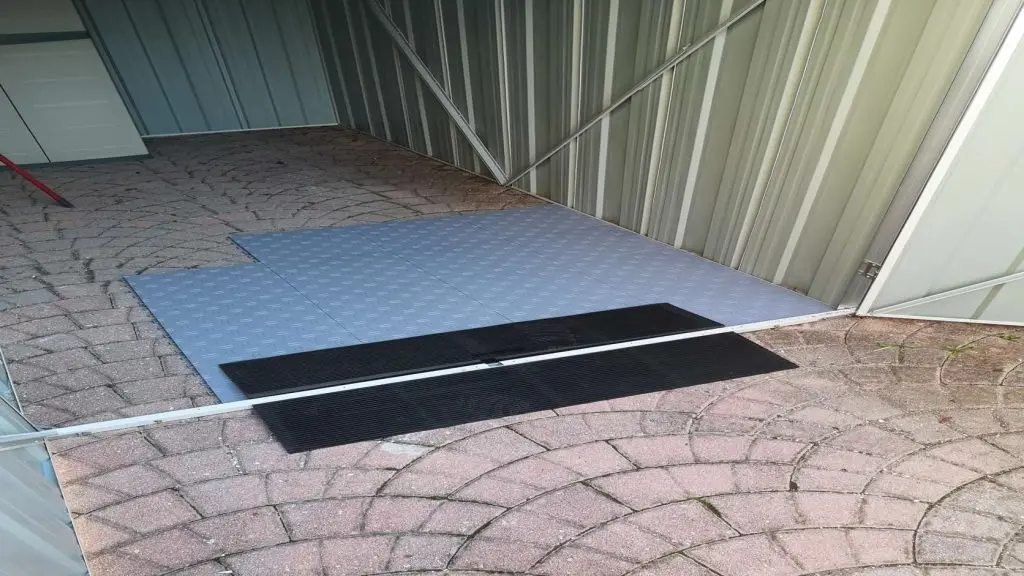
Without edges, a floor would look like it wasn’t put together properly. A raised tile lip that is left bare at the doorway can catch toes and wheels, so sloped ramps are important. When you only want to tile a parking spot, make sure the area has sides so the island of garage flooring tiles looks like a planned design and not an unfinished patch. Good edges also keep dirt and water from getting under the flooring in garage corners, so measure the whole room before you place your order.
Choosing Garage Flooring Tiles In France
When French people shop for tiles, they look at price, durability, and appearance. Once you know what to compare, choosing garage flooring here is easy.
What are the most popular garage flooring tile types sold in France and which product lines should I compare?
2 tile builds make up most French garages. Check out the double-sided textured interlocking tiles and the diamond-plate PVC floor tiles. The first is lighter and comes in more colors for home use, while the second is stiffer and tougher for the workshop. Both lines are easy to find. These are the garage flooring types that most French buyers choose first.
| Feature | Textured interlocking tile | Diamond-plate PVC tile |
|---|---|---|
| Tile size | About 12 x 12 in | About 20 in / 513 mm square |
| Feel | Lighter, many colors | Rigid, workshop-tough |
| Grip | Double-sided texture | Raised diamond plate |
| Best use | Home garage, living space | Workshop, heavy carts |
| VEVOR example | 12 x 12 in textured interlocking tiles | 513 mm diamond-plate PVC tiles |
What are the best budget vs premium garage flooring tile options in France and how do specific products compare?
Put your money where it matters. A textured interlocking PVC set is the best low cost option. A thicker diamond plate or high load polypropylene tile is the best high end option. One more similarity is important here. Which garage flooring tiles in France offer the best balance of price, durability, and appearance and which product ranges fit that balance? The best range of textured interlocking tiles is in the middle. The table displays the advantages and disadvantages of the basic, middle, and high end tiers across the wider range of garage floor solutions.
| Tier | Tile type | Holds a parked car? | Look |
|---|---|---|---|
| Entry/budget | Thin textured PVC interlocking | Light vehicles | Basic, solid colors |
| Mid-range | Textured interlocking, about 0.53 in | Yes, daily driver | Sharp, color choices |
| Premium | Thick diamond-plate or high-load tile | Heavy, repeated turns | Industrial, pro finish |
| VEVOR example | Textured interlocking tile, about 0.53 in thick | Supports a parked car | Several colors |
Garage Flooring Tiles For Rooms That Double As Living Spaces
More garages are being used as gyms, home offices, or hangouts, so the floor has to look good even though it gets dirty and worn down. Choose based on that mix of comfort and toughness.
What are the best garage flooring tiles for garages that double as living spaces in France and which products balance looks and durability?
If you want to use your garage as a living room at night, choose colorful modular tiles that feel like padded PVC. Pick a textured tile in a color you like and arrange it the way you want. With a set of red or blue interlocking floor tiles, you can turn a plain bay into a stylish room that can still fit a car during the week. The table has both the look you want and the strength you need.
| Priority | Tile pick | Why it works |
|---|---|---|
| Best looks | Color interlocking tiles, checkerboard | Styles the room, hides stains |
| Comfort underfoot | Cushioned PVC interlocking | Softer for standing and gym use |
| Toughness | Diamond-plate PVC where the car sits | Handles tires and tool carts |
| VEVOR example | Interlocking tiles in black, silver, red, blue | Color mix with non-slip texture |
Styling Without Losing Toughness
You can have both. Put down a two-tone checkerboard, frame off a work area, and leave the tougher tile where the car sits. Soft lighting, a rug, and smart storage finish off the room. To get started, a guide to the best garage storage solutions can help you clear out the junk. Event flooring tiles work well on a porch or in an event corner off the garage. They are just as easy to put together, so the upgrade doesn’t end at the garage door.
Conclusion
The right garage flooring depends on how you plan to use the room. Snap-together tiles are the easiest and fastest way to improve almost any home garage. Rubber rolls work best for heavy corners, and epoxy rewards anyone ready for a permanent finish. Consider the garage flooring materials, how hard they will be to install, and whether the room does more than one thing, then choose the floor that fits. Find garage flooring systems that fit your plans, then begin the job.
FAQs
How long does garage flooring last?
If you take good care of your PVC and plastic tiles, they should last for more than ten years. Rubber rolls can handle years of heavy use. Replacing one tile takes much less time than replacing the whole floor.
Can I put flooring over cracked concrete?
Yes, interlocking tiles and roll-out mats can hide cracks and minor unevenness. If the damage is serious, patch the worst areas first to keep the surface flat and stable.
Do interlocking tiles move when you park on them?
No, when it’s properly configured. Locking tabs keep the tiles together as a single surface. Edge ramps prevent the edge from moving. The tiles can turn and stop without moving the floor.
Is tile or epoxy better for a cold garage?
When it’s cold, tiles are better. Epoxy needs a warm, dry slab to bond, and it can get slippery when it gets wet. You can install them in any season because they don’t need to cure before you can use them.
How many tiles do I need for a two-car garage?
Divide the floor area by the number of square meters in the pack. Add about 10% for cuts and edges, and buy an extra pack so future fixes still match.