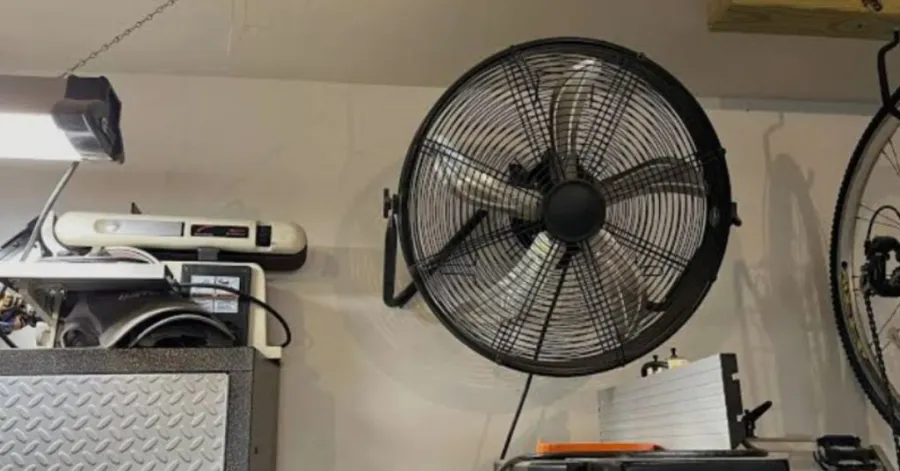
A garage with poor ventilation and heat can quickly become uncomfortable, particularly during project work or when storing heat-sensitive products. Selecting the appropriate airflow solution can make a huge difference in comfort and usability. Ceiling systems and portable units are just a few of the useful ideas for garage fans that can help circulate air and minimize heat buildup. You may want to know how to cool a garage with fans, or you just want easy additions to enhance ventilation; the appropriate arrangement is in your space and use. This guide discusses how to use fans effectively to transform your garage into a cooler, easier-to-breathe space.
- Wall-Mounted Garage Fan Ideas for Targeted Cooling
- Portable Garage Fan Ideas for Flexible Airflow
- Exhaust and Ventilation Fan Ideas for Air Exchange
- Smart Garage Fan Ideas for Energy Efficiency
- DIY Garage Fan Ideas for Budget-Friendly Cooling at Home
- How to Choose the Best Garage Fan Setup for Your Space
Ceiling-Mounted Garage Fan Ideas for Whole-Space Cooling
The first step to better airflow in a garage is often a ceiling-mounted solution, since it provides wide, even air distribution. Poor circulation and wall and ceiling traps cause many garages to be hot and stifling. The right setup may result in a tangible difference in comfort and usability.
In this section, we will discuss practical cooling methods to help you learn about garage fans in a systematic manner. It also helps plan better for cooling a garage with fans without necessarily using costly systems.
Benefits of Installing Ceiling Fans in Garages
Garage ceiling fans help maintain steady air circulation, reducing stagnant heat and moisture, particularly in confined or poorly ventilated garages. They spread air throughout the room, unlike portable fans that only direct air to a specific area, enhancing comfort during long working periods. This allows them to be used in hobby areas, storage, and workshop setups where consistent air flow is required. They also help eliminate stagnant air pockets that often form in corners or near ceilings.
Ceiling fans are a reliable and energy-efficient alternative to people who are considering garage fans in their workshops. They can also promote broader, cheaper garage cooling concepts by reducing reliance on costly cooling systems. In the long run, they help keep things more stable and comfortable.
Best Types of Ceiling Fans for Large Garage Spaces
Big garages require ceiling fans that can move large amounts of air effectively across large spaces. Industrial or heavy-duty models are commonly used because they are designed for continuous operation and to withstand dust, heat, and other harsh conditions. Metal blades are particularly efficient because they are durable and have enhanced airflow compared to ordinary residential fans. Adjustable speed controls are also useful for adjusting performance according to the season or activity within the garage.
Durability and airflow strength are important when choosing the most suitable ceiling fan for the garage workshop. These fans are compatible with the workshop fan concepts aimed at long-term ventilation performance. Selecting the appropriate model will make it more comfortable and guarantee regular air circulation within the space.
Ideal Placement for Maximum Air Distribution
The ceiling fan in a garage should be placed properly to ensure maximum performance. The best location is typically the center of the ceiling, as it allows air to circulate in all directions. In larger garages, multiple fans may be needed to cover dead zones created by storage shelves, tools, or partitions. The ceiling height ought to be taken into consideration as well, so that the airflow can reach the work areas.
Smart positioning can be the first step to understanding how to improve airflow in a garage. It is also related to DIY garage ventilation ideas, where both the natural and mechanical air flows are combined. Proper setup ensures easy air circulation and overall comfort for everyday garage use.
Wall-Mounted Garage Fan Ideas for Targeted Cooling
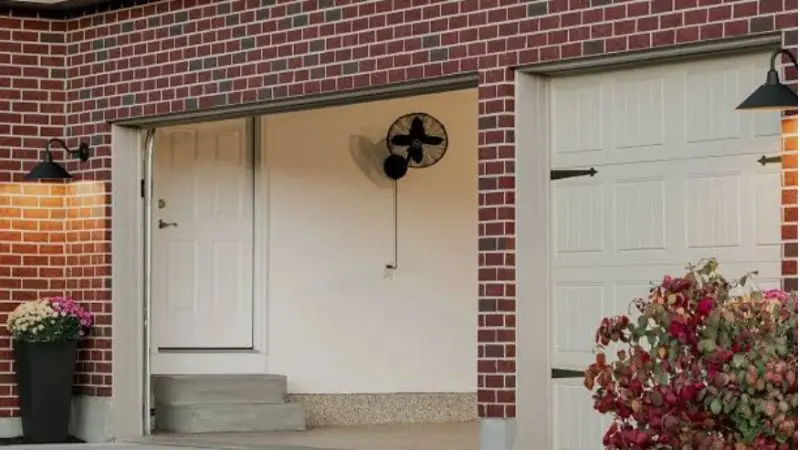
When you require specific air circulation in certain parts of your garage rather than throughout the entire room, a wise solution is to install wall-mounted fans. They are also effective in a small area where there is little or no ceiling or floor space available, and assist in directing air where work is occurring. This contributes to them being a solid member of the garage fan ideas that are practical and targeted at cooling. They also help improve airflow in a garage when coupled with other ventilation measures.
Advantages of Wall Fans in Work Areas
Wall fans come in handy in garages since they provide direct ventilation in the area where work is taking place without requiring a floor or ceiling space. This helps keep workbenches and tool areas cooler during long tasks. They come in particularly handy in smaller garages where space is at a premium and airflow may feel stifling. They enhance air circulation at working height to minimize heat buildup and make the working environment more comfortable for work and daily operations in the workshop.
Wall fans are easy and efficient when it comes to garage fan ideas in workshops. They also fit effectively in the cheap garage cooling ideas as they are cheap and easy to install.
Adjustable vs Fixed Wall Fan Options
Wall fans are also adjustable and can be redirected and angled to suit the flexible workspace, where the cooling requirements change over the day. Fixed wall fans, on the other hand, offer constant air flow in a single direction and are more suitable for the uniform cooling of a particular area. The two types may be useful for enhancing comfort, though the appropriate one will depend on how your garage will be used and the frequency of your airflow needs when undertaking tasks or projects.
Adjustable models provide greater control over planning the cooling of a garage with fans. Fixed models are effective in organized DIY garage ventilation ideas where the routes of airflow are predetermined.
Best Placement for Direct Airflow Control
The wall fans are to be located at working height or slightly above it to distribute air to the main activity area. Hot spots in the garage can be minimized by placing them in places close to heat sources or having low circulation. More than a single fan can be used in bigger spaces to cover the area and prevent dead air areas. Effective positioning enhances comfort and maintains uniform airflow within workplaces.
One important aspect of enhancing airflow in a garage is proper placement. It can also be used to facilitate the installation of exhaust fans in garages, helping direct air flow more effectively.
Portable Garage Fan Ideas for Flexible Airflow
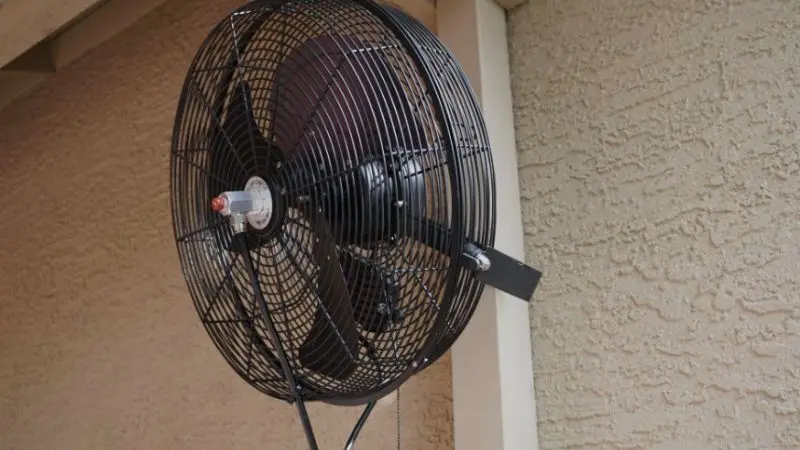
Portable cooling systems are an excellent option when you require flexibility in various areas of the garage. They are not difficult to move based on the location of airflow requirements and are therefore good for changing work areas and seasonal applications. These arrangements are typically part of garage fan concepts since they provide easy and versatile cooling without the need for permanent installation. They also suit well in investigating how to cool a garage using fans in a cost-effective manner.
Pedestal Fans for Adjustable Cooling
Pedestal fans are also a good choice in a garage since they come with adjustable height and direction; this can direct the airflow to the point of need. This is why they can be used in workplaces where the operations vary or when more than one individual is using the garage at a time. They also provide a constant flow of air that may help reduce heat accumulation in certain regions without the need to install or set them up permanently.
To come up with garage fan ideas for workshops, the pedestal fans will be flexible and easy to move around. They are also compatible with the low-cost garage cooling ideas, as they are cheap and easily accessible.
Industrial Floor Fans for High-Power Air Movement
Fans used in industrial floors are powerful and are suitable for large or heavily used garages. They are low to the ground; however, they provide a strong air movement, which can cool down a hot or stagnant space quite quickly. The fans are particularly handy in workshops, where tools and equipment generate heat or where there is inadequate ventilation. They are also durable and can therefore be used in rough conditions that require long hours of continuous operation.
Floor fans provide a strong, portable alternative to ceiling fans for garage workshop use. They also assist in how to enhance airflow in a garage by forcing air over greater distances.
Box Fans for Budget-Friendly Ventilation
Box fans are considered the cheapest way to improve airflow in the garage; they are widely used as a simple method of cooling. They are easy to install, portable, and can be installed on windows, doors, or open spaces so as to aid in the transfer of air in and out of the space. They are not as strong as industrial ones, but are useful in light ventilation and overall air movement.
Box fans are an easy point of entry when it comes to DIY garage ventilation ideas. They also suit well with the cheap garage cooling concepts for users who desire simple and cheap airflow solutions.
Exhaust and Ventilation Fan Ideas for Air Exchange
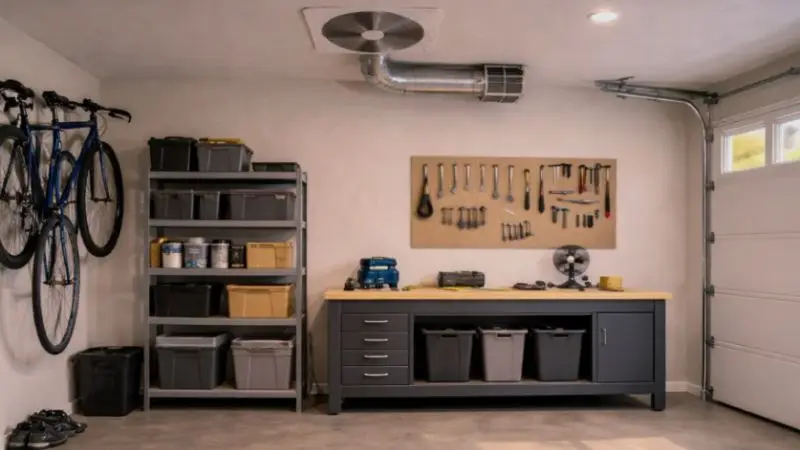
Any garage needs good airflow, as a lot of heat, dust, and fumes can accumulate in enclosed spaces. The exhaust and ventilation systems help remove stale air and draw in fresh air, making the environment healthier and more comfortable. These are solutions that frequently form a central element of garage fan conceptualizations aimed at enhancing long-term airflow. They are also significant in the process of enhancing the airflow in a garage in instances where natural ventilation is inadequate.
How Exhaust Fans Remove Heat and Fumes
The exhaust fans operate by forcing hot air, fumes, and any air particles in the garage out of the garage. This procedure reduces heat buildup and improves air quality, particularly in areas where welding, painting, or mechanical processes are performed. They help keep the temperature steadier and eliminate lingering odors by continually clearing stale air. This renders the garage more secure and comfortable to use over time.
Exhaust fans are imperative for managing airflow in most workshop garage fan ideas. They also enable the idea of installing exhaust fans in the garages by offering a first-hand approach to eliminating the unwanted air in the enclosed areas.
@vencedor707 Respuesta a @EL COMPI
♬ sonido original – Vencedor 707
Intake vs Exhaust Balance for Better Airflow
Intake and exhaust should be balanced to achieve good ventilation in the garage. Exhaust fans are used to get rid of hot air, and without adequate intake, the airflow may be limited and inefficient. Open spaces or intake vents allow fresh air to enter the space, and air is removed. The balance ensures stable circulation and eliminates pressure issues that may reduce fan performance. Properly balanced installation enhances the general comfort and air quality.
When strategizing about cooling a garage with fans, there must be a balance between intake and exhaust. It also promotes DIY garage ventilation ideas that ensure the air circulates in the area rather than stagnates.
Best Exhaust Fan Locations in a Garage
Exhaust fans are to be placed where hot air tends to accumulate naturally, e.g., high on walls or near the ceiling. Having them opposite the intake points can help maintain a consistent airflow direction throughout the garage. Several exhaust points can be required in larger spaces to evenly remove air and eliminate heat pockets. The correct location prevents stale air from being effectively expelled while maintaining the overall ventilation balance.
Proper placement of exhaust is usually the first step in understanding how to enhance airflow in a garage. This is the essence of the garage exhaust fan installation concepts, which can be used to establish a more efficient and balanced air exchange system.
Smart Garage Fan Ideas for Energy Efficiency
Intelligent cooling systems are gaining popularity because they help control temperature without energy waste. These systems do not need to run the fans continuously but instead regulate airflow based on actual conditions in the garage. This puts them as an upgrade to garage fan ideas, emphasizing comfort and economy. They also assist in improving airflow in a garage by automating ventilation when it is required.
Smart Thermostat-Controlled Fan Systems
Fans with smart thermostats are automatically activated or vary their speed based on a predetermined garage temperature. This helps maintain a comfortable environment without manual control. They are particularly handy in garages where temperatures change sharply throughout the day or season. Using the real-time heat readings, these systems are able to provide efficient cooling when it is required and avoid unnecessary energy consumption.
To add convenience and consistency to the use of garage fans in workshops, thermostat control will help. It also helps cool a garage with fans by making the airflow responsive rather than continuous.
Remote-Control and Timer-Based Fan Options
Air conditioners with remote controls and timers allow users to avoid physically adjusting the device each time they use it. It can be controlled with a remote to switch speed or direction in real time, and timers can be used to program operation at certain hours. This can be applied to garages that are not used daily but require periodic ventilation. These characteristics enhance convenience and improve airflow management in crowded or multi-purpose areas.
Timed operation can help minimize energy waste when considering DIY garage ventilation ideas. It is also compatible with low-cost garage cooling concepts by maximizing usage without additional equipment.
Energy-Saving Features to Reduce Electricity Costs
Garage fans that save energy consume less electricity while providing efficient air circulation. Most of the models have efficient motors, variable-speed settings, and low-power operating modes, which minimize overall consumption. These characteristics are significant for garages where fans can operate extensively, helping make electricity costs affordable. Even minor gains in productivity can be observed in the long run.
Energy efficiency is also an important consideration in the current garage fan concepts. It is also related to the way of enhancing the air circulation in a garage by making sure it can cool better without consuming more power.
DIY Garage Fan Ideas for Budget-Friendly Cooling at Home
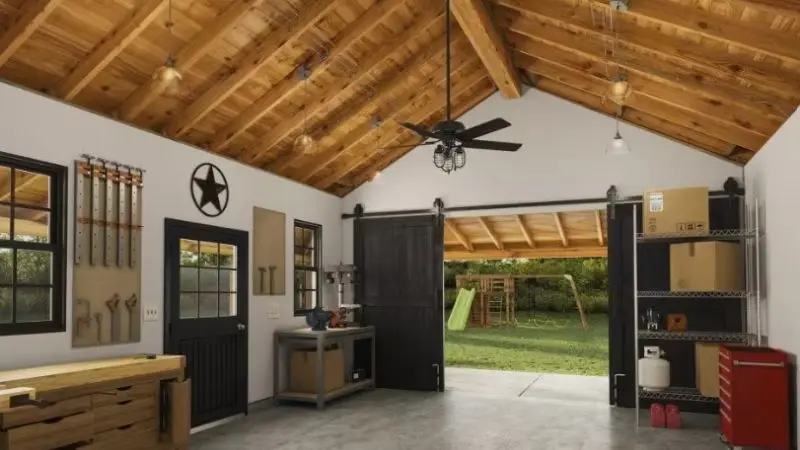
Home cooling techniques are a viable way to enhance comfort without necessarily investing a lot of money in elaborate systems. Most garages use simple arrangements involving fans and free air circulation to mitigate heat buildup. These strategies are particularly handy for homeowners in need of cost-effective garage cooling solutions that still deliver tangible results. They also relate to how to enhance airflow in a garage without costly installation, simply through planning.
How to Set Up a Simple Multi-Fan Cooling System in Your Garage
One of the simplest DIY techniques for enhancing the airflow in the garage is to use a combination of fans. A single fan to introduce air, and a second to expel air, may provide a constant circulation throughout the area. This arrangement minimizes hot spots and enhances overall comfort in the course of work or storage. Placing fans at various heights or in corners may also improve airflow in larger garages.
For a garage fan in workshops, a multi-fan system can provide scalable, flexible cooling. They also help cool a garage using fans, without permanent equipment.
How to Improve Natural Airflow in a Garage Using Fans
Natural ventilation is enhanced by fans, which help move air through open doors, windows, or vents. Depending on the installation, a fan next to an opening can either draw fresh air into or blow warm air out of the building. This enhances air circulation and helps dissipate heat, particularly in garages with limited passive air circulation. It is an easy method of improving the current ventilation with no significant alterations.
These homemade garage ventilation designs are applicable in most areas and can be modified according to layout. They also fall under the garage fan concept that is geared towards maximizing natural air flow.
Simple Low-Cost Ways to Increase Garage Airflow Efficiency
Minor modifications that enable fans to be more efficient are often low-cost airflow improvements. Performance can be enhanced by placing fans so they form a direct airflow path, avoiding obstructions from the vents, and applying reflective surfaces to minimize heat buildup. Even minor adjustments, such as raising or changing the angle of a fan, can help move air more effectively around the garage. These minuscule movements can cause a discernible difference in comfort.
To cool a garage cheaply, these hacks will deliver effective results without additional cost. They also enhance airflow in a garage by maximizing its presence.
How to Choose the Best Garage Fan Setup for Your Space
The correct choice of garage fan installation is based on the usage of your space, size, and the amount of heat that accumulates throughout the day. Without costly cooling systems, a well-thought-out system can make a significant difference in comfort and airflow. This is where prudent planning comes in, particularly in comparing the various ventilation methods. The garage fan ideas are a lot of ideas that are best matched to your garage design and day-to-day habits to reach a higher overall air circulation.
What to Consider When Choosing Garage Fan Size, Use, and Climate
The first step to selecting the appropriate fan system is to determine your garage size, the frequency of use of the space, and the climate where the garage is located. Larger garages usually require more powerful fans or several fans to provide sufficient air circulation, whereas smaller ones can get by with one or two well-placed units. It also depends on usage since the workshops or active working areas produce more heat and need better airflow regulation. Climate also plays a role, particularly in hot or humid climates where heat accumulates rapidly.
These factors are useful when deciding the appropriate balance of power and location when designing the cooling of a garage with fans. They also instruct on how to enhance airflow in a garage more efficiently and practically.
How to Use Different Types of Garage Fans Together for Better Airflow
One of the best ways to enhance airflow in a garage is to combine different types of fans. Ceiling fans distribute air throughout the area, wall fans direct air to specific work areas, and portable fans can be moved to any location that needs additional cooling. Combined, they provide a more comprehensive airflow system, eliminating hot spots and enhancing comfort across the space. This stratified technique is most effective in garages that have more than one working area or storage area.
To come up with garage fan ideas in workshops, a combination of the types of fans offers versatile cooling. It also promotes DIY garage ventilation ideas, as airflow can be adjusted to suit requirements.
How to Keep Garage Fans Clean and Working Properly for a Long Time
Garage fans should be regularly maintained to ensure their continued efficiency. The accumulation of dust on the blades and vents may reduce airflow and cause fans to run more than necessary. Periodic cleaning is beneficial for maintaining high performance and extending lifespan. One should also check the mounting hardware, electrical connections, and moving parts to ensure everything is in place and working correctly. Properly serviced fans deliver air more reliably and are more energy-efficient.
Proper maintenance is one of the cheap garage cooling ideas when it comes to maximizing your current cooling system. It also favors garage fan concepts in workshops by making sure that they perform well in long working hours.
Wrap-Up
Enhancing the airflow in the garage does not necessarily involve high-cost systems and installations. When you have the right mix of ceiling, wall, portable fans, and exhaust fans, you can have a balanced cooling system that suits your space. All solutions are unique in terms of size, use, and cost. Consistency and the right location are the main factors that will make you successful, whether you concentrate on DIY garage ventilation ideas or formal systems. By using the correct garage fan concepts, you can maintain a cooler, more comfortable environment year-round. Having a properly ventilated garage not only makes it more comfortable but also safer and more productive for storing tools and materials.
FAQ
What are the most effective ideas for garage fans to cool a hot garage?
Ceiling, wall-mounted fans, and portable fans are the best ideas for a garage fan. Their combination can help enhance airflow, reduce heat traps, and keep the working environment more comfortable year-round.
What are the best ways to cool a garage using fans?
A combination of intake and exhaust airflow is used to cool a garage using fans. Place fans so they can circulate hot air out of the room and bring in cooler air.
Which ceiling fan is the most suitable for a garage workshop?
An industrial-style fan with high airflow, metal blades, and variable speed to cope with heat and dust is the best ceiling fan that can be used in a garage workshop.
What can I do to enhance air circulation in a garage without costly systems?
Multiple fans, opening vents, and placing fans will also help you improve the airflow and create cross-ventilation. Even a minor repositioning can increase the movement of air massively.
Can the concept of cheap garage cooling work in small garages?
Yes, the low-cost garage cooling solutions, such as box fans, pedestal fans, and homemade ventilation systems, are effective in small garages, as they enhance air circulation and help keep heat levels down.