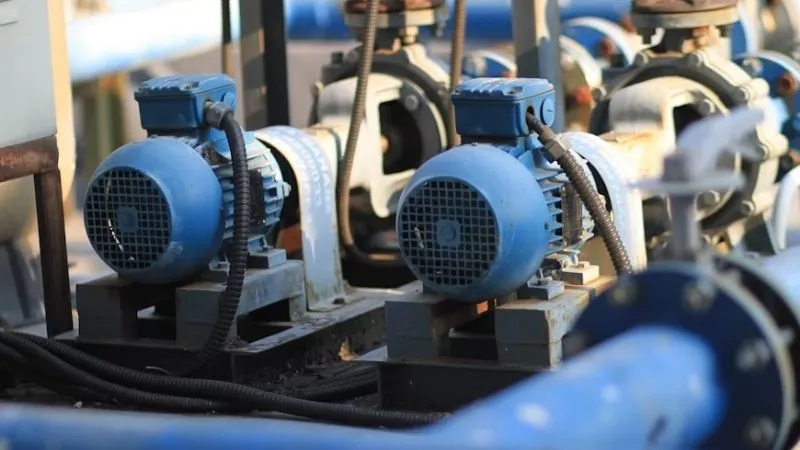
You do tough heavy-duty jobs. You push bearings and straighten frames. You also bend thick metal. You need strong fluid power. Top electric hydraulic pump models give steady force. They reach 10,000 PSI. Pick the right pump. Whether you are operating hydraulic presses, lifting heavy loads, straightening steel frames, or powering large cylinders, choosing the right electric hydraulic pump is essential for safe and efficient operation. Modern electric hydraulic pumps provide powerful output, advanced safety features, and energy-efficient performance to handle demanding industrial applications.
How to install an electric hydraulic pump? In this guide, you’ll discover the top 7 electric hydraulic pumps for heavy-duty applications, compare their key specifications, and learn where each model performs best. You’ll also find helpful tips on selecting the right pump, understanding pressure and flow requirements, and maintaining your equipment for maximum performance and longer service life.
Table of Contents
Selection Metrics for Heavy Duty Applications
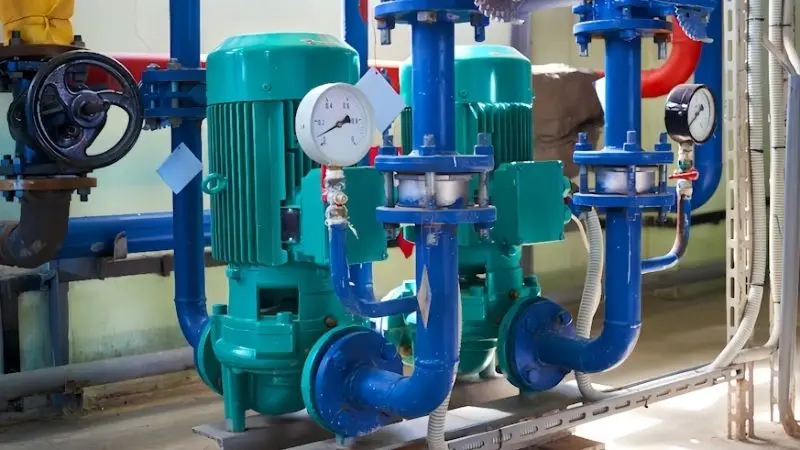
For heavy-duty applications, consider these key performance parameters: 10,000 PSI operating pressure; two-stage flow systems; continuous-duty motors for reliable power and efficiency. Additionally, for demanding industrial operations, check for effective thermal management and built-in safety features that prevent overheating, safeguard equipment, and deliver reliable performance.
Recommended For Your Project
Operating Pressure Ratings and Flow Rates
Hard jobs require great force. You need 10,000 PSI electric hydraulic pump power. How does an electric hydraulic pump work? The power is strong, and so is this. Easily press fit heavy bearings now. Rapidly form thick steel plates. Easily straighten large frames. Two-stage flow systems boost efficiency. They are effective throughout the day! The first stage provides a high flow. It has low pressure first. The piston comes forward rapidly—an automatic switch between the pump modes. The second stage applies high pressure. It provides a low flow rate. You receive precise pushing management.
- First Stage: Operates at low pressure with high flow (GPM) to provide fast piston extension and quicker positioning.
- Second Stage: Moves to high pressure, low flow (GPM) for the highest power and accuracy in critical applications.
Continuous Duty Motors and Power Sources
Basic motors will run too hot. Work hours take a toll. Use robust S1 continuous motors. They perform well in manufacturing environments. The motors run continuously throughout the day. There is no harm in full loads. In many hydraulic uses, constant pressure is needed throughout the day, particularly in factories, workshops, construction sites, maintenance workshops, etc. How to choose an electric hydraulic pump? A motor with a continuous-duty rating is designed to operate continuously under heavy loads and provide a reliable option for heavy-duty tasks. These motors drive many tools. Use multiple large cylinders for power. This smartly designed system saves time. Your equipment is built to last for years.
Thermal Management and System Controls
High pressure means high heat. Soft seals are destroyed by exposure to hot fluid. Oil breaks down. Today’s pumps are equipped with smart coolers. Internal fans prevent heat buildup. Safety always remains a priority. Safety valves prevent pressure surges. Smart controls deactivate motors. Fast shutdowns due to high heat. These features ensure worker protection. They prevent unexpected tool failure. Your equipment remains protected for longer. Effective thermal management removes excess heat and keeps the hydraulic fluid at the correct operating temperature to ensure optimum performance. It also provides knowledge about an electric hydraulic power unit. Properly maintaining the hydraulic oil temperature also helps to safeguard internal components.
Top 7 Electric Hydraulic Pumps Showcase
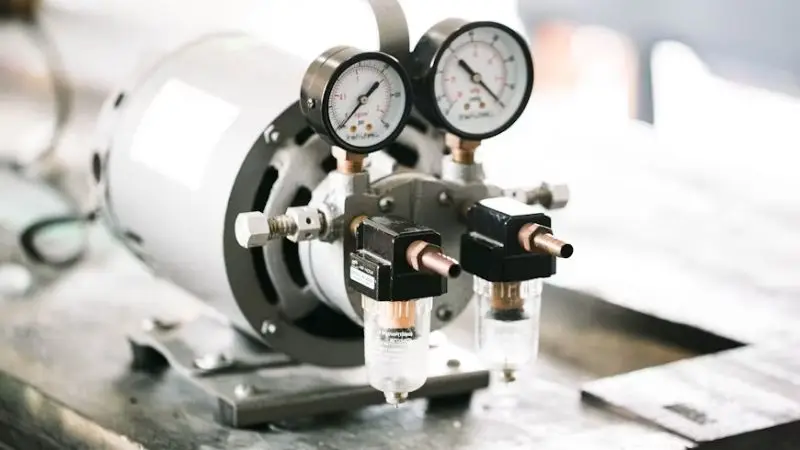
Large plants require robust instruments! A good hydraulic pump provides a consistent power output. They are essential for work scenarios that depend on them every day. Carefully select the best electric hydraulic pump. Do check total pressure requirements. Learn how much you actually work in any day! These pumps are hardworking. They work on large-scale industrial assignments. The force here is most important.
Enerpac ZE4 Series Electric Pump
Does hard jobs easily. Good motor cooling helps. How to take care of an electric hydraulic pump? The Enerpac ZE4 has S1 ratings. Motors are used throughout the shift. It has a two-stage fluid-moving mechanism. Adjusts for large loads. Easily transfer large double-acting cylinders. Construct steel works in a timely fashion. Bridge Spans can be placed with high flow. Move heavy objects with accuracy—One-Size-Fits-All Smart Sensors for all Workers. Safety remains at a high level at all times.
- Working Pressures: 10,000 PSI (700 bar) continuous output.
- Motor Power: Continuous 1.5 hp electric motor.
- Flow Displacement: 450 cu. in./min low pressure; 60 cu. in./min (0.26 GPM) at 10,000 PSI.
- Mounting Options: 3 1/2″ or 4″ with 1/2″ or 3/4″ valve options.
SPX FLOW Power Team PE55 Series
This small electric hydraulic pump is a favorite amongst workers. Quick on the move for field fix work. It is aided by low amps to start—no problem with full pressure. Great pumps push the liquid through quickly. They can carry a heavy load. Aluminum covers protect inner parts. There is no harm from a drop or hit. Two-stage pumps lift medium loads. They are suitable for these occupations. Operate large 100-ton shop presses. When using big pullers, use them safely. Fluid is always at a cool temperature.
- Working Pressure: 10,000 PSI (700 bar).
- Max Runtime: 8 hours.
- Flow Displacement: 700 cu. in./min low pressure; 55 cu. in./min (0.24 GPM) at 10,000 PSI.
- An optional choice of 2-way, 3-way, or 4-way manual and solenoid valves.
Bosch Rexroth CytroBox Power Unit
Big steady flow is needed for big plant presses. Controls need to function properly. Bosch Rexroth CytroBox drives are employed. Variable speeds are suitable for use in small cabinets. Servo drives are energy-saving. How to size an electric hydraulic pump? The speed of motors varies gradually. There is less heat accumulation each day. Press operation is done efficiently—fluid sensor monitored by a small IoT sensor. Constantly monitors the oil temperature.
- Working Pressure: Up to 4,500 PSI (315 bar).
- Motor Power: Servo electric drives range from 7.5 kW to 30 kW.
- Flow Displacement: Variable flow rates of up to 42 GPM.
- Valve Options: Proportional direction valves and integrated manifold blocks.
Parker Hannifin Compact EHA System
Small actuators are required for separate factory tools. They are electrically powered. The Parker system assembles parts. The motor, pump, and tank remain closed. What is an Electric Hydraulic Pump? They withstand pressure drops due to built-in safety features. Sudden failures don’t occur. Oil leaks are eliminated using sealed fluid paths. There is improved plant safety. Mount these units right away. Place them on press arms. Install heavy-duty gate controls.
- Working Pressure: Up to 4,000 PSI (275 bar).
- Motor Power: 12V/24V DC or AC power units (0.5 to 2.0 kW).
- Pressure Drop: 5 to 15 inches of water.
- Valve Options: Integrated thermal relief and check valve (pilot operated).
Simplex E100 Series Electric Unit
The crews carry this tiny pump. They can go into tight work areas without any problems. The Simplex E100 is used for steady flow. It has a very light frame. What is the choice of electric hydraulic pump? Small pumps aid field workers. They help make difficult tasks simpler. All day, the electric motors run strong. Heat causes no damage. Match lift on numerous jacks. Maintain all the parts in synchrony. The addition of simple valves improves system work. Long shifts go smoothly.
- Working Pressure: 10,000 PSI (700 bar).
- High Torque: 1.0 high torque motor.
- Flow Displacement: 200 cu. in./min low pressure; 20 cu. in./min (0.09 GPM) at 10,000 PSI.
- Valve Options: 3-position 4-way manual valves with load holding controls.
Bieri HPW High-Pressure Radial Pump
Hard gear tests require a lot of power. The Bieri HPW pump is the power source. The test rig applies extreme pressure. How does an electric hydraulic pump work? Special radial pumps pump oil. They have smooth and effortless movement. Very accurate operation thanks to the radial pistons. Efficiency is retained during tests. Sustained effort – strong parts. They don’t decompose. Firmly drive in heavy bearings. Safely test tough materials.
- Working Pressure: 14,500 PSI (1,000 bar) max. Operating pressure.
- Motor Power: 3.0 kW-7.5 kW, radial drive electric motors.
- Flow Displacement: 0.3 to 2.2 GPM high-pressure output.
- Pressure/Valve Options: High-Pressure Custom Manifold Block & Check Valves.
VEVOR Electric Hydraulic Pump
A shop’s flexibility needs are power flexibility. They have benders and presses. This is a great Electric Hydraulic Pump. Powerful assistance to pipe benders. Two-stage pumps provide increased overall pump work speed. Less time is required to move cylinders. Relief valves prevent high pressures. They serve as important safety elements. Workers are protected with foot switches. When the job work is done remotely, it becomes easier to press the job. Solenoid valves are used to automate tools. The factory line’s speed is very fast.
- Working pressure: 10,000 PSI (70 MPa).
- Motor Power: 750 W (1 hp) electric motor.
- Flow Displacement: 1.3 GPM (Low) / 0.18 GPM (High).
- Valve Options: dual circuit solenoid or manual lever control with foot switches.
Axial Piston Pumps and System Compatibility
The axial piston pumps are designed to offer accurate flow control, high efficiency, and dependability, making them perfect for modern hydraulic systems. Depending on the application, you can select either a single-stage or two-stage pump: Two-stage pumps provide more powerful cylinder movement and greater power than single-stage pumps. Selecting the appropriate pump type for the system will optimize performance, prolong equipment life, and provide reliable pumping in severe industrial applications.
Axial Piston Performance in Electrified Systems
This course focuses on the fundamental characteristics of axial piston machines and how they are used in electrified systems. Electric motors directly drive axial piston pumps. Pistons are inside a rotating cylinder block. Swashplates are easily adjustable for piston stroke. This motion provides high-efficiency power changes to meet changing requirements. Your system has lower heat loss during operation. How does an electric hydraulic pump work? Energy is conserved in factories by using heavy hydraulic pumps. The major benefits of an axial piston design are high hydraulic pressure and excellent efficiency. Several pistons reciprocate in a rotating cylinder block inside the pump. This is driven by an electric motor, which generates the necessary hydraulic pressure for tools and equipment. This not only conserves electricity use but also decreases operating expenses and enhances the overall efficiency of the hydraulic system.
Single-Stage vs. Two-Stage Hydraulic Pumps
Single-stage and two-stage designs are the options available for you. Single-stage units maintain a constant flow rate. They are well suited to tasks that are carried out in the same way each time. Two-stage units combine two pressure stages. Low pressure forces fluid to rapidly move cylinders. Next, under pressure, it gives its highest power. This is a double-action, which quickens the work cycle. Smart heat management ensures the system’s protection over long shifts. Which electric hydraulic pump to choose? A one-stage hydraulic pump pumps at a single constant flow rate. It can continue to generate hydraulic oil at the same rate and pressure until the job is finished. The hydraulic load automatically switches the way in which the pump functions in two stages. In the first step, the pump sends hydraulic oil at a low pressure at a high flow rate.
Matching Pump Types to Specific Application Demands
Different pressure and flow characteristics are needed for every industrial job. How to install an electric hydraulic pump? When installing heavily loaded bearings, it is essential to exercise a high level of control over the torque applied to the installation. In the field, metal bending requires high advance speeds. By matching parts to jobs, you extend machine life. With the right pump selection for the task, users can expect improved performance and prolong the life of their equipment.
- Axial Piston Pump: Most suitable for variable load automation systems where flow control is critical.
- Single-Stage Pump: Suitable for continuous production presses where a constant, regular flow rate is required.
- Two-Stage Pump: Good for lifting heavy loads and bending metal for high pressure when necessary.
Industrial Applications for Hydraulic Pumps
For heavy lifting, press fitting, bending, straightening, and more extreme applications, industrial hydraulic pumps generate high pressure. They can operate high-tonnage cylinders and several hydraulic tools simultaneously, increasing productivity in industrial applications. The right pump size and capacity guarantee smooth operation, reliable performance, and safe handling in heavy engineering applications.
Bending, Straightening, and Press-Fitting Operations
You do hard, manual work at the factory every day. Metal shops require high strength. Steady pressure from powerful pumps is required. Thick steel plates are easily bent with metal tools. Straightening frames requires a very precise degree of power. An electric hydraulic pump is used to press bearings. Each press job requires consistent pressure. Choose the most advantageous configuration for your project. Finish work without straining tools. An electric hydraulic pump provides this pressure, and the hydraulic bending machine can bend metal easily without abrupt shifts in power. Stable pressure reduces material damage and helps make accurate bends. The pump also helps in straightening processes.
Powering High-Tonnage Cylinders and Multi-Tool Systems
This is one of the most significant benefits: being confident in running large-tonnage hydraulic cylinders. These cylinders are typically employed in the construction, manufacturing, mining, shipbuilding, railway maintenance, and repair of heavy machinery. What is an electric hydraulic pump? These are used for carrying extremely heavy equipment, straightening steel structures, placing bridge sections, and so on. A great advantage is that the same pump can use more than one hydraulic tool. One electric hydraulic pump can provide hydraulic pressure to multiple tools rather than having one hydraulic power unit for each tool. These tools can be hydraulic presses, cylinders, torque wrenches, pullers, cutters, spreaders, lifting jacks, and punching machines.
Heavy Field Lifting and Infrastructure Engineering
Concrete beams, steel girders, bridge sections, pipelines, and large industrial machinery are often towed in infrastructure projects. No one can handle these loads by hand. How to maintain a hydraulic pump? These heavy objects are delivered a smooth, secure upward lift by the hydraulic cylinders and lifting jacks using pressure provided by an electric hydraulic pump. This means that lifting operations are more reliable and quicker. Heavy structures cannot be lifted rapidly or without planning. They are frequently required to be gradually raised and precisely placed. An electric hydraulic pump provides a constant hydraulic fluid flow that enables the operators to adjust the movement and speed of the hydraulic cylinders precisely.
Maintenance Guidelines for Electric Hydraulic Pumps
To ensure the safe and efficient operation of electro-hydraulic pumps, it is critical to carry out regular maintenance. Keep hydraulic oil clean, inspect seals and hoses, and ensure accumulator pressure complies with regulatory requirements to avoid problems like wear, leakage, and overheating. Regular maintenance can help extend the lifespan of the pump, optimize its performance, and facilitate reliable operation in different industrial applications.
Fluid Viscosity and Contamination Control
Hydraulic oil conveys power to cylinders, jacks, presses, and other hydraulic tools. Oil with the proper viscosity will flow easily through hoses and valves and maintain stable pressure. This way, the electric hydraulic pump can provide uniform hydraulic force when it is used for lifting, pressing, bending, straightening,g and other heavy-duty tasks. An electric hydraulic pump has fluid viscosity and contamination control as important features that make it efficient and help it last longer. Clean oil of the proper viscosity (thickness) is used in hydraulic systems to transmit pressure and to lubricate the internal parts. When the hydraulic fluid is too thick, too thin, or dirty with dirt and metal particles, the pump will not perform its job correctly.
Thermal Management and Cavitation Safeguards
Excess heat can rapidly break down the fluid. Hot oil can destroy internal seals. Any work activity that involves extended periods of time should monitor tank temperatures. Air bubbles may cause internal shock. Shocks can destroy heavy-duty hydraulic pumps. Check fluids daily to check for air regularly. The intelligent safety switches are part of the new pumps. High heat detected by sensors is blocked from causing damage. The electric hydraulic pump builds up high-pressure fluid, flows, and generates heat while running. When the temperature gets too hot, the hydraulic oil is not able to work. Hot oil becomes thinner and can no longer adequately lubricate moving parts or provide efficient hydraulic power transfer. Thermal management keeps the pump at an adequate temperature, ensuring stable operation.
System Seal Inspections and Accumulator Checks
Seals are damaged by high pressure. Inspect hose joints for leaks once a week. Replace defective rings quickly to conserve power. System pressure is balanced using gas tanks. Examine gas pressure on the check tank once per month. Tight hoses help to keep workers safe from spikes. How does an electric hydraulic power unit work? The good pumps provide full Push power. Having proper care will ensure that your crew is safe. Use a suitable electric hydraulic pump for improved efficiency. For quick, factory tasks, use the Enerpac ZE4. Use SPX PE55 for hard field lifting. A strong 10,000 PSI force is required for heavy jobs. S1 continuous motors are continually operating. The Axial Piston Pump is a power-saving pump. Inspect fluid seals and valve set-ups first. Never purchase something without considering all costs.
Wrap Up
To get the right performance, you’ll need to pick the right electric hydraulic pump. Match the pump to the application; if you need a pump to lift heavy loads, press fit, bend metal, or drive multiple tools, it will boost productivity. Additional functions such as thermal management, axial piston technology, and 2-stage operation further facilitate efficiency and reliability. Proper maintenance, such as fluid monitoring for levels, checking and replacing seals, and controlling hydraulic fluid contamination, also helps maintain your hydraulic system’s optimum performance. What is an electric hydraulic pump? This way, you’ll be able to make an informed purchase when it comes to the best electric hydraulic pump models. Provides lasting performance, reduced maintenance,e and reliable hydraulic power regardless of the job.
FAQ
What is an S1 duty motor rating?
Non-stop running, no overheating with an S1 motor. Consistent electric hydraulic pump power for shifts. This rating is for gear to be used at the factory in heavy-duty applications—excellent performance for difficult field situations.
Which pumps do you choose to use, single stage or two stage?
Single-stage units provide a single continuous flow rate. Two-stage units operate at low pressure at high speed. Then, they go to maximum force at high pressure. Choose 2-stage models for fast lifting and bending.
What advantages does an electric hydraulic pump offer when working in the field?
A small electric hydraulic pump is really light. These units are easy to move to job sites. They give 10,000 PSI work pressure. Built-in safety valves help keep your job site safe.
Which duty rating is most suitable for heavy production plant machinery?
Plant gear must have an S1 rating. This rating can support non-stop factory work cycles. Prevents motor damage at full heavy loads. Choose this motor type for your power press.