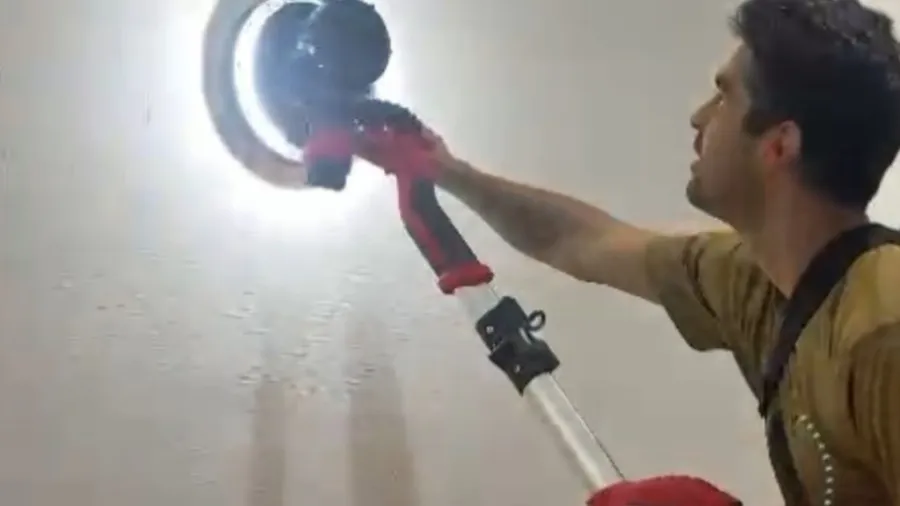
Sanding a ceiling with a corded machine means two headaches at once: a cord that snags on every ladder leg, and a fog of fine dust that settles for days. A cordless drywall sander eliminates the cord problem, and most now trap dust in a built-in box. If you’re weighing one for a basement, repaint, or full remodel, this guide covers the types, battery life, and dust control that matter. Browse the full lineup of drywall sanders and grab a few proven drywall sanding tips along the way.
- What Sets A Cordless Drywall Sander Apart
- 3 Types Of Cordless Drywall Sanders By Reach And Head
- Battery Power And Run Time On Cordless Models
- Dust Collection On Cordless Drywall Sanders
- Cordless Versus Corded Drywall Sanders
- Matching A Cordless Drywall Sander To Your Project
- Budget And A Spare Battery For Small Jobs
What Sets A Cordless Drywall Sander Apart
A cordless drywall sander is a wall-and-ceiling sander powered by a removable lithium-ion battery instead of a cord. Most run on 20V packs, spin a round head, and pull dust into an attached collector.
How A Battery Drywall Sander Is Built
Under the housing sits a motor, a speed dial, and a flexible head that follows the wall. A battery drywall sander adds a pack mount and trigger lock where a corded one has a plug. The head takes 9-inch hook-and-loop discs in grits from 80 to 240.
Brushless motors are common now because they run cooler and sand more per charge. A good battery wall sander balances the weight onto the head, not your arms. Next to corded electric drywall sanders, a battery drywall sander swaps the plug for a pack and changes little else.
3 Types Of Cordless Drywall Sanders By Reach And Head
Cordless drywall tools vary by reach and head function. Three forms cover most jobs, so pick the reach first.
Long-Reach Telescopic Models For Ceilings And Tall Walls
A long-reach model puts the head on a telescoping pole that extends to 5 or 6 feet, so you finish a ceiling from the floor. This portable drywall sander is what most remodelers want for whole rooms, covering flat areas fast and saving ladder moves. A cordless wall sander in this class is hard to beat for stairwells and high walls. For that reach without a cord, a 450-watt cordless model with a 360-degree LED ring extends to about six feet and carries a self-suction box.
Compact Handheld Models For Walls And Patches
A compact handheld unit skips the pole and puts the head in your grip, with more control on lower walls, patches, and around outlets. It’s lighter and steers easily, so this portable drywall sander suits touch-ups and small rooms. A handheld cordless sanding machine is also simpler to carry, and pairs well with a cordless finishing sander for corners. These compact drywall hand sanders handle edges a long pole would fumble.
Detail And Corner Finishing Heads
Some cordless models use a smaller or segmented head that reaches corners a big round disc can’t sit flat against. This is where a cordless finishing sander earns its place, cleaning the last 10 percent a full head leaves behind. Many crews keep a cordless finishing sander beside the main cordless drywall tool, because a dedicated cordless finishing sander trims corners the wide head skips.
Here’s how the three forms compare.
| Type | Best for | Reach | Head | Example |
| Long-reach telescopic | Ceilings, tall walls, rooms | ~5-6 ft pole | 9 in round, pivoting | VEVOR cordless drywall sander, 360-degree LED ring, self-suction box |
| Compact handheld | Lower walls, patches | Arm’s length | 9 in round | 9-inch handheld sander with onboard dust box |
| Detail/corner | Edges a cordless finishing sander reaches | Short | Triangular pad | Triangular detail sander for inside corners |
Battery Power And Run Time On Cordless Models
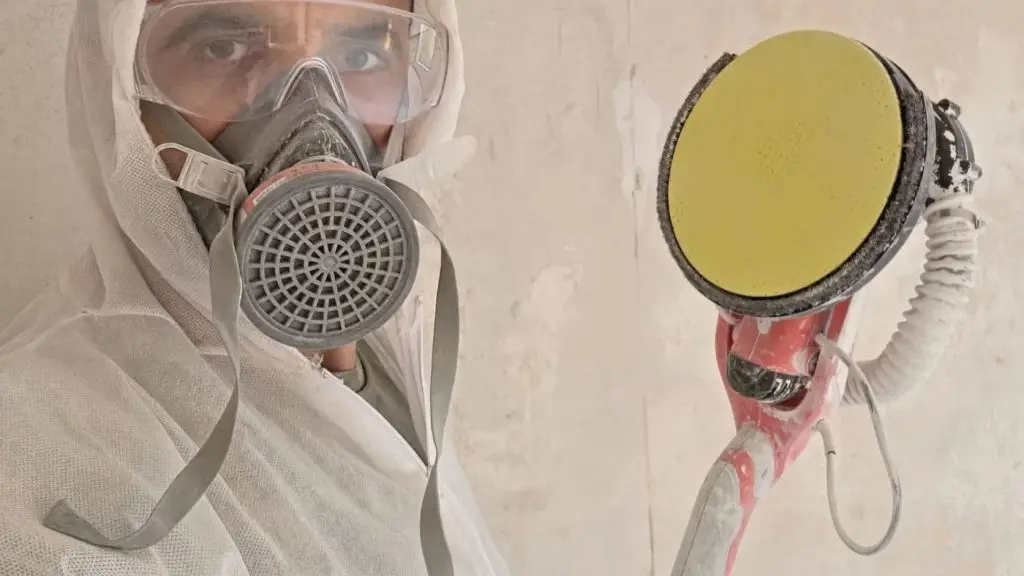
Run time worries most first-time buyers; it comes down to battery size and motor type. A bigger amp-hour pack lasts longer; a brushless motor stretches its plan for swaps, not marathons.
Which drywall sanders have the longest run time on a single battery for cordless options in the US?
The longest single-charge times come from a high-capacity pack around 5.0Ah paired with a brushless motor, which pushes continuous sanding toward 40 minutes. Most 20V battery-powered sander setups land closer to 30 to 45 minutes on a full charge, so the fix is a second pack on the charger. A battery-powered sander with a 2.0Ah pack taps out sooner, while a larger battery wall sander runs through a full room. Pair any battery-powered sander with a spare, and run time stops being a limit.
| Battery capacity | Typical run time | Best for | Notes |
| 2.0Ah | ~15-20 min | Patches, touch-ups | Light and cheap |
| 4.0Ah | ~25-35 min | One room at a time | Good all-round pick |
| 5.0Ah or higher | ~35-45 min | Full day with a spare | Heaviest pack |
How Brushless Motors Stretch A Single Charge
A brushless motor has no carbon brushes rubbing and wasting energy, so more battery power goes into sanding and less into heat. That means more wall time per charge than a brushed design. A cordless sanding tool with a brushless motor also holds speed in a stubborn seam.
If run time is your worry, a brushless cordless sanding tool is the first box to check, and it’s the quiet advantage behind every long-running, battery-powered sander. For a closer look at the specs, an overview of electric drywall sander features explains the numbers.
Dust Collection On Cordless Drywall Sanders
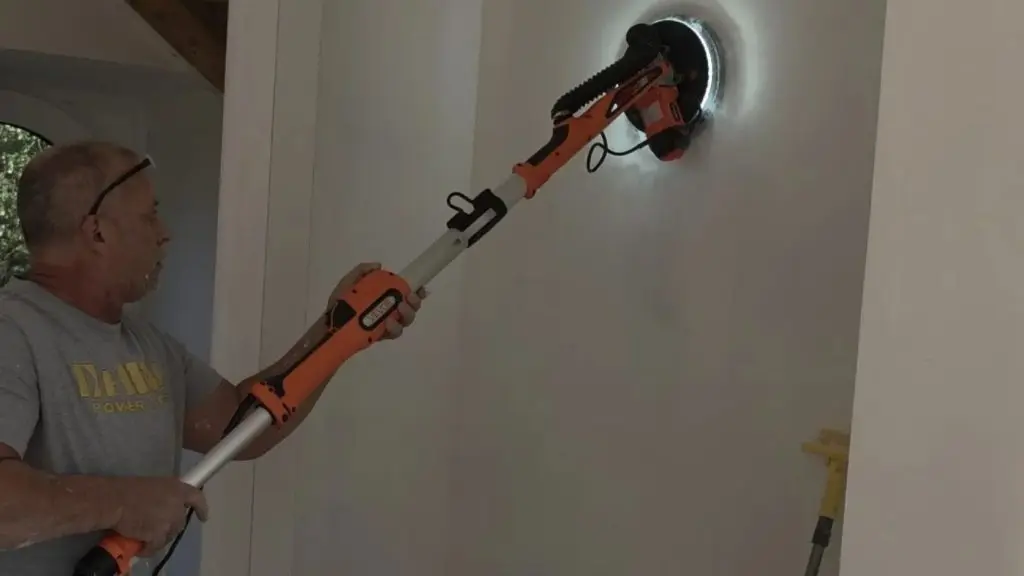
The best setups catch most of the fine gypsum powder before it reaches the air, through a self-contained box or a hose to a vacuum. How much a cordless dustless sander catches depends on the system.
Which cordless drywall sanders offer the best dust collection?
The best dust collection comes from models that connect to a wet/dry vacuum through a hose port, since a vacuum pulls far more than any onboard fan. Close behind sits a cordless dustless sander with a strong self-suction fan and a sealed box, trading a little capture for cord-free freedom. A cordless dustless sander is never truly dust-free, but a good one keeps the room breathable. If you’d rather skip the hose, a self-suction cordless sander holds dust in an onboard box so nothing trails you up the ladder.
| Dust system | How it works | Capture | Trade-off |
| Vacuum hose port | Hose runs to a wet/dry vac | Highest | Needs a vacuum, adds a hose |
| Self-suction box | Onboard fan to a sealed box | Good | Empty the box often |
| Dust bag | Fan to a cloth bag | Moderate | Finest dust still escapes |
Self-Contained Box Versus Vacuum Port
A self-contained box keeps everything on the tool, which suits a true cordless workflow. A vacuum port catches more but ties you to a hose and an outlet. For a battery wall sander used room to room, the box usually wins on convenience, and a cordless sanding tool with a sealed box is as clean as most jobs need.
That makes a cordless dustless sander the practical choice when you roam. For suction-first models, a roundup of drywall sanders with strong vacuum systems compares the better performers.
Cordless Versus Corded Drywall Sanders
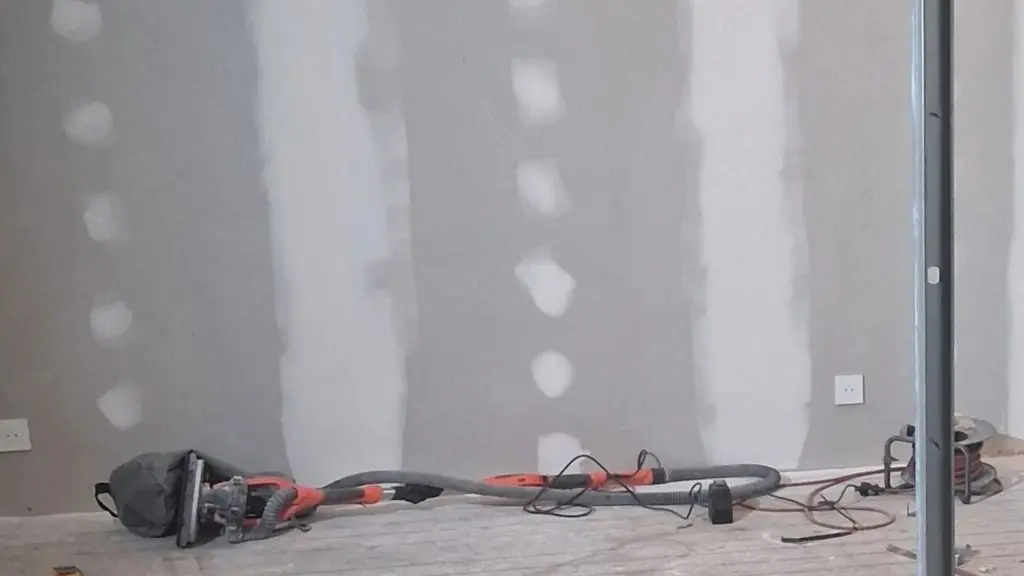
Cordless isn’t automatically better. Corded machines never stop for a charge and often cost less. Choosing between a cordless wall sander and a corded one mostly comes down to where you work.
What are the top cordless versus corded drywall sander options for portability in the US?
For pure portability, a cordless wall sander with long reach wins outright: no cord, no reel, no hunting for an outlet two rooms away. Corded models still lead on nonstop power for all-day production, so the pick depends on whether you move or stay put. A cordless drywall tool suits scattered patches and occupied homes; a corded one suits new construction with power on site. One battery often runs a fleet of cordless drywall tool heads from one brand, so a portable drywall sander is cheaper to own over time.
| Factor | Cordless | Corded |
| Setup | Clip in a battery and go | Find an outlet, run a cord |
| Reach | Anywhere in the building | Limited by cord and reel |
| Run time | 30-45 min per pack | Unlimited |
| Weight | Heavier up top | Lighter head, cord drag |
| Best site | Occupied homes, no power | New builds, all-day work |
When A Corded Model Still Wins
On a new build with outlets live, a corded machine saves money and never pauses. A battery drywall sander earns its price the moment you’re in a finished home, a space without power, or up a stairwell, where a cordless sanding machine also spares you the trip hazard of a cable.
A quiet cordless sanding tool is easier on the ears, too. For nonstop work, an 800-watt brushless wall sander holds speed through long sessions. You can compare cordless drywall sander options with corded ones, alongside the wider range of drywall tools you’ll need to finish a wall.
Matching A Cordless Drywall Sander To Your Project
The right choice depends on the job. A weekend patch, a basement refinish, and a pro remodel each point to a different tool. Sizing a battery wall sander to the project keeps you from overspending, and a versatile cordless sanding machine covers more than one job.
What are the best cordless drywall sanders for DIY home renovation?
For DIY home renovation, the best pick is a mid-power long-reach model with a self-suction box and a 4.0Ah battery, enough for a room without a vacuum setup. It handles ceilings and walls without fighting you overhead. A cordless wall sander in this bracket covers most home jobs, and a mid-weight cordless sanding machine stays comfortable on a ceiling. The table below maps projects to the tool that fits.
| Project | Suited tool | Battery | Dust setup | Example |
| Patches and touch-ups | Compact handheld | 2.0Ah | Onboard box | Compact handheld with sealed dust box |
| DIY room renovation | Long-reach, mid-power | 4.0Ah | Self-suction box | VEVOR cordless drywall sander, 360-degree LED ring |
| Small remodel | Long-reach tool plus a spare pack | 4.0-5.0Ah | Box or vacuum | Long-reach model with vacuum hose port |
| Pro / all-day | Corded long-reach | None (corded) | Vacuum hose | VEVOR Corded long-reach wall sander, 850W |
Budget And A Spare Battery For Small Jobs
The biggest money-saver is buying bare and sharing 20V batteries you already own. This is what trips up a lot of first-time buyers: Which cordless drywall sanders are worth buying for small remodeling projects in the US? A mid-range long-reach cordless wall sander with one 4.0Ah pack is plenty for a few rooms, and skipping the pro kit saves real money. If you already have a compatible platform, a bare cordless sander is the smartest buy, since the same packs often fit general sanding and finishing tools. Pros who sand all day step up to a 950-watt sander with a double-deck LED light on a cord.
New to it? A walk-through of how to sand drywall with a power sander covers grit and technique.
Recommended For Your Project
Conclusion
Start from the room, not the spec list. A cordless drywall sander earns its keep in finished homes, tight stairwells, and anywhere a cord fights you, if you add a spare battery and decent dust control. Match the reach to your ceilings, the pack to your run time, and the dust system to how far you roam. Do that, and a battery drywall sander, or the right portable drywall sander, turns the messiest part of drywall work into a clean, quick job.
FAQs
Are cordless models powerful enough for a whole room?
Yes, for most rooms. A 20V cordless model with a 4.0Ah pack handles a standard room on one or two charges, and a brushless battery wall sander stretches that further. Very large or back-to-back jobs are where a corded machine still pulls ahead.
What battery size should I get for a cordless model?
A 4.0Ah pack is the sweet spot for most users. It balances run time and weight on a portable drywall sander, letting you finish a room before a swap. Grab a 5.0Ah for longer sessions, or a 2.0Ah only for quick patches.
Can I connect a cordless sander to a vacuum?
Often, yes. A cordless dustless sander may include a hose port that fits a wet/dry vacuum for better capture, or you can use a self-suction box to keep the setup fully cord-free.
How long does a battery last on one charge?
Expect roughly 30 to 45 minutes of sanding from a full 20V battery-powered sander. A brushless cordless sanding tool and a higher amp-hour pack extend runtime, so a spare keeps you working.
What grit sandpaper works best on drywall?
Start with 120-grit for general finishing and 150 to 220 for a final smooth pass. Drop to 80 or 100 only for heavy ridges, since coarse grit can scar the face.