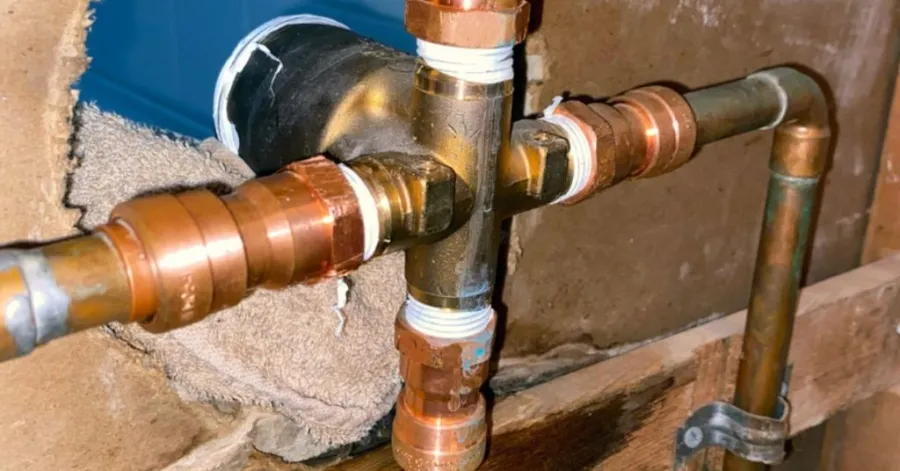
Copper plumbing systems are popular due to their durability, quality, and strength. Copper pipe press fittings have gained momentum in this category of modern solutions since they do not require soldering and are now quicker and safer to install. Most installers use a ProPress crimping tool to create secure and consistent joints, making the installation process faster and more reliable. They can be applied in both domestic and commercial water systems in order to provide clean and safe connections. Knowledge of copper pipe press fittings in residential plumbing can help improve performance and reduce maintenance problems. The fittings can also be used in applications of safe drinking water when lead-free copper press fittings are used to supply potable water, making them a good choice in the current plumbing projects.
How Copper Pipe Press Fittings Work In Plumbing Systems
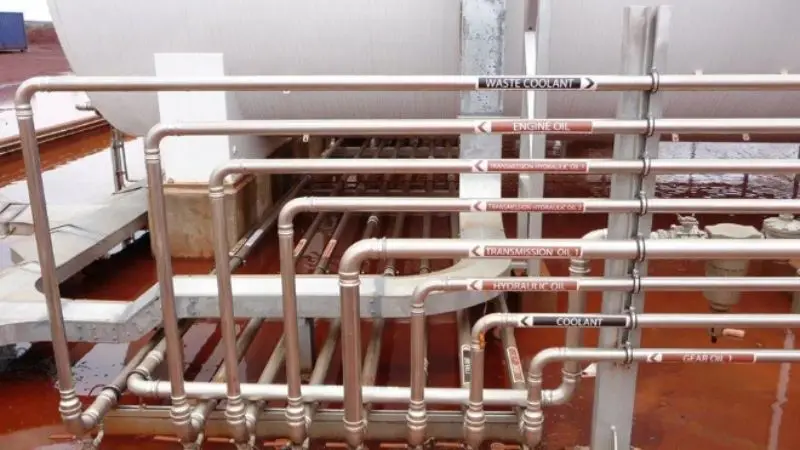
The copper press fittings systems have transformed modern plumbing by making pipe connections quicker and stronger. These fittings are based on mechanical pressure to create a tight seal as opposed to conventional methods of heating or soldering. This not only makes the installation cleaner but also minimizes the possibility of human errors during installation.
These systems are common in residential and commercial plumbing as they are time-saving and offer a long life span of operation. Knowledge of their operation helps you select the correct technique for various water line applications.
The Basic Mechanism Behind Press Fitting Technology
The copper pipe press fittings work principle does not rely on heat but on mechanical force. The fittings are pre-assembled with a sealing element within. When the fitting has a copper pipe inserted into it, it is pressed against this internal structure, ready to be compressed.
An equal pressure is then applied to the fitting body using a press tool. This pressure permanently alters the metal shell by permanently locking it around the pipe. The seal ring within makes sure that no water will escape even at high pressure. This technique does not require soldering and saves a lot of time during its installation process, yet its joint integrity is high.
Role Of Sealing Rings And Compression In Leak Prevention
The most significant objective in any plumbing system is to avoid leaks, and sealing rings are important in this regard. Potable water lead-free copper pipe press fittings have an elastomeric O-ring inside to form a waterproof seal when compressed.
After insertion of the pipe, the press action causes both the fitting body and the sealing ring to squeeze together. This two-fold compression makes sure that the water cannot be passed through even when the pressure fluctuates. This design is particularly applicable in residential plumbing systems where reliability and safety are vital. With time, the ring will remain in shape and will keep on preventing any leakage without any maintenance or adjustments.
How Press Tools Create Secure And Permanent Joints
Press tools are specially made devices to exert a controlled force around the fitting to form a permanent joint. The tool grips the fitting when used and squeezes it all around its sides in a uniform way. This makes sure that the pipe and the fitting fit securely.
In copper pipe press fittings systems used in residential plumbing, this process is quicker and safer to implement than the time-honored soldering. Open flame is not necessary, and this lowers the risk at job sites. When pressed, the joint is non-reusable and very secure, and so is used in long-term water line applications where the joint must be very durable.
Types Of Copper Pipe Press Fittings You Should Know
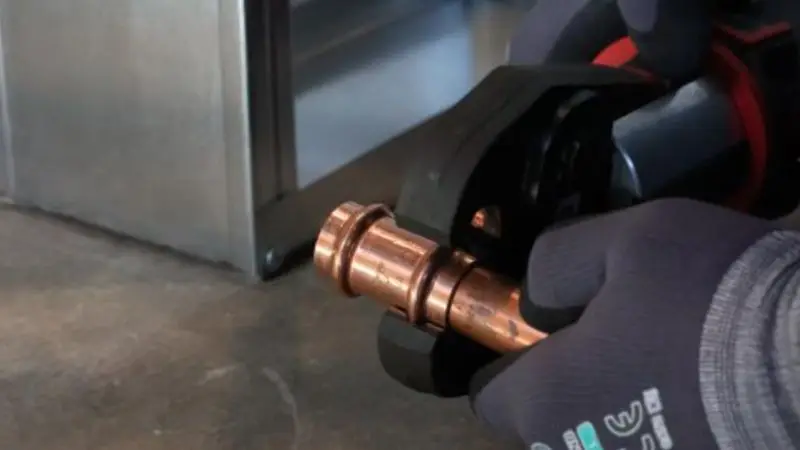
Copper plumbing systems have various press fittings that are used to meet various installation requirements. Every fitting type is installed with a specific purpose in mind, either extending the pipe length, changing its direction, or connecting two different materials. The knowledge of such types can be used to develop a secure and effective plumbing network without any unnecessary complications.
In contemporary plumbing work, particularly on residential work, the appropriate fitting is a decision that will provide improved flow control and prolonged duration of service. These fittings, in addition, save time on installation and still ensure high joint performance throughout the pipeline.
Straight Couplings And Connectors For Pipe Extension
Straight couplings and connectors are normally used when two copper pipes need to be joined in a straight line. These fittings are easy to design, yet very crucial in the process of lengthening the pipe runs without compromising on the water flow.
Water lines in systems with the best copper pipe press fittings have straight connectors to provide a smooth internal passage, enabling water to flow without pressure loss. They are particularly effective in long pipelines where several sections of the pipeline have to be connected. They have a tight and permanent seal due to their press-based design, which minimizes the chances of leaks and is also suitable for both new installations and repair work.
Elbows, Tees, And Reducers For Direction Changes
Tees, reducers, and elbows are necessary when it is necessary to change the direction or the distribution of flow of the plumbing system. The pipes are redirected at various angles using the elbows, and the tees are used to split the water into more than one direction. Reducers apply when the connections between pipes of various sizes are required.
The fittings are commonly employed in copper pipe press fittings of residential plumbing since they simplify the layout management without requiring welding or soldering. Their press-fit construction guarantees secure joints with bends and junctions included, and water pressure remains the same across the system. This makes them highly dependable for hot- and cold-water applications.
Transition Fittings For Mixed Material Systems
Transition fittings are meant to join copper pipes to other fittings, such as PEX or steel. These fittings are particularly applicable when it comes to renovation projects where the existing plumbing systems are to be updated without necessarily replacing them all.
Transition fittings are used in systems with lead-free copper pipe press fittings with potable water to maintain a safe and contamination-free flow of water, even when other materials are used together. They are designed to manage pressure variations and to avoid corrosion where they are joined. This makes them a significant solution in the current plumbing systems where there is a need for flexibility and compatibility to ensure long-term performance.
How To Install Copper Pipe Press Fittings Step By Step
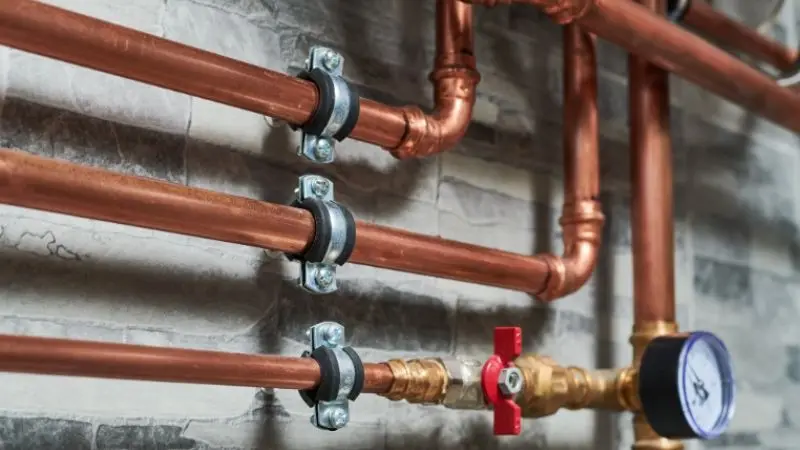
When you have a proper and right procedure to follow to the end, installing press fitting systems becomes a lot easier. Every step is significant to make the system remain strong, safe, and leak-free over an extended period. When installed correctly, it eliminates installation errors and enhances the overall plumbing performance.
The technique is common in contemporary water systems as it does not require heat or soldering. Knowing the proper installation of copper pipe press fittings can enable you to attain a professional level of work even in intricate plumbing designs.
How To Cut And Prepare Copper Pipes Properly
The first thing first in the installation process is to cut the copper pipe to the desired length. A straight cut and clean cut is quite essential since the rough or uneven sides may prevent the fitting of the pipe in the connector. Once cut, the ends of the pipe should be deburred to eliminate sharp edges and small metal fragments.
With proper preparation, copper pipe press fittings can be used to form a good seal without any impediment. The step is particularly crucial in systems with lead-free copper pipe press fittings in the supply of potable water, where clean connections are necessary for drinkable water. Best copper pipe press fittings to water lines also perform well when properly prepared, so that there is a long life performance and easy flow of water.
How To Insert Pipes And Align Fittings Correctly
Once the pipe is prepared, it is then loaded into the fitting until it has reached the depth marked. The alignment in the stage is highly necessary as any wrong step may compromise the joint or lead to future leakage. The insertion depth is usually marked by installers to accurately and consistently follow the depth of the insertion during assembly.
When plumbing with copper pipe press fittings in a system, proper alignment of the fitting will utilize the sealing ring to sit in place around the surface of the pipe. This forms a good and safe bond until pressing commences. This step will also prevent issues that are commonly experienced in copper pipe press fittings vs solder fittings comparison, where a lack of alignment during the soldering process may result in weak joints or rework.
How To Use Press Tools To Create Strong Joints
When the pipe is fixed in place, a press tool is applied to make the final permanent joint. The fitting is placed in the tool that exerts even pressure along the fitting, fitting it firmly onto the pipe without using heat or open flame. This renders the process safer and much quicker than the traditional processes.
This step in the modern plumbing systems with the best copper pipe press fittings in use in the water lines will help in giving the water lines strong and reliable pipelines that will carry high pressure. The pressing motion acts to plate the inner sealing ring and creates a joint free of leakage. This is among the key factors why copper pipe press fittings are popular in residential plumbing in new construction and renovation work.
@diesel_2124 Replying to @Houdini9262 VEVOR Hydraulic Hose Crimper @vevor.official #vevor #toolstoday #toolsofthetrade #hvac #tools #ToolTok #vevorbuildit
♬ original sound - diesel_2124
How To Check And Test The Final Installation
Once all the fittings have been pressed, they are then checked over to make sure that all of the joints have been fixed in place and that they are aligned correctly. This involves inspection of visible pressing marks and ensuring that no fittings have been overlooked during installation.
Pressure testing is a necessary component in systems that have lead-free copper pipe press fittings of potable water to ensure safety and reliability. The water is taken through the whole system under regulated pressure to identify any potential leaks. This last check is to confirm that the installation completed using copper pipe press fittings is robust, solid, and can be used in the long term without any problem.
Common Mistakes To Avoid During the Installation Of Copper Pipe Press Fittings
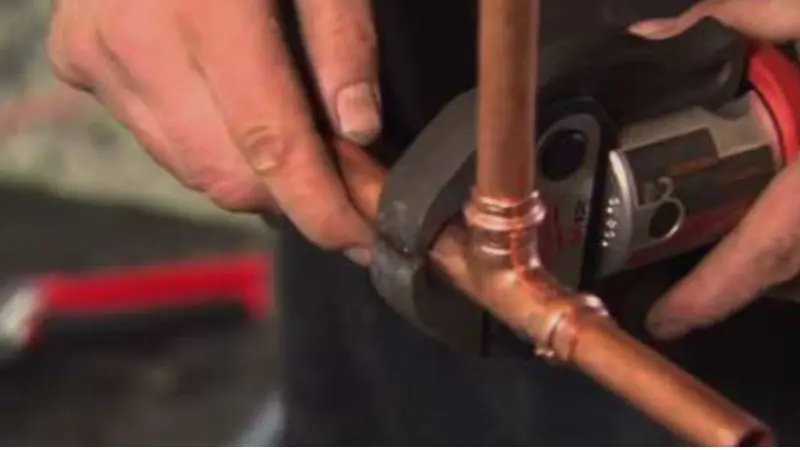
Although the purpose of press fitting systems is to simplify plumbing, an error in their installation may lead to severe consequences. Such mistakes tend to cause leakages, weak joints, or the collapse of the system in the long run. Knowing what to shun facilitates a safe and durable plumbing system.
Handling of materials, proper use of tools, and a final test are all necessary components of a successful installation. These steps should be taken into consideration and followed correctly; otherwise, even high-quality fittings may fail to serve as intended.
How Improper Pipe Cutting And Preparation Causes Installation Problems
Poor cutting and bad preparation of pipes are one of the most prevalent errors in plumbing. In case the copper pipe is cut irregularly or has remaining rough sides, then it will not fit properly into the fitting. This may destroy the internal sealing ring and weaken the bond.
In the case of copper pipe press fittings, correct preparation is necessary in order to attain a tight and leak-free joint. Un-deburred or dirty pipe ends may also not seal properly, particularly with the use of lead-free copper pipe press fittings with potable water, in which case cleanliness is highly desirable. Poor preparation can undermine the performance of the rest of the installation, even when the rest is done right. That is why the correct procedure of installing copper pipe press fittings always starts with attentive cutting and finishing of pipes.
How Incorrect Tool Usage And Pressure Application Lead to Weak Joints
The other significant error made is the improper use of press tools or the unequal pressure used when installing. Without fitting the tool correctly, it can cause an incomplete press, thus creating weak or unreliable joints. Even when using a ProPress crimping tool, following the manufacturer’s guidelines is essential to ensure every joint is properly sealed and structurally sound. The fitting structure can also be spoiled by over-pressing or under-pressing.
In copper pipe press-fitting systems, where the pipe is used in residential plumbing, proper use of the tool ensures that every joint is tight and all compressions are even. Weak technique might shorten the system’s overall lifespan and cause unseen leaks. Press systems tend to be safer than copper pipe press fittings compared to solder fittings, although they can only be safe when the appropriate tools and techniques are employed. Even the finest copper pipe press fittings to water lines will not work if the pressing procedure is inaccurately carried out.
Why Skipping Inspection And Testing Can Lead To Serious Leaks
Lack of inspection and pressure testing after installation is a great mistake that can lead to long-term troubles. Although it might appear that the system has been properly installed, it is possible to have leaks or weak joints that are not visible. Such problems can only manifest themselves when the system is in operation without testing.
Plumbing systems that incorporate lead-free copper press fittings in conveying potable water need to be tested, in particular, to promote safety and reliability. Pressure testing is used to ensure that all the joints made using copper pipe press fittings are completely secure and free of leaks. This step is ignored, which adds to the risk of further damage, the loss of water, and expensive repairs. Proper inspection guarantees that the system works according to expectation and helps in maintaining long-term durability in any form of water line installations.
Maintenance Tips For Long-Lasting Plumbing Performance
Any plumbing system should be properly maintained in order to ensure that it operates effectively in the long run. Although the press fitting systems are created with durability in mind, frequent maintenance allows for preventing unforeseen problems and prolonging the lifespan of the whole pipeline. An effective system is also well-maintained, thus guaranteeing a continuous flow of water and minimizing repair expenses in the long term.
You can maintain your plumbing in good condition and prevent serious breakages with easy and regular inspections. This is particularly so in domestic and drinking water, where safety and reliability hold the greatest importance.
How To Check For Leaks And Pressure Problems Regularly
Often, checking the system can assist in detecting minor problems before they become bigger problems. Although this method of leak detection may not be the most efficient, inspecting joints and exposed sections of pipes to identify moisture or drops can allow one to avoid leaks at an early stage. It is also essential to monitor water pressure as sudden changes can reflect unknown damage.
Even small pressure drops cannot be overlooked in systems with copper pipe press fittings. Problems that are not apparent with time may compromise performance and water efficiency. The inspection is regularly made to ensure the best copper pipe press fittings of water lines are not disrupted or hampered. The habit is to follow the plumbing system to ensure safety and reliability.
How To Clean And Protect Fittings From Corrosion
Another maintenance aspect is to maintain the cleanliness of fittings and protection. Metal surfaces may gradually be corroded by dust, moisture, and other environmental factors. Wiping bare fittings and keeping the surrounding area dry will minimize the chances of corrosion.
In lead-free copper pipe press fittings that are used in systems to handle potable water, it is particularly important to maintain a clean environment to make the water safe and long-lasting. Proper protection will also serve to prolong the life of copper pipe press fittings used in residential plumbing, making them strong and stable. Frequent maintenance helps avoid the wear and tear on the surfaces and maintains the overall system to operate effectively.
When To Replace Or Repair Press Fittings
Even high-quality plumbing systems might require repair or replacement after prolonged use. The indicators of a fitting no longer functioning well can include signs like recurring leaks, apparent damage, or low water pressure.
With copper pipe press fittings, replacement in most cases is easy when damage is noticed at an early stage. The problem should not be neglected as it will influence related parts and the performance of the entire system. Knowing the correct installation of copper pipe press fittings also aids in the replacement work, as new fittings are also correctly installed. In other scenarios, a comparison of copper pipe press fittings vs solder fittings can also be used to determine which should be repaired or upgraded to ensure reliability in the long term.
Wrap Up
Copper press fitting systems provide an efficient and modern method of constructing solid plumbing networks. All the steps involved in installation and maintenance are significant to the long-term performance. Best copper pipe press fittings for water lines, when properly installed, offer leak-free, durable installations without the risks of conventional soldering. Knowledge of proper installation of copper pipe press fittings will prevent the common errors and will enhance the reliability of the system. All in all, these fittings are a viable option when it comes to safe, hygienic, and durable water supply systems at home and commercial premises.
FAQs
What are copper pipe press fittings used for?
Copper pipe press fittings are solder-free fittings used to join pipes. They develop non-leaky, mechanical pressure joints that are secure and make plumbing installation safer, more efficient, and quicker in water systems.
Are the copper pipe press fittings safe when using drinking water?
Sure, particularly lead-free copper pipe press fittings for potable water. They are engineered to provide safe water flow without contamination, hence they can be used in homes and buildings as supply systems of drinking water.
What is the life span of copper pipe press fittings?
Copper press fittings have a life span of decades when properly installed. They require installation, water quality, and maintenance to be able to perform long-term, without frequent repairs and replacements.
Are special tools required when using copper press fittings?
Yes, they will need a press tool that will press the same pressure around the fitting. A robust, irreversible seal is guaranteed by this tool, and it is easy and fast to install without heat or soldering.
Is it possible to reuse copper press fittings once they have been removed?
No, copper press fittings cannot be reused after pressing. The compression fixes the joint permanently, and in case any part is to be replaced or changed, a new fitting is necessary.