You can use hand tools such as a sledgehammer and crowbar to demolish concrete. This is suitable for small jobs. Heavy equipment is not required for all projects. This guide provides a step-by-step method for removing a concrete patio, walkway, or small concrete slab using basic concrete demolition techniques. You’ll learn how to do the job yourself and when to call a pro. Safety measures, appropriate tools and the true financial implications of DIY concrete demolition are addressed. Always wear goggles, gloves, and a dust mask before you swing a hammer. Begin with a small slab. Hire power tools for larger projects. With proper planning, your first concrete demolition project can succeed.
What Is Concrete Demolition?
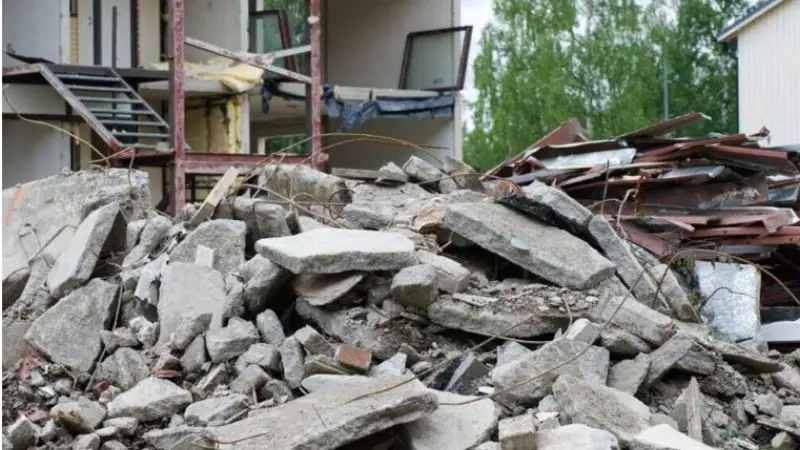
Concrete demolition is the process of breaking up and removing concrete structures. This includes patios, driveways, walkways, foundations and slabs. The idea is to break up solid concrete into smaller chunks to haul off. Concrete can also be broken to reveal underground pipes or to clear a construction site for new construction.
Recommended For Your Project
How Does Concrete Demolition Work?
Concrete demolition involves repeated and applied pressure, leverage, and impact, as it is strong in compression but weak in tension. When the slab is hit with a hammer, a shock wave goes through the slab and initiates small cracks. As strikes repeat, these cracks enlarge and eventually join together, allowing the concrete to break into more manageable pieces—the basic law of breaking concrete in small jobs.
Prying or lifting tools for concrete can also be used. A crowbar uses leverage on an edge or a joint; the concrete is lifted up and will split along a natural seam. A hand hammer can break concrete at a slower pace than a power tool, like a jackhammer, which provides quick release of high-energy impacts. Water and dust control also help to make the work area safer and cleaner.
When Is Concrete Demolition Needed?
Many home improvement, repair, and renovation projects require concrete demolition. If the old patio is being replaced with a new deck or garden, it can be torn up, and a new patio can be laid, but if the old driveway is being replaced, the first step would be to break up the old driveway slab. A basement floor or a floor with concrete steps or a walkway in need of repair could also be removed as part of a renovation.
If the concrete is badly fractured, sunken or crumbling, it may require a full replacement rather than repair. Tree roots can lift walkways, and freeze-thaw cycles can damage outdoor surfaces. In these cases, the ability to remove concrete is essential when planning and selecting demolition tools for the job. Knowing how to demolish concrete starts with assessing the concrete thickness, surrounding structures, and access to the work area. If a small job (i.e. one step or short path) can be done, it might be possible to do it yourself. Never dig into concrete without first checking for underground utilities.
Types of Concrete Demolition
You can use hand or power tools to break up concrete. The best solution depends on the slab’s size, thickness, location, and required force. Depending on the scale and thickness of the slabs, mechanical equipment may be required for larger residential jobs or projects.
When selecting a method, consider how much concrete you need to remove and what’s around the work area. This can help you determine where to cut a concrete slab without damaging nearby surfaces. There are two principal methods of demolition: mechanical and manual.
Manual Concrete Demolition
Manual cutting and removal is based on simple tools such as a sledgehammer, pry bar, chisel, and manual effort. It’s suitable for thin slabs, walkways, small concrete patios, and damaged concrete. It also provides improved control when approaching plants, walls or other sensitive areas.
First, cut a line through the area you want to cut out. Be firm and steady, using the weight of the hammer to make the blow hit the concrete. If there are some cracks, position a pry bar under an edge and press the opposite side down to elevate the broken section. Manually cracking concrete takes time and labor, but it can reduce equipment hire costs and provide more control over the demolition process.
Mechanical Concrete Demolition
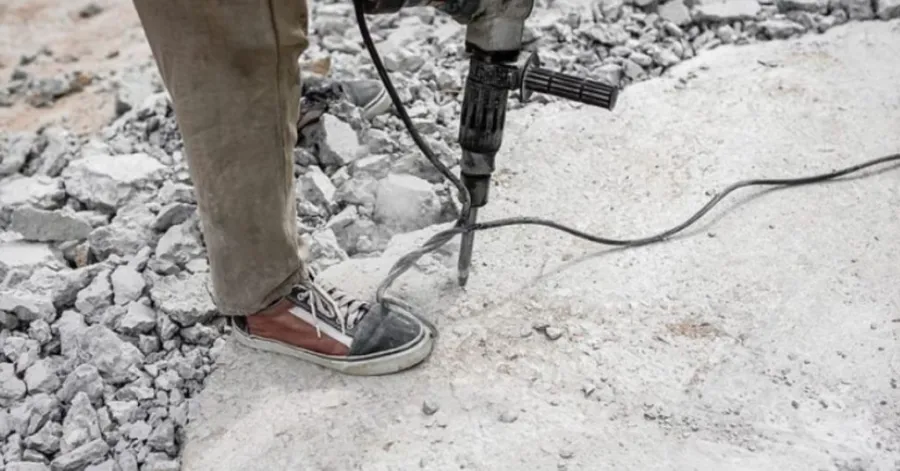
Powered equipment quickly breaks and removes concrete—this is called mechanical concrete demolition. A jackhammer has a more rapid impact rate and can be used to break thick slabs, while an excavator fitted with a hydraulic breaker can be used for foundations, driveways and large commercial applications. These machines can save workforce and speed up large-scale demolition projects.
But powered equipment should be handled with safety precautions. Demolition can create noise, dust, and vibration, so nearby buildings need protection. However, while machines are appropriate for thicker or larger slabs, DIY concrete removal may be feasible for smaller projects. When weighing concrete demolition, first consider the slab thickness and project size. It may be worth hiring a jackhammer if a slab is too big or too hard to break with hand tools.
Top six professional demolition hammers by job type and cost
| Model | Impact | Suitable job | Approx. French price |
| Metabo MHEV 11 BL | 18 J | General demolition | €814+ |
| Bosch GSH 11 VC | 23 J | Walls/floors | €1,360 |
| Hilti TE 2000-AVR | 35 J | Concrete floors/foundations | €3,599+ |
| DeWalt D25981 | 62 J | Heavy concrete | €1,599+ |
| Makita HM1812 | 72.8 J | Very heavy demolition | €1,317+ |
| Hilti TE 3000-AVR | — | Heavy concrete/asphalt | €3,999 promotional |
Prices are based on French-market listings rather than standardized retail prices. Hilti’s September 2026 promotion lists TE 3000-AVR at €3,999 and TE 2000-AVR at €3,599.
How to Prepare for Concrete Demolition
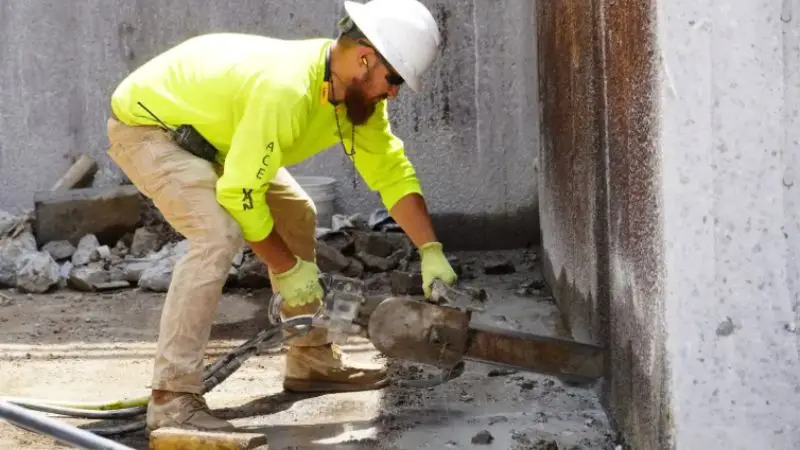
Proper preparation can result in a safer, cleaner and more manageable concrete demolition. Take time to examine the concrete before using a hammer or any machinery, and know what is under and around it.
With just a few minutes of planning, damaged utilities, injuries and unnecessary cleanup can be avoided. When you’re considering the demolition of a concrete slab, you should begin by inspecting the slab and its properties, including its thickness, location, and surroundings. Then verify that there are no underground utilities in the demolition zone.
Inspect the Concrete and Work Area
Do a walkthrough of the slab before beginning demolition. Identify existing cracks, joints, edges or other vulnerable areas to serve as starting points. Check the thickness of the concrete, as a thin walkway may be appropriate for hand tools and a thick driveway may require a jackhammer. Older concrete may also be more prone to breaking than newer concrete.
Then check the surrounding area for walls, pipes, plants, windows, vehicles and other items that might be damaged by flying debris. Clear the workplace of furniture and other movable equipment and materials. A tarp can be used to trap smaller pieces and to facilitate cleanup. Maintain a clear path around the work area to allow you to get away from concrete sections that may detach. These checks are crucial when deciding how to safely and efficiently break up a concrete slab.
Locate Utilities Before Demolition
Concrete surfaces can have gas, water, electrical and sewer lines buried underneath or near them. Damage in the course of demolition could result in injury, costly repairs or loss of service. Before breaking or removing concrete, always contact the proper utility locating service. Homeowners in the United States can call 811 to ask for utility markings prior to work being performed.
Wait until the lines have been properly marked before beginning demolition. Even if the concrete appears relatively shallow, do not assume that a utility line is safe to dig. Do not assume that a utility line is safe to dig even if it appears the concrete is relatively shallow. Extra care is particularly required around marked lines and connections. If you’re preparing to remove a concrete driveway or patio, utility checks are a part of your preparation. When you plan in advance, you won’t have to deal with unexpected dangers, and you will have a safer work space prior to demolition.
Wrap Up
Now you know a bit about how to do your own concrete demolition. Short lengths, such as patios, walkways and short runs, fit first-time projects. Select the tools according to the thickness of concrete. Follow safety precautions. Use a dust mask, gloves and goggles. Call 811 to mark the location of utilities before beginning excavation work. Use a sledgehammer to hit edges and joints. Use the weight of the tool. Use a pry bar and wheelbarrow to remove broken parts. Use a jackhammer when necessary; rent one for thicker slabs. If you have large driveways or foundations, then a professional is required. Begin with a basic project to gain confidence. Use power tools for rent rather than purchase them. Use protective equipment throughout the activity. It’s possible to achieve success with planning and the correct approach.
FAQs
Best breaker hammers for breaking concrete floors in France
The sustained 35 J of Hilti TE 2000-AVR comes with a 14.5-kg design that is oriented towards the floor, whereas the Bosch GSH 11 VC is lighter and more versatile, with a 23 J rating.
Best breaker hammers for driveways and impact-energy comparison
Higher impact energy is for thicker concrete, and lighter models will also have better maneuverability and operator control on concrete driveways, which are typically larger.
Best breaker hammers for concrete foundations
Hilti TE 2000-AVR is a medium foundation demolition machine for use on concrete slabs and foundations, and has a power of 35 J and 14.5 kg. Bosch GSH 11 VC provides 23 J and has an 11.4-kg body to handle more challenging vertical chiselling.
Concrete block walls versus reinforced concrete
In the case of concrete block walls, a low weight and SDS-Max tooling are offered by Bosch GSH 11 VC or Metabo MHEV 11 BL. Typically, reinforced concrete requires more powerful equipment: DeWalt D25981’s 62 J or Makita HM1812’s 72.8 J are significantly more powerful than other models.
What is the best jackhammer for heavy demolition versus light chiseling?
Heavy demolition is good for the Makita HM1812 at 72.8 J or the DeWalt D25981 at 62 J. The Metabo MHEV 11 BL provides 18 J at 12.2 kg, and smaller SDS-Max models are available from Bosch, starting at 7.5 J.
What are the best breaker hammers for professional tradespeople in France?
Professional models are Bosch GSH 11 VC, Metabo MHEV 11 BL, Hilti TE 2000-AVR, DeWalt D25981 and Makita HM1812. They range from about 18- 72.8 J, with various priorities on weight, vibration control, demolition capacity, service and purchase cost.