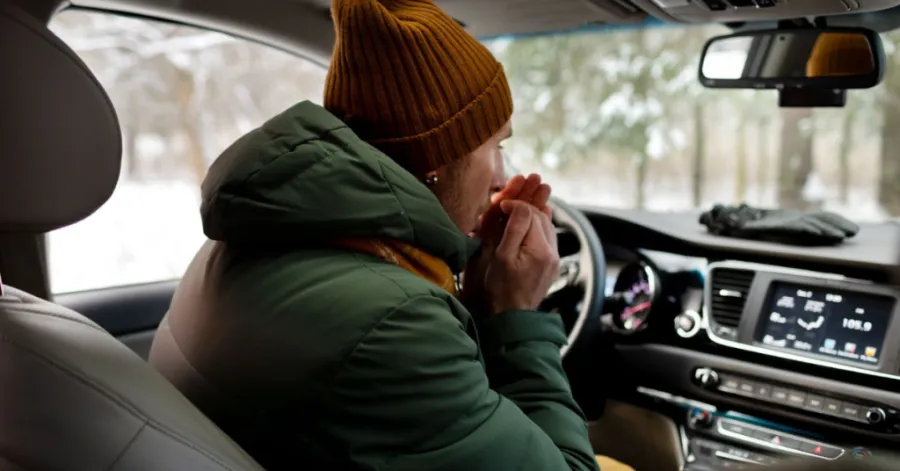
You might feel frustrated when your car heater stops working. Don’t worry—car heater problems happen to lots of drivers. You can check many things yourself with just a little guidance. Take your time, follow each step, and see what you find before taking your vehicle to a mechanic.
Car Heater Problems: First Checks

Car heater problems can make winter drives uncomfortable. You can fix many issues by checking a few key parts. Let’s start with the basics.
Check Coolant Level
Your car heater uses hot coolant from the engine to warm the air. If you have low coolant levels, the heater can’t do its job. You might notice the air from your vents feels cold, even when the engine is warm. Here’s how you can check the coolant:
- Wait for the engine to cool down. Hot coolant can burn you.
- Open the hood and find the coolant reservoir. It’s usually a transparent plastic tank with markings for “Min” and “Max.”
- Look at the level. If it’s below “Min,” you have low coolant levels.
- Add coolant if needed. Use the type recommended in your owner’s manual.
Low coolant levels are one of the most common causes of car heater problems. Always check the coolant before proceeding to the next step.
Inspect Heater Core
The heater core acts like a small radiator. It uses hot coolant to heat the air inside your car. If you have a clogged heater core, you’ll notice weak heat or no heat at all. To assess the heater core, try these steps:
- Turn on the heater and set it to the highest temperature.
- Feel the air coming from the vents. Is it warm or cold?
- Check the floor under the dashboard for wet spots. Leaks here mean trouble.
- Smell the air. A sweet odor can mean coolant is leaking inside.
A clogged heater core can block hot coolant from reaching the heater. You may notice foggy windows or observe the engine overheating. If you suspect a clogged heater core, you can try flushing it, but this job can get messy. Many drivers ask a mechanic for help.
Examine Water Pump
The water pump keeps coolant moving through the engine and heater core. If it fails, you’ll have low coolant levels and poor heat. To inspect the water pump, follow these steps:
- Listen for unusual noises from the engine, such as whining or grinding.
- Look for coolant leaks around the pump. The pump sits near the front of the engine.
- Watch the temperature gauge. If the engine runs too hot, the pump may not function properly.
A broken water pump can cause car heater issues and engine damage. If you find leaks or hear unusual sounds, have the pump checked immediately.
Troubleshoot Car Heater: Electrical and Controls
How to fix a car heater that’s not working? When troubleshooting car heater problems, electrical parts and controls play a significant role. Sometimes, the issue is not with the coolant or heater core. Instead, you might find the problem in the fan, fuses, controls, or thermostat. Let’s walk through each step together.
Test Heater Fan
The heater fan, also called the blower motor, pushes warm air into your car. If you hear silence when you turn on the heater, you may have issues with your blower motor. Here’s how you can check the fan:
- Start your car and set the heater to its highest setting.
- Listen for the sound of air moving. If you hear nothing, the fan may not be working.
- Try switching between different fan speeds. Sometimes, only one speed fails.
- Feel for air coming from the vents. If you get heat, blowing cold air, or no air at all, the fan could be the problem.
A working fan is key to your car’s heating system. If you find the fan isn’t working, you may need car heater repair or a new blower motor.
Check Fuses
Fuses protect your car’s electrical system. If a fuse blows, your heater might stop working. You can check the fuses with these steps:
- Find the fuse box. It’s usually under the dashboard or in the engine bay.
- Look for the fuse labeled “Heater” or “Blower.”
- Pull out the fuse and check if the metal strip inside is broken.
- Replace any blown fuses with the same type.
If you replace a fuse and the heater works again, you’ve solved the problem. If the fuse blows again soon, you may have a more serious electrical issue that requires professional diagnosis.
Adjust Heater Controls
Sometimes, the heater controls cause trouble. If your car heater is not working, check the settings first. You might have the controls set to “cool” or “vent” instead of “heat.” Here’s what you can do:
- Turn the temperature dial to the hottest setting.
- Switch the airflow to “floor” or “defrost.”
- Make sure the fan speed is not set to “off.”
- Try moving the controls back and forth. Stuck controls can prevent the heater from working.
If adjusting the controls fixes the heat, you’ve completed a simple car heater troubleshooting step. If not, keep going to the next check.
Diagnose Thermostat
The thermostat controls the flow of coolant in your engine. A faulty thermostat can cause your car’s heater not to work or blow cold air. You need to know how to spot thermostat problems. Here’s a quick guide:
| Symptom | What It Means |
| The engine takes a long time to warm up | Thermostat stuck open |
| The temperature gauge stays low | Thermostat stuck open |
| Engine overheats | Thermostat stuck closed |
| No heat from the heater | Faulty thermostat |
To diagnose thermostat issues:
- Start your car and watch the temperature gauge.
- If the indicator never returns to normal, the thermostat may be stuck open.
- If the engine overheats quickly, the thermostat could be stuck closed.
- If you get cold air from the heater even when the engine is hot, suspect a faulty thermostat.
You can replace the thermostat yourself if you feel confident. If not, ask a mechanic for help. A working thermostat keeps your car’s heating system running smoothly.
To Sum Up
To Sum Up
You have looked at the coolant, heater core, water pump, fan, fuses, controls, and thermostat. Most of the time, these are the places where car heater problems happen. First, try these steps. If your heater still doesn’t work, contact a mechanic. You can do this! Stay safe and warm on the road.
FAQ
Why does the heater in my car blow cold air?
Your heater core might be clogged, your thermostat might be stuck, or your coolant might be low. Look at these first. If you still feel cold air, talk to a mechanic.
Is it safe to drive with a broken heater?
You can drive, but it might be cold and uncomfortable. If the heater is broken due to leaks or overheating, stop and seek help.
How often should I check my car’s coolant?
In the summer, inspect your vehicle’s cooling system monthly. In winter, inspect your system every two weeks, especially during this time.