When selecting the best laser level for outdoor use, construction, landscaping, grading, and alignment projects can be more accurate and efficient. Bright sunlight, long measuring distances, uneven surfaces, dust, and moisture are factors that occur more often outdoors than indoors. The ideal laser level will offer accuracy, excellent visibility, great range, and a tough design. When the light is bright, green beams and compatible laser receivers can also help to make the beam visible. Depending on the project and the areas to be covered, you can use different types of lasers, such as rotary, line, or point lasers for specific alignment jobs. Knowing these features will enable you to choose the right tool and use it comfortably outdoors.
Table of Contents
Key Features to Look for in an Outdoor Laser Level
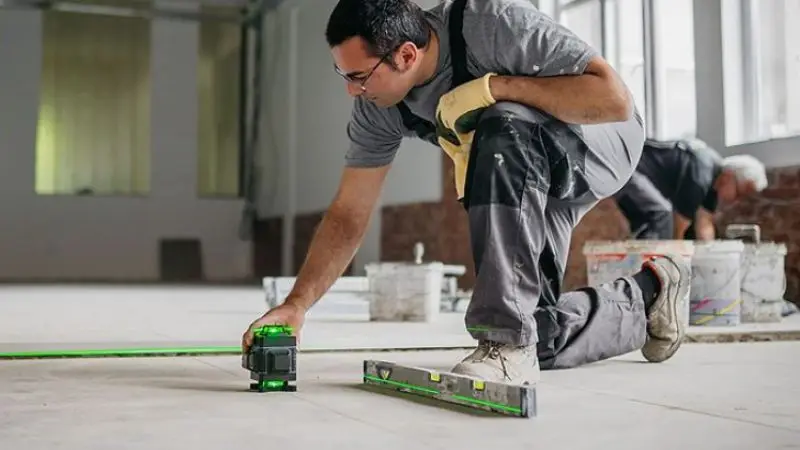
When using lasers outside, consider more than beam color and measuring range. You should have a model that is accurate, visible, and reliable under varying outdoor conditions. These features can help you figure out the best laser level for outdoor use for your projects.
Recommended For Your Project
Choose the Right Laser Beam Color
@avichihuas Laser rotativo de la marca VEVOR pal que le sirva
♬ original sound - avichihuas
One of the initial things to consider when selecting an outdoor laser level is the beam visibility. The green beams tend to be easier to spot than the red beams, particularly in the daytime. This is why a green laser is a recommended option if you are in need of the best laser level for sunny days. But beam colour isn’t the only thing that counts when it comes to performance. Additionally, the power of the laser, working conditions, and range to the target are all important. A laser detector can help you find the beam when it is hard to see, especially for longer outdoor measurements. The proper beam color and visibility features can help to make outdoor layout and alignment easier.
Check the Working Range and Accuracy
Measurement Range is an important feature to consider, as distances tend to be greater in outdoor projects. A long-range laser level will cover a bigger construction area without having to move it around so much. Accuracy is also crucial, as a slight measurement mistake can impact walls, foundations, grades, or other installations. In comparing the best laser level for outdoor use, look for its accuracy over a certain distance and not just the maximum distance. You can add a detector to a model for professional construction to increase its useful range. By integrating both of these, measurements will be more dependable when covering large areas outdoors.
Look for a Reliable Self-Leveling System
Self-leveling automatically sets the laser level reference after positioning the tool. This can save time and minimize errors during construction, landscaping, framing, and installation. To see which laser level is perfect for outdoor usage, search for the one that has a reliable self-leveling system and an appropriate leveling range. Some models also include an alarm if the tool is outside its self-leveling range. This will help you avoid the problem of using an incorrect reference line. A stable leveling system is especially helpful when working on an uneven outdoor surface or when the work spans multiple areas of a project.
Consider Visibility in Bright Sunlight
Bright sunlight can make it difficult to see any laser beam, even when the laser is functioning properly. This is why outdoor visibility is a crucial factor when selecting a laser level. When it comes to a laser level for outdoor use, consider a laser with high beam visibility and compatibility with the laser detector. Green beams are more easily visible to the human eye than red beams, and a detector can be used to detect the beam over a greater distance. A model used for outdoor jobs should also have a clearly discernible reference line under varying lighting conditions. These functions make leveling and alignment easier during daytime construction.
Choose a Durable and Weather-Resistant Design
Any outdoor work puts tools at risk of dust, moisture, accidental impacts, and fluctuations in temperature. A rugged laser level should be well built and able to withstand typical job site conditions. Check the tool’s IP rating to see how resistant it is to dust and water. A rugged design can also help protect internal components if the tool is accidentally bumped or dropped. Take time to consider where and how much you’ll use your laser level before choosing an outdoor model. For example, construction sites may be more demanding than occasional landscaping work. A well-shielded model can maintain consistent performance in challenging outdoor applications.
Check Battery Life and Power Options
Battery life matters most when you are working outdoors for several hours. If a laser level dies during a layout job, work will stop, and you may need extra setup time. Check how long the runtime should be before you start using it for your projects and determine if it has replaceable or rechargeable batteries. Some laser levels also provide convenient charging options for extended jobs. When the laser isn’t needed to run continuously, power-saving features can extend battery life. When comparing laser levels for outdoor leveling, consider battery performance, accuracy, visibility, and range. A reliable power system makes the tool more useful for extended outdoor jobs.
Types of Laser Levels for Outdoor Use
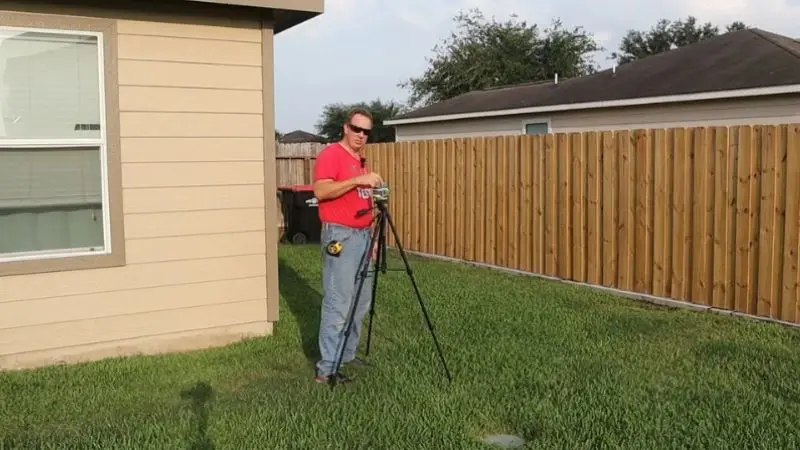
There are various types of lasers and their beam patterns for different outdoor projects. Understanding how each one works helps you choose the right tool for your application. There are four types of levels you can choose from: rotary, line, cross-line, and point laser levels.
Rotary Laser Levels
Rotary laser levels suit applications that need a level reference over an extended outdoor area. They emit a laser beam that spins around the tool, forming a continuous horizontal or vertical reference plane. This makes them useful for foundation work, grading, landscaping, site preparation and other construction work. Many rotary models can be used with a detector, helping locate the beam in bright daylight when direct visibility is difficult. They also have a very long working range, which makes them suitable for bigger job sites. If you’re wondering what laser level is good for outdoor construction, a rotary laser level may be a good option as it can deliver a stable reference point over long distances and uneven terrain.
Line Laser Levels
Laser levels may have a line that is projected straight horizontally, vertically, or at an angle to assist with positioning and alignment. These are used for outdoor jobs like setting posts, fencing, aligning buildings, and smaller construction jobs. Unlike rotary models, line lasers focus on a visible reference line rather than projecting a plane across a large workspace. Some models also have green beams that enhance visibility during the day, and detector compatibility can extend their use to the outside. If you are thinking about using a laser level outdoors, a line laser may be the solution if you need alignment lines over moderate distances, rather than over a wide area.
Cross-Line Laser Levels
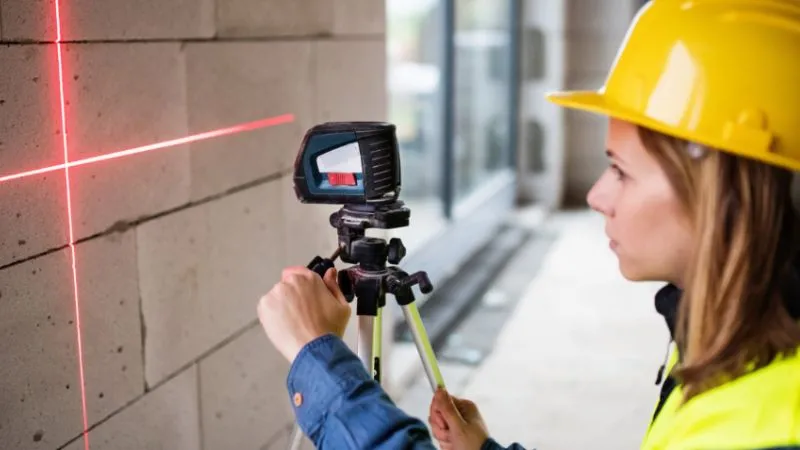
Cross-line laser levels are the most common type of level, usually emitting two perpendicular laser lines, one horizontal and one vertical, that cross each other to form a clear reference point. They are regularly utilized for positioning, installing, and alignment jobs that require direction in both directions. Outdoor uses may include adding a fence, building a deck, creating landscape design plans, and placing fixtures and structures. Green-beam versions might be more visible during daylight hours; however, a detector may be necessary for longer ranges or when the sun is bright. When considering which laser level is best for outdoor use, a cross-line laser is a suitable type for smaller jobs requiring broader coverage than a cross-line laser, but still requiring horizontal and vertical references.
Point Laser Levels
Point laser levels emit a single or multiple laser points, not lines. You can use them to transfer measurements, set up reference points, and square off from one surface to another. They can be used for tasks that require specific reference points rather than a horizontal or vertical line. When working outside, they can be used to set posts, transfer elevations, or position structural elements. But in bright daylight, individual points can be hard to see, so consider detector compatibility and beam visibility. If you are looking up the best laser level for outdoor leveling, a point laser may be helpful if the job you are doing doesn’t require a continuous laser line and needs a point-to-point job.
How to Choose the Best Laser Level for Outdoor Use
When selecting an outdoor laser level, first determine your project’s requirements. Things like range, accuracy, beam visibility, and durability can all affect the tool’s outdoor performance.
Consider the following to choose the right tool for your work.
Consider Your Project Type
First, ask yourself what kind of outdoor project you’re going to undertake. Foundation work, grading, or large construction layouts may need a different laser level, as might small landscaping, fence setting, or deck work. For projects that require horizontal and vertical lines, a cross-line or line laser may be appropriate; for a large area or extended distance, a rotary laser may be preferred. Most of the time, it would be best to understand your application rather than simply focusing on individual specifications to answer the question, ” What is the best laser level for outdoor use? Think about the surfaces, distances, and measurements used in the average job you would be working on to make sure you select the laser level you actually need to do the job.
Check the Required Working Range
Working range is especially crucial when you’re using a laser level in an open outdoor area. Estimate the distance you expect to reach and compare it to the tool’s rated distance. Keep in mind that the visible range and detector range are not necessarily the same, particularly in bright daylight. When it is challenging to see the laser beam, a detector can be used to extend the practical working distance. When you’re trying to figure out what is the best laser level for outdoor construction, choose a model that has the range you need for your largest project you may need to use it on, not just the max distance it’s advertised for. An appropriate working range will minimise the need for repositioning and ensure consistent measurements over larger areas.
Choose the Right Beam Color
Beam color may affect the laser’s visibility outdoors. The green beams are usually more visible to the naked eye than red beams, especially during daylight hours. This can make a green-beam model a good option if you need the best laser level to use in sunshine. But visibility also relies on the strength of the beam, the distance between the beam and target, the target surface, and ambient light conditions. With harsh outdoor applications, detector compatibility may be a more significant factor than beam color alone, as a detector can detect the beam when the beam color is not distinguishable by eye. Select a beam color that works with the laser level’s overall visibility system under your working conditions.
Compare Accuracy and Self-Leveling
Accuracy reflects the degree of deviation from the actual level or alignment required for your project that is found in the laser reference. Look at the manufacturer’s accuracy specification and the distance it is measured at. Self-leveling is also useful since it can automatically set a level reference within the specified range. When choosing the best laser level for outdoor use, consider both features, not just self-leveling. A proper self-leveling mechanism can simplify the setting-up process, thus reducing the time required, and good accuracy helps create consistent results. If you’re building or leveling on a larger scale, these specs are even more critical, as the error may be more apparent over a distance.
Look for Durable Construction
Laser levels used outdoors must be able to hold up against conditions that are not as controlled as those indoors. Dust, moisture, accidental bumps, and uneven job-site surfaces can affect tools. Check for rugged housing and a suitable IP rating to withstand dust and water. If you are often at construction sites or if you frequently transport the laser to different workplaces, it is all the more important that the laser is robust. Outside, don’t sacrifice physical protection for range or beam color when deciding on the laser level to use. A tool that is properly protected will be more likely to operate reliably, regardless of the harsh outdoor weather and occasional tool-site abuse.
Consider Receiver Compatibility
When using it outdoors, a laser receiver can help make a laser beam visible, which can make all the difference. When the laser beam hits the target, the receiver provides an indication. This will help you work longer distances and in brighter lighting, which you might not be able to handle visually. Before selecting a model, make sure the receiver is compatible and intended for the type of laser beam. For outdoor large-scale leveling tasks like grading, foundation work, and more, receiver compatibility may be a key consideration when choosing the best laser level for the job.
How to Use a Laser Level Outdoors
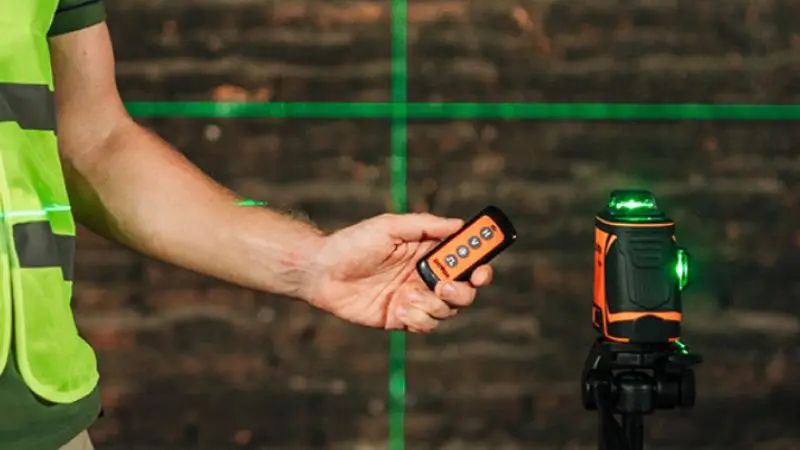
When using a laser outdoors, take special care to get the level set up properly, as sunlight, ground leveling, and distance may all influence visibility and accuracy. If you follow the same process every time, you’ll have a reliable reference for your project.
Here are tips to make the most of an outdoor laser level.
Set Up the Laser Level on Stable Ground
Always start the laser level on a solid and stable base that will not move during the taking of measurements. A tripod may be helpful as it can be used to adjust the tool to a convenient height and to provide a secure platform. Do not have loose soil, unstable materials, or surfaces that vibrate when moving around the work area. Hold the tool in place with a clear line to the area to be measured. It is important to have a stable setup, as even minor movement can alter the reference line. Taking time to secure the laser before starting helps ensure consistent measurements throughout the outdoor project.
Position and Level the Laser
Once the tool is secured, set it so the beam projects to the desired area to get the reference. Let the laser self-level if it is capable of self-leveling. Check the indicator or leveling status to ensure the tool is ready. On manual models, make sure to set the instrument level with precise controls. Minimize unnecessary motion of the laser during operation. This is especially critical outdoors at long distances, as any setup error becomes more noticeable the farther the beam travels. With the laser leveled and stabilized, you can now start to set up the reference points necessary for your project.
Use a Laser Detector in Bright Conditions
In a large outdoor area, direct sunlight can make a laser beam hard to see. During these conditions, a compatible laser detector is used to find the laser beam more easily. Adjust the detector so that it is close to the point where the reference is to be fixed and move the detector until it is found. Use the display on the detector or the sound from the detector to help you locate the beam. This is particularly suitable for use with rotary laser levels and long-range construction layouts. Using a detector increases the working range in practice outdoors and makes daytime measurements easier. Before use, always check compatibility of the detector with your laser level.
Take Accurate Measurements
After you position the laser correctly and set the beam or detector reference, take measurements from the same reference plane as the laser was positioned. Clearly mark the points required and consistently measure throughout the project. Do not relocate the laser after the initial reference is set up and verified unless the setup and verification are repeated. For greater distances, take measurements at several locations to look for unsuspected variations. When it comes to the best laser level for outdoor use, good measurement practices are important, as outdoor conditions can present a range of challenges that are not as likely to occur indoors. Keep the tool stable, and maintain a reference on the same tool throughout the project to get consistent results.
Check the Level Before Starting Work
Double-check the laser reference before construction or installation. Test that the tool is stable, the self-leveling system reads a proper position, and the beam or detector provides a proper reference. Repeat the setup and leveling process if the laser has been moved, bumped, or repositioned before continuing. Comparing a few reference points will be helpful to ensure measurements are consistent from point to point throughout the work area. This last review will minimize the possibility of mistakes being carried over to the project. When grading, setting posts, or setting structural components, check the level first to provide a reliable benchmark for future tasks.
Wrap Up
When choosing an outdoor laser level, it is important to take into account the visibility, range, accuracy, self-leveling, durability, battery life, and receiver compatibility. The best choice depends on the kind of work you want to do and how much. Rotary models suit large construction and grading projects, while line, cross-line, and point lasers suit more focused alignment projects. When you are still uncertain about what the best laser level for outdoors is, rather than just selecting one specification, consider the ones that are appropriate for your working conditions. A laser level provides reliable references for construction, landscaping, leveling, and outdoor installation applications when properly installed and measured.
FAQ
Which laser level is best for outdoors?
The very best outside laser level is dependent on the project. Green-beam line lasers are recommended for shorter alignment tasks in daylight, and Rotary models are recommended for large areas.
Which of the laser levels is best for outdoor construction?
For outdoor construction, a rotary laser with a compatible receiver may be appropriate to give long-range references for grading, foundations, site preparation, and alignment.
Which laser level is best to use in the sun?
Green beam laser levels tend to have a more visible beam than red beams. If you need to use the laser in bright sunlight or at long ranges, then a compatible detector would enhance the use of the laser.