Industrial ceiling fans are a fundamental solution to ensure good air circulation in large areas such as warehouses, factories, workshops, and commercial buildings. They are built to handle heavy-duty use, provide more extensive coverage, and can work long hours without deterioration, unlike ordinary fans. These fans help minimize heat buildup, increase airflow, and create a more comfortable working environment for workers. They are also energy-efficient, as they can move large volumes of air with less power. This blog will discuss the various types, key characteristics, purchasing considerations, and errors to avoid when selecting the best industrial ceiling fans for warehouses, factories, and other large industrial areas.
What Industrial Ceiling Fans Are and How They Work
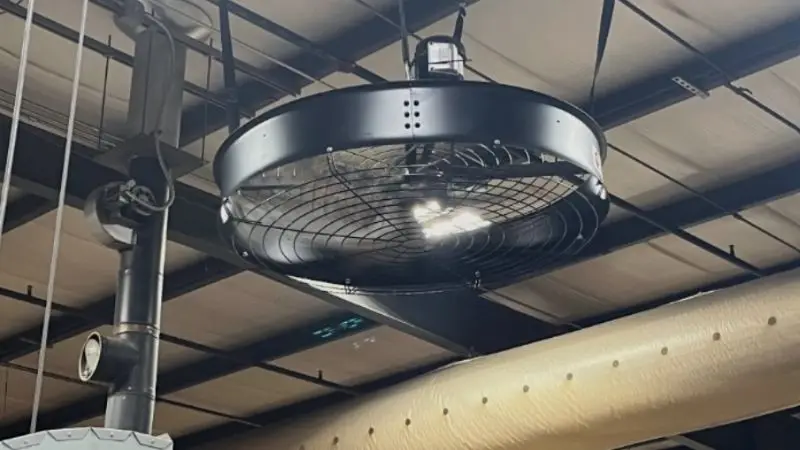
Industrial ceiling fans are huge, powerful fans designed to circulate air in large areas such as factories, warehouses, and workshops. They are built to withstand heavy use and operate for long hours without failure. Their primary aim is to enhance air circulation, reduce heat buildup, and make large indoor spaces more comfortable for workers and equipment.
These fans are more efficient and stronger than ordinary ceiling fans, hence their popularity in commercial and industrial buildings. Best industrial ceiling fans in warehouses have become popular among many businesses due to their ability to enhance air circulation and create a better working environment.
How Industrial Ceiling Fans Move Air in Large Spaces
Industrial ceiling fans operate on powerful motors that rotate large blades at a constant rate. The blades push air downward in a wide, controlled flow when they rotate. This air then circulates on the floor and flows back up the walls, completing the air circulation cycle. This constant movement helps dissipate heat and makes the environment more balanced.
Due to their design, a single industrial fan can cover a very large area. This makes them more effective than having a lot of small fans. They come in handy, particularly where air movement is poor, and temperatures rise rapidly due to equipment or congested storage facilities.
How Industrial Ceiling Fans Are Different from Regular Ceiling Fans
Industrial ceiling fans are built to be strong, durable, and deliver high air volumes, whereas regular ceiling fans are designed to provide comfort in the home. The industrial fans have larger blades, more powerful motors, and are made to last long hours without overheating. They are also constructed using heavy-duty materials to withstand harsh conditions, such as factories and warehouses.
Conversely, the regular fans are smaller, less noisy, and are designed to be used short-term, daily, in rooms. They are unable to transport air over extensive open areas. That is why the best ceiling fans are used in factories across many industries to provide appropriate ventilation and high performance under harsh conditions.
Why Large Buildings Need Industrial Ceiling Fans
Industrial ceiling fans are required in large buildings since air can be trapped and stagnant in open spaces that are very wide. This might lead to heat accumulation, discomfort, and poor working conditions. To address this issue, industrial fans circulate air evenly throughout the area, helping regulate temperature and enhance overall comfort.
They are particularly handy in warehouses, production areas, and storage areas in which heat and humidity may be in play with workers and materials. The best industrial ceiling fans are used in many companies to serve large areas, provide adequate air circulation, and make the workplace more efficient.
Key Features to Look for in the Best Industrial Ceiling Fans
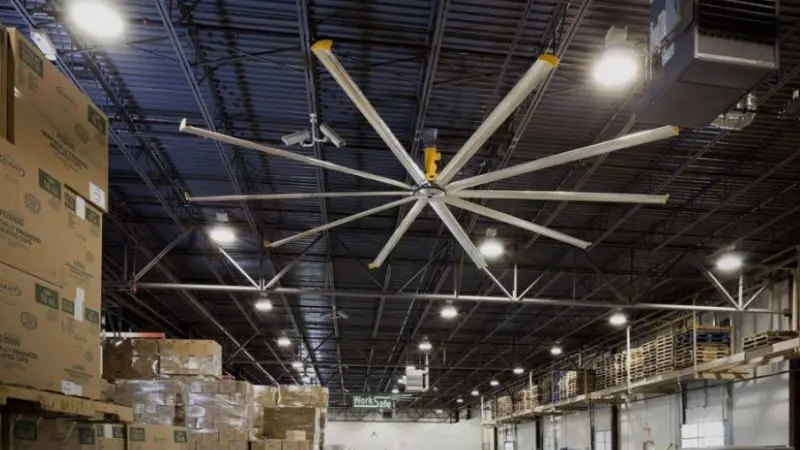
Performance, strength, and long-term reliability should be prioritized when selecting industrial ceiling fans. These fans are not simply cooling fans but are designed to circulate large volumes of air in factories, warehouses, and other expansive areas. Learning the main characteristics will help you choose a fan that is effective in harsh conditions.
Given current industrial practices, consumers often seek the best industrial ceiling fans for warehouses or manufacturing rooms to maintain adequate air circulation, save energy, and extend longevity.
Strong Motor Power and Performance for Continuous Operation
The core of any industrial ceiling fan is the motor, and its strength directly impacts performance. An excellent motor will enable the fan to run long hours without overheating and wasting power. Certain industrial settings demand continuous air flow, and thus, the quality of the motor becomes very crucial.
There are also high-performance motors that provide a consistent rotation of large blades to maintain air flow across broad regions. The strain is minimized, and life is enhanced with better motors, which can be used in heavy-duty facilities in factories and commercial buildings. That is why the best ceiling fans are in high demand among users seeking a stable, long-term airflow solution for factories.
Blade Size and Material Quality for Maximum Air Movement
The blade size and material significantly affect the amount of air a fan can move. The bigger blades occupy more area per rotation, and are thus suitable in open spaces such as warehouses and halls. The design and angle of the blades also help direct the airflow more effectively in the room.
The quality of the materials is also critical since the industrial fans are subject to constant operation and even adverse weather. High-strength materials, such as metals or reinforced composites, reduce wear and enhance stability. This size and strength combination facilitates the provision of strong airflow, especially in the most appropriate industrial ceiling fans in big areas where broad area coverage is paramount.
Airflow Capacity (CFM Rating) for Effective Cooling Performance
Airflow capacity is expressed in CFM (Cubic Feet per Minute), which indicates the amount of air that a fan can transfer in a certain period of time. In factories, when CFM is increased, there is greater cooling and a quicker flow of air in large spaces. This is one of the most important factors when selecting an industrial fan.
An increased CFM rating would mean that air will reach all corners of a factory or warehouse, eliminating heat and making it more comfortable. It also aids in the preservation of a more balanced temperature in the space. Most current designs of the best industrial ceiling fans with lights are also aimed at enhancing CFM efficiency with the integration of lighting and airflow in a single system.
@ashtonbrown007 VEVOR Wall-Mount Misting Fan #VevorMistingFan #WallMountFan #Vevor #PatioMistingFan #MistingFan
♬ original sound – AshtonBrown007
Energy Efficiency and Power Consumption for Lower Operating Costs
One of the issues in large industrial spaces is energy efficiency, due to the long hours of fan operation daily. Efficient fans are also designed to move as much air as possible with minimal electricity, which helps reduce total operating expenses. This renders them a wise long-term business investment.
Modern industrial fans tend to employ sophisticated motor technology to enhance efficiency and ensure good airflow. Such a balance enables the companies to conserve energy without affecting performance. Facilities relying on the best heavy-duty ceiling fans for garages and other high-use settings should particularly opt for energy-efficient options.
Durability and Build Quality for Long-Term Industrial Use
Their durability is essential since the ceiling fans used in industry are subjected to constant use, dust, and even high temperatures. Good construction quality means that the fan can withstand harsh environments and does not require constant repairs or fail.
Reinforced steel or high-grade alloys contribute to the fan’s long-term lifespan and stability during operation. The fan is also well-built, leading to low repair costs and downtime, which is essential in crowded workplaces. That is why long-lasting models can be found on the list of the best industrial ceiling fans in warehouses, where long-term reliability is a valuable factor.
Noise Levels in Industrial Use for a Comfortable Work Environment
Otherwise, significant consideration is given to noise levels, particularly in work environments where communication and concentration are prioritized. Although industrial fans are very powerful, good designs also ensure minimal noise while still circulating air.
Quieter operation can be achieved through blade shape, motor quality, and proper installation. A balanced fan will generate a smooth airflow rather than a loud mechanical sound. This will help create a more comfortable working environment, particularly in factories and large production areas where the best ceiling fans are used in their day-to-day operations.
Types of Industrial Ceiling Fans for Warehouses and Factories
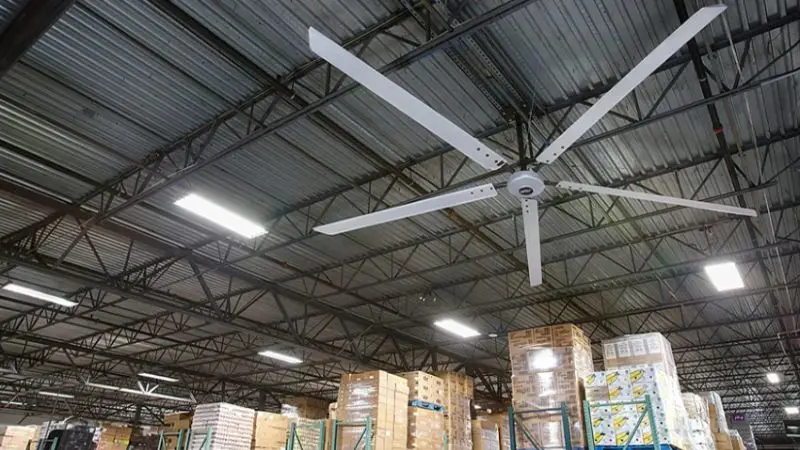
The selection of the appropriate industrial ceiling fan is based on the area size, air requirement, and working conditions. Warehouses and factories might need various airflow solutions; thus, understanding each one helps make the right choice. Others that are designed with huge coverage are fans,s and others with an appearance of durability, efficiency, or smart control.
In such massive buildings, the best industrial ceiling fan in warehouses and production floors is one of the many options that managers compare to determine the best airflow system to use in their space.
High-Volume Low-Speed (HVLS) Fans for Large Open Spaces
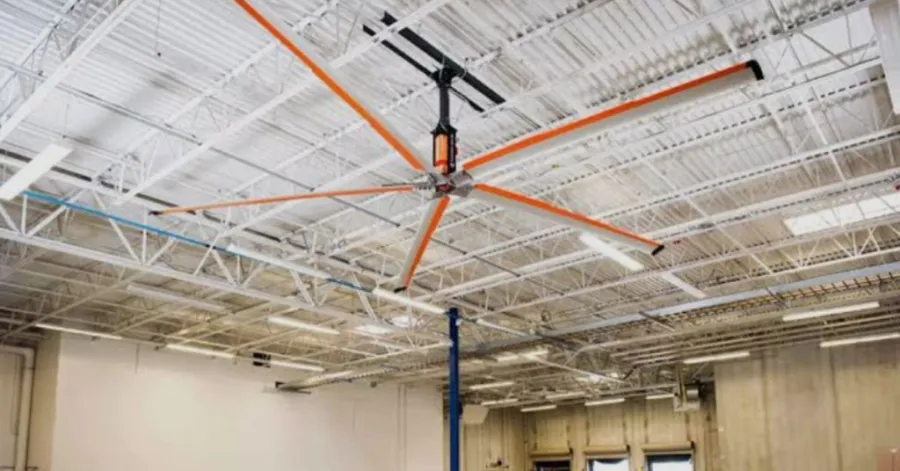
High-Volume Low-Speed (HVLS) fans are designed to move an extremely high volume of air at a low rotational speed. These fans are very efficient in large open areas such as warehouses, distribution centers, and large industrial halls. They have a big blade span that enables them to operate over a vast area with uniform and consistent airflow.
HVLS fans do not produce strong direct wind, but circulate air all over the space; this effectively maintains a balanced temperature. This makes them the best at alleviating heat stress in large workplaces. Most companies have viewed them as the best industrial ceiling fans for large areas due to their coverage and energy-saving efficiency.
Standard Industrial Ceiling Fans for Medium Industrial Areas
In medium-sized factories, workshops, and storage areas, standard industrial ceiling fans are more prevalent. They provide a trade-off between airflow strength and economy. These fans are not as large as HVLS models but are significantly more powerful than typical home ceiling fans.
They can be used in places where full-scale HVLS systems are not necessary, but regular air movement is necessary. Their design prioritizes durability and consistent operation, making them a strong option for day-to-day industrial use. The category that many users choose for installing the best ceiling fans in factories falls under practical, affordable airflow solutions.
Heavy-Duty Metal Blade Fans for Harsh Industrial Environments
Metal blade fans are heavy-duty and designed to operate under harsh industrial conditions, with strength and longevity being key. These fans have heavy metal blades that withstand heat, dust, and constant use without deterioration. They are also applied in factories, garages, and mechanical workshops.
Their concrete construction guarantees their long life and steady functionality even in harsh conditions. Their rugged construction makes them well-suited for areas where machinery operates continuously, and air quality must be maintained. These ceiling fans are usually among the most suitable heavy-duty garage ceiling fans for their power and durability.
Energy-Saving Smart Industrial Fans for Modern Facilities
Smart industrial fans save energy and are designed for modern buildings where modernity and efficiency are the goals. Such fans may also offer speed control, timers, and smart sensors that regulate airflow based on room conditions. This helps minimize unnecessary power use while still providing comfort.
They are particularly applicable in large facilities that operate long hours and seek to optimize energy consumption. There are even models that incorporate lighting systems with airflow, hence they are multifunctional. These sophisticated designs are also among the best industrial ceiling fans with lights, widely used in modern warehouses and commercial areas.
Best Industrial Ceiling Fans for Warehouses and Factories
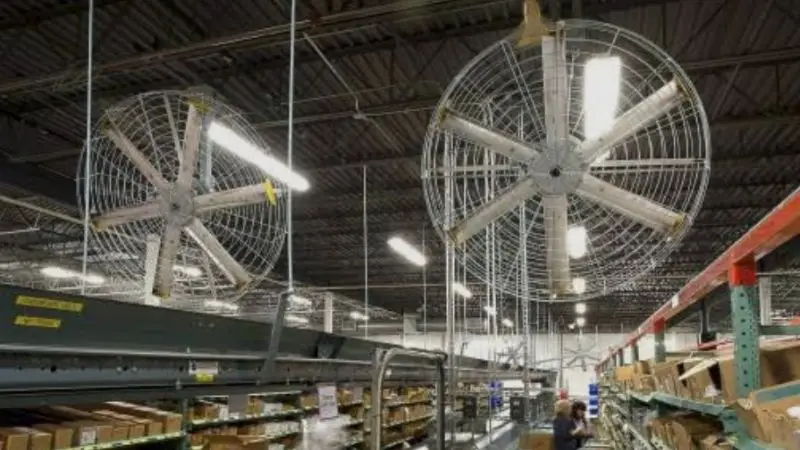
The industrial ceiling fans are designed to support intensive air circulation, extended working periods, and harsh working conditions, such as warehouses and factories. The actual performance considerations, such as airflow strength, durability, power consumption, and noise level, should be known when selecting one. A proper industrial fan must be able to cool large spaces efficiently, operate continuously, and reliably in harsh environments.
Below are the obvious advantages and disadvantages of some of the most popular and reliable industrial ceiling fans, so you can compare them easily.
VEVOR Industrial Ceiling Fan – Best Budget Heavy-Duty Option
VEVOR industrial ceiling fans are offered to users who desire high performance at a low price. This fan is mostly used in warehouses, workshops, and other medium industrial environments where regular air circulation is required. It is powered by a powerful motor and broad blades that help move air over large surfaces. It is particularly attractive to those users who want to find the best industrial ceiling fans in warehouses and have a limited budget. Its build quality is average at the cost, and can be used in normal industrial conditions to work long hours without significant problems.
- Pros: Low cost, powerful air movement, can be used in medium- to large-sized areas.
- Cons: May create audible noise at higher speeds.
Big Ass Fans Powerfoil X4 – Premium High-Performance HVLS Fan
Big Ass Fans Powerfoil X4 is a high-quality HVLS intended for use in extremely large industrial areas, such as distribution centers and massive warehouses. It provides a very high level of air movement with uniform distribution over large spaces and helps reduce heat concentration and enhance comfort. The fan is designed to be highly durable and operate noiselessly, even when it is large. It is commonly used in factories that require high-performance, high-efficiency industrial ceiling fans for large areas.
- Pros: It covers a very large airflow area, operates very quietly, and offers high durability.
- Cons: Extremely expensive initial cost and installation.
Hunter Industrial ECO Series – Energy Efficient Factory Fan
Hunter Fan Company ECO Series is designed to serve factories and commercial settings where air circulation should be balanced while remaining more energy-efficient. It offers a constant air flow, which minimizes hot spots in medium to large industrial areas. The fan is designed for a long service life and requires minimal maintenance. It is also effective in places that require regular cooling but do not have to be expensive in terms of electricity. Mostly, it is chosen as the best ceiling fan in factories due to its energy-saving design and reliability.
- Pros: Low maintenance, reliable long-term performance, energy efficient.
- Cons: It is not strong enough to cover very large warehouse areas.
Crompton HighSpeed Industrial Fan – Affordable Standard Option
Crompton Greaves Consumer Electricals HighSpeed Industrial Fan is a low-cost option to cover small to medium industrial spaces. It provides adequate airflow to meet basic cooling requirements in workshops, small factory facilities, and storage rooms. The fan is simple to fit and service, and can be a viable option for cost-conscious users. It is widely used when simple ventilation is needed, without the need for other sophisticated options or energy efficiency.
- Pros: Inexpensive, good airflow, simple to maintain.
- Cons: No hi-tech features, noisier than high-quality fans.
Havells V3 Industrial Ceiling Fan – Durable Everyday Industrial Use
Havells India V3 industrial ceiling fan is a heavy-duty and daily industrial fan suited for the industrial setup, such as garages, factories, and warehouses. It is characterized by a powerful motor that enables continuous operation and sturdy blades that handle harsh working environments. The fan ensures stable airflow and is designed to last a long time with few breakdowns. It is a convenient choice for users who demand reliable performance without requiring sophisticated features.
- Pros: Good construction, dependable high performance, high durability.
- Cons: Simple construction with fewer features.
How to Pick the Right Industrial Ceiling Fan for Your Space
When you concentrate on the basic requirements of your space, you will find it easy to select the right industrial ceiling fan. You cannot just consider the power or the design, but you have to consider the location where the fan will be applied and the quantity of air needed. Each warehouse, factory, or industrial building is unique, so the fan must be fitted to suit the conditions in which it is used to achieve optimal results.
Many companies compare options for the best industrial ceiling fans for warehouses and large industrial spaces to determine what is most suitable for their installation.
Pick the Fan According to the Size of Your Space
The fan you require depends on the size of your warehouse or factory. Large open spaces require fans capable of circulating air over large areas, whereas smaller industrial rooms can use regular fans. When the space is large and the fan is small, it may not be able to circulate air to all corners, reducing the cooling effect.
In very large buildings, HVLS fans are frequently employed since they are able to cover a larger area with fewer fans. This improves air circulation and reduces the need for multiple fans. That is why most industries prefer the best industrial ceiling fans in large areas to provide even air circulation in large halls and storage facilities.
Choose Based on How High Your Ceiling Is
A very important consideration in the choice of an industrial ceiling fan is ceiling height. Fans that can help push the air down to the working level are required on high ceilings. Without the correct fan to match the height, the air will remain in the air and will not reach the ground-based people.
In tall warehouses and factories, long-bladed industrial fans are typically used for their ability to circulate air more effectively. Smaller fans are safer and more comfortable in low-ceiling areas. That is why the best ceiling fans are more popular among facility owners who plan to operate at various ceiling heights without compromising performance.
Choose Based on Your Local Weather Conditions
The performance of an industrial fan is also influenced by the weather conditions. Having good air circulation is required in humid and hot environments to make them comfortable and help to eliminate heat. Fans are employed more to circulate the air than to cool in cooler areas.
Industrial fans are used to evenly distribute temperature by circulating air in the area. This not only enhances comfort for the workers but also ensures that equipment is not overheated or affected by moisture. In a more challenging climate, a lot of users use the best heavy duty ceiling fans for garages since they are effective in extreme conditions.
Choose Based on Your Budget and Daily Usage
Another factor to consider when choosing an industrial ceiling fan is the budget and usage requirements. If the fan will run for long hours daily, it is preferable to invest in a durable, energy-efficient model. This helps reduce electricity bills and maintenance costs in the long term.
Simple industrial fans would suffice in the case of smaller operations, but more sophisticated models that have higher performance are common in large facilities. Other contemporary ones also integrate airflow and lighting, which is why most purchasers believe that the best industrial ceiling fans are those that include lights as an additional functionality in industrial areas.
Wrap Up
Industrial ceiling fans play a crucial role in ensuring that there is adequate air circulation, heat dissipation, and comfort in warehouses, factories, garage, and other large areas. The selection of a suitable fan is based on its motor power, airflow capacity, size of the blade, energy efficiency, and life span. The HVLS fans, heavy duty metal blade fans and smart energy saving models have their own special benefits in various industrial settings. The prevention of typical errors such as improper sizing, improper installation and neglect of energy efficiency can contribute to the long-term performance and reduce the operating costs. Investment in the most efficient industrial ceiling fans will provide a safer, more productive and energy saving workplace to industrial daily activities.
FAQ
Which is the most appropriate industrial ceiling fan in a large area?
HVLS fans are optimal in very large areas since they circulate very large amounts of air slowly and uniformly. They enhance air circulation in warehouses and factories, making the best industrial ceiling fans for large spaces very effective.
Do industrial ceiling fans use a lot of energy?
Yes, the modern industrial fans have efficient motors that move more air with less power. This will help reduce electricity costs, particularly in prolonged use, and thus, the best industrial ceiling fans for warehouses are an intelligent decision.
Could industrial ceiling fans be applied in factories and warehouses?
Yes, they are destined to be in factories and warehouses. They cope with working long hours and extensive space to enhance comfort and ventilation. The best ceiling fans for factories are widely used for their reliable delivery of industrial airflow.
Do industrial ceiling fans make noise?
Noisy models exist, but good fans produce no noise because their blades are balanced, and the motors are powerful and run slowly. The best heavy-duty ceiling fans can be used in garages, but they have a high cost and low vibration and sound.
What is the key advantage of industrial ceiling fans?
They enhance air flow, heat dissipation, and provide a comfortable working environment in spacious areas. Most of the contemporary systems incorporate the best industrial ceiling fans, which have lights to be effective and enhance lighting.