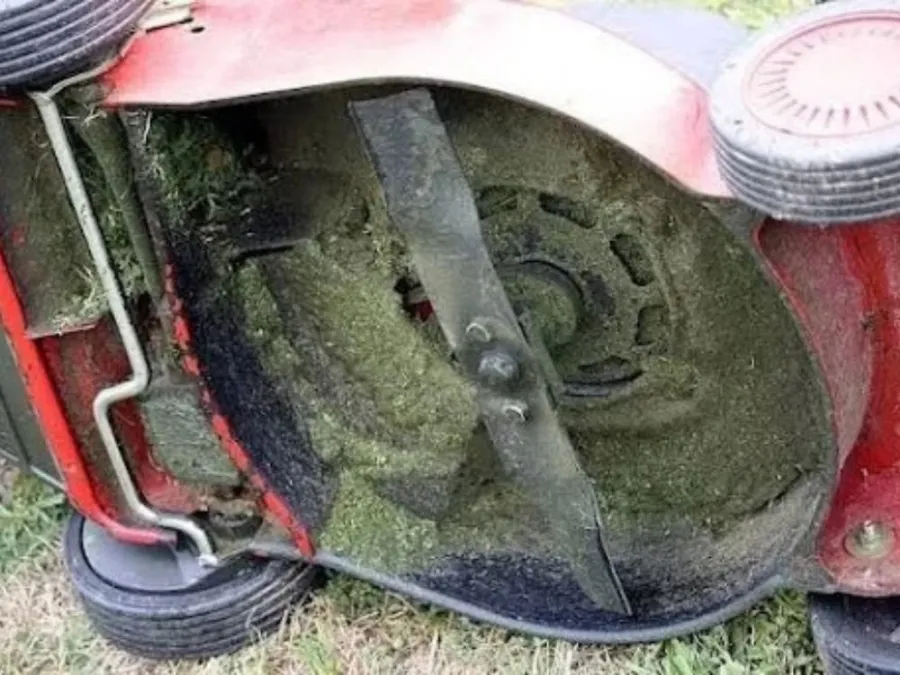
No matter how slowly you go, the cut appears uneven, and your mower leaves ragged, browning tips all over the lawn. Sometimes, just cleaning a lawn mower is not enough, and you need to sharpen lawn mower blades. For that purpose, you can use a bench grinder: remove the blade, clean it, make light passes to grind the cutting edge to the original angle, then balance it before reinstalling it. This article provides a step-by-step guide to using a lawn mover grinder for sharpening lawn mower blades.
Choosing the Best Bench Grinder for Mower Blades
Not all bench grinders work well for sharpening mower blades. Because a blade is thin and long, it heats up quickly and loses its hardness if you are not careful. When sharpening lawn mower blades, a good bench grinder for sharpening lawn mower blades removes metal uniformly and controls heat. Wheel size, motor power, and speed determine how well it accomplishes that.
What are the best bench-mounted blade sharpeners for a home workshop?
The best bench-mounted blade sharpeners for a home workshop are low-speed, guided units with a ceramic wheel and a set angle. For lawn mower blade sharpeners that offer the most precise angle control for a sharper edge, look for guided bench-mounted units with a fixed 30 or 40-degree setting. The VEVOR guided bench-mounted VEVOR sharpener holds that set angle on every pass.
An affordable sharpening tool or adjustable-angle jig can turn your current bench grinder for sharpening lawn mower blades into a mower blade sharpening tool. That means you don’t need a separate blade-sharpening machine. The best affordable sharpening attachments for existing bench grinders to handle mower blades are blade-sharpening jigs and flap-wheel kits. They mount on a grinder you already own.
Recommended For Your Project
Wheel Size (6-inch vs. 8-inch)
A reliable bench grinder with an 8-inch wheel offers a larger grinding surface for sharpening blades. That’s what matters more than it may seem. Because the larger wheel disperses heat over a wider area, the blade edge stays cooler, and the wheel lasts longer.
If you want to know what are the top-rated compact bench grinders for lawn mower blade sharpening that fit a small workbench? Choose the 6-inch, low-speed blade sharpening bench grinders. The grinders take up little space. Motor power also matters. This prevents the wheel from bogging down on thick, nicked blades.
Look for at least 3/4 HP. To sharpen mower blades effectively, your bench grinder should have a high-powered motor that holds a steady speed, even when working hard.
Speed (RPM)
The speed affects how much heat reaches the steel. For example, a standard grinder rotates at around 3,450 rpm. If you wait, this will blue the edge in seconds. A low-speed bench grinder for sharpening blades runs at around 1,750 RPM. It generates far less heat and preserves the blade’s temper.
Units with an adjustable tool rest or a fixed worktable set to 30 or 40 degrees are top-rated bench-mounted sharpening systems that include guides for consistent angles, and VEVOR’s bench-mounted sharpeners are built exactly this way. A safer option for mower blades is a low-speed or variable-speed blade-sharpening bench grinder. The process is straightforward and simple. You control the speed. Keep the edge cool. Avoid the brittle spots that kill a blade.
| Feature | Recommended Spec | Why It Matters |
| Wheel size | 6–8 inches | A larger wheel spreads heat over more surface, stays cooler, and lasts longer |
| Speed | 1,750 RPM (low-speed) | Produces less heat and preserves the blade’s temper |
| Motor power | 3/4 HP or more | Holds a steady speed on thick, nicked blades |
| Wheel material | Ceramic | Runs cooler than standard wheels and won’t burn the edge |
| Angle guide | Fixed 30° or 40° rest or jig | Keeps every pass on the same bevel for an even edge |
How to Sharpen a Lawn Mower Blade with a Bench Grinder? 5 Easy Steps
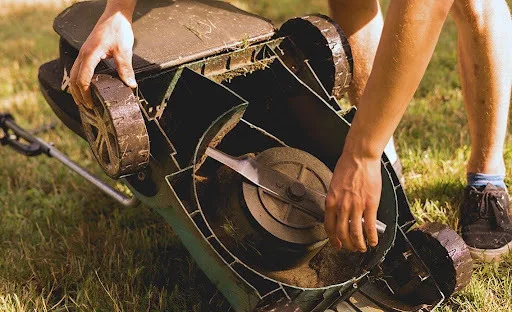
These five steps explain how to sharpen lawn mower blades on a bench grinder for sharpening lawn mower blades. Don’t rush the grinding; follow these steps.
Step 1: Safety and Tool Preparation
- First, remove the spark plug wire so the engine can’t fire while your hands are near the blade.
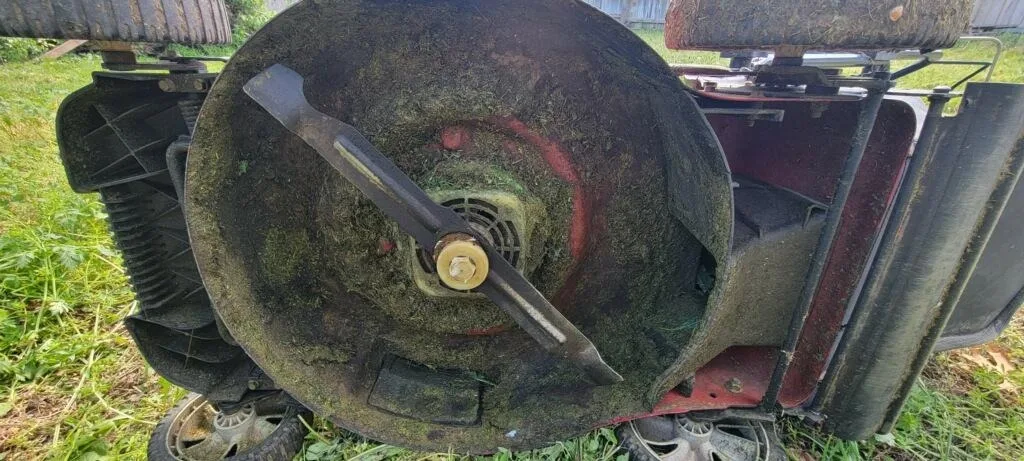
- Tip the mower onto its side with the air filter pointing up, then loosen the blade bolt with a wrench and lift the blade off.
- Put on safety tools, such as glasses and thick gloves, then clamp the blade in a vise so it stays put while you grind.
Step 2: Cleaning and Inspection
- To reveal the true edge, use a wire brush to remove caked dirt and dry grass.
- Look for deep gouges, cracks, or a bent blade body.
- Instead of sharpening a cracked or severely bent blade, replace it since grinding won’t strengthen a weakened blade and it may break quickly.
Step 3: Set the Angle
- Find the original bevel first; most mower blades sit between 30 and 45 degrees.
- Set the tool rest or worktable to that same angle so you do not change the edge.
- Line the cutting edge up flat against the grinding wheel before you start a pass.
Holding that angle by hand is the tricky part, which is why top multi-angle sharpening jigs and grinders lock the blade at a fixed bevel so every pass comes out the same.
Step 4: The Grinding Process
- Turn on the blade sharpening bench grinder and let it get to full speed before the blade meets the wheel.
- Use less pressure and make smooth, continuous passes, moving gently around the edge.
- Never hold the blade in one spot, or you will overheat the steel. This systematic, light process is the foundation for sharpening lawn mower blades on a bench grinder.
- Make the same number of passes on both ends to keep the blade balanced and even.
Step 5: Remove Burrs and Balance
- To remove the metal burrs that grind leaves behind, make one light pass along the flat back edge.
- Make sure the blade is level by setting it on a balancer.
- If it tips, grind off the heavy side a bit more before reinstalling it with the cutting edge facing the deck. That’s all there is to using a bench grinder for sharpening lawn mower blades at home.
Bench Grinder vs. Handheld Rotary Sharpener for Lawn Mower Blade Sharpening
Before you start, you should know why the reliable bench grinders are the better choice for this job. The drawbacks of handheld rotary sharpeners versus bench grinders for mower blades really come down to two things: control and heat.
Because a handheld rotary tool is tough to hold at a steady angle, the edge can turn out uneven. It can also overheat one spot quickly. A bench grinder for sharpening lawn mower blades can still take off too much metal if you push hard or rush. Still, it stays fixed in place and uses a guide to hold the angle.
For control and consistency when sharpening lawn mower blades, most owners find a bench grinder with a guide or jig works best. A handheld rotary tool is handy for a quick field touch-up. Still, keeping the edge even along the whole length is harder. Bench-mounted sharpeners are built for this job and handle flat, gator, high-lift, and low-lift blades.
| Factor | Bench Grinder | Handheld Rotary Sharpener |
| Angle control | Fixed rest or jig holds the bevel | Set by hand; so the edge can turn out uneven |
| Heat risk | Lower at low speed | Overheats one spot quickly |
| Best for | Full-length, even sharpening | Quick field touch-ups |
| Blade types | Flat, gator, high-lift, low-lift | Light wear only |
Using a Bench Lawn Mower Blade Grinder: Mistakes and Safety Tips
Common Mistakes to Avoid with a Bench Lawn Mower Blade Grinder
The same few mistakes cause most damaged blades. Be mindful of these:
- Overheated steel softens and becomes brittle. The warning sign is blue or purple steel.
- Using a dirty or coarse wheel roughens the edge and removes too much material at once.
- Modifying the bevel angle: Always match the current 30- to 45-degree bevel because a new angle weakens the blade.
- A wavy edge and uneven metal removal can result from pushing too hard or stopping in one place.
- Ignoring the balance check can wear down the spindle, cause vibration, and create uneven cuts.
- Aim for a butter-knife edge instead of over-sharpening to a razor edge, which chips the first time it hits dirt or a stone.
Pro Safety Tips for Using Bench Lawn Mower Blade Grinder
A few habits keep the job safe because a blade sharpening bench grinder spins quickly and throws sparks:
- Avoid wearing loose clothing that could catch, and wear safety glasses and a face shield.
- Place the tongue guard within 1/4 inch, and the work rests within 1/8 inch of the wheel.
- When starting, stand aside and let the wheel accelerate to maximum speed before making contact.
- Use light pressure and only grind the wheel’s face, never the side.
- Every few passes, cool the blade by keeping a quenching tray or water bucket close by.
@jeromy_henson_bfss VEVOR CIRCULAR SAW BLADE SHARPENER, 370W, 3600 RPM, SAW BLADE GRINDING SHARPENER MACHINE WITH 6 SAW CENTERINGS, 5″ GRINDING WHEEL. #vevor #bladesharpener #sharpener #grindingwheel #tiktokshopcreatorpicks @Vevor Shop US @Vevor Store US @CreatorCollab_Mabel @Haidee_Collab
♬ original sound – JEROMY HENSON-BFSS☑️
Conclusion
When using a bench grinder for sharpening lawn mower blades, follow these guidelines. Use the same angle as the factory blade. Use a low speed and light passes. Keep the steel cool. Balance the blade before reinstalling it. A sharp blade takes care of the open lawn, but crisp lawn edges along beds and walkways need a lawn edger for that clean finish. Once you learn the method, it takes just a few minutes to sharpen a lawnmower blade with a blade sharpening bench grinder setup.
FAQ
Can I use a bench grinder for sharpening lawn mower blades at home?
Yes, once you set the angle and go slowly, a bench grinder for sharpening lawn mower blades works well at home. To avoid overheating, remove and clean this mower blade. Also use light passes to grind the edge at the original bevel.
What steps should I take before sharpening a lawn mower blade with a bench grinder?
To keep the engine off, unplug the spark plug first. Then remove the blade, wipe off any dirt or grass, and check for bends or cracks. Before you sharpen it, make sure the blade is straight, clean, and free of cracks.
How often should I sharpen a lawn mower blade?
For most yards, this means sharpening every 20 to 25 hours of mowing, or about twice a season. Sharpen your blades as soon as you hit rocks, roots, or sticks because dull blades tear grass and strain your mower.
Do I need to balance the blade after sharpening?
Yes, grinding changes the blade’s weight and removes metal. An unbalanced blade vibrates and harms the mower’s spindle. After sharpening, check it on a balancer; sharpeners with an integrated balancer speed up this process.
What grinding wheel works best for sharpening mower blades?
A ceramic wheel is the ideal option. It is less likely to burn the edge, runs cooler than regular wheels, and maintains its shape for longer. Bench-mounted sharpeners fit flat, gator, high-lift, and low-lift blades and have ceramic wheels.