A ticking from under the hood, a cylinder down on compression, carbon you can’t see these are when a mechanic reaches for an automotive borescope camera. Pulling the head to confirm a hunch burns hours and risks damage. A slim probe fed through the spark plug hole shows the fault on screen instead; no teardown needed. This guide covers what a car borescope camera does, the specs that set image quality, and how to match one to the job. Industrial borescope cameras range from single-lens to triple-lens builds.
What Is an Automotive Borescope Camera?
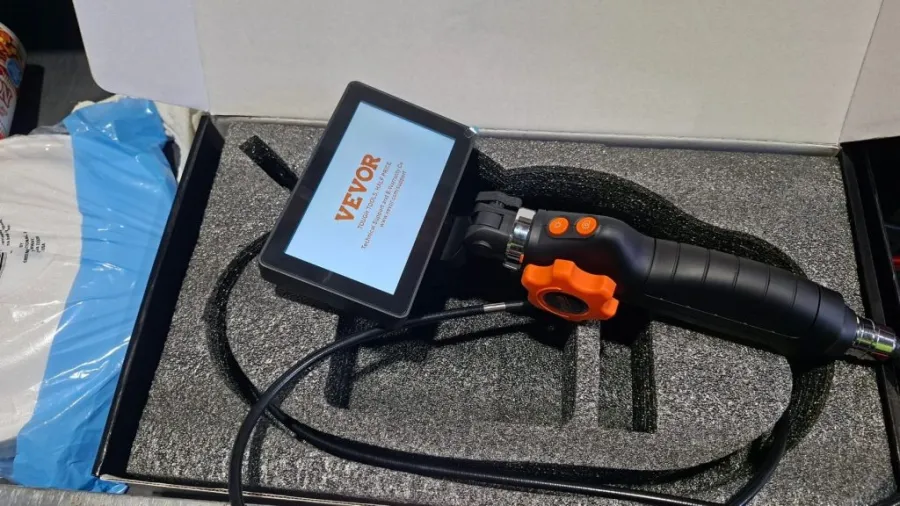
An automotive borescope camera is a lit camera on a flexible or semi-rigid probe, wired to a handheld screen or a phone. It shows places the eye can’t reach: cylinders, intake runners, timing covers, without taking anything apart. Two things separate a useful automotive borescope camera from a toy: how clearly it sees, and how well the probe steers.
How a Car Engine Camera Works
The lens sits ringed by LEDs, and that car engine camera streams live video to the screen while the lights fill the dark cavity. You slide it in through an existing opening, then watch in real time as the car engine camera relays what’s inside. Most units add 8X digital zoom, so you can enlarge a suspect spot without moving the probe. The optics don’t care what they’re pointed at, which is why the same automotive borescope camera crosses between jobs, and these accurate inspections show how steady that view stays.
Can borescopes be used for both car and aircraft engine diagnostics? Yes, the physics is identical, and inspectors scope turbine blades much like a mechanic checks a piston crown, though aircraft work follows strict certification rules a home car check never does. A capable car engine camera bridges that gap because light and a lens behave the same in any cavity.
What are the main uses of a borescope in auto repair?
In auto repair, a borescope mostly earns its keep by confirming a problem before anything comes apart. The usual jobs are:
- Checking cylinder walls and piston crowns for scoring, carbon, or a bent valve.
- Spotting oil or coolant where it shouldn’t be, like a weeping gasket.
- Looking at intake and exhaust ports for carbon buildup.
- Finding a dropped bolt or broken clip inside a cavity.
- Viewing timing parts behind a cover without pulling it.
One engine inspection camera replaces a lot of guesswork, and because the feed records, you can show a customer the exact fault. A quick pass with an engine inspection camera also tells you whether a repair was held, so the same automotive inspection camera handles plumbing and drain checks too.
3 Types of Automotive Borescope Cameras
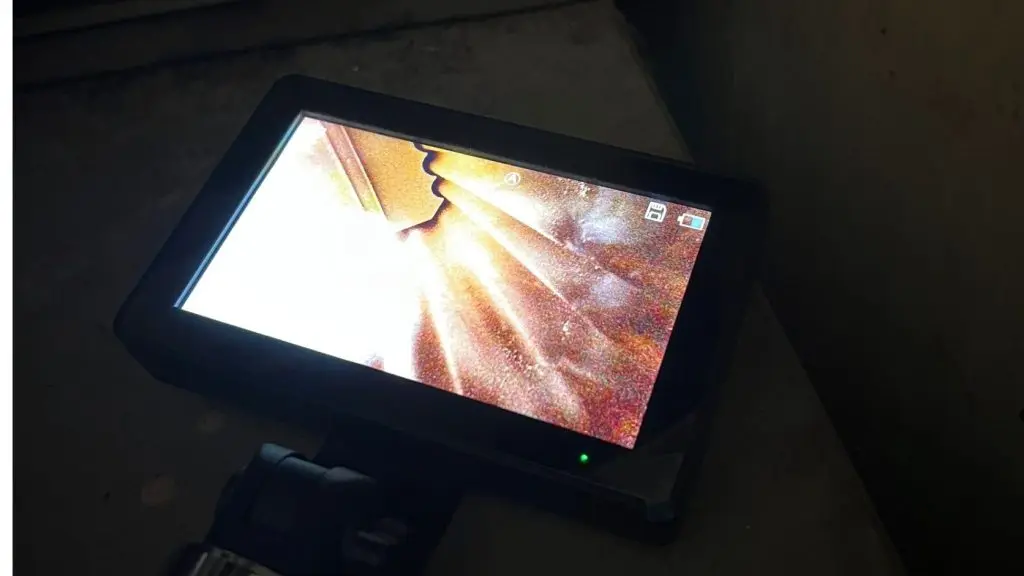
Automotive scopes are mainly split by how many lenses sit at the probe tip, which determines how much you see in one pass. Three builds cover nearly every garage. Browsing the wider range of inspection cameras shows how the lens count shapes the picture.
Single-Lens Engine Borescope Camera
A single-lens engine borescope camera puts one forward-facing lens at the tip, simple, slim, and the easiest to thread through a narrow port. It shows what’s dead ahead, which is plenty for a quick cylinder peek. The catch is that you need to rotate the probe to see the side walls. For occasional checks, this engine borescope camera is a practical starting point: a slim automotive scope camera threads in where a bulkier head can’t. Many owners buy a basic automotive scope camera first, then add a wider car inspection camera later.
Dual-Lens Vehicle Inspection Camera
A dual-lens vehicle inspection camera adds a side-facing lens beside the front one, so you see ahead and sideways at once. That matters on a cylinder, where you want the bore wall and the valve seat in one shot without twisting the cable back and forth.
A mechanic often reads a cylinder wall straight on while checking the valve from the side, which is exactly where this vehicle inspection camera helps. Across VEVOR’s endoscope cameras, you’ll find this dual-lens style with a slim 0.24-inch tip. It costs a bit more than a single-lens model, but the time this car inspection camera saves on tricky work usually makes up for it.
Triple-Lens Automotive Endoscope Camera
A triple-lens automotive endoscope camera carries one front lens and two side lenses, giving an almost all-around view in a single pass. It’s built for the fussiest inspections, welds, turbine-style parts, anywhere missing a flaw from one angle gets expensive. The automotive endoscope camera screen lets you switch feeds or watch all three at once.
For a shop that scopes engines daily, this automotive endoscope camera cuts repeat passes, though the extra lenses make the probe too wide for the tightest ports. Treat a three-lens vehicle endoscope camera as the detail specialist, not the everyday pick.
How Do I Choose the Right Borescope for Engine Inspection?
The right pick comes down to the engine openings you’ll use and how fine a detail you need to catch. A probe that won’t fit your spark plug port is useless no matter how sharp its picture. The full borescope lineup runs from tight-port slims to open-cavity rigid scopes, so match your automotive borescope camera to the tightest job you expect.
- Start with probe diameter, because it decides whether the engine inspection camera even fits. Check your smallest access point; many spark plug holes take a probe near 6 mm, while tighter ports need a slim 3.9 mm tip.
- Then pick a resolution high enough to read scoring, which means 1080p over 720p, a cable long enough to reach, and articulation if you must steer around corners.
- Fit first, clarity second, reach and steering third. A dependable two-way borescope balances all four, and a good automotive inspection camera won’t force you to max out one at the cost of another.
5 Specs About Automotive Borescope Camera That Set Image Quality and Fit
Five specs do most of the work when you weigh one car inspection camera against the next. Each one changes what an automotive inspection camera shows and how it fits.
| Spec | Why It Matters | What To Look For |
| Probe diameter | Decides if the scope fits the port | 3.9-6 mm for most engine work |
| Resolution | Sets how fine a flaw you can read | 1080p over 720p |
| Articulation | Lets the tip steer around corners | 2-way or VEVOR 4-way camera for cylinders |
| Cable type | Flexible bends; rigid holds its shape | Semi-rigid for engine bays |
| LED lighting | Fills dark cavities for a clear shot | Adjustable multi-LED ring |
| VEVOR example | A dual-lens automotive inspection camera | 0.22-inch slim lens, 8X zoom |
Best Automotive Borescope Camera Picks by Job
There’s no single best automotive borescope camera; the winner depends on whether you’re after value, cylinder detail, or two-wheel upkeep with a vehicle endoscope camera. The three questions below cover what owners ask most, each with a quick pick and a table.
What are the best borescope options for automotive inspection when comparing price and image quality?
For the best balance of price and image quality, a mid-range 1080p car borescope camera wins for most people, sharp enough to read scoring without paying for industrial triple-lens features you won’t use. Budget single-lens units suit light checks, while pro triple-lens rigs suit daily shop work. An articulating borescope sits in that practical middle for a car borescope camera buyer, and it remains the most flexible automotive inspection camera for mixed jobs.
| Tier | Best For | Image Quality | Suited Camera |
| Budget | Light, occasional checks | 720p to 1080p | Single-lens automotive scope camera |
| Mid-range | Most owners and DIY work | True 1080p | Articulating car borescope camera |
| Pro-grade | Daily shop inspections | 1080p multi-angle | Triple-lens automotive endoscope camera |
| VEVOR example | A balanced car borescope camera | Sharp and well-lit | Two-way articulating |
Which borescopes are best for engine cylinder inspection based on camera diameter and resolution?
For cylinder inspection, the best scopes pair a slim probe that drops through the spark plug hole with 1080p resolution sharp enough to show scoring and carbon- the job a dedicated engine borescope camera is built for. A 3.9–6 mm borescopes at 1920×1080 is the sweet spot; go slimmer for tight ports and higher-res for fine cracks. An ultra-slim borescope with a 4-way articulating tip reaches the hardest bores, so choose the car engine camera that fits the port.
| Probe Diameter | Resolution | Best Cylinder Job | Scope Type |
| 3.9 mm | 1080p | Tight ports and fine cracks | Ultra-slim car engine camera |
| 5.5-6 mm | 1080p | Standard spark plug holes | Dual-lens engine borescope camera |
| 8 mm and up | 1080p | Open cavities and bores | Triple-lens engine inspection camera |
| Example to consider | VEVOR 0.15-inch ultra-slim lens | Reaches the hardest bores | VEVOR 4-way articulating borescope |
What borescopes are recommended for bicycle and motorcycle maintenance inspections?
For bikes and motorcycles, a compact single- or dual-lens vehicle inspection camera with a slim probe is the practical choice. Small engines and frames pack tighter cavities than a car, so reach and a thin tip matter more than a big screen. This isn’t an official product class, so treat it as fit-for-purpose guidance and match the vehicle endoscope camera to the part. A flexible triple-lens automotive scope camera still helps on shadowed suspension bolts where extra light counts, and the same automotive scope camera moves easily from a bike frame to a shock linkage.
| Vehicle Part | Suited Type | Why It Fits |
| Motorcycle cylinder | Slim vehicle endoscope camera | Thin tip reaches small bores |
| Bike frame interior | Flexible vehicle endoscope camera | Side view checks weld seams |
| Suspension linkage | Triple-lens car inspection camera | Extra LEDs light shadowed bolts |
| Chain and sprocket | Compact car inspection camera | Short reach for a quick visual |
Recommended For Your Project
Conclusion
Seeing inside an engine used to mean taking it apart. An automotive borescope camera turns that into a two-minute look on screen: fit the probe to your tightest port, pick enough resolution to read scoring, and you confirm a fault before touching a wrench. Match the lens count to the job: single for quick peeks, dual or triple for cylinders. Whether you service a daily driver, a motorcycle, or a shop full of engines, the right vehicle inspection camera saves hours and guesswork. Size the probe to your engine first, then pick the picture quality that fits.
FAQs
Can I use a borescope without removing all the spark plugs?
Yes, for the cylinder you’re checking, you only remove that one plug. The probe drops straight through the open port, so you leave the rest of the engine sealed and untouched.
What probe length do I need for engine inspection?
About 3 feet covers most engine inspection camera work. A 1-meter cable reaches cylinders and intake runners easily, while longer 5-meter cables are really meant for pipes and drains, not tight engine bays.
Is a higher-megapixel probe always better?
Not always. Past 1080p, lighting and lens quality matter more than raw megapixels. A well-lit 1080p image beats a dim higher-resolution one every time, especially inside a dark cylinder.
Do these cameras work with a smartphone?
Many do. Entry models connect by USB or Wi-Fi and stream to a phone app, while mid-range tools come with their own 4.3-inch or 5-inch screen, so no phone is needed.
How do I avoid damaging the probe tip?
Feed it slowly and never force it around a bend. Keep the lens clear of hot metal and sharp edges, wipe it after use, and store the cable loosely coiled, not kinked.