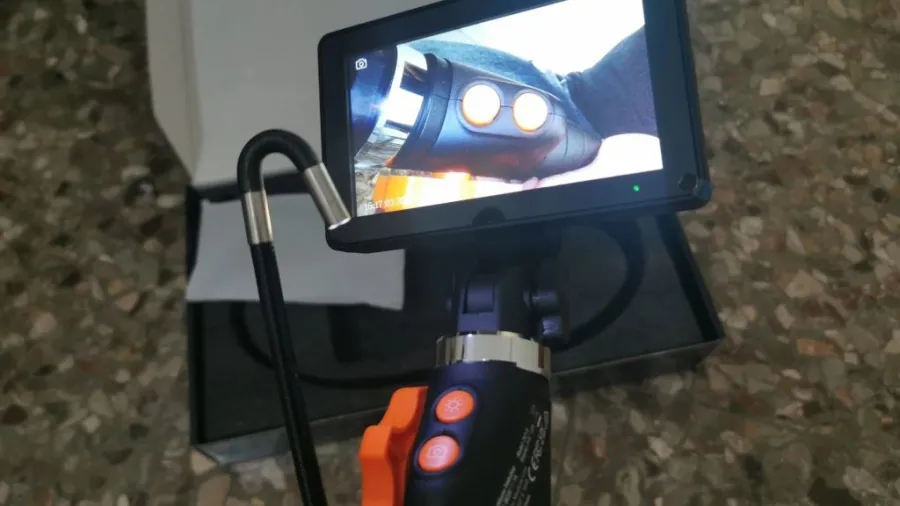
A ticking deep in an engine, a draft behind a finished wall, a clog three bends down a drain you know something’s wrong, but can’t see it without pulling half the job apart. An articulating inspection camera ends that guesswork: its tip bends on command and steers the lens around corners a rigid probe skips. New to these tools? The quick borescope basics cover the fundamentals. Below you’ll learn the three types, the specs that matter, and which flexible inspection camera fits your next job.
What Is An Articulating Inspection Camera?
An articulating inspection camera is a viewing scope whose camera tip bends under your control instead of staring straight ahead. That one feature sets it apart from the plain snake cameras in the inspection cameras aisle. You aim the lens at a sidewall, a valve back, or a duct top without dragging the whole cable around.
How The Steerable Probe Bends And Holds Its Angle
Steering comes from a jointed section behind the lens, pulled by thin control wires that run up the cable to a dial on the handle. Turn the dial and the articulating camera probe bends to a set angle 180 degrees each way on a two-direction head, a full 360 on a four-way then holds there while you look. A good steerable inspection camera keeps its shape under light pressure, so the view stays put as you feed the probe deeper. That steady hold makes a directional inspection camera usable with one hand.
Common Jobs For A Flexible Inspection Camera
A flexible inspection camera earns its spot wherever the fault sits out of sight. Mechanics drop one down spark-plug holes to read cylinder walls. HVAC techs push a flexible borescope camera through ducts to catch mold or a crushed section. Plumbers trace clogs past elbows; electricians check wiring inside conduit. The point is simple: you inspect without cutting or disassembling, which is where the right scope saves real hours. A short articulating borescope guide shows the workflow end to end.
3 Types Of Articulating Inspection Cameras
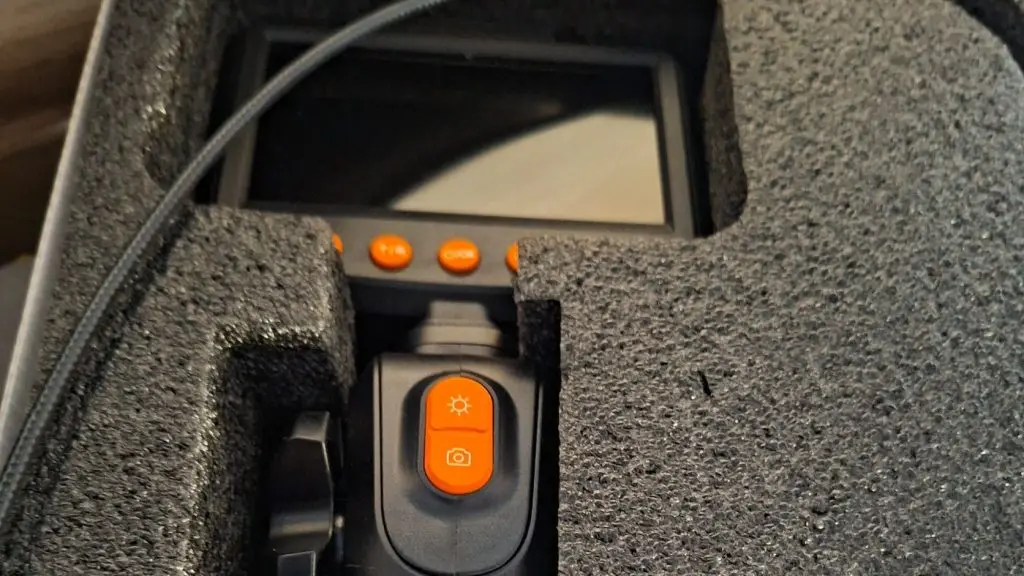
Every articulating scope camera falls into one of three families by how the tip moves. The right pick depends on how much of the chamber you need to see and how narrow the entry is. The whole borescope range is organized this way, so learn them before you shop.
2-Way 180° Articulating Borescopes
A two-way head bends the articulating camera probe in one plane, up-down or left-right, up to about 180 degrees each way. That handles most daily work: a cylinder wall, a weld seam, the back of a panel. Two-way heads use a slimmer, simpler build, so this compact articulating scope fits smaller openings and costs less than a four-way. For a tech who looks around one bend, a two-way steerable borescope is plenty. Weigh the trade-offs in this look at borescope features.
4-Way 360° Articulating Endoscopes
A four-way head steers in every direction and sweeps a full 360-degree view from one entry, so this directional inspection camera covers all angles at once. Park the cable and scan a whole combustion chamber without pulling out to re-aim. That’s why a four-way articulating endoscope is the pick for detailed industrial and automotive diagnostics. The cost is a bigger headache and higher price, so you pay for a simpler steerable inspection camera. A dedicated four-way endoscope handles demanding jobs.
360° Rotating-Probe Scopes
A rotating-probe scope takes another route: the lens spins inside the tip to show a 360-degree ring. A rotating inspection camera won’t curl around a tight corner like a bending head, but it’s great at scanning the full circumference of a straight pipe or bore. On a long rigid cable, a rotating inspection camera gives wall-to-wall coverage in deep, straight runs where articulation isn’t needed. A rotating-probe scope suits pipe-and-bore work.
What are the main differences between various articulating borescopes?
The differences between articulating borescopes come down to three things: how far the articulating camera probe bends, how slim the head is, and how far the cable reaches. Two-way heads stay slim and cheap, a four-way directional inspection camera sees all around, and a rotating inspection camera spins for straight-pipe scans, so a steerable borescope trades reach for a smaller head. For background, the borescope overview covers the basics. The table lays the three articulating scope camera types side by side.
| Type | Tip Movement | Best Use | Head / Lens |
| 2-Way Articulating | 180°, one plane | Auto and panel checks | Slim, small ports |
| 4-Way Articulating | 360° all ways | Industrial diagnostics | Medium, full coverage |
| Rotating Probe | Lens spins 360° | Straight pipes, bores | Rigid, for deep runs |
| VEVOR two-way scope | 180°, two-way | Tight auto spaces | 0.15-inch ultra-slim lens |
How To Choose An Articulating Inspection Camera
Choosing well is less about the badge and more about matching four specs to your articulating endoscope: tip movement, probe diameter, resolution, and cable length. Get those right, and the extras are just comfort. Like any power tool you depend on, the best steerable inspection camera is the one built for your actual work.
How do I choose the best articulating endoscope for industrial inspections?
Start with articulation and diameter, then resolution. For industrial work, choose a four-way 360-degree head so a directional inspection camera can inspect an entire chamber from one entry, and match the articulating camera probe diameter to your smallest access port. Aim for a true 1080p lens so hairline cracks show clearly, and pick a reinforced cable rated for your line’s heat and solvents. If ports run very small, a slim two-way articulating endoscope that fits beats a wide four-way that won’t enter. A quick step-by-step setup gets a new scope running.
Checking Probe Size, Resolution, and Build
Online you can’t hold a steerable inspection camera, so read the spec sheet like a checklist. This is where plenty of buyers get burned, so ask it straight: what should I consider when buying an articulating borescope online? Confirm the probe diameter in millimeters, screen resolution, real articulation angle, IP rating, and cable length and stiffness of the flexible borescope camera. Match the lens to your tightest opening, confirm the stated angle is per direction (not combined), and choose an IP67 probe for oil or water, with a sealed build found across the pipe inspection cameras category. Comparing two models? The thinner lens and higher pixel count usually win on a flexible inspection camera.
Best Articulating Inspection Cameras By Job
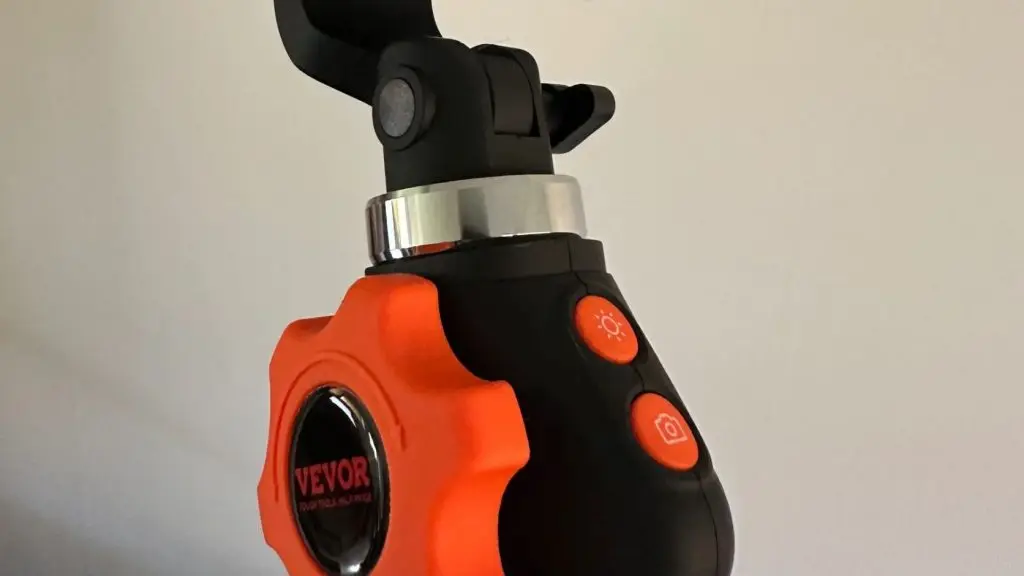
The best scope matches the cavity in front of you. A tiny engine port, a long duct run, and a straight pipe each reward a different build, so the specs that make an articulating inspection camera fit change with the job. A steerable inspection camera only helps if it reaches the fault.
Which borescopes are best for tight spaces under $200?
For tight spaces on a budget, grab the slimmest lens you can: a 0.15-inch (3.9 mm) head slides into ports a thicker articulating camera probe can’t enter, and plenty land under $200. A two-way articulating borescope keeps the head small while still bending around the first corner, usually all a cramped cavity allows a steerable borescope. One well-priced flexible borescope camera pairs that ultra-slim lens with a 5-inch screen. The table compares three slim builds by lens size and screen.
| Pick | Lens Diameter | Articulation | Screen |
| Ultra-slim starter | 0.15 in (3.9 mm) | 2-way 180° | 4.3 in |
| Ultra-slim plus | 0.15 in (3.9 mm) | 2-way 180° | 5 in |
| Compact four-way | 0.24 in (6 mm) | 4-way 360° | 4.5 in |
| VEVOR ultra-slim two-way | 0.15 in (3.9 mm) | 2-way 180° | 5 in HD IPS |
Which borescopes are recommended for HVAC technicians for flexibility and camera reach?
For HVAC, reach and bend matter more than a razor-thin lens; ducts are wide but long and full of turns. Pick a four-way 360-degree head on a long, flexible cable with a big battery, so the camera can snake through supply runs and still see every surface. A four-way articulating scope camera with a 6-inch screen and a 7000mAh battery runs a full day of duct checks, and its long, flexible borescope reaches deep returns. The table sets reach-focused builds against short-cable auto scopes.
| Build | Cable Reach | Articulation | Battery / Screen |
| Long flexible (HVAC) | 4.9 – 16 ft | 4-way 360° | High-capacity, 6 in |
| Short semi-rigid (auto) | 3 – 5 ft | 2-way 180° | Standard, 4.3 in |
| Mid flexible (plumbing) | 15 – 50 ft | Rotating / 2-way | Standard, 5 in |
| VEVOR four-way 360° endoscope | 4.9 ft flexible | 4-way 360° | 7000mAh, 6-inch screen |
Lighting And Close-Up Performance
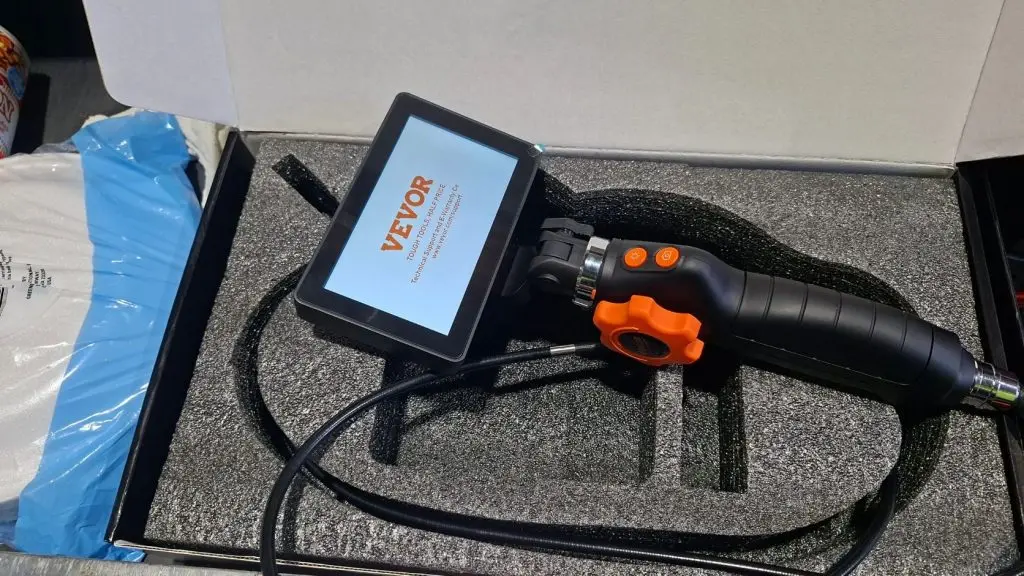
Reach gets you to the fault; light and focus let you read it. Dark cavities swallow detail, and some flaws only show up an inch from the lens. The borescope selection runs from simple to pro-grade, but two features decide whether a directional inspection camera spots the problem or walks right past it.
What borescopes provide the best lighting control for dark cavities?
The best lighting control comes from adjustable LEDs you can dim, not one fixed bulb. In a dark cavity, harsh fixed light blows out shiny metal and hides the crack you want; dimmable LEDs let you dial in brightness until the detail shows. Look for several lights ringed around the lens, a brightness control, and an anti-glare lens handy on any flexible borescope camera. A rotating inspection camera gains most here, since even light around a pipe wall clears shadows. The table pairs each cavity with its lighting setup.
| Cavity | Lighting Need | Feature To Look For |
| Shiny metal (engine) | Low, controllable | Dimmable LEDs, anti-glare lens |
| Deep dark duct | High, even | 6+ LEDs, side lights |
| Wet pipe | Sealed, bright | IP67 LEDs around lens |
| VEVOR borescope | Adjustable | Adjustable LED lighting with dimming |
Which borescopes offer the best macro focus and close-up clarity?
For close-up clarity on an articulating inspection camera, two numbers matter: lens resolution and minimum focus distance. A true 1080p sensor that focuses sharply within an inch or two reveals thread wear, hairline cracks, and solder joints the eye misses. A dual-lens design helps, since a dedicated side lens frames small surfaces better than a single front lens trying to do it all. For fine detail, favor a higher pixel count and short macro range over extra cable on a steerable borescope. The table compares articulating scope camera setups for close work.
| Setup | Resolution | Focus Range | Best For |
| Single HD lens | 1080p | ~2 – 4 in | General close-up |
| Dual-lens | 1080p front + side | ~1 – 2 in | Small parts and threads |
| High-zoom single | 1080p + 8X | ~2 in | Reading stamped marks |
| VEVOR dual-lens endoscope | 1080p dual-lens | Close macro | Side-lens close-up detail |
Recommended For Your Project
Conclusion
Picking an articulating inspection camera comes down to the cavity you’re inspecting. Two-way heads and a steerable borescope handle everyday auto and panel work, a four-way articulating endoscope covers whole chambers from one entry, and a rotating inspection camera scans straight pipes clean. Add a slim enough lens, dimmable lighting, and sharp macro focus, and you’ll read faults instead of guessing. Browse the full tool lineup, weigh the specs for your trade, and the right flexible inspection camera becomes an easy call.
FAQs
Is an articulating borescope worth it over a standard one?
Yes, if your work involves corners or sidewalls a straight probe can’t show. The bending tip reaches around the first turn, so you reposition the cable far less and save time on engine and duct checks.
What probe diameter should I pick?
Match it to your smallest access port. A 0.15-inch (3.9 mm) tip fits spark-plug holes and tight cavities, while a 6 mm or larger head suits wider ducts and pipes that want more light.
Can these cameras record video and photos?
Most models with a built-in screen save both to a memory card. Recordings document findings for clients or repair logs, and many units add an 8X digital zoom to inspect fine detail first.
Are articulating scopes waterproof?
The probe and cable usually carry an IP67 rating, so they handle oil, coolant, and water. The handle and screen are not fully sealed, so keep the control unit dry during wet-pipe work.
How long is the typical cable?
Auto and mechanical models run about 3 to 5 feet for close control; plumbing and duct versions reach 15 to 50 feet. Pick the shortest length that still reaches your deepest inspection point.