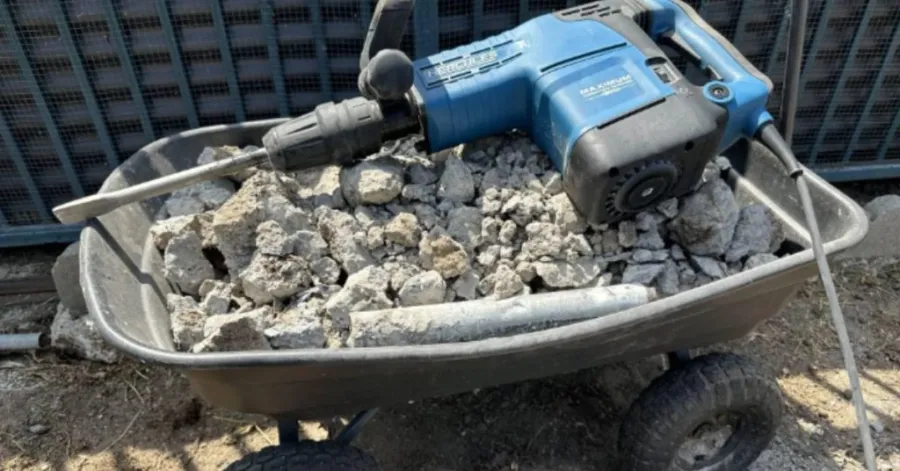
Breaking up concrete is hard going if you don’t have the right gear. With the right busting tools, slabs, floors, sidewalks, foundations, and other hard surfaces come apart much more easily. Every tool, from a compact demolition hammer to a powerful hydraulic breaker, is built for a certain level of work. Some work by impact; others cut in a controlled way so you can remove material precisely. Think about how thick and hard the concrete is, how big the job is, your power source, and the site conditions before choosing. In this guide, you’ll find the best tools for breaking concrete, along with how they work, where to use them, and how to pick and run them safely on different demolition jobs.
What Are the Best Concrete Busting Tools?
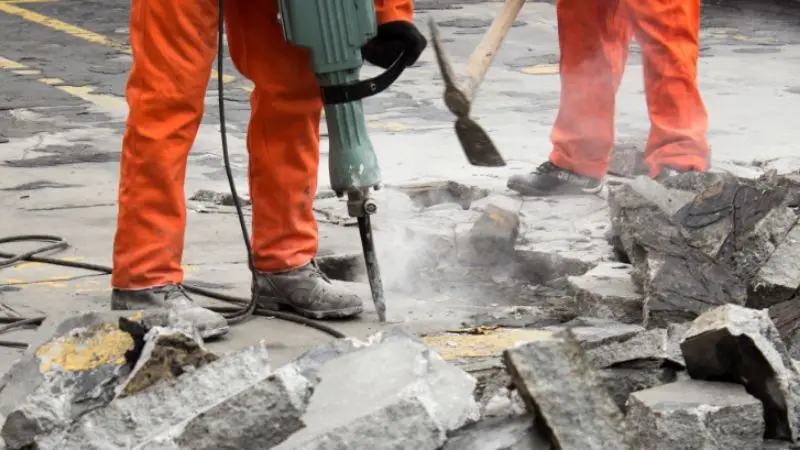
No single machine handles every kind of concrete demolition, so the best tool changes with the job. A tight renovation might only call for a rotary hammer or demolition hammer. Thick reinforced concrete is a different story and may need a heavy jackhammer or hydraulic breaker.
Recommended For Your Project
Below, common options are laid out along with where each one performs best. Before you pick equipment, weigh the concrete thickness, the work area, the power source, portability, and how much control you need.
Jackhammers
Jackhammers rank among the most widely used tools for breaking concrete because they hammer away with a steady, powerful rhythm. Electric, pneumatic, and hydraulic versions exist, each built in a range of sizes to suit different jobs. Lighter electric jackhammers take on floors, sidewalks, and small slabs, but you need something heavier for thick concrete and the toughest demolition. A flat chisel breaks off and clears sections of concrete, whereas a pointed one starts the cracks or drives into hard material. Because these tools kick out heavy vibration and a lot of noise, they call for a tight grip and the right safety gear. Get the weight and impact power right on a bigger job, or the work will drag.
Which Jackhammer Works Best for Heavy Demolition and Which for Light Chiseling?
What separates the right jackhammer from the wrong one is how much you need to remove and how much control you need while doing it. Heavy-duty jackhammers are built for the toughest demolition work — thick slabs, foundations, roads. Higher impact energy comes with the territory, but heavier and more tiring are the trade-offs. Save the smaller jackhammers for tile removal, minor repairs, light chiseling, and working in thin concrete. A good power supply makes electric models handy; pneumatic ones demand an air compressor. When comparing concrete busting tools, forget going straight for the biggest jackhammer — match its impact energy, weight, bit type, and operating time to your job instead.
Demolition Hammers
Handheld demolition hammers carry a lot of power, and they exist chiefly to chisel and break tough materials. That contrasts with rotary hammers: without rotation to worry about, more of the impact energy lands straight on the surface. Breaking concrete slabs, stripping masonry, opening up floors, renovation work — these tools take all of it on. Electric demolition hammers deliver serious performance and skip the air compressor, which is why you see so many of them. Breaking, cutting, scraping, or clearing material away — each job calls for a different chisel shape. When a standard drill no longer has the power you need, but a heavy jackhammer is more machine than the job calls for, a demolition hammer fits the gap. For plenty of medium-sized jobs, it ranks among the best demolition tools you can use.
Rotary Hammers
Rotary hammers do two things at once, rotating and hammering, which gives them more flexibility than demolition hammers built for one purpose. Drilling into concrete, masonry, or stone is one use, and with the rotation switched off, they can handle lighter chiseling and breaking. So contractors and homeowners who want a single tool to cover several jobs get good use out of them. They come in a range of sizes, from small units for repairs to big machines built for heavy construction work. They are easier to manage than heavy demolition equipment, though thick concrete may demand more impact energy than they can deliver. When a job calls for both drilling and light demolition, rotary hammers stand out among the best tools for breaking concrete.
Hydraulic Concrete Breakers
Hydraulic concrete breakers are heavy attachments that rely on hydraulic pressure to strike again and again with real force. Most often, you will see them mounted on excavators, skid steers, backhoes, and similar construction machines. These breakers exist for big demolition work: thick concrete, foundations, roads, bridge sections, and other stubborn materials. On large projects, their impact force breaks concrete much faster than the smaller handheld equipment can. Different carriers and applications call for different breaker sizes. Operators have to stick to equipment and site safety rules, since hydraulic breakers are loud and vibrate heavily. When the demolition is major, few pieces of equipment break concrete better.
Concrete Saws and Cutting Equipment
Instead of smashing concrete apart, saws and cutters slice through it with controlled cuts. Abrasive or diamond blades let them cut slabs, walls, floors, roads, and other concrete structures. Models range from handheld units to walk-behind machines and saws mounted on specialized equipment. Concrete cutting comes into its own when you need a straight edge, a specific opening, or a section removed with no damage to surrounding areas. Wet cutting also helps keep dust down and the blade cooler in certain applications. Precision is where these machines earn their place. When a project calls for clean, planned cuts, they rank among the best concrete busting tools you can use.
Concrete Breaker Attachments
Concrete breaker attachments turn skid steers, excavators, backhoes, and similar construction machines into powerful demolition equipment. Drawing on the carrier’s hydraulic system, they drive a breaker that pounds concrete again and again. Because attachments come in a range of sizes and impact ratings, the breaker has to match the carrier’s hydraulic flow, pressure, and weight. Small units take on sidewalks and slabs; bigger ones handle foundations, roads, and heavy structures. On commercial and construction sites, they earn their keep because the same carrier can usually take other attachments once the demolition is done. On big jobs, such attachments can be a key part of the best concrete busting equipment around.
How to Choose the Right Concrete Busting Tool
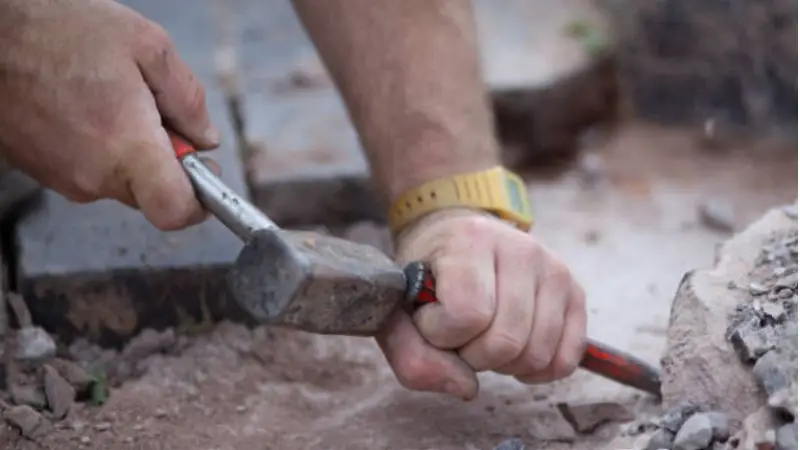
Picking the right tool begins with knowing the concrete and the work ahead of you. A tool that handles a thin floor with ease can stall out on a thick foundation.
Weigh the material, the size of the job, the power you have on hand, and how long the tool will actually run before you buy or rent anything. Those details will point you toward the concrete-busting tools that actually fit your job.
Consider Concrete Thickness and Hardness
How much breaking power you need comes down to the thickness and hardness of the concrete. For thin concrete like a sidewalk or a small floor section, a demolition hammer or medium-duty jackhammer often does the job. Foundations and reinforced or thick slabs are another matter; those demand more powerful equipment. Concrete that has aged can also put up a fight, since dense aggregate or steel reinforcement may be inside it. Check how thick the slab is before you settle on a tool. When in doubt, let the project requirements guide you instead of defaulting to the biggest machine on offer. Pair the tool with the material, and you’ll work faster, with less wear on the equipment.
Match the Tool to the Project at Hand
Before you start picking from the many best tools for breaking concrete, get clear on what the job actually demands. A rotary hammer covers hole drilling and small removals well, but for steady chiseling a demolition hammer is the better tool. Foundations and large slabs often call for a jackhammer or a hydraulic breaker. When the cuts need to be straight and controlled, a concrete saw beats an impact tool. Think as well about whether the job is taking down a whole structure or just cutting an opening in one part of it. When the tool fits the task, you keep more control and cause less harm to the surfaces around it.
Compare Impact Force and Power
How well a tool breaks hard concrete comes down to its impact force. A machine with more impact handles tougher material, though smaller jobs rarely need that much. When you weigh one machine against another, look at things like impact energy, blows per minute, motor power, and hydraulic pressure. On handheld tools, more impact energy speeds up heavy demolition but also brings more vibration, and the operator tires sooner. Where the work is demanding, pneumatic and hydraulic breakers bring serious power. So when you compare concrete breaking equipment, ask what force your project needs — not which machine tops the power charts.
Consider Tool Size and Weight
Size and weight shape both how a tool performs and how it handles. Heavy jackhammers and hydraulic breakers hit hard, but in a tight space they can be a struggle to maneuver. Go smaller and the demolition hammer is easier to handle, and often the smarter pick for floors, walls, and renovation work. Think about how long the tool will run in your hands and whether you’ll be lugging it from one area to another. Go too heavy and fatigue sets in fast, and with it your grip on the tool slips. On many jobs, the best concrete demolition tools are the ones that bring enough power and stay manageable for the operator and the space.
Check Power Source and Portability
Where the tool gets its power from matters just as much. For a lot of indoor work, electric tools make sense as long as you have a decent outlet and extension cord. Pneumatic breakers need an air compressor, so you’re hauling around more equipment. Hydraulic breakers hook up to compatible construction machines, so they suit bigger sites. When a cord gets in the way on a small job, battery tools free you up to move. Think about where you’ll be working and how difficult the equipment is to move. Portable options pay off most on repairs and renos where power or heavy machinery is hard to come by.
Best Concrete Busting Tools for Different Applications
No two concrete jobs need the same balance of power, accuracy, and maneuverability. A small repair calls for different gear than breaking up a road or foundation.
Below are ways to match breaking tools to the jobs they’re most often asked to do. The aim is to pick a tool with enough breaking power without turning a simple task into an ordeal.
Tools for Small Concrete Demolition Jobs
Sidewalks, thin slabs, steps, small floor patches, and minor repairs make up most small concrete demolition jobs. A rotary hammer, a demolition hammer, or a compact electric jackhammer can handle this, delivering enough impact force without the bulk of heavy construction equipment. A pointed chisel is what gets a crack started; switch to a flat chisel once you need to clear away the broken pieces. Because they need neither an air compressor nor a hydraulic carrier, electric models work well for home and renovation jobs. Protect your eyes, ears, hands, and feet while operating the tool. On small projects, you want something compact enough to keep under control but still putting out enough impact energy to get the work done.
Best Breaker Hammers for Breaking Concrete Floors in France, and Their Pros and Cons
In France, picking a breaker hammer for concrete floors comes down to slab thickness, the work area, the power you have available, and how much material has to come out. Models from well-known manufacturers like Bosch, Makita, DeWalt, and Hilti are among the usual choices. Heavy breakers hit harder, which is what thick floors demand, whereas lighter models are easier to handle on renovation work. Check the model’s voltage, impact energy, weight, chisel system, warranty, and whether it’s actually available in France before you buy. The table below gives you a practical way to compare the best tools for breaking concrete, rather than assuming one model fits every job.
| Breaker hammer type | Pros | Cons | Best suited for |
| Heavy-duty electric breaker | High impact force; suitable for thick floors | Heavy and tiring during long use | Thick concrete floors |
| Medium demolition hammer | Good balance of power and handling | Slower on very thick concrete | Renovation and general demolition |
| Compact breaker hammer | Easier to control and transport | Lower impact energy | Small floor sections and repairs |
| Professional high-impact breaker | Designed for demanding work; strong performance | Higher purchase cost and weight | Frequent commercial demolition |
Tools for Breaking Concrete Slabs
To break a concrete slab, you need equipment that opens up deep cracks and clears sections away without wasted effort. A demolition hammer or medium-duty jackhammer often does the trick on thin residential slabs. Reinforced slabs can call for a hydraulic breaker after the concrete is cut or weakened, and thicker slabs may need a heavier electric or pneumatic jackhammer. You can also run a concrete saw first to cut controlled lines, which makes the slab easier to break and clear. What decides it is slab thickness, reinforcement, access, and how big the area is. For pulling out large sections, impact tools stand out among the best concrete breaking equipment.
Tools Used to Remove Concrete Floors
Concrete floors usually come up with a mix of cutting and breaking tools. A demolition hammer or jackhammer breaks the material into manageable pieces afterward, and a concrete saw sets clean boundaries around the section you want removed. In a small room or a repair area, a handheld demolition hammer often brings enough power and control. Bigger commercial floors can call for heavier breakers or floor-removal equipment built for the purpose. Dust, noise, debris handling and access all deserve thought before the work starts. Pick a sensible pairing of the best tools for concrete demolition, and floor removal stays under control with less collateral damage to what lies beneath.
Tools for Large-Scale Demolition
Big demolition jobs call for machinery that can chew through thick concrete over long working hours. For foundations, roads, bridges, and large structures, hydraulic breakers mounted on excavators, skid steers, or backhoes are the usual pick. Heavy pneumatic breakers also earn their place, provided you have an air compressor and enough room to work. When breaking needs to follow controlled cuts, concrete saws often go first. Selection should factor in carrier compatibility, hydraulic flow, breaker size, concrete thickness, reinforcement, and site access. On major projects, the best concrete busting tools tend to be the ones that hold a steady impact force and work smoothly with whatever machinery is on hand.
Tools for Construction and Renovation
On construction and renovation jobs, the tools often multiply, because the same project can go from drilling a small hole to yanking out a whole section. Rotary hammers excel at drilling anchors and light chiseling, while demolition hammers take on the heavier chiseling and surface removal. Jackhammers do better on larger sections of concrete, and when accuracy matters, concrete saws deliver controlled cuts. The same contractor might switch tools several times over a project, depending on what stage the work has reached. Know what tools are used to break concrete, and you can match equipment to each task instead of leaning on a single machine for the whole job.
Wrap-Up
The material, its thickness, the size of the project, and site conditions all shape which concrete busting tool is right. Small repairs might get by with a demolition hammer or rotary hammer; heavy-duty jackhammers and hydraulic breakers come into play for thick slabs and foundations. Concrete saws come in handy for making clean, controlled cuts ahead of the actual breaking. Check impact energy, weight, power source, attachment type, and vibration level before you begin. Just as important are proper protective gear and safe operating habits. Match your equipment to the task, and you’ll get concrete removal that’s controlled, efficient, and equal to your project’s demands.
FAQs
What should I consider when buying a jackhammer for home use?
At home, weigh the concrete thickness, impact energy, tool weight, vibration, power source, chisel compatibility, and how comfortable the tool is to run. Go for a model with enough power to do the job, but skip the ones that are heavy or hard to steer.
How do I safely operate and maintain a jackhammer to extend its life?
Protect your eyes, ears, hands, and feet, look the tool over before you start, and follow the operating instructions. Scrub or resharpen the chisels, clear the air vents, check every connection, add lubricant where the tool calls for it, and store the jackhammer out of harm’s way.
What are the key differences between pneumatic and electric/hydraulic jackhammers and when should I choose each?
Pneumatic jackhammers run off a compressor and are made for hard, demanding work. Electric models save a lot of hassle on renovation jobs. Hydraulic breakers hit hard, and for major demolition they usually ride on construction machinery.
Which demolition hammers have the lowest vibration levels and how do they compare in a top-5 list?
Anti-vibration handles and internal damping systems are what separate low-vibration demolition hammers from the rest. When you compare, look at vibration rating, impact energy, weight, operating comfort, and the manufacturer’s specs together — don’t let one item decide it for you.
Which demolition hammers are best for breaking up driveways, and how do their impact energies compare?
On a driveway, pick a demolition hammer whose impact energy matches the thickness of the concrete. Match the project to a model by weighing its joules, blows per minute, weight, and chisel type alongside how it handles.