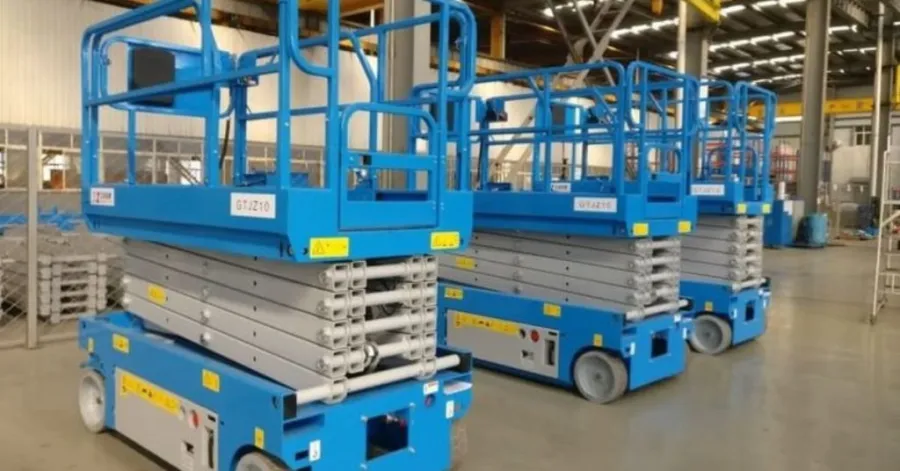
A scissor lift will ensure safe working at heights. Scissor lifts are helpful in many different working environments. For instance, you can employ the scissor lifts for indoor maintenance or outdoor construction. The main categories of scissor lifts include hydraulic scissor lifts, electric scissor lifts, diesel scissor lifts, rough terrain scissor lifts, and pneumatic scissor lifts. Every type of scissor lift comes with unique characteristics. Therefore, choosing an appropriate scissor lift type increases safety and improves productivity.
Table of Contents
What Are the Different Types of Scissor Lifts and Their Features?
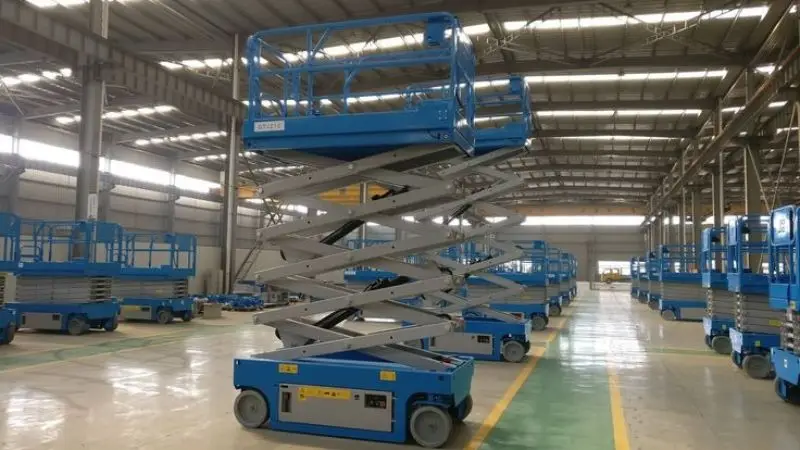
Electric Scissor Lifts
When you require a machine with minimal fumes and noise, the electric scissor lifts are appropriate. Electric scissor lifts are appropriate for use inside buildings. Zero emissions characterize electric scissor lifts. The machine operates on battery power, which is easy to recharge. Electric scissor lifts are portable, allowing you to move the machine from one place to another without difficulty. You will find the machine in malls, warehouses, and even schools.
Recommended For Your Project
Diesel Scissor Lifts
You use a diesel scissor lift for outdoor work. Diesel engines give you more power. You reach higher places with these lifts. You see diesel scissor lifts at construction sites. They handle heavy loads. You do not use them indoors because they make noise and release fumes. If you want electric vs diesel scissor lift, diesel scissor lifts work best for large outdoor projects.
Rough Terrain Scissor Lifts
You choose a rough-terrain scissor lift for uneven ground. These lifts have strong tires. You drive them over dirt, gravel, or grass. Rough-terrain scissor lifts help you with outdoor construction. You use them where normal lifts cannot go. They keep you safe on rough surfaces.
Hydraulic Scissor Lifts
You use hydraulic scissor lifts for many jobs. These lifts use fluid to move the platform up and down. You find hydraulic scissor lifts in factories, warehouses, and stores. They lift heavy loads. You control the speed easily. Hydraulic scissor lifts work both indoors and outdoors. You choose hydraulic scissor lifts for jobs that need strength and smooth movement. This is the best scissor lift for a warehouse.
Pneumatic Scissor Lifts
You use pneumatic scissor lifts when you want an eco-friendly option. These lifts use air pressure. You do not need fuel or electricity. Pneumatic scissor lifts work well in places where you must avoid pollution. You find them in clean rooms or food factories.
Engine-Powered Scissor Lifts
You use engine-powered scissor lifts for tough jobs. These lifts run on gas or diesel. You get more lifting power. Engine-powered scissor lifts help you with construction and outdoor projects. You choose them when you need to lift heavy materials. It is one of the best scissor lifts for construction.
Key Features to Compare Before Choosing a Scissor Lift
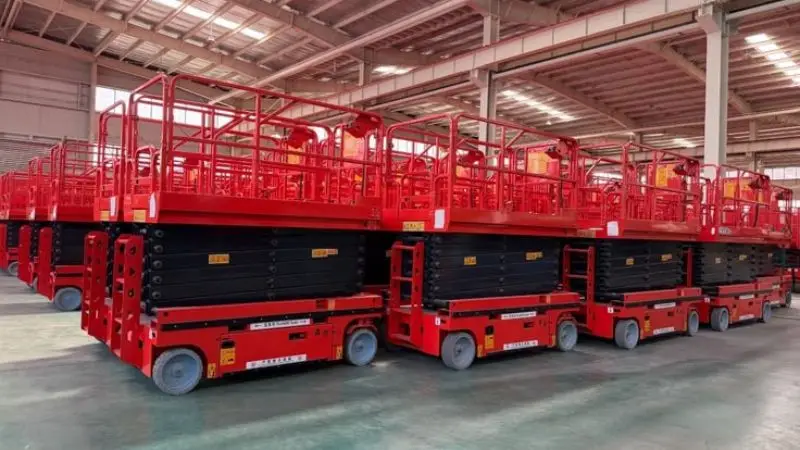
Which scissor lift should I choose? When you look at different types of scissor lifts, you need to check several features. These features help you pick the best lift for your job. You can use manual scissor lifts for many applications. You must compare each feature to make sure you stay safe and work efficiently.
Platform Height
You need to know how high you must reach. Platform height tells you the maximum height you can work at. Some manual scissor lifts reach only a few feet. Others go much higher. You choose the right height from the scissor lift types used in construction for your applications.
Load Capacity
You must check how much weight the lift can hold. Load capacity is a key feature. Manual scissor lifts handle different weights. You use them for light or heavy applications. Always check the load before you start.
Indoor vs Outdoor Scissor Lift
You decide where you will use the lift. Some manual scissor lifts work best indoors. Others handle outdoor applications. The lift you choose depends on your working environment. Indoor lifts come with various features, including silent running. Outdoor lifts have features such as heavy-duty tires.
Platform Size
You examine the platform’s size. Manual scissor lifts differ in size. You choose the right platform size according to your application needs. Larger platforms allow carrying more equipment. Smaller platforms fit in confined areas.
Safety Features
It is essential to pay attention to the safety features. Manual scissor lifts have guardrails and locking wheels. The above-mentioned features protect during any application. Make sure to choose lifts with strong safety features.
Maneuverability and Mobility
You must ensure the lift’s mobility. Manual scissor lifts provide convenient mobility. You move them manually to different applications. Some lifts have wheels for convenient mobility. Maneuverability is a useful feature.
Scissor Lift Safety Tips
Inspect the Lift Before Its Use
You should inspect your equipment before using a scissor lift. Pay attention to possible signs of damage and leakage. Both pit-mounted and pitless scissor lifts need to be inspected. You should check controls and safety devices. Rough-terrain scissor lifts usually operate under difficult conditions, so you need to check the tires and platform as well. There are special fuel requirements for diesel scissor lifts. If there are any issues, do not use the equipment. This measure will prevent possible accidents.
Obey the Posted Limitations on Weight
There are limitations that you should observe for your equipment. Scissor lifts have their own weight limits. Pit-mounted and pitless scissor lifts have different load capacities. Exceeding the limit may result in damage to the equipment or injuries. Diesel scissor lifts have a higher capacity, but you still need to consult the label. Observe the posted weight limits in all applications in logistics and construction. You can pick the best scissor lift for construction.
Wear Appropriate Protective Equipment
When using scissor lifts, protective gear is required. You will use helmets, gloves, and harnesses to ensure that you are protected. Pit-mounted and pitless scissor lifts require protective gear. Rough-terrain scissor lifts may require additional protective measures due to the terrain on which they are used. When using diesel scissor lifts, there is a need for noise protection. Using the appropriate protective gear will enable you to benefit from it.
Place Your Scissors Lifts on Firm Ground
Your equipment needs to be placed on firm ground. While the pit-mounted scissor lift is stationary, the pitless scissor lift moves. You will need to operate the rough-terrain scissor lift on uneven surfaces; however, you will still need to watch for areas that may pose challenges. You will also need to operate the diesel scissor lifts on firm ground.
Train Operators Appropriately
It is necessary to make sure that anyone using a scissor lift gets proper training. Such training will help them appreciate the strengths and limitations of different scissor lifts. Different kinds of scissor lifts have different control mechanisms. There is a need for special training for applications in logistics. The diesel and rough-terrain scissor lifts require some special care. Effective training can help reduce mistakes and ensure safety.
Conclusion
In conclusion, there are at least five kinds of scissor lifts. They include the electric, diesel, rough-terrain, hydraulic, and pneumatic scissor lifts. Different types of scissor lifts have specific attributes suitable for different applications. The electric lifts are suited for indoor use, while the diesel and rough-terrain scissor lifts are appropriate for outdoor use. Hydraulic lifts allow you to control the platform’s movement. Pneumatic scissor lifts are environmentally friendly.
FAQ
What is a self-propelled scissor lift?
A self-propelled scissor lift is driven from the platform. The driver drives the lift to different locations without leaving the platform. Such lifts help you save time and work safely. Self-propelled scissor lifts are used in applications where there is frequent movement.
What is the difference between a self-propelled scissor lift and a mobile semi-electric scissor lift?
A self-propelled scissor lift is driven using controls on the platform. Mobile semi-electric scissor lifts have electric-powered platforms, while the lifts are moved manually by pushing or pulling.
Where are self-propelled scissor lifts used?
Self-propelled scissor lifts are used in factories, warehouses, and construction sites. The lifts run on the ground surface, so they reach their destinations quickly because they do not require manual maneuvering. Such lifts are suitable for larger work areas.
What are the advantages of mobile semi-electric scissor lifts?
You get easy lifting with mobile semi-electric scissor lifts. You push them to the right spot, then use electric power to raise the platform. You use these lifts for indoor maintenance, light repairs, or when you need a compact lift.