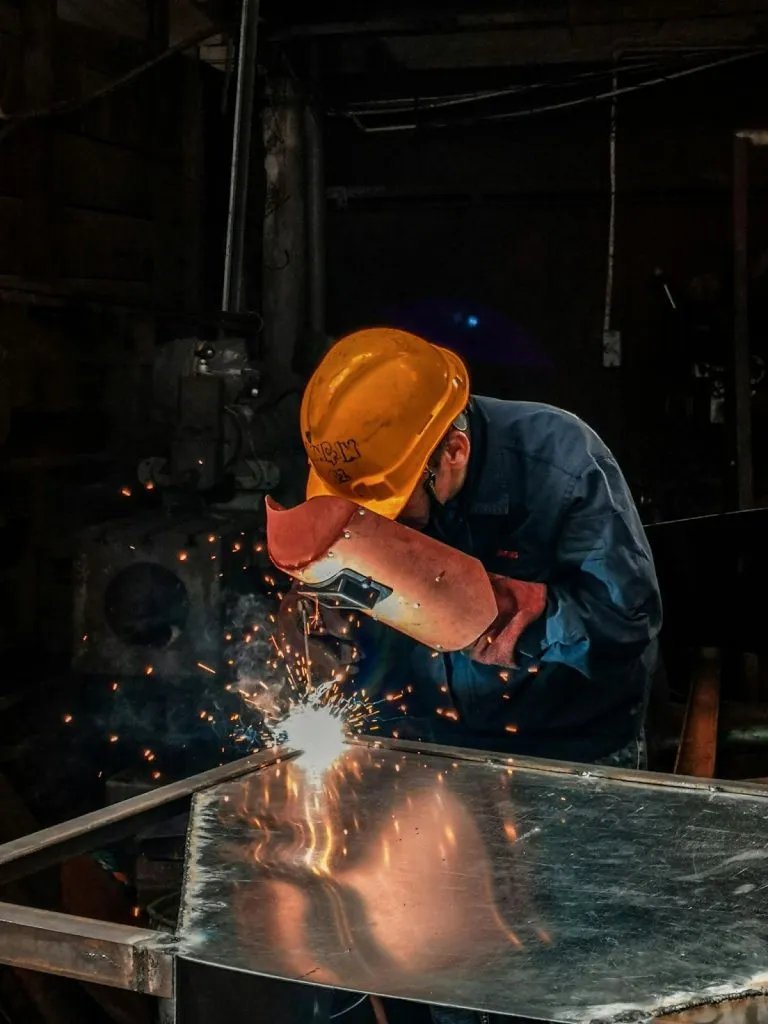
Starting your welding journey? One of the smartest projects you can take on is how to build a welding table. A sturdy table instantly improves accuracy and enhances safety by optimising overall performance. Avoid struggling with uneven surfaces and improvised setups by building a welding table for your work.
This guide is specifically for beginners, and it explains all steps clearly with useful tools. From planning to cutting and finishing, you will learn all here! By the end, you will discover how to build a welding table from scratch that fits your space, budget, and level of skill. Let’s start!
What can you do with welding tables?
A welding table is a useful apparatus for manufacturers; it is more than a flat piece of metal. It is the basic necessity of every fabrication task you take on. You can use it for Metal Inert Gas(MIG), Tungsten Inert Gas(TIG), and stick welding. You can also use it for cutting, grinding, fitting, and assembly work.
With a stable welding table, you can:
- Clamp projects safely
- Keeping parts square
- Maintain consistent angles
- Improve arc stability and weld quality
Once you start working on a welding table, the fabrication work becomes easier. For beginners, understanding how to build a welding table means gaining control over your environment. You don’t need to adapt to old and poor conditions.
What you need before building
Before starting any metalworking, like striking an arc or cutting steel, prepare the setup. Many beginners make mistakes in choosing the wrong materials or poor management. Planning is necessary for smooth functioning.
First, decide what type of project you are working on because light hobby work requires a different setup than heavy fabrication. Analyse your workspace size, power availability, and need for mobility.
A little time in thinking and planning before building gives you the first experience with how to build a welding table successfully.
Figure out the dimensions
Measurements determine accuracy and long-term usability. A small table limits projects, but a large welding table will occupy a large space and waste materials, too.
First-time builders select a table top of 36 to 48 inches long and 24 to 36 inches wide. İts height typically ranges from 34 to 48 inches, depending on your preference for standing or seated welding.
Accurate dimensions and measurements are essential for learning how to build a welding table because poor calculations can lead to mistakes and injury over time.
Gather all your tools and material
Discipline in working saves a lot of time. Father all the essential things required before building. You will need:
- Welder
- Portable mag drill
- Angle grinder
- Clamps
- Measuring tape
- Square
- Cutting tools
- Steel tubing
- Angle iron for frame
- Steel plate for the top
Make sure the materials are of good quality as thin steel will cause frustration later. İnvest slightly more upfront to save time and money in the long run when figuring out how to build a welding table accurately.
Use safety equipment
Whatever you are working on, safety is the first priority. Welding involves sharp metal edges, heat, sparks, and UV radiation. Have this safety equipment with you:
- Welding helmet
- Gloves
- Safety goggles
- Proper footwear
- Wear long sleeves
Besides this safety apparatus, a clean workspace with good ventilation is equally important. When you are learning how to build a welding table, keep safety as a part of the process. Setting these examples makes good habits for the long term.
How to build a welding table in steps
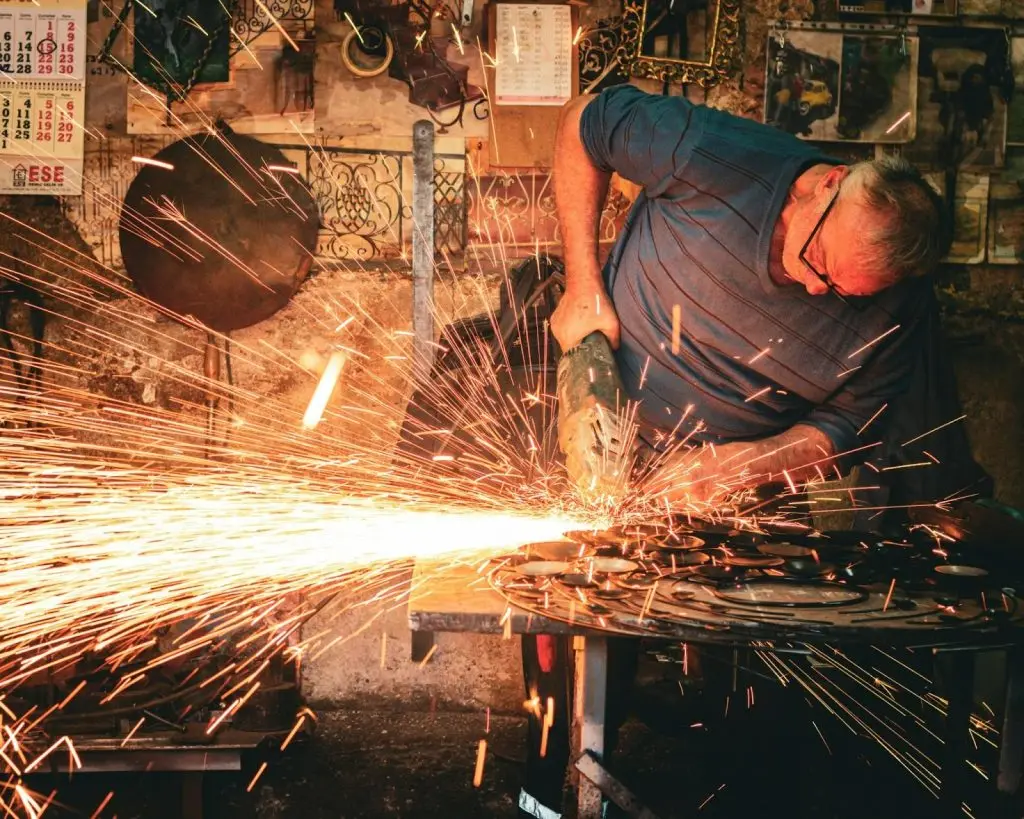
İn this section, we will break the process into manageable steps so beginners can follow easily.
Step 1: Cut the steel to size
First of all, measure carefully and mark all components before cutting. These components are frame rails, cross braces, and table supports. Accurate cuts make sure everything fits together strongly.
Straight and clean cuts make welding easier and reduce the need for grinding later. İt is a necessary step for learning how to build a welding table.
Step 2: Prepare the Steel Surfaces
Remove dirt , dust, mill scale, and oil from weld areas. With the help of a grinder or wire wheel you can expose clean metal. Preparation before work can improve weld penetration and reduce defects.
İf you skip this step as a beginner when learning how to build a welding table is one of the most common mistakes.
Step 3: Square and Clamp the Frame
Lay the frame on a flat surface and use a square to make sure all corners are 90 degrees. Clamp everything safely so that nothing moves during welding.
İt is important for the table to remain flat and stable when you are learning how to build a welding table.
Step 4: Tack Weld the Table Frame
İnstead of welding everything fully at once, apply small tack welds at each point. This will give you adjustments if the frame moves.
Tack welding is an important skill and technique when you are learning how to build a welding table.
Step 5 Attach the legs
Place the legs on each corner of the frame and confirm the height before welding. The legs should be properly aligned and plumb.
Sturdy and well-aligned legs of a welding table provide stability while working for the long term. This reinforces good habits in how to build a welding table project.
Step 6: Fix cross bracing
Add lower support, like diagonal bracing, to prevent flexing and racking. This step is critical for larger tables or heavy work. For this step, you’ll need a magnetic drill to install the cross bracing onto your welding table.
Step 7: Organise the tabletop
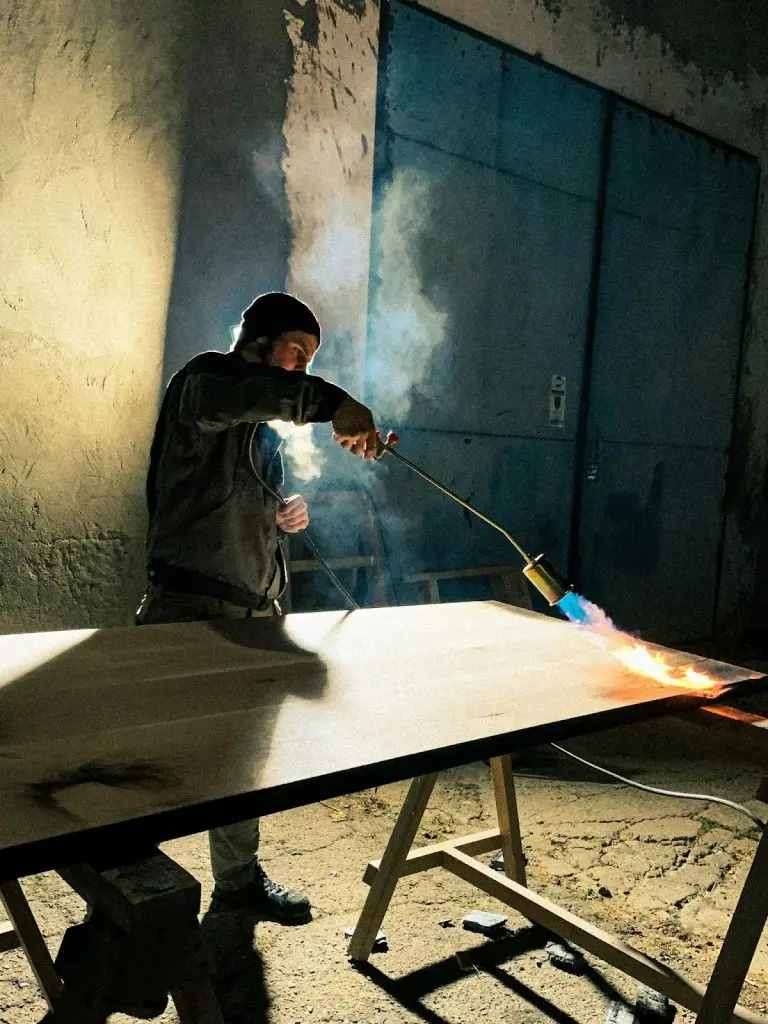
Place the steel plate on the frame and clamp it safely. Welding in short intervals will minimise heat distortion and keep the tools working properly.
The welding table top is the centre of the build, and controlling heat in this step is essential for obtaining professional results.
Step 8: Include leveling feet
You can adjust the uneven floors with the help of levelling feet. Locking the casters will provide the mobility that is required for some welding work. Select what is suitable according to your working space. Mobility and stability are necessary in designing a functional welding table setup.
Step 9: Add functional features
Adding accessories customises your table. Don’t forget to add:
- Clamps
- Shelves
- grounding lugs or hooks
These features improve workflow and organisation. After this step, your table looks like a true DIY welding table customised to your needs.
Step 10: Inspect flatness and structural integrity
With a straight edge, you can check for warping and irregularities. Check all welds for cracks or weak assembly because it is important to fix issues before using them regularly.
Step 11: Surface finishing and shielding
İn this step, make sure you:
- Grind sharp edges
- Clean spatter
- Apply paint for rust protection
Leave the top slightly oiled to prevent corrosion. Proper finishing gives a professional look to your DIY wedding table.
Protection tips when using a welding table
Follow these tips for working securely:
- Put flammable materials away from the table
- Do proper grounding to prevent electrical hazards
- Avoid overloading the table
Maintaining these safety habits protects your equipment and you, especially when you are using a custom welding table frequently.
Blunders to avoid
Many beginners make these mistakes which give unprofessional results. Try to avoid these:
- Using thin steel surfaces
- Leaving behind surface preparation
- hustling welds
- İgnoring flatness inspection
These mistakes compromise the durability and accuracy of a welding table.
FAQs
How thick should steel be for a welding table top?
Usually, beginners choose steel between 3/16 inch and ¼ inch thick for sturdiness and heat resistance.
Can I build a welding table without a welder?
Yes, you can build bolted designs, but welding provides stability and strength.
What is the best height for a welding table?
İt depends on your comfort and satisfaction. A suitable height is between 34 to 38 inches for most users.
Do I need to ground my welding table?
Yes, grounding is necessary for arc stability, and it improves safety during welding operations.
Conclusion
Once you’ve built the table you can complete works with welds that are of a good and even standard. You can clamp any form of items to it to be safely held. Experts will always recommend that, even if you are a novice welder, you should use your first project to construct a welding table.
It’s ideal for your first project due to safety and precision. It also provides you with the appropriate working space. So, let’s get started. By being careful to stick to the provided instructions and step to avoid the typical mistakes to achieve a table that will be the basis for many projects.