You want perfect, even slices every time — but safety should always come first. Learning how to use a meat slicer at home isn’t just about getting clean cuts; it’s about protecting yourself while you do it. Always start by reading your manual and using the hand guard before turning on the machine. Keep your focus steady, your workspace clean, and your hands clear of the blade. With the right care and attention, you can slice meats, cheeses, and more with confidence, precision, and peace of mind every single time.
How to Use a Meat Slicer Safely at Home
Using a meat slicer can make food prep faster and more precise, but safety and proper setup are essential. Whether you’re slicing deli meats or preparing ingredients for a family meal, learning how to use a meat slicer safely at home helps you achieve clean, even slices while keeping your fingers protected.
Step 1: How to Set Up Your Meat Slicer
Prepare your workplace before switching on your slicer. With proper installation, safety is assured as well as efficiency.
- Place your slicer on a flat surface that is clean and make sure that it is stable.
- Unless it is plugged in, do not turn it on yet.
- Read your user manual and know the positions of the power switch, the thickness knob, and the safety guard.
- Also, put on the hand guard in case you do not have it.
- Check the blade – must be sharp and clean. It is recommended to wipe all clinging food beforehand.
- To have the slices fall at the end of the slicer, place a tray or a plate.
To achieve better outcomes, refrigerate your meat 20-30 minutes, then slice it. Cold meat maintains its form and causes less tearing.
Step 2: How to Slice the Meat
Now that your slicer is ready, it’s time to start cutting. Follow this step-by-step guide to using a meat slicer for clean, even slices every time.
- Adjust the thickness knob to your preferred slice size. Start with a test slice to check the result.
- Prepare the meat by trimming excess fat or bones and cutting it into manageable pieces.
- Place the meat on the carriage tray and use the hand guard to hold it securely.
- Turn on the slicer, then slide the carriage handle smoothly back and forth across the blade.
- Collect the slices on your tray or plate as they fall. Repeat as needed for consistent results.
- If slicing in large batches, keep extra meat chilled between rounds to maintain texture.
Working slowly and maintaining focus ensures you can slice deli meat thin without tearing, giving your sandwiches and platters a professional finish.
Step 3: How to Clean and Maintain a Meat Slicer
Once the slicing process is done, you should understand how to clean a meat slicer. Cleaning helps keep your machine clean, and it avoids bacterial formation. Always make sure, before using it, that you turn off the slicer.
Clean it by following these easy steps:
- Separate the food tray, hand guard, and other parts that can be removed.
- Wash in warm soapy water and then rinse and dry.
- Be careful not to touch the sharp edge of the blade, but wipe it with a damp cloth.
- Do not allow water to get into the motor or electrical parts.
- Wipe down all parts thoroughly and then put the slicer back together.
For long-term care:
- Wash your slicer when you have used it to avoid contamination.
- Test whether the blade requires sharpening or replacing.
- Be sure to lightly lubricate moving parts as specified in your manual.
With proper maintenance and proper handling, you will learn how to operate a meat slicer safely at home and still maintain it in great working order for years to come.
Safety Tips for Using a Meat Slicer
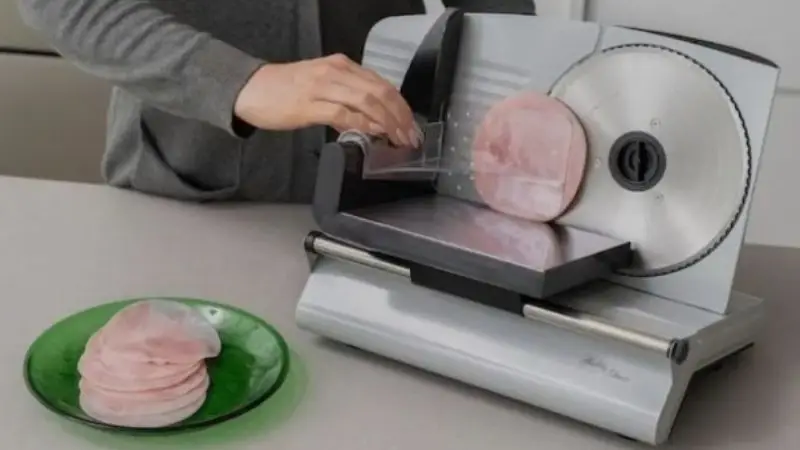
Knowing how to use a meat slicer safely at home is just as important as knowing how to slice meat perfectly. A meat slicer has sharp, fast-moving parts that can cause injury if not used carefully. By following a few simple safety rules, you can enjoy smooth, worry-free slicing in your kitchen.
Never Touch the Blade Directly
The most dangerous part of your slicer is the blade. This may make deep cuts even when the machine is not operational. It should always be dealt with carefully.
- Always wash your hands without touching the blade.
- Clean it with a cleaning instrument or a handled cloth.
- In case you have to cut off the blade, put on cut-resistant gloves.
- Handling the blade is also important; the blade is also sharp with the slicer switched off.
This supplementary care will save your hands and ensure that you are able to use your slicer safely on a large scale.
Keep your Hands Away from the Moving Carriage
When cutting the slicer, give your full attention to your job. The carriage travels at a high speed, and the slightest diversion can cause an accident. To use the slicer safely:
- Always remember to keep your hands on the handle, but not close to the blade or carriage.
- In case you have to change the food, switch off the slicer initially.
- Wear the hand guard in order to be safe.
- Keep others away and call their attention to remain away when the slicer is running.
These few simple steps will make sure that you are able to cut deli meat into fine slices, and you will not ruin your deli meat.
Always Unplug Before Cleaning or Adjusting
Knowing how to clean a meat slicer after use starts with one golden rule — always unplug it first. Electricity and sharp blades are a risky combination, so never skip this step.
- Turn the slicer off and unplug it from the wall before touching any part.
- Wait until the blade has completely stopped spinning.
- Only then, begin cleaning, adjusting, or removing parts.
Unplugging takes just a second but can prevent serious injuries and electric shocks.
Stay Alert and Prioritize Safety
Being safe means being conscious. Whether it is training on how to use a meat slicer safely at home or being a meat slicing pro, safety needs to be part of you.
- Get down to business and do not hurry.
- Do not put children and pets near the slicer.
- Check that attachments and all guards are in place.
With practice and these tips in place each time, you will be comfortable and safe with your meat slicer, and all your slices will be smooth and accurate.
Common Mistakes to Avoid When Using a Meat Slicer

Even if you already know how to use a meat slicer safely at home, a few common mistakes can affect your slicing results or even cause accidents. Avoiding these errors ensures smoother operation, cleaner cuts, and a longer-lasting slicer.
Mistake 1: Not Wearing Safety Gloves
Wearing cut-resistant gloves is one of the easiest ways to protect yourself. The slicer blade is extremely sharp, and accidents can happen in a second. Gloves add a layer of safety and confidence while handling or cleaning the machine.
- Always wear cut-resistant gloves when touching or cleaning the blade.
- Keep a pair of gloves near your slicer so you never forget them.
- Handle the blade carefully, even when the slicer is unplugged.
This simple habit helps you prevent cuts and ensures you can use a meat slicer safely at home every time.
Mistake 2: Choosing the Wrong Slice Thickness
The most common mistake that beginners make is to get the thickness wrong. In case the setting is too thick, the slices may tear or appear unbalanced. If it is too thin, they may fall apart or come together.
Here’s how to get it right:
- Start at a medium thickness level.
- A small test piece would give you the result of a slice.
- Put the knob fine-tuning until it attains the desired thickness.
In such a manner, you can easily cut deli meat into thin pieces without tearing it, thus making your food look clean and professional.
Mistake 3: Slicing Warm or Soft Meat
Temperature affects how well your meat slices. Warm or soft meat can squish, tear, or clog the blade, while cold meat slices cleanly and evenly.
- Chill the meat in the refrigerator or freezer for about 20–30 minutes before slicing.
- Avoid slicing hot or freshly cooked meat — let it cool first.
- Cold meat holds its shape better, making slicing safer and smoother.
Properly chilled meat not only gives you perfect slices but also keeps your slicer cleaner and easier to maintain.
Wrap Up
Understanding how to use a meat slicer safely at home involves more than just slicing — it’s about using the right techniques, proper setup, and safe cleaning habits. By wearing gloves, adjusting the thickness carefully, and using chilled meat, you can slice confidently and efficiently.
This step-by-step guide to using a meat slicer also helps you learn how to clean a meat slicer after use, so you can keep your equipment in top condition. Stay alert, practice safety every time, and enjoy smooth, even slices for years to come.
FAQ
How often should you clean your meat slicer?
You should clean your meat slicer after every use to keep it safe and hygienic. Regular cleaning prevents bacteria buildup, keeps the blade sharp, and extends the slicer’s lifespan. Always unplug it first and follow proper cleaning steps after slicing.
Can you slice cheese or vegetables with a meat slicer?
Yes, you can slice cheese and firm vegetables using your meat slicer. For best results, ensure the food is cold and firm to avoid sticking or tearing. Always clean the slicer thoroughly afterward to remove any leftover cheese or vegetable residue.
What should you do if the blade feels dull?
If your slicer’s blade feels dull, it’s time to sharpen or replace it for smooth and even cuts. Always wear cut-resistant gloves when handling or removing the blade to stay safe, and follow your slicer’s manual for proper blade maintenance.