Deals Bulk Savings Best Sellers Clearance Inspiration DIY Projects & Ideas Member Club Product Recall
Download VEVOR App 

Exclusive $5.00 off for your first three orders on the App.
Scan the QR code to download


+12
More


Features & Details
- Perfect Fit: Replaces the original cylinder head assembly to resolve failure and damage issues. As a cylinder head for small block Chevrolet engines, it fits the following models: SBC 327/350/383 Corvette, Camaro, Z06. You will experience unprecedented smoothness in engine operation.
- Precise Manufacturing: Utilizes CNC precision machining for the combustion chamber, intake, and exhaust passages. Compared to standard casting, this cylinder head provides smoother airflow and high precision with excellent sealing. Ensures that all components (such as valves, threaded holes, etc.) are correctly positioned, sized, and angled, avoiding issues such as improper valve heights. Passed sealing tests to ensure correct installation and operation. Compatible with angled spark plugs, M14*P1.25*22.8 installation holes.
- Long Service Life: The cylinder head assembly is crafted from premium materials to extend its lifespan. Made with industrial-grade aluminum alloy, it offers excellent impact resistance, wear resistance, and rapid heat dissipation to prevent overheating. We also include manganese bronze valve guides and hardened valve seats to maintain engine performance stability. Upgrade from disappointing old cylinder heads with our reliable option.
- Fully Assembled: The cylinder head assembly comes fully assembled with all necessary components, including valve spring seats, inner springs, outer springs, valve locks, valve seals, valve seats, intake valves, and exhaust valves. This reduces the likelihood of installation errors and ensures ease of use. It is carefully packaged and ready to be delivered to you. Please keep the installation environment clean and have a professional perform the installation.
- Efficient Solution for Common Issues: If your vehicle experiences abnormal vibrations, severe oil leaks, aging or deformation, or excessive spark plug oil deposits, consider replacing it with this high-quality engine cylinder head. It will enhance horsepower, improve fuel efficiency, and reduce emissions.
Frequently Bought Together
Reviews 4.5
All reviews are from verified purchases
Average rating based on 41 reviews
Reviews 4.5
All reviews are from verified purchases
See all 41 reviews
About this item
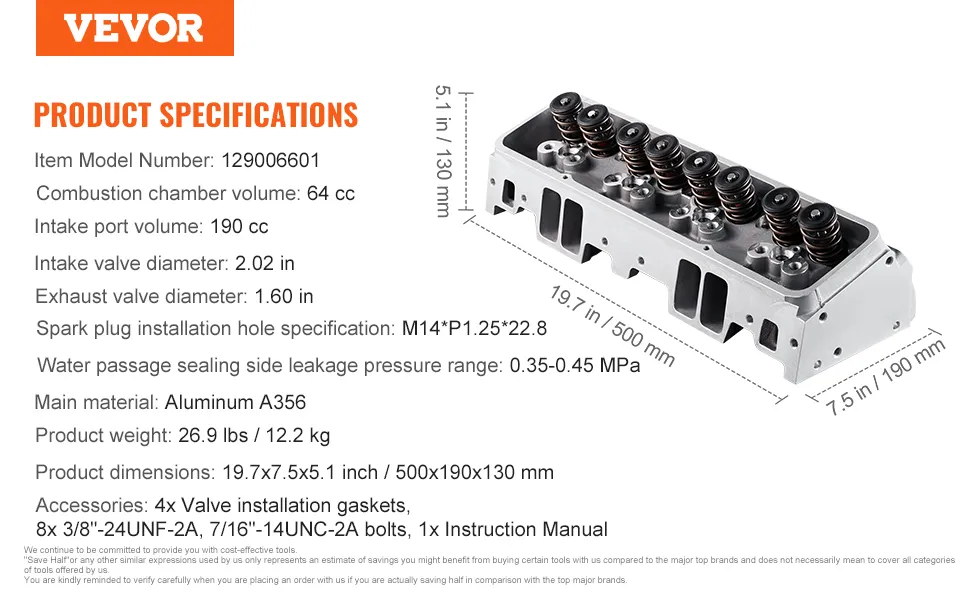
Product specification
- Item Model Number
- 129006601
- Combustion Chamber Volume
- 64 cc
- Intake Port Volume
- 190 cc
- Intake Valve Diameter
- 2.0 inch / 51.3 mm
- Exhaust Valve Diameter
- 1.60 inch / 40.6 mm
- Spark Plug Type
- Slant Hole
- Spark Plug Installation Hole Specification
- M14*P1.25*22.8
- Water Passage Sealing Side Leakage Pressure Range
- 0.35-0.45 MPa
- Main Material
- Aluminum A356
- Product Weight
- 26.9 lbs / 12.2 kg
- Product Dimensions
- 19.7x7.5x5.1 inch / 500x190x130 mm
Description


Cylinder Head Assembly Replacement: Enjoy a Smooth Start-up
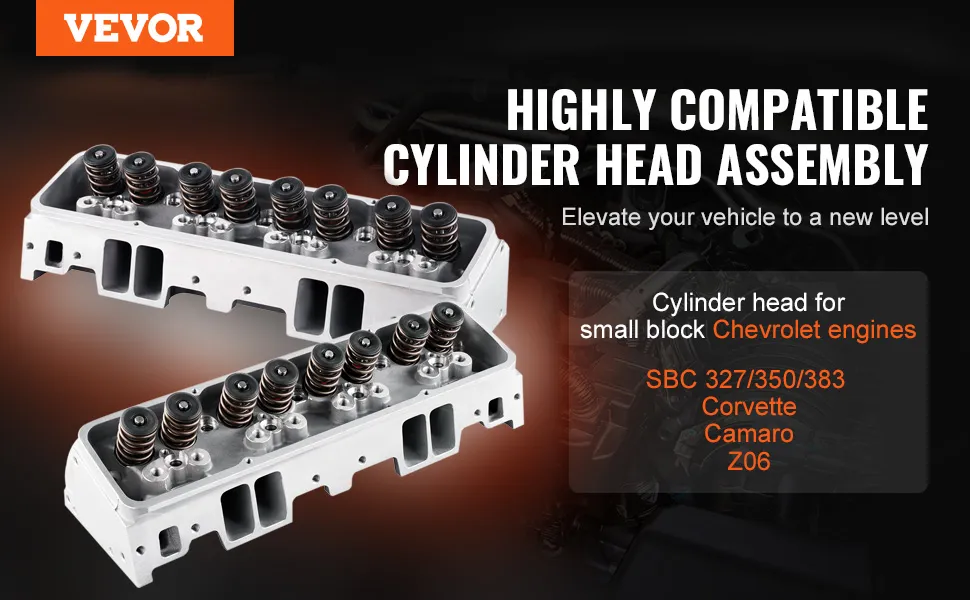
Designed specifically to replace cylinder heads for small block Chevrolet engines. Please confirm your engine model and vehicle make before purchase.
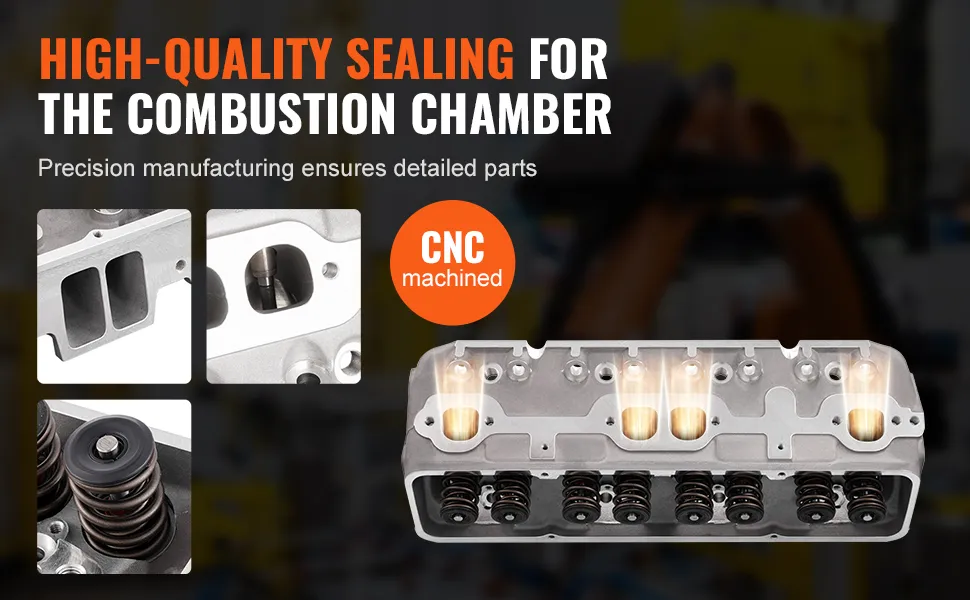
The cylinder head assembly seals the top of the cylinder, forming the combustion chamber. Each cylinder head is meticulously designed and rigorously tested before delivery to ensure precise fit and high sealing performance.
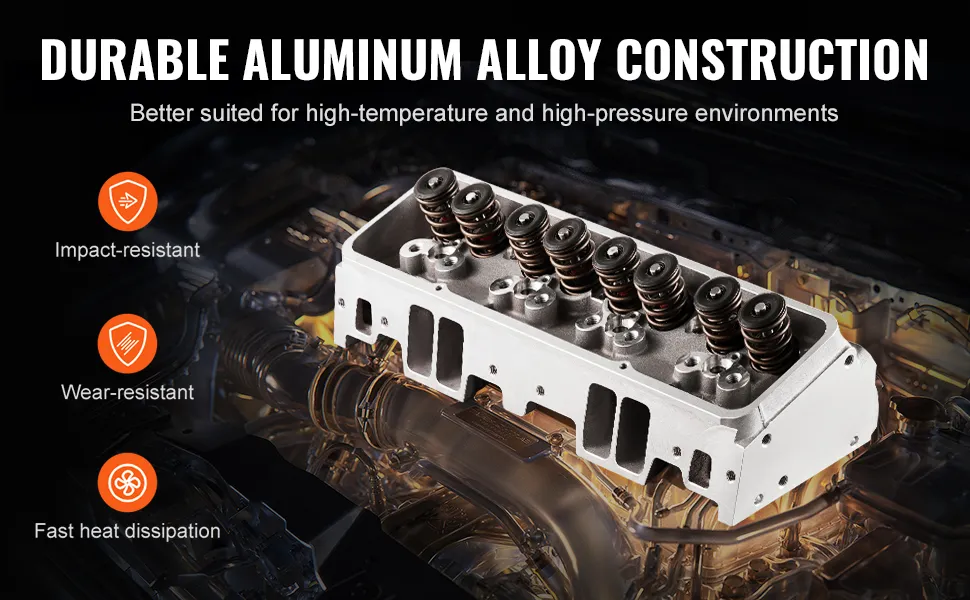
This cylinder head is made from high-rigidity aluminum alloy with excellent heat dissipation. It can endure high-temperature and high-pressure environments, ensuring long-term durability even with frequent use.
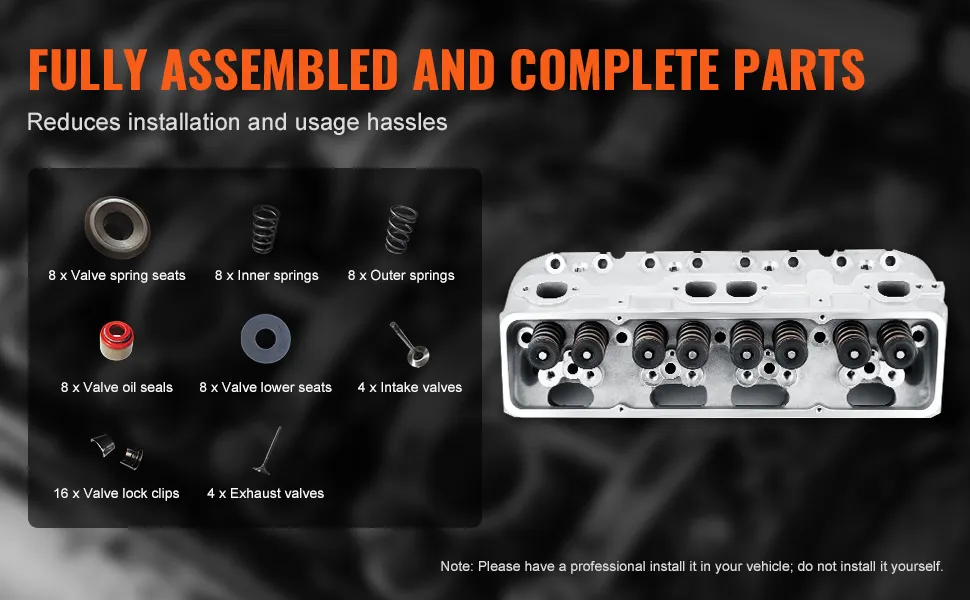
Essential components are pre-installed to reduce assembly steps. Purchase spark plugs compatible with your model, maintain a clean installation environment, and have a professional perform the installation.

This complete cylinder head is designed to improve vehicle performance. It has been optimized to enhance your vehicle's operational efficiency.
Questions and Answers (8)
What is the maximum valve spring lift in inches ? What size are the valves in inches ?
Maximum valve lift (inches): 0.550 inches.
Intake valve: Φ8.6*Φ51.2*128.
Exhaust valve: Φ8.6*Φ40.5*128.
By vevor
Helpful
(
1
)
Is this for a pair of heads or 1 single head?
This is for a pair of heads.
By vevor
Helpful
(
1
)
What year models are these heads made to fit? I didnt see that anywhere in the listing
It fits the following models: SBC 327/350/383 Corvette, Camaro, Z06.
By vevor
Helpful
(
1
)
What intake are these heads drilled for? Early model or vortec?
Hello, the holes are for installing bolts, it is an early model.
By vevor
Helpful
(
1
)
Do they come with rocker arm studs and push rod guide plates?
Yes. They include rocker arm studs and pushrod guide plates.
By vevor
Helpful
(
0
)
ZHSKU00000000000110
VEVOR Engine Cylinder Head Assembly Replacement, Aluminum Engine Cylinder Head Kit, Compatible with Small Block Chevrolet Engines, SBC 327/ 350/ 383, Corvette, Camaro, Z06
4.5 41 Reviews
$ 658 99
Earn at least 2% points on purchases or save up to 15%.
FREE to join
Each when you buy 0+.
Shop
Exclusive $5.00 off for your first three orders on the App.
Download Now
Add product protection
Accident and warranty protection by Xcotton (partner with AIG)
In Stock
Security & Privacy
100% Secure payment
Secure privacy
FREE Returns
30-day Free Returns
Refund for lost packages / damaged items
Professional Service
12-months warranty
Customer Support
Compare with similar items
Similar Items You Might Like
People Who Bought This Item Also Bought
Best sellers in this category
People Who Viewed This Item Also Viewed
Your Browsing History
Recommended Searches
power tool combo kits 2nd hand scissor lift for sale used scissor lift near me 24 volt dc electric motor oxygen gas cylinder gasoline powered welder weight machine near me auxiliary gas tanks for pickups m&i motors illinois rear wheel cylinder propane gas cylinder used scissor lift for sale affordable motors electronic weight machine price body weight machine price digital weight machine online weight machine digital weight machine price electronic weight machine small weight machine